![Bizen-yaki Hidasuki Guinomi: Okayama Sake Cup, Where to Buy [2026]](https://jpmono.com/wp-content/uploads/2026/06/bizen-yaki-hidasuki-guinomi-sake-cup-where-to-buy-2026-featured.jpg)
Bizen-yaki (備前焼) is the unglazed, wood-fired stoneware tradition of Bizen, in southeastern Okayama Prefecture on the Seto Inland Sea coast of western Honshu. It is one of the Six Old Kilns (Nihon Rokkoyō, 日本六古窯) — the half-dozen Japanese pottery centers whose continuous production reaches back over a thousand years — and the most aesthetically distinctive of the six. Bizen uses no glaze at all; every piece’s surface emerges from flame, ash, and kiln position during a firing that runs 10 to 14 days. This guide covers a specific object from that tradition: a single guinomi (ぐい呑み) sake cup carrying hidasuki (火襷, “fire cord”) marks — the scarlet streaks left where rice-straw rope is wrapped around the piece in the kiln.
The item is identified by Amazon JP catalog ID B0GG6LWV6L: an unglazed, reduction-fired Bizen guinomi from the Imbe (伊部) pottery district of Bizen city, sold as a single cup. Bizen sake vessels are valued for a specific, traditionally held reason — the slightly porous, micro-textured surface is said to round out the edges of sake — and the hidasuki finish makes this cup read instantly as Six Old Kilns craft rather than generic ceramic. Live pricing for this exact listing was unavailable in the data at the time of writing; comparable single Bizen pieces sit in an entry tier of roughly ¥4,000–¥8,000 (≈ $27–$53 USD at the ¥150/USD baseline), and the live figure should be checked on the listing before purchase.
This article is written for international readers — primarily US, EU, and Australian — who want to source a real Bizen sake cup from outside Japan, with the historical and cultural context that turns a guinomi into a meaningful object. We walk the roughly 1,000-year arc from medieval Sue-ware roots through Sen no Rikyū’s tea-ceremony embrace and the Edo-period Six Kiln Family system to the postwar Living National Treasure tier, then cover specs, surface effects, shipping reality, and the comparison axes that matter when this sits next to a Tamba guinomi or an Echizen tokkuri on your shelf.
🔄 Last updated:
⏱️ Read time: ~15 min
🏺 Bizen-yaki · Okayama · 1,000+ year tradition

- Who this is for — and who should skip it
- Product overview (from published specs)
- 📍 Where this comes from — place, era, and the craft tradition
- 📌 How does it compare?
- Price snapshot across stores
- What it does well
- Weaknesses and things to verify before buying
- Conclusion — which buyer type are you?
- Other ways to approach this purchase
- 🏆 Editor’s Pick
- ❓ Frequently Asked Questions
Who this is for — and who should skip it
- A sake drinker who wants a single, characterful cup rather than a matched set — a guinomi is the canonical sipping vessel for room-temperature or warmed sake.
- Drawn to the Six Old Kilns lineage and want one of the six on your shelf at entry-tier pricing.
- Attracted to wabi-sabi surfaces — the scarlet hidasuki streaks and earth-red clay are unmistakably Japanese wood-fired stoneware.
- Comfortable hand-washing ceramics and willing to season the cup with use; Bizen develops a patina over years.
- Outside Japan but want a piece from the Imbe district rather than industrial “Bizen-style” mass ware.
- Outfitting a minimalist white-and-stainless kitchen — Bizen’s rough, mottled surface is decidedly non-minimal.
- Looking for a matched pair or a full sake set; this is a single guinomi, and Bizen surface effects do not match cup-to-cup across firings.
- Hoping for Living National Treasure–tier work at entry pricing (Kaneshige, Kakurezaki, and similar named-master pieces start around ¥30,000 and reach six figures).
- Expecting a precise, repeatable color and pattern; each fired cup is individual by design.
- Buying for dishwasher-and-microwave-only convenience — the stoneware tolerates both, but the patina that is part of Bizen’s appeal develops best with hand-washing.
Product overview (from published specs)
The table below reflects the Amazon JP Global Store catalog entry for B0GG6LWV6L plus publicly documented Bizen-yaki facts. The fetched data snapshot for this specific listing did not include a live price; that cell is marked unconfirmed rather than guessed. Where a figure is genuinely unavailable, the table says so plainly.
Bizen-yaki Hidasuki Guinomi
岡田輝 備前焼 火襷 ぐい呑 備前 箱無し
通常6~7日以内に発送します。 · Sold by sunsun8ショップ · ASIN B0GG6LWV6L
Price and availability as of 2026-08-31 02:30 JST. The Amazon listing at the time of purchase is authoritative. jpmono.com earns a commission on qualifying purchases at no extra cost to you.
| Spec | Value | Source |
|---|---|---|
| Product | Bizen-yaki hidasuki guinomi (備前焼 火襷 ぐい呑み) — single sake cup | Amazon JP listing |
| ASIN | B0GG6LWV6L | Amazon JP listing |
| Form | Guinomi (ぐい呑み), a sipping sake cup; sold as a single piece | Listing |
| Surface effect | Hidasuki (火襷, “fire cord”) — scarlet streaks left by rice-straw wrapping during firing | Listing + maker tradition |
| Material | Yakishime — high-fired, unglazed reduction-fired stoneware from iron-rich Hiyose (干寄) clay; surface character from flame and ash, not glaze | METI craft record |
| Capacity / dimensions | Unconfirmed — check listing (guinomi typically run roughly 40–90 ml) | Not in fetched data |
| Made in | Imbe (伊部), Bizen, Okayama Prefecture, Japan | Listing |
| METI designation | Bizen-yaki designated Traditional Craft Product (国指定伝統的工芸品), 1982 | METI registry |
| Price (Amazon US search) | Varies — Japanese Bizen / Six Old Kilns sake cups from comparable makers | Amazon US (search; moonill-20) |
| Price (Amazon JP Global Store) | Unconfirmed — verify on listing. Only the catalog entry was available; live pricing was unavailable at time of writing. | Amazon JP listing (moonill-22) |
| International shipping | Amazon JP Global Store to US/EU/AU/CA where eligible; Bizen stoneware is more robust than porcelain in transit (~1–2% breakage) | Amazon JP / category data |
Specs not present in the source listing — exact capacity, individual cup weight, and the precise extent of the hidasuki marking on any single fired cup — are intentionally left out rather than guessed. Bizen pieces vary noticeably from firing to firing; the photographed sample may not match a future shipped cup exactly, which is part of the tradition rather than a quality issue.
📖 Glossary — key terms used in this guide
- Bizen-yaki (備前焼)
- The unglazed, wood-fired stoneware tradition of Bizen, southeastern Okayama Prefecture. One of the Six Old Kilns. METI-designated Traditional Craft Product since 1982.
- Guinomi (ぐい呑み)
- A sake cup larger than the tiny ochoko, sized for unhurried sipping. The word comes from guitto nomu (“to drink in one go”); a guinomi is the connoisseur’s everyday sake vessel.
- Yakishime (焼締)
- High-fired, unglazed stoneware vitrified by heat alone, with no applied glaze. The defining technical category of Bizen, Tokoname, Echizen, and Tamba ware.
- Six Old Kilns (Nihon Rokkoyō, 日本六古窯)
- The six Japanese pottery centers with continuous medieval-to-present production: Bizen (Okayama), Tokoname (Aichi), Seto (Aichi), Shigaraki (Shiga), Echizen (Fukui), and Tamba (Hyōgo). The concept was formalized in the 1940s by ceramic historian Koyama Fujio.
- Imbe (伊部)
- The pottery district of Bizen city, with roughly 70 active kilns within a short radius. The historic and current center of Bizen-yaki production. Closest station: Imbe Station on the JR Akō Line.
- Hidasuki (火襷, “fire cord”)
- Scarlet streaks on a Bizen surface, formed where rice-straw rope (waramaki 藁巻き) is wrapped around the piece during firing, leaving iron-rich marks. The most decorative Bizen surface effect, and the signature of this cup.
- Goma (胡麻, “sesame”)
- Yellow-amber speckled patches where pine ash dropped onto the piece during firing, resembling scattered sesame seeds.
- Sangiri (桟切, “shelf-cut”)
- Sharp light-dark contrast lines where the kiln shelf or an adjacent piece shielded the surface from direct flame and ash.
- Yōhen (窯変, “kiln transformation”)
- Dramatic color shifts (blue, green, gray, black) caused by reduction-atmosphere variations during firing. The most prized of the Bizen effects.
- Hiyose (干寄) clay
- The sticky, iron-rich clay dug from old rice paddies around Imbe. Its high iron content gives Bizen its characteristic red-brown body; the deposit is managed cooperatively among the kilns.
- Noborigama (登り窯, “climbing kiln”)
- A multi-chamber wood-fired kiln built up a hillside. Bizen kilns typically fire continuously for 10–14 days with red pine.
- Living National Treasure (人間国宝)
- A Japanese government designation, formally “Holder of an Important Intangible Cultural Property” (重要無形文化財保持者). Bizen-yaki has produced several, including Kaneshige Tōyō, the first, in 1956.
📍 Where this comes from — place, era, and the craft tradition

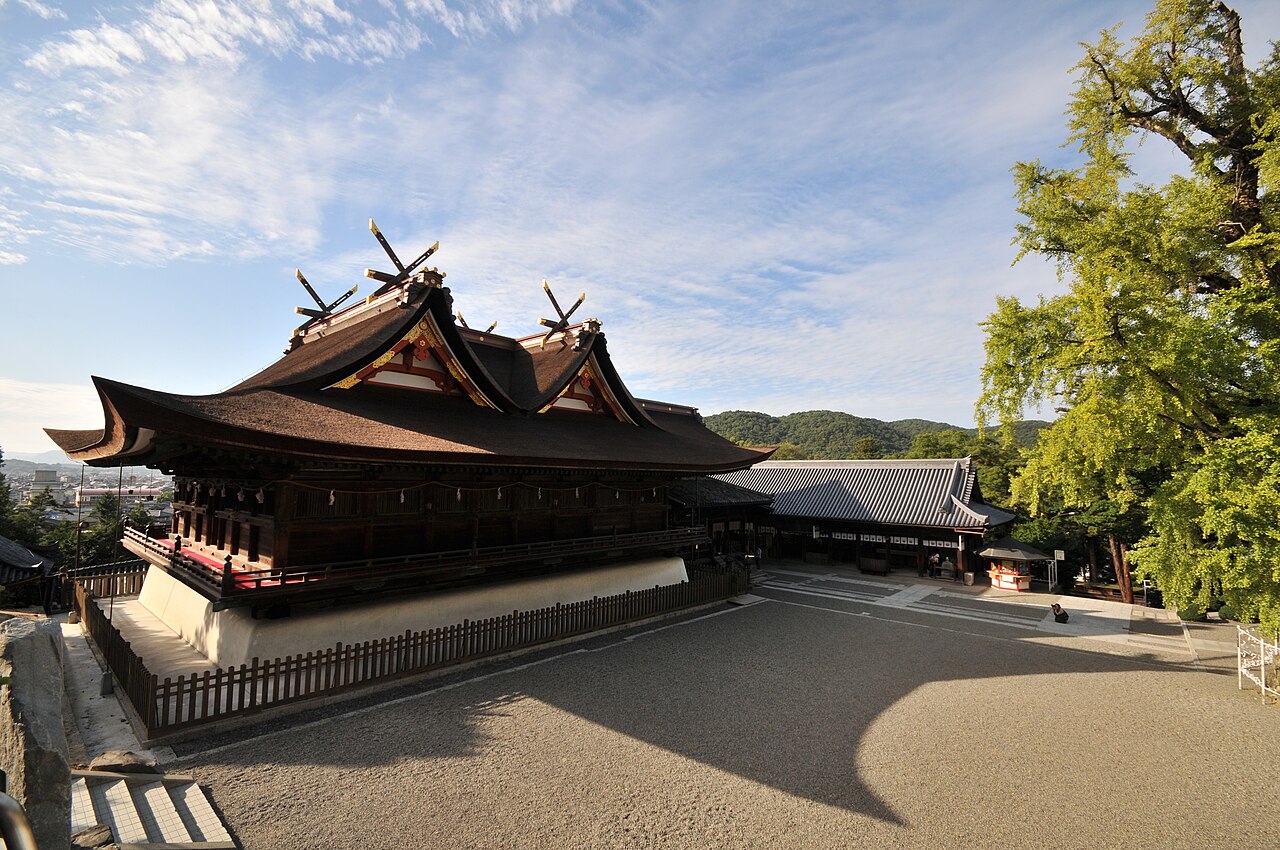
The region — Imbe, in southeastern Okayama Prefecture
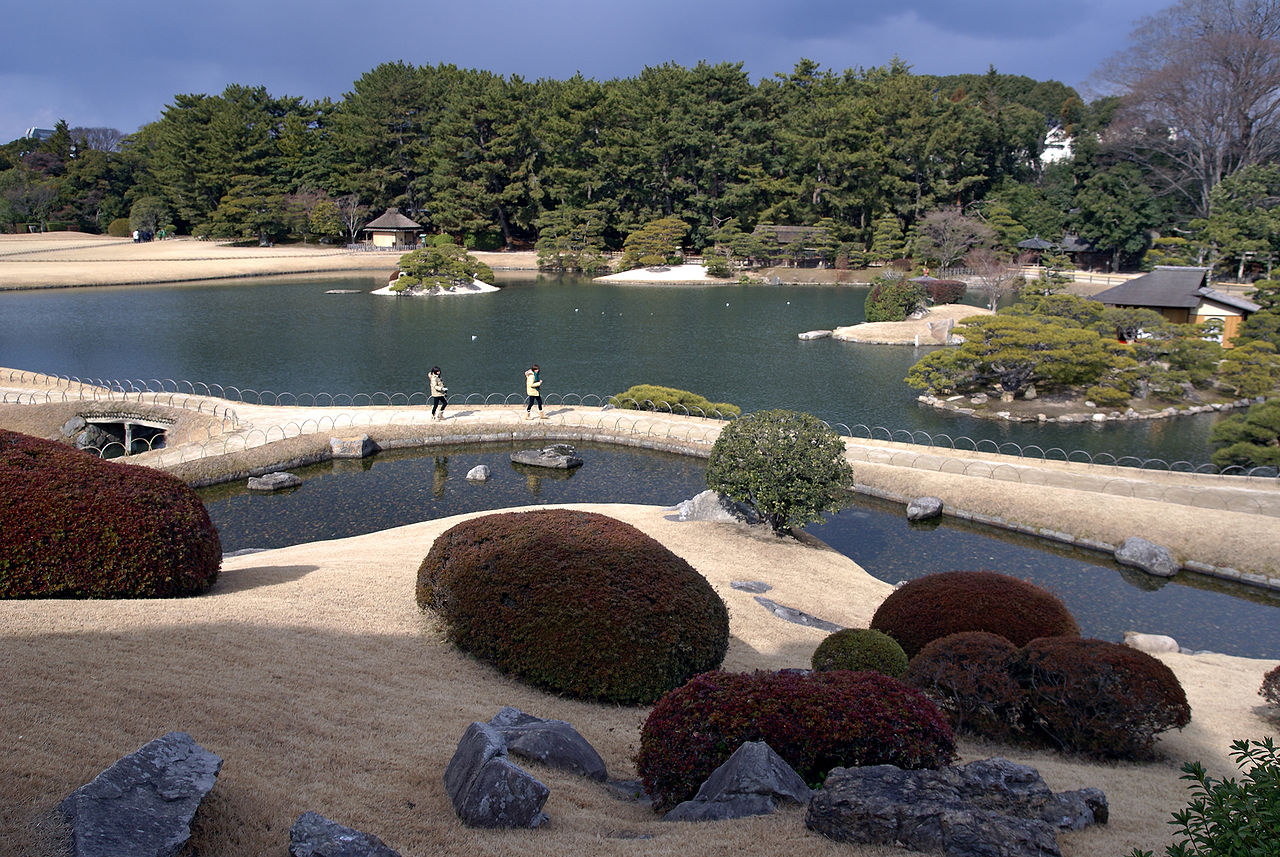
Bizen-yaki kilns concentrate in Imbe (伊部), a small town within the city of Bizen, in southeastern Okayama Prefecture on Honshu’s south coast facing the Seto Inland Sea. Imbe is the historic pottery district of the Bizen region — roughly 70 active kilns sit within a short radius, including workshops descended from Living National Treasure lineages. For an international visitor, Imbe is realistically a half-day excursion from Osaka: about 45 minutes from Okayama Station by JR Akō Line local train, or roughly 90 minutes from Osaka via the Sanyō Shinkansen plus the Akō Line transfer.
The geology of the area is what makes the aesthetic possible. The local clay — Hiyose (干寄) earth, dug from old rice paddies — has unusually high iron-oxide content and carries naturally occurring mineral salts that feed the kiln-firing color effects. This specific clay is found only in the Imbe-area paddies and a limited set of surrounding sites; deposits are managed cooperatively among the kilns to prevent depletion. Without this sticky, iron-rich clay you cannot make Bizen, and that material constraint is a large part of why production has stayed concentrated in one small town for a thousand years.
The historical anchor — from Sue-ware to Sen no Rikyū
Bizen-yaki’s documented history begins in the 12th–13th centuries (the Heian–Kamakura transition), when local potters refined the older Sue-ware (須恵器) reduction-firing tradition into the distinct Bizen style. Sue-ware itself had been produced in the region for centuries earlier, with techniques transmitted from the Korean Peninsula, so the underlying skill base is older still. The “1,000 years” claim for Bizen specifically refers to the continuous, identifiable Bizen lineage — wheel-thrown, unglazed, reduction-fired in Imbe-area kilns — that emerged in the medieval period.
Like its sibling Six Old Kilns, early Bizen produced mainly utilitarian ware: storage jars, water vessels, and mortars for the medieval commercial economy. Bizen’s position near the Seto Inland Sea trade routes carried its jars across western Japan by boat, and by the 14th century Bizen ranked among the largest single-region pottery producers in the country.
-
5th–10th centuries — Sue-ware reduction-firing active in the wider Bizen region; technical foundation transmitted from the Korean Peninsula. -
12th–13th c. — Distinct Bizen style emerges in Imbe: wheel-thrown, unglazed, reduction-fired stoneware. Origin point of the continuous Bizen-yaki lineage. -
14th century — Bizen ranked among Japan’s largest single-region pottery producers; Seto Inland Sea routes carry Bizen storage jars across western Japan. -
Late 1500s (Momoyama) — Sen no Rikyū and contemporary tea masters champion Bizen for its rough, unglazed wabi beauty. Bizen becomes high-prestige tea ware. -
Edo period (1603–1868) — The Six Kiln Family system holds official production rights under the Okayama domain; the domain’s tea culture sustains the Imbe kilns. -
1868 (Meiji) — The Six Kiln Family system is dismantled; production volume rises but quality becomes variable, beginning a long decline. -
Early 20th c. — Bizen nearly extinct as industrial ceramics undercut traditional ware; by 1945 only a handful of Imbe kilns remain. -
1956 — Kaneshige Tōyō (金重陶陽, 1896–1967) designated Bizen’s first Living National Treasure, anchoring the postwar revival. -
1982 — Bizen-yaki designated a METI Traditional Craft Product (国指定伝統的工芸品). -
2004 — Kakurezaki Ryūichi designated a Bizen-yaki Living National Treasure, continuing the modern master lineage. -
2026 — ~70 active kilns in Imbe; the annual Bizen-yaki Festival (mid-October) draws large crowds for direct-from-kiln sales.
The most consequential moment in Bizen’s history was its embrace by the tea-ceremony world in the late Muromachi and Momoyama periods. Sen no Rikyū and other tea masters prized Bizen for its rough, unglazed beauty — a deliberate aesthetic rejection of the more refined, Chinese-influenced porcelain popular among the elite. That single shift transformed Bizen from a utilitarian commercial ware into a high-prestige art ceramic, and it is the lineage a Bizen guinomi still draws on every time it is set on the table.
“Bizen’s continuous lineage is roughly a thousand years old — older than the Edo period itself, older than the Six Old Kilns concept that retroactively named it. The thousand-year arc is not marketing; it is the documented length of time that wheel-thrown, unglazed, reduction-fired pots have been coming out of the same valley.”
The Edo domain and the 20th-century revival
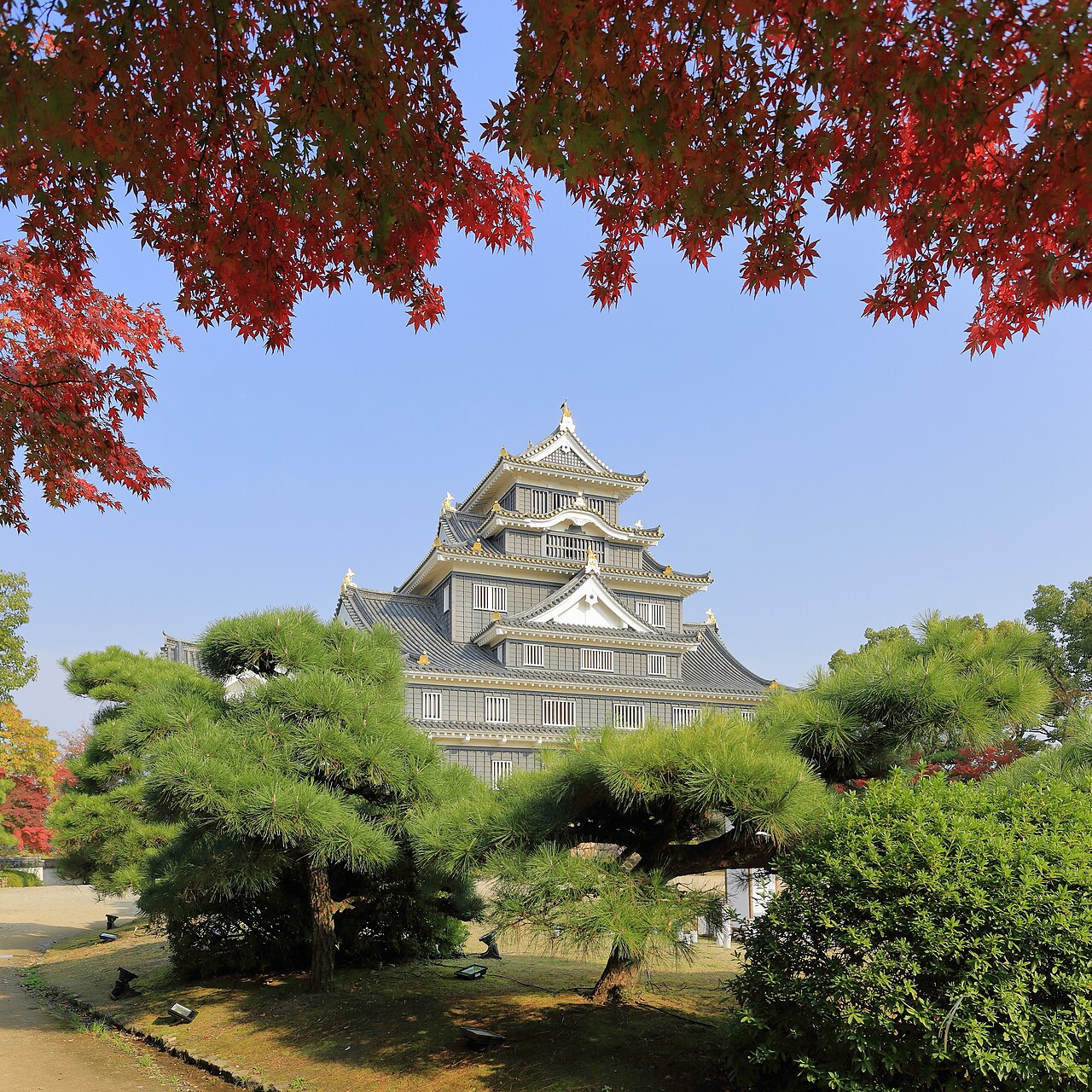
Through the Edo period (1603–1868), Bizen production was organized under the Okayama domain’s hereditary “Six Kiln Family” system, which enforced quality control and concentrated economic returns within a small set of families. The domain’s castle town — Okayama, whose black keep earned it the nickname “Crow Castle” — and its tea culture provided a steady market for refined Bizen tea and sake ware. When the system was dismantled after 1868, production opened up but quality grew uneven, and the tradition slid toward near-extinction in the early 20th century.
The revival was led by Kaneshige Tōyō (金重陶陽, 1896–1967), who researched the lapsed medieval wood-firing methods in the 1930s and 1940s and rebuilt the high-quality technique. In 1956 he was designated Bizen’s first Living National Treasure, placing Bizen-yaki in the official top tier of Japanese craft. Several further Bizen Living National Treasures have been designated since — among the highest concentration of any Japanese ceramic tradition — and the 1982 METI Traditional Craft Product designation formalized the regional identity the revival had rebuilt.
Why a Bizen guinomi — wood firing, hidasuki, and sake
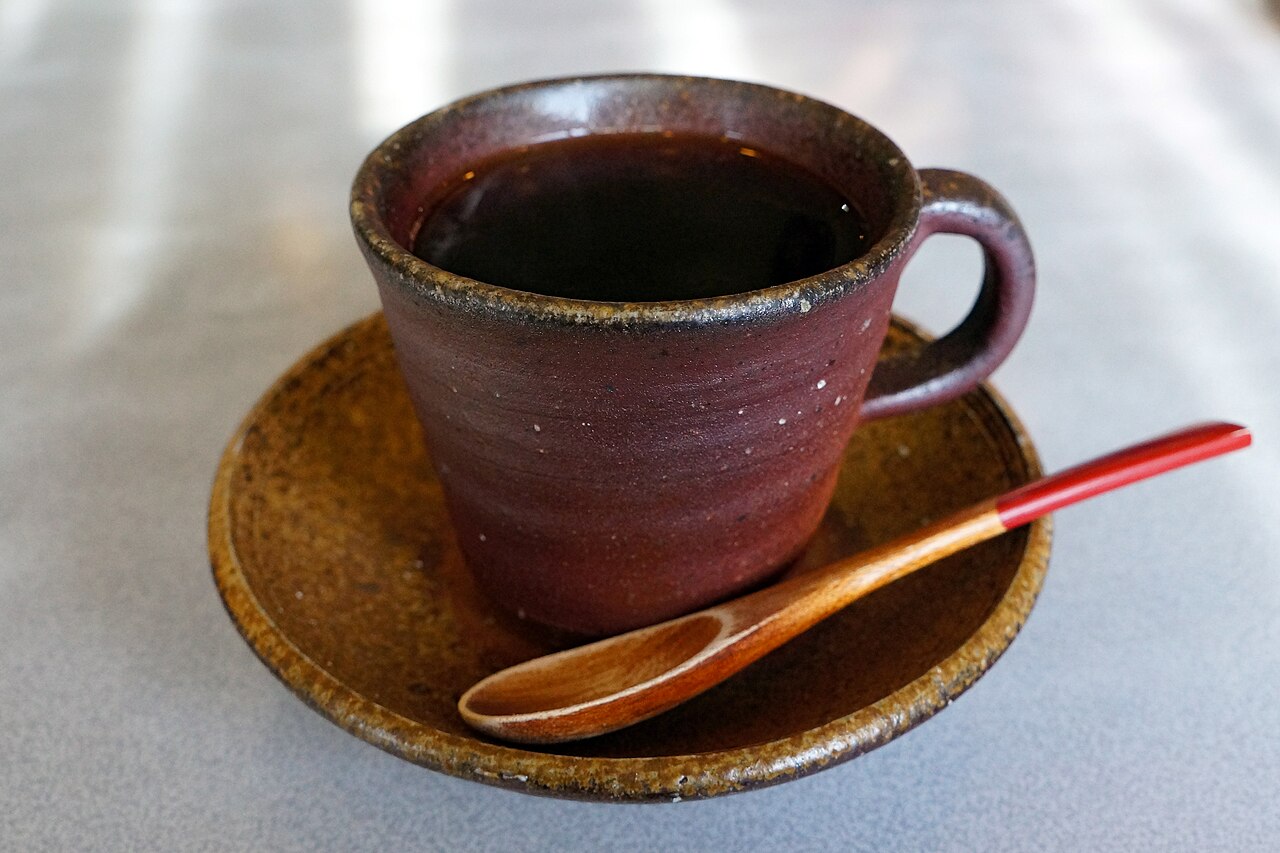
What makes Bizen visually distinct is its complete rejection of applied glaze. Every piece’s surface comes entirely from the firing. Hiyose clay is dug, aged, and shaped; if hidasuki marks are wanted, rice-straw rope is wrapped around the piece before it is loaded into a 3-to-4-chamber noborigama; placement in the kiln determines which effects each piece receives; the kiln is fired continuously for 10–14 days with red pine, reaching roughly 1,250–1,300 °C; and only a fraction of fired pieces meet quality standards. The scarlet hidasuki streaks on this guinomi are the literal record of where the straw touched the clay.
Bizen sake and beer vessels carry a specific reputation: the slightly porous, micro-textured surface is traditionally believed to round out the edges of sake and to build a finer head on beer. This is folk-traditional rather than laboratory-proven, but it is the practical reason Bizen guinomi and tokkuri remain popular among sake drinkers, and it pairs naturally with the dry, food-friendly local sake of the wider Chūgoku region. A Bizen guinomi is an everyday object that also happens to be a thousand-year-old craft — a cup you actually use rather than display.
📌 How does it compare?
Bizen beer tumbler
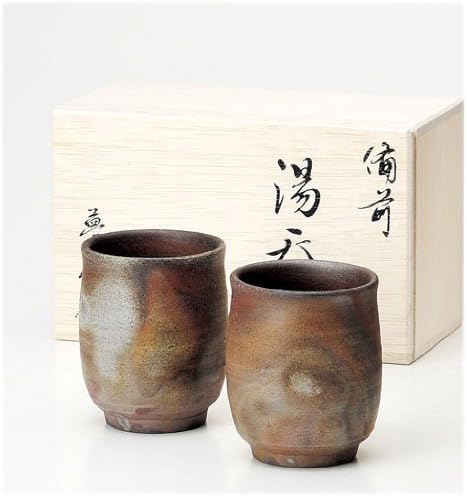
The same Imbe stoneware in a beer form — the porous surface said to build a finer foam head.
Bizen Osafune knife
Okayama’s other great craft — the Osafune sword-smithing lineage, carried into modern kitchen blades.
Tamba guinomi
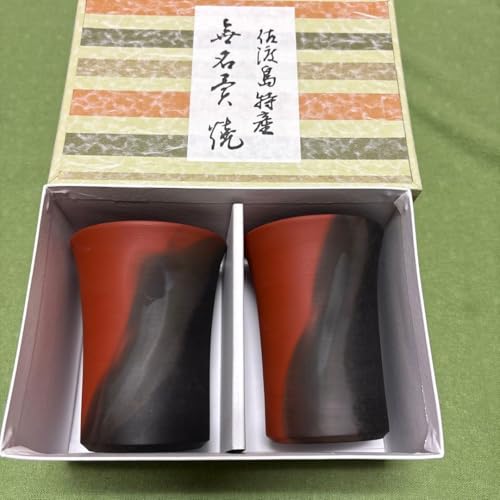
The closest direct comparison — another Six Old Kilns guinomi, in Tamba’s softer ash palette.
Echizen tokkuri
The matching flask — a yakishime tokkuri from another of the six kilns to pour into this cup.
Shigaraki mug
Shigaraki-yaki — the sandier, lighter-toned sibling kiln; useful for comparing wood-fired palettes.
Tokoname kyusu
Tokoname red-clay teapot — another Six Old Kilns member, the tea-side counterpart to a sake cup.
Karatsu guinomi
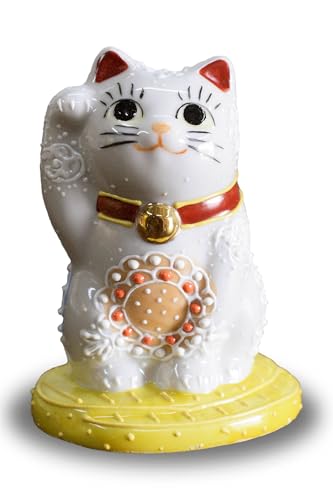
A glazed, painted E-garatsu sake cup from Kyushu — the decorated counterpoint to Bizen’s bare clay.
Price snapshot across stores
Pricing reflects the data at the time of writing (June 21, 2026); always verify on the retailer page before buying. The live price for this exact Bizen guinomi (B0GG6LWV6L) was unavailable in the fetched data, so the JPY figure is shown as unconfirmed rather than guessed. Sources: Amazon US search (moonill-20), Amazon JP Global Store (moonill-22), maker direct via the Bizen Imbe pottery cooperative, and proxy-service estimates from Buyee / Tenso.
| Store | Item / Variant | Price (JPY + USD est.) | Notes |
|---|---|---|---|
| 🇺🇸 Amazon.com (US) | Browse Japanese Bizen-yaki and Six Old Kilns sake cups (guinomi) | varies (USD) | Best if you’re shopping from the US — Prime shipping, USD pricing, no international customs. Amazon US carries Japanese sake cups from Bizen, Tokoname, Mino, and other makers at comparable price tiers; the exact Imbe guinomi here ships from Japan (next row). |
| 🇯🇵 Amazon JP Global Store | Bizen-yaki hidasuki guinomi, single cup (B0GG6LWV6L) | Unconfirmed — verify on listing | Where this specific item is sourced. Ships internationally from Japan via Amazon JP Global Store where eligible; Bizen stoneware tolerates transit at ~1–2% breakage (more robust than porcelain). Live pricing was unavailable at time of writing. |
| Maker direct (Bizen Imbe pottery cooperative) | Comparable single Bizen guinomi via the Bizen Pottery museum direct-sales channel | ≈ ¥4,000–¥8,000 (≈ $27–$53 USD), category estimate | Cooperative ships internationally via Japan Post. The mid-October Bizen-yaki Festival is the in-person window with discounted direct-from-kiln pricing. Live pricing for this specific cup was unavailable at time of writing. |
| Proxy services (Buyee / Tenso) | Forwarded purchase from any JP-domestic Bizen retailer | listing price + proxy fee 10–15% + shipping | Useful if you want a guinomi from a specific Imbe kiln that is not on Amazon JP Global Store. For this exact ASIN the Amazon JP path is simpler; live pricing for proxy paths was unavailable at time of writing. |
What it does well
Weaknesses and things to verify before buying
- The cup you receive will not match the photograph exactly. Wood-firing surface effects vary across firings and even across pieces in the same kiln load — that is intrinsic to Bizen rather than a quality flaw. The listing photo is representative, not a guarantee of the specific cup shipped.
- Live price was unavailable at the time of writing. The fetched data for this exact listing (B0GG6LWV6L) did not include a price. Comparable single Bizen guinomi sit roughly in the ¥4,000–¥8,000 band, but you must confirm the actual figure on the listing before buying.
- Capacity and dimensions are unconfirmed. Guinomi vary widely in size (roughly 40–90 ml is typical). The source listing did not state exact capacity; check the product page if a specific volume matters to you.
- It is a single cup, not a set. If you want a matched pair or a multi-cup sake set, this listing does not provide it, and Bizen surface effects will not match cup-to-cup across separate pieces.
- Pre-warm and hand-wash for best results. Bizen tolerates thermal change better than porcelain, but avoid pouring very hot liquid into a refrigerator-cold cup; and the patina that is part of Bizen’s appeal develops best with hand-washing rather than high-heat dishwasher cycles.
- This is a working-kiln piece, not a Living National Treasure work. If you specifically want a Kaneshige- or Kakurezaki-lineage signed piece, this is not it; those start around ¥30,000 and reach six figures. This guinomi is the everyday-use tier of authentic Bizen.
- International shipping eligibility varies by country. Amazon JP Global Store covers most major destinations, but confirm availability and the landed cost (shipping plus any duties) for your specific country at checkout.
Conclusion — which buyer type are you?
Other ways to approach this purchase
🏆 Editor’s Pick
❓ Frequently Asked Questions
What is a guinomi, and how is it different from an ochoko?
A guinomi (ぐい呑み) is a sake cup sized for unhurried sipping — larger than the tiny ochoko used for formal pours. The name comes from guitto nomu, “to drink in one go.” A guinomi is generally the connoisseur’s everyday personal cup, where the ochoko is more often part of a formal set.
What is hidasuki, and is it painted on?
Hidasuki (火襷, “fire cord”) is not painted. It is the scarlet streaking left where rice-straw rope is wrapped around the piece before firing; the straw reacts with the clay in the kiln and leaves iron-rich red marks. Because it comes from the firing rather than a brush, each cup’s hidasuki pattern is unique and cannot be reproduced industrially.
Does Bizen really make sake taste better?
This is a traditionally held belief rather than a proven fact. Bizen’s unglazed, slightly porous, micro-textured surface is said to round out the edges of sake, and the same property is credited with building a finer head on beer. Many sake drinkers prefer Bizen vessels for this reason; treat it as folk wisdom worth trying rather than a laboratory claim.
Will the cup I receive look exactly like the photo?
No, and that is intrinsic to Bizen rather than a flaw. Wood-firing surface effects — hidasuki streaks, goma ash speckles, sangiri contrast lines — vary across firings and even within one kiln load, depending on each piece’s exact placement. The listing photo is a representative sample; two Bizen cups from the same kiln share the clay, form, and palette but differ in surface detail, which is why each is appreciated individually.
How do I care for a Bizen guinomi?
Hand-wash with hot water; mild soap is acceptable, though many owners rinse only, to let the cup season. Avoid sudden temperature shock (do not pour hot sake into a refrigerator-cold cup). Bizen is fired to roughly 1,250–1,300 °C and is more chip-resistant than porcelain, so daily use is fine, and the porous body develops a desirable patina over time. The patina builds best with hand-washing rather than high-heat dishwasher cycles.
Will Amazon JP Global Store deliver this to my country?
Amazon JP Global Store ships many Bizen items to the US, EU, Australia, Canada, and other major destinations, but eligibility varies by listing and country. Bizen stoneware is more robust than fine porcelain in transit, with breakage in this category around 1–2 percent. Confirm shipping availability and the landed cost for your specific country on the Amazon JP product page at checkout. If a listing will not ship to you, a proxy service such as Buyee or Tenso can forward it for a fee.
Why does this cup cost more than a ¥1,500 “Bizen-style” cup?
Cheaper “Bizen-style” cups are typically industrially fired ceramics with surface treatment that imitates the wood-firing look. They are not made in Imbe, do not use the local iron-rich clay, and are not part of the Six Old Kilns lineage. A real wood-fired Bizen guinomi requires a 10-to-14-day pine firing in which only a fraction of pieces meet quality standards, which is why authentic Bizen sits in a higher price band. Below that band, you are usually buying an imitation rather than Bizen.
jpmono.com is curated by a Japan-based editorial team (working out of Toyama in the Hokuriku region and Nara in Kansai) and is independent. We don’t take payment from the makers we feature; income comes from affiliate links. Read more about our editorial standards.
AI-assistance note: this article was drafted with AI assistance based on Amazon JP catalog data and publicly documented Bizen-yaki history (METI traditional-craft registry, Bizen Imbe pottery cooperative materials, and standard ceramic-history references on the Six Old Kilns and Living National Treasure designations). Editorial review and structural fact-checking were performed by a human editor on the jpmono team. Pricing and availability fluctuate; the live price for this specific listing was unavailable at the time of writing, so always verify at the retailer before purchasing.
Affiliate disclosure: jpmono.com may earn a commission on qualifying purchases made through links on this page, at no additional cost to you.