![Ryukyu Sanshin Okinawan Three-String Lute: Where to Buy [2026]](https://jpmono.com/wp-content/uploads/2026/06/ryukyu-sanshin-okinawa-three-string-lute-where-to-buy-2026-featured.jpg)
The sanshin (三線, “three strings”) is Okinawa’s three-stringed lute, and it does not sound like anything on the Japanese mainland. Its neck is carved from dense kuruchi ebony, its body was historically skinned in snake hide, and its voice — bright, percussive, slightly nasal — is the sound most people picture when they imagine Okinawan music. It is the spine of classical uta-sanshin court song, of village min’yo, and of the Eisa drum-and-dance processions that fill the islands every Obon.
Internationally, the sanshin is the easiest entry point into Ryukyu culture that you can actually hold in your hands. It is small, it is portable, and — crucially for overseas buyers — beginner and export models now use reinforced or synthetic skin rather than python, which makes them far simpler to ship and to keep alive in a dry foreign climate. What you are buying when you buy a sanshin is, above all, the neck: the sao, whose profile and timber determine the instrument’s grade.
This guide is written for the overseas reader deciding whether to buy a first sanshin, and which way to buy it. We cover what actually distinguishes a good neck, why synthetic skin is the right call for most international players, how to read a beginner set’s contents, and the two realistic purchase paths — Amazon US search and the Amazon JP Global Store listing this guide is sourced from.
🔄 Updated: June 4, 2026
⏱️ Read time: ~11 min

- Who this is for — and who should skip it
- Product overview (from published specs)
- Where this comes from — Okinawa, the Ryukyu court, and the sao
- Price snapshot across stores
- What it does well
- Weaknesses and things to verify before buying
- Conclusion — which buyer type are you?
- Other ways to approach this purchase
- 🏆 Editor’s Pick
- ❓ Frequently Asked Questions
Who this is for — and who should skip it
- Want a genuine Okinawan instrument, not a souvenir prop
- Are a beginner who values a complete starter set (pick, pegs, case)
- Live in a dry or temperate climate where natural skin would crack
- Care about the neck timber — kuruchi/ebony-style sao — over decoration
- Want a portable, quiet-to-moderate instrument for home practice
- Specifically need genuine python-skin tone for stage performance
- Expect a heirloom-grade hand-graded master neck (a different price tier)
- Want a shamisen — the mainland instrument is larger and different
- Are unwilling to tune by ear or learn kunkunshi notation
- Need it shipped to a country with strict CITES/wildlife import rules and assume natural skin (verify the material first)
Product overview (from published specs)
The data available for this item is thin. Only the Amazon JP listing reference (ASIN B08PKJB3VK) is available; live pricing and a full spec sheet were unavailable at the time of writing, so the table below describes the documented configuration of an Okinawa-made beginner set and marks unconfirmed fields plainly. Always verify the current spec on the listing before purchasing.
Ryukyu Sanshin Okinawan Three-String Lute
ちゅら咲 沖縄三線 琉球ベーシック 標準サイズ
通常6~7日以内に発送します。 · Sold by 三線専門店 三線ちゅら咲 · ASIN B08PKJB3VK
Price and availability as of 2026-09-01 05:22 JST. The Amazon listing at the time of purchase is authoritative. jpmono.com earns a commission on qualifying purchases at no extra cost to you.
| Attribute | Documented value | Source |
|---|---|---|
| Instrument type | Sanshin (Okinawan three-string lute) | Amazon JP Global Store (sourced listing) |
| Sao (neck) material | Kuruchi / ebony-style hardwood | Amazon JP Global Store (sourced listing) |
| Chiiga (body) skin | Synthetic / reinforced skin (not python) | Amazon JP Global Store (sourced listing) |
| Included accessories | Bachi (pick), tuning pegs, soft case | Amazon JP Global Store (sourced listing) |
| Origin | Okinawa, Japan | Maker direct / listing |
| Weight / dimensions | Unconfirmed — check manufacturer site | — |
| Price | Live pricing unavailable at time of writing — verify on listing | Amazon JP Global Store (sourced listing) |
📖 Glossary — key sanshin terms
sanshin (三線) — Okinawa’s three-stringed lute; the name literally means “three strings.”
sao (棹) — the neck. The single most important component; its timber and profile set the instrument’s grade.
kuruchi (黒木) — Okinawan ebony (Diospyros ferrea), the dense dark hardwood traditionally prized for the sao.
chiiga (チーガ) — the resonating body, a wooden frame covered in skin (historically python; now often synthetic).
bachi (撥) — the pick. The Okinawan sanshin is plucked with a small horn or plastic plectrum worn on the index finger, unlike the large shamisen bachi.
uta-sanshin (歌三線) — “song-and-sanshin,” the classical vocal music of the Ryukyu court.
min’yo (民謡) — folk song; the village repertoire that carried the sanshin beyond the palace.
Eisa (エイサー) — the Obon drum-and-dance procession driven by sanshin and taiko.
kunkunshi (工工四) — the traditional Okinawan tablature notation used for sanshin.
Other Japanese craft objects we have covered — useful if you are weighing the sanshin against another regional piece, or building out an Okinawa / woodwork collection.

Where this comes from — Okinawa, the Ryukyu court, and the sao

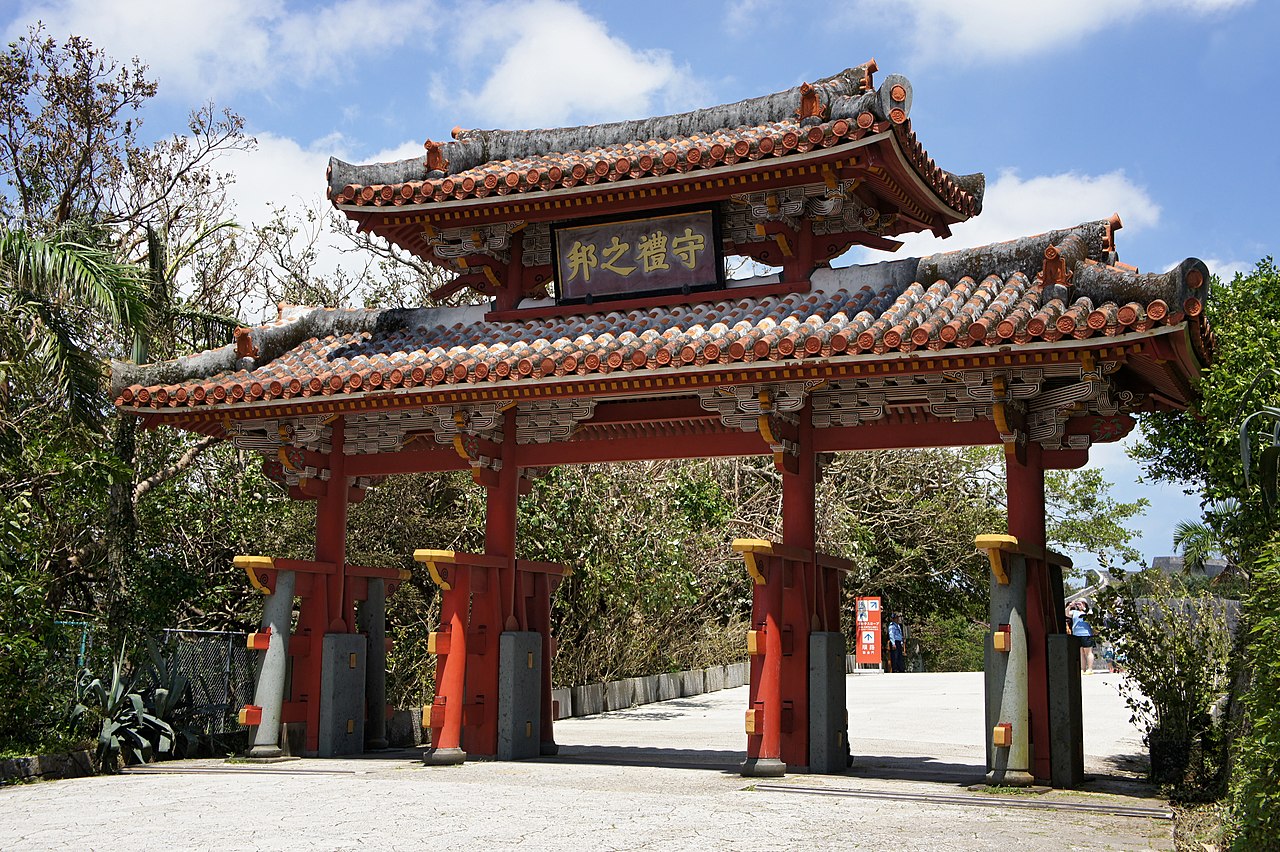
Okinawa is not a regional variation on mainland Japan. For most of its recorded history it was the Ryukyu Kingdom, an independent maritime state that traded across the East and South China Seas and absorbed influences — including musical ones — from China and Southeast Asia. The sanshin is the clearest surviving evidence of that openness: it descends from the Chinese sanxian, a skin-covered three-string lute carried into the Ryukyu Islands through Fujian trade in the late 14th century.
Once on the islands, the instrument was reshaped. Under the Ryukyu court, unified in 1429 with its seat at Shuri Castle, the sanxian became the sanshin and the heart of a refined vocal tradition.
“What you buy when you buy a sanshin is the neck — the sao — and Okinawa graded those necks by the hand of the maker long before it graded them by price.”
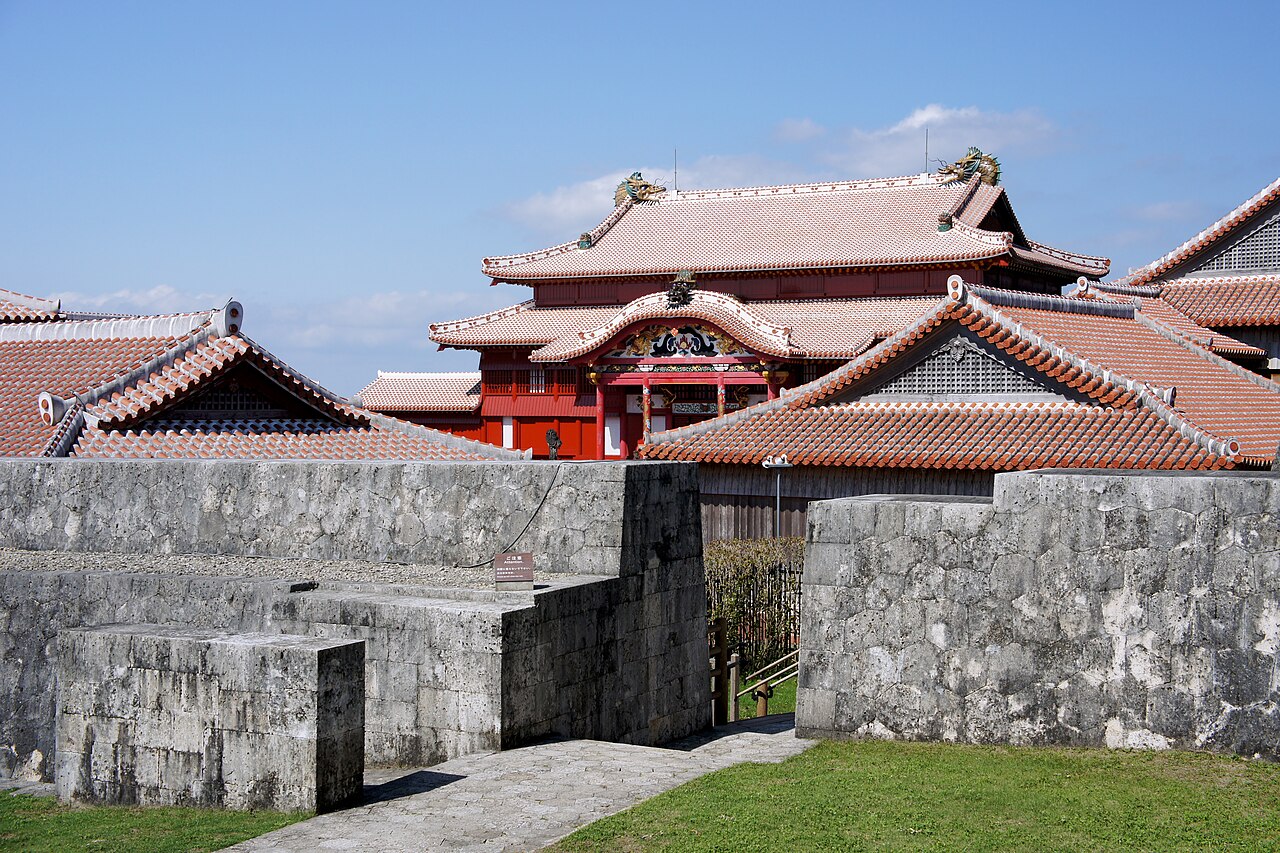
At Shuri, uta-sanshin (歌三線, “song-and-sanshin”) was codified as the court’s classical music, and the instrument’s craftsmanship was formalized alongside it. The value of a sanshin lives in its sao, traditionally carved from kuruchi (黒木) — Okinawan ebony, Diospyros ferrea — a dense, slow-growing hardwood. Necks are graded by classic profiles named after the master makers who defined them: Makabe, Kuba-no-Kunjan, Nunukwaakata, and others. To an experienced player the profile is recognizable the way a luthier recognizes a violin neck.
- Late 1300s — The Chinese sanxian reaches the Ryukyu Islands through Fujian trade.
- 1429 — The Ryukyu Kingdom is unified; Shuri Castle becomes the royal seat.
- 1500s–1700s — Uta-sanshin is refined as classical court music; neck profiles are codified.
- 1879 — The kingdom is dissolved into Okinawa Prefecture; the sanshin spreads into village min’yo.
- 1945 — After the Battle of Okinawa, internees build “kankara sanshin” from tin cans to keep the music alive.
- Late 20th c. — Eisa and min’yo carry the sanshin into modern Okinawan popular music.
- Present — Recognized among Okinawa’s traditional crafts; synthetic-skin models reach overseas players.
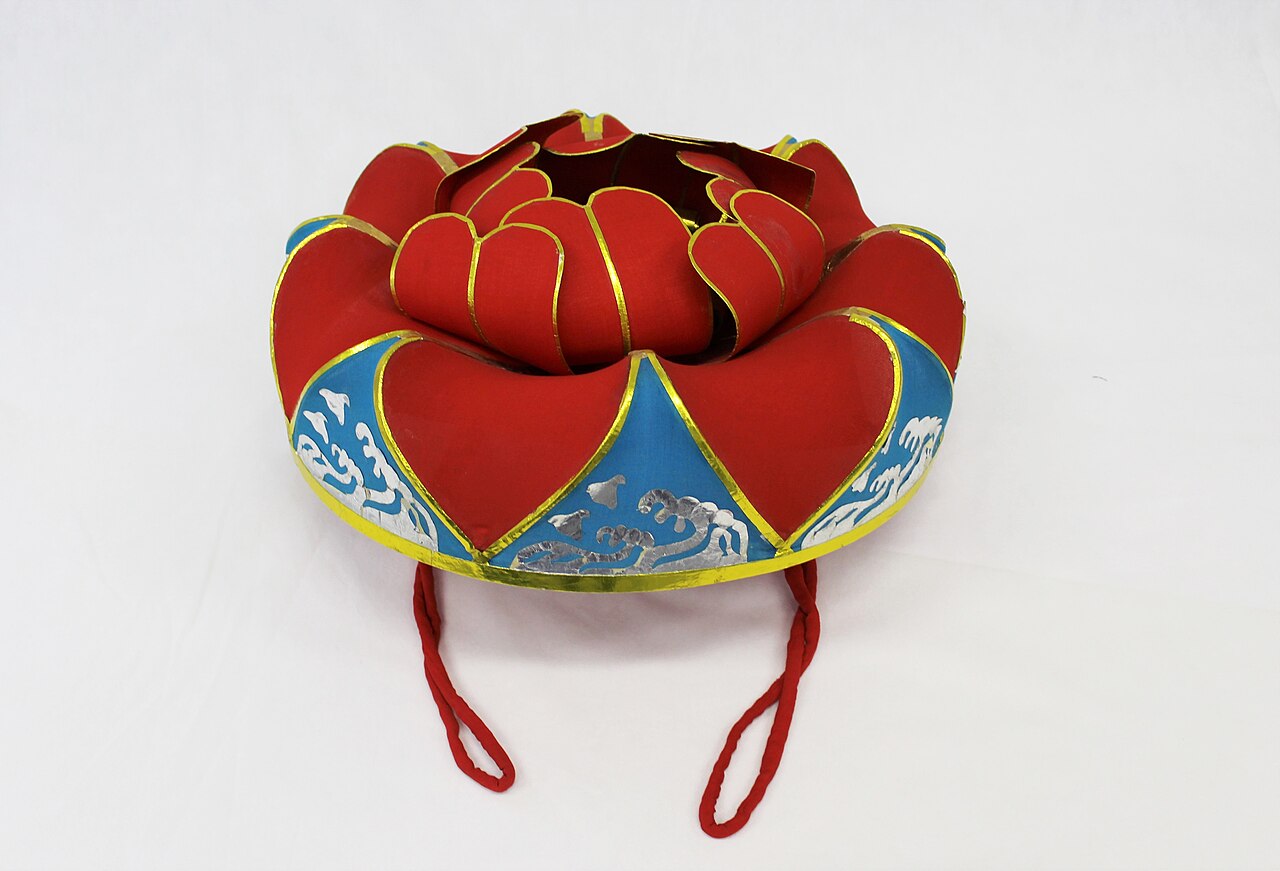
The instrument did not stay in the palace. After the kingdom was dissolved into Okinawa Prefecture in 1879, the sanshin moved into village life, becoming the backbone of min’yo folk song and of Eisa, the Obon drum-and-dance procession. Even the islands’ darkest moment could not silence it: after the Battle of Okinawa in 1945, internees in the postwar camps built “kankara sanshin” from discarded tin cans and parachute cord, an improvisation that has since become a symbol of cultural survival.

Today the sanshin is one of Okinawa’s officially recognized traditional crafts, distinct in both voice and lineage from the wadaiko drums and koto zither of the Japanese mainland. The resonating body, the chiiga, was historically skinned in python; reputable export and beginner models now use reinforced or synthetic skin, which is both more durable in foreign climates and far simpler to ship across borders. That single material change is the reason an overseas player can realistically own one.
Price snapshot across stores
JPY is the authoritative price for the specific listed item; USD figures elsewhere on jpmono are approximate estimates at a ¥150/USD baseline. Live pricing for this listing was unavailable at the time of writing — confirm the current figure at the retailer before buying.
| Store | Item / Variant | Price (JPY + USD est.) | Notes |
|---|---|---|---|
| 🇺🇸 Amazon US (search) | Browse Japanese sanshin & Okinawan instruments | varies (USD) | Best if you are shopping from the US — Prime shipping, USD pricing, no international customs. Amazon US carries assorted Japanese instruments and Okinawan goods; the specific Okinawa-made set in this guide is sourced from Japan (next row). |
| 🇯🇵 Amazon JP Global Store | Okinawa-made beginner sanshin set (ASIN B08PKJB3VK) | Live price unavailable — verify on listing | The exact item this guide is sourced from. Ships internationally from Japan to most major destinations. |
| Maker direct (Okinawa workshops) | Beginner to hand-graded master necks | varies | Naha workshops sell across the grade range; useful for higher tiers, but international ordering varies by shop. |
| Proxy services (Buyee / Tenso) | Any Japan-only listing | item price + service fee + forwarding | For listings that do not ship abroad directly. Adds a handling fee and a forwarding leg; confirm skin material before forwarding (wildlife import rules). |
What it does well
Weaknesses and things to verify before buying
- Pricing is unconfirmed. Live pricing was unavailable at the time of writing; treat the listing’s current figure as authoritative and check before you commit.
- Synthetic skin is a tonal compromise. It is durable and travel-friendly, but serious players seeking the warmth of genuine python skin for stage work will want a higher tier.
- “Beginner set” is not master-grade. The hand-graded master necks (Makabe and the like) sit at a much higher price point; do not expect heirloom timber here.
- Tuning and notation require learning. The sanshin is tuned by ear or with a tuner and read in kunkunshi tablature, not standard Western notation.
- Confirm the skin material for customs. If a listing uses genuine python or natural materials, wildlife import rules (CITES) may apply in your country. Synthetic skin sidesteps this — verify which you are buying.
- Climate and humidity care. Even synthetic-skinned instruments have a wooden neck and body; sudden humidity swings can affect tuning stability and the skin’s tension.
Conclusion — which buyer type are you?
Other ways to approach this purchase
🏆 Editor’s Pick
❓ Frequently Asked Questions
Does the Amazon JP Global Store ship a sanshin internationally?
Is the body real python skin or synthetic?
Do I need to read music to play it?
Will customs or CITES rules be a problem?
What is included in the beginner set?
How is a sanshin different from a shamisen?
How should I care for it in a dry climate?
jpmono.com is curated by a Japan-based editorial team (working out of Toyama in the Hokuriku region and Nara in Kansai) and is independent. We do not take payment from the makers we feature; income comes from affiliate links. We do not physically test every product — we read maker specs and source listings — and we flag thin data plainly when it occurs.
Note: This article was prepared with AI assistance and reviewed against the source listing data. Specifications and pricing reflect the data available at the time of writing and should be verified on the retailer’s page before purchase.
Affiliate disclosure: jpmono.com may earn a commission on qualifying purchases made through links on this page, at no additional cost to you.