![Sawara Lacquer Soup Bowl: Chiba’s Little Edo Shiruwan Wood-Urushi Bowl [2026]](https://jpmono.com/wp-content/uploads/2026/06/sawara-shikki-lacquer-soup-bowl-where-to-buy-2026-featured.jpg)
A shiruwan (汁椀, “soup bowl”) is the small lidless lacquer bowl that holds miso soup at a Japanese table — light enough to lift in one hand, warm to the touch, quiet underfoot. The bowl in this guide is a vermilion-on-black urushi (漆, “lacquer”) shiruwan with a turned-wood core, in the everyday tradition associated with Sawara, the Edo-era canal town in northern Chiba now part of Katori City. It is rice-and-miso ware, not display ware: an object meant to be used at breakfast, washed by hand, and kept for years.
What makes Sawara interesting is not a famous trademark — there is no METI-designated “Sawara lacquerware” brand the way there is a “Wajima Nuri” or an “Echizen Shikki.” What Sawara has instead is a documented merchant-and-festival economy: a riverport nicknamed Koedo (“Little Edo”) whose warehouse wealth, and whose black-lacquered, gilt-carved festival floats, kept nushi (塗師, “lacquerers”) and decorative-metal artisans in steady work for generations. This article treats the bowl as a secondary regional craft rooted in that economy — honestly, without inflating it into something it is not.
This guide is written from a Japan-based editor’s desk in Toyama and Nara for international readers. It covers what a Sawara wood-and-urushi bowl is, who it suits, how it differs from cheaper look-alikes, where the regional tradition comes from, and the practical considerations when buying one outside Japan.
🔄 Updated: June 12, 2026
⏱️ Read time: ~13 min
Who this is for — and who should skip it
- Want a real wood-and-urushi soup bowl for daily use, not a museum piece
- Prefer a warm, lightweight bowl that is gentle to lift and quiet to set down
- Like the classic vermilion-on-black palette of traditional Japanese tableware
- Are comfortable hand-washing and avoiding the dishwasher and microwave
- Value a regional, festival-town craft story over a big-name luxury label
- Want a dishwasher- and microwave-safe bowl you never have to think about
- Expect a signed, certified maki-e art object — this is plain everyday ware
- Need a guaranteed brand certification mark (there is no METI “Sawara” seal)
- Are shopping purely on lowest price; resin look-alikes cost far less
- Dislike the slight color and grain variation natural to hand-lacquered wood
Product overview (from published specs)
The table below records established characteristics of Sawara wood-and-urushi bowls. Details such as the workshop, dimensions, and finish can vary, so values that cannot be confirmed are left open rather than guessed.
| Attribute | Detail | Source |
|---|---|---|
| Item type | Shiruwan (miso-soup bowl), lidless | Amazon JP Global Store |
| Core material | Turned (rokuro-lathed) wood core | Product details + category norm |
| Finish | Urushi lacquer — vermilion over black ground | Product details |
| Approx. diameter | ~11–12 cm (standard miso-soup size) | Product details |
| Region | Sawara / Bōsō, Chiba (Kantō) | Maker / regional attribution |
| Price | — | — |
| Maker / workshop | — | — |
📖 Glossary — key terms in this article
Shiruwan (汁椀) — a lidless lacquer “soup bowl,” the standard vessel for miso soup at a Japanese meal. Distinct from a larger lidded owan used for clear soups in formal settings.
Urushi (漆) — natural lacquer refined from the sap of the lacquer tree (Toxicodendron vernicifluum). Built up in thin coats and hardened by humidity, it forms a durable, food-safe, water-resistant surface.
Nushi (塗師) — a lacquer coater; the artisan who applies and polishes the urushi layers, as distinct from the wood-turner who shapes the core.
Koedo (小江戸, “Little Edo”) — a nickname for canal towns, Sawara among them, whose Edo-period merchant townscapes survive largely intact.
Taisai (大祭, “grand festival”) — the Sawara Grand Festival (Sawara no Taisai), whose tall floats are finished in black lacquer and gold.
Maki-e (蒔絵) — decorative lacquer work with sprinkled gold or silver powder. The bowl here is plain everyday ware, not maki-e display work.
Related jpmono guides — other Chiba crafts, other regional lacquer bowls and boxes, and the wood-core vs. decorative-lacquer contrast.
 🔨 Chiba Koshogu sickle
 🪭 Bōshū Uchiwa (Chiba)
🥣 Gohara lacquer bowl
 🍱 Ise Shunkei lacquer
 🌙 Nara Shikki raden tray
🍶 Wajima Nuri sake cups
 🍵 Sanuki Shikki kinma
Where to buy Sawara lacquer bowls
| Store | Item / variant | Price (JPY + USD est.) | Notes |
|---|---|---|---|
| 🇺🇸 Amazon US (search) | Browse Japanese lacquer soup bowls | varies (USD) | Best if you are shopping from the US — Prime shipping, USD pricing, no international customs. Amazon US carries comparable wood and resin urushi-style soup bowls from various Japanese makers; this specific Sawara / Bōsō piece is sourced from Japan (next row). |
| 🇯🇵 Amazon JP Global Store | This exact wood-core shiruwan | — | Ships internationally from Japan to most major destinations. |
| Maker direct | Workshop unconfirmed | — | No verified maker storefront at the time of writing; confirm the specific workshop before ordering. |
| Proxy services (Buyee / Tenso) | Domestic JP shops forwarded abroad | item + forwarding fee | Useful if a domestic-only seller has the bowl cheaper; adds a forwarding fee and a second shipping leg. Watch customs thresholds. |
What it does well
Weaknesses and things to verify before buying
- No dishwasher, no microwave. Heat and prolonged soaking damage urushi and can crack the wood core. This is a hand-wash, towel-dry bowl. If that does not fit your routine, pass.
- No METI brand certification. Unlike Wajima or Echizen lacquerware, there is no official “Sawara lacquerware” designation. The regional attribution here is editorial, based on the town’s documented lacquer economy, not a certification mark.
- Maker and finish unconfirmed. The workshop and whether the finish is full natural urushi or a lacquer-over-base hybrid are not established here. Confirm the material description before buying.
- Natural variation. Hand-lacquered wood varies slightly in tone, sheen, and grain between pieces. Buyers wanting machine-identical units may find this unsatisfying.
- Image may be a fallback. The product image can be a stock or representative photo; the bowl you receive may differ slightly in shade. Check buyer photos where available.
Where this comes from

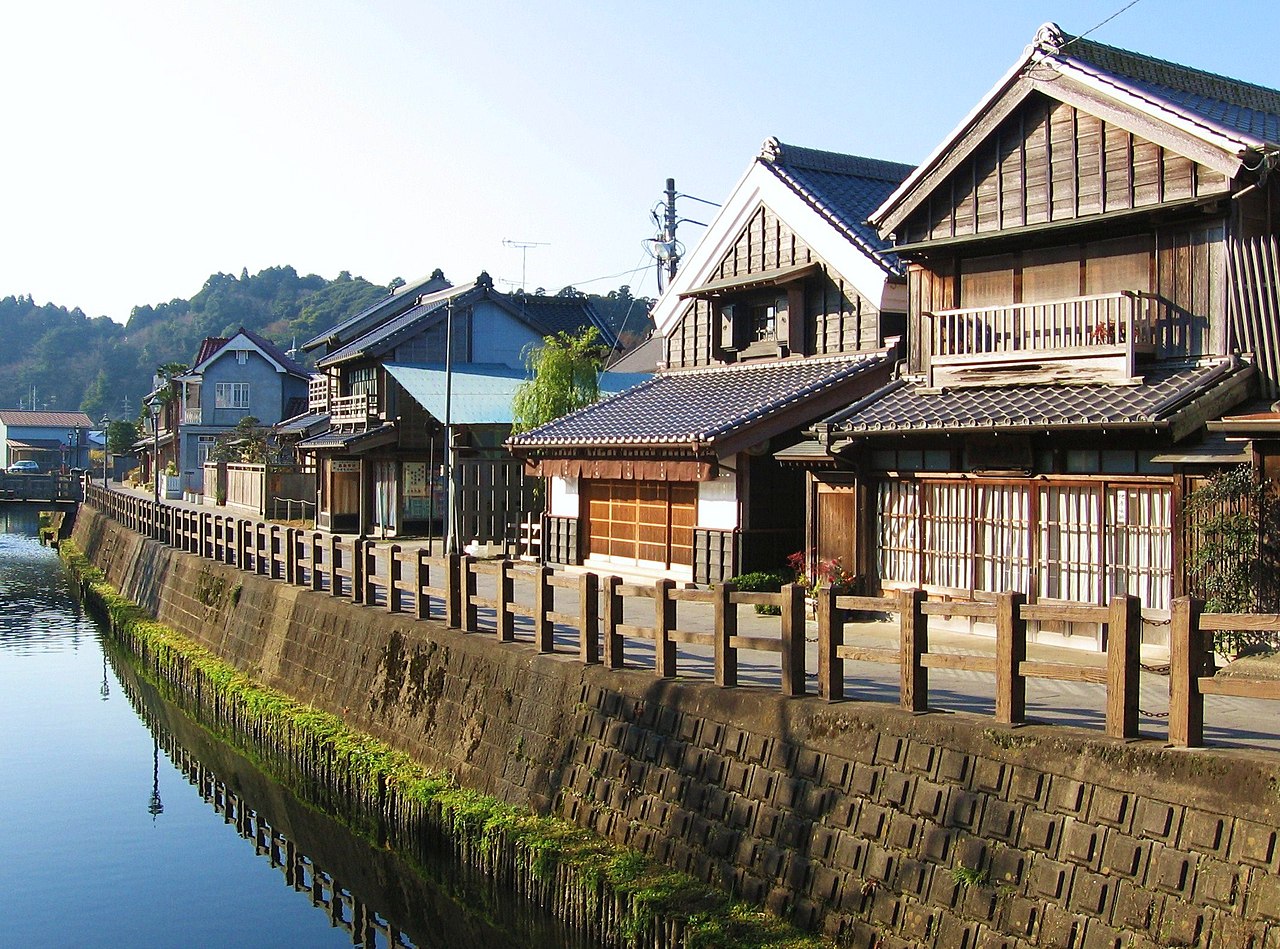
Sawara sits in the northern corner of Chiba Prefecture, in the Kantō region that surrounds Tokyo, on the south bank of the lower Tone River near the boundary with Ibaraki. In the Edo period this was prime logistics ground: the Tone and its tributary canals, including the Ono River that still runs through the old town, fed grain, sake, and goods downstream toward Edo (present-day Tokyo). That river traffic made Sawara rich, and the wealth left a townscape of black-timbered merchant houses and stone-edged canals that is now a preservation district.
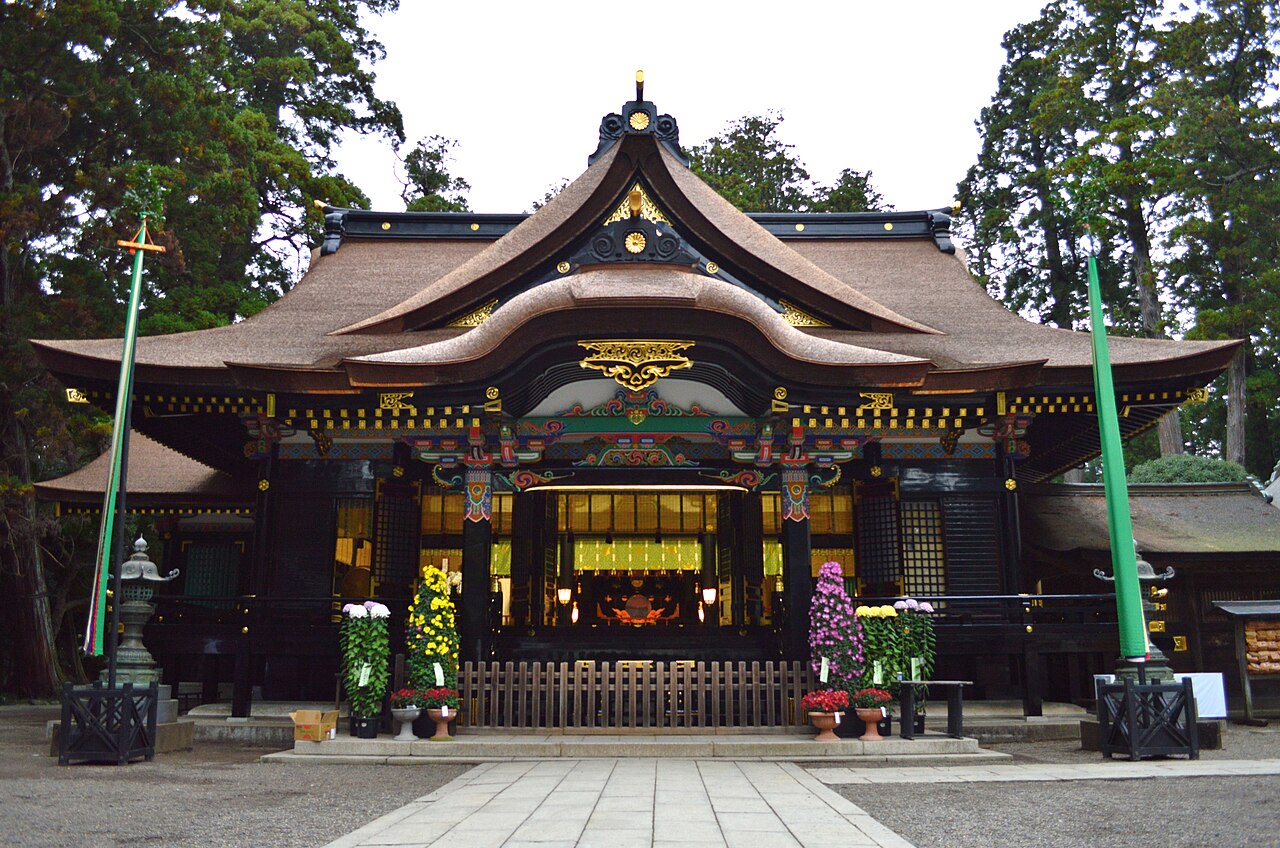
The town’s importance is older than its warehouses. Nearby Katori Jingū is one of the oldest shrines in eastern Japan, and the ritual life around it — together with the great float festival the town still mounts — gave steady, generational work to nushi (lacquerers) and kazari (decorative-metal) artisans. Festival floats and shrine fittings are lacquer-and-gilt objects; a town that maintains them year after year keeps lacquer skills alive even without a famous tableware brand.
- Antiquity — Katori Jingū established, anchoring the region’s ritual life
- 1603–1868 — Sawara prospers as a Tone / Ono River riverport; warehouses earn it the name “Little Edo” (Koedo)
- 1745 — Inō Tadataka born in Sawara, into a sake-brewing merchant household
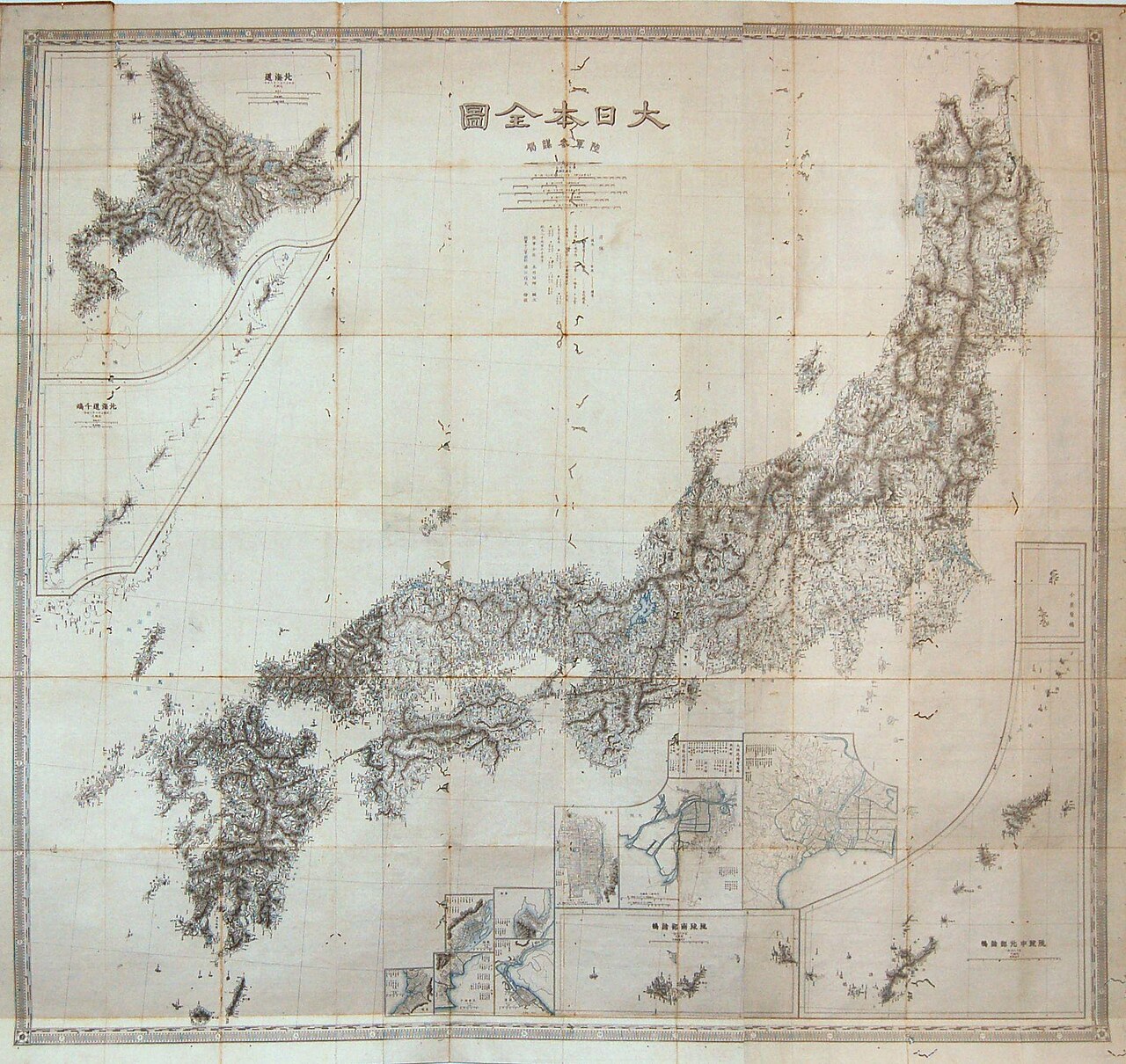
- 1800–1816 — Inō surveys the coast of Japan, producing the first accurate national map
- Edo–Meiji — Black-lacquered, gilt-carved floats develop for the Sawara Grand Festival, sustaining nushi and kazari trades
- 1996 — Sawara’s townscape designated an Important Preservation District for Groups of Traditional Buildings
- 2006 — Sawara merges into the newly formed Katori City
- 2016 — The Sawara Grand Festival inscribed on UNESCO’s Representative List (as part of “Yama, Hoko, Yatai float festivals”)
The link between those festival floats and a humble miso-soup bowl is the lacquer skill itself. The same coating discipline that finishes a float’s black-and-gold surfaces is what coats a wood-core bowl: thin layers of urushi, hardened slowly in humidity, polished between coats. A town that mounts a UNESCO-listed lacquer festival every year is a town where that knowledge is not theoretical.
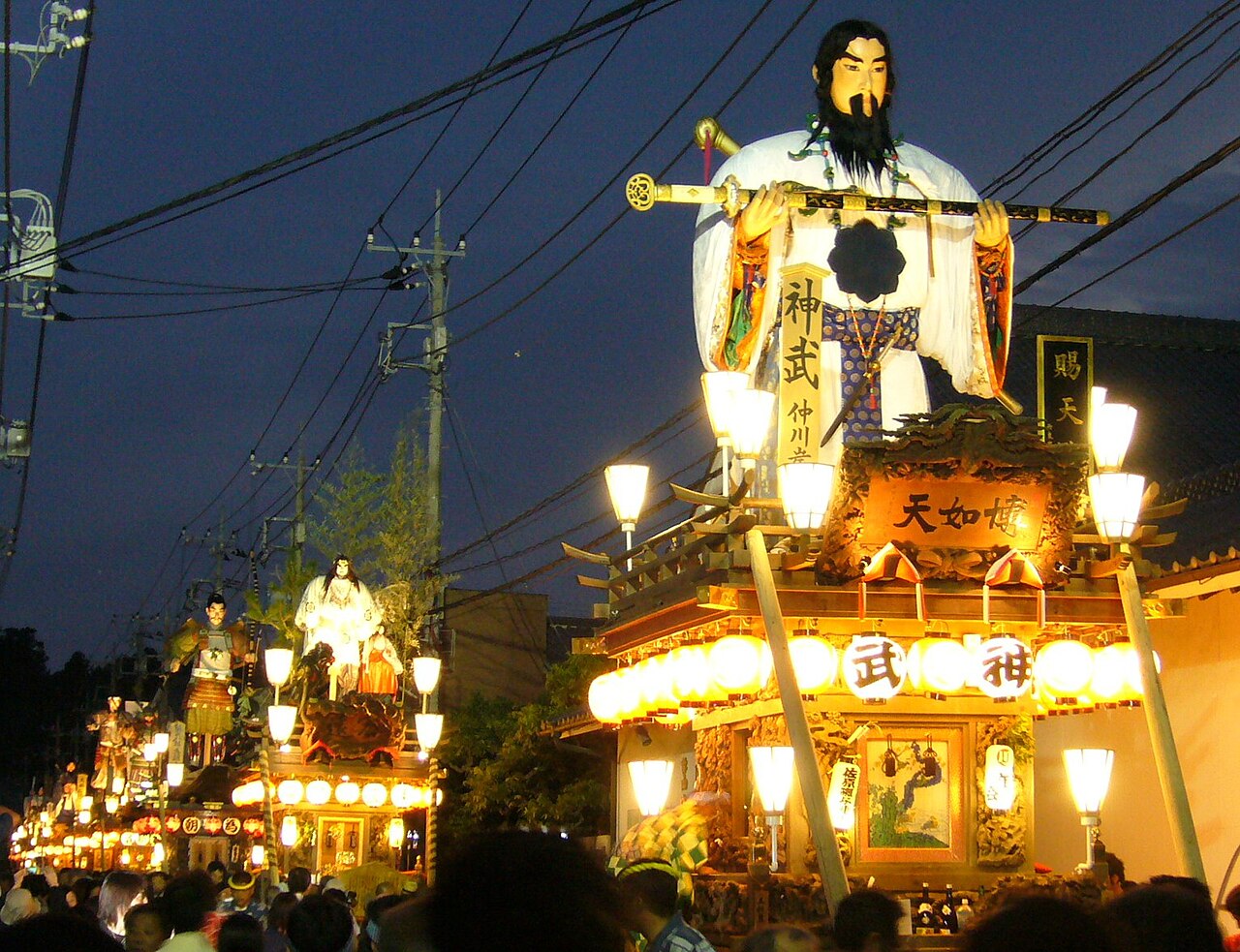
“Sawara has no luxury lacquer trademark — what it has is a town that still lacquers its festival floats every year, and a bowl is a small, daily expression of that same hand.”
Sawara’s most famous son makes the point about its merchant culture. Inō Tadataka, born here in 1745, ran the family sake-and-shipping business before, in his fifties, walking the coastline of Japan to produce the country’s first accurate survey map. His preserved residence in the old town is a reminder that this was a place of prosperous, capable artisan-merchants — exactly the kind of economy that keeps skilled trades, lacquer among them, in steady work.
One honest caveat for international readers: because there is no certified Sawara lacquerware brand, the regional framing here is a curatorial reading of a real economy, not a stamped designation. Treat the bowl as everyday ware in that tradition and evaluate the maker and finish from the seller’s description.
Conclusion — which buyer type are you?
Other ways to approach this purchase
❓ Frequently Asked Questions
Is this real urushi lacquer or a synthetic coating?
Can I put it in the dishwasher or microwave?
Does it ship internationally from Japan?
Is “Sawara lacquerware” an officially designated craft?
How much does it cost?
How is this different from a Gohara or Wajima lacquer bowl?
Affiliate disclosure: jpmono.com may earn a commission on qualifying purchases made through links on this page, at no additional cost to you.