![Edo Sashimono Shima-Guwa Jewelry Box: Tokyo Joinery Guide [2026]](https://jpmono.com/wp-content/uploads/2026/05/japan-map-regions-and-prefectures-800x1050.png)
Edo Sashimono (江戸指物, “Edo joinery”) is the cabinetmaking tradition that grew up with the city of Edo — today’s Tokyo — after Tokugawa Ieyasu made it the shogunal seat in 1603. The defining trait is structural: boards are fitted together with concealed mortise-and-tenon joints (hozo) cut into the wood itself, so a finished box or chest shows no nails and no visible hardware. A shima-guwa (島桑, “island mulberry”) jewelry box is one of the most compact expressions of that craft, pairing fine-grained island mulberry from Tokyo’s own Izu Islands with joinery that is meant to be felt rather than seen.
For an international reader, the appeal is partly aesthetic and partly cultural. The restrained, sturdy look reflects the iki sensibility of Edo townsmen — understatement over ornament — which sets Edo Sashimono apart from the courtly refinement of Kyoto’s Kyo Sashimono and the temple-carpenter lineage of Shizuoka’s Suruga Sashimono. The craft was designated a national traditional craft by Japan’s Ministry of Economy, Trade and Industry (METI) in 1997, and the surviving workshops still cluster in the old shitamachi (下町, “low city”) wards of Taito and Arakawa.
This guide explains what distinguishes an Edo Sashimono shima-guwa accessory box from a generic wooden box, including the material and joinery that define the craft.
🔄 Updated: June 13, 2026
⏱️ Read time: ~11 min
- Who this is for — and who should skip it
- Product overview (from published specs)
- Where this comes from — place, era, and the craft tradition
- Where to buy
- What it does well
- Weaknesses and things to verify before buying
- Conclusion — which buyer type are you?
- Other ways to approach this purchase
- ❓ Frequently Asked Questions
Who this is for — and who should skip it
- Value joinery you can feel — tight, hardware-free construction over decoration.
- Want a small heirloom-grade object rather than mass-produced storage.
- Appreciate wood that changes — shima-guwa deepens to amber with age and handling.
- Are comfortable buying from the Amazon JP Global Store and waiting for cross-border shipping.
- Like the restrained iki aesthetic of old Edo over ornate carving.
- Need a large-capacity jewelry chest with many drawers and trays.
- Want a low-cost box and are not paying for the joinery and material.
- Expect a glossy, heavily lacquered finish — this craft favors restrained surfaces.
- Need it quickly; international shipping from Japan takes time and may add customs.
- Prefer humidity-proof synthetic materials over solid wood that moves with the seasons.
Product overview (from published specs)
| Attribute | Detail | Source |
|---|---|---|
| Craft | Edo Sashimono (Tokyo joinery), METI-designated traditional craft (1997) | Craft record / data notes |
| Material | Shima-guwa (island mulberry) from the Izu Islands | Spec / data notes |
| Construction | Concealed mortise-and-tenon (hozo) joints, nail-free | Craft record |
| Type | Jewelry / accessory box | Spec |
| Origin | Tokyo (shitamachi: Taito / Arakawa wards) | Data notes |
| Dimensions / weight | Not specified | — |
| Price | Not specified | — |
📖 Glossary — key terms
- Sashimono (指物) — joinery / cabinetmaking that assembles wood with interlocking joints rather than nails. The name is said to derive from “measuring stick” (sashi) used to lay out the cuts.
- Edo Sashimono (江戸指物) — the Tokyo branch of the craft, favoring the restrained, sturdy taste of Edo townsmen.
- Shima-guwa (島桑) — “island mulberry,” prized mulberry timber from Tokyo’s Izu Islands, with fine grain and an amber tone that deepens with age.
- Hozo (ほぞ) — the mortise-and-tenon joint cut directly into the boards; in Edo Sashimono these are concealed so no joinery is visible from outside.
- Iki (粋) — an Edo-period aesthetic of understated, unfussy chic; the opposite of showy ornament.
- Shitamachi (下町) — the “low city,” the old merchant-and-artisan districts of eastern Tokyo where many workshops survive.
- Chonin (町人) — the townsman / merchant class whose wealth in Edo created demand for fine furniture.
Where this comes from — place, era, and the craft tradition

Edo Sashimono is, unusually for a Japanese craft, the product of a great city rather than a remote castle town. When Tokugawa Ieyasu established his government at Edo in 1603, the settlement grew within a century into one of the largest cities in the world. That concentration of population, money, and demand is the precondition for the craft: a city needs cabinetmakers when it has households wealthy enough to commission them.
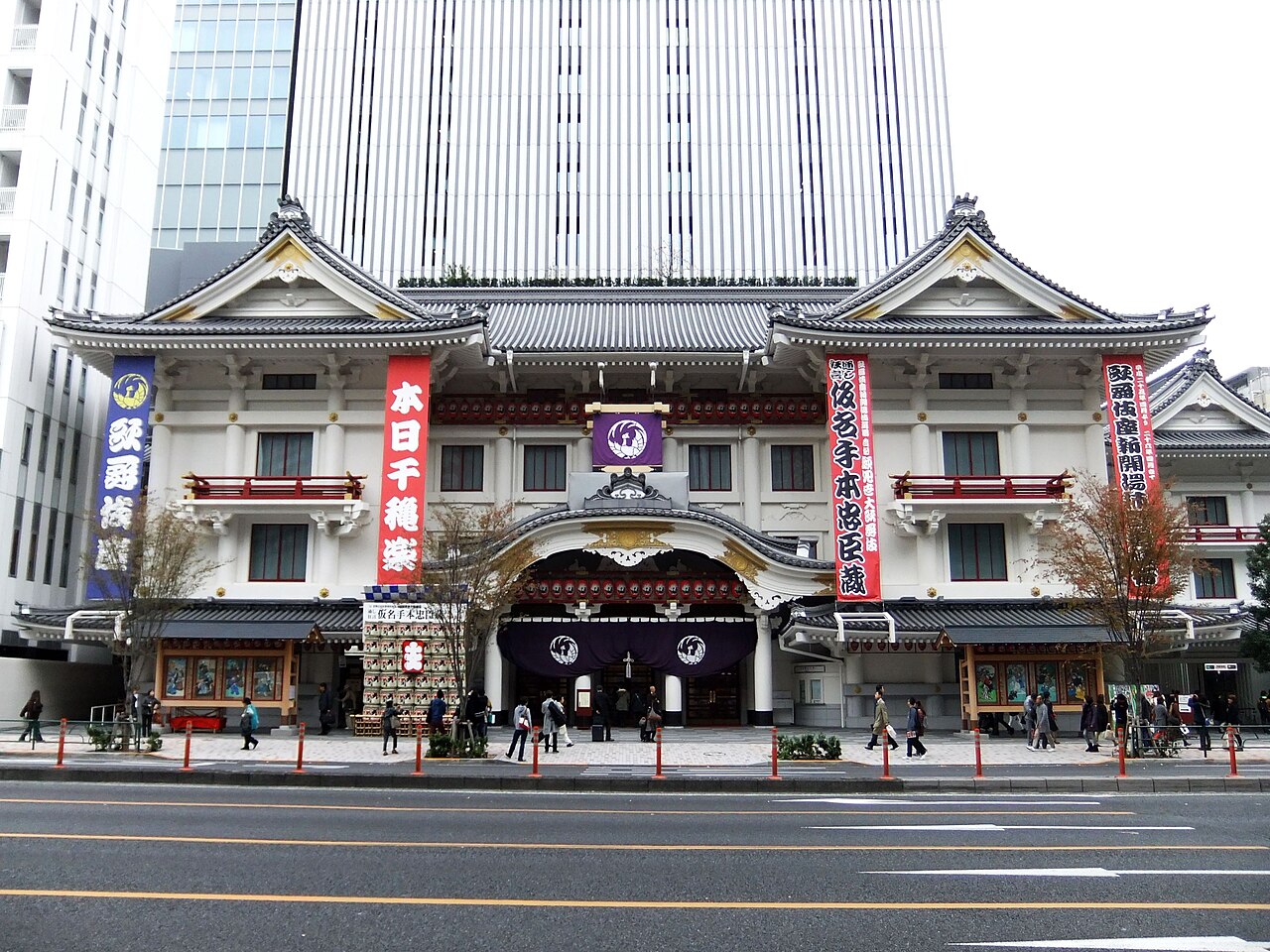
The patrons came from three directions. Daimyo households furnishing their Edo residences wanted chests, document boxes, and dressing stands. The chonin — the merchant townsmen whose commercial wealth pooled in districts like Nihonbashi — wanted the same, scaled to their taste. And the kabuki theaters, the popular entertainment of the age, commissioned dressing boxes and mirror stands for their star actors. Each group pulled the craft toward the restrained, structurally honest style that the Edo townsman called iki: chic without display.
- 1603 — Tokugawa Ieyasu establishes the shogunate at Edo; the city begins its rapid growth.
- 17th c. — Cabinetmakers form to serve daimyo households, chonin merchants, and kabuki actors.
- Edo period — The restrained iki aesthetic separates Edo joinery from courtly Kyo Sashimono and temple-carpenter Suruga Sashimono.
- 1868 — Edo is renamed Tokyo; the workshops continue in the eastern shitamachi districts.
- 1997 — Edo Sashimono is designated a national traditional craft by METI.
- 2026 — Workshops still operate in Taito and Arakawa, supplying shima-guwa boxes and furniture.
The signature material deserves its own note. Shima-guwa — island mulberry — grows on the Izu Islands such as Mikurajima and Hachijojima, which lie in the Pacific to the south but are administered as part of Tokyo. The slow-grown island wood has a fine, even grain and an amber-brown tone that darkens and gains depth with handling. Because the supply is limited, shima-guwa pieces sit at the upper end of the craft; a box made from it is as much about the wood as the joinery.

“An Edo Sashimono box hides its craft inside the joint — what the eye reads as a plain wooden box is held together by cuts you are never meant to see.”
What “still being made here” means is concrete. The craft survived the shift from Edo to modern Tokyo by staying in the same eastern wards, and a number of small workshops continue to cut hozo joints by hand around the shitamachi quarter near Senso-ji in Asakusa. Production is small and largely domestic, which is the main reason an overseas buyer’s realistic path runs through the Amazon JP Global Store rather than a US shelf.
Related jpmono guides to other Japanese wood and box crafts — useful for comparing regions, materials, and joinery styles.
Where to buy
| Store | Item / Variant | Price (JPY + USD est.) | Notes |
|---|---|---|---|
| 🇺🇸 Amazon US (search) | Browse Japanese wooden jewelry & accessory boxes | varies (USD) | Best if you’re shopping from the US — Prime shipping, USD pricing, no international customs. Amazon US carries Japanese wooden and lacquered boxes from various makers, useful for comparing size and price tiers; this exact Edo Sashimono shima-guwa box ships from Japan (next row). |
| 🇯🇵 Amazon JP Global Store | Edo Sashimono shima-guwa jewelry box | Not specified | Ships internationally from Japan to most major destinations. |
| Maker direct | Workshop-made shima-guwa box (Taito / Arakawa workshops) | Unconfirmed — varies by workshop | Small Edo Sashimono workshops sell direct or through Tokyo craft galleries; most ordering is domestic and Japanese-language. |
| Proxy services (Buyee / Tenso) | Forward Japan-only orders abroad | Item price + forwarding fee | Useful when a workshop or shop ships only within Japan; adds a service fee and a consolidation step. |
What it does well
Weaknesses and things to verify before buying
- Seller details vary. Confirm the maker and finish before you buy.
- Capacity varies. Jewelry boxes range from compact accessory boxes to larger multi-drawer chests; choose one that suits what you intend to store.
- Solid wood moves. Shima-guwa is a natural material that responds to humidity. Avoid prolonged direct sun, radiators, and very dry indoor air, which can stress joints over time.
- Thin US availability. The specific piece is sourced from Japan; expect to buy via the Amazon JP Global Store rather than a US shelf, with longer shipping.
- Customs and duties. Cross-border orders above local thresholds may incur import duty or tax that is not shown at checkout — budget for it.
- Finish expectations. Edo Sashimono favors restrained surfaces over high-gloss lacquer; if you want a mirror-shine finish, this craft may disappoint.
- Authenticity check. “Mulberry-look” boxes exist. Look for shima-guwa and Edo Sashimono / nail-free joinery rather than veneer over composite.
Conclusion — which buyer type are you?
Other ways to approach this purchase
❓ Frequently Asked Questions
What makes Edo Sashimono different from an ordinary wooden box?
Edo Sashimono is assembled with concealed mortise-and-tenon (hozo) joints cut into the boards, so a finished box has no visible nails or brackets. It is a METI-designated traditional craft from Tokyo, with a restrained iki aesthetic distinct from Kyoto’s Kyo Sashimono and Shizuoka’s Suruga Sashimono.
What is shima-guwa and why does it matter?
Shima-guwa is “island mulberry,” a fine-grained timber from the Izu Islands such as Mikurajima and Hachijojima, which are administered as part of Tokyo. It has a warm amber tone that deepens with age. Because supply is limited, shima-guwa pieces sit at the upper end of the craft.
Can I buy one from outside Japan?
An Edo Sashimono box is a compact wooden craft object whose suitability depends on its size and finish. Buyers sourcing one from Japan should consider international shipping and customs.
How do I care for a solid-wood mulberry box?
Keep it out of prolonged direct sunlight and away from radiators or very dry air, since solid wood responds to humidity. Wipe with a soft dry cloth; avoid soaking or harsh cleaners. Handling over time is part of how the amber tone develops.
Will I pay customs duty?
Possibly. Cross-border orders above your country’s de minimis threshold may incur import duty or tax that is not shown at checkout. Check your local rules and budget for it before ordering from Japan.
Is this a good gift?
A compact, well-made wooden box with documented heritage can suit a milestone gift. As a natural-wood craft object rather than a mass-produced organizer, its size and finish should be considered before purchase.
jpmono.com is curated by a Japan-based editorial team (working out of Toyama in the Hokuriku region and Nara in Kansai) and is independent. We don’t take payment from the makers we feature; income comes from affiliate links. Read more about our editorial standards.
Affiliate disclosure: jpmono.com may earn a commission on qualifying purchases made through links on this page, at no additional cost to you.