![Odawara Shikki Keyaki Woodgrain Lacquer Soup Bowl Guide [2026]](https://jpmono.com/wp-content/uploads/2026/06/odawara-shikki-keyaki-soup-bowl-where-to-buy-2026-featured.jpg)
An Odawara Shikki (小田原漆器, “Odawara lacquerware”) soup bowl is turned from solid zelkova — keyaki (欅) — and finished not with a thick opaque coat but with suri-urushi (摺り漆), a “wiped lacquer” rubbed in thin so the straight grain of the wood stays visible. The piece covered in this guide is a keyaki miso-soup bowl in that wiped-lacquer tradition, the everyday tableware of a craft that grew up in the old Hōjō castle town of Odawara, at the foot of the Hakone mountains in Kanagawa Prefecture.
Odawara Shikki is the lacquerware flagship of Kanagawa, and it is deliberately plain. Where its prefectural neighbors run to ornament — Hakone’s yosegi mosaic marquetry up the pass, Kamakura’s carved-and-lacquered Kamakura-bori — Odawara’s signature is restraint: thin coats of urushi that reveal the keyaki figure rather than hide it. The result reads as honest daily ware, shaped by a town that for centuries sold bowls to travelers crossing the Tōkaidō highway.
This guide is written for international readers deciding whether, and how, to buy one from outside Japan. It covers who the bowl suits and who should pass, the documented craft background, the realistic purchase paths (Amazon US search, the Amazon JP Global Store, the maker, and proxy forwarders), and the caveats — care, pricing transparency, and shipping — worth checking before you order.
🔄 Last updated:
⏱️ Read time: ~11 min

- Who this is for — and who should skip it
- Product overview (from published specs)
- Where this comes from — place, era, and the craft tradition
- Price snapshot across stores
- What it does well
- Weaknesses and things to verify before buying
- Conclusion — which buyer type are you?
- Other ways to approach this purchase
- 🏆 Editor’s Pick
- ❓ Frequently Asked Questions
Who this is for — and who should skip it
- Want everyday soup or rice bowls with a verifiable craft lineage, not a display piece
- Prefer a frank, grain-forward look over gold maki-e or carved relief
- Like the warmth and light weight of solid turned wood against the lip and in the hand
- Are comfortable with hand-wash-only care and occasional re-oiling
- Value the visible keyaki figure — each bowl’s grain is unique to its block of wood
- Need dishwasher- and microwave-safe vessels with zero maintenance
- Want an exact, repeatable color and grain across a matched set
- Need confirmed dimensions, weight, and price before ordering (listing data is currently thin — see caveats)
- Prefer the high-gloss, decorated look of ornamental lacquerware to plain wiped urushi
- Cannot accommodate hand-wash care or the look of natural wood movement over time
Product overview (from published specs)
The data below is drawn from the craft record for Odawara Shikki and the Amazon JP Global Store listing for this keyaki soup bowl (ASIN B01I1UGHAW). Where the public listing did not state a figure, the cell reads “—”; nothing below is inferred. Spec sheets indicate this is a wiped-lacquer zelkova bowl in the everyday soup/rice size rather than a ceremonial vessel.
Odawara Shikki Keyaki Woodgrain Lacquer Soup Bowl Guide
伝統の小田原漆器 『汁椀』
通常3~4日以内に発送します。 · Sold by 産直お取り寄せNセレクト · ASIN B01I1UGHAW
Price and availability as of 2026-08-31 02:30 JST. The Amazon listing at the time of purchase is authoritative. jpmono.com earns a commission on qualifying purchases at no extra cost to you.
| Attribute | Detail | Source |
|---|---|---|
| Craft | Odawara Shikki (Odawara lacquerware) | Craft record |
| Origin | Odawara, Kanagawa Prefecture (Kantō) | Craft record |
| Item type | Soup / miso bowl (owan) | Listing |
| Material | Solid zelkova — keyaki (欅) | Listing / craft record |
| Technique | Lathe-turned wood base, hand-lacquered | Craft record |
| Finish | Suri-urushi (摺り漆), wiped lacquer — grain stays visible | Craft record |
| Dimensions | — | Not fully stated |
| Weight | — | Not stated |
| Care | Hand wash; no dishwasher / microwave; periodic re-oiling | General urushi-wood care |
| Designation | Designated a national traditional craft (dentō kōgeihin) | Craft record |
⚠️ Data note: the fetched dataset returned no Amazon US results and no live price snapshot for this item. Only the Amazon JP listing reference is available; exact dimensions, weight, and current pricing were unavailable at the time of writing — verify them on the listing before ordering.
📖 Glossary — key terms
- Shikki (漆器) — lacquerware; wood (or other) bases finished with urushi, natural Japanese lacquer.
- Suri-urushi (摺り漆) — “wiped lacquer.” Thin coats of urushi are rubbed into the wood and wiped back, so the lacquer soaks into the grain instead of forming a thick opaque film. Also called fuki-urushi.
- Keyaki (欅) — Japanese zelkova, a hard, fine-grained hardwood with a strong figure, prized for turned and joined ware.
- Owan (椀) — a lidless bowl for soup or rice, the everyday vessel of the Japanese table.
- Maki-e (蒔絵) — decorative lacquer technique using sprinkled gold or silver powder; the ornamental opposite of plain wiped urushi.
- Yosegi (寄木) / Kamakura-bori (鎌倉彫) — Kanagawa’s other wood crafts: Hakone mosaic marquetry and Kamakura’s carved-and-lacquered relief, both distinct from Odawara Shikki’s plain wiped finish.
Wajima lacquer sake cups
 Takaoka raden lacquer box
 Kiso lacquer coffee cups
 Tosa lacquer katakuchi
 Sanuki kinma tea caddy
 Kanagawa: Yokohama silk scarf
Kanto neighbor: Takasaki bell
Where this comes from — place, era, and the craft tradition

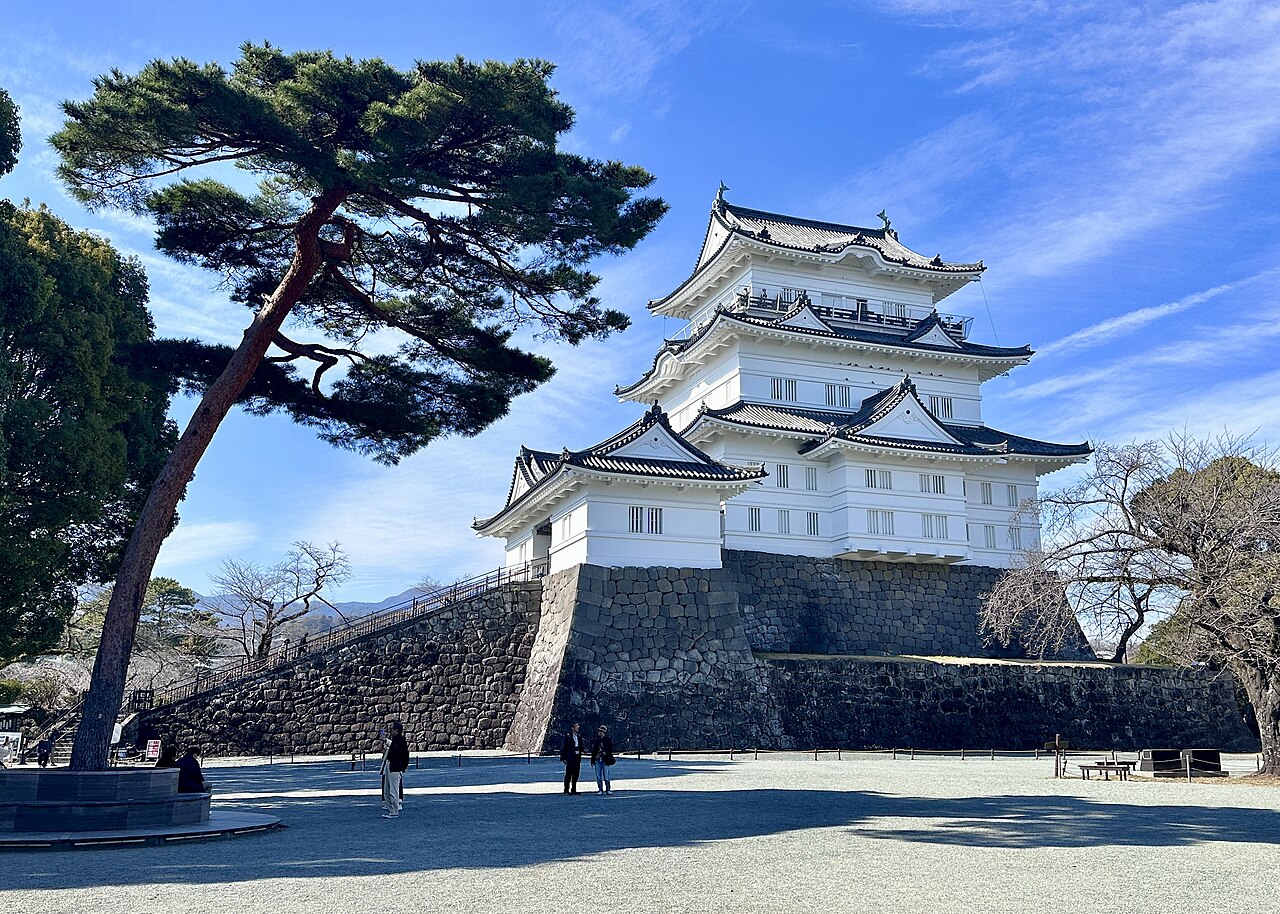
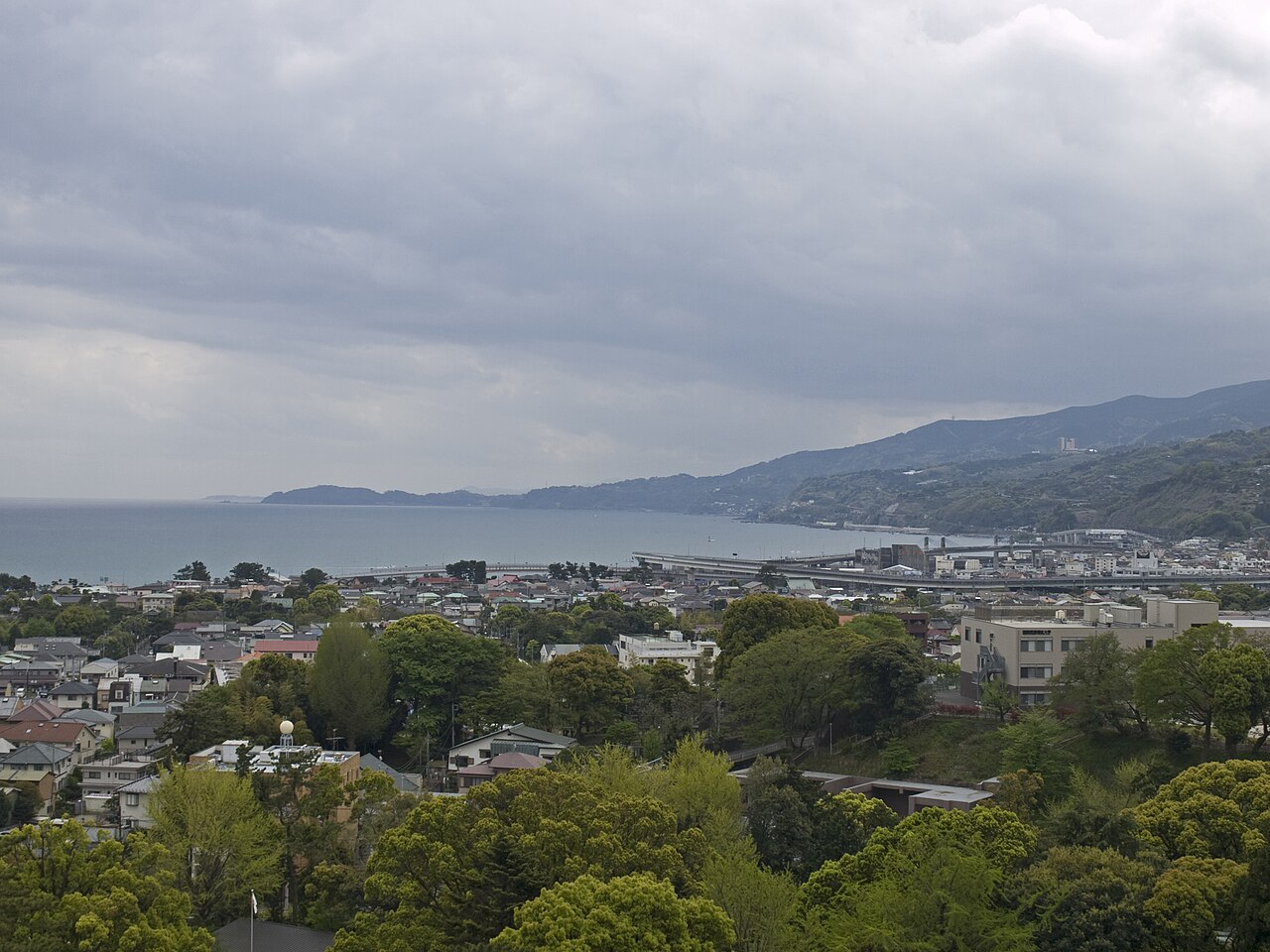
Odawara is a coastal city in Kanagawa Prefecture, in the Kantō region of eastern Japan. It sits at the western edge of the Kantō plain where the land rises into the Hakone and Tanzawa mountains, and where the historic Tōkaidō — the great Edo-era highway between Kyoto and Edo (modern Tokyo) — came down from the Hakone pass to meet the shore of Sagami Bay. Timber from the mountains, clean water, a working port, and constant road traffic gave woodworking and lacquer a natural place to concentrate.
The craft’s roots reach back to the Muromachi period, when woodturners first worked the zelkova and mulberry of the Hakone and Tanzawa ranges. In the Sengoku era the Later Hōjō clan ruled Sagami from Odawara Castle, and the domain encouraged local lacquer production — turning a forest resource into a household industry under castle-town patronage.
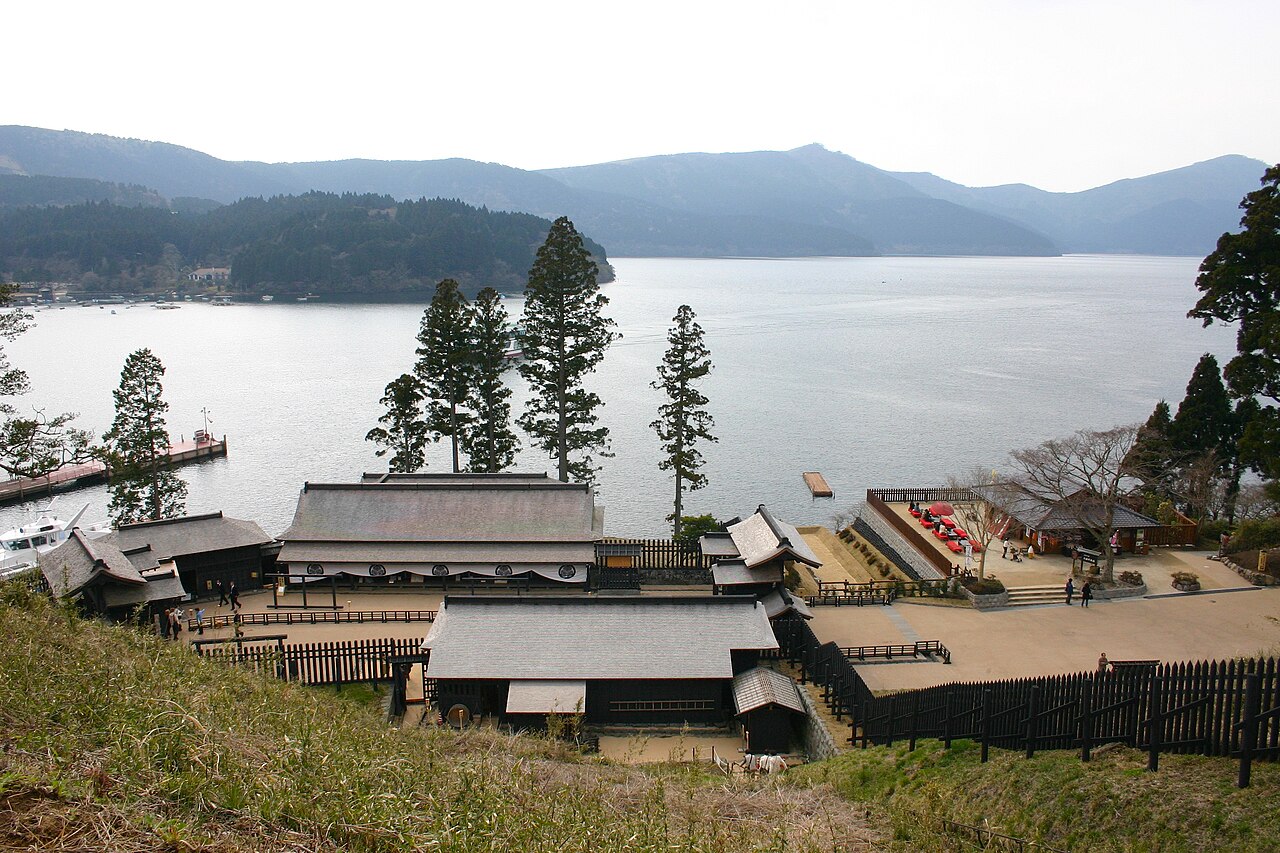
The Hōjō era did not last, but the craft did. After Toyotomi Hideyoshi’s siege ended Hōjō rule in 1590, Odawara was reorganized as a post town on the Tōkaidō — the ninth of the road’s fifty-three stations, and the gateway town sitting just below the Hakone barrier checkpoint that controlled traffic into and out of the Kantō. Travelers stopping before or after the mountain crossing bought local goods, and Odawara’s lacquered bowls and everyday vessels became among them.
- Muromachi period (14th–16th c.) — Woodturners begin working the zelkova and mulberry of the Hakone and Tanzawa ranges.
- Late 15th c. — Hōjō Sōun seizes Odawara Castle, anchoring the Later Hōjō domain in Sagami.
- Sengoku era (16th c.) — The Hōjō clan encourages local lacquer production for the domain, seeding Odawara Shikki.
- 1590 — Hideyoshi’s siege ends Hōjō rule; Odawara is reorganized as a Tōkaidō post town.
- Edo period — As the ninth Tōkaidō station below the Hakone checkpoint, Odawara sells its lacquered bowls to travelers; the suri-urushi style matures.
- Modern era — Odawara Shikki is designated a national traditional craft (dentō kōgeihin); wiped-lacquer keyaki bowls remain in daily production.
The raw material is the heart of the story. The Hakone and Tanzawa mountains behind Odawara supplied keyaki (zelkova) and mulberry — hardwoods dense and fine enough to hold a clean turned edge and a smooth lacquered surface. This is the same timber belt that fed the famous Hakone yosegi marquetry workshops a few kilometers up the pass. Two of Kanagawa’s wood-and-lacquer traditions, then, grew from one forest, but they pull in opposite aesthetic directions: yosegi toward intricate pattern, Odawara Shikki toward plain grain under thin lacquer.

What “still made here” means in practice is restraint as a method. The defining step is the suri-urushi finish: rather than building a thick, glossy film, the lacquerer rubs thin coats of urushi into the wood and wipes them back, so the lacquer cures inside the grain. The keyaki figure stays in plain view, and the bowl gains water resistance and durability without losing the feel of wood. It is a frank, utilitarian aesthetic — the look of a craft that was meant to be sold to people who would actually eat from it on the road.
“Where its prefectural neighbors decorate, Odawara reveals. The lacquer is rubbed in thin so the zelkova grain stays in plain view — a post-station craft made to be used, not admired from a shelf.”
The bowl also has a place in the year and on the table. An owan of this size is the standard vessel for miso soup, served at nearly every Japanese meal, and wood is the traditional choice precisely because it does not conduct heat — you can cradle a bowl of hot soup without burning your hands, the way a ceramic bowl would. Paired with rice, pickles, and a grilled fish, it is the quiet center of a daily Japanese place setting rather than an occasion piece.
Price snapshot across stores
The data suggests pricing for this exact piece was not retrievable at the time of writing — treat the figures below as “check at the retailer.” JPY is the authoritative currency for the sourced JP listing; any USD shown elsewhere is an estimate at a ¥150/USD baseline (mid-2026).
| Store | Item / variant | Price | Notes |
|---|---|---|---|
| 🇺🇸 Amazon US (search) | Browse Japanese lacquer & wooden soup bowls | varies (USD) | Best if you are shopping from the US — Prime shipping, USD pricing, no international customs. Amazon US carries wiped-urushi and lacquered wood bowls from various Japanese makers, useful for comparing size and finish. The exact Odawara Shikki keyaki piece is sourced from Japan (next row). |
| 🇯🇵 Amazon JP Global Store | Odawara Shikki keyaki soup bowl (B01I1UGHAW) | price unavailable at time of writing — check listing | Ships internationally from Japan to most major destinations. This is the sourced listing for the specific item in this guide. |
| Maker direct | Odawara Shikki workshops / co-op | varies | Japanese-language sites; typically domestic shipping only — pair with a proxy for overseas delivery. |
| Proxy services (Buyee / Tenso) | Forwards JP listings | item price + forwarding fee | For regions the Global Store does not reach, or to consolidate several JP-only purchases into one parcel. Customs duties may apply above local thresholds. |
What it does well
Weaknesses and things to verify before buying
- Thin listing data. The fetched dataset returned no live price and no confirmed dimensions or weight. Verify exact bowl diameter, depth, and capacity on the listing before ordering — “soup / miso bowl size” covers a range.
- Hand-wash only. Urushi-finished solid wood should not go in a dishwasher or microwave, and prolonged soaking can damage both wood and lacquer. This is daily-care tableware, not fit-and-forget.
- Natural variation. Because each bowl is turned from a unique block of keyaki, grain and color differ piece to piece. If you want a perfectly matched set, this is a drawback rather than a feature.
- Plain by design. If you are drawn to lacquerware for gold maki-e or carved relief, the deliberately restrained wiped-urushi look may read as too plain — that is the intent, not a flaw, but it is worth knowing.
- Urushi sensitivity. A small number of people react to raw lacquer; fully cured urushi is generally inert, but those with known sensitivities should be aware of the material.
- Cross-border friction. If the Amazon JP Global Store does not ship to your country, you will need a proxy forwarder (Buyee / Tenso), which adds fees and a customs step.
- Price opacity right now. Until you open the listing, neither JPY nor a USD estimate is reliable for this item — do not budget from this article alone.
Conclusion — which buyer type are you?
Other ways to approach this purchase
🏆 Editor’s Pick
❓ Frequently Asked Questions
Does the Amazon JP Global Store ship Odawara Shikki bowls internationally?
Yes. The Amazon JP Global Store ships many household and tableware items, including this bowl, to most major destinations. If your country is not covered, a proxy forwarder such as Buyee or Tenso can receive the parcel in Japan and re-ship it to you.
What is suri-urushi, and how is it different from regular lacquerware?
Suri-urushi (摺り漆), or “wiped lacquer,” means thin coats of urushi are rubbed into the wood and wiped back, so the lacquer cures inside the grain instead of forming a thick opaque film. The keyaki grain stays visible, and the look is plainer than the glossy, decorated finishes of ornamental lacquerware such as maki-e.
How do I care for the bowl, and can it go in the dishwasher or microwave?
Hand-wash with a soft sponge and mild detergent, rinse, and dry promptly — do not leave it soaking, and avoid abrasive scrubbers. Do not use a dishwasher or microwave: the heat, prolonged moisture, and detergent cycle can crack the wood and dull the lacquer. Over time the surface can be refreshed with a thin wipe of food-safe oil.
How is Odawara Shikki different from Hakone yosegi and Kamakura-bori?
All three are Kanagawa wood-and-lacquer crafts, but they differ in approach. Odawara Shikki is plain wiped-lacquer ware that shows the grain. Hakone yosegi is mosaic marquetry — colored woods glued into patterned blocks and shaved into thin sheets. Kamakura-bori is carved relief that is then lacquered. Odawara is the utilitarian, grain-forward one of the three.
What wood is the bowl made from?
This bowl is made from solid keyaki — Japanese zelkova — a hard, fine-grained hardwood with a strong figure, historically drawn from the Hakone and Tanzawa mountains behind Odawara. Because each bowl is turned from a single block, the grain and tone vary from piece to piece.
How much does it cost?
A live price was not available in the data at the time of writing, so we have not quoted one — please check the current figure on the Amazon JP Global Store listing. The JPY price there is the authoritative one; any USD estimate elsewhere is approximate at a ¥150/USD baseline.
jpmono.com is curated by a Japan-based editorial team (working out of Toyama in the Hokuriku region and Nara in Kansai) and is independent. We do not take payment from the makers we feature; income comes from affiliate links. We do not physically test every product — we read makers’ specs and source listings.
This article was prepared with AI assistance and reviewed against the craft record for Odawara Shikki and the source listing data. Where live pricing or specifications were unavailable, the text says so rather than estimating.
Affiliate disclosure: jpmono.com may earn a commission on qualifying purchases made through links on this page, at no additional cost to you.