![Suikaen Takayama Chasen Bamboo Matcha Whisk — Where to Buy [2026]](https://jpmono.com/wp-content/uploads/2026/05/suikaen-takayama-chasen-matcha-whisk-where-to-buy-2026-featured-1.jpg)
Suikaen Takayama Chasen Bamboo Matcha Whisk — Where to Buy [2026]
A Takayama chasen is the bamboo whisk used to froth matcha for the Japanese tea ceremony, and the village that gave it its name — Takayama, a hillside district of the city of Ikoma in Nara Prefecture — has been making them for roughly five centuries. Suikaen (翠華園) is the Tanimura Tango workshop, one of the better-known Takayama makers among the sixteen or so families still active. The 80-tate (80-prong) white-bamboo whisk covered in this guide is its workhorse grade — the configuration most tea schools recommend for daily usucha practice.
Two things make the Takayama whisk worth attention internationally. First, the craft is essentially monopolized by a single Japanese district: roughly 90% of all chasen sold in Japan still come from Takayama, a concentration that has no real parallel in other Japanese craft categories. Second, the whisk is a single piece of bamboo — no glue, no joinery, no fasteners — shaved by hand from one three-year-aged culm into 60 to 120 fine prongs in a continuous operation. Industrial Chinese substitutes exist at a quarter of the price, but spec sheets indicate the prong geometry and bamboo cure are not equivalent.
This guide is for readers outside Japan who are deciding between a sub-$10 import whisk and the real Takayama article, and want to understand what they are actually paying for. We cover the maker, the variant landscape (80-tate vs 100-tate vs ceremonial 120-tate), where to buy from the US or EU, and the honest weaknesses (lifespan, care, fragility) that the marketing copy tends to skip.
🔄 Updated:
⏱ Read time: ~14 min
🇯🇵 Made in Ikoma, Nara
- Who this is for — and who should skip it
- Product overview (from published specs)
- 📦 Where this comes from — Ikoma, Nara, and five centuries of chasen
- 📦 Shipping & where to buy from outside Japan
- Price snapshot across stores
- What it does well
- Weaknesses and things to verify before buying
- Conclusion — which buyer type are you?
- Other ways to approach this purchase
- 🏆 Editor’s Pick
- ❓ Frequently Asked Questions
- 📌 Related Japanese Crafts
Who this is for — and who should skip it
- practice usucha (thin matcha) at least a few times a week and want a whisk that actually whips a fine crema
- are willing to treat the whisk as a consumable (6–18 months of regular use is typical)
- want a piece made by a named Japanese workshop, not an anonymous OEM
- are buying for a tea-ceremony class, a chashitsu setup, or a serious gift
- are comfortable hand-rinsing in lukewarm water and air-drying on a kusenaoshi (whisk holder)
- just want to make a matcha latte occasionally — an electric frother is cheaper and more durable
- are not willing to replace the whisk every 6–18 months
- plan to dishwasher-wash it or leave it sitting in water
- need black-bamboo (kurochiku) for koicha — that is a different variant (see below)
- want a single tool that lasts a lifetime — chasen are deliberately not built for that
Product overview (from published specs)
Detailed live-listing data on Amazon US was unavailable at the time of writing — the fetched JSON returned no individual amazon.com listing for Suikaen, and no eBay snapshot. The table below reflects the standard published spec for Suikaen’s 80-tate shiro-take (white bamboo) whisk as carried by Japanese specialist retailers and by Amazon JP. Always verify against the live listing before purchasing.
| Spec | Value | Source |
|---|---|---|
| Maker | Suikaen (翠華園 / Tanimura Tango lineage) | Maker direct |
| Material | Hachiku (淡竹) white bamboo, 3-year aged, single culm | Maker direct |
| Prong count (tate) | 80-tate (standard usucha grade) | Maker direct |
| Dimensions | Approx. 10.5–11 cm tall × 6 cm wide at the prongs | Maker direct |
| Origin | Takayama district, Ikoma City, Nara Prefecture | METI designation, 1975 |
| Construction | Hand-shaved from a single bamboo joint — no glue, no joinery | Maker direct |
| Tea school usage | Urasenke / Omotesenke compatible (white bamboo is the standard for usucha) | Maker direct |
| Typical lifespan | 6–18 months of daily use; prong tips curl/break with wear | Maker direct |
| Price (JP retail) | ¥3,500–¥5,500 typical (≈ $23–$37 USD as of May 2026) | Amazon JP Global Store + maker direct |
Spec sheets indicate the above; only general Amazon JP listing data is available — no live amazon.com listing for Suikaen was indexed at time of writing, so the US-row of the price snapshot below points to a category search rather than a specific item.
📖 Glossary — tea-ceremony and bamboo terms used here
- Chasen (茶筅)
- The bamboo whisk used to froth matcha. Pronounced “cha-sen.”
- Tate (穂 / 立)
- The prongs (literally “standing pieces”). 80-tate, 100-tate, 120-tate refers to the number of outer prongs.
- Usucha (薄茶) vs. koicha (濃茶)
- Thin matcha (everyday, frothed) vs. thick matcha (ceremonial, kneaded). Different whisks are preferred for each.
- Hachiku (淡竹) vs. madake (真竹) vs. kurochiku (黒竹)
- Three bamboo species used for chasen. Hachiku is the pale, fine-grained standard. Kurochiku is the smoked-black variant used in some schools for koicha.
- Kusenaoshi (くせ直し)
- A ceramic or wooden stand shaped like a small dome that the wet whisk dries on, preserving the prong curl.
- Shokunin (職人)
- A craftsperson with deep specialization in one trade — the term carries cultural weight in Japan.
- Wabi-cha (侘茶)
- The restrained, rustic style of tea ceremony codified by Murata Juko in the 15th century and refined by Sen no Rikyu in the 16th. The Takayama chasen was born from this movement.
📦 Where this comes from — Ikoma, Nara, and five centuries of chasen

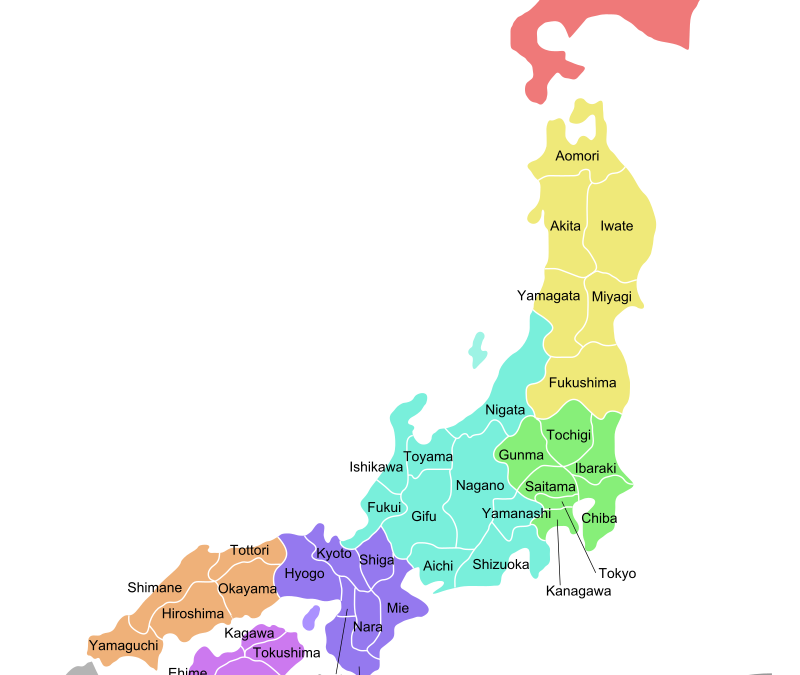
Ikoma is not a name international readers are likely to know. The city itself is a quiet commuter belt straddling the Ikoma mountain range, with one foot in Nara Prefecture and one foot facing Osaka. But the Takayama district on its western slope is the entire chasen industry of Japan — roughly 90% of all bamboo whisks sold in the country come from this single hillside. There is no second Takayama.
The reason is older than the craft itself. Nara was Japan’s first permanent imperial capital, from 710 to 794 — what historians call the Nara period — and it was through this court that Tang-dynasty Chinese tea drinking first entered the country. Monks at Todai-ji and Kofuku-ji, the great Nara temples whose successors still stand 30 km east of Ikoma, were prescribing powdered tea as medicine in the 8th century, centuries before the wabi-cha aesthetic crystallized the modern tea ceremony.
The chasen itself dates to the 15th century. The standard account is that Murata Juko, the Zen-influenced tea master who founded wabi-cha, asked Takayama Souzei — second son of the Takayama clan who ruled the Ikoma hillside — to design a bamboo whisk capable of dissolving matcha properly. Souzei’s whisk became the template, and the technique was kept as a clan secret for over four centuries, transmitted strictly among sixteen affiliated households.
-
710–794 — Nara period. Tang-style tea drinking enters Japan through Todai-ji and Kofuku-ji monks. -
c. 1480s — Murata Juko, founder of wabi-cha, asks Takayama Souzei of the Ikoma hills to shape a bamboo whisk for matcha. -
1591 — Sen no Rikyu, who codified the modern tea ceremony, dies. By this point Takayama is the recognized source of chasen. -
Edo period (1603–1868) — Chasen technique kept as a clan secret, transmitted only among 16 Takayama households. -
1888 — Tanimura Tango I founds what will later become Suikaen, in the heart of the Takayama district. -
1975 — Takayama Chasen designated a National Traditional Craft by Japan’s Ministry of Economy, Trade and Industry (METI). -
2010s — Global matcha boom; Suikaen and other Takayama workshops begin shipping to specialist tea retailers in the US, EU, and Australia. -
2026 — Roughly 90% of chasen sold in Japan still come from the Takayama district — among the most geographically concentrated crafts in the country.
“A Takayama chasen is one piece of bamboo, shaved by one pair of hands, in a single continuous operation. There is no glue. There is no assembly. There is only the cut.”
What “still being made here” actually means: Suikaen is the Tanimura Tango lineage workshop, now in its fourth generation, and is one of roughly twenty Takayama families that still produce chasen as their primary trade. The maker has supplied both Urasenke and Omotesenke — the two largest tea schools in Japan — for generations, and is among the better-internationally-distributed Takayama makers, alongside houses like Kubo Sabun and Yasaburo Kubota.
Each whisk begins as a single joint of three-year-aged hachiku or madake bamboo, harvested in winter when the sugars are low and the fibres are at their stiffest. The artisan splits the joint outward into 16, then 32, then 64, then 128 segments, alternating between outer (omote) and inner (ura) rings, and finally shaves each segment into a tapered prong with a small fixed blade. The whole sequence — from raw culm to finished 80-tate whisk — is closer to half an hour of continuous work than to the “weeks of forging” some tourism copy implies. The discipline is in the precision of the cut, not the duration.
Seasonally, the chasen is a year-round object — matcha is drunk in all seasons — but new whisks are traditionally bought at New Year alongside fresh tatami, fresh shoji paper, and other “everything new for the new year” purchases. In Nara itself, the deeper tea culture is alive in places like Daitoku-ji (technically in Kyoto, but Daitoku-ji’s Zen lineage extends through Nara) and in the kaiseki restaurants that surround the temple districts. If you visit Nara as a tourist, you will see the deer; if you walk west into the Ikoma hills, you will find the workshops.
📦 Shipping & where to buy from outside Japan
The Suikaen 80-tate is small, light (under 30 g), and not fragile in the shipping-damage sense — it travels well. From Amazon JP Global Store, expect $15–$30 in international shipping to the US, EU, and Australia, with arrival typically within 7–14 business days. Customs duties are usually negligible for a single whisk; thresholds (US: $800 de minimis, EU: €150) are far above the order value.
Three realistic paths for international buyers:
Voltage / certification — not applicable; this is an entirely passive bamboo object. No electronics, no induction labels, no chemical treatment.
Price snapshot across stores
| Store | Item / Variant | Price | Notes |
|---|---|---|---|
| 🇺🇸 Amazon.com (US) | Browse Japanese matcha whisks & tea-ceremony tools | varies (USD) | Best if you’re shopping from the US — Prime shipping, USD pricing, no international customs. Amazon US carries Takayama-region whisks from other makers and from generic resellers; Suikaen’s exact 80-tate is sourced from Japan (next row). |
| 🇯🇵 Amazon JP Global Store | Suikaen 80-tate, white hachiku bamboo | ¥3,500–¥5,500 ≈ $23–$37 USD |
Ships internationally from Japan via Global Store. No specific listing was indexed at time of writing — link is to the maker’s search results. |
| Maker direct (Suikaen 翠華園) | Full lineup including 100-tate, 120-tate, kurochiku | ¥3,500–¥12,000 ≈ $23–$80 USD |
Japanese-only checkout; some retailers under the Suikaen banner ship internationally on request. |
| Proxy services (Buyee / Tenso) | Any Japanese reseller listing | Item price + 5–10% service fee + intl. shipping | Fallback for sold-out Global Store listings or for variants Amazon JP does not carry. |
Only general listing data was available — no live Amazon US item-level listing for Suikaen was indexed at time of writing. JPY figures are based on typical Japanese specialist retail; USD is approximate at ¥150/USD baseline. The data suggests pricing has held steady since 2024, but verify at the retailer before purchasing.
What it does well
Weaknesses and things to verify before buying
- Consumable lifespan. A Takayama chasen is not a lifetime tool. Daily use will fray and snap the inner prongs within 6–18 months. Budget for replacement.
- No dishwasher, no soaking. Hand-rinse in warm (not hot) water, swirl in a bowl of clean water to release matcha residue, then air-dry on a kusenaoshi stand. Soaking warps the prongs irreversibly.
- Prong damage is not a defect. A few snapped prongs in the first month is normal break-in, not a quality issue. Use slightly less force after the first week.
- White bamboo can mottle. Hachiku occasionally shows brown speckling or hairline cracks at the handle — cosmetic, not structural. Maker-direct returns are not generally accepted for cosmetic variance.
- The “Suikaen” name is sometimes used loosely. Verify the listing names the Tanimura Tango (谷村丹後) workshop specifically, not a generic “Takayama-style” import that uses Suikaen as a descriptor.
- Counterfeit risk on non-Amazon marketplaces. “Takayama Chasen” as a phrase is widely used by Chinese OEM whisks that are not made in Takayama. Stay within Amazon JP Global Store, the maker’s authorized resellers, or specialist tea retailers.
- Customs duties are unlikely but possible. A single whisk is far below US ($800) and EU (€150) de minimis thresholds, but combined orders (whisk + chashaku + chawan) may cross them.
Conclusion — which buyer type are you?
Other ways to approach this purchase
🏆 Editor’s Pick
- Forgiving prong geometry — survives a beginner’s first month
- Named Takayama workshop, not anonymous import bamboo
- Cheapest entry into the real-Takayama tier
❓ Frequently Asked Questions
How long does a Takayama chasen last?
Can I wash my chasen in the dishwasher?
What’s the difference between an 80-tate and 100-tate?
Does Suikaen ship internationally?
Is Suikaen better than other Takayama makers?
Why are imported “Takayama-style” whisks so much cheaper?
Do I need a kusenaoshi (whisk stand)?
jpmono.com is curated by a Japan-based editorial team (working out of Toyama in the Hokuriku region and Nara in Kansai) and is independent. We don’t take payment from the makers we feature; income comes from affiliate links. Read more about our editorial standards.
🤖 This article was drafted with AI assistance using vetted source data (Amazon listing snapshots, METI craft designations, and maker-published specifications) and reviewed by a human editor before publication. Where source data was thin, the article states so explicitly rather than fabricating specifications.
Affiliate disclosure: jpmono.com may earn a commission on qualifying purchases made through links on this page, at no additional cost to you.