![Oribe-yaki Mino Green-Glaze Mukozuke Serving Dish: Where to Buy [2026]](https://jpmono.com/wp-content/uploads/2026/06/oribe-yaki-mino-green-glaze-mukozuke-where-to-buy-2026-featured.jpg)
Oribe-yaki (織部焼, “Oribe ware”) is the most extroverted of Japan’s Momoyama-era tea ceramics. Where the wabi aesthetic prized restraint, Oribe pushed the other way: a vivid copper-green oxide glaze, deliberately lopsided forms, and loose, almost abstract iron-brush patterns drawn straight onto the clay. A mukozuke (向付) — the small serving dish placed on the far side of the tray in a kaiseki meal — is one of the styles where that boldness reads most clearly, because the irregular rim and pooled green glaze frame just a few bites of food.
The dish covered here is a Mino-yaki (美濃焼, “Mino ware”) Oribe mukozuke fired in southern Gifu, in the kiln towns of Toki and Tajimi that today produce roughly half of all Japanese tableware. It is the same tradition that runs back through the Momoyama tea masters to potters who migrated from neighboring Seto — the lineage Japanese ceramicists call “Seto-Mino.”
This guide is written for international buyers comparing where and how to buy one. We cover what the published listing actually states, how it sits beside other Momoyama tea ceramics on this site, the realistic purchase paths from outside Japan, and the caveats worth checking before you pay. Pricing data for this specific listing was thin at the time of writing — that limitation is stated plainly below rather than papered over with invented figures.
🔄 Updated:
⏱️ Read time: ~10 min

- Who this is for — and who should skip it
- Product overview (from published specs)
- Price snapshot across stores
- 📍 Where this comes from — place, era, and the craft tradition
- 📦 Shipping & where to buy from outside Japan
- What it does well
- Weaknesses and things to verify before buying
- Conclusion — which buyer type are you?
- Other ways to approach this purchase
- 🏆 Editor’s Pick
- ❓ Frequently Asked Questions
Who this is for — and who should skip it
- Set a Japanese table — kaiseki, sushi, or small-plate dining — and want a dish with real Momoyama-tradition character
- Appreciate deliberate asymmetry (hizumi) and value handwork over machine-perfect symmetry
- Want a single statement serving piece rather than a matched dinner set
- Are building a collection of Momoyama tea ceramics and lack an Oribe green-glaze example
- Understand stoneware care and are comfortable hand-washing
- Want a perfectly uniform, machine-finished plate — the off-kilter form is intentional, not a defect
- Need a large dinner plate; a mukozuke is a small serving dish by design
- Expect identical pieces — handmade glaze pooling and shape vary unit to unit
- Require confirmed dishwasher/microwave/induction ratings before buying (verify per listing)
- Need firm pricing and stock today — listing data for this item was thin at the time of writing
Product overview (from published specs)
Based on the spec sheet supplied for this guide, the item is a Mino-yaki Oribe-style mukozuke: a copper-green oxide-glazed stoneware serving dish with an iron-painted geometric design and the asymmetric form typical of Oribe ware, made in the Toki/Tajimi kiln district of Gifu. Detailed fetched listing data — live price, exact dimensions, weight — was not available at the time of writing, so the table below marks those fields as unconfirmed rather than guessing.
Oribe-yaki Mino Green-Glaze Mukozuke Serving Dish
アースモス 美濃焼 向付 織部乱線切立鉢
通常7~8日以内に発送します。 · Sold by ノゾミショップ · ASIN B0HDLLGH6K
Price and availability as of 2026-09-01 05:22 JST. The Amazon listing at the time of purchase is authoritative. jpmono.com earns a commission on qualifying purchases at no extra cost to you.
| Attribute | Detail (per spec) | Source |
|---|---|---|
| Item type | Mukozuke (向付) — small kaiseki serving dish | Spec |
| Ware / style | Oribe-yaki, within the Mino-yaki tradition | Spec |
| Material | Stoneware | Spec |
| Glaze / decoration | Copper-green oxide glaze + iron-painted geometric design | Spec |
| Form | Asymmetric (hizumi), intentionally off-kilter | Spec |
| Origin | Toki / Tajimi, southern Gifu (old Mino province) | Spec |
| Dimensions / weight | Unconfirmed — check the listing before buying | — |
| Item ID (ASIN) | B09NLKY15W | Spec |
Data note: the fetched dataset for this item returned no live US listing and no price snapshot. Only the spec’s identifying details and the product image were available; live pricing and exact dimensions may differ at the retailer and should be verified before purchase.
📖 Glossary — key terms
- Oribe-yaki (織部焼) — a Momoyama-period style of Mino ware named for the tea master Furuta Oribe, marked by copper-green glaze, distorted forms, and bold iron-brush patterns.
- Mino-yaki (美濃焼) — ceramics from the old Mino province (southern Gifu); today roughly half of all Japanese tableware.
- Mukozuke (向付) — a small dish set on the far side of the tray in a kaiseki meal, holding a few bites such as sashimi or a vinegared dish.
- Hizumi (歪み) — deliberate distortion or asymmetry of a vessel’s form, a prized Oribe quality.
- Kaiseki (懐石) — the multi-course meal served in the tea ceremony, and by extension Japan’s refined seasonal cuisine.
- Seto-Mino — the shared ceramic lineage of neighboring Seto (Aichi) and Mino (Gifu) potters.
- Wabi (侘び) — the austere, understated aesthetic of Sen no Rikyu, against which Oribe’s boldness is often contrasted.
Related guides on jpmono.com — other Gifu crafts and other Momoyama-lineage tea ceramics worth weighing against this dish.
 🪵 Gifu woodwork: Hida Ichii netsuke
 🍶 Momoyama tea ware: Bizen guinomi
 🍶 Tea ceramics: E-Garatsu guinomi
 ☕ Shigaraki stoneware mug
 🍶 Tamba Tachikui guinomi
🍽️ Fujina slipware plate
🍚 Mashiko kaki-glaze bowl
Price snapshot across stores
The first row is the consumer-friendly US path; the specific dish in this guide is sourced from the Amazon JP Global Store (second row). Live pricing for this exact item was not retrievable at the time of writing — figures are marked accordingly.
| Store | Item / Variant | Price (JPY + USD est.) | Notes |
|---|---|---|---|
| 🇺🇸 Amazon US (search) | Browse Japanese Oribe & Mino serving dishes | varies (USD) | Best if you are shopping from the US — Prime shipping, USD pricing, no international customs. Amazon US carries Japanese Mino-yaki and Oribe-style tableware from various makers, useful for comparing glaze, size, and price tiers. This guide’s exact dish is sourced from Japan (next row). |
| 🇯🇵 Amazon JP Global Store | This exact Oribe Mino mukozuke (ASIN B0HDLLGH6K) | Price unconfirmed — verify on listing | Ships internationally from Japan to most major destinations. The sourced listing for the specific item in this guide. |
| Maker direct | Toki / Tajimi kiln & pottery-town shops | varies | Mino-yaki is produced by many independent kilns; direct retail typically requires Japanese-language ordering or in-person purchase. |
| Proxy services (Buyee / Tenso) | Forwarding from JP-only sellers | item + service fee + forwarding | Useful when a kiln or marketplace does not ship abroad; adds a handling fee and a second shipping leg. |
Prices in USD are approximate and depend on the current exchange rate (¥150/USD baseline as of mid-2026). The JPY price is authoritative for the specific listed item.
📍 Where this comes from — place, era, and the craft tradition

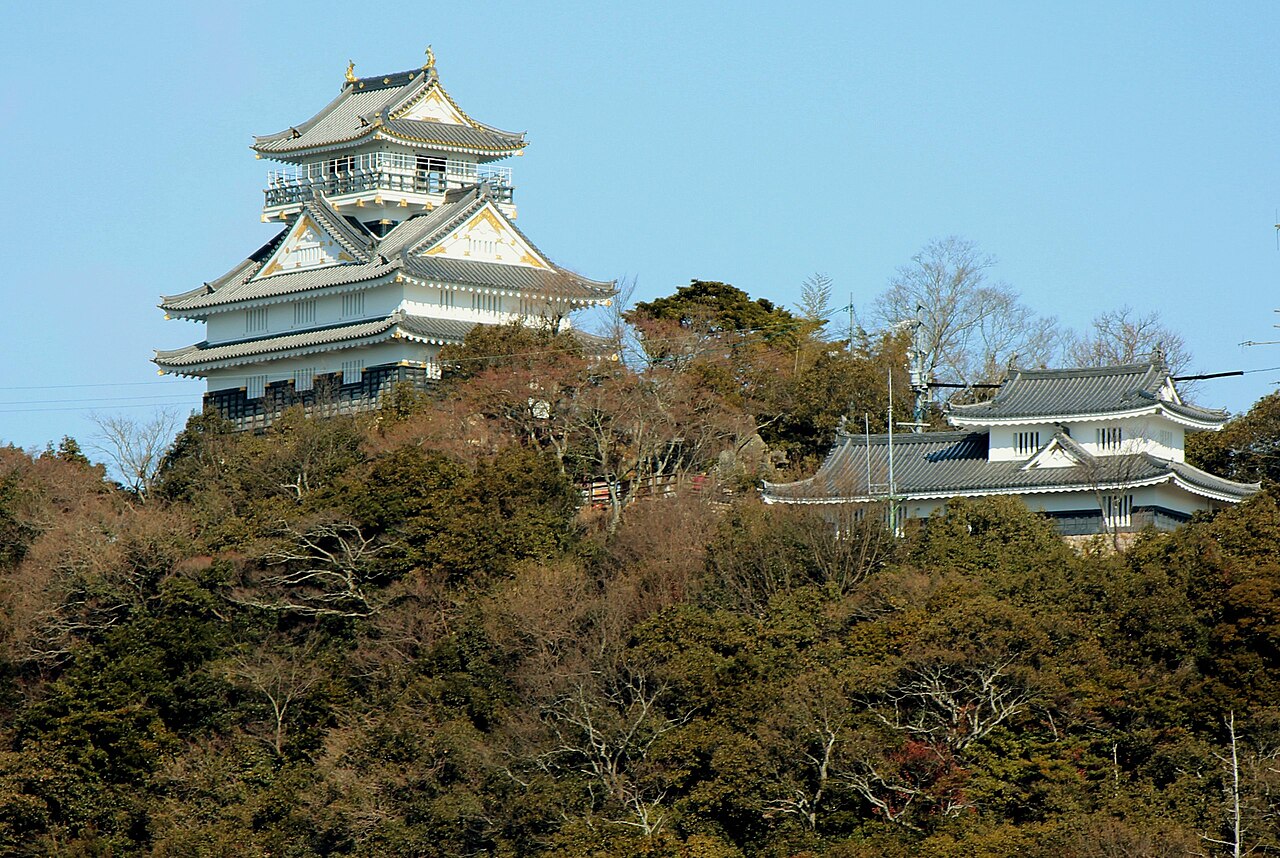
Mino ware comes from the old Mino province, which today maps onto southern Gifu Prefecture — principally the cities of Toki, Tajimi, and Mizunami. This is landlocked central Honshu, a belt of clay-rich hills just over the prefectural line from Seto in Aichi. The two districts are so closely linked that Japanese ceramicists speak of a single “Seto-Mino” lineage: Mino’s earliest production grew from potters who carried Seto techniques across the hills, where good local clay, abundant fuel, and the kiln know-how of neighboring Owari let an industry take hold.
That industry never let go. Mino-yaki now accounts for roughly half of all the tableware made in Japan — the everyday plates, bowls, and cups in countless Japanese kitchens trace back to these kilns.
- 7th c. — Sue-ware kiln roots take hold across the Seto-Mino hills.
- 1544 — Furuta Oribe, the daimyo tea master who gives the style its name, is born.
- 1591 — Sen no Rikyu dies; Oribe emerges as a leading arbiter of tea taste.
- late 1500s — Momoyama tea ceramics flourish in Mino: Ki-Seto, Shino, and Oribe.
- 1615 — Furuta Oribe dies; his bold aesthetic outlives him in the ware that bears his name.
- Edo period — Mino kilns shift toward large-scale everyday tableware production.
- Today — Mino-yaki accounts for roughly half of all tableware made in Japan.
The style itself is the work of a person, not just a place. Oribe ware is named for Furuta Oribe (1544–1615), a daimyo and tea master who studied under Sen no Rikyu. After Rikyu’s death in 1591, Oribe became one of the most influential voices in the tea world — and he pushed it somewhere new. Against the muted austerity of wabi, he championed a deliberately bolder aesthetic: warped, asymmetric forms (hizumi); a vivid copper-green oxide glaze that pools thick and glassy; and free, geometric iron-brush patterns that look almost modern.
“Where Rikyu’s wabi prized what was plain and quiet, Oribe prized what was lopsided, green, and alive — distortion as a deliberate act of taste.”
The mukozuke became one of Oribe’s signature vessels. In a kaiseki meal it holds only a few bites — a portion of sashimi, a vinegared dish — set across the tray from the rice and soup. Its small size is exactly why an irregular rim and a sweep of green glaze read so strongly: the dish frames the food the way a mat frames a print. That is the role this serving dish is built for, and the reason its asymmetry is a feature rather than a flaw.

What “still being made here” means in practice is continuity at scale. The Toki and Tajimi kiln towns remain a working ceramics district, not a museum — the same hills that supplied Momoyama-era potters still feed contemporary studios producing Oribe, Shino, and everyday Mino tableware side by side. A buyer today is not commissioning a revival; they are buying from a tradition that never lapsed.

Gifu wears that continuity openly. The cormorant fishing (ukai) on the Nagara River, the castle on Mount Kinka, and the kiln smoke of Tajimi all belong to the same long-running cultural fabric — one where seasonal ritual and handwork have stayed in step for centuries. An Oribe mukozuke is a small, usable piece of that fabric.
📦 Shipping & where to buy from outside Japan
The specific dish in this guide is sourced from the Amazon JP Global Store, which ships many household ceramics internationally to most major destinations. For readers in the US, the simplest path is often to browse comparable Japanese Mino and Oribe tableware on Amazon US first (Prime shipping, USD pricing, no customs paperwork), then fall back to the JP Global Store for this exact piece.
- Amazon JP Global Store typically ships ceramics to the US, EU, AU, and many other regions; estimate roughly $15–$40 shipping to the US/EU, higher elsewhere.
- Ceramics are fragile — confirm the seller’s packaging and breakage policy before ordering.
- Orders above your local de-minimis threshold may incur customs duties or import tax; this is separate from the item and shipping price.
- If a kiln or JP-only marketplace does not ship abroad, a proxy/forwarding service (Buyee, Tenso) can receive and re-ship, for an added fee.
What it does well
Weaknesses and things to verify before buying
- Pricing was thin at the time of writing. The fetched dataset returned no live price for this listing; confirm the current figure on the Amazon JP Global Store page before ordering.
- Dimensions and weight unconfirmed. A mukozuke is small by design — verify the exact size suits your plating before buying, especially if you expect a dinner-plate footprint.
- Unit-to-unit variation. Handmade glaze pooling, iron-brush patterning, and the degree of hizumi differ between pieces; the one you receive will not be identical to the photo.
- Care ratings need checking. Dishwasher, microwave, and oven suitability vary by glaze and kiln; do not assume — confirm per listing, and when in doubt hand-wash.
- Fragility in transit. Stoneware ships from Japan over a long route; confirm packaging quality and the seller’s breakage/return policy.
- Not a matched set. This is a single statement serving dish, not a coordinated dinner service — plan accordingly if you want multiples.
Conclusion — which buyer type are you?
Other ways to approach this purchase
🏆 Editor’s Pick
❓ Frequently Asked Questions
What is a mukozuke, exactly?
A mukozuke (向付) is a small serving dish placed on the far side of the tray in a kaiseki meal. It typically holds a few bites — sashimi or a vinegared dish — and its modest size is part of the design, letting the dish’s shape and glaze frame the food.
Why is the dish lopsided — is that a defect?
No. The asymmetry, called hizumi (歪み), is a deliberate Oribe aesthetic. The tea master Furuta Oribe championed distorted, off-kilter forms as a bold contrast to the quiet symmetry of wabi taste. The irregularity is the point, not a flaw.
Does Amazon JP ship this to my country?
The Amazon JP Global Store ships many ceramics to most major destinations, including the US, EU, and Australia. Shipping to the US or EU is roughly $15–$40, and orders above your local threshold may incur customs duties. Confirm shipping eligibility and packaging on the listing before ordering.
Can I put it in the dishwasher or microwave?
Care ratings vary by glaze and kiln, and were not confirmed in the data for this listing. Do not assume dishwasher, microwave, or oven safety — check the listing, and when in doubt, hand-wash to protect the glaze.
How is Oribe different from other Momoyama tea ceramics?
Oribe is the boldest of the Mino Momoyama styles, defined by its copper-green glaze and free iron-brush geometry, versus the milky white of Shino or the iron-yellow of Ki-Seto. Compared with stoneware like Bizen, Karatsu, Tamba, or Shigaraki, Oribe leans on vivid glaze and deliberate distortion rather than bare fired clay.
Will the one I receive look like the photo?
Closely, but not identically. Glaze pooling, iron-brush patterning, and the degree of distortion vary between handmade pieces. Treat the listing image as representative of the style rather than an exact match.
Is this a single dish or a set?
This is a single statement serving dish, not a coordinated dinner service. If you want multiples for a full table, plan to order several and expect natural piece-to-piece variation.
jpmono.com is curated by a Japan-based editorial team (working out of Toyama in the Hokuriku region and Nara in Kansai) and is independent. We don’t take payment from the makers we feature; income comes from affiliate links. We don’t physically test every product — we read maker’s specs and source listings.
This article was prepared with AI assistance and reviewed against the supplied product data. Specifications and pricing reflect the data available at the time of writing and may have changed.
Affiliate disclosure: jpmono.com may earn a commission on qualifying purchases made through links on this page, at no additional cost to you.