![Osaka Naniwa Maki-e Lacquer Hand Mirror: Buyer’s Guide [2026]](https://jpmono.com/wp-content/uploads/2026/05/japan-map-regions-and-prefectures-800x1050.png)
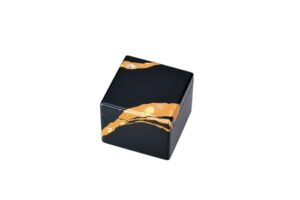
A te-kagami (手鏡, “hand mirror”) finished in gold maki-e over black urushi is one of the quieter objects to come out of Osaka’s lacquer trade. It belongs to the same workshop lineage that produced the city’s Buddhist altars — the gold-flecked, deep-black decorative work known today as Osaka-butsudan, designated a traditional craft by Japan’s Ministry of Economy, Trade and Industry in 1982. The mirror is the vanity-table cousin of the altar: the same lacquer, the same gold powder, applied to an object you actually pick up.
What makes the piece notable for an international reader is not novelty but continuity. Osaka was the merchant capital of early-modern Japan — the “Tenka no Daidokoro,” the nation’s kitchen — and that mercantile wealth bankrolled a dense cluster of lacquer and metal-leaf workshops clustered around the city’s great Jodo Shinshu temple towns. A hand mirror is where that altar-grade craft tradition meets a small, ordinary, personal object.
This guide is written for readers shopping from outside Japan who want to understand what the object is, where it comes from, how to buy it, and — just as importantly — who should not buy it. We cover the maki-e technique, the Naniwa lacquer lineage, international shipping paths, and how the piece compares to other lacquerware in the same family.
🔄 Updated:
⏱️ Read time: ~9 min
- Who this is for — and who should skip it
- Product overview (from published specs)
- Buying options
- 📦 Shipping & where to buy from outside Japan
- What it does well
- Weaknesses and things to verify before buying
- Conclusion — which buyer type are you?
- Other ways to approach this purchase
- Where this comes from
- ❓ Frequently Asked Questions
Who this is for — and who should skip it
- Want a small, usable object that carries a genuine regional lacquer lineage
- Appreciate gold maki-e on black urushi as a decorative idiom and understand it is hand-applied
- Are buying a gift with cultural depth rather than a mass-produced souvenir
- Accept hand-care (no dishwasher, no soaking) in exchange for a hand-finished surface
- Are comfortable buying internationally via the Amazon JP Global Store
- Need a large, daily wall or stand mirror — this is a hand-held te-kagami
- Want a guaranteed museum-grade artisan piece with a signed certificate (this is a catalog item)
- Expect a confirmed price and full spec sheet before ordering — those were not in the data
- Are unwilling to hand-wipe lacquer and keep it out of direct sun and dry heat
- Want next-day domestic shipping with no customs consideration
Product overview (from published specs)
The available information for Naniwa maki-e hand mirrors is thin. The table summarizes what can be stated for the craft and flags what could not be confirmed for any given piece. Such mirrors are generally hand-held objects finished in decorative lacquer; exact dimensions and weight vary by piece and should be checked with the seller.
| Attribute | Detail | Source |
|---|---|---|
| Object type | Hand mirror (te-kagami, 手鏡) | International retailer |
| Decoration | Gold maki-e over black urushi | Naniwa lineage and craft tradition |
| Tradition | Osaka-butsudan lacquer lineage (METI-designated 1982) | Maker / craft history |
| Origin | Osaka, Kansai, Japan | Maker direct |
| Dimensions / weight | — | Not in fetched data |
| Price | — | Not in fetched data |
📖 Glossary — key terms
- Maki-e (蒔絵, “sprinkled picture”) — a lacquer decoration technique in which gold or silver powder is sprinkled onto wet urushi to build a design.
- Urushi (漆) — Japanese lacquer, the refined sap of the lacquer tree, applied in layers and polished to a deep, durable finish.
- Te-kagami (手鏡) — a hand-held mirror, historically part of a woman’s vanity set.
- Osaka-butsudan (大阪仏壇) — Osaka’s Buddhist household altars; the maki-e and gold-leaf craft cluster designated by METI in 1982.
- Naniwa (難波 / 浪華) — a classical name for Osaka, used here to denote the city’s lacquer-craft lineage.
- Jodo Shinshu (浄土真宗) — the True Pure Land school of Buddhism whose dense Osaka temple network drove altar demand.
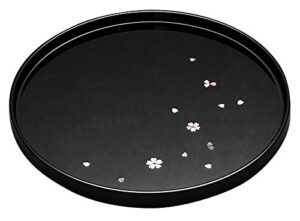
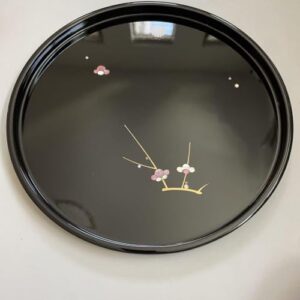
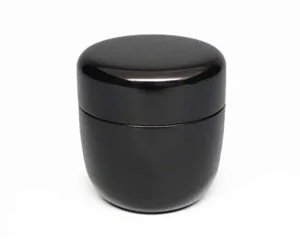
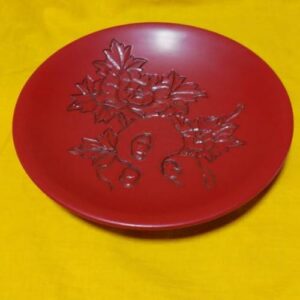
Related lacquerware guides on jpmono.com, for readers weighing maki-e against raden, tsuishu, kinma, and other decorative traditions.
Buying options
Prices and stock fluctuate, so the figures below describe purchase paths rather than a guaranteed quote. JPY (¥) is the reference currency; any USD figure is an approximate estimate at a ¥150/USD baseline.
| Store | Item / variant | Price | Notes |
|---|---|---|---|
| 🇺🇸 Amazon US (search) | Browse Japanese maki-e lacquer mirrors & vanity items | varies (USD) | Best if you are shopping from the US — Prime shipping, USD pricing, no international customs. Amazon US carries comparable Japanese lacquerware and maki-e accessories from several makers; this exact Naniwa piece is sourced from Japan (next row). |
| 🇯🇵 Amazon JP Global Store | This exact hand mirror | — | International shipping from Japan may be available; terms vary by destination. |
| Maker direct | Naniwa lacquer workshops | Varies | Workshop pages may list other vanity and altar pieces; English ordering is not guaranteed. |
| Proxy services (Buyee / Tenso) | Japan-only forwarding option | Item + forwarding fee | Useful if direct shipping is unavailable; adds a forwarding margin and a second shipping leg. |
Prices in USD are approximate and depend on the current exchange rate. The JPY price is the authoritative figure for the specific listed item.
📦 Shipping & where to buy from outside Japan
Lacquerware is generally not restricted for international shipping, but availability to a particular country can change. Confirm the destination and shipping terms with the seller at checkout.
Expect international shipping in the rough range of $15–$40 to the US and EU, with higher rates to other regions. Orders above your local de minimis threshold may attract customs duties or import VAT, which are the buyer’s responsibility. If a Japanese craft retailer does not ship to your country directly, a proxy service such as Buyee or Tenso can forward it, at the cost of an added margin and a second shipping leg.
“A hand mirror is where altar-grade lacquer meets a small, ordinary object you actually pick up.”
What it does well
Weaknesses and things to verify before buying
- No confirmed price. The fetched data did not include a price; treat any figure you see at purchase time as the real one and the article as context only.
- Fit is unconfirmed. Choose one suited to the intended use before buying.
- Hand-care required. Urushi lacquer should be wiped with a soft dry or barely-damp cloth, never put in a dishwasher, soaked, or scrubbed.
- Sensitive to sun and dry heat. Prolonged direct sunlight and very dry heat can dull or craze lacquer over time; store away from radiators and windows.
- Catalog item, not a signed art piece. If you need a named artisan and certificate of authenticity, contact the seller first.
- International shipping and duties. Cross-border delivery adds cost and time, and customs charges over your local threshold are your responsibility.
- Gold maki-e wears with handling. Decorative gold work is durable but not indestructible; abrasive contact in a bag or drawer can scuff it.
Conclusion — which buyer type are you?
Other ways to approach this purchase
Where this comes from

Osaka sits at the eastern edge of the Seto Inland Sea, at the mouth of the Yodo River, on the Osaka Plain in the Kansai region. Its position — a sheltered harbor with river access inland toward Kyoto and Nara — made it Japan’s logistical and commercial hub for centuries. Where Nara and Kyoto were imperial and religious capitals, Osaka was the capital of trade, and the wealth that flowed through its warehouses paid for the luxury crafts that grew up around its temples.
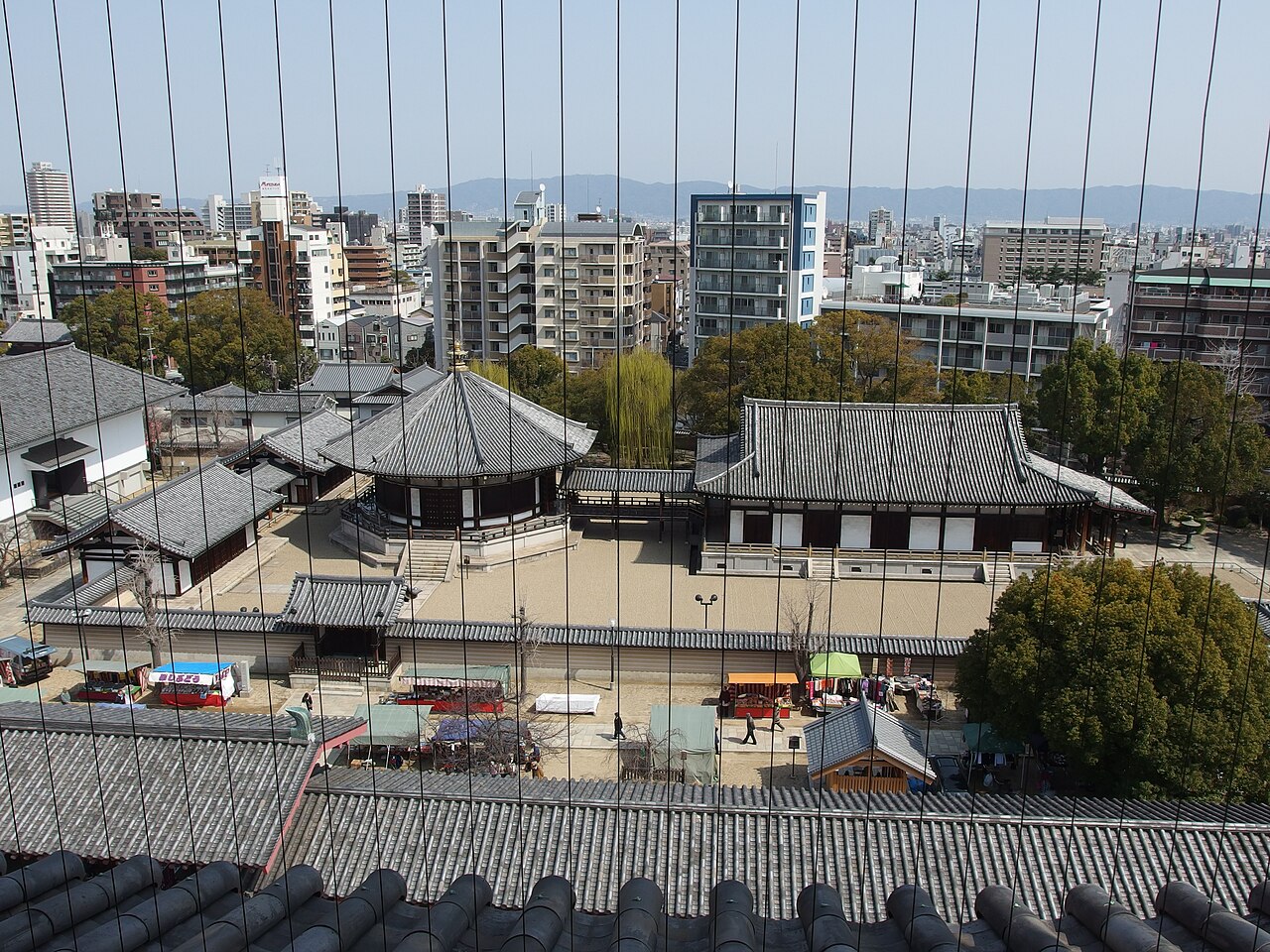
The historical anchor is religious. Shitenno-ji, founded in 593, is Japan’s oldest officially established Buddhist temple, and Buddhism’s long presence in Osaka created a standing demand for ritual objects — altars, fittings, and the lacquer and metal-leaf work that decorated them. That demand intensified dramatically in the late medieval period.
- 593 — Shitenno-ji founded, Japan’s oldest state Buddhist temple.
- 1496 — Ishiyama Honganji established, becoming the center of a vast Jodo Shinshu network.
- 1496–1580 — The Ishiyama Honganji temple town concentrates altar and lacquer demand in Osaka.
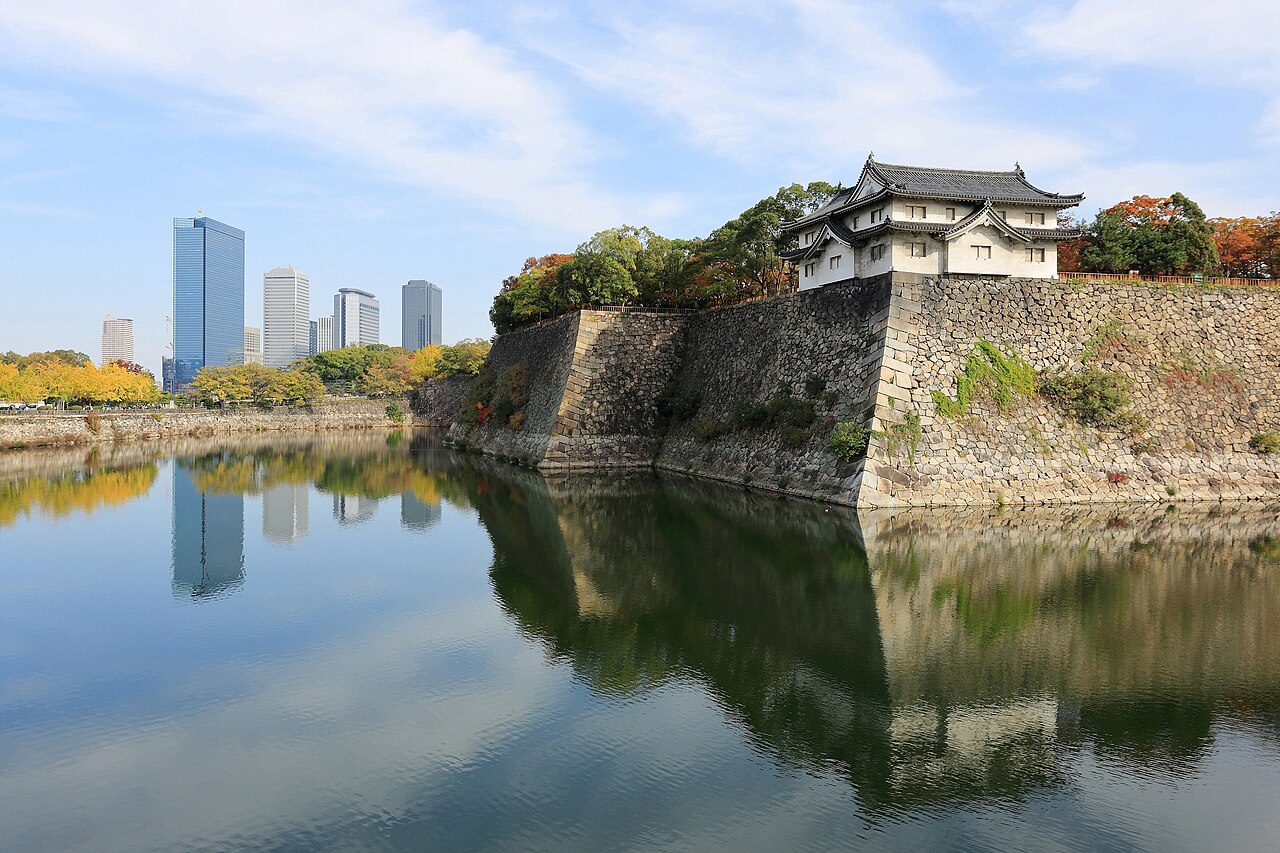
- 1583 — Toyotomi Hideyoshi begins Osaka Castle, anchoring the city’s merchant economy.
- Edo period — Osaka becomes the “Tenka no Daidokoro,” its wealth bankrolling luxury urushi work around the Kita-Mido and Minami-Mido temple towns.
- 1982 — Osaka-butsudan designated a traditional craft by METI.
- 2026 — Naniwa maki-e lacquer still applied to altars, accessories, and vanity pieces like this mirror.
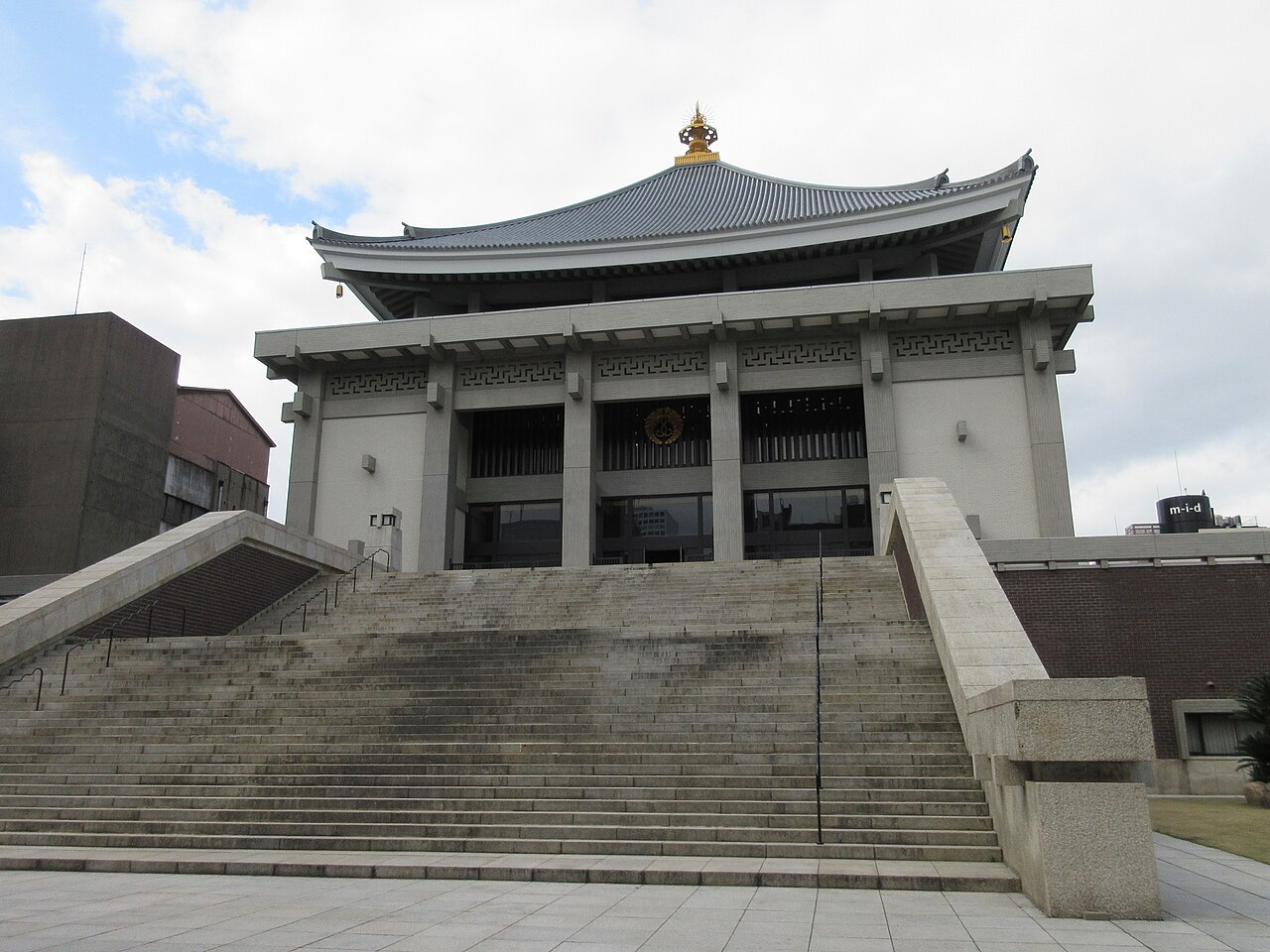
The continuity case runs through the city’s Jodo Shinshu temple towns. The Ishiyama Honganji complex, established in 1496, stood at the center of a vast True Pure Land network until 1580; after its fall, the religious demand reorganized around the Kita-Mido and Minami-Mido Honganji temples, whose surrounding districts concentrated the carpenters, gilders, and lacquerers who built and decorated household altars. That cluster is what METI recognized as Osaka-butsudan in 1982.
The same workshops that decorated altars applied the technique to smaller objects: accessory boxes, vanity items, and hand mirrors. The gold maki-e over deep black urushi seen on this te-kagami is, in effect, altar-grade decorative lacquer scaled down to a personal object. That is the lineage reflected here — a domestic mirror finished in the visual language of the Naniwa temple trade.
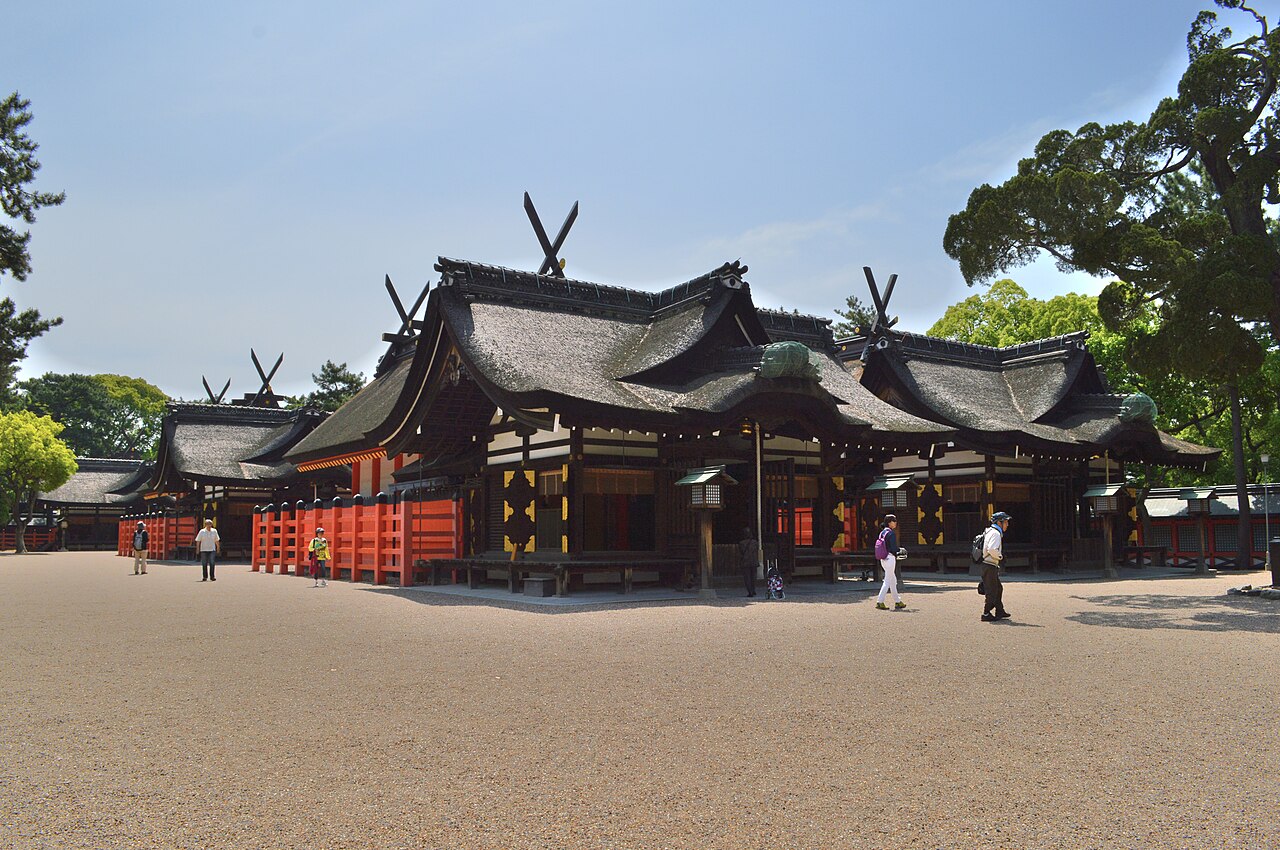
That ritual culture has never been a museum exhibit in Osaka — it is a working part of the city, from Sumiyoshi Taisha’s festivals to the household altars still kept in homes across Kansai. A maki-e hand mirror is a small, secular extension of the same lacquer tradition: an everyday object made in the idiom of a sacred one.
jpmono.com is curated by a Japan-based editorial team (working out of Toyama in the Hokuriku region and Nara in Kansai) and is independent. We do not take payment from the makers we feature; income comes from affiliate links.
❓ Frequently Asked Questions
What is maki-e, exactly?
Maki-e is a Japanese lacquer technique in which gold or silver powder is sprinkled onto wet urushi lacquer to build a design. On this mirror, the gold is applied over a deep black urushi base in the Naniwa decorative idiom.
Does this hand mirror ship outside Japan?
It is listed on the Amazon JP Global Store, which ships many household items internationally to most major destinations. Confirm availability to your country at checkout; if it does not ship directly, a proxy service such as Buyee or Tenso can forward it.
How do I care for a lacquer hand mirror?
Wipe it with a soft dry or barely-damp cloth. Do not put urushi lacquer in a dishwasher, soak it, or scrub it, and keep it out of prolonged direct sunlight and very dry heat to avoid dulling or crazing the surface.
How much does it cost?
Prices vary with the mirror’s size, lacquer materials, and finish, so compare current offers rather than relying on a fixed figure. Any USD estimate is approximate at a ¥150/USD baseline.
Is this a signed artisan piece?
A piece in the Naniwa maki-e lineage is not necessarily a signed, certificated artwork. If you need a named artisan and a certificate of authenticity, contact the seller or approach an Osaka lacquer workshop directly before buying.
How is maki-e different from raden or tsuishu?
Maki-e uses sprinkled metal powder for its design; raden inlays iridescent shell; tsuishu builds and carves layers of red lacquer. Our Nara raden tray, Takaoka aogai raden box, and Murakami tsuishu guides cover those alternatives if you want to compare techniques.
🤖 This article was prepared with AI assistance and reviewed against the available craft notes. Specifications, prices, and availability should be verified with the seller or workshop before purchase.
Affiliate disclosure: jpmono.com may earn a commission on qualifying purchases made through links on this page, at no additional cost to you.