![Ogatsu Suzuri Inkstone: Where to Buy Japan’s Slate Inkstone [2026]](https://jpmono.com/wp-content/uploads/2026/05/ogatsu-suzuri-slate-inkstone-where-to-buy-2026-featured.jpg)
Ogatsu Suzuri (雄勝硯, “Ogatsu inkstone”) is the slate inkstone carved on Miyagi’s Oshika Peninsula, on the Pacific coast of the Tōhoku region. The stone itself is genshoseki (玄昌石), a dense black slate that has been quarried in the hills above Ogatsu since the Muromachi period — roughly six centuries. Ground flat and polished, it becomes the surface on which a calligrapher rubs a sumi inkstick with water to make ink.
What makes Ogatsu unusual is not decoration but supply. According to industry figures cited in our source notes, this one small district produces close to 90 percent of all inkstones still made domestically in Japan, and the craft carries a national traditional-craft designation from Japan’s Ministry of Economy, Trade and Industry. The same slate roofs landmark buildings, Tokyo Station among them. The 2011 Great East Japan Earthquake tsunami struck Ogatsu hard, and what you are looking at today is a craft in slow recovery rather than a tourist souvenir.
This guide is written for calligraphy and sumi-e practitioners outside Japan who want a real working inkstone with verifiable provenance, and who need a clear path to buy one from abroad. We cover where Ogatsu sits, why the stone grinds the way it does, how it compares to the other “four treasures of the study,” and the honest gaps in the data we were able to pull for the specific listing.
🔄 Updated:
⏱️ Read time: about 9 minutes
![Ogatsu Suzuri Inkstone: Where to Buy Japan's Slate Inkstone [2026]](https://m.media-amazon.com/images/I/41M7biH6DfL._SL500_.jpg)
- Who this is for — and who should skip it
- Product overview (from published specs)
- Where this comes from — place, era, and the craft tradition
- Price snapshot across stores
- What it does well
- Weaknesses and things to verify before buying
- Conclusion — which buyer type are you?
- Other ways to approach this purchase
- 🏆 Editor’s Pick
- ❓ Frequently Asked Questions
Who this is for — and who should skip it
- Practice shodō (calligraphy) or sumi-e and want a stone you grind ink on daily
- Care about domestic Japanese provenance and a recognized traditional-craft designation
- Prefer the quiet, even bite of fine slate to a cheap molded resin or imported stone
- Want an object whose recovery story (post-2011 revival) means something to you
- Are comfortable buying from Japan and verifying details on the listing
- Only ever use bottled liquid sumi (bokujū) and never grind a stick
- Want a guaranteed price before you commit — our snapshot has no captured price
- Need a decorative display piece more than a working surface
- Expect same-day domestic shipping; this generally ships from Japan
- Are shopping purely on cost — entry resin or Chinese stones are far cheaper

Product overview (from published specs)
Our data pull for this specific listing came back nearly empty: the source snapshot captured the keyword and the item identifier, but no price, image, dimensions, or weight. We will not invent those numbers. The table below states what is verifiable from our craft source notes and marks the rest plainly. Treat the listing itself as the authoritative source for the missing fields.
Ogatsu Suzuri Inkstone
伝統工芸 雄勝硯
通常6~7日以内に発送します。 · Sold by JIMMY Online Shop · ASIN B0G4QN19DB
Price and availability as of 2026-08-31 02:30 JST. The Amazon listing at the time of purchase is authoritative. jpmono.com earns a commission on qualifying purchases at no extra cost to you.
| Attribute | Value | Source |
|---|---|---|
| Item | Ogatsu Suzuri hand-carved slate inkstone (rectangular, with ink well) · ASIN B0G4QN19DB | Spec sheet |
| Material | Genshoseki (玄昌石), a dense black slate quarried locally | Craft source notes |
| Form | Traditional rectangular shape with a grinding flat and an ink well (umi) | Spec sheet |
| Origin | Ogatsu, Ishinomaki City, Miyagi Prefecture (Oshika Peninsula) | Craft source notes |
| Designation | Nationally designated traditional craft (伝統的工芸品, METI) | Craft source notes |
| Dimensions | Unavailable at time of writing — verify on the Amazon JP listing | — |
| Weight | Unavailable at time of writing — verify on the Amazon JP listing | — |
| Price | Not captured in our source snapshot — verify on the Amazon JP listing | — |
Note on data: only the listing identifier was available from our fetch; live pricing, photographs, and measured specifications were unavailable at the time of writing. The data suggests the snapshot step did not complete for this item.
📖 Glossary — Japanese terms used in this article
- suzuri (硯) — an inkstone; the flat stone on which a sumi stick is ground with water to make ink.
- genshoseki (玄昌石) — the dense black slate quarried at Ogatsu; the raw material of the inkstone.
- hōbō / homei (鋒鋩) — the fine micro-tooth texture of the polished stone surface; it holds water and abrades the inkstick evenly.
- sumi (墨) — a solid inkstick of soot and animal glue, ground against the suzuri.
- bunbō shihō (文房四宝) — the “four treasures of the study”: brush, ink, paper, and inkstone.
- dentōteki kōgeihin (伝統的工芸品) — a craft formally designated as traditional by Japan’s METI.
- Date clan (伊達氏) — the warrior house that ruled the Sendai domain through the Edo period and patronized this craft.

Where this comes from — place, era, and the craft tradition

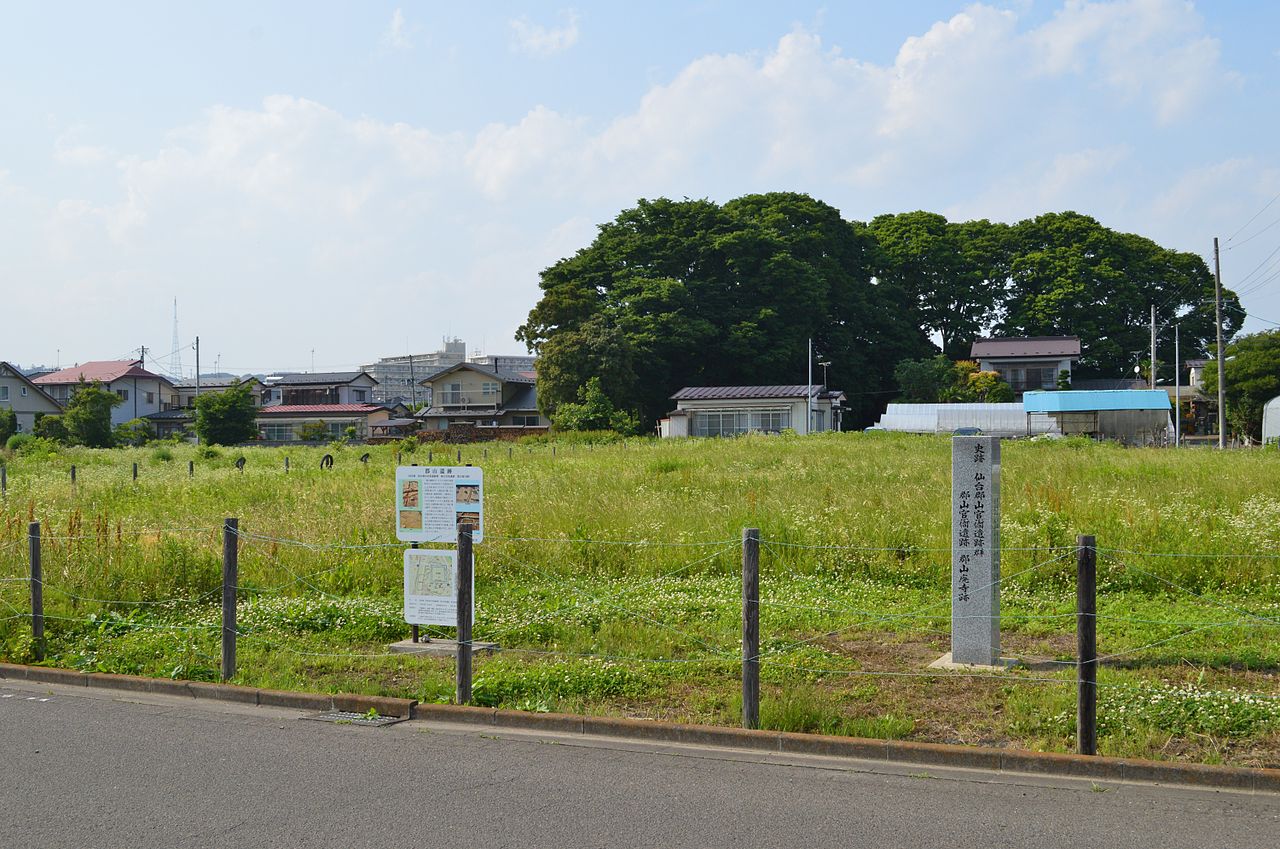
Miyagi Prefecture occupies the central Pacific side of Tōhoku, the northeastern arm of Japan’s main island of Honshu. Ogatsu itself is a small fishing district on the Oshika Peninsula, where the coastline folds into the deep, narrow inlets of a ria shoreline. The hills behind the harbor hold seams of genshoseki slate, and that geological accident — workable black stone within carrying distance of the water — is the reason an inkstone industry took root in a place otherwise known for fishing.
The stone has been quarried here since the Muromachi period, which places the craft’s origins roughly six hundred years back. Through the Edo period the district fell within the Sendai domain, ruled by the Date clan. The Date lords protected the craft and presented Ogatsu inkstones to the Tokugawa shogunate in Edo, the patronage that lifted a local stone trade into a recognized product.
- c. 1400 (Muromachi period) — Genshoseki slate first quarried in the hills above Ogatsu; inkstone carving begins.
- 1600s (Edo period) — The Date lords of the Sendai domain protect the craft and present Ogatsu inkstones to the Tokugawa shogunate.
- Modern era — The same genshoseki slate is used to roof landmark buildings, Tokyo Station among them.
- 20th century — Ogatsu Suzuri is designated a nationally recognized traditional craft (伝統的工芸品) by Japan’s METI.
- 2011 — The Great East Japan Earthquake tsunami devastates Ogatsu’s harbor and inkstone workshops.
- 2026 — A slow revival continues; Ogatsu still supplies roughly 90 percent of Japan’s domestically made inkstones.
The 2011 tsunami is not a footnote here. It reached up the inlets and destroyed much of the harbor settlement, including the small workshops where the stone was cut and finished. The craft did not end, but it contracted sharply, and the inkstones being carved today come from a community that is still rebuilding. Buying one is, in a modest way, buying into that continuity.
“Roughly nine out of every ten inkstones still made in Japan come from this one tsunami-scarred stretch of the Oshika Peninsula.”
Why does the stone matter to a calligrapher? The polished slate carries a fine micro-tooth surface the craft calls hōbō (鋒鋩). Those microscopic teeth catch the inkstick and abrade it evenly while the stone holds a thin film of water, so the ink develops with a quiet, consistent bite rather than skating or clumping. The data suggests this fine, even grind is exactly what separates a working Ogatsu stone from a decorative one.
Price snapshot across stores
Prices and stock fluctuate, and our snapshot did not capture a price for this listing. The table below is a routing guide, not a quote. JPY is the authoritative currency for the sourced item; any USD figure would be an approximate estimate at a ¥150/USD baseline, and we have none to convert here. Verify the current figure at the retailer before buying.
| Store | Item / variant | Price | Notes |
|---|---|---|---|
| 🇺🇸 Amazon.com (US) | Browse Japanese calligraphy supplies & inkstones | varies (USD) | Best if you are shopping from the US — Prime shipping, USD pricing, no international customs. Amazon US carries Japanese inkstones, sumi inksticks, and brushes from various makers, useful for comparing. The specific Ogatsu piece is sourced from Japan (next row). |
| 🇯🇵 Amazon JP Global Store | Ogatsu Suzuri slate inkstone (ASIN B0G4QN19DB) | Not captured — verify on listing | Where the specific piece is sourced. Ships internationally from Japan to most major destinations; confirm price and shipping at checkout. |
| Maker direct | Ogatsu cooperative / local workshops | varies | Post-2011 revival means limited and often Japanese-only online presence; selection is irregular. |
| Proxy services (Buyee / Tenso) | Domestic-only listings forwarded abroad | varies + fees | For Japanese listings that do not ship to your country directly; the service forwards from a Japan address for a fee. |
International shipping: Amazon JP Global Store ships many household items worldwide; an inkstone is small but dense, so expect roughly $15–$40 in shipping to the US or EU, with higher rates elsewhere. Orders above your country’s de minimis threshold may attract customs duty. Prices in USD are approximate and depend on the current exchange rate.
What it does well
Weaknesses and things to verify before buying
- No captured price. Our source snapshot did not include a price for this listing; you cannot budget from this article alone and must check the store page.
- No listing photograph in our data. Because no image was captured, confirm the actual shape, finish, and presence of a lid or box on the listing before ordering.
- Dimensions and weight unconfirmed. Slate is dense; a larger stone can be surprisingly heavy and may raise shipping cost. Verify size before assuming it suits your desk or travel kit.
- Care discipline required. A slate inkstone should be wiped, not left with dried ink crusting in the well; neglect dulls the grinding surface over time.
- Not for liquid-ink-only users. If you never grind a stick, an inkstone of this caliber is wasted on you; bottled bokujū does not need it.
- Supply is irregular. The post-2011 revival means stock and seller mix can change; a listing available today may lapse, so do not delay if a specific stone matters.
Conclusion — which buyer type are you?
Other ways to approach this purchase
🏆 Editor’s Pick
❓ Frequently Asked Questions
Where is Ogatsu Suzuri made?
In Ogatsu, a coastal district of Ishinomaki City on Miyagi Prefecture’s Oshika Peninsula, in the Tōhoku region — about 400 km northeast of Tokyo and roughly 50 km east of Sendai. The slate is quarried from the hills behind the harbor.
What is genshoseki, and why does it matter for grinding ink?
Genshoseki (玄昌石) is the dense black slate quarried at Ogatsu. When polished it carries a fine micro-tooth surface called hōbō (鋒鋩) that holds water and abrades the inkstick evenly, so ink develops with a smooth, consistent bite rather than skating or clumping.
Can I buy an Ogatsu inkstone and ship it outside Japan?
Yes. The specific listing is sourced from Amazon JP Global Store, which ships many household items internationally to most major destinations. Expect roughly $15–$40 in shipping to the US or EU, with higher rates elsewhere, and possible customs duty above your country’s threshold. If a domestic-only listing will not ship to you, a proxy service such as Buyee or Tenso can forward it.
How do I care for a slate inkstone?
Rinse off ground ink with water after use and wipe the stone dry; do not let ink dry and crust in the well, as it dulls the grinding surface over time. Avoid harsh abrasives. With basic care a genshoseki stone lasts for decades.
How is Ogatsu Suzuri different from Akama Suzuri?
Ogatsu is a black genshoseki slate from Miyagi in Tōhoku and supplies most of Japan’s domestically made inkstones. Akama is a reddish-brown stone from Yamaguchi in western Honshu, prized for fine carving. Both are designated traditional crafts; see our separate Akama Suzuri guide for its specifics.
Was the craft affected by the 2011 tsunami?
Severely. The Great East Japan Earthquake tsunami destroyed much of Ogatsu’s harbor and many of its inkstone workshops. The craft survived but contracted sharply, and the stones made today come from a community still in slow recovery.
Do I need a specific sumi inkstick and brush to use it?
You need a solid sumi inkstick and water to grind on the stone, plus a fude brush and paper to write. The inkstone is one of the four treasures of the study (bunbō shihō); our guides to Kobaien sumi, Akashiya brushes, and Echizen washi cover the others.
jpmono.com is curated by a Japan-based editorial team (working out of Toyama in the Hokuriku region and Nara in Kansai) and is independent. We do not take payment from the makers we feature; income comes from affiliate links. We do not physically test every product — we read maker specs and source listings.
This article was prepared with AI assistance and reviewed against the source data available at the time of writing. Specifications, prices, and availability should be confirmed on the retailer’s listing before purchase.
Affiliate disclosure: jpmono.com may earn a commission on qualifying purchases made through links on this page, at no additional cost to you.