![Kasama Yaki Pottery Mug: Ibaraki’s Free-Spirited Stoneware [2026]](https://jpmono.com/wp-content/uploads/2026/05/kasama-yaki-pottery-mug-where-to-buy-2026-featured.jpg)
Kasama yaki (笠間焼, “Kasama ware”) is the oldest pottery tradition in the Kantō region — the eastern plain that surrounds Tokyo — and it began not in a city but in a farming village. The mug covered in this guide is a handmade stoneware coffee cup of roughly 300 ml, finished in ash and iron glazes and thrown at a single artisan kiln in Kasama, Ibaraki Prefecture.
What makes Kasama unusual is what it refuses to do. After the war the town deliberately declined to adopt one signature house style, and instead became a place where individual potters work to their own eye. The result is a tradition whose defining quality is the absence of a fixed style — every kiln, and often every firing, looks a little different. A plain drinking mug, used every morning, turns out to be one of the most honest objects this town makes.
This article is written for international readers deciding whether a one-of-a-kind Japanese stoneware mug is worth sourcing from Japan. We cover what the listing actually documents, where Kasama sits on the map and in history, how it compares to neighboring kilns, the realistic shipping paths from outside Japan, and who should pass on it. Where the fetched data is thin, we say so plainly rather than guess.
🔄 Updated:
⏱️ Read time: ~9 min
Kasama Yaki Stoneware Mug
Ash & iron glaze · ~300 ml · ASIN B0BN1PF4FX
![Kasama Yaki Pottery Mug: Ibaraki's Free-Spirited Stoneware [2026]](https://m.media-amazon.com/images/I/31mNsbo6svL._SL500_.jpg)
- Who this is for — and who should skip it
- Product overview (from published specs)
- 📍 Where this comes from — place, era, and the craft tradition
- Which finish should you choose?
- 📦 Shipping & where to buy from outside Japan
- Price snapshot across stores
- What it does well
- Weaknesses and things to verify before buying
- Conclusion — which buyer type are you?
- Other ways to approach this purchase
- 🏆 Editor’s Pick
- ❓ Frequently Asked Questions
Who this is for — and who should skip it
- Want a daily-use mug with genuine maker provenance rather than mass production
- Appreciate ash- and iron-glaze surfaces where no two pieces match
- Are comfortable that a handmade item will differ from its catalog photo
- Like the idea of owning the parent tradition of better-known Mashiko ware
- Are shopping for a thoughtful, everyday gift with a real backstory
- Need a guaranteed exact match to a photo, dimension, or weight
- Want confirmed microwave/dishwasher ratings before buying (the listing does not state them)
- Expect cheap, fast domestic shipping — this ships from Japan
- Are buying a matched set where every cup must be identical
- Need precise pricing locked in advance (live price was not captured in our data)

Product overview (from published specs)
The data note for this article is important: only the spec’s ASIN reference and recommendation hint were available — the live Amazon listing snapshot (price, photograph, exact dimensions, weight) was not captured in the fetched JSON. The values below are drawn from the spec’s recommendation hint and should be confirmed on the listing before purchase. We have not invented any figure that the data does not support.
| Attribute | Detail (per spec hint) | Source / confidence |
|---|---|---|
| Item | Kasama yaki handmade stoneware coffee mug | Spec hint |
| Material | Stoneware (high-fired clay) | Spec hint |
| Glaze | Ash / iron glaze | Spec hint |
| Capacity | ~300 ml (approximate) | Spec hint — verify |
| Origin | Kasama, Ibaraki Prefecture (Kantō) | Spec hint |
| Production | Single artisan kiln, handmade | Spec hint |
| ASIN | B0BN1PF4FX (Amazon JP Global Store) | Spec |
| Weight / exact dims | Unconfirmed — check listing | Not in fetched data |
| Price | Not captured — verify at listing | Not in fetched data |
📖 Glossary — Japanese craft terms used here
yaki (焼, “ware” / “fired”) — the suffix attached to a pottery tradition named for its town: Kasama yaki, Mashiko yaki, Shigaraki yaki.
Kasama yaki (笠間焼) — stoneware made in and around Kasama, Ibaraki; the oldest pottery tradition in the Kantō region.
Stoneware — clay fired to a high temperature until it vitrifies into a hard, water-resistant body; sits between earthenware and porcelain.
Ash glaze — a glaze made using wood or plant ash, producing soft, variable greens and browns that shift with the firing.
Iron glaze — an iron-bearing glaze that fires to warm browns, ambers, and near-blacks, characteristic of Kasama’s iron-rich local clay.
kame (甕) — large storage jars; an early Kasama utilitarian product. suribachi (すり鉢) — a ridged grinding mortar bowl.
Mito domain (水戸藩) — a senior branch house of the ruling Tokugawa family, whose patronage helped Kasama flourish in the Edo period.
Himatsuri (ひまつり) — Kasama’s annual pottery fair, which draws large crowds of buyers and visitors.

📍 Where this comes from — place, era, and the craft tradition

Kasama is an inland town in the western part of Ibaraki Prefecture, on the northeastern edge of the Kantō plain that radiates out from Tokyo. The land here holds iron-rich clay, and that geology — rather than a court or a castle — is the reason a pottery industry took root. The earliest Kasama products were not art objects but the heavy utilitarian wares a farming region needs: kame storage jars, suribachi grinding mortars, and everyday bowls.
The tradition is old by Kantō standards. It began in the An’ei era of the 1770s, when a local farmer named Kuno Hanemon learned potting techniques from a craftsman of the Shigaraki tradition far to the west. That single transmission seeded what would become the oldest pottery in eastern Japan.
“Kasama’s signature is that it has no signature — its identity is the absence of a fixed style.”
-
1770s (An’ei era) — Local farmer Kuno Hanemon learns potting from a Shigaraki craftsman; the Kasama kiln tradition begins. -
Edo period — Kasama flourishes under the patronage of the Mito domain, a senior Tokugawa branch house; iron-rich clay supplies kame jars, suribachi mortars, and everyday bowls. -
19th century — The founder of Mashiko ware (Tochigi) studies at Kasama, making Kasama the parent of its more famous neighbor. -
Postwar (mid-20th century) — Kasama deliberately rejects a single house style and reinvents itself as a “free” artist-potter town. -
Annually — The Himatsuri pottery fair draws large crowds to the kilns and galleries of Kasama. -
2026 — Kasama remains the Kantō region’s oldest pottery town, defined by varied ash, iron, and colored glazes from independent kilns.
The most consequential thing about Kasama may be its offspring. In the 19th century the founder of Mashiko ware — the Tochigi tradition later made internationally famous through the folk-craft (mingei) movement — studied his craft at Kasama. The two towns sit close together across the Ibaraki–Tochigi border, the parent and the child of eastern Japanese pottery.
What “still being made here” means in Kasama is unusual. Rather than a single multi-generation house pouring one recognizable style, Kasama after the war became a town of independent artist-potters, each working to a personal vision. The continuity here is not a fixed look passed down unchanged; it is the ongoing freedom to make whatever the clay and the maker suggest. A humble ash- or iron-glazed mug is the everyday expression of exactly that openness.
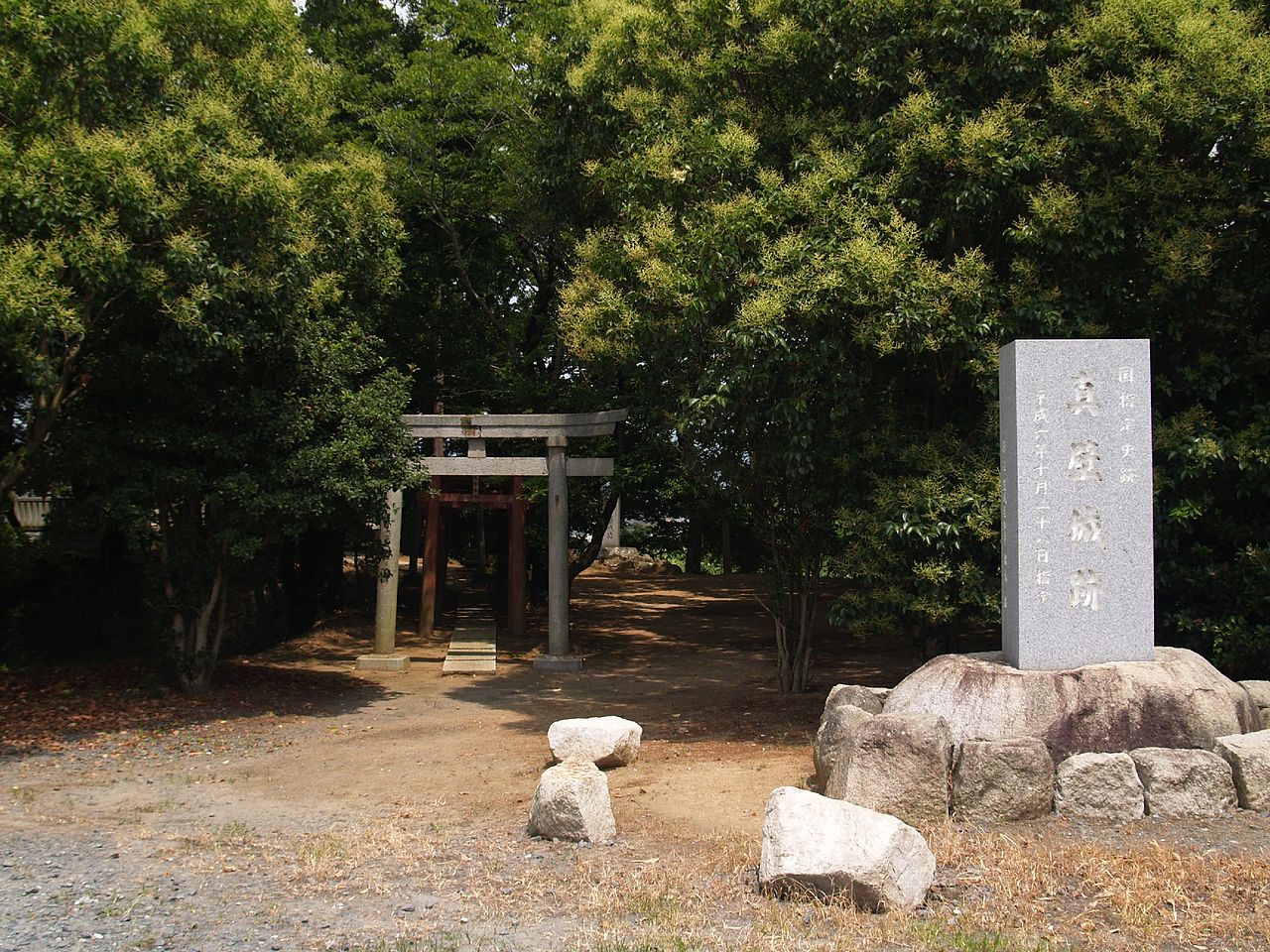
Which finish should you choose?
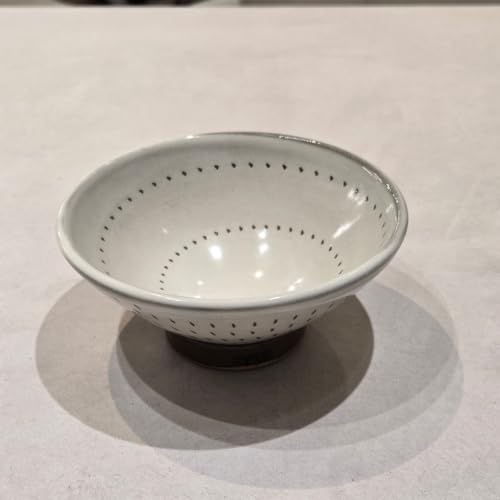
This piece is listed in 3 finishes. The photos below are the actual 色 options on the listing right now — pick the one you want and confirm it on the product page before ordering, since hand-finished wares vary slightly piece to piece.
![Kasama Yaki Pottery Mug: Ibaraki's Free-Spirited Stoneware [2026] — ホワイトマット・ブラックマット finish](https://m.media-amazon.com/images/I/31QXu211XzL._SL500_.jpg)
![Kasama Yaki Pottery Mug: Ibaraki's Free-Spirited Stoneware [2026] — ホワイトマット finish](https://m.media-amazon.com/images/I/31nQHm-+YCL._SL500_.jpg)
📦 Shipping & where to buy from outside Japan
The specific mug in this guide is sourced from the Amazon JP Global Store (ASIN B0BN1PF4FX), which ships many household items internationally to most major destinations. For readers in the US, EU, or Australia, the realistic path is either the Amazon JP Global Store link directly or, for shoppers who prefer USD and Prime logistics, browsing comparable Japanese stoneware on Amazon US.
- Amazon JP Global Store — ships the listed item from Japan; international shipping is typically in the range of $15–$40 to the US and EU, higher to other regions. Confirm the per-item shipping quote at checkout.
- Customs / duties — orders above your local de minimis threshold may incur import duty or tax on arrival; this is separate from the item and shipping price.
- Proxy services (Buyee / Tenso) — useful if a particular kiln’s piece is listed only on a domestic Japanese marketplace and not on the Global Store.
- Handmade caveat — because the item is one of a kind, returns/exchanges for “looks different from the photo” are unlikely to be honored; the variation is the product, not a defect.
Price snapshot across stores
Live pricing was not captured in the fetched data for this item, so the JPY figure below is shown as “verify at listing” rather than guessed. JPY (¥) is the authoritative price for the specific item; any USD figure is an approximate estimate at a ¥150/USD baseline as of May 2026.
| Store | Item / variant | Price (JPY + USD est.) | Notes |
|---|---|---|---|
| 🇺🇸 Amazon.com (US) | Browse Japanese stoneware mugs | varies (USD) | Best if you’re shopping from the US — Prime shipping, USD pricing, no international customs. Amazon US carries Japanese stoneware and mingei-style mugs from various makers, useful for comparing glaze styles and price tiers. This exact Kasama kiln’s piece ships from Japan (next row). |
| 🇯🇵 Amazon JP Global Store | Kasama yaki ash/iron mug, ~300 ml (B0BN1PF4FX) | Verify at listing (price not captured) | The sourced listing for the specific item. Ships internationally from Japan; international shipping and any duties are additional. |
| Maker direct | Individual Kasama kiln / gallery | Varies | Many Kasama potters sell through their own kilns and the annual Himatsuri fair; international shipping is not always offered. |
| Proxy services (Buyee / Tenso) | Domestic-only Kasama listings | Item + proxy fee + forwarding | For pieces listed only on Japanese marketplaces; adds a service fee and a second shipping leg. |
Prices and stock fluctuate. USD figures are approximate and depend on the current exchange rate; the JPY price on the listing is authoritative. Always confirm at the retailer before purchasing.
What it does well
Weaknesses and things to verify before buying
- Live price not captured. Our fetched data did not include a price snapshot; confirm the current JPY price on the listing before ordering.
- No product photo in our data. The mug’s exact appearance, glaze tone, and form should be checked against the live listing image — and even then, handmade variation applies.
- Care ratings unconfirmed. The listing does not state microwave or dishwasher compatibility; for a glazed stoneware art piece, hand washing is the safe default until you confirm otherwise.
- Dimensions and weight unlisted in our data. “~300 ml” is from the spec hint; verify capacity and size if those matter for your use.
- Piece-to-piece variation. No two cups are identical — unsuitable if you need a matched set or an exact catalog match.
- International shipping and possible duties add to the JPY price and lengthen delivery versus a domestic mug.
Conclusion — which buyer type are you?
Other ways to approach this purchase
🏆 Editor’s Pick
❓ Frequently Asked Questions
Does the Amazon JP Global Store ship a Kasama yaki mug internationally?
Why might the mug look different from the listing photo?
Is the mug microwave and dishwasher safe?
How is Kasama yaki different from Mashiko yaki?
What does Kasama’s “no fixed style” actually mean for a buyer?
How much does it cost?
jpmono.com is curated by a Japan-based editorial team (working out of Toyama in the Hokuriku region and Nara in Kansai) and is independent. We do not take payment from the makers we feature; income comes from affiliate links. We do not physically test every product — we read maker’s specs and source listings.
🤖 This article was prepared with AI assistance and reviewed against the source listing data. Where the fetched data was incomplete (price and product image were not captured), the article states this explicitly rather than filling gaps with assumptions.
Affiliate disclosure: jpmono.com may earn a commission on qualifying purchases made through links on this page, at no additional cost to you.