![Tokyo Ginki Hammered Silver Sake Cup: Edo Silversmith Craft Guide [2026]](https://jpmono.com/wp-content/uploads/2026/05/japan-map-regions-and-prefectures-800x1050.png)
Tokyo Ginki (東京銀器, “Tokyo silverware”) is the silversmith’s craft of old Edo, and a hand-hammered solid-silver sake cup is one of its most direct expressions. The trade grew up around the shogunate’s silver mint — the ginza — relocated in 1612 to the district of central Tokyo that still carries the name. A guild of shirogane-shi (silversmiths) settled nearby, first making sword fittings, hairpins, and pipe parts for samurai and wealthy merchants, and later, when the sword era ended, turning the same hands toward vessels for the table.
What reaches an international reader today is a small, dense cup raised from a single sheet of silver by hand-hammering — a technique called tsuiki (鎚起). Silver conducts cold faster than almost any tableware metal, so a chilled pour reaches the lip quickly, and the metal is traditionally said to round the edge of the sake. It is also a material that ages: silver tarnishes, is polished, tarnishes again, and slowly takes on the marks of its owner.
This guide is written for readers shopping from outside Japan who want to understand what they are actually buying — the craft, how to tell a real solid-silver piece from a plated one, what it does well, where it falls short, and the realistic paths to purchase it. We cover material and form, regional and historical context, comparisons to related Japanese metal and glass vessels, and an honest list of caveats before you commit.
🔄 Last updated: June 2, 2026
⏱️ Read time: about 13 minutes
- Who this is for — and who should skip it
- Product overview (from published specs)
- Where this comes from — Tokyo, Edo, and the silversmith’s trade
- 📦 Shipping & where to buy from outside Japan
- Purchase options
- What it does well
- Weaknesses and things to verify before buying
- Conclusion — which buyer type are you?
- Other ways to approach this purchase
- ❓ Frequently Asked Questions
Who this is for — and who should skip it
- Want a serious, lifetime drinking vessel rather than a souvenir, and accept that solid silver ages and needs occasional polishing.
- Drink chilled junmai or daiginjō sake and value the fast, clean chill that silver delivers.
- Collect Japanese metal craft and want a piece from the Edo silversmith lineage to sit alongside tin, copper, or iron vessels.
- Are buying a milestone gift — silver carries weight as a wedding, retirement, or anniversary present.
- Appreciate visible hand-work and prefer hammer-marked surfaces over machine-perfect ones.
- Want a low-maintenance cup — silver tarnishes and is not something to leave wet in a drying rack.
- Need dishwasher- and freezer-proof everyday glassware; a hand-raised silver cup is neither.
- Are on a tight budget — solid silver sits far above ceramic, glass, or tin in price.
- Expect a sealed, plated, or food-coated finish; this is bare metal that reacts with air over time.
- Cannot verify the hallmark and would not be comfortable buying a piece sold without a clear pure-silver mark.
Product overview (from published specs)
Tokyo ginki silver sake cups are made by shaping and hammering silver, while dimensions and weight vary by piece. The overview focuses on craft characteristics rather than fixed product specifications.
| Attribute | Detail |
|---|---|
| Craft | Tokyo Ginki (東京銀器) — Edo / Tokyo silverware, a nationally designated traditional craft |
| Form | Guinomi / ochoko — a small sake cup |
| Material | Solid silver (純銀, jungin, pure silver) — confirm the hallmark before buying |
| Technique | Tsuiki (hand-raising a single sheet by hammering) with possible hori chasing |
| Origin | Tokyo (Kantō region), made by a Tokyo silversmith workshop |
| Capacity / dimensions / weight | — |
| Price | — |
📖 Glossary — key terms
- Tokyo Ginki (東京銀器) — “Tokyo silverware”; the silversmith craft of old Edo, designated a National Traditional Craft.
- Tsuiki (鎚起) — raising a hollow form from a single flat sheet of metal by repeated hand-hammering over a stake.
- Shirogane-shi (白銀師) — a silversmith; the guild trade that grew around the Edo silver mint.
- Kazari-shokunin (錺職人) — an ornament-maker who worked precious metals into fittings and decorative pieces.
- Hori (彫り) — chasing or engraving; cutting line and texture into the metal surface.
- Jungin (純銀) — pure silver; the hallmark to look for on a solid-silver piece.
- Guinomi (ぐい呑み) — a larger sake cup for unhurried drinking; ochoko (お猪口) is the smaller everyday size.
- Ginza (銀座) — literally “silver mint”; the Tokyo district named for the shogunate institution moved there in 1612.
Where this comes from — Tokyo, Edo, and the silversmith’s trade

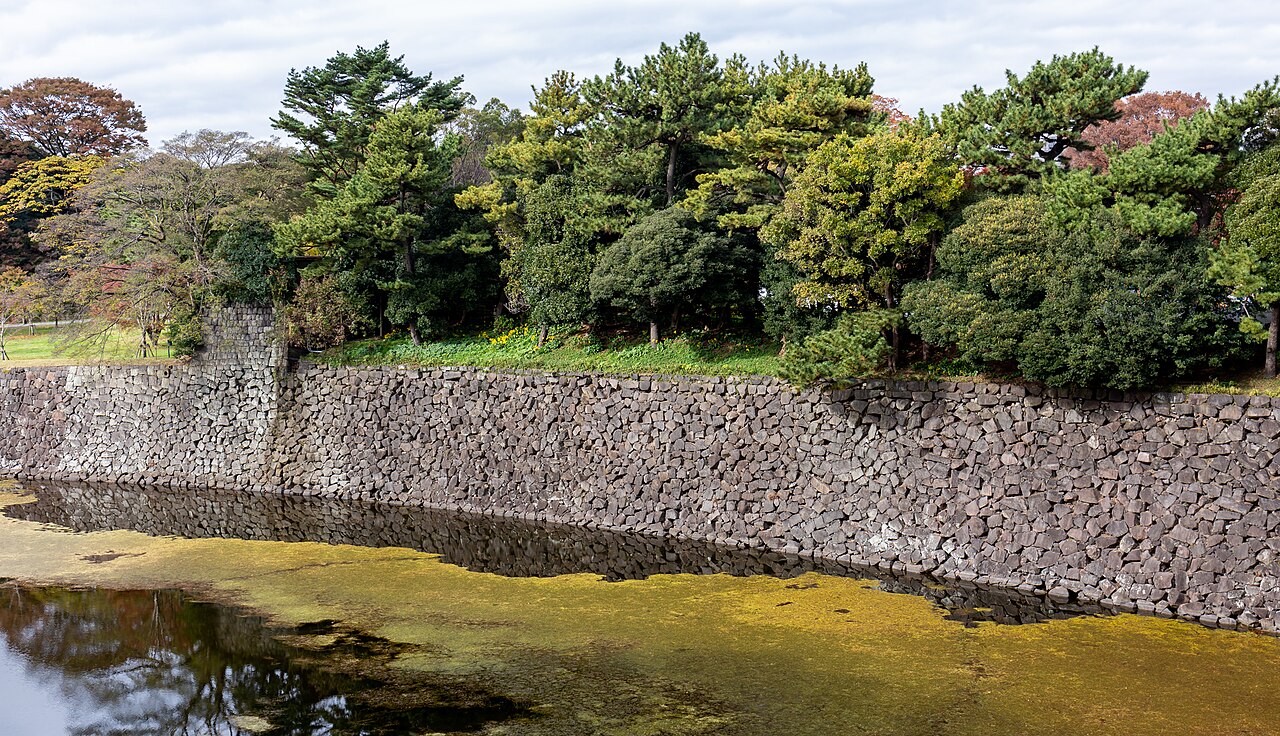
Tokyo is the seat of the Tokugawa shogunate’s old city, Edo, on the broad Kantō plain where the Sumida River meets Tokyo Bay. It became Japan’s political center in 1603 and has been the country’s capital ever since. The silver trade did not arrive as a rural folk craft; it grew inside a dense merchant-and-samurai city, financed by the people who lived and spent there.
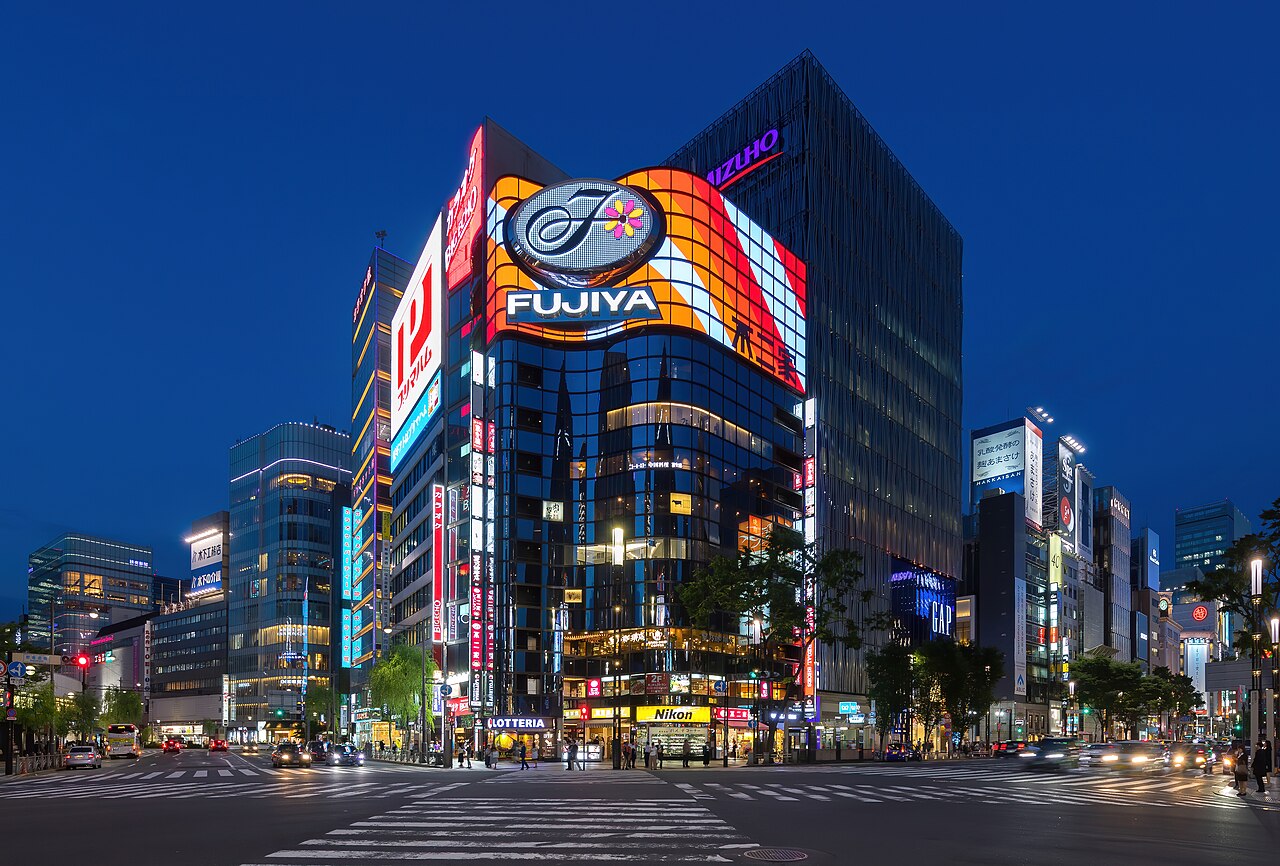
In 1612 the shogunate moved its silver mint, the ginza, to a district of central Edo that has carried the name ever since. Around that institution a guild of shirogane-shi — silversmiths — and kazari-shokunin — ornament-makers — took root. Their early work was not tableware at all. They made sword fittings, kanzashi hairpins, kiseru pipe parts, and decorative metalwork for samurai and for the merchant class concentrated in nearby Nihonbashi.
- 1603 — Tokugawa Ieyasu establishes the shogunate; Edo (modern Tokyo) becomes Japan’s political center.
- 1612 — The shogunate relocates the silver mint (ginza) to the central Edo district that still bears the name.
- Edo period (1603–1868) — A guild of shirogane-shi and kazari-shokunin grows, making sword fittings, kanzashi, kiseru, and ornaments.
- 1868 — The Meiji Restoration ends the shogunate and, with it, samurai sword culture.
- Meiji era — Silversmiths pivot from sword fittings to tableware and vessels: sake cups, tea utensils, spoons.
- Shōwa era — Tokyo Ginki is designated a National Traditional Craft (Dentō Kōgeihin) by Japan’s METI.
- 2026 — Tokyo silversmith workshops, many in the shitamachi quarters, continue raising silver vessels by hand.
The Meiji Restoration of 1868 ended the world these artisans had served. As the samurai class dissolved and sword-wearing fell away, demand for fittings collapsed. Rather than disappear, the silversmiths redirected the same raising-and-chasing skills toward objects for the table — sake cups, tea utensils, and spoons. This pivot is the direct reason a hand-hammered silver guinomi exists as a category today: it is sword-fitting craftsmanship rerouted into a drinking vessel.
“A silver cup tarnishes, is polished, and tarnishes again — it is one of the few drinking vessels deliberately made to age alongside the person who owns it.”
Why silver for sake at all? The metal conducts heat extremely well, so a chilled cup pulls warmth from your fingers and a cold pour reaches the lip fast and clean. Drinkers traditionally describe silver as rounding the edge of the sake — a folk-traditional claim about mouthfeel rather than a measured chemical effect. And because bare silver reacts with air, the surface dulls and is re-polished over a lifetime, so the cup records its own use.
The continuity case for Tokyo Ginki is a city story rather than a single-village one. The craft survives in workshops scattered through Tokyo’s downtown, where the master-apprentice line connects today’s silversmiths to the Edo guild that once supplied the samurai. That a hammered silver cup can still be ordered and shipped is the modern tail of a four-hundred-year trade.
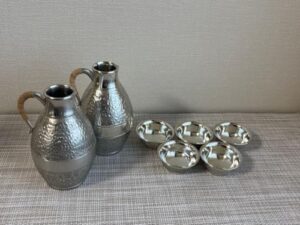
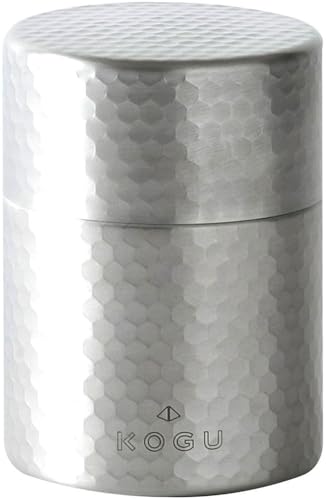
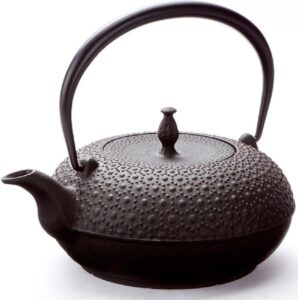
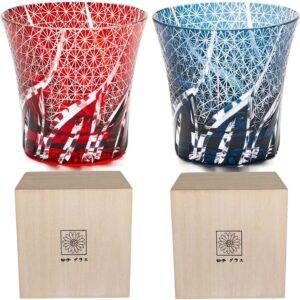
If you are weighing a silver sake cup against other Japanese metal and glass vessels, these related guides cover the closest alternatives across silver, tin, iron, and cut glass.
📦 Shipping & where to buy from outside Japan
Tokyo ginki silver tableware can be sourced through Japanese craft retailers, and international availability and shipping fees vary by country. Confirm shipping to your destination before ordering.
- Amazon JP Global Store: a route for international delivery from Japan; check destination shipping at checkout.
- Amazon US (amazon.com): easiest if you are in the US — Prime shipping and USD pricing — though this exact hand-raised silver cup may not be individually listed there. Use it to browse comparable Japanese silver and metal vessels.
- Maker direct / specialist galleries: some Tokyo silversmith workshops sell through their own sites or Japanese craft galleries; expect proxy forwarding for overseas orders.
- Proxy services (Buyee / Tenso): useful when a Japan-based seller does not ship directly; they receive the parcel in Japan and forward it on.
- Customs & duties: orders above your country’s de minimis threshold may incur import duty and tax on arrival — silver content can affect valuation, so budget for it.
Purchase options
JPY (¥) is the authoritative price for the specific listed item. No price was present in the available data at the time of writing, so the figures below are marked for verification rather than fabricated. USD figures, where shown elsewhere, are approximate estimates at a ¥150/USD baseline.
| Store | Item / variant | Price (JPY + USD est.) | Notes |
|---|---|---|---|
| 🇺🇸 Amazon.com (US) | Browse Japanese silver & metal sake cups | varies (USD) | Best if you are shopping from the US — Prime shipping, USD pricing, no international customs. Amazon US carries Japanese silver, tin, and copper drinkware for comparing tiers; this exact Tokyo Ginki piece is sourced from Japan (next row). |
| 🇯🇵 Amazon JP Global Store | This Tokyo Ginki hammered silver sake cup | — | Ships internationally from Japan; confirm delivery terms before buying. |
| Maker direct | Workshop / gallery piece | Unconfirmed — check maker site | Some Tokyo silversmiths sell direct; overseas buyers usually need a forwarding service. |
| Proxy services (Buyee / Tenso) | Any JP-only option | Item price + forwarding fee | Use when a seller does not ship directly to your country; a handling and forwarding fee may apply. |
What it does well
Weaknesses and things to verify before buying
- Solid silver usually costs more than ceramic, glass, or tin. Confirm the purchase details before committing.
- Confirm it is solid silver, not plated. Look for a pure-silver hallmark (純銀 / "silver" / a numeric fineness mark). If composition is unclear, assume nothing — silver-plated cups exist.
- Tarnish is built in. Bare silver dulls with exposure to air and sulfur compounds. You will need to polish it periodically; this is maintenance, not a defect, but it is real ongoing care.
- Not dishwasher or freezer hardware. A hand-raised cup should be hand-washed and dried promptly; do not treat it like everyday tempered glass.
- Dimensions and capacity are unconfirmed here. Guinomi and ochoko sizes differ noticeably. Check the stated capacity so you receive the size you expect.
- International shipping and customs add cost. Shipping from Japan plus possible import duty on a silver item can raise the landed price meaningfully; budget before ordering.
- Softness of pure silver. High-purity silver is a soft metal and can dent or scratch under rough handling — fine for careful use, less so for a busy shared bar.
Conclusion — which buyer type are you?
Other ways to approach this purchase
❓ Frequently Asked Questions
Does Amazon ship Tokyo Ginki silver sake cups internationally?
Tokyo ginki silver tableware can be sourced through Japanese craft retailers. International availability and shipping fees vary by country, so confirm shipping to your destination before ordering.
Is the cup solid silver, and how do I confirm it?
Tokyo Ginki pieces are traditionally raised from solid silver. A pure-silver hallmark such as 純銀 (jungin) or a fineness mark can help identify composition; silver-plated cups also exist and cost less.
Why drink sake from silver rather than glass or tin?
Silver conducts heat very well, so a chilled cup pulls cold quickly and a cold pour reaches the lip crisp. Drinkers traditionally say silver rounds the edge of the sake — a folk-traditional description of mouthfeel rather than a measured chemical change. Tin offers a similar chill at lower cost, while glass shows the liquid but does not conduct cold the same way.
How do I care for a silver sake cup and handle tarnish?
Hand-wash with mild soap, rinse, and dry promptly rather than leaving it wet. Bare silver tarnishes with exposure to air and sulfur compounds, so polish it periodically with a proper silver cloth or polish. Avoid the dishwasher and abrasive scrubbers. Tarnish-and-polish is part of owning solid silver, not a defect.
Is silver safe for sake and food contact?
Solid silver is a long-established material for drinking vessels. Use the cup for its intended purpose, keep it clean and dry, and distinguish solid silver from coated or plated pieces.
How is Tokyo Ginki different from Akita silver filigree or tin cups?
Tokyo Ginki is the Edo silversmith tradition of raising and chasing solid silver into vessels and ornaments. Akita ginsen-zaiku is a different silver craft built from fine twisted silver wire (filigree), more often used for jewelry. Tin cups, such as Osaka or Naniwa suzuki ware, share the cold-conducting appeal at a lower price but are a softer, non-precious metal.
Will I pay customs duty?
Possibly. Orders above your country’s de minimis threshold can incur import duty and tax on arrival, and a silver item’s value may push it over that line. Budget for the possibility and check your local rules before ordering.
jpmono.com is curated by a Japan-based editorial team (working out of Toyama in the Hokuriku region and Nara in Kansai) and is independent. We do not take payment from the makers we feature; income comes from affiliate links. We do not physically test every product — we read maker specifications and describe the craft context. Read more about our editorial standards.
Affiliate disclosure: jpmono.com may earn a commission on qualifying purchases made through links on this page, at no additional cost to you.