![Ryukyu Lacquer Tsuikin Tray: Okinawa’s Royal Lacquerware, Where to Buy [2026]](https://jpmono.com/wp-content/uploads/2026/06/ryukyu-shikki-tsuikin-lacquer-tray-where-to-buy-2026-featured.jpg)
A Ryukyu lacquer tray (琉球漆器, Ryukyu shikki) is one of the few Japanese household objects that carries the memory of a sovereign kingdom. Before Okinawa was a prefecture, it was the Ryukyu Kingdom — a maritime state unified under the Sho dynasty in 1429 that traded across the East China Sea — and lacquerware was among its most prized court goods. The tray covered here is finished in the islands’ vivid vermilion urushi and decorated with tsuikin (堆錦), a raised-relief lacquer technique that exists in no other Japanese tradition.
Most international readers know lacquerware through Wajima, Aizu, or Kyoto. Ryukyu lacquer sits apart. It grew up in the subtropics, on light cores of native deigo wood, under the patronage of a court that needed splendid tribute gifts for Ming and Qing China — not in a cold mainland castle town. That different climate, different botany, and different political purpose produced a different aesthetic: warmer reds, tropical flower motifs, and the soft sculptural texture of tsuikin that you can feel under a fingertip.
This guide is for readers weighing a genuine Ryukyu lacquer tray as a serving piece or a display object, and who want to understand what they are actually buying before they spend. We cover what the technique is, how the piece compares to mainland raden and lacquer trays, where it comes from, honest caveats about a niche craft with thin distribution, and the realistic purchase paths from outside Japan.
🔄 Updated: June 13, 2026
⏱️ Read time: ~11 min

- Who this is for — and who should skip it
- Product overview (from published specs)
- Price snapshot across stores
- Where this comes from
- What it does well
- Weaknesses and things to verify before buying
- Conclusion — which buyer type are you?
- Other ways to approach this purchase
- 🏆 Editor’s Pick
- ❓ Frequently Asked Questions
Who this is for — and who should skip it
- Want a lacquer piece with genuine Okinawan, not mainland, heritage
- Are drawn to the warm vermilion and raised-relief tsuikin texture
- Will use it for sweets, tea service, or as a display tray rather than daily knocks
- Appreciate buying from a small workshop tradition and accept limited stock
- Already own mainland lacquer and want a contrasting regional piece
- Need a dishwasher- and microwave-safe everyday tray
- Want guaranteed in-stock availability and fast Prime delivery
- Are price-sensitive — authentic urushi tsuikin is not cheap
- Expect mass-produced consistency rather than handwork variation
- Plan to leave it in direct sun or a very dry, heated room long-term
Product overview (from published specs)
The data available for this specific item is limited to the Amazon JP Global Store listing, which is the sourced path for the piece. Where a spec value was not stated in the listing, it is marked rather than guessed.
Ryukyu Lacquer Tsuikin Tray
琉球漆器 角萬漆器 堆錦 菓子盆 24㌢
通常9~10日以内に発送します。 · Sold by 玩具jamp · ASIN B0FR1B1KZR
Price and availability as of 2026-09-01 05:22 JST. The Amazon listing at the time of purchase is authoritative. jpmono.com earns a commission on qualifying purchases at no extra cost to you.
| Attribute | Detail | Source |
|---|---|---|
| Craft | Ryukyu shikki (琉球漆器) — Okinawan lacquerware | Maker tradition |
| Form | Tray / obon (serving and display) | Listing |
| Decoration | Tsuikin (堆錦) raised relief; some pieces use raden (mother-of-pearl) inlay | Maker tradition |
| Finish | Vermilion urushi (natural lacquer) | Listing image |
| Core material | Wood core (traditionally native deigo); confirm at listing | Maker tradition |
| Origin | Okinawa Prefecture, Japan | Maker tradition |
| Dimensions / weight | Unconfirmed — check listing | — |
| Price | Not captured in snapshot — verify at the live listing | — |
| ASIN | B0FR1B1KZR | Amazon JP Global Store |
Sources: Amazon US search (primary, moonill-20) for comparable Japanese lacquer goods; Amazon JP Global Store (secondary, moonill-22, sourced listing) for the specific item; maker tradition for craft attributes. Specs not present in the listing are marked “Unconfirmed.”
📖 Glossary — key terms
- Ryukyu shikki (琉球漆器) — lacquerware of the Ryukyu Kingdom / Okinawa, distinct from mainland Japanese lacquer.
- Urushi (漆) — natural lacquer sap, applied in thin coats and hardened by humidity into a durable, water-resistant film.
- Tsuikin (堆錦) — a uniquely Ryukyuan technique: pigment-kneaded lacquer is rolled into thin sheets, cut to shape, and applied as a raised relief of flowers and tropical motifs.
- Raden (螺鈿) — mother-of-pearl inlay; in Okinawa, often cut from local yako-gai (great green turban shell).
- Deigo (梯梧) — the Indian coral tree (Erythrina), a light subtropical wood traditionally used for Ryukyu lacquer cores.
- Kaizuri Bugyosho (貝摺奉行所) — the Ryukyu court’s official lacquer-and-shell workshop in Shuri.
- Obon (お盆) — a flat serving tray.
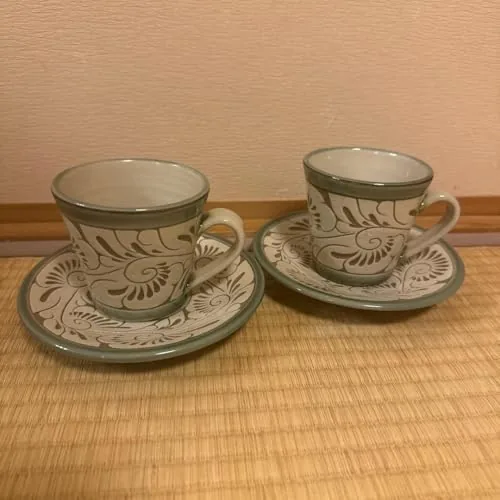
Related jpmono guides — other Okinawan crafts, and lacquer / raden trays from across Japan worth weighing against this one.
 🏺 Okinawa Yachimun Tsuboya mug
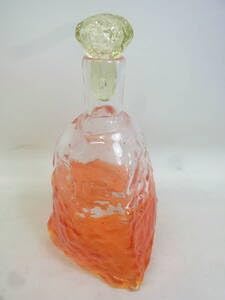 🍶 Ryukyu glass kara-kara server
🔪 Okinawa hand-forged knife
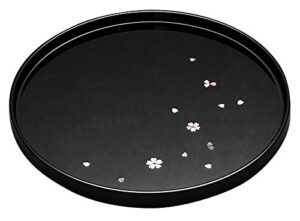 🌙 Nara raden lacquer tray
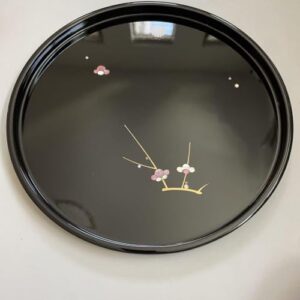 📦 Takaoka aogai raden box
🍶 Wajima nuri sakazuki pair
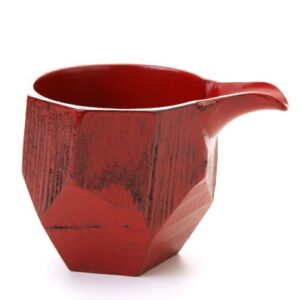 🥣 Tosa lacquer katakuchi
Price snapshot across stores
USD figures are approximate estimates at a ¥150/USD baseline as of mid-2026; the JPY price at the listing is the authoritative one. Where no price was captured, the snapshot says so plainly rather than inventing a figure.
| Store | Item / Variant | Price | Notes |
|---|---|---|---|
| 🇺🇸 Amazon.com (US) | Browse Japanese lacquer trays | varies (USD) | Best if you are shopping from the US — Prime shipping, USD pricing, no international customs. Amazon US carries lacquer and raden trays from various Japanese makers; genuine Okinawan tsuikin pieces are rarely listed and are sourced from Japan (next row). |
| 🇯🇵 Amazon JP Global Store | This Ryukyu shikki tsuikin tray (ASIN B0FR1B1KZR) | Check listing (not captured in snapshot) | Sourced listing for the specific item; ships internationally from Japan to most major destinations. Verify the live price before ordering. |
| Maker direct | Okinawan lacquer workshop / craft gallery | Varies by piece | Some Okinawan lacquer ateliers and Naha craft shops sell direct; selection and international shipping vary. Best for commissioned or one-of-a-kind tsuikin work. |
| Proxy services (Buyee / Tenso) | Forwarding for JP-only listings | Item price + forwarding fee | Useful when a workshop or marketplace ships only within Japan. Adds a forwarding fee and a customs step at your border. |
Prices and stock fluctuate. Always verify the current figure at the retailer before purchasing; the affiliate link carries the live data.
Where this comes from

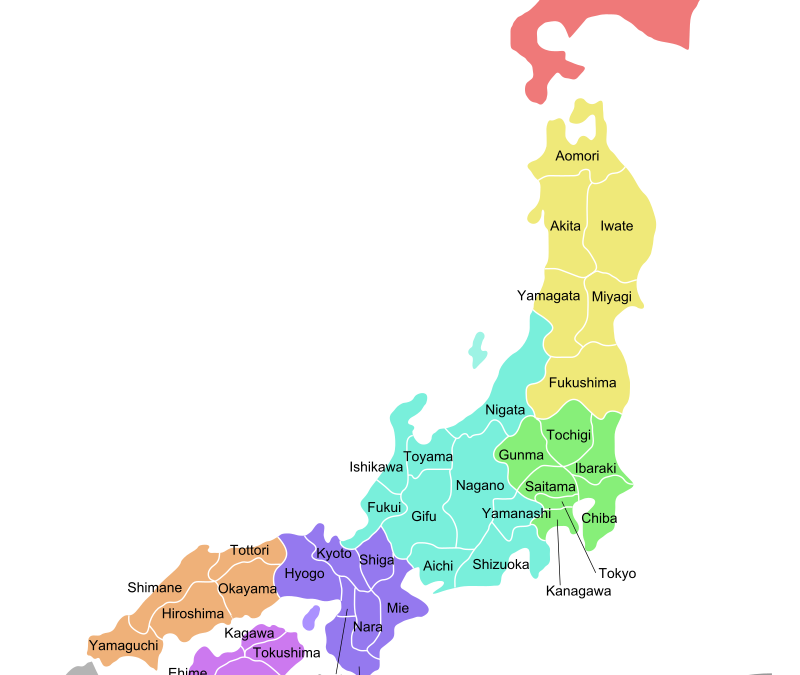
Okinawa is not a single place but an archipelago — a long scatter of islands strung across the warm seas between Kyushu and Taiwan. Naha, on the main island, sits at a latitude shared with subtropical southern China. This geography is not background detail; it shaped the craft. The mainland lacquer centers worked in temperate forests with slow-grown hardwoods and cold, dry winters. Okinawan artisans worked with light subtropical timber and humidity that, in fact, helps urushi cure — and they answered to a court whose wealth came from the sea.
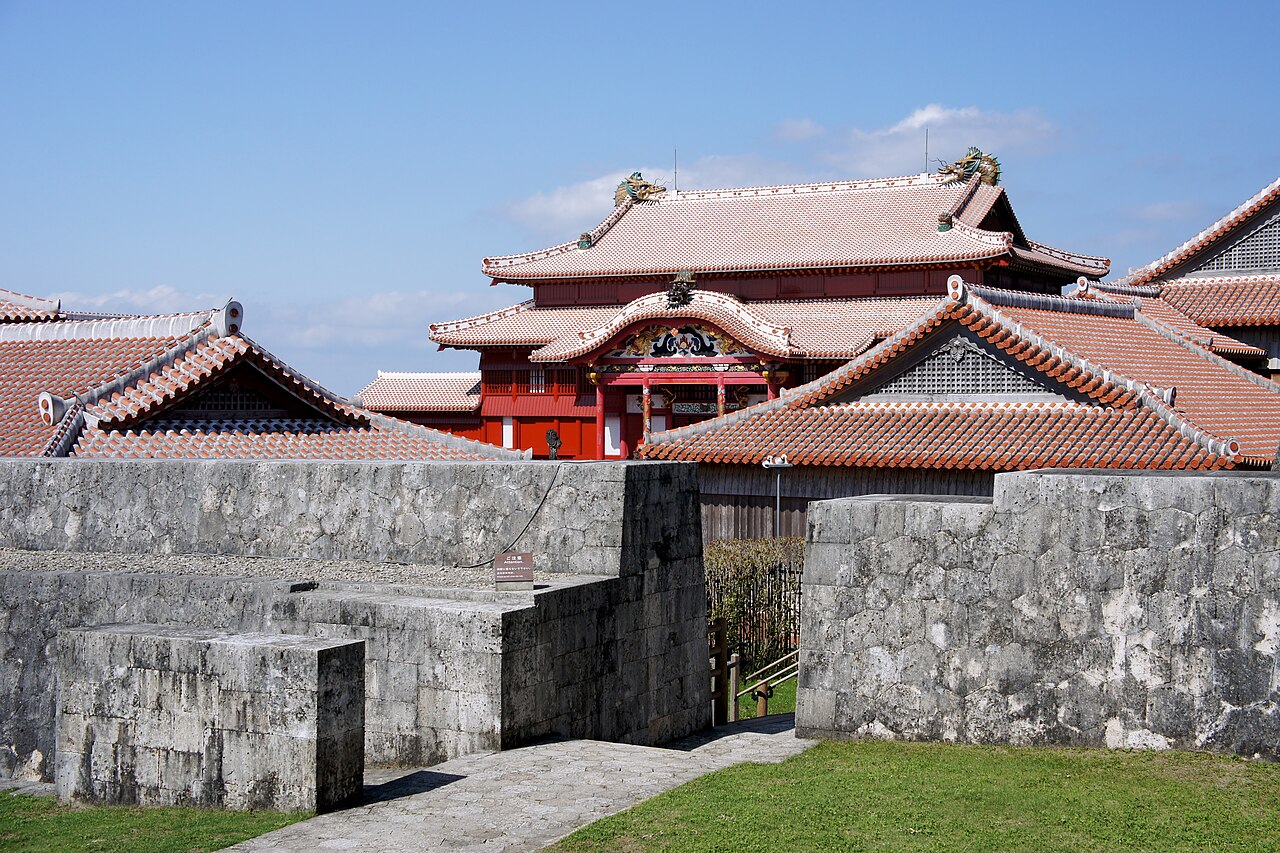
The Ryukyu Kingdom was unified under the Sho dynasty in 1429, ending an era of rival principalities and turning the islands into a single state centered on Shuri. For the next two centuries Ryukyu thrived as a tribute-trade hub: it sent regular missions to Ming and later Qing China and brokered goods across the East China Sea. Lacquerware was a prime tribute and export good — splendid, durable, and unmistakably Ryukyuan — and the court treated it as a matter of state. In the 17th century it established the Kaizuri Bugyosho (貝摺奉行所), an official workshop in Shuri that gathered the kingdom’s best lacquer and shell artisans under royal supervision.
- 1372 — Ryukyu begins formal tribute trade with Ming China.
- 1429 — Sho Hashi unifies the islands as the Ryukyu Kingdom, centered on Shuri.
- 1609 — Satsuma invades; Ryukyu becomes subordinate to both Satsuma and Edo while keeping its China trade.
- 17th century — The Kaizuri Bugyosho, the court lacquer-and-shell workshop, is established in Shuri.
- Early 18th century — The tsuikin raised-relief technique is developed — found in no other Japanese lacquer tradition.
- 1879 — The kingdom is abolished and Okinawa Prefecture is established; the court workshop system ends.
- 1945 — The Battle of Okinawa destroys Shuri Castle and much of the craft’s infrastructure.
- 1972 — Okinawa reverts to Japan; postwar workshops rebuild the lacquer tradition.
- Today — A small number of Okinawan workshops continue Ryukyu shikki, including tsuikin and raden work.
The craft adapted to its setting in concrete ways. Cores were cut from light native deigo wood. The lacquer was laid in a vivid vermilion that reads warmer than mainland reds. Inlay came from local yako-gai, the great green turban shell, whose shimmer the islands had in abundance. And in the early 18th century Ryukyu lacquerers developed their signature: tsuikin, in which lacquer is kneaded with pigment, rolled into paper-thin colored sheets, cut like cloth, and laid onto the surface as a low relief of flowers and tropical motifs.
“Tsuikin is the one lacquer technique that belongs to no mainland school — it was invented in a kingdom that traded with China and answered to a king, and it exists nowhere else in Japan.”
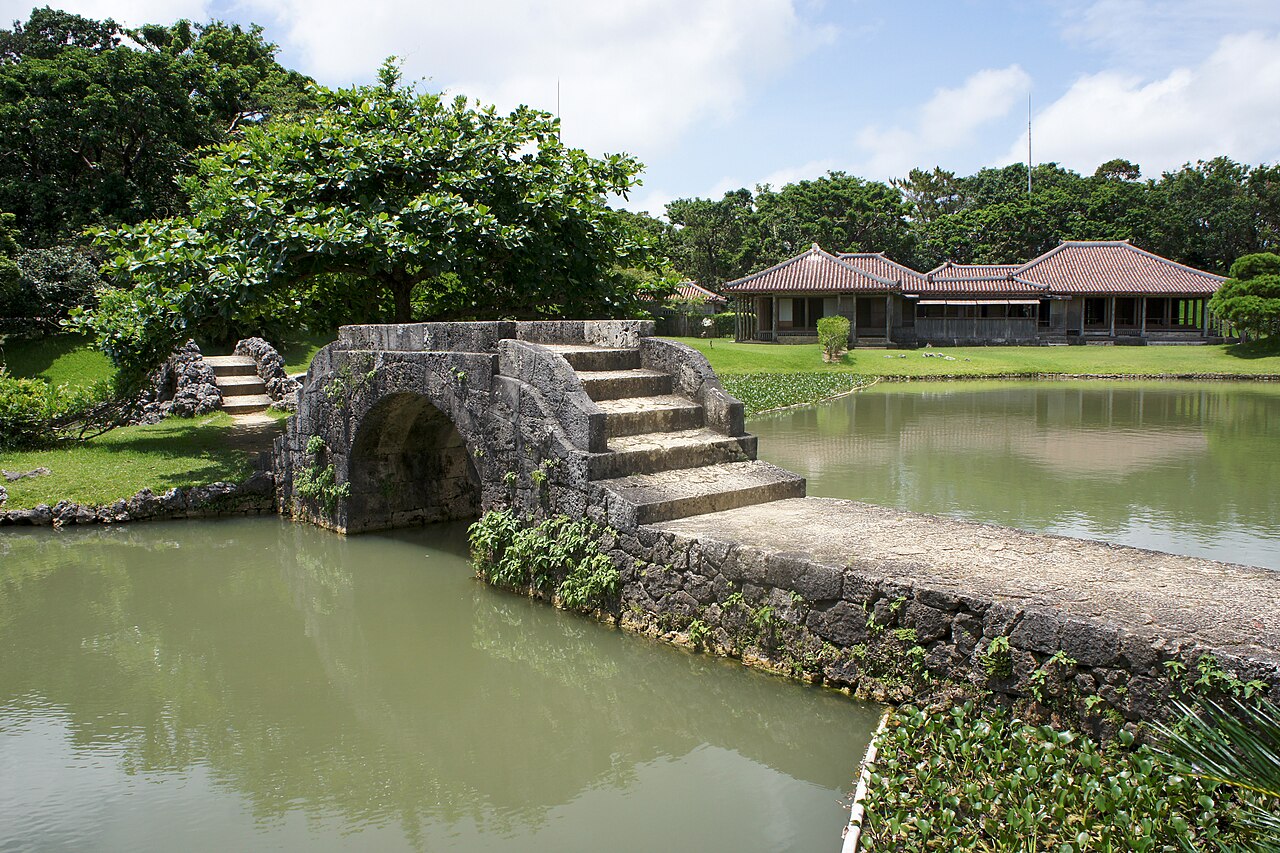
What “still being made here” means for Ryukyu lacquer is a story of survival as much as continuity. The court workshop system ended with the kingdom in 1879, and the Battle of Okinawa in 1945 destroyed Shuri Castle and scattered the craft’s tools, materials, and masters. Postwar, the tradition was rebuilt by a small number of workshops, and today Ryukyu shikki — tsuikin and raden alike — is made by relatively few hands. That scarcity is the honest backdrop to any purchase: this is not a high-volume product line.
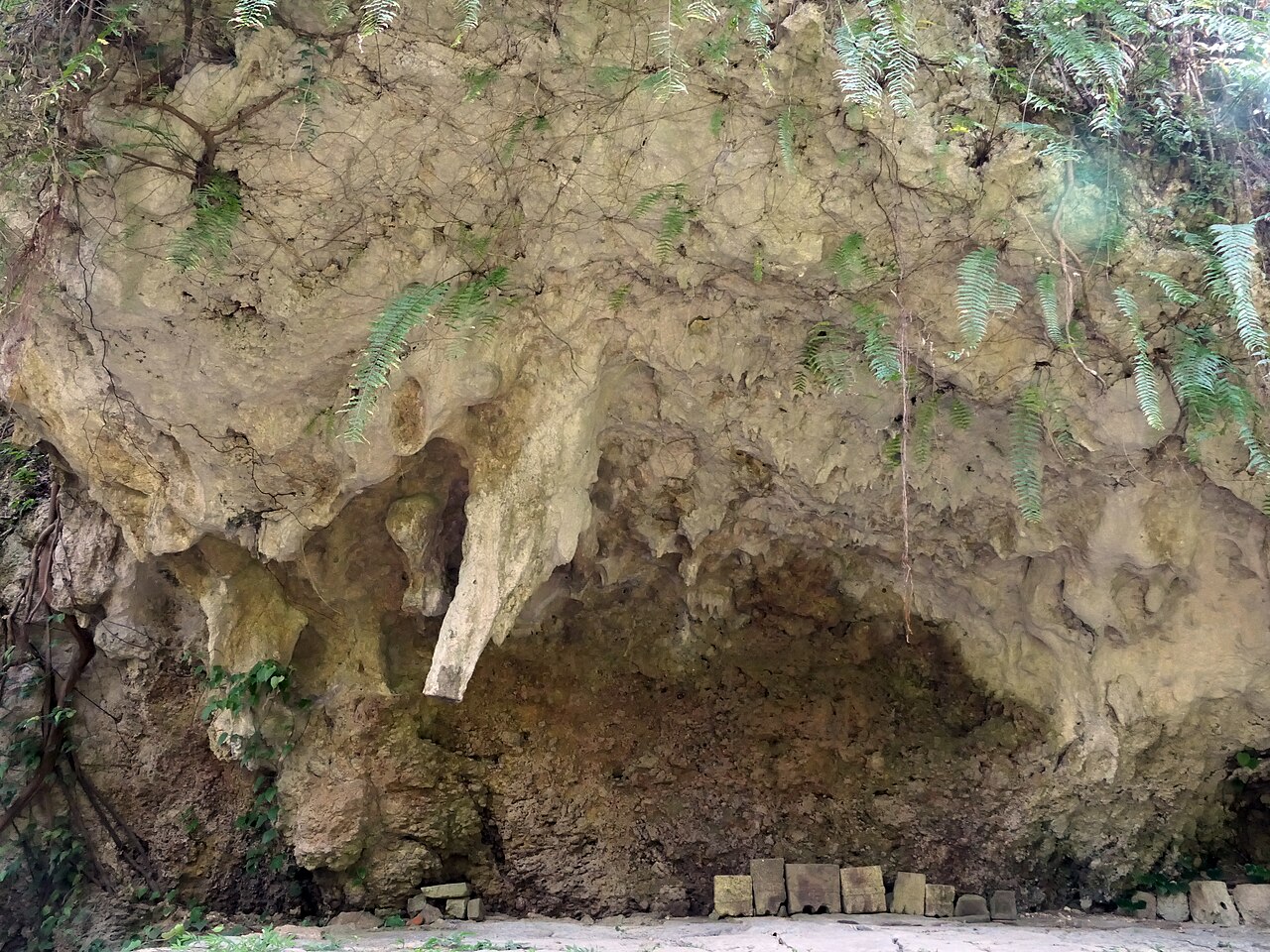
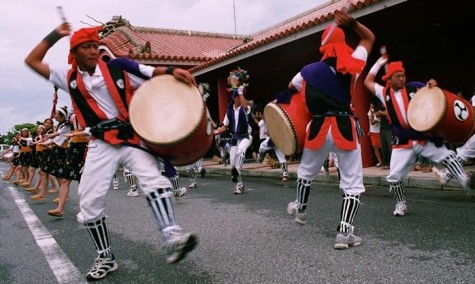
The cultural surround still hums. Okinawa’s color sense — saturated reds, deep blues, the greens of subtropical leaves — runs through its textiles, its pottery, and its festivals, and tsuikin’s floral motifs draw from the same well. A vermilion lacquer tray is not an isolated curiosity; it is a piece of an island visual language that you can still hear in summer drumming and see in the dyes of bingata cloth.
What it does well
Tsuikin relief is unique to Ryukyu lacquer. Owning a tsuikin tray is owning a craft with no mainland equivalent — a genuine point of difference from Wajima or Aizu pieces.
The vermilion urushi reads warmer and brighter than mainland reds, and pairs strikingly with the iridescence of yako-gai raden when present.
Because the decoration is raised, the motifs have real relief you can feel — a quality flat painted or inlaid lacquer cannot reproduce.
This is the descendant of court-workshop tribute ware, not a tourist-market invention. The heritage is documented and specific.
Weaknesses and things to verify before buying
- Thin, inconsistent distribution. Genuine Ryukyu shikki is made by few workshops. Stock comes and goes, and the specific listing may sell out or change. Confirm availability before setting your heart on a piece.
- Price and specs not in the snapshot. The data captured for this item did not include a confirmed price or dimensions. Verify both at the live listing — do not assume.
- Authenticity varies. “Ryukyu-style” and machine-decorated trays exist alongside true hand-built tsuikin. Check the producer name and whether the relief is genuinely hand-applied urushi tsuikin rather than a printed or molded imitation.
- Care is not casual. Natural urushi is not dishwasher- or microwave-safe and dislikes prolonged direct sun, heaters, and very dry air. It wants hand-washing, gentle drying, and a moderately humid room.
- Handwork variation. Color depth, motif placement, and relief texture vary piece to piece. That is the nature of the craft, but buyers expecting mass-produced uniformity may be surprised.
- International logistics. If the piece ships only within Japan, you will need a proxy forwarder and should budget for forwarding fees plus possible customs duty at your border.
Conclusion — which buyer type are you?
You want documented royal-craft lineage and a true hand-built tsuikin or raden piece. Consider buying maker-direct or from a Naha craft gallery, and accept that the best work commands a high price.
You want one beautiful, genuine Okinawan tray for serving and display. The Amazon JP Global Store listing is the most direct path; verify price, producer, and stock first.
If authentic urushi tsuikin is beyond your budget, a mainland lacquer or raden tray (see the cross-links) may give you a lacquer piece at a lower entry point — just know it will not be tsuikin.
If you need a dishwasher-safe daily tray with guaranteed stock and fast delivery, natural-lacquer Ryukyu shikki is the wrong tool. A coated wood or melamine tray will serve you better.
Other ways to approach this purchase
Because workshops produce in small batches, the listing you want may be out of stock. Set a watch and check back rather than settling for an imitation.
Okinawan lacquer ateliers and Naha craft galleries sell direct, sometimes with commission options. Best for a one-of-a-kind tsuikin piece, though international shipping varies.
If you already use Amazon, applying accrued points or rewards can offset the cost of a higher-priced craft item. Check eligibility on the Global Store listing.
When a workshop ships only within Japan, services like Buyee or Tenso forward to your country. Budget for the forwarding fee and possible customs duty.
🏆 Editor’s Pick
❓ Frequently Asked Questions
What makes tsuikin different from other lacquer decoration?
Tsuikin is a Ryukyuan technique in which lacquer is kneaded with pigment, rolled into thin colored sheets, cut to shape, and applied as a raised relief. Unlike painted maki-e or inlaid raden, the motifs have physical relief you can feel, and the technique is found in no other Japanese lacquer tradition.
Does Amazon JP ship a Ryukyu lacquer tray internationally?
Items listed on the Amazon JP Global Store generally ship internationally to most major destinations. Confirm shipping eligibility and cost on the specific listing before ordering, and note that customs duty may apply at your border.
How do I care for a natural urushi lacquer tray?
Hand-wash with mild soap and warm water, dry gently with a soft cloth, and avoid the dishwasher, microwave, prolonged direct sun, and very dry heated air. A moderately humid room suits urushi best. Treated this way, lacquer lasts for generations.
How can I tell a genuine piece from a “Ryukyu-style” imitation?
Look for a named Okinawan producer, natural urushi rather than synthetic coating, and genuinely hand-applied tsuikin relief instead of printed or molded decoration. Because distribution is thin, verifying the maker is the most reliable check.
Why was no price shown for this item?
The data snapshot used for this article did not capture a confirmed price for this listing, and we do not invent figures. Because genuine Ryukyu shikki is niche, pricing can shift; check the live Amazon JP Global Store listing for the current figure.
Is the tray food-safe for serving?
Traditional urushi lacquer is food-safe once fully cured and is widely used for serving sweets, tea, and small dishes. Use it for dry or lightly moist foods, hand-wash promptly, and avoid leaving it soaking. Confirm any maker-specific guidance on the listing.
How does this compare to a Nara or Takaoka raden tray?
Nara and Takaoka pieces are mainland traditions built around mother-of-pearl raden inlay, often on darker grounds. The Ryukyu tray’s distinguishing feature is tsuikin raised relief and its warm vermilion, subtropical color sense. See the cross-link box above to compare directly.
jpmono.com is curated by a Japan-based editorial team (working out of Toyama in the Hokuriku region and Nara in Kansai) and is independent. We do not take payment from the makers we feature; income comes from affiliate links. We do not physically test every product — we read maker specs and source listings — and we focus on items with verifiable craft heritage and clear international shipping paths.
This article was prepared with AI assistance and reviewed against the available listing data. Craft-history details draw on documented Ryukyu lacquer tradition; product specifics are limited to what the source listing provided at the time of writing.
Affiliate disclosure: jpmono.com may earn a commission on qualifying purchases made through links on this page, at no additional cost to you.