A nata (鉈, “billhook” or chopping knife) is the tool a Japanese woodcutter reaches for when a kitchen knife is too thin and an axe is too crude. The piece covered here is a hand-forged Tosa uchihamono (土佐打刃物, “Tosa forged blades”) nata from Kochi Prefecture on the island of Shikoku — a double-bevel, full-tang carbon-steel blade in the roughly 165–180 mm class, finished kurouchi (黒打ち, the black forge scale left on the blade), with a turned wooden handle. It is built for splitting kindling, limbing branches, clearing brush, and the general bushcraft and garden work that a thick, wedge-profiled blade does well.
What makes a Tosa nata worth a guide of its own is the tradition behind it. Tosa uchihamono is a free-forging blade culture — designated a Traditional Craft of Japan in 1998 — whose defining method is jiyu-tanzo (自由鍛造, “free forging”): smiths work hot steel to shape by eye, without fixed dies. That approach is why Tosa makers turn out an unusually wide range of tool shapes and thicknesses, and why a Tosa nata tends to feel purpose-built rather than stamped out.
This guide is written from a Japan-based editor’s perspective, working out of Toyama and Nara. It is for international readers weighing a hand-forged Japanese chopping tool: who the nata suits, who should pass, how the carbon-steel/kurouchi construction behaves, and the realistic paths to buying one from outside Japan. Note up front: the fetched listing data for this item was thin, so where a price or spec is not confirmed in the source, this article says so rather than guessing.
🔄 Updated:
⏱️ Read time: ~12 min

- Who this is for — and who should skip it
- Product overview (from published specs)
- Where this comes from — place, era, and the craft tradition
- Price snapshot across stores
- What it does well
- Weaknesses and things to verify before buying
- Conclusion — which buyer type are you?
- Other ways to approach this purchase
- 🏆 Editor’s Pick
- ❓ Frequently Asked Questions
Who this is for — and who should skip it
- Split kindling, baton small logs, or process firewood for a stove, fireplace, or camp.
- Do bushcraft or trail work and want one stout blade for limbing and brush clearing.
- Garden or manage land — bamboo, saplings, and woody stems that dull a pruning knife.
- Value hand-forged carbon steel and are comfortable maintaining it (drying, light oiling).
- Want a tool with a documented regional craft tradition, not a generic hardware-store hatchet.
- Want a stainless, zero-maintenance blade — carbon steel will rust if neglected.
- Need a fine slicing or kitchen knife; a nata is a thick chopping tool, not a paring blade.
- Expect to fell large trees — that is axe and saw territory, not a nata.
- Are uneasy carrying or storing a fixed blade, or face local rules on edged tools.
- Want a polished mirror finish; the kurouchi (black scale) surface is intentionally rustic.
Product overview (from published specs)
The table below reflects the listing snapshot and the recommendation hint for this item. Where the fetched data did not confirm a figure, the cell says so. Tosa nata are free-forged, so blade length and weight vary slightly between individual pieces even within one model.

Tosa Uchihamono Hand-Forged Nata Hatchet
海老鉈 並型 石突き付 両刃 白鋼 柄長30cm 土佐打刃物 腰鉈 枝打ちナタ エビ鉈 竹割り 枝打ち 薪割り キャンプ アウトドア 防災用 ケース付き 日本製
通常2~3日以内に発送します。 · Sold by 奥宮商店 · ASIN B07VVC4MWX
Price and availability as of 2026-08-31 02:30 JST. The Amazon listing at the time of purchase is authoritative. jpmono.com earns a commission on qualifying purchases at no extra cost to you.
| Attribute | Detail (per listing / spec) |
|---|---|
| Craft tradition | Tosa uchihamono (土佐打刃物), Kochi Prefecture — Traditional Craft of Japan (designated 1998) |
| Tool type | Nata (鉈) — chopping / splitting blade for kindling, brush, and bushcraft |
| Edge geometry | Double-bevel (両刃, ryoba) — symmetric edge for general splitting and chopping |
| Steel | Hand-forged carbon steel (free-forged, jiyu-tanzo) |
| Finish | Kurouchi (黒打ち) — black forge scale left on the blade body |
| Construction | Full tang with turned wooden handle |
| Blade length (approx.) | ~165–180 mm class (varies between individual hand-forged pieces) |
| Origin | Kochi Prefecture, Shikoku, Japan |
| Weight | Unconfirmed — check manufacturer / listing |
| Price | Unavailable in fetched data at time of writing — verify on the listing |
Sources: Amazon US search (primary, moonill-20) + Amazon JP Global Store (secondary, moonill-22, sourced listing) + maker-direct, where available. Specs not present in the fetched JSON are marked “Unconfirmed.”
📖 Glossary — Japanese blade terms used here
nata (鉈) — a thick, heavy-spined chopping blade, between a knife and a hatchet, used for splitting kindling, clearing brush, and woodcraft.
uchihamono (打刃物) — “struck/forged blades”; the broad category of hammer-forged Japanese edged tools (knives, sickles, nata, hoes).
jiyu-tanzo (自由鍛造) — “free forging”; shaping hot steel by eye and hammer without fixed dies, the signature method of Tosa smiths.
kurouchi (黒打ち) — the black iron-oxide forge scale deliberately left on the blade body; rustic, low-maintenance on the flats, and traditional.
ryoba (両刃) — “double edge”; a symmetric bevel ground on both sides, versus single-bevel (片刃, kataba) blades.
full tang — the steel of the blade extends the length of the handle, for strength under chopping impact.
Where this comes from — place, era, and the craft tradition

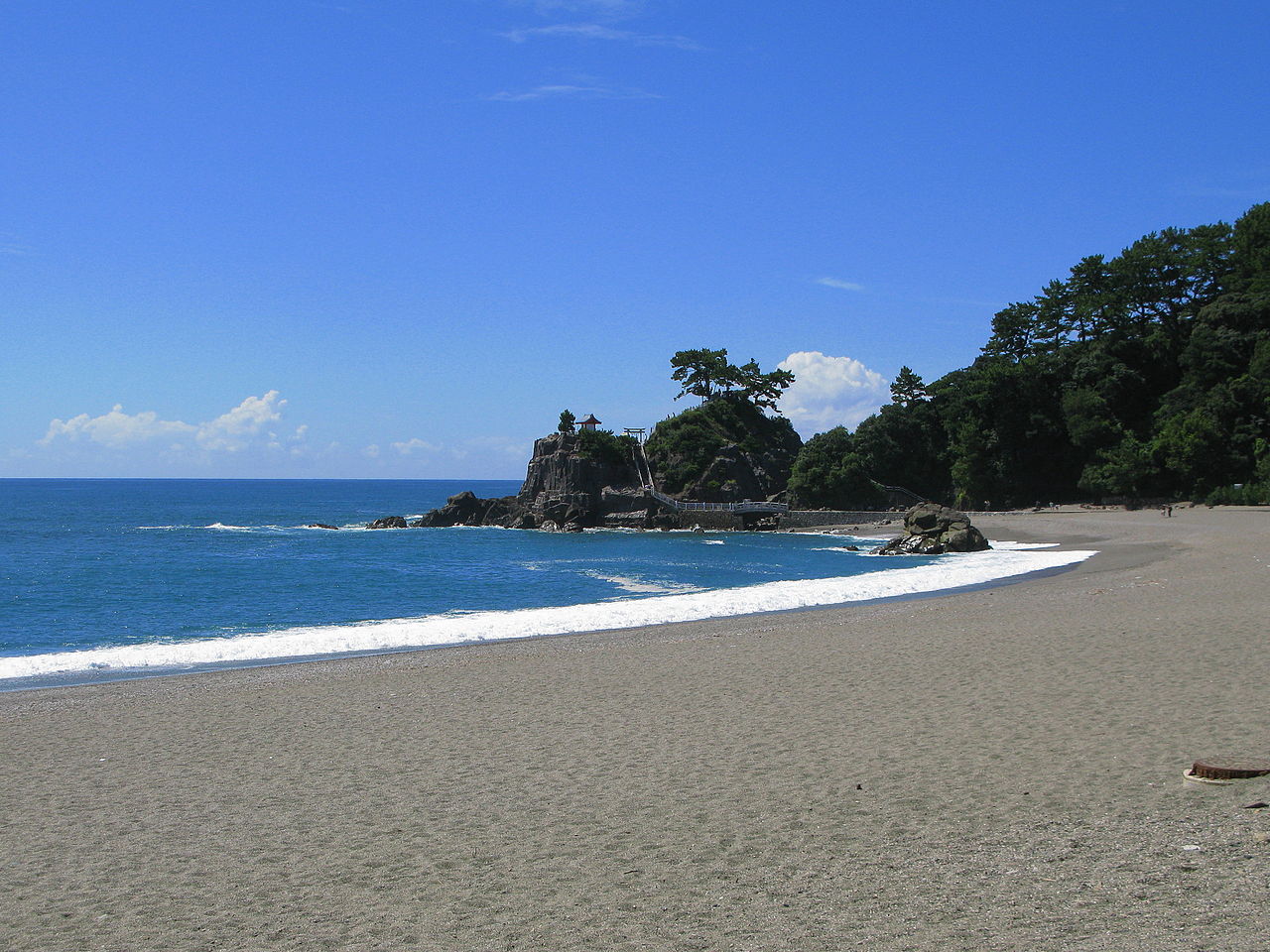
Kochi occupies the southern half of Shikoku, the smallest of Japan’s four main islands, fronting the Pacific Ocean. It is one of the most isolated and most heavily forested parts of the country — roughly 84% of the prefecture is woodland, the highest forest cover in Japan. The climate is defined by the open Pacific: heavy rainfall, warm summers, and clear, fast rivers draining the interior mountains. This is rugged, maritime country, set well apart from the central blade-making hubs of Sakai (near Osaka) and Seki (in Gifu).
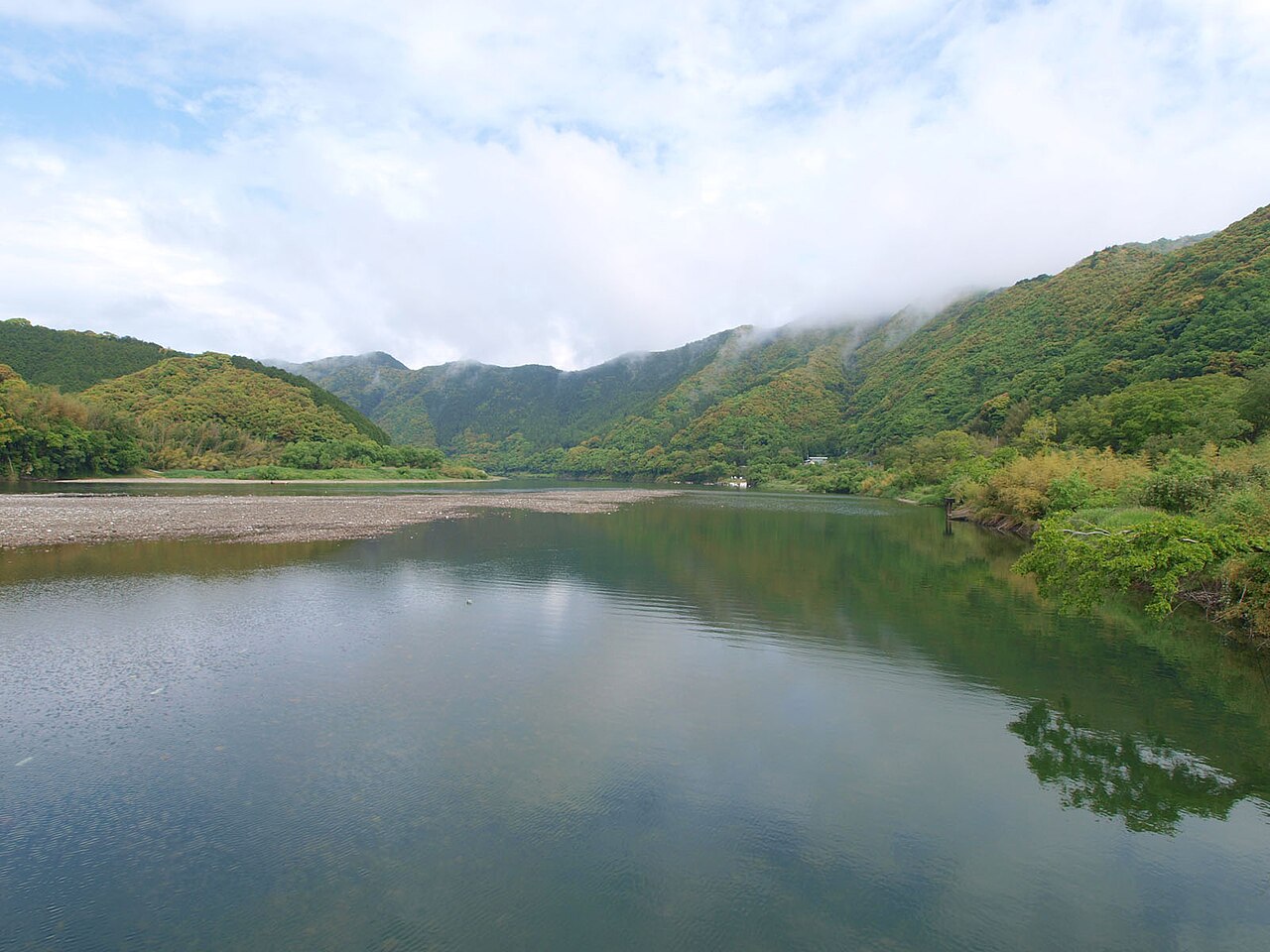
That geography is the whole story behind the blades. A province that is overwhelmingly mountain and forest is a province that lives by woodcutting and farming, and woodcutting and farming run on edged steel. Clear rivers like the Shimanto — often called Japan’s last clear stream — drain a deeply forested interior where, for centuries, the everyday economy demanded nata, axes, sickles, and hoes in large numbers. Where there is constant demand for tools, smiths follow.
The historical anchor reaches back to the late 1500s, the warring-states era. Tosa was unified under the warlord Chosokabe Motochika, and the war-era demand for blades is traditionally cited as the seed of the province’s forging trade. The custom should be read as folk-historical rather than precisely documented — but the through-line from military blade-making to civilian tool-making is the standard account of how Tosa’s smiths first concentrated here.
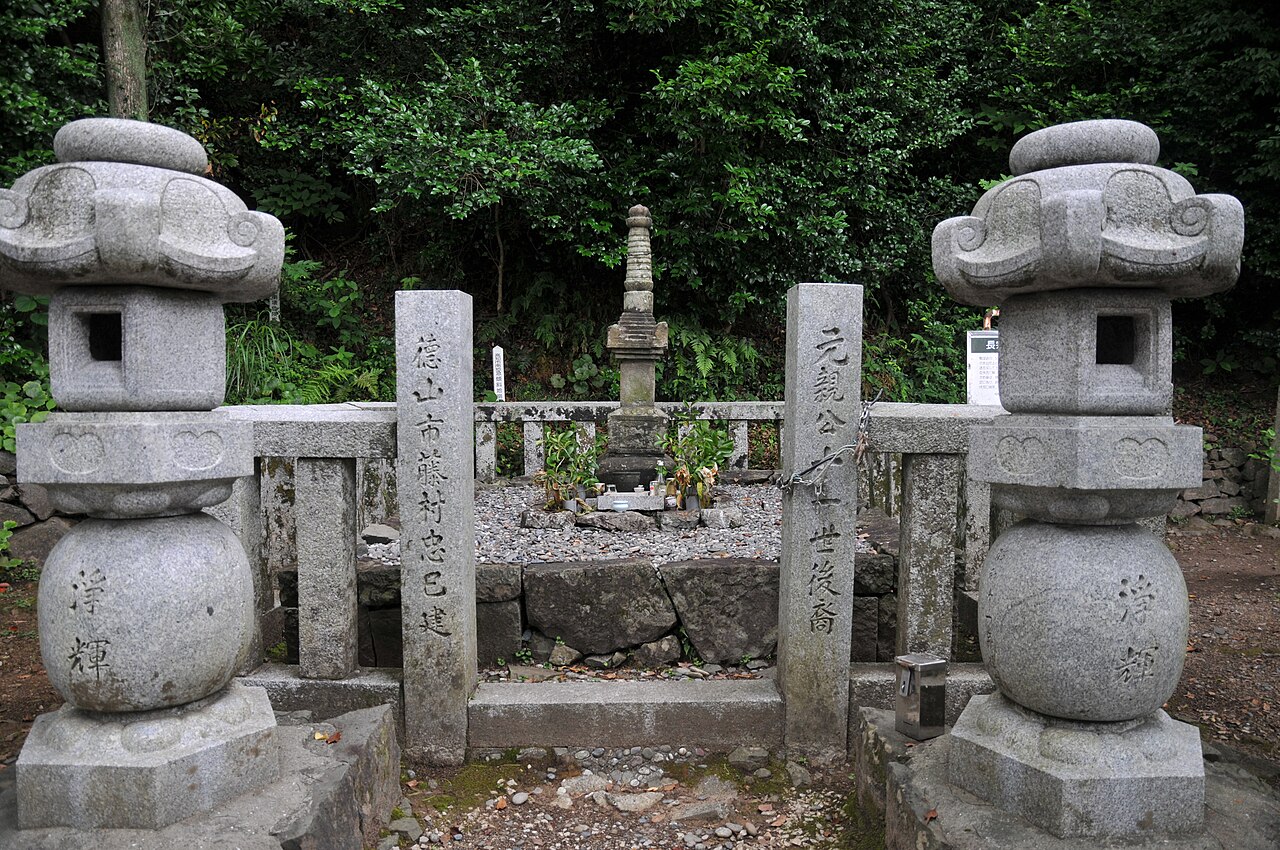
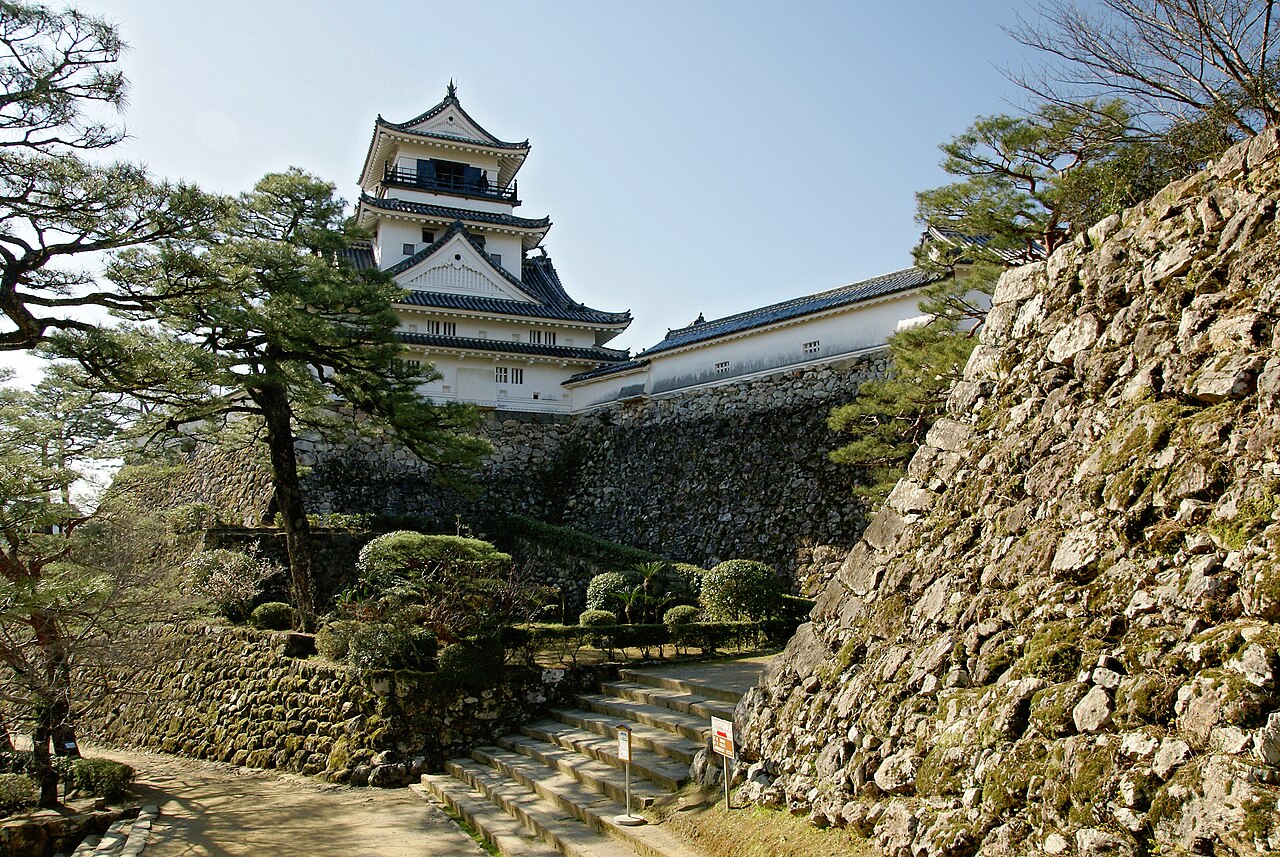
The trade was institutionalized in the Edo period, when the Yamauchi clan ruled the Tosa domain from Kochi Castle. The domain heavily promoted forestry and land reclamation, and that policy turned a folk craft into an industry: clearing, planting, and farming on this scale demanded huge volumes of nata, axes, sickles, and hoes. Smiths spread across the province to meet it. Centuries of that steady, practical demand are why Tosa became — and remains — one of Japan’s great free-forging blade regions, recognized as a Traditional Craft by Japan’s Ministry of Economy, Trade and Industry (METI) in 1998.
- Late 1500s — Chosokabe Motochika unifies Tosa; war-era blade demand is traditionally cited as the seed of the forging trade.
- Early 1600s — The Yamauchi clan is installed as lords of the Tosa domain, with their seat at Kochi Castle.
- Edo period (1603–1868) — The domain heavily promotes forestry and land reclamation; mountain and farm work drives demand for nata, axes, sickles, and hoes.
- Through the Edo era — Free-forging (jiyu-tanzo) smiths spread across the province; Tosa becomes known for a wide range of tool shapes.
- 1998 — Tosa uchihamono is designated a Traditional Craft of Japan by METI.
- 2026 — Tosa smiths continue to free-forge nata, sickles, and knives by hand.
The defining technique tying all of this together is jiyu-tanzo — free forging. Rather than forming a blade in a fixed die, a Tosa smith works the hot steel to shape by eye and hammer. That is slower and more skill-dependent than die forging, but it lets a single workshop produce an enormous variety of tool shapes and thicknesses on demand — exactly what a forest-and-farm economy with idiosyncratic needs required. The nata, with its thick wedge profile, is the archetypal product of that flexibility.
“In a prefecture that is 84% forest, the blade is not decoration — it is infrastructure. Tosa learned to forge by eye because the work never came in standard sizes.”
What “still being made here” means in practice is that the free-forging method has not been replaced by full automation: Tosa nata in this class are shaped by hand by working smiths, which is why individual pieces vary slightly in length and weight. The kurouchi finish is part of that honesty — the black forge scale is left on the blade body rather than ground and polished away, a look that is both traditional and low-fuss on the flats.
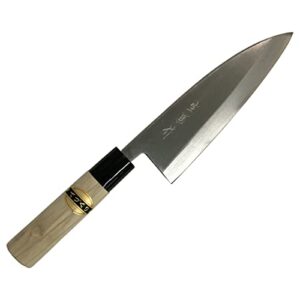
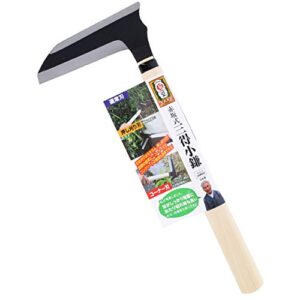
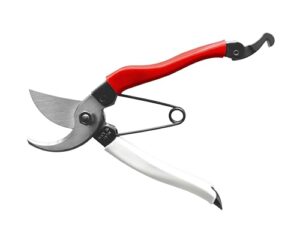
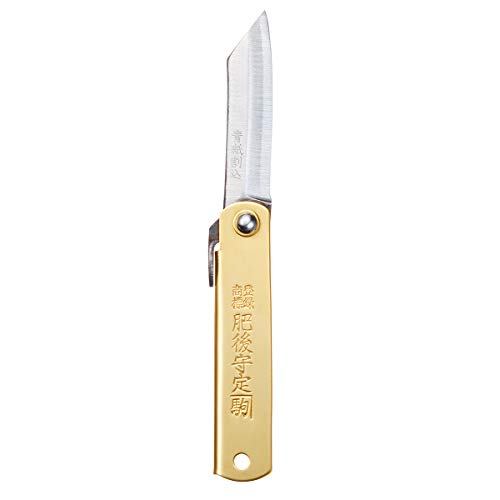
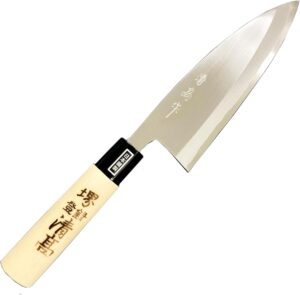
Related hand-forged blades and Shikoku crafts on jpmono.com — useful for comparing steel, geometry, and use case.
Price snapshot across stores
The specific nata in this guide is sourced from the Amazon JP Global Store listing. Live pricing was unavailable in the fetched data at the time of writing, so verify the current figure on the listing before buying. USD figures, where shown elsewhere, are approximate at a ¥150/USD baseline; the JPY price is the authoritative one.
| Store | Item / Variant | Price | Notes |
|---|---|---|---|
| 🇺🇸 Amazon US (search) | Browse Japanese hand-forged nata & hatchets | varies (USD) | Best if you are shopping from the US — Prime shipping, USD pricing, no international customs. Amazon US carries Japanese hatchets, nata, and bushcraft blades from several makers; this exact Tosa piece ships from Japan (next row). |
| 🇯🇵 Amazon JP Global Store | This Tosa nata (ASIN B07VVC4MWX) | Check listing (price unavailable in fetched data) | The sourced listing for the exact item. Ships internationally from Japan to most major destinations. |
| Maker direct | Tosa workshop / craft retailer | Varies; often JP-only | Some Tosa smiths sell through Japanese craft shops; international shipping is inconsistent. Use a proxy if there is no direct overseas option. |
| Proxy services (Buyee / Tenso) | Any JP listing forwarded abroad | Item price + forwarding fee + freight | For listings that do not ship overseas directly. Note customs rules on edged tools in your country. |
What it does well
Weaknesses and things to verify before buying
- Carbon steel rusts. The blade needs to be dried after use and lightly oiled for storage. A humid garage or wet pack will leave surface rust; this is not a stainless tool.
- Price was unavailable in the fetched data. Confirm the current price and any shipping surcharge directly on the listing before committing.
- Hand-forged variation. Because pieces are free-forged, blade length (~165–180 mm class), weight, and balance vary slightly unit to unit. If you need an exact spec, ask the seller.
- Kurouchi is rustic, not pristine. The black forge scale is intentional. Buyers expecting a polished, uniform finish may be surprised by the rough blade body.
- Wrong tool for fine or heavy extremes. A nata is neither a slicing knife nor a felling axe. For kitchen work or large trees, look elsewhere.
- Edged-tool import and carry rules. Some countries and carriers restrict importing or carrying fixed blades. Check your local rules and never pack a blade in carry-on luggage.
- International shipping is item-dependent. The Global Store listing generally ships abroad, but confirm your destination is supported and budget for customs duties over local thresholds.
Conclusion — which buyer type are you?
Other ways to approach this purchase
🏆 Editor’s Pick
❓ Frequently Asked Questions
Is this nata double-beveled or single-beveled?
Will Amazon ship a Tosa nata internationally?
What is kurouchi, and does the black finish wear off?
How is a nata different from a hatchet or an axe?
Does carbon steel rust, and how do I care for it?
Is it legal to own and how should I travel with it?
jpmono.com is curated by a Japan-based editorial team (working out of Toyama in the Hokuriku region and Nara in Kansai) and is independent. We do not take payment from the makers we feature; income comes from affiliate links. We do not physically test every product — we read maker specs and source listings. Read more about our editorial standards.
🤖 This article was prepared with AI assistance and reviewed against the source listing data. Specs, prices, and availability can change after publication; always confirm on the retailer’s page before purchasing.
Affiliate disclosure: jpmono.com may earn a commission on qualifying purchases made through links on this page, at no additional cost to you.