![Bizen Ware Flower Vase (Hanaire): Where to Buy This Ikebana Piece [2026]](https://jpmono.com/wp-content/uploads/2026/06/bizen-yaki-hanaire-flower-vase-where-to-buy-2026-featured.jpg)
A Bizen ware flower vase — a hanaire (花入, “flower container”) — is one of the quietest objects in Japanese craft. It carries no glaze, no painted pattern, and no maker’s color. Everything you see on its surface — the toasted sesame speckle of goma ash, the russet flare of a hidasuki straw mark, the blue-grey blush of sangiri — was written into the clay by fire, ash, and where the piece happened to stand inside the kiln. Bizen ware is made in Imbe, a district of Bizen City in Okayama Prefecture, and it descends from Heian-period sue ware, which makes it one of Japan’s Six Ancient Kilns (六古窯, Rokkōyō) — and the oldest of them still in continuous production.
For an international reader, the practical hook is simple. Bizen’s unglazed, high-fired body (a technique called yakishime) is mildly porous, and that porosity is exactly why ikebana practitioners have prized Bizen hanaire for centuries: the wall breathes a little, water stays fresher, and cut stems last longer. The vase is a tool first and an ornament second. That is an unusual proposition in a market full of decorative ceramics.
This guide is for readers deciding whether to buy a single-flower Bizen vase (an ichirinzashi / hanaire) and, just as importantly, where to buy one without guessing. We cover what the form is, how to read its fired surface, who it suits and who should skip it, the realistic purchase paths from outside Japan, and a specific Editor’s Pick. Based on the listing data available at the time of writing, we also flag clearly where the data is thin so you can verify before paying.
🔄 Updated:
⏱️ Read time: ~11 min

- Who this is for — and who should skip it
- Product overview (from published specs)
- Where this comes from
- Price snapshot across stores
- What it does well
- Weaknesses and things to verify before buying
- Conclusion — which buyer type are you?
- Other ways to approach this purchase
- 🏆 Editor’s Pick
- ❓ Frequently Asked Questions
Who this is for — and who should skip it
- Practice or appreciate ikebana and want a vessel chosen for water-keeping, not just looks
- Prefer wabi-sabi restraint — earth tones and fired texture over glaze and pattern
- Want a single object with a thousand-year lineage you can actually trace to one district
- Display one stem or a small seasonal branch rather than a large arrangement
- Value that no two pieces are identical, because the kiln decorates each one differently
- Want bright color, glossy glaze, or a matched set of identical pieces
- Need a large vase for big bouquets — these single-flower forms are small
- Expect dishwasher-safe convenience (unglazed stoneware wants hand care)
- Are uncomfortable buying an item whose exact finish varies from the photo
- Need confirmed live pricing today — listing data here is thin (see caveats below)
Product overview (from published specs)
The fetched marketplace snapshot for this keyword returned no live price or structured spec rows at the time of writing, so the table below is built from the spec sheet and the maker-category facts in our data notes rather than from a live listing scrape. Treat dimensions and finish as representative of the Bizen hanaire category — confirm the exact figures on the listing before buying.
Bizen Ware Flower Vase (Hanaire)
備前焼 竹花入(桟切) 【花器 花入 花瓶 花びん 一輪挿し】
通常6~7日以内に発送します。 · Sold by 器茶房 彩庵 · ASIN B00CEWWLZE
Price and availability as of 2026-09-01 05:22 JST. The Amazon listing at the time of purchase is authoritative. jpmono.com earns a commission on qualifying purchases at no extra cost to you.
| Attribute | Detail (representative) | Source |
|---|---|---|
| Object | Single-flower vase (ichirinzashi / hanaire) | Spec sheet |
| Material | Unglazed wood-fired stoneware (yakishime) | Maker direct (category) |
| Surface effects | Goma (sesame ash), hidasuki (straw marks), sangiri — from fire, not glaze | Maker direct (category) |
| Origin | Imbe, Bizen City, Okayama Prefecture | Maker direct |
| Firing | Noborigama climbing kiln, ~10–14 days at high heat | Maker direct (category) |
| Item ID (ASIN) | B09BQW7KX4 | Amazon JP Global Store (sourced listing) |
| Price (US) | Varies — browse comparable pieces (Amazon US search) | Amazon US (search, primary) |
| Price (JP) | Not returned in snapshot — verify on listing | Amazon JP Global Store (secondary) |
⚠️ Data honesty note: Only the Amazon JP listing snapshot is available, and it returned no live price; live pricing and stock may have shifted since the writing date. Confirm the current figure, exact dimensions, and finish on the listing itself before purchasing. We do not fabricate prices or specs that the data does not contain.
📖 Glossary — key Bizen terms
- Bizen-yaki (備前焼) — unglazed, high-fired stoneware from Imbe, Okayama; one of the Six Ancient Kilns.
- Hanaire (花入) — a flower container, especially for the tea ceremony and ikebana; ichirinzashi (一輪挿し) is the single-stem form.
- Yakishime (焼締め) — firing clay to vitrification with no applied glaze, sealing it through heat alone.
- Goma (胡麻) — “sesame”: speckles formed where wood ash melts onto the surface during firing.
- Hidasuki (緋襷) — “scarlet cords”: red-brown marks left where rice straw was wrapped around the piece.
- Sangiri (桟切り) — blue-grey to slate tones produced by reduction in ash-buried parts of the kiln.
- Noborigama (登窯) — a multi-chamber “climbing kiln” built up a slope, wood-fired for many days.
- Rokkōyō (六古窯) — the “Six Ancient Kilns”: Bizen, Tamba, Shigaraki, Echizen, Seto, and Tokoname.
Related jpmono guides — pieces from the same kiln, neighboring Six Ancient Kilns, and other wabi-sabi tea wares worth weighing against a Bizen hanaire.
Same Imbe stoneware, drinkware form
 Bizen Osafune letter opener
Okayama’s other ancient craft — bladesmithing
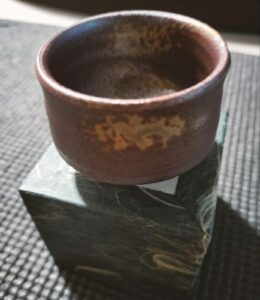 Tamba guinomi (Six Ancient Kilns)
Sister kiln, sake cup form
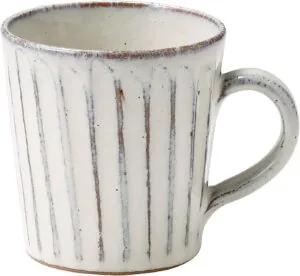 Shigaraki mug (Six Ancient Kilns)
Another Rokkōyō kiln, drinkware
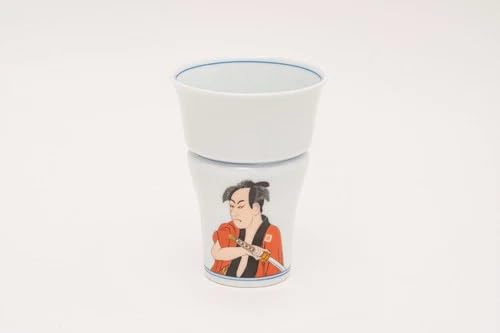 Otani-yaki large-form ware
Unglazed stoneware, big-vessel tradition
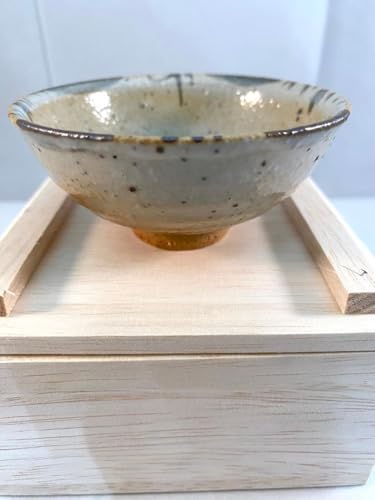 Karatsu wabi-sabi tea ware
Tea-ceremony ceramics to compare
Where this comes from

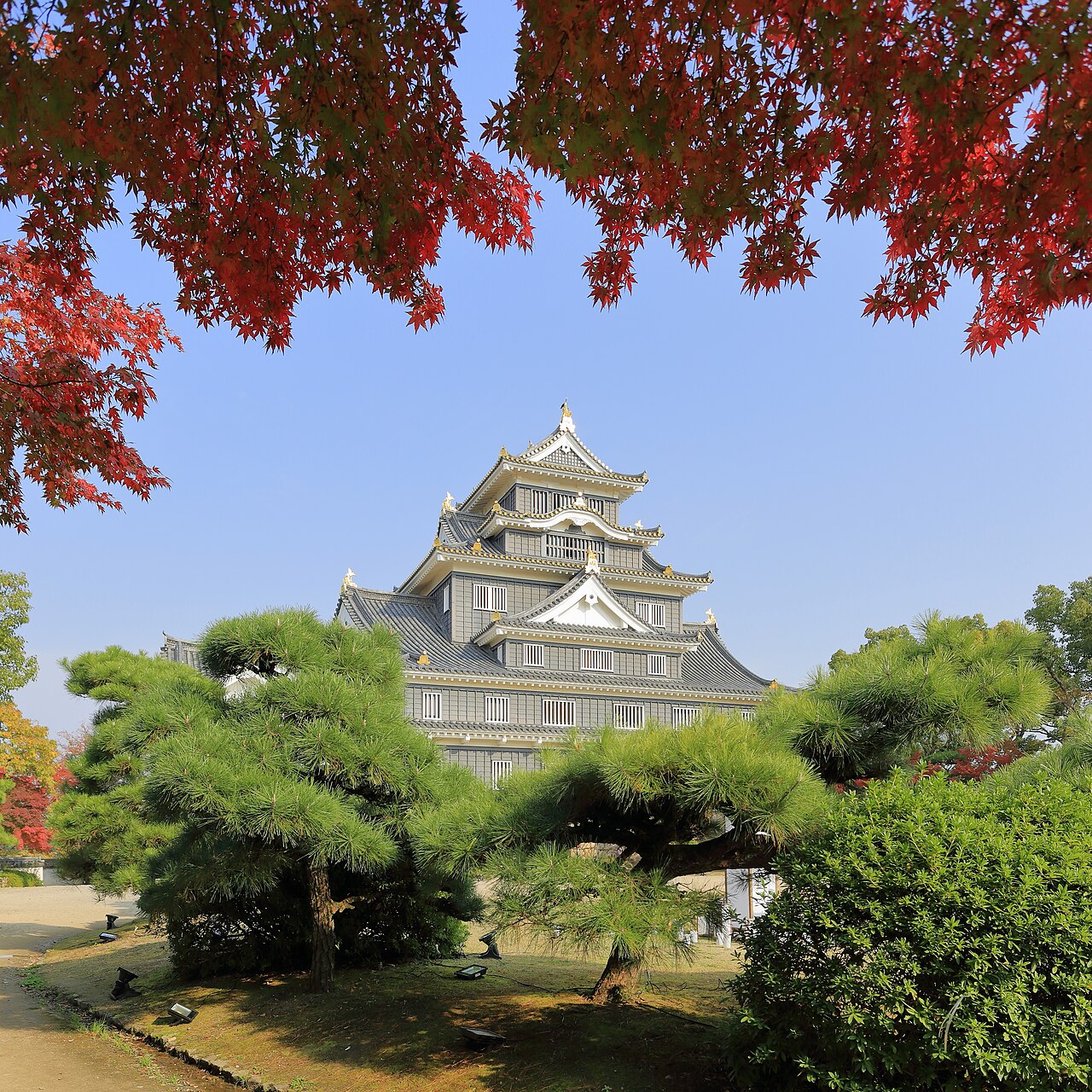
Bizen ware is made in Imbe, a district of Bizen City in the southeastern corner of Okayama Prefecture. Okayama sits in the Chūgoku region, facing the calm Seto Inland Sea — a sheltered, dry, sunny stretch of Japan that earned the prefecture its nickname as the “Land of Sunshine.” The local clay matters as much as the climate: Imbe’s iron-rich, fine, sticky soil, dug from old rice-paddy subsoil, can withstand the long, slow firing that defines the style. Good clay, good fuel from the surrounding hills, and a port-and-road network toward Osaka and Kyoto gave the kilns both their material and their market.
The lineage runs deep. Bizen ware descends from Heian-period sue ware and matured at Imbe — the village name itself became shorthand for the ware. That continuity is why it is counted among Japan’s Six Ancient Kilns, and it is the oldest of the six still in continuous production.
- Heian period — Bizen ware emerges from earlier sue ware at Imbe.
- Kamakura–Muromachi — Production of jars, mortars, and tableware in unglazed stoneware spreads widely.
- Muromachi–Momoyama — The wabi tea ceremony elevates Bizen; Sen no Rikyū favors its restrained, fired surfaces.
- Edo period — The Ikeda lords of Okayama protect the six hereditary kiln families at Imbe.
- 1956 — Kaneshige Tōyō named a Living National Treasure for reviving Momoyama-era technique.
- Today — Imbe’s kilns still fire noborigama for 10–14 days, the same unglazed method.
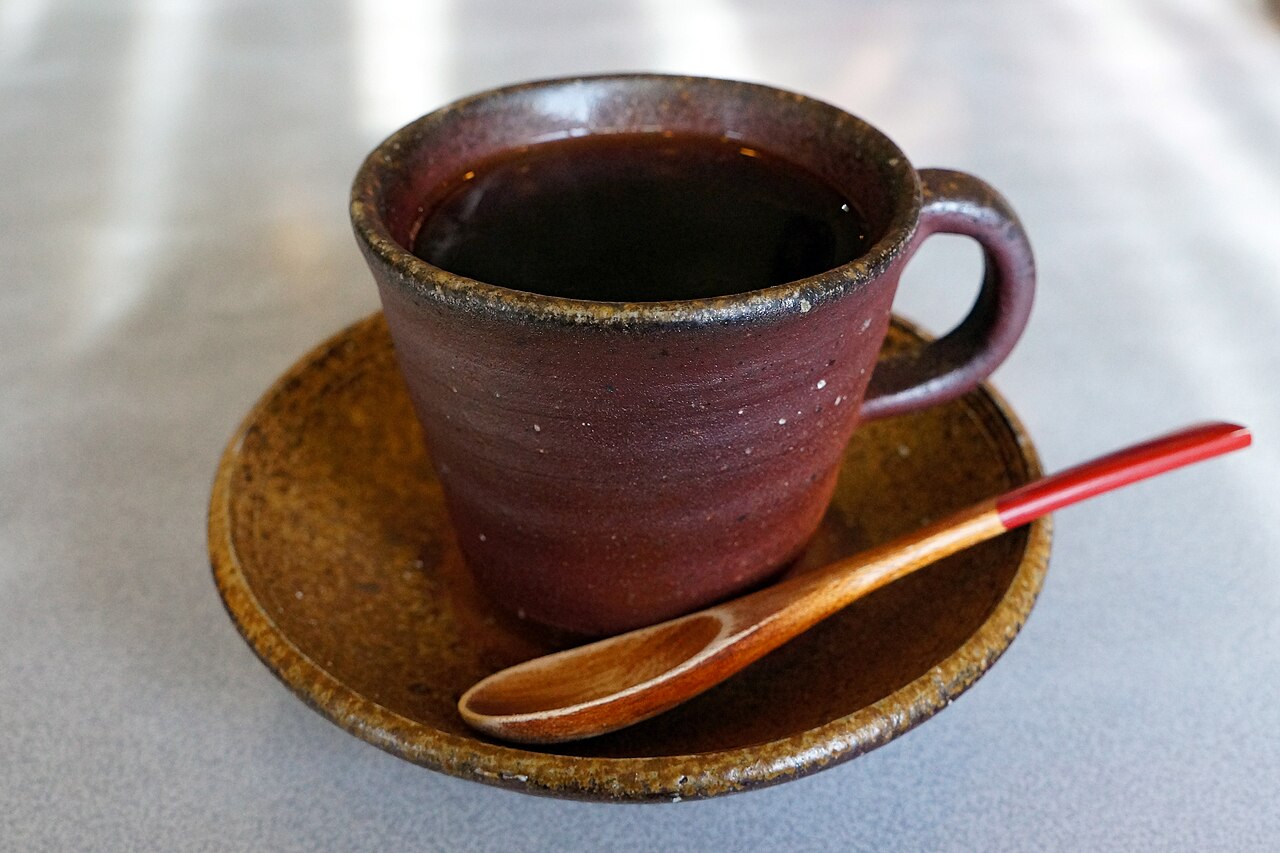
Here is the part that explains the surface. Bizen is fired by yakishime — vitrified by heat alone, with no glaze — inside a noborigama climbing kiln for roughly 10 to 14 days. Over that long burn, wood ash drifts and melts onto the pieces to leave the speckled goma (“sesame”); rice straw wrapped around the clay scorches red-brown hidasuki lines; and pieces buried in ash take on the slate-blue sangiri. None of this is painted. Where a piece stands in the kiln, how the flame wraps it, which neighbor shields it — those accidents are the decoration.
“Bizen wears no glaze and carries no painted pattern. Its color is a record of two weeks inside the fire — which is why no two vases are ever the same.”
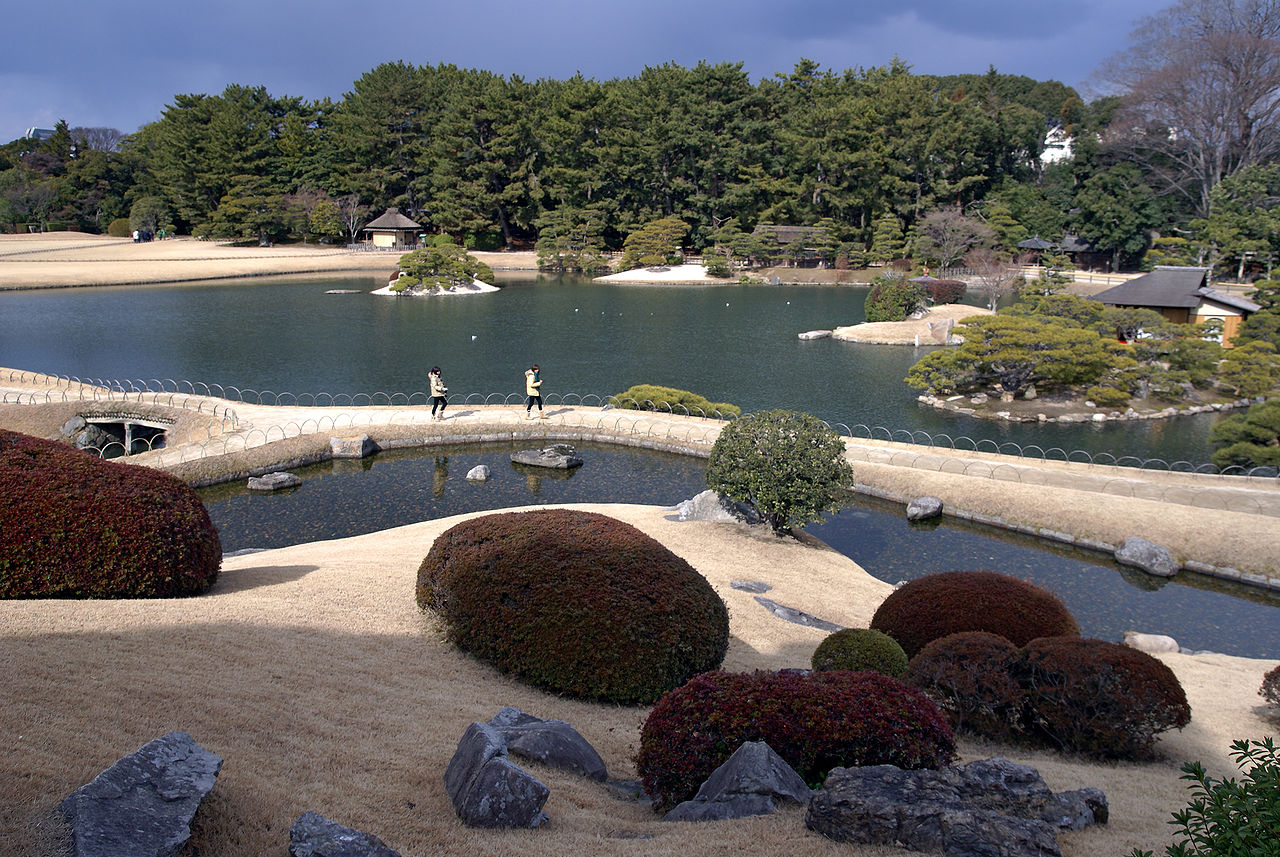
The reason Bizen survived as a refined art and not only as utility ware is patronage. When the wabi tea ceremony flourished in the Muromachi and Momoyama eras, tea masters — Sen no Rikyū among them — read Bizen’s plain, fire-marked surfaces as the embodiment of restraint, and tea wares became its prestige line. In the Edo period the Ikeda daimyo of Okayama formalized that status by protecting the six hereditary kiln families of Imbe, giving the craft an institutional spine that carried it through the centuries.
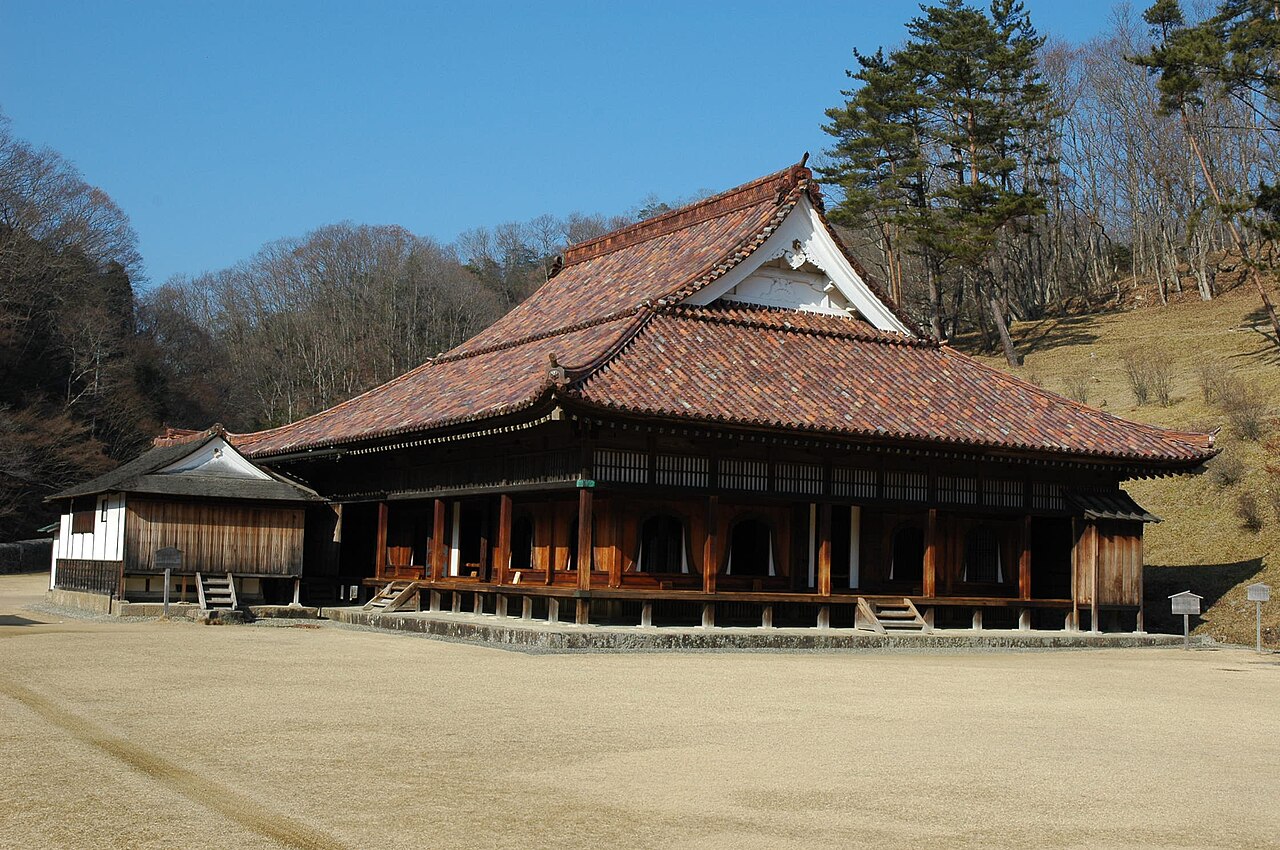
That continuity is not marketing language; it is the actual state of the district. Imbe is still a working pottery town, its kilns still fire the long noborigama cycle, and the craft has held national recognition since the modern era — most visibly when Kaneshige Tōyō was designated a Living National Treasure in 1956 for restoring Momoyama-period methods. A Bizen hanaire bought today is the same idea, made the same way, in the same place that supplied Rikyū’s tea rooms.
For the flower vase specifically, all of this resolves into one practical fact. Bizen’s unglazed, slightly porous body lets the wall breathe, which is traditionally believed to keep water fresher and cut stems alive longer — the reason ikebana practitioners have reached for Bizen hanaire for generations. It is a vase that earns its place by working, not only by looking.
Price snapshot across stores
Buying paths below run from easiest-for-US-readers to most specialized. The live snapshot returned no confirmed price, so figures are marked as “verify on listing” rather than guessed.
| Store | Item / Variant | Price (JPY + USD est.) | Notes |
|---|---|---|---|
| 🇺🇸 Amazon US (search) | Browse Japanese Bizen ware & ikebana vases | varies (USD) | Best if you are shopping from the US — Prime shipping, USD pricing, no international customs. Amazon US carries Japanese stoneware and ikebana vessels from various makers; this specific Imbe piece ships from Japan (next row). |
| 🇯🇵 Amazon JP Global Store | This Bizen hanaire (ASIN B00CEWWLZE) | Verify on listing (¥ authoritative; USD ≈ ¥150/USD) | The sourced listing. Ships internationally from Japan to most major destinations. Price not returned in snapshot — confirm before buying. |
| Maker direct | Imbe kiln / Bizen pottery galleries | Unconfirmed — check maker site | Bizen City galleries and individual kilns sell direct; international shipping varies by shop. No maker URL in the dataset. |
| Proxy services (Buyee / Tenso) | Forward any JP-only listing | Item price + forwarding fee | Use if a kiln or JP shop does not ship abroad directly. Adds a service fee and a second shipping leg; watch customs thresholds. |
Prices in USD are approximate and depend on the current exchange rate (¥150/USD baseline as of mid-2026). The JPY price on the listing is the authoritative one. Always verify at the retailer before purchasing.
What it does well
The unglazed, porous body breathes — traditionally believed to keep cut stems alive longer, the core reason ikebana practitioners choose Bizen hanaire.
Goma, hidasuki, and sangiri are written by fire and placement, so every vase is unique — no two come out of the kiln alike.
A traceable lineage from Heian sue ware to the modern Imbe kilns — one of the Six Ancient Kilns, the oldest still in continuous production.
Earth tones and matte texture set off a single seasonal flower or branch better than glossy color competing for attention.
Weaknesses and things to verify before buying
- Live price unconfirmed. The snapshot returned no price; verify the current ¥ figure on the listing before paying. We do not estimate a price the data does not contain.
- The piece you receive will not match the photo exactly. Because the kiln decorates each vase, color and markings vary unit to unit. If you need a precise match, this category is a poor fit.
- Unglazed care. Bizen is hand-care stoneware — rinse and dry well; avoid harsh detergents and dishwashers. Unglazed bodies can hold moisture and odor if neglected.
- Size is small. An ichirinzashi / single-flower form is sized for one stem; it will not hold a large bouquet. Confirm exact dimensions on the listing.
- International shipping and customs. Amazon JP Global Store ships abroad, but delivery time, shipping cost ($15–$40 to the US/EU is typical for small ceramics), and possible customs duty over local thresholds apply.
- Fragility in transit. Stoneware is breakable; confirm packaging and the return/replacement policy before ordering, especially via proxy forwarding.
- Authenticity of “Bizen.” Buy from the sourced listing or a Bizen City maker/gallery. Generic “Japanese vase” listings may not be genuine Imbe ware.
Conclusion — which buyer type are you?
You want a signed piece or a named-kiln work and value provenance. Buy maker-direct from a Bizen City gallery; expect higher prices and verify the artist.
You want an authentic everyday Bizen hanaire with minimal friction. The Amazon JP Global Store listing (this guide’s pick) ships internationally — confirm price first.
You want the look and breathing body for less. Browse Amazon US for comparable Japanese stoneware vases with USD pricing and Prime, accepting it may not be Imbe-made.
You want bright glaze, a matched set, or dishwasher convenience. Unglazed single-flower Bizen is the wrong category — look at glazed tableware lines instead.
Other ways to approach this purchase
Cross-border ceramics rarely deep-discount, but watch Amazon seasonal events and currency swings — a softer yen lowers the effective USD cost.
Bizen City galleries and individual Imbe kilns sell direct, sometimes with kiln and artist documentation. Shipping abroad varies by shop.
If you already accrue Amazon points or card rewards, the JP Global Store route lets you apply them and consolidate with other Japan-sourced orders.
For a JP-only kiln listing, Buyee or Tenso will forward it abroad — for a service fee and a second shipping leg. Best when no direct international option exists.
🏆 Editor’s Pick
❓ Frequently Asked Questions
Why do ikebana practitioners specifically choose Bizen for flower vases?
Bizen is fired unglazed (yakishime), leaving the body slightly porous. That porosity is traditionally believed to keep water fresher and cut stems alive longer, which is the practical reason Bizen hanaire have been prized for ikebana for generations.
Will my vase look exactly like the photo?
No. The surface effects — goma ash, hidasuki straw marks, and sangiri — are created by fire, ash, and where the piece sits in the kiln, so every vase is unique. Expect variation from the listing image, and treat the photo as representative rather than exact.
How do I care for unglazed Bizen ware?
Hand-rinse and dry it thoroughly, and avoid harsh detergents and dishwashers. Because the body is unglazed and porous, it can retain moisture or odor if left damp, so let it dry fully between uses.
Can I buy it from outside Japan?
Yes. The sourced listing is on Amazon JP Global Store, which ships internationally to most major destinations. You can also browse comparable Japanese stoneware vases on Amazon US for USD pricing, or use a proxy service such as Buyee or Tenso to forward a Japan-only listing.
What does the price snapshot say live pricing is?
At the time of writing, only the Amazon JP listing snapshot was available and it returned no confirmed price. We do not estimate a figure the data does not contain — verify the current ¥ price directly on the listing before purchasing.
Is Bizen ware really one of Japan’s oldest kilns?
Bizen ware descends from Heian-period sue ware and is counted among the Six Ancient Kilns (Rokkōyō) — the group also includes Tamba, Shigaraki, Echizen, Seto, and Tokoname. Bizen is the oldest of the six still in continuous production.
Does it make a good gift?
It can, for someone who appreciates restrained, functional craft and ikebana. Because each piece is one-of-a-kind and carries a documented heritage, a Bizen hanaire suits a recipient who values provenance over bright decoration. It is less suited to anyone wanting a colorful, matched, or dishwasher-friendly object.
jpmono.com is curated by a Japan-based editorial team working out of Toyama (Hokuriku region) and Nara (Kansai region), and is independent. We do not take payment from the makers we feature; income comes from affiliate links. We do not physically test every product — we read maker’s specs and source listings.
🤖 This article was prepared with AI assistance and reviewed against the available listing data. Specifications and pricing reflect the data at the time of writing and may have changed; verify on the retailer’s page before purchasing.
Affiliate disclosure: jpmono.com may earn a commission on qualifying purchases made through links on this page, at no additional cost to you.