![Bingo Kasuri Indigo Cotton Tote Bag: Hiroshima Ikat Cloth [2026]](https://jpmono.com/wp-content/uploads/2026/05/japan-map-regions-and-prefectures-800x1050.png)
Bingo kasuri (備後絣, “Bingo ikat”) is an indigo-dyed cotton cloth woven around Fukuyama in eastern Hiroshima — the old Bingo province. A tote bag cut from it carries a pattern that is not printed onto the surface but built into the thread itself: bundles of yarn are tie-resisted and dipped in indigo before weaving, so the soft white blur of the design only resolves once warp and weft meet on the loom. The result is the cross-and-frame motif Japanese weavers call igeta (井桁, “well-frame”).
For an international reader, the short version is this: Bingo is counted among Japan’s three great kasuri, alongside Kurume in Fukuoka and Iyo in Ehime. It was, through the Meiji and Shōwa eras, the country’s largest kasuri-producing district — the cloth that clothed working Japan in indigo monpe (もんぺ, “field trousers”) and everyday wear. A tote made from it is a way to own a piece of that textile lineage in a form you will actually use.
This guide is written from a Japan-based editor’s perspective. It covers what the cloth is, where it comes from, how to buy it from outside Japan, and — honestly — who should pass. One note up front on the data: live pricing and measured specs for individual Bingo kasuri tote bags vary between workshops and runs, so figures below are described qualitatively and flagged where verification is needed.
🔄 Updated:
⏱️ Read time: ~9 min
- Who this is for — and who should skip it
- Product overview (from published specs)
- 📍 Where this comes from — place, era, and the craft tradition
- 📦 Shipping & where to buy from outside Japan
- Where to buy
- What it does well
- Weaknesses and things to verify before buying
- Conclusion — which buyer type are you?
- Other ways to approach this purchase
- ❓ Frequently Asked Questions
Who this is for — and who should skip it
- Want a genuine regional Japanese textile in a form you will use daily, not display in a cabinet
- Appreciate woven (not printed) ikat, where the pattern is dyed into the yarn before weaving
- Like deep indigo that softens and develops character with age and washing
- Are building a small collection across Japan’s three great kasuri traditions
- Prefer understated, hard-wearing cotton goods over logo-driven fashion
- Need the bag’s intended capacity confirmed before buying
- Want a structured, hardware-heavy bag — kasuri totes are soft cotton
- Expect bright, fade-proof color; natural-style indigo can transfer or lighten early on
- Need next-day delivery and are shopping from outside Japan
- Want a low-cost mass-market tote rather than a small-batch regional craft piece
Product overview (from published specs)
Bingo kasuri totes combine cotton with indigo dyeing and kasuri patterning. Because handmade textiles vary, dimensions and weight should be confirmed with the maker before purchase.
| Attribute | Detail | Source |
|---|---|---|
| Craft | Bingo kasuri (備後絣) — indigo-dyed cotton ikat | Spec brief |
| Material | Cotton, indigo dye | Spec brief |
| Pattern | Hand-resisted igeta (well-frame) ikat, woven not printed | Spec brief |
| Origin | Fukuyama, Hiroshima (old Bingo province) | Spec brief |
| Dimensions / weight | Not specified | — |
| Amazon US (search) | Browse Japanese kasuri & indigo cotton goods | Primary path (moonill-20) |
| Maker direct | Fukuyama-area kasuri workshops (varies) | — |
📖 Glossary — key terms
- Kasuri (絣) — the Japanese term for ikat: cloth woven from yarn that is dyed in a pre-planned pattern before it goes on the loom, so the design appears to “blur” at its edges.
- Igeta (井桁) — the cross / well-frame motif, named after the wooden frame around a traditional water well; the signature Bingo pattern.
- Kukuri (くくり) — the tie-resisting step: thread is bound tightly in bundles so the bound sections resist the indigo and stay white.
- Aizome (藍染め) — indigo dyeing, the deep blue that defines Japanese work cloth.
- Monpe (もんぺ) — loose field trousers; the everyday garment for which Bingo kasuri was mass-produced.
- Bingo (備後) — the old province name for eastern Hiroshima, now centered on Fukuyama.
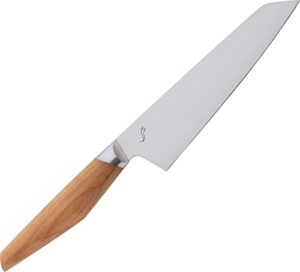 🔪 Bingo-region Bunka knife (same district)
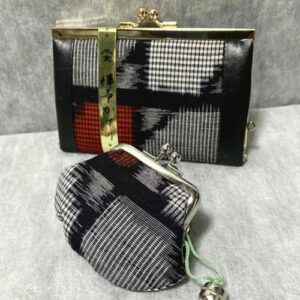 👛 Iyo-gasuri, another of the three great kasuri
🧵 Yumihama-gasuri indigo ikat
💙 Awa aizome indigo dyeing
 🪑 Cotton woven craft
🍚 More from Hiroshima
 🐟 Setouchi cotton textile
 🧣 Regional weaving tradition
📍 Where this comes from — place, era, and the craft tradition

Fukuyama sits in the far east of Hiroshima Prefecture, where the Ashida River reaches the Seto Inland Sea. This is the heart of the old Bingo province — a name that survives today in the cloth, in regional rail labels, and in local cuisine. The Bingo plain gave the craft what it needed: warm Setouchi climate, a long history of cotton cultivation, and inland-sea ports that could move finished goods across Japan.
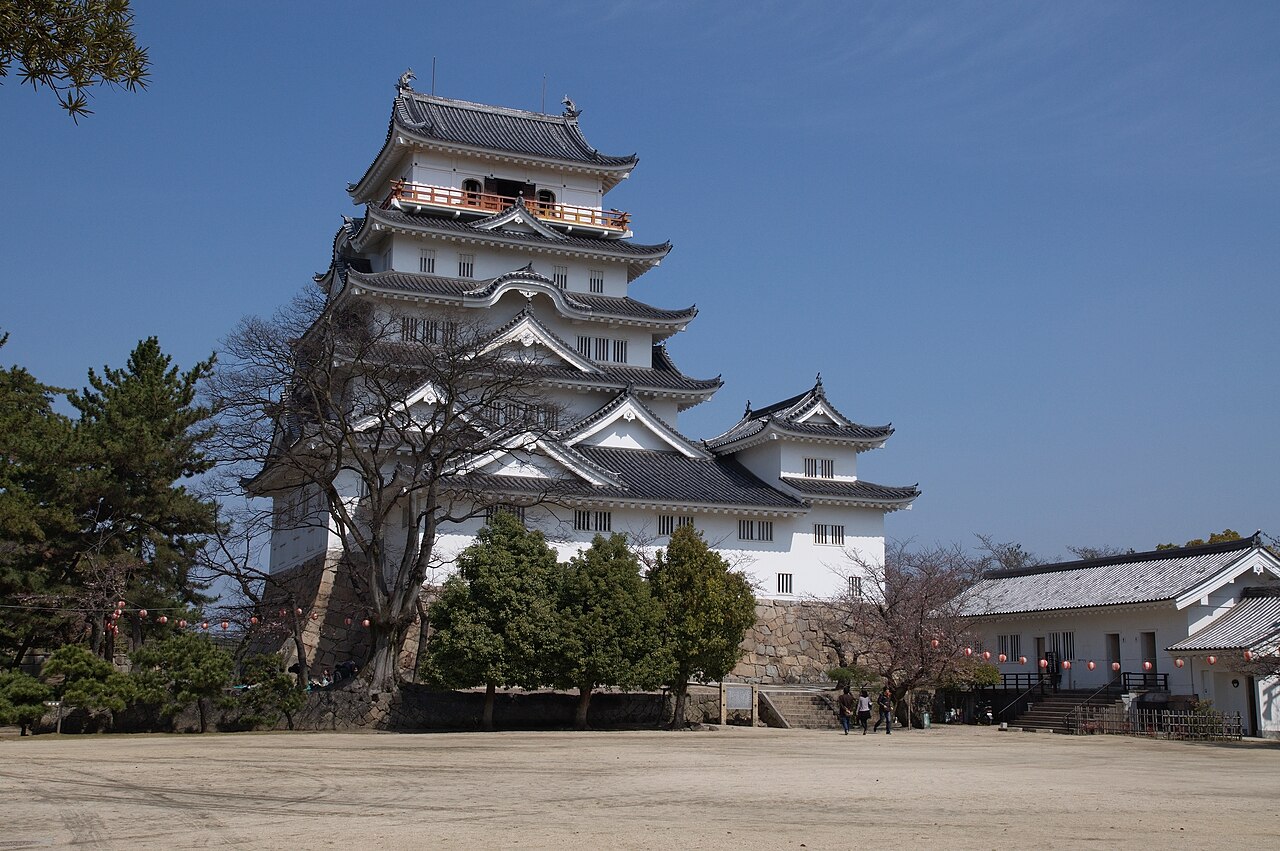
Cotton is the precondition for everything that follows. Bingo kasuri is a cotton ikat, and the craft took root because the Fukuyama domain — held in the Edo period by the Abe clan from Fukuyama Castle — actively encouraged cotton growing across the plain. A reliable supply of local cotton, soft inland-sea water for dyeing, and indigo culture gave the district the raw materials for an indigo-cloth industry.
- Edo period — The Abe-clan Fukuyama domain encourages cotton cultivation across the Bingo plain.
- 1853 — Tomita Kuhei of the Fukuyama area devises a practical igeta kasuri after studying existing ikat methods.
- Meiji era (1868–1912) — Bingo grows into Japan’s largest kasuri-producing district.
- Shōwa era (1926–1989) — Indigo monpe work clothes and everyday cloth ship nationwide from Fukuyama.
- Postwar — Demand falls as Western clothing replaces field wear; production contracts sharply.
- 2026 — A handful of Fukuyama workshops keep the craft alive in small-batch goods like this tote.
The technique itself is the deep history. To make kasuri, weavers first bind bundles of thread with tight ties — the kukuri step — so the bound sections resist the indigo bath. The thread is then dyed, the ties removed, and the yarn arranged so that, in weaving, the resisted white sections line up into a pattern. The signature Bingo design is the igeta, the cross or well-frame motif. The white never sits perfectly sharp against the blue, and that gentle blur at every edge is the visible signature of true ikat — the thing a printed imitation cannot reproduce.
“The pattern is not printed onto Bingo kasuri — it is dyed into the thread before a single row is woven, so the design exists in the cloth’s structure rather than on its surface.”
The craft’s importance is best understood through how widely it traveled. The historic Bingo port of Tomonoura, with its Seto Inland Sea trade routes, helped Fukuyama cloth reach markets across Japan, and through the Meiji and Shōwa eras Bingo became the country’s largest kasuri district. This was not luxury cloth. It was the indigo that clothed working people — monpe for the fields, everyday wear for ordinary households.
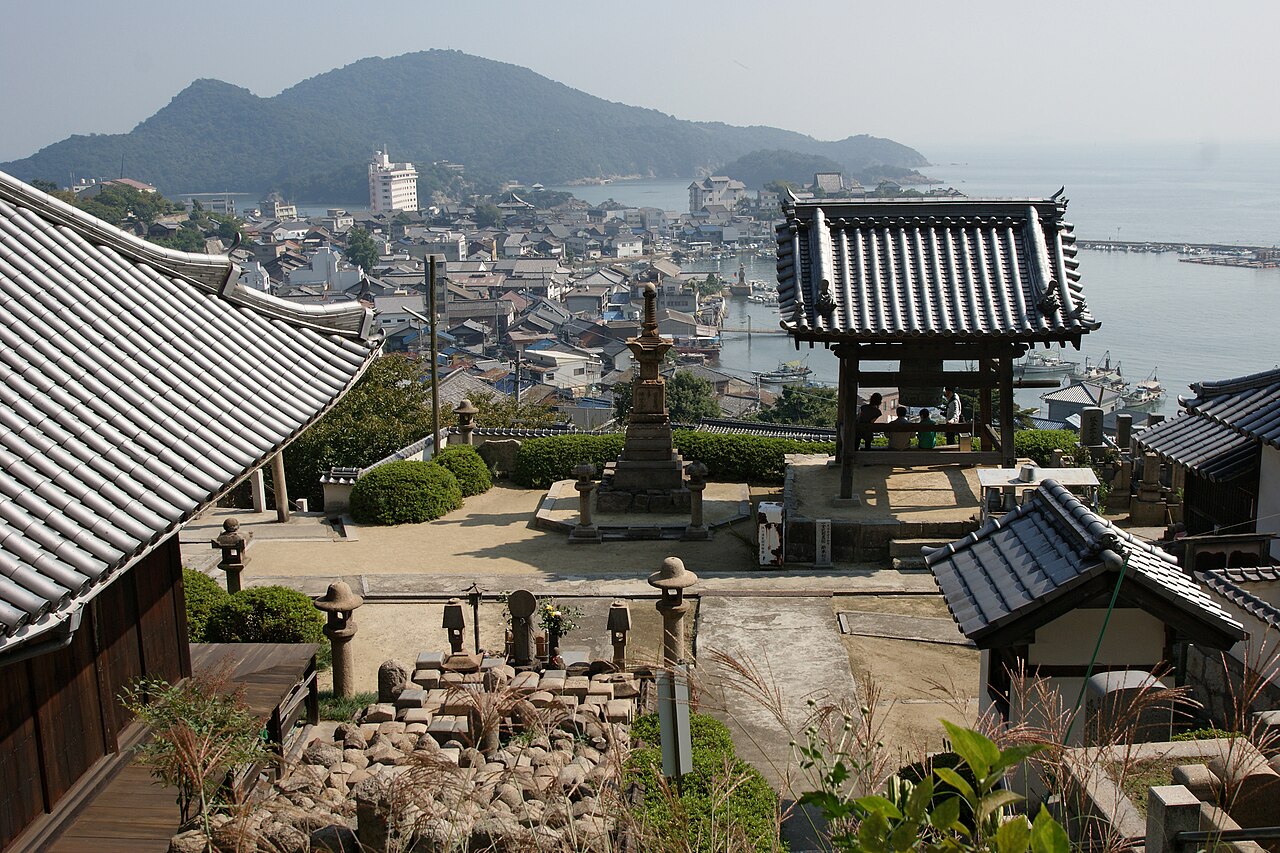
What “still being made here” means today is more modest than the Meiji peak, and it is fair to say so plainly. After the war, as Western clothing replaced field wear, demand for monpe collapsed and the district contracted. Bingo kasuri survived a near-disappearance and now exists as a small revival — a handful of Fukuyama workshops keeping the dyeing and weaving alive, often in accessory and homeware forms like this tote rather than the bolts of garment cloth that once defined the trade.

📦 Shipping & where to buy from outside Japan
A Bingo kasuri tote brings regional Japanese indigo and kasuri cotton to an everyday bag. International buyers should compare shipping and customs terms when ordering from Japan.
Customs duties may apply above your country’s de minimis threshold; check local rules before ordering from Japan. Workshop-direct options may offer another route for buyers who want to learn more about the making process.
Where to buy
| Store | Item / Variant | Price (JPY / USD est.) | Notes |
|---|---|---|---|
| 🇺🇸 Amazon US (search) | Browse Japanese kasuri & indigo cotton goods | varies (USD) | Best if shopping from the US — Prime shipping, USD pricing, no customs. Carries comparable Japanese indigo cottons; this exact Bingo tote ships from Japan (next row). |
| 🇯🇵 Amazon JP Global Store | Bingo kasuri indigo cotton tote | Not specified | Ships internationally from Japan. |
| Maker direct | Fukuyama-area kasuri workshops | Varies | Small workshops; international shipping not guaranteed, may require Japanese-language ordering. |
| Proxy services (Buyee / Tenso) | Forwarded JP purchase | Item + fee + shipping | Useful when direct shipping is unavailable; adds a service fee. |
What it does well
Weaknesses and things to verify before buying
- Capacity varies. Choose a bag suited to your laptop or groceries, and confirm its intended use before buying.
- Indigo can transfer or fade. Natural-style indigo cotton may rub color onto light clothing at first and lighten with washing; this is normal for the dye but not for everyone.
- Soft, unstructured build. Kasuri totes are cotton cloth, not structured leather or canvas with a flat base — they slouch when not full.
- Seller terms vary. Compare the available options before assuming a budget.
- International shipping adds cost and time. Expect roughly $15–$40 shipping from Japan plus possible customs, and longer delivery than a domestic purchase.
- Small-batch supply. With only a handful of Fukuyama workshops active, specific patterns or stock can sell out and not return.
Conclusion — which buyer type are you?
Other ways to approach this purchase
❓ Frequently Asked Questions
Is the pattern printed or woven into the cloth?
It is woven. Bingo kasuri is a true ikat: the thread is tie-resisted and indigo-dyed before weaving, so the white igeta pattern is built into the cloth’s structure rather than printed on the surface.
Does Amazon JP ship this tote internationally?
International shipping for textile goods varies by destination. Confirm that the seller ships to your country and budget for shipping and any customs duties.
Will the indigo dye rub off or fade?
Natural-style indigo cotton can transfer a little color when new, especially onto light clothing, and may lighten gradually with washing. This is normal behavior for indigo, not a defect, but it is worth knowing before buying.
What size is the bag and how much does it hold?
Tote dimensions and capacity vary by maker; check them before buying if the bag must hold a particular item such as a laptop.
How is Bingo kasuri different from Iyo or Kurume kasuri?
All three are counted among Japan’s great kasuri traditions and share the indigo-and-ikat method, but they come from different regions — Bingo from Fukuyama in Hiroshima, Iyo from Ehime, and Kurume from Fukuoka — with their own pattern conventions. Bingo is known for the igeta well-frame motif.
How should I care for it?
As a general guide for indigo cotton, wash gently and separately in cold water, avoid prolonged soaking, and dry in shade to slow fading.
Is this a good gift?
It works well as a gift for someone who appreciates regional textiles or Japanese craft, pairing a recognizable indigo aesthetic with the provenance of one of Japan’s three great kasuri districts. Allow enough time for shipping when ordering for an occasion.
jpmono.com is curated by a Japan-based editorial team (working out of Toyama in the Hokuriku region and Nara in Kansai) and is independent. We do not take payment from the makers we feature; income comes from affiliate links. Read more about our editorial standards.
Affiliate disclosure: jpmono.com may earn a commission on qualifying purchases made through links on this page, at no additional cost to you.