![Ainu Embroidery Pouch: Hokkaido Nibutani Monyo, Where to Buy [2026]](https://jpmono.com/wp-content/uploads/2026/06/ainu-monyo-embroidery-pouch-hokkaido-where-to-buy-2026-featured.jpg)
A small cotton zip pouch is an ordinary object until you look at what is stitched onto it. On this one, a continuous spiral curls back on itself and breaks into bracket-like thorns — the moreu and aiushi motifs of Ainu monyo, the embroidery tradition of Hokkaido’s indigenous people. The Ainu lived and made on this northern island long before Wajin (ethnic-Japanese) settlement spread north and long before the Matsumae domain held its Edo-period monopoly on trade with them. The needlework on a pouch like this descends, directly, from the patterns Ainu women laid along the collars and cuffs of elm-bark robes.
What makes the tradition notable to an international reader is not novelty but continuity and intent. Ainu monyo was never mass-codified into a fixed catalog of patterns; each maker’s hand differs, carrying family and regional lineage rather than a printed template. The motifs themselves were understood to do something — laid at the openings of a garment to guard the wearer against harmful spirits. A modern zip pouch carries that grammar forward onto an everyday carry item.
This guide is written for a reader shopping from outside Japan who wants to understand what they are actually buying: where the craft comes from, what the motifs mean, how to read the listing honestly, and where to buy. We cover the place and its history, the realistic limits of the available product data, the cross-craft comparisons worth knowing, and the buyer types this object suits — and the ones it does not.
🔄 Updated: June 6, 2026
⏱️ Read time: ~10 min


- Who this is for — and who should skip it
- Product overview (from published specs)
- 📍 Where this comes from — place, era, and the craft tradition
- 📌 How does it compare?
- Price snapshot across stores
- What it does well
- Weaknesses and things to verify before buying
- Conclusion — which buyer type are you?
- Other ways to approach this purchase
- 🏆 Editor’s Pick
- ❓ Frequently Asked Questions
Who this is for — and who should skip it
- Want a small, usable object that carries a genuine Hokkaido Ainu craft lineage rather than a printed souvenir motif.
- Value handwork where each maker’s pattern differs and no two pieces are identical.
- Are buying a meaningful gift and will take time to explain the moreu and aiushi motifs to the recipient.
- Are comfortable buying from a Japan-based listing and reading specs carefully before purchase.
- Appreciate indigenous and folk-textile traditions and want to support their continued visibility.
- Expect a precisely standardized product — handwork varies in stitch density, exact motif, and finish.
- Need guaranteed fast domestic shipping and USD pricing with no customs steps.
- Want a verified maker name, exact dimensions, and material breakdown before you will buy — that data is thin here.
- Are looking for the lowest-cost generic zip pouch; embroidered handwork carries a premium.
- Want a certified “Nibutani Attus” textile specifically — confirm provenance with the seller first.
Product overview (from published specs)
Important data note: at the time of writing, the structured product feed for this item returned an empty result — no live Amazon US search rows and no Amazon JP Global Store snapshot with price, dimensions, or material breakdown. The fields below reflect only what can be stated responsibly from the listing identifier and the craft category. We have not fabricated dimensions, weight, or price. Treat the retailer listing as the authoritative source and verify every field there before purchase.
Ainu Embroidery Pouch
アイヌししゅう アイヌ刺繍 3.3寸 小銭入れ ガマ口 財布 (EL)
残り2点 ご注文はお早めに · Sold by 函館えさん昆布の会 · ASIN B07R434JWZ
Price and availability as of 2026-08-31 02:30 JST. The Amazon listing at the time of purchase is authoritative. jpmono.com earns a commission on qualifying purchases at no extra cost to you.
| Field | Detail (per available data) | Source |
|---|---|---|
| Item type | Cotton zip pouch with hand-stitched Ainu monyo embroidery | Listing / spec hint |
| Motifs | moreu (spiral) and aiushi (thorn-bracket), the protective Ainu pattern grammar | Craft tradition |
| Material | Cotton ground cloth (embroidery thread unconfirmed) — verify on listing | Listing hint |
| Origin | Hokkaido — Ainu / Nibutani craft lineage | Craft category |
| Dimensions / weight | Not stated in available data — verify on listing | — |
| Item ID (ASIN) | B07R434JWZ | Spec |
Per the data available at the time of writing, no live price was returned from either Amazon US search or the Amazon JP Global Store snapshot. We have therefore left price as “verify on listing” throughout this guide rather than printing a number we cannot source.
📖 Glossary — key Ainu craft terms
Ainu (アイヌ) — the indigenous people of Hokkaido and the northern islands, with a distinct language, cosmology, and craft tradition predating Wajin settlement.
monyo (文様) — the Ainu decorative pattern system as a whole; the umbrella term for the motifs embroidered and carved across textiles and woodwork.
moreu (モレウ) — the curling spiral motif, one of the two core forms of Ainu pattern.
aiushi (アイウシ) — the thorn-bracket or barbed motif, often paired with moreu; traditionally believed to turn away harmful spirits.
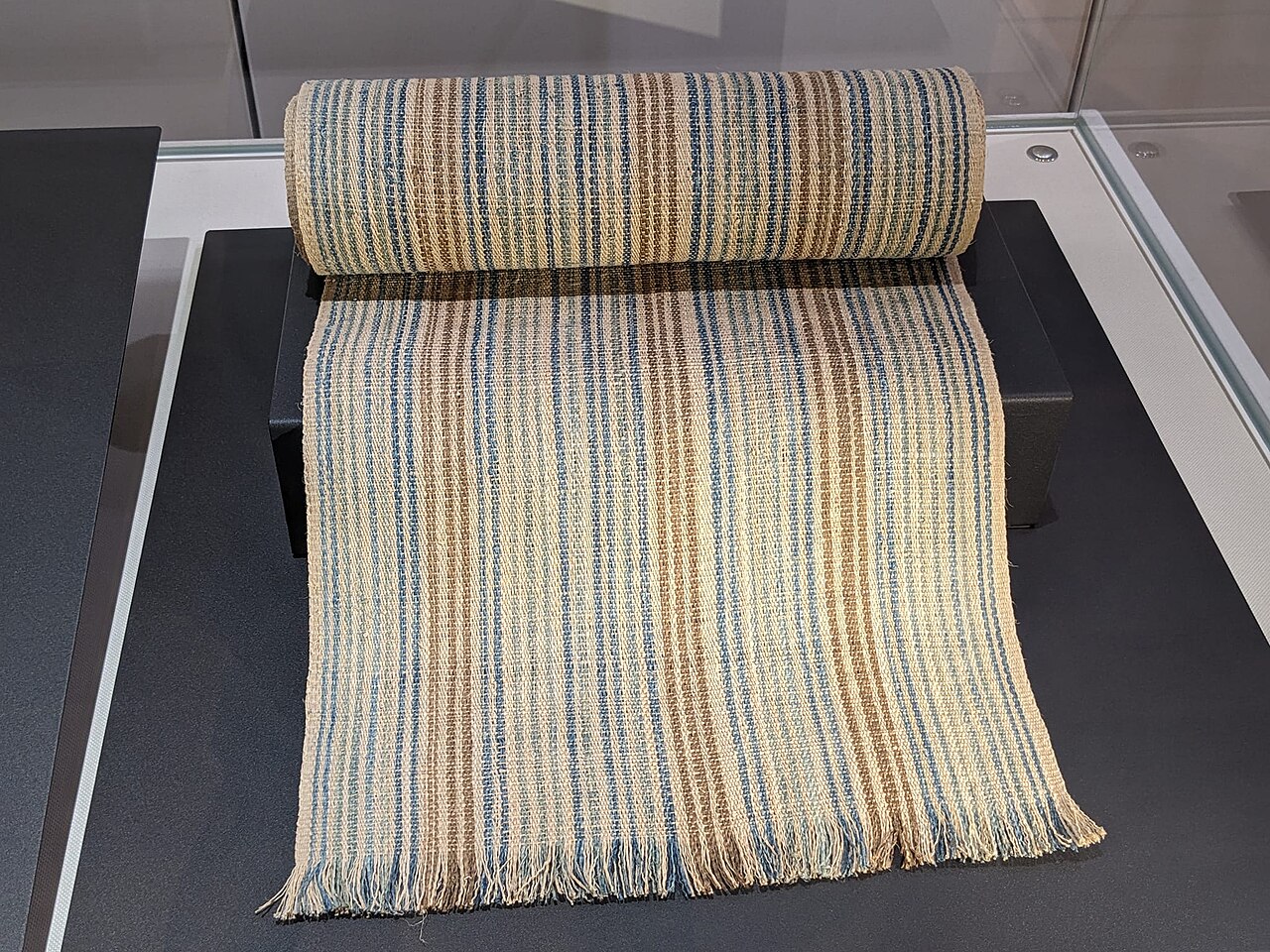
attus / attush (アットゥㇱ) — the foundational Ainu cloth, woven from soaked and beaten ohyo (Manchurian elm) bast fibers. Nibutani Attus is a nationally designated traditional craft.
kaparamip (カパラミㇷ゚) — white-cloth appliqué laid onto a robe, combined with embroidery to reinforce and protect the openings of a garment.
ohyo (オヒョウ) — Manchurian elm, the tree whose inner bark is processed into attus thread.
kotan (コタン) — an Ainu village or settlement.
Wajin (和人) — ethnic-Japanese settlers, used to distinguish them from the Ainu in historical context.
Nibutani (二風谷) — a district of Biratori, Hokkaido, the recognized center of Ainu craft and home of the first nationally designated Ainu textiles.
📍 Where this comes from — place, era, and the craft tradition

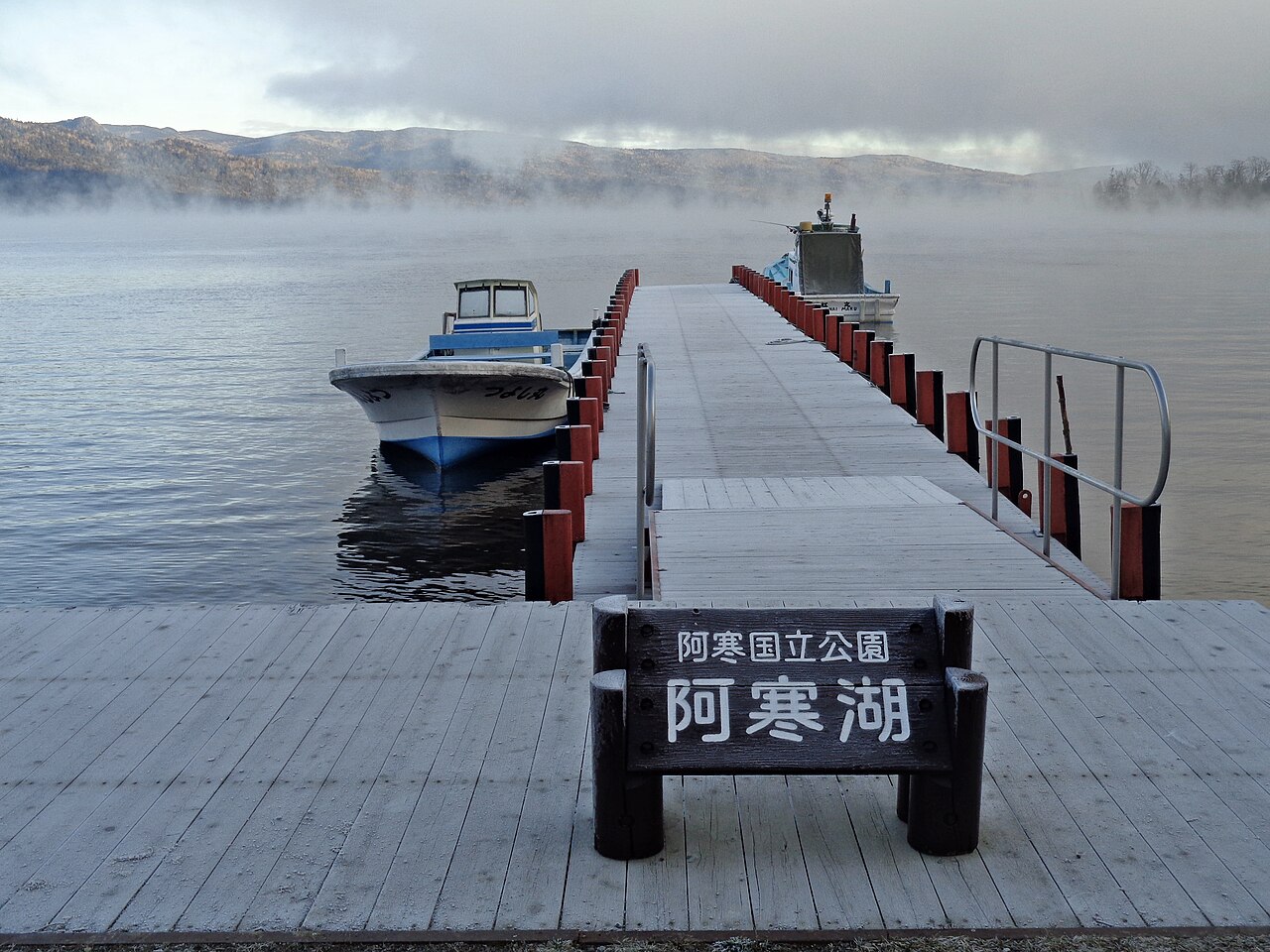
The region. Hokkaido is the northernmost of Japan’s main islands, separated from Honshu by the Tsugaru Strait and shaped by cold winters, dense forest, and long river valleys. It is the Ainu homeland. The cloth traditions described here grew out of that environment directly: the foundational textile, attus, is woven from the inner bast of the ohyo (Manchurian elm), soaked and beaten into pliable thread — a material drawn straight from the northern forest rather than imported.
The historical anchor. The Ainu inhabited Hokkaido long before Wajin settlement reached the island in significant numbers. During the Edo period, the Matsumae domain held an exclusive monopoly on trade with the Ainu, a relationship that shaped — and constrained — the flow of materials and goods for centuries. In 1869 the island, previously called Ezo, was renamed Hokkaido and brought under direct national administration. The twentieth century brought assimilation pressure, and only in recent decades has formal recognition and cultural revival followed.
- Pre-Edo — Ainu communities live across Hokkaido, weaving attus from ohyo elm bast and embroidering monyo onto robes.
- 1604 — The Matsumae domain is recognized by the Tokugawa shogunate and granted monopoly rights over trade with the Ainu.
- 1869 — Ezo is renamed Hokkaido and placed under the Colonization Commission; large-scale Wajin settlement follows.
- 1899 — The Hokkaido Former Aborigines Protection Act is enacted, a period of intense assimilation pressure on Ainu culture.
- 2013 — Nibutani Attus (cloth) and Nibutani Ita (carved trays) are designated national traditional crafts — the first Ainu textiles so honored.
- 2019 — National legislation formally recognizes the Ainu as an indigenous people of Japan.
- 2020 — Upopoy, the National Ainu Museum and Park, opens at Shiraoi as a public center for cultural revival.
- 2026 — Nibutani and Shiraoi remain the living centers of attus weaving and monyo embroidery.
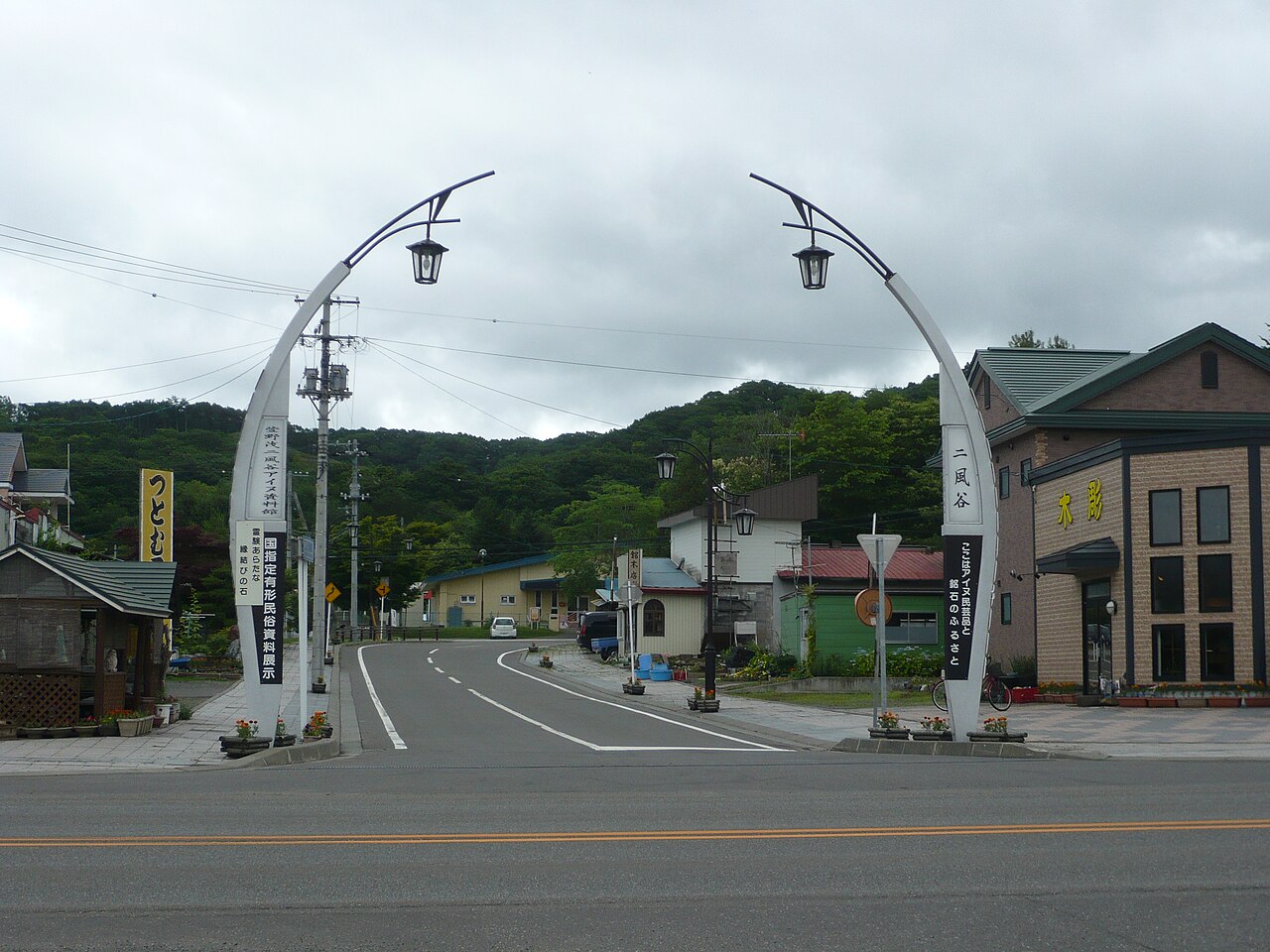
What “still being made here” means. The continuity case for Ainu craft runs through two places above all: Nibutani, a district of Biratori where attus weaving and ita carving earned their 2013 national designation, and Shiraoi, home since 2020 to the Upopoy National Ainu Museum and Park, where weaving and embroidery are demonstrated publicly. The monyo on a modern pouch is not a reproduction of a museum pattern; it is the same living pattern grammar, stitched by hands that learned it within that lineage.
The motifs and their meaning. Ainu monyo is built primarily from two forms: the moreu spiral and the aiushi thorn-bracket. On a robe, these were embroidered — together with kaparamip white-cloth appliqué — along the collar, the cuffs, and the hem. The placement was deliberate: the openings of a garment were the points a garment needed to guard, and the patterns were traditionally believed to turn away harmful spirits there. Crucially, the patterns were never mass-codified. There is no single authoritative chart; each maker’s hand differs, and the variation itself carries family and regional lineage.
“The moreu and aiushi were stitched where a garment opens — collar, cuff, hem — because the opening was the place that needed guarding. A pouch has a zip; the grammar still fits.”
📌 How does it compare?
If you are weighing this pouch against other Japanese regional crafts — by material, motif, or region — these related jpmono guides are useful points of comparison. Indigo, sashiko, kogin, shibori, and the other Ainu crafts all sit nearby in the textile-and-handwork landscape.
 Hokkaido Kibori BearThe carved bear okimono — Hokkaido’s best-known wood folk craft.
Hirosaki Kogin-sashi CoastersAomori counted-thread embroidery — the nearest mainland needlework cousin.
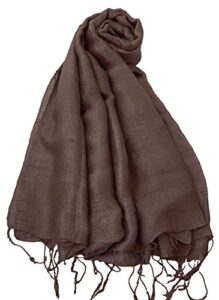 Iwate Homespun ScarfNorthern Tōhoku hand-spun wool — another cold-region textile.
Buaisou Aizome TenuguiTokushima natural-indigo cloth — a dye tradition to compare on color.
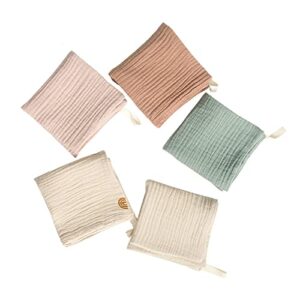 Banshu-ori HandkerchiefHyogo yarn-dyed cotton — a woven (not embroidered) cotton small good.
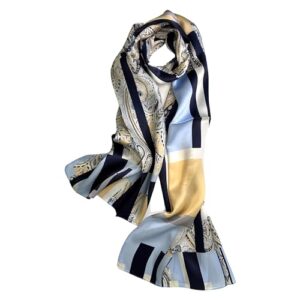 Arimatsu Shibori ScarfAichi tie-resist dyeing — a pattern-on-cloth craft via a different method.
Price snapshot across stores
No live price was returned by the data feed at the time of writing. The table below shows the purchase paths and is honest about what is and is not confirmed. Prices and stock fluctuate; the affiliate links carry the current figures.
| Store | Item / Variant | Price (JPY + USD est.) | Notes |
|---|---|---|---|
| 🇺🇸 Amazon US (search) | Browse Japanese embroidered pouches & textile goods | varies (USD) | Best if you are shopping from the US — Prime shipping, USD pricing, no international customs. Amazon US carries Japanese textile and craft pouches from various makers; this specific Ainu-monyo piece is sourced from Japan (next row). |
| 🇯🇵 Amazon JP Global Store | The specific Ainu monyo cotton zip pouch (ASIN B07R434JWZ) | Verify on listing — no price in available data | Where this exact item is sourced; ships internationally from Japan to most major destinations. Confirm price, dimensions, and stock before buying. |
| Maker direct | Nibutani / Shiraoi craft workshops & museum shops | Varies — not listed in data | For certified provenance (e.g., a documented Nibutani piece), buying via a museum or workshop shop is the surest path; international shipping may be limited. |
| Proxy services (Buyee / Tenso) | Re-ship from Japan-only listings | Item price + proxy & forwarding fees | Useful when a workshop or domestic listing does not ship abroad directly. Adds handling fees and a forwarding step; factor in customs duties. |
Prices in USD are approximate and depend on the current exchange rate (≈ ¥150/USD baseline as of mid-2026). The JPY price on the listing is the authoritative one. Only the listing identifier was available from the data feed; live pricing was unavailable at time of writing.
What it does well
Weaknesses and things to verify before buying
- Thin product data. At the time of writing, the data feed returned no price, dimensions, or material breakdown. Confirm every spec on the live listing before buying.
- Provenance is not certified by the listing alone. “Ainu monyo” describes the motif; it does not by itself guarantee a maker, a workshop, or a Nibutani designation. If certified provenance matters to you, ask the seller or buy through a workshop/museum shop.
- Handwork varies. Stitch density, exact motif arrangement, thread color, and finish will differ piece to piece. The photo may not match the unit you receive in every detail.
- International shipping and customs. Buying from the Amazon JP Global Store means cross-border shipping times and possible customs duties above your local threshold. Budget for both.
- Embroidery durability. Hand-embroidered cotton needs gentle care — hand-washing or a delicate cycle, avoiding heavy abrasion on the stitched panel. Treat it as a craft object, not a rugged utility pouch.
- Cultural respect. Ainu monyo is an indigenous tradition. Buy from sources that credit and benefit the makers, and present it accurately if you gift it.
Conclusion — which buyer type are you?
Other ways to approach this purchase
🏆 Editor’s Pick
❓ Frequently Asked Questions
What are the moreu and aiushi motifs?
Is this a certified Nibutani Ainu craft?
Can I buy it from outside Japan?
How do I care for the embroidery?
Why does no two pieces look exactly alike?
What is the price?
How does it compare to other Japanese textile crafts?
jpmono.com is curated by a Japan-based editorial team (working out of Toyama in the Hokuriku region and Nara in Kansai) and is independent. We do not take payment from the makers we feature; income comes from affiliate links. We do not physically test every product — we read maker specs and source listings — and we flag thin data when it occurs, as we have here.
🤖 This article was prepared with AI assistance and reviewed against the source listing data available at the time of writing. Where structured product data was missing (price, dimensions, materials), we have said so plainly rather than estimate. Verify all specifics on the retailer’s listing before purchase.
Affiliate disclosure: jpmono.com may earn a commission on qualifying purchases made through links on this page, at no additional cost to you.