![Iwate Homespun Wool Scarf: Handwoven Tweed from Tohoku [2026]](https://jpmono.com/wp-content/uploads/2026/05/japan-map-regions-and-prefectures-800x1050.png)
In Iwate Prefecture, in the cold northern interior of Japan’s Tōhoku region, a small number of ateliers still make wool scarves the slow way — dyeing raw fleece, carding it by hand, spinning the yarn on a wheel, and weaving slubby tweed on a hand loom one shuttle at a time. The result is “homespun” (ホームスパン, hōmu supan): an airy, lightly irregular cloth that behaves quite differently from smooth machine-spun wool.
Homespun arrived here in the late Meiji era, when British-style wool weaving spread through Tōhoku’s pasture-friendly highlands around Morioka and Hanamaki. Meiji-era agricultural reform and sheep husbandry gave the region its fleece, and over the following century Iwate became Japan’s homespun heartland. Nakamura Kōbō, a Morioka workshop, is among the best-known names keeping the technique alive today.
This guide is for international readers weighing a hand-woven Iwate homespun stole — what the craft actually involves, who makes it, how to buy it from outside Japan, and who should probably look at a smooth merino scarf instead. Where the data is thin, this article says so plainly rather than guessing.
🔄 Last updated: May 31, 2026
⏱️ Read time: ~11 min
Nakamura Kōbō, Morioka (Iwate)
- Who this is for — and who should skip it
- Product overview (from published specs)
- Where this comes from — place, era, and the craft tradition
- Buying options
- 📦 Shipping & where to buy from outside Japan
- What it does well
- Weaknesses and things to verify before buying
- Conclusion — which buyer type are you?
- Other ways to approach this purchase
- ❓ Frequently Asked Questions
Who this is for — and who should skip it
- Want a genuinely hand-made textile, not a factory scarf
- Appreciate the airy, slightly irregular texture of hand-spun tweed
- Are drawn to Tōhoku regional craft with a documented history
- Prefer lightweight wool warmth for autumn and winter layering
- Are comfortable hand-washing or dry-cleaning pure wool
- Need a machine-washable, low-maintenance scarf
- Have a known wool sensitivity or want the smoothness of fine merino or cashmere
- Want guaranteed in-stock availability and fixed pricing
- Need it delivered fast with no customs paperwork outside Japan
- Expect exact, confirmed dimensions before ordering (specs were not in the dataset)

Product overview (from published specs)
The data suggests this is a 100% hand-spun wool stole / muffler hand-woven as tweed by Nakamura Kōbō in Morioka, Iwate. Beyond fiber content, technique, and origin, the source dataset did not include confirmed dimensions, weight, or colorway breakdowns, so those rows are marked unconfirmed rather than guessed.
| Attribute | Detail | Source |
|---|---|---|
| Item | Iwate homespun stole / tweed muffler | Spec / maker |
| Maker | Nakamura Kōbō (Morioka, Iwate) | Spec / maker |
| Material | 100% wool, hand-spun | Spec / maker |
| Construction | Hand-carded, hand-spun, hand-woven tweed | Spec / maker |
| Origin | Morioka, Iwate Prefecture, Tōhoku | Spec / maker |
| Dimensions / weight | — | — |
| Colorway | — | — |
| Price | — | — |
The defining points to compare in an Iwate homespun wool scarf are its fiber, technique, and dimensions. Current details vary between pieces, so confirm those points with the maker before purchase.
📖 Glossary — key terms
Homespun (ホームスパン, hōmu supan) — a wool cloth made from hand-spun yarn, woven on a hand loom. The English word was borrowed directly into Japanese in the Meiji era. The texture is deliberately uneven and airy.
Tweed — a rough, flecked woolen cloth. Homespun is, in effect, a hand-made tweed; the flecks come from blending dyed fleece before spinning.
Carding — combing washed fleece to align the fibers before spinning. In homespun this is done by hand, which keeps the yarn lofty rather than tightly compacted.
Hand-spun yarn — fleece twisted into thread on a spinning wheel rather than by machine, giving slight, natural thickness variation along the strand.
Stole / muffler — Japanese retail distinguishes a wider, flatter “stole” from a narrower “muffler”; both describe a scarf worn at the neck or shoulders.
Tōhoku (東北) — the cold, mountainous northeastern region of Honshū, Japan’s main island. Iwate is its largest prefecture by area.
Nambu (南部) — the historical name of the clan and domain that governed the Morioka area; it survives in regional craft names such as Nambu tetsubin ironware.

Where this comes from — place, era, and the craft tradition

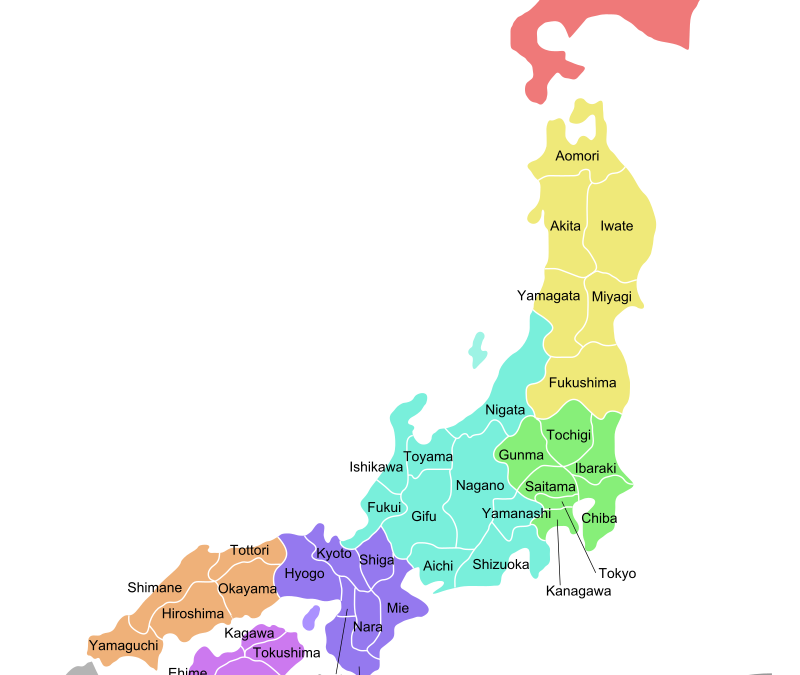
Iwate is the largest prefecture on Honshū after Hokkaidō, occupying the northeastern shoulder of Japan’s main island. It is bordered by Aomori to the north, Akita across the Ōu Mountains to the west, and Miyagi to the south, with the Pacific along its eastern coast. Morioka, the prefectural capital, sits in a basin where three rivers meet, ringed by highlands. Winters are long and cold, and the surrounding uplands take well to grazing.
That combination — cold climate and pasture — is exactly why wool took hold here. When Japan opened to Western industry in the Meiji era (1868–1912), British-style wool spinning and weaving spread into Tōhoku, and agricultural reform encouraged sheep husbandry across the cold highlands around Morioka and Hanamaki. Domestic fleece met imported technique, and homespun weaving put down roots.
- 1868 — The Meiji era begins; Japan starts importing Western industrial methods, including British wool spinning and weaving.
- Late Meiji (c. 1890s–1900s) — Homespun weaving takes root in Tōhoku’s pasture-friendly highlands around Morioka and Hanamaki.
- Meiji–Taishō — Agricultural reform and sheep husbandry expand, supplying domestic fleece and making Iwate Japan’s homespun heartland.
- 20th century — The full by-hand sequence — dyeing fleece, carding, wheel-spinning, hand-loom weaving — is preserved as a regional craft.
- Present day — Ateliers such as Nakamura Kōbō in Morioka continue hand-spinning and hand-weaving homespun tweed.
- 2026 — Iwate homespun remains a small-batch hand craft, distinct from industrial wool production.
Dates for the spread of homespun are approximate; they describe the late-Meiji adoption period rather than a single founding year.
What “still being made here” means in practice is a workshop sequence rather than a factory line. The fleece is dyed, carded, and spun into yarn on a wheel, then woven into tweed on a hand loom — every step carried by hand. That is why two scarves are never quite identical, and why the cloth has an airy loft and a faintly irregular surface that machine wool does not reproduce.
“Homespun is a tweed you can trace back to a single pair of hands — the fleece was carded, spun, and woven one shuttle at a time, and the cloth shows it.”
Iwate is better known internationally for Nambu tetsubin ironware, also from the Morioka–Mizusawa area. Homespun is the textile side of the same cold-country craft culture: a Tōhoku tradition born of sheep pastures and long northern winters, finished slowly by hand.

Buying options
| Store | Item / variant | Price | Notes |
|---|---|---|---|
| 🇺🇸 Amazon US (search) | Browse Japanese wool scarves | varies (USD) | Best if you are shopping from the US — Prime shipping, USD pricing, no international customs. Amazon US carries Japanese wool and tweed scarves from various makers, useful for comparing weight and price tiers. The exact Nakamura Kōbō piece is sourced from Japan (next row). |
| 🇯🇵 Amazon JP Global Store | Nakamura Kōbō Iwate homespun stole | — | International shipping from Japan may be available. Confirm the current total before ordering. |
| Maker direct | Nakamura Kōbō homespun line | — | Some Iwate homespun ateliers sell direct, but international shipping is not guaranteed. Verify availability on the maker’s own page. |
| Proxy services (Buyee / Tenso) | Japan-only options, forwarded abroad | item price + forwarding fee | Useful when an option does not ship to your country directly. Adds a handling fee and a second shipping leg; factor in customs. |
Any USD amounts are approximate conversions at a ¥150/USD baseline; exchange rates and prices for handmade wool textiles vary.
📦 Shipping & where to buy from outside Japan
Amazon JP Global Store ships many household and apparel items internationally, and the listed Nakamura Kōbō stole is a soft-goods textile with no electrical or hazardous components, so it is generally eligible. International shipping to the US and EU typically runs in the rough range of $15–$40 depending on weight and speed; other regions can cost more. Customs duties may apply once an order exceeds your country’s de minimis threshold, so check your local limit before ordering.
If a particular Iwate workshop does not ship to your country, a proxy/forwarding service such as Buyee or Tenso can receive the parcel in Japan and re-ship it to you, at the cost of an added handling fee and a second shipping leg. Because this is wool, not electronics, there is no voltage or certification concern.
What it does well
Weaknesses and things to verify before buying
- Pure-wool care. Expect hand-washing in cool water or dry cleaning; machine washing risks felting. Store with moth protection in the off-season.
- Confirm the current total before committing.
- Colorway and form can vary. Confirm the finish before purchase.
- Wool feel. Hand-spun wool can feel less smooth than fine merino or cashmere; those with wool sensitivity may find it scratchy against bare skin.
- Small-batch availability. Hand-made homespun is produced in limited quantities, so a specific colorway may sell out or vary between batches.
- International logistics. Confirm that the purchase can ship to your country; otherwise a proxy service and added fees may be needed, plus possible customs duties.
- Seasonal use. This is a cold-weather accessory; it has little use in hot, humid climates year-round.
Conclusion — which buyer type are you?
Other ways to approach this purchase
❓ Frequently Asked Questions
Does Amazon ship the Iwate homespun scarf internationally?
How do I care for a hand-spun wool scarf?
What makes homespun different from a regular wool scarf?
Is it itchy against the skin?
Why does this article link to an Amazon US search first?
What does it cost?
This article was prepared with AI assistance and reviewed against the available source data. Where pricing, dimensions, or images were not present in that data, the article states so rather than estimating.
Affiliate disclosure: jpmono.com may earn a commission on qualifying purchases made through links on this page, at no additional cost to you.