![Aizu Akabeko Papier-Mâché Red Cow: Fukushima’s Lucky Folk Toy [2026]](https://jpmono.com/wp-content/uploads/2026/06/aizu-akabeko-papier-mache-red-cow-where-to-buy-2026-featured.jpg)
The akabeko (赤べこ, “red cow”) is a papier-mâché folk toy from the Aizu region of western Fukushima, in Japan’s Tōhoku north. Its body is built from layered washi paper over a mold, painted vermilion red, and finished with black and gold markings — and its head is mounted on a separate weighted piece so that it nods, slowly and endlessly, at the lightest touch. It is one of the most recognizable engimono (縁起物, “lucky charms”) in the country, and for many Japanese households it is the first folk toy a child is given.
What makes the akabeko notable beyond its cheerful design is the weight of history packed into a small, light object. The form traces back to the 9th-century rebuilding of a Buddhist temple, its red pigment was once believed to ward off smallpox, and the domain that ruled Aizu turned hariko (張子, “papier-mâché”) painting into a recognized household trade. After the 2011 Great East Japan Earthquake, the nodding red ox became a national emblem of patient recovery — a fitting role for an object from a region defined by resilience.
This guide is written for international readers who want an authentic Aizu-made akabeko rather than a generic souvenir, and who want to understand what they are buying before they buy it. We cover what to look for, where this craft comes from, how the leading listings compare, the honest caveats, and where to purchase from outside Japan. Based on the spec data available at the time of writing, the live Amazon listing snapshot was thin — so pricing and stock should be confirmed at the retailer before purchase.
🔄 Last updated: June 15, 2026
⏱️ Read time: ~10 min

- Who this is for — and who should skip it
- Product overview (from published specs)
- Where this comes from
- What it does well
- Price snapshot across stores
- Weaknesses and things to verify before buying
- Conclusion — which buyer type are you?
- Other ways to approach this purchase
- 🏆 Editor’s Pick
- ❓ Frequently Asked Questions
Who this is for — and who should skip it
- Want a genuine Aizu-made hariko folk toy, not a mass-produced replica
- Collect engimono or Japanese folk toys (kyōdo gangu)
- Like a meaningful gift for a new baby, a recovery, or a new beginning
- Appreciate handwork where each piece is painted slightly differently
- Want a light, shelf-friendly piece of Tōhoku cultural history
- Expect a perfectly uniform, machine-precise finish
- Need a durable toy for rough play by very young children
- Want a functional household object rather than a decorative charm
- Dislike paper-based items in humid or high-traffic spaces
- Are unwilling to verify maker authenticity before buying
Product overview (from published specs)
The data fetched for this guide contained no live listing snapshot, so the table below reflects the general specification of an Aizu hariko akabeko rather than confirmed per-listing values. Treat material and construction as characteristic of the craft; confirm exact size, weight, and price on the retailer page before buying.
Aizu Akabeko Papier-Mâché Red Cow
赤べこ(小)根付【2個入り】
在庫あり。 · Sold by 株式会社コヤマ · ASIN B08YDFXCXZ
Price and availability as of 2026-08-31 02:30 JST. The Amazon listing at the time of purchase is authoritative. jpmono.com earns a commission on qualifying purchases at no extra cost to you.
| Attribute | Detail (characteristic of the craft) | Source |
|---|---|---|
| Item | Aizu hariko akabeko, nodding red-cow folk toy | Spec |
| Material | Layered washi paper (papier-mâché / hariko), painted finish | Spec / data_notes |
| Construction | Separate spring-mounted head that nods; hand-painted | data_notes |
| Color | Vermilion red body with black and gold markings | data_notes |
| Origin | Aizu region (Aizuwakamatsu / Yanaizu), Fukushima Prefecture | data_notes |
| Size / Weight | Unconfirmed — check the listing (typically a small desk/shelf piece) | — |
| Makers (examples) | Yamada Mingei, Noguchi Hariko and other Aizu workshops | Spec hint |
| Item ID (JP listing) | ASIN B08YDFXCXZ | Amazon JP Global Store |
Sources: Amazon US search (primary, moonill-20) + Amazon JP Global Store (secondary, moonill-22, sourced listing) + maker direct, where available. Only thin data was available at the time of writing; live pricing may have shifted since the writing date.
📖 Glossary — key terms
- akabeko (赤べこ) — “red cow” in the Aizu dialect; the nodding papier-mâché ox folk toy.
- hariko (張子) — papier-mâché made by layering washi paper over a mold, then removing the mold.
- washi (和紙) — traditional Japanese paper made from plant fibers such as kōzo (mulberry).
- engimono (縁起物) — an object kept or given to invite good fortune or ward off misfortune.
- kyōdo gangu (郷土玩具) — regional folk toys, each tied to a specific place and legend.
- hōsō-yoke (疱瘡除け) — a smallpox amulet; red was traditionally believed to repel the disease.
- Byakkotai (白虎隊) — the “White Tiger” teenage samurai unit of Aizu during the Boshin War.
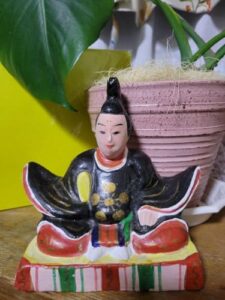 🏺 Akita Yatsuhashi Clay Doll (Tohoku folk figure)
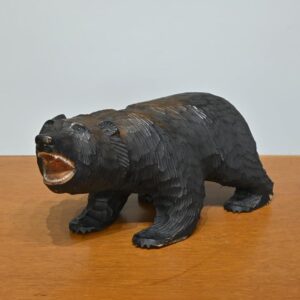 🐻 Hokkaido Kibori Bear (folk okimono)
 🍶 Tsutsumi-yaki Tumbler (neighboring Miyagi)
⚙️ Sendai Tansu Iron Trivet (Tohoku)
🧵 Hirosaki Kogin-sashi (Tohoku craft)
 🌳 Kabazaiku Cherry Bark Caddy (Tohoku)
Where this comes from

Aizu is the western, mountain-locked third of Fukushima Prefecture, set in a wide basin between the Ōu range and the highlands around Lake Inawashiro. It is high, inland, and famously snowbound in winter — a geography that matters to this craft. When deep snow closed the fields for months, indoor handwork such as hariko painting became a practical household trade, and the long winters of the Aizu basin are part of why papier-mâché toys took root here rather than on the milder coast.
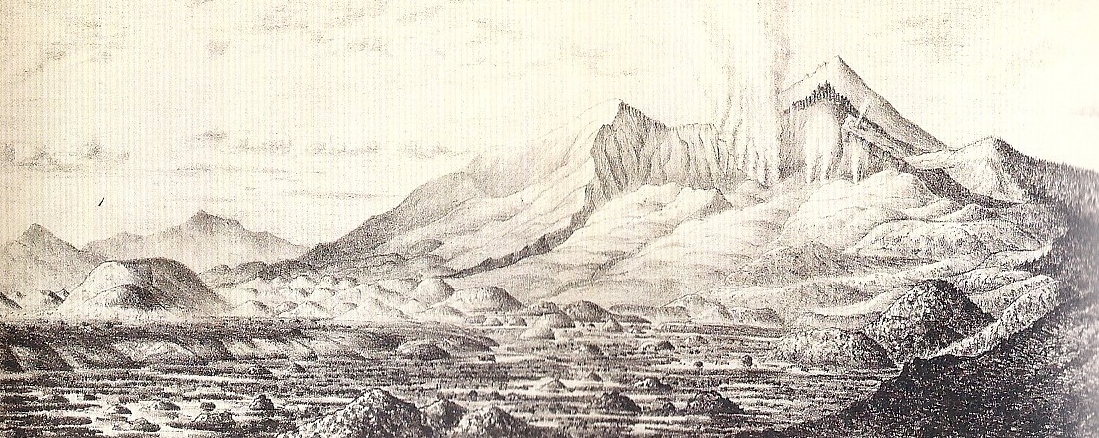
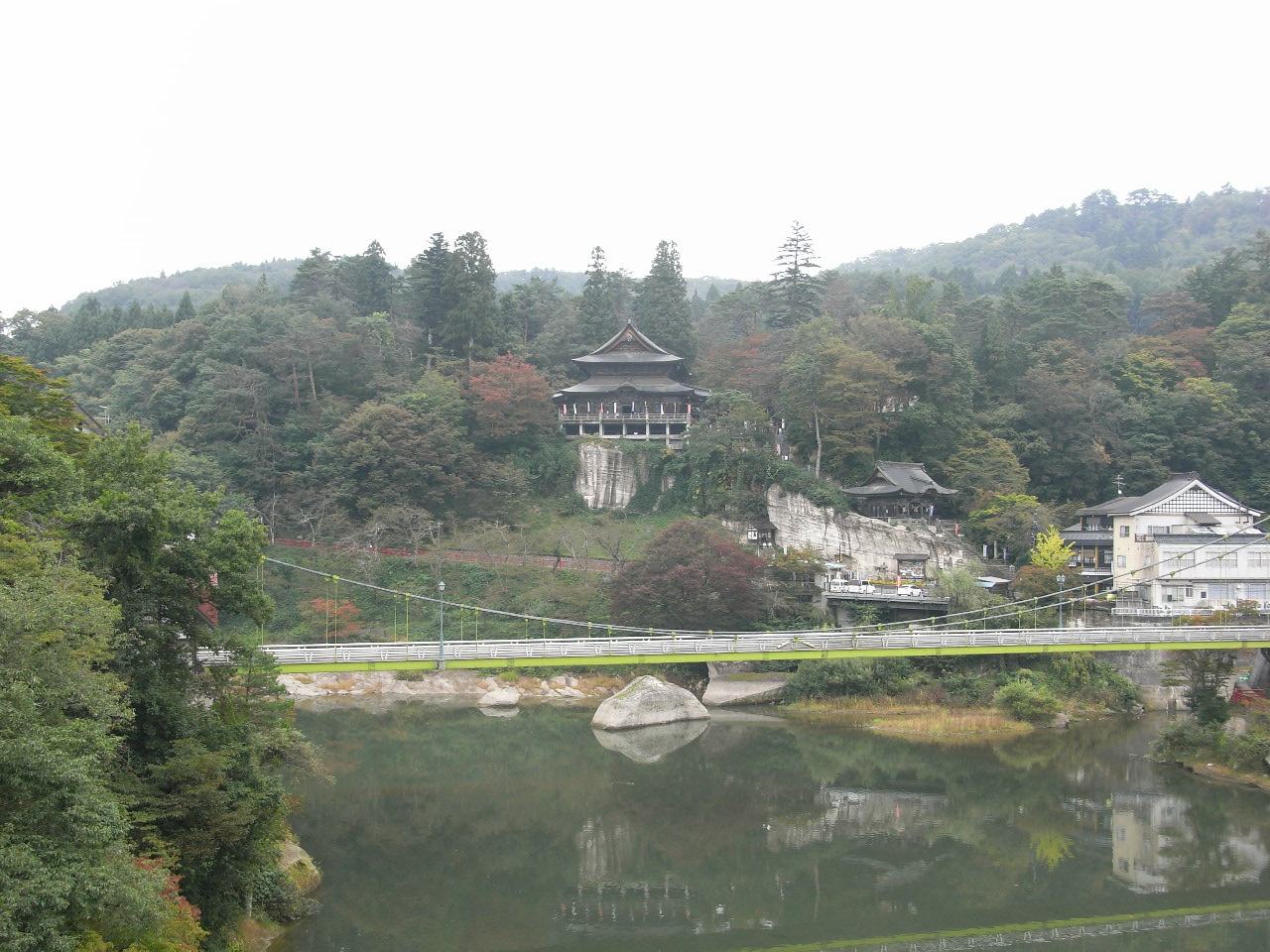
The akabeko’s origin is a legend tied to a temple. In 807, during the rebuilding of Fukuman Kokuzō Enzōji (圓蔵寺) in Yanaizu, a red ox is said to have hauled the heavy timber and then, refusing to leave the holy ground, turned to stone — becoming a guardian of the site. The red ox of that story is the ancestor of every akabeko sold today. The legend gives the toy both its color and its quiet stubbornness: a creature that stays, endures, and protects.
- 807 — Enzōji temple is rebuilt in Yanaizu; the legend of the red ox that turned to stone takes hold.
- 1590s — Lord Gamō Ujisato, ruling Aizu, encourages papier-mâché and other handicrafts in the domain.
- Edo period — The Aizu domain promotes hariko-making as side work for lower samurai and farmers.
- Edo era — The akabeko’s red pigment is valued as a hōsō-yoke (smallpox amulet) for children.
- 1868 — The Boshin War; the siege of Tsuruga Castle and the tragedy of the Byakkotai mark Aizu as a place of endurance.
- 2011 — After the Great East Japan Earthquake, the nodding red ox becomes a national emblem of recovery.
- 2026 — Aizu workshops continue to mold, layer, and hand-paint akabeko by the same essential method.
By the Edo period the Aizu domain had turned this folklore into an industry. Building on papier-mâché handicrafts encouraged since Gamō Ujisato’s rule in the late 16th century, the domain promoted hariko-making as approved side work (naishoku) for lower-ranking samurai and farming households. The akabeko’s vivid red did double duty: it was also believed to be a hōsō-yoke, a charm against smallpox, which made the toy a natural gift for young children. As the spec data notes, these are traditional beliefs rather than medical claims.
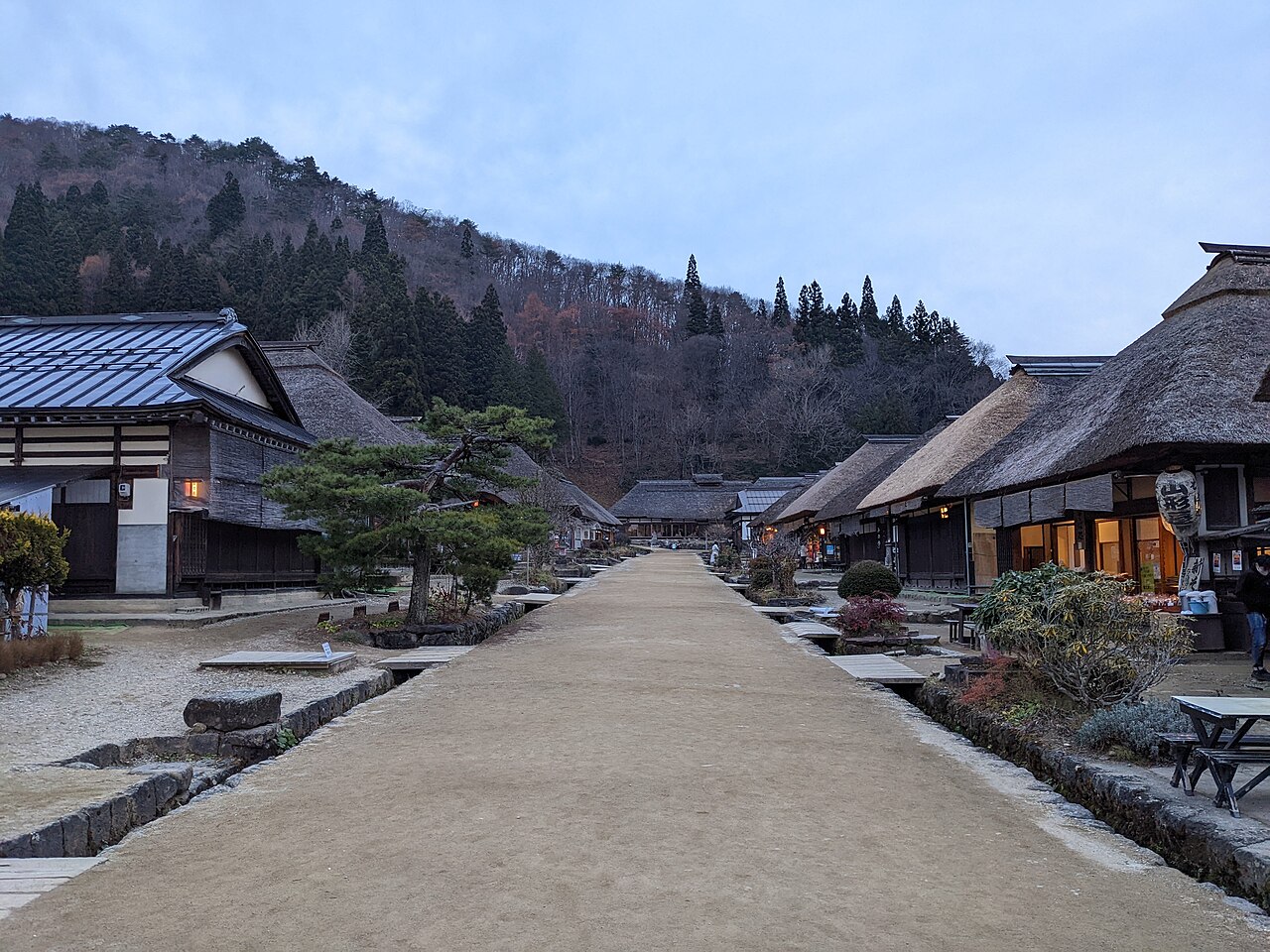
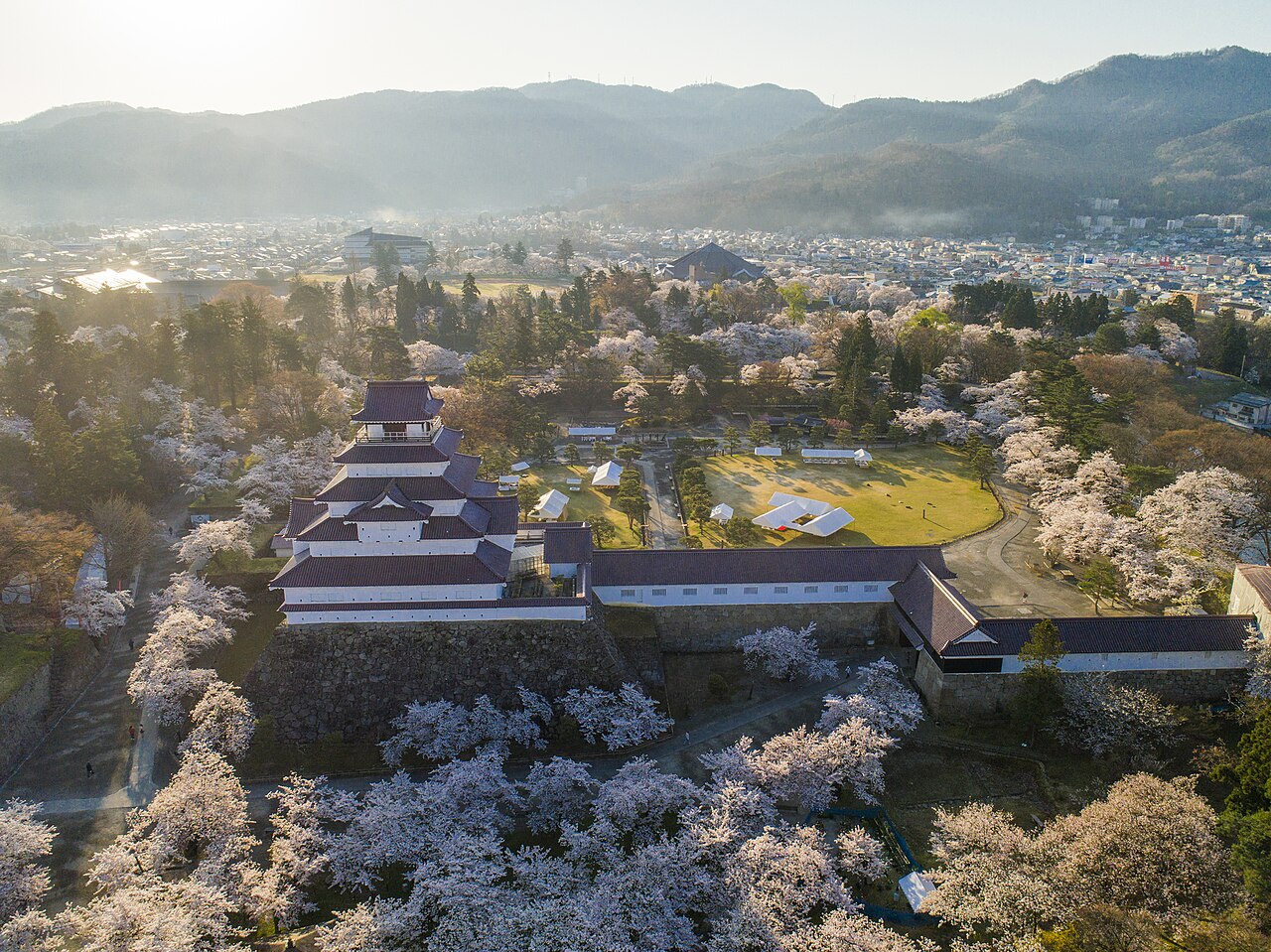
Aizu’s identity as a place of perseverance was sealed in 1868. The castle town of Aizuwakamatsu, seat of the Aizu domain at Tsuruga Castle, made the Boshin War’s most famous last stand; the teenage Byakkotai have been remembered ever since as a symbol of loyalty and loss. That history is why the akabeko reads as more than a cute toy here — its endless, patient nod fits a region that has rebuilt itself more than once.
“A red ox that hauled timber for a temple, refused to leave, and turned to stone — the akabeko has spent twelve centuries learning how to stay.”
The continuity case is straightforward: akabeko are still made in Aizu workshops today, layered from washi over a mold, dried, assembled with a nodding head, and painted by hand one piece at a time. Makers such as Yamada Mingei and Noguchi Hariko are among the names associated with the craft. Because each is hand-painted, no two are identical — small differences in the face and markings are a sign of the handwork, not a defect.
What it does well
Price snapshot across stores
JPY is the authoritative price; USD figures are approximate at a ¥150/USD baseline as of mid-2026. The fetched data contained no confirmed price, so verify the current figure at the retailer before buying.
| Store | Item / Variant | Price (JPY + USD est.) | Notes |
|---|---|---|---|
| 🇺🇸 Amazon US (search) | Browse Japanese folk toys & engimono | varies (USD) | Best if you are shopping from the US — Prime shipping, USD pricing, no international customs. Amazon US carries Japanese folk toys, daruma, and lucky charms; the specific Aizu hariko piece is sourced from Japan (next row). |
| 🇯🇵 Amazon JP Global Store | Aizu hariko akabeko (ASIN B08YDFXCXZ) | Check live price (USD est. on conversion) | Ships internationally from Japan. This is the sourced listing for the specific item. |
| Maker direct | Yamada Mingei / Noguchi Hariko and other Aizu workshops | Unconfirmed — check maker site | Widest selection of sizes and hand-painted styles; international shipping varies by workshop. |
| Proxy services (Buyee / Tenso) | Domestic-only Japanese listings forwarded abroad | Item price + forwarding fee | Useful for workshop or marketplace listings that do not ship overseas directly; adds a handling fee and a customs step. |
Weaknesses and things to verify before buying
- No confirmed price or specs in the fetched data. The listing snapshot was thin, so exact size, weight, and price must be checked on the retailer page before you commit.
- It is paper. Hariko is light and fragile; it does not tolerate moisture, rough handling, or being dropped the way ceramic or wood would.
- Authenticity varies. “Akabeko” is a widely copied form. Confirm the listing states an Aizu workshop or named maker rather than a generic imported replica.
- Hand-painted means non-uniform. Faces and markings differ slightly piece to piece. That is correct for the craft, but buyers wanting identical units may be disappointed.
- Not a play toy for very young children. Despite being a “folk toy,” it is a decorative charm; the nodding head and paper body are not built for rough use.
- The amulet claims are traditional, not medical. The smallpox-ward (hōsō-yoke) association is folklore, as the source notes state.
- Shipping and customs. If buying from Japan, confirm the listing ships to your country and budget for possible duties above local thresholds.
Conclusion — which buyer type are you?
Other ways to approach this purchase
🏆 Editor’s Pick
❓ Frequently Asked Questions
What does the akabeko symbolize?
It is an engimono (lucky charm) associated with protection, good health, and perseverance. Its red color was traditionally believed to ward off smallpox, and its origin legend — a red ox that helped rebuild a 9th-century temple and would not leave — gives it a meaning of steadfastness. These are folk traditions rather than medical claims.
Where is the akabeko made, and what is it made of?
It comes from the Aizu region of western Fukushima, in Japan’s Tōhoku north. It is a hariko (papier-mâché) toy built by layering washi paper over a mold, then painted by hand, with the head mounted separately so that it nods.
Can I buy an akabeko from outside Japan?
Yes. The Amazon JP Global Store listing (ASIN B08YDFXCXZ) ships internationally from Japan, and Amazon US carries comparable Japanese folk toys with USD pricing. For workshop listings that do not ship abroad, a proxy service such as Buyee or Tenso can forward the item.
How do I know it is an authentic Aizu piece?
Look for a listing that names an Aizu workshop or a known maker such as Yamada Mingei or Noguchi Hariko, and that describes it as hand-painted hariko. Slight differences in the painted face are normal for handwork; perfectly identical units can indicate mass production.
How should I care for it?
Keep it dry and away from direct sunlight to protect the paper and pigment, and handle the nodding head gently. Dust with a soft dry brush rather than a damp cloth. It is a decorative charm, not a durable plaything.
Is it a good gift?
It is a classic gift for a new baby, a recovery, or a fresh start, owing to its protective and perseverance symbolism. It is light, displays easily on a shelf, and carries a story that travels well across cultures.
Why did the akabeko become a symbol of recovery?
Aizu has rebuilt itself before — most famously after the 1868 Boshin War and the siege of Tsuruga Castle. After the 2011 Great East Japan Earthquake, the patient, endlessly nodding red ox from Fukushima was widely embraced as an emblem of Tōhoku’s resilience.
jpmono.com is curated by a Japan-based editorial team (working out of Toyama in the Hokuriku region and Nara in Kansai) and is independent. We do not take payment from the makers we feature; income comes from affiliate links.
This article was prepared with AI assistance and reviewed against the source data available at the time of writing. Specifications, prices, and availability should be confirmed at the retailer before purchase.
Affiliate disclosure: jpmono.com may earn a commission on qualifying purchases made through links on this page, at no additional cost to you.