![Akahada-yaki Nara-e Yunomi: Hand-Painted Nara Pottery Teacup [2026]](https://jpmono.com/wp-content/uploads/2026/05/akahada-yaki-nara-e-yunomi-where-to-buy-2026-featured.jpg)
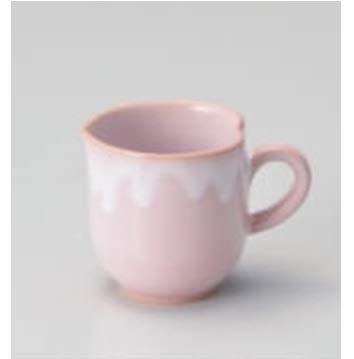
Akahada-yaki (赤膚焼, “red-skin ware”) is the pottery of Nara — fired from the iron-rich, reddish clay of Akahada-yama on the city’s western fringe, the hill whose warm hue gives the ware its name. A typical piece you would actually use day to day is the yunomi (湯のみ): a tall, handleless teacup for everyday green tea. Over the reddish clay body sits a milky, crackled glaze, and across that pale surface a brush has laid down a few quick figures — a deer, a pavilion roof, a sketch of Mt. Wakakusa. That brushwork is called Nara-e (奈良絵).
What makes Akahada-yaki notable to a reader outside Japan is not refinement in the porcelain sense; it is the opposite. The decoration is deliberately naive, descended from medieval Nara-ehon (奈良絵本) picture books, and it points straight at the Yamato landscape and the Kasuga deer that the old capital is known for. Kiln activity in the area traces to the late 16th century, and in the Edo period the ware was counted among the “seven kilns” associated with the tea master Kobori Enshū and patronized by the local Kōriyama domain. It is, in other words, a tea-culture object with a documented lineage rather than a souvenir.
This guide is written for the international reader deciding whether — and how — to buy an authentic hand-painted Akahada-yaki Nara-e yunomi. We cover what the ware is, how the variants differ, how to read the crackle and the brushwork, the realistic purchase paths from outside Japan, and the honest caveats. One of those caveats up front: Akahada-yaki is largely a domestic-circulation craft, so listings come and go and pricing data is thin. We say so where it matters rather than inventing numbers.
![Akahada-yaki Nara-e Yunomi: Hand-Painted Nara Pottery Teacup [2026]](https://m.media-amazon.com/images/I/31TO4PuvI6L._SL500_.jpg)
- Who this is for — and who should skip it
- Product overview (from published specs)
- Where this comes from — place, era, and the craft tradition
- 📦 Shipping & where to buy from outside Japan
- Price snapshot across stores
- What it does well
- Weaknesses and things to verify before buying
- Conclusion — which buyer type are you?
- Other ways to approach this purchase
- 🏆 Editor’s Pick
- ❓ Frequently Asked Questions
Who this is for — and who should skip it
- Want a daily tea cup with a documented Nara craft lineage, not a mass-market mug
- Like warm, earthy pottery with a soft crackled glaze rather than smooth white porcelain
- Appreciate hand-painted figures and accept that each cup is one of a kind
- Are buying a meaningful gift tied to Nara, the Kasuga deer, or the tea tradition
- Are comfortable buying from a Japan-based listing and waiting for international shipping
- Need an exact, repeatable product where every unit looks identical
- Want guaranteed dishwasher- and microwave-safe stoneware with no special care
- Expect fast Prime-style delivery and dislike customs paperwork
- Read the crackle lines in the glaze as defects rather than a feature
- Want a confirmed price before committing — listings here are intermittent

Product overview (from published specs)
The data suggests this is a small, hand-decorated tea object rather than a spec-driven product, so most of the “spec sheet” is qualitative. The table below is built from the verified craft notes for Akahada-yaki and from the realistic purchase paths; price and availability fields are left honest where no listing was supplied.
| Attribute | Detail | Source |
|---|---|---|
| Ware | Akahada-yaki (赤膚焼), Nara pottery | Craft notes |
| Form | Yunomi (handleless tea cup) | Craft notes |
| Body | Iron-rich reddish clay from Akahada-yama (Nara’s western edge) | Craft notes |
| Glaze | Milky, crackled hagi-like glaze (kan’nyū crackle) | Craft notes |
| Decoration | Hand-brushed Nara-e — deer, Mt. Wakakusa, Kasuga / Tōdai-ji motifs | Craft notes |
| Kilns | Nara-area kilns (e.g., Ohshio; Akahadayama Motogama) | Recommendation hint |
| Dimensions / weight | Unconfirmed — varies by maker; check the individual listing | — |
| 🇺🇸 Amazon.com (US) | Thin / intermittent — domestic-circulation craft; browse comparable Japanese pottery | Search |
| 🇯🇵 Amazon JP Global Store | Realistic primary path; specific stock varies — price unconfirmed at time of writing | Search |
| Maker direct | Nara kilns sell through local galleries / their own shops | Craft notes |
| Proxy services (Buyee / Tenso) | Useful fallback when a listing does not ship to your country | — |
Data note: only the craft description was available for this guide — no live Amazon listing snapshot, ASIN, or price was supplied. Live pricing and stock may have shifted since the writing date, and specific dimensions are not confirmed. We have not invented any figures.
📖 Glossary — key terms in this guide
Akahada-yaki (赤膚焼, “red-skin ware”) — Nara’s traditional pottery, named for the reddish “skin” of the iron-rich clay from Akahada-yama.
Yunomi (湯のみ) — a tall, handleless Japanese tea cup for everyday green tea, as distinct from the matcha tea-ceremony bowl (chawan).
Nara-e (奈良絵) — naive, brushy ink-and-color figure painting — deer, pavilions, court figures — descended from medieval Nara-ehon picture books.
Enshū nanagama (遠州七窯, “Enshū’s seven kilns”) — a traditional grouping of kilns associated with the Edo-period tea master and garden designer Kobori Enshū; Akahada-yaki is counted among them.
Kan’nyū (貫入) — the fine crackle network in a glaze, formed as glaze and clay body cool at different rates. In hagi-like wares it is prized, not treated as a flaw.
Kasuga deer — the free-roaming deer of Nara, treated as sacred messengers of Kasuga Taisha shrine; a recurring Nara-e motif.

Where this comes from — place, era, and the craft tradition

Nara sits in the Yamato basin of the Kansai region, ringed by low hills and well inland from the sea. The reddish clay that defines this ware is local: it is dug from Akahada-yama, a hill on the western fringe of the city, and its iron content is high enough that the fired body reads as warm and ruddy under the pale glaze. That single geographic fact — local iron-rich clay — is why the ware is called “red-skin” and why no other region’s pottery looks quite like it.
Nara was Japan’s capital from 710 to 794 — the Nara period — when the imperial court first concentrated temples, workshops, and craftspeople into a planned city. Even after the capital moved to Kyoto in 794, Nara remained a religious and cultural center: Tōdai-ji, Kasuga Taisha, and the famous free-roaming deer all date their importance to this era. Akahada-yaki is much younger than the city itself. Kiln activity in the area traces to the late 16th century, under Toyotomi Hidenaga at Kōriyama, just southwest of central Nara.
- 710 — Nara (Heijō-kyō) becomes Japan’s first permanent imperial capital.
- 794 — The capital moves to Kyoto; Nara remains a temple and shrine center.
- Late 16th c. — Kiln activity at Kōriyama under Toyotomi Hidenaga; the roots of Akahada-yaki.
- Edo period — Akahada-yaki is counted among Kobori Enshū’s “seven kilns” (Enshū nanagama).
- Edo period — Patronized by the Kōriyama domain’s Yanagisawa clan as a local ware.
- 2026 — Still produced by Nara-area kilns (e.g., Ohshio, Akahadayama Motogama), mostly for the domestic market.
In the Edo period the ware gained a tea-culture pedigree. It was formalized as one of the “seven kilns” associated with Kobori Enshū — the tea master, official, and garden designer whose taste shaped much of 17th-century tea ceramics — and it was patronized by the Yanagisawa clan, who ruled the Kōriyama domain. That patronage matters: it is the reason a small regional pottery acquired a recognized name and a tea-ware identity rather than remaining anonymous folk pottery.
The decoration is where Nara’s deep history shows up directly. Nara-e brushwork descends from medieval Nara-ehon picture books, and its stock figures — deer, pavilions, Mt. Wakakusa, Kasuga and Tōdai-ji motifs — are exactly the icons a visitor associates with the old capital today. When you drink from one of these cups, the painted deer is not generic decoration; it points at the sacred deer of Kasuga that still wander the city’s parks.
“The clay is dug from a hill on the edge of Japan’s first capital, and the deer painted on the glaze still walk the streets below it.”
One honest qualifier: Akahada-yaki is largely a domestic-circulation craft. It is well known inside Japan and within tea circles, but it has never been an export commodity the way Arita porcelain or Hagi tea bowls became. That is why international stock is thin and why this guide leans on the Japan marketplace rather than promising easy US availability.
📦 Shipping & where to buy from outside Japan
Based on how this ware circulates, the realistic path for an international buyer is the Amazon JP Global Store, which lists many Japanese household items with international shipping to most major destinations. Amazon US is worth checking first for convenience, but for a domestic-circulation craft like Akahada-yaki the .com stock is intermittent — you are more likely to find comparable Japanese pottery there than this exact ware.
- Amazon JP Global Store — ships internationally; expect roughly $15–$40 shipping to the US or EU for a single small ceramic item, higher to other regions.
- Customs / duties — orders above your country’s de-minimis threshold may attract import duty or VAT on arrival; budget for it.
- Proxy services (Buyee / Tenso) — a reliable fallback when a specific listing or maker shop does not ship to your country; they receive the parcel in Japan and forward it.
- Maker direct / Nara galleries — kilns such as Ohshio sell through local shops and galleries; these usually require a proxy for overseas delivery.
- Fragility — this is hand-thrown pottery; confirm the seller packs ceramics properly, since crackle-glaze cups are not forgiving of rough transit.
Prices in USD are approximate and depend on the current exchange rate (¥150/USD baseline as of mid-2026). The JPY price on the listing is always the authoritative one.
Price snapshot across stores
No live listing or price was supplied for this guide, so the table records purchase paths and honest “unconfirmed” pricing rather than invented figures. The data suggests pricing for a single hand-painted yunomi varies widely by kiln and by how elaborate the Nara-e is.
| Store | Item / variant | Price (JPY + USD est.) | Notes |
|---|---|---|---|
| 🇺🇸 Amazon.com (US) | Browse Japanese pottery & yunomi tea cups | varies (USD) | Best if you are shopping from the US — Prime shipping, USD pricing, no customs. Amazon US carries Japanese pottery and yunomi from many makers; this exact Nara ware usually ships from Japan (next row). |
| 🇯🇵 Amazon JP Global Store | Akahada-yaki Nara-e yunomi (specific stock varies) | Unconfirmed — check listing | Ships internationally from Japan. The realistic primary path; no price snapshot was available at time of writing. |
| Maker direct | Nara kilns / galleries (e.g., Ohshio) | Unconfirmed — check maker site | Often domestic shipping only; pair with a proxy for overseas delivery. |
| Proxy services (Buyee / Tenso) | Forwards any JP listing / shop purchase | Item price + forwarding fee | Use when a listing will not ship to your country. |
What it does well
Weaknesses and things to verify before buying
- Thin international availability. This is a domestic-circulation craft; expect intermittent stock and to lean on the JP Global Store or a proxy.
- No confirmed price. No listing snapshot was supplied here, and prices vary widely by kiln and by how elaborate the painting is — verify before committing.
- Unconfirmed dimensions and capacity. Size is not standardized across makers; check the specific listing’s measurements if cup volume matters to you.
- Crackle is a feature, not a flaw. The kan’nyū lines, and possible slight color variation, are intrinsic to the ware; if you want a flawless uniform surface, this is the wrong object.
- Care requirements. Hand-thrown crackle-glaze pottery is generally best hand-washed; do not assume dishwasher, microwave, or freezer safety unless the listing states it.
- Fragility in transit. Confirm careful ceramic packing, especially for long international routes.
- Authenticity. “Nara-e style” decoration appears on mass goods too; confirm the listing names an actual Akahada-yaki kiln if provenance matters to you.
Conclusion — which buyer type are you?
Other ways to approach this purchase
🏆 Editor’s Pick
❓ Frequently Asked Questions
Can I buy Akahada-yaki on Amazon US?
Will the Amazon JP Global Store ship a cup to my country?
Is each Nara-e yunomi really hand-painted and unique?
Are the crackle lines in the glaze a defect?
How should I care for an Akahada-yaki yunomi?
How is Akahada-yaki different from Hagi ware?
How much should I expect to pay?
jpmono.com is curated by a Japan-based editorial team (working out of Toyama in the Hokuriku region and Nara in Kansai) and is independent. We don’t take payment from the makers we feature; income comes from affiliate links. We don’t physically test every product — we read maker specs and source listings. Read more about our editorial standards.
This article was prepared with AI assistance and reviewed against the supplied craft data. Where listing, price, or product-image data was unavailable, the article says so plainly rather than estimating; no ASINs, prices, or specifications were invented.
Affiliate disclosure: jpmono.com may earn a commission on qualifying purchases made through links on this page, at no additional cost to you.