![Niigata Shikki Take-nuri Lacquer Chopsticks: Bamboo-Look Urushi Guide [2026]](https://jpmono.com/wp-content/uploads/2026/05/japan-map-regions-and-prefectures-800x1050.png)
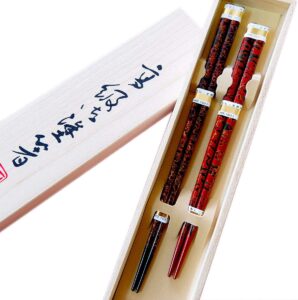
Niigata Shikki (新潟漆器, “Niigata lacquerware”) is the lacquer tradition of the old port city of Niigata, on the Sea of Japan coast of the Chūbu region. Its signature trick is take-nuri (竹塗, “bamboo lacquering”): a layered urushi finish that reproduces the nodes, joints, and matte skin of real bamboo so convincingly that the finished chopstick is easily mistaken for a length of cut cane. This article focuses on how that technique appears in an everyday chopstick form.
What makes this notable for an international reader is the deception itself. There is no bamboo in a take-nuri chopstick; the grain, the green-brown gradient, and the slightly rough culm texture are built up entirely in lacquer over a wooden core. Niigata Shikki was designated a National Traditional Craft by Japan’s Ministry of Economy, Trade and Industry (METI) in 2003, and take-nuri is the finish that distinguishes it from every other lacquer town in the country.
This article is for readers deciding whether a take-nuri pair is the right Japanese-craft chopstick to buy from outside Japan. It covers what the craft is, how it differs from the better-known Tsugaru-nuri of Aomori, the place and history behind it, honest weaknesses, and buying paths through US search and Japan-based sellers. Current prices may change, so no item-specific figure is asserted.
🔄 Updated:
⏱️ Read time: ~10 min
- Who this is for — and who should skip it
- Product overview (from published specs)
- Where this comes from — place, era, and the craft tradition
- Buying options compared
- What it does well
- Weaknesses and things to verify before buying
- Conclusion — which buyer type are you?
- Other ways to approach this purchase
- ❓ Frequently Asked Questions
Who this is for — and who should skip it
- Want a Japanese lacquer object that is genuinely unusual — a trompe-l’œil bamboo finish, not another solid-color pair.
- Like the look of bamboo tableware but want the durability and washability of a sealed urushi surface.
- Are building a collection of regional Japanese lacquer and want a Niigata entry distinct from Wajima, Tsugaru, or Yamanaka.
- Are buying a meoto (paired) gift and value craft provenance over a brand name.
- Are comfortable hand-washing tableware and treating it as a keepsake, not a dishwasher commodity.
- Need dishwasher- and microwave-safe everyday chopsticks for heavy daily rotation.
- Want a precise, confirmed price before buying — live pricing was unavailable in the fetched data.
- Expect actual bamboo; this is lacquer imitating bamboo, which some buyers find counterintuitive.
- Are shopping purely on lowest unit cost — mass-market lacquered chopsticks are far cheaper.
- Cannot accommodate international shipping times or possible customs handling from Japan.
Product overview (from published specs)
Take-nuri chopsticks vary by maker, wood, and finish. Where a value is not stated in our documented sources for Niigata Shikki, the table says so rather than guessing. As of June 23, 2026:
| Attribute | Detail |
|---|---|
| Craft | Niigata Shikki (新潟漆器), Niigata lacquerware |
| Finish | Take-nuri (竹塗) — urushi finish imitating bamboo nodes and skin |
| Form | Chopsticks, sold as a pair (hand-finished) |
| Core material | Wood, coated in urushi lacquer (no bamboo content) |
| Origin | Niigata City, Niigata Prefecture, Chūbu region, Japan |
| Designation | METI National Traditional Craft (designated 2003) |
| Length / weight | Confirm with the seller |
| Price | Unconfirmed — live pricing unavailable at time of writing; verify on Amazon JP Global Store |
| Sources | Amazon US (search) · Amazon JP Global Store · maker tradition |
📖 Glossary — key terms used in this article
- Urushi (漆) — the refined sap of the lacquer tree, brushed on in thin layers and hardened in a humid cabinet; the basis of all Japanese shikki (lacquerware).
- Shikki (漆器) — lacquerware; an object coated in urushi.
- Take-nuri (竹塗) — literally “bamboo lacquering,” the Niigata signature technique of building a realistic bamboo surface in lacquer over a non-bamboo core.
- Nushi-machi (塗師町) — “lacquerers’ quarter,” the dedicated district of urushi craftsmen that consolidated the Niigata trade.
- Hana-nuri / ishime-nuri / nishiki-nuri / shu-tame / isokusa-nuri — the wider repertoire of decorative Niigata lacquer finishes, ranging from glossy unpolished coats to stone-textured and brocade-like effects.
- Meoto (夫婦) — a “married pair,” the format in which Japanese chopsticks and cups are often sold as a his-and-hers gift.
- METI National Traditional Craft — a government designation certifying a regional craft’s continuity, technique, and materials; Niigata Shikki received it in 2003.
Where this comes from — place, era, and the craft tradition

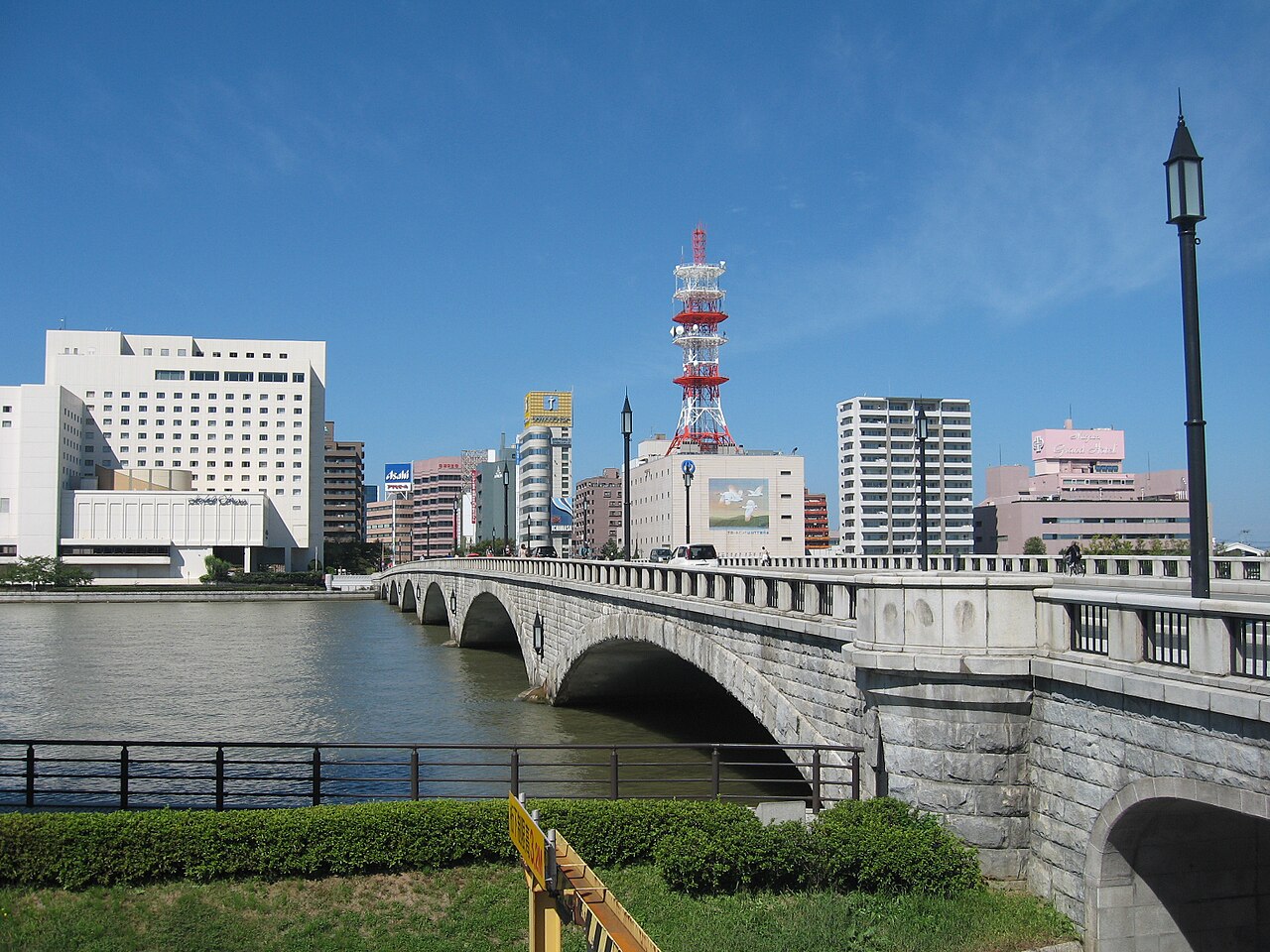
Niigata City sits where the Shinano River — Japan’s longest — empties into the Sea of Japan. That geography is the whole story of the craft. A river mouth on a sheltered coast is a natural harbor, and from the early Edo period Niigata grew into a thriving merchant town: rice from the surrounding plain went out by ship, and goods, timber, and money flowed back in. A port with cash and traffic is exactly the kind of place where decorative crafts can take root, because there are merchants to buy them and trade routes to carry them.

Within that port economy, the lacquer trade consolidated into a dedicated district known as the nushi-machi (塗師町), the lacquerers’ quarter. Concentrating the urushi craftsmen in one quarter let materials, apprentices, and finishing techniques circulate quickly, and Niigata Shikki became known for an unusually wide repertoire of decorative finishes — hana-nuri, ishime-nuri, nishiki-nuri, shu-tame, and isokusa-nuri among them. Most lacquer towns are known for one or two looks; Niigata cultivated many.
The signature that came out of that quarter is take-nuri (竹塗). It is a virtuoso finish: working in urushi over a wooden core, the lacquerer reproduces the nodes, joints, and slightly rough matte skin of real bamboo so faithfully that the finished piece is easily mistaken for cut cane. It is a craft of disciplined illusion — the maker is not decorating a surface so much as impersonating a different material. On a chopstick, where the eye is close and the form is slender, the effect is especially striking.
“There is no bamboo in a take-nuri chopstick. The grain, the green-brown gradient, and the culm texture are all built up in lacquer — a port-city craft that learned to make one material wear the face of another.”
- Early Edo period (1600s) — Niigata grows into a thriving merchant town at the mouth of the Shinano River.
- Edo period — A dedicated lacquerers’ quarter (nushi-machi) consolidates the urushi trade and its decorative finishes.
- Edo period — Take-nuri, the bamboo-imitation finish, develops as Niigata’s signature technique.
- 1869 — Niigata opens as one of Japan’s five treaty ports, deepening its role in international trade.
- 2003 — Niigata Shikki is designated a National Traditional Craft by METI.
- 2026 — Take-nuri pieces such as this chopstick pair remain in production and reach international buyers via Amazon’s Japan Global Store.
By 1869, Niigata’s standing was formalized when it opened as one of Japan’s five treaty ports — the harbors through which the country conducted foreign trade as it ended its long period of restricted contact. A treaty port is a place accustomed to outside eyes and outside buyers, a fitting context for a craft shaped by the merchant culture that paid for and circulated the lacquer.
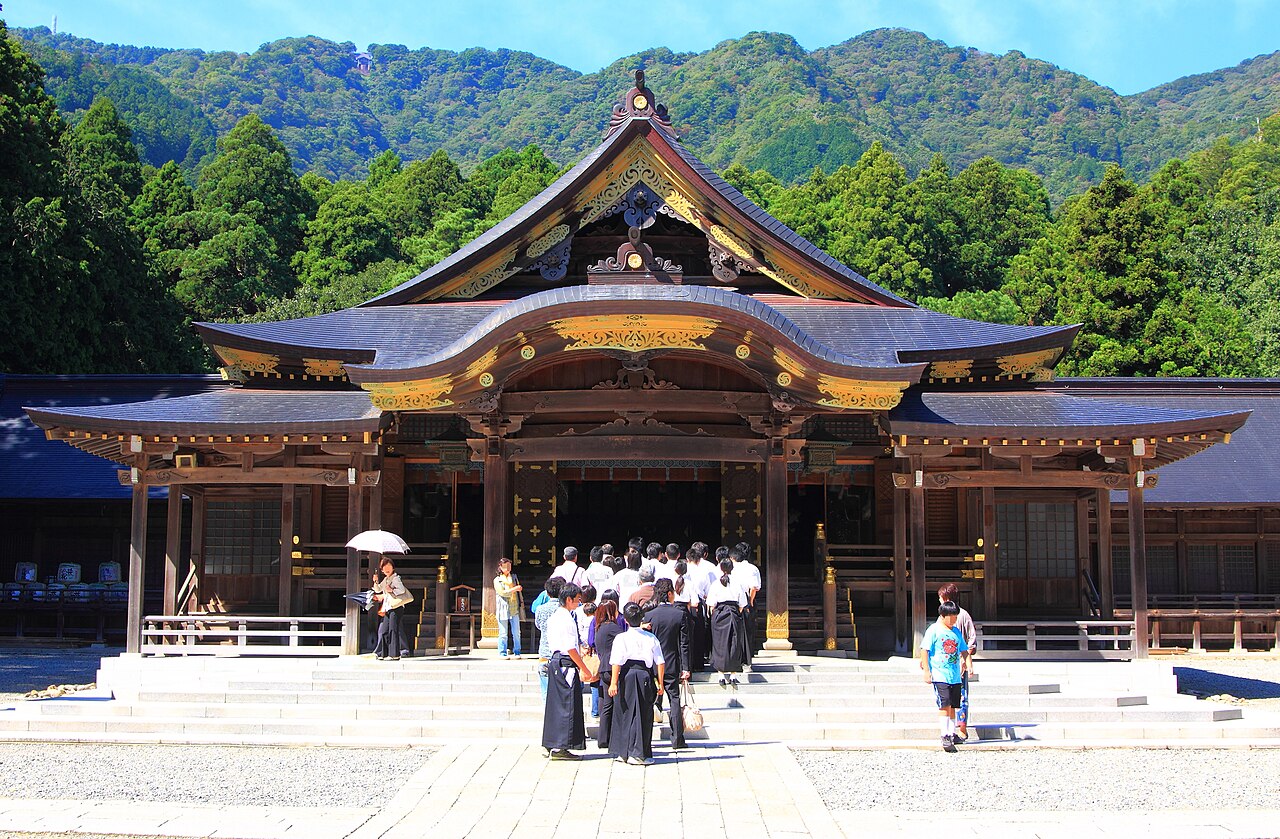
It is worth being precise about what Niigata Shikki is not. The prefecture has a second, separate lacquer tradition — Murakami Kibori Tsuishu (村上木彫堆朱), the carved red lacquer of Murakami city to the north, a different technique on a different object in a different town. Niigata Shikki and take-nuri belong to Niigata City itself. The wider Niigata plain, framed by Mt. Yahiko and its shrine, is also home to the country’s most famous metal-and-blade cluster around Tsubame-Sanjō, so the take-nuri chopstick sits within a remarkably dense regional making tradition.
Other Japanese lacquer, woodturning, and tableware guides on jpmono — useful for placing this take-nuri pair against neighboring crafts, including Niigata’s own.
🍴 Tsubame stainless cutlery (Niigata)
 🥢 Tsugaru-nuri lacquer chopsticks
 🐚 Takaoka raden lacquer box
 🥣 Naruko lacquer soup bowl
 🍵 Yamanaka woodturned tea caddy
🍶 Wajima lacquer sake cup pair
 ☕ Kiso lacquer coffee cups
Buying options compared
Live pricing was unavailable in the fetched data, so the price columns below point to where to verify rather than quoting a figure. JPY (¥) is the authoritative currency for the specific listed item; any USD figure would be an estimate at a ¥150/USD baseline.
| Store | Item / Variant | Price | Notes |
|---|---|---|---|
| 🇺🇸 Amazon.com (US) | Browse Japanese lacquer & bamboo-style chopsticks | varies (USD) | Best if you are shopping from the US — Prime shipping, USD pricing, no international customs. Amazon US carries Japanese lacquer and chopstick sets from various makers; the specific Niigata take-nuri pair is sourced from Japan (next row). |
| 🇯🇵 Amazon JP Global Store | Niigata Shikki take-nuri chopsticks pair | — | The exact item in this guide. Ships internationally from Japan to most major destinations. Price unconfirmed in fetched data — verify before buying. |
| Maker direct | Niigata Shikki cooperative / individual workshops | varies (JPY) | Some Niigata lacquer makers sell direct but may not ship abroad or render English; treat as a fallback for specific commissions. |
| Proxy services (Buyee / Tenso) | Forwarding for Japan-only orders | item + fees (JPY) | Useful when a take-nuri piece is listed only on a Japan-domestic shop; adds a service fee plus international forwarding. |
Prices and stock fluctuate; USD figures are approximate and depend on the current exchange rate. Always confirm the live price at the retailer before purchasing.
What it does well
Weaknesses and things to verify before buying
- Not dishwasher or microwave safe. As with most urushi lacquerware, hand-washing and avoiding prolonged soaking, abrasives, and high heat is the safe assumption. Treat it as a keepsake, not a commodity utensil.
- It is lacquer, not bamboo. Buyers expecting actual bamboo may be surprised; the value is in the technique of imitation, which is precisely the point but is counterintuitive to some.
- Urushi sensitivity. Fully cured lacquer is generally inert, but individuals with known urushi (lacquer-tree) sensitivity should be aware of the material; this is a folk-traditional caution.
- International shipping and customs. Shipping from Japan adds transit time and, for orders over local thresholds, possible duties. Confirm the Global Store ships to your country before ordering.
- Limited source. If it goes out of stock, you may need a proxy service or a comparable take-nuri pair.
Conclusion — which buyer type are you?
Other ways to approach this purchase
❓ Frequently Asked Questions
Is a take-nuri chopstick actually made of bamboo?
No. Take-nuri (竹塗, “bamboo lacquering”) builds the appearance of bamboo — the nodes, joints, and matte skin — entirely in urushi lacquer over a wooden core. There is no bamboo in the piece; the realism is the craft’s whole point.
How is Niigata Shikki different from Tsugaru-nuri?
Both are lacquer chopstick traditions, but they come from different places and use different techniques. Tsugaru-nuri is the multi-layer mottled lacquer of Hirosaki in Aomori. Niigata Shikki is the Niigata City tradition known for a wide repertoire of finishes, with take-nuri — bamboo imitation — as its signature. They are distinct crafts.
Can I put these chopsticks in the dishwasher?
As with most urushi lacquerware, the safe assumption is no. Hand-wash with mild detergent, avoid prolonged soaking, abrasives, and high heat, and dry promptly. Treat the pair as a keepsake utensil rather than a dishwasher commodity.
Does Amazon ship this internationally from Japan?
Niigata Shikki take-nuri chopsticks are typically available through the Amazon JP Global Store or directly from Niigata workshops, both of which ship to most major destinations. Confirm that your country is supported at checkout, and budget for transit time plus possible customs duties on orders above your local threshold.
How much does it cost?
No current price is quoted here. JPY is the standard currency; USD amounts, if shown, are approximate and depend on the exchange rate.
Is this the same as Murakami carved lacquer?
No. Niigata Prefecture has two separate lacquer traditions. This take-nuri pair is Niigata Shikki from Niigata City. Murakami Kibori Tsuishu is a different carved-red-lacquer craft from Murakami city to the north — different technique, different town.
Is it a good gift?
Yes, for the right recipient. Sold as a pair, it suits a meoto-style his-and-hers gift, and the bamboo illusion makes it more distinctive than ordinary solid-color lacquer chopsticks. Pair it with a note about take-nuri so the recipient understands what they are looking at.
jpmono.com is curated by a Japan-based editorial team (working out of Toyama in the Hokuriku region and Nara in Kansai) and is independent. We do not take payment from the makers we feature; income comes from affiliate links. We do not physically test every product — we read maker specifications and craft references.
Affiliate disclosure: jpmono.com may earn a commission on qualifying purchases made through links on this page, at no additional cost to you.