![Ouchi-Nuri Lacquer Dolls: Yamaguchi’s Ouchi-Ningyo Pair to Buy [2026]](https://jpmono.com/wp-content/uploads/2026/05/ouchi-nuri-lacquer-dolls-where-to-buy-2026-featured.jpg)
Few Japanese folk objects carry a clan’s name as openly as Ouchi-nuri (大内塗, “Ouchi lacquer”). The pair covered here is the Ouchi-ningyo (大内人形) — a rounded husband-and-wife lacquer doll set from Yamaguchi, finished in a deep vermilion ground and scattered with gold autumn grasses and the diamond-shaped Ouchi-bishi crest. It is a regional symbol of marital harmony, and one of the few lacquer crafts whose visual signature traces directly to a medieval warlord household.
Yamaguchi was once called the “Kyoto of the West” (Nishi-no-Kyo, 西の京). Under the Ouchi clan, who controlled western Honshu from the 14th to the 16th century and grew wealthy on trade with Ming China and Joseon Korea, the city became a refuge for Kyoto aristocrats and artists fleeing the Onin War. That courtly transplant seeded a high culture far from the capital — and Ouchi-nuri lacquer is one of its surviving expressions. For an international reader, this is the appeal: not a generic souvenir, but an object with a traceable place and a traceable century.
This guide is written for buyers comparing a heritage lacquer gift — for a wedding, an anniversary, or a display piece — who want to understand what they are looking at before they look at the price. Based on the available listing data, we cover what the form is, where it comes from, who it suits, who should pass, the realistic caveats of buying lacquer from overseas, and where to actually purchase it.
🔄 Updated: May 30, 2026
⏱️ Read time: ~9 min
![Ouchi-Nuri Lacquer Dolls: Yamaguchi's Ouchi-Ningyo Pair to Buy [2026]](https://m.media-amazon.com/images/I/31tHjcx3GAL._SL500_.jpg)
- Who this is for — and who should skip it
- Product overview (from published specs)
- Price snapshot across stores
- What it does well
- Weaknesses and things to verify before buying
- Conclusion — which buyer type are you?
- Other ways to approach this purchase
- Where this comes from
- 🏆 Editor’s Pick
- ❓ Frequently Asked Questions
Who this is for — and who should skip it
- Want a wedding or anniversary gift with a clear marital-harmony meaning.
- Collect regional Japanese lacquer (urushi) and folk dolls.
- Value a piece with documented historical lineage over mass-market décor.
- Have a stable indoor display spot away from sun and dry heat.
- Are comfortable sourcing from Amazon JP Global Store and waiting for cross-border shipping.
- Need a known, fixed price today — listing pricing was unavailable in the source data.
- Want a toy or a handled object; this is a fragile decorative pair.
- Have a confirmed urushi (lacquer) sensitivity.
- Expect fast domestic shipping; most listings ship from Japan.
- Prefer a single figure rather than a paired set.

Product overview (from published specs)
The source dataset for this item is thin: the Amazon US search index returned no individual listing, and only the Amazon JP Global Store item identifier was available, without a confirmed price snapshot. Specifications below are stated only where the form itself or the listing identifier supports them; everything else is marked unconfirmed rather than guessed.
Ouchi-Nuri Lacquer Dolls
伝統工芸品 大内塗 大内人形 夫婦雛 牧野大内塗店 木箱入り 山口特産
通常6~7日以内に発送します。 · Sold by ハッピードア · ASIN B0H1X8ZK1Z
Price and availability as of 2026-08-31 02:30 JST. The Amazon listing at the time of purchase is authoritative. jpmono.com earns a commission on qualifying purchases at no extra cost to you.
| Attribute | Detail (per available data) |
|---|---|
| Object | Ouchi-ningyo — married-couple (meoto) lacquer doll pair |
| Craft | Ouchi-nuri lacquer (urushi over wood base) |
| Finish | Vermilion (shu) ground; gold autumn-grass (aki-no-nanakusa) maki-e; Ouchi-bishi diamond crest |
| Origin | Yamaguchi Prefecture, Chugoku region (westernmost Honshu) |
| Listing ID (Amazon JP) | B0H1X8ZK1Z |
| Dimensions / weight | Unconfirmed — check the listing |
| Price | Unavailable at time of writing — verify on the Amazon JP listing |
📖 Glossary — key terms
- Ouchi-nuri (大内塗) — “Ouchi lacquer,” a Yamaguchi lacquerware tradition associated with the medieval Ouchi clan, marked by a vermilion ground with gold autumn grasses and the Ouchi diamond crest.
- Ouchi-ningyo (大内人形) — the rounded husband-and-wife doll pair that is Ouchi-nuri’s signature form, traditionally read as a symbol of marital harmony.
- Urushi (漆) — Japanese lacquer, the refined sap of the lacquer tree, applied in layers and hardened by humidity rather than heat.
- Maki-e (蒔絵) — “sprinkled picture,” a decorative technique in which gold or silver powder is fixed into wet lacquer to form designs.
- Shu (朱) — vermilion, the characteristic red ground of Ouchi-nuri.
- Ouchi-bishi (大内菱) — the diamond-shaped (rhombus) family crest of the Ouchi clan.
- Nishi-no-Kyo (西の京) — “the Kyoto of the West,” the historical nickname for Ouchi-era Yamaguchi.

Price snapshot across stores
No live price was present in the source data, so the table reads honestly: confirm the figure on the listing before buying. JPY is the authoritative price for the specific item; any USD shown elsewhere is an estimate at a ¥150/USD baseline.
| Store | Item / variant | Price | Notes |
|---|---|---|---|
| 🇺🇸 Amazon US (search) | Browse Japanese lacquer dolls & urushi craft | varies (USD) | Best if you are shopping from the US — Prime shipping, USD pricing, no international customs. Amazon US carries comparable Japanese lacquer and folk-doll items; the specific Ouchi-ningyo pair is sourced from Japan (next row). |
| 🇯🇵 Amazon JP Global Store | Ouchi-ningyo married-couple pair (B0H1X8ZK1Z) | Unavailable at time of writing — verify on listing | The sourced listing for this exact item. Ships internationally from Japan to most major destinations; confirm price and stock before ordering. |
| Maker direct | Yamaguchi Ouchi-nuri workshops | — | Some Yamaguchi makers and prefectural craft shops sell directly, occasionally with size choices not on Amazon. Overseas shipping is not guaranteed; check each shop. |
| Proxy services (Buyee / Tenso) | Japan-only listings forwarded abroad | item price + fees | Useful when a listing does not ship internationally. Adds a service fee and forwarding cost; expect customs duties above local thresholds. |
What it does well
“Yamaguchi was the Kyoto of the West — and this little vermilion pair is what is left, in the hand, of a warlord’s borrowed court.”
Weaknesses and things to verify before buying
- No confirmed price in the source data. Pricing was unavailable at the time of writing — treat any figure you see as current-only and verify it on the listing.
- Dimensions and weight are unconfirmed. If shelf or alcove fit matters, confirm the size on the listing before ordering; Ouchi-ningyo are made in several sizes.
- Lacquer care. Urushi dislikes direct sunlight, prolonged dryness, and standing water. Keep it out of strong sun and away from heaters or air-conditioner airflow; wipe with a soft dry cloth only.
- Urushi sensitivity. Some people react to lacquer. Cured urushi is generally stable, but anyone with a known sensitivity should be cautious about handling.
- Not a handling or play object. This is a fragile decorative pair, not a toy; the gold maki-e can wear with rubbing.
- Cross-border logistics. Most listings ship from Japan. Factor in shipping time, possible customs duties above your local threshold, and the chance that a given listing does not ship to your country (in which case a proxy is needed).
- Pair only in this dataset. If you want a single figure, the available data did not include a separate listing — you will need to source it elsewhere.
Conclusion — which buyer type are you?
Other ways to approach this purchase
Where this comes from

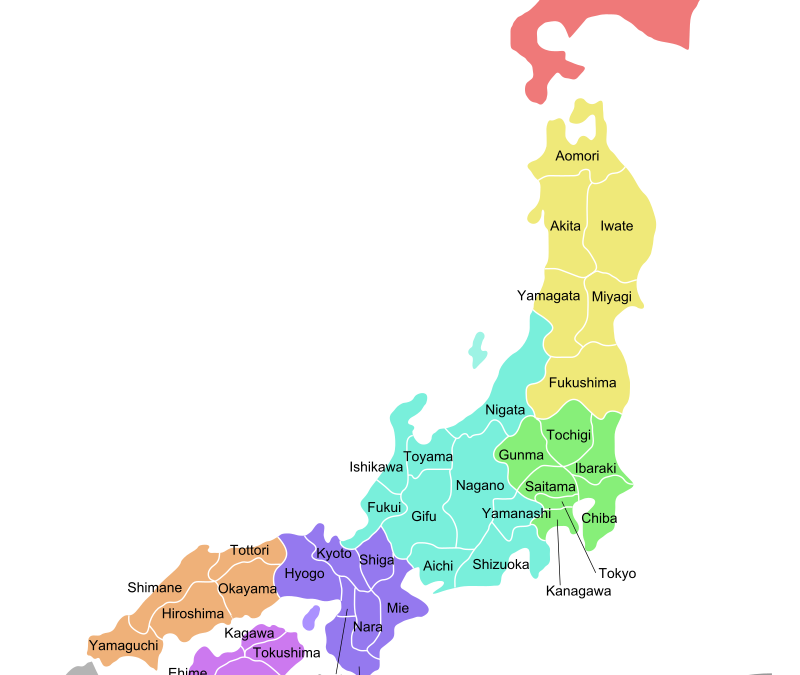
Yamaguchi lies at the western tip of Honshu, where the island narrows toward the Kanmon Strait and the crossing to Kyushu. It faces the Seto Inland Sea to the south and the Sea of Japan to the north, and that position — astride sea routes to the continent — is exactly why a clan based here could grow rich. The Ouchi controlled this corner of western Honshu and traded directly with Ming China and Joseon Korea, and the wealth from that trade is what paid for the courtly culture the city is remembered for.
The historical anchor is the Ouchi golden age. From the 14th to the 16th century the Ouchi clan dominated western Honshu, and when the Onin War (1467–1477) wrecked Kyoto, aristocrats, monks, and artists took refuge in Ouchi-ruled Yamaguchi. They brought the capital’s manners and arts with them, and the city earned the name Nishi-no-Kyo, the “Kyoto of the West.” The clan patronized the ink painter Sesshu and, in 1551, received the Jesuit missionary Francis Xavier. Ouchi-nuri lacquer belongs to this period: the vermilion ground, gold autumn grasses, and diamond crest are the visual residue of that borrowed court.
- 14th century — The Ouchi clan consolidates control of western Honshu (Suo and Nagato provinces), basing its power at Yamaguchi.
- 15th century — Ouchi wealth grows on trade with Ming China and Joseon Korea, funding a courtly culture far from the capital.
- 1467–1477 — The Onin War devastates Kyoto; aristocrats and artists take refuge in Ouchi-ruled Yamaguchi, which becomes the “Kyoto of the West.”
- late 15th century — The ink painter Sesshu works under Ouchi patronage in Yamaguchi.
- 1551 — The Ouchi receive the Jesuit missionary Francis Xavier in Yamaguchi.
- mid-16th century onward — Ouchi power ends, but the city’s courtly legacy and its lacquer tradition persist as the craft now known as Ouchi-nuri.
What “still being made here” means for Ouchi-nuri is continuity of motif more than scale. The craft survives in a small number of Yamaguchi workshops that keep the vermilion-and-gold formula and the Ouchi-bishi crest, and the Ouchi-ningyo remains its emblematic product. The rounded husband-and-wife pair is traditionally said to commemorate an Ouchi lord and his bride — a folk reading, not a documented portrait — which is why the set is given as a token of marital harmony rather than displayed as a historical likeness.
🏆 Editor’s Pick
❓ Frequently Asked Questions
What is an Ouchi-ningyo?
It is a rounded husband-and-wife lacquer doll pair from Yamaguchi, finished in Ouchi-nuri style — a vermilion ground with gold autumn grasses and the Ouchi diamond crest. It is traditionally read as a symbol of marital harmony.
Does it ship outside Japan?
The pair is sourced from the Amazon JP Global Store, which ships internationally to most major destinations. If a particular listing does not ship to your country, a proxy service such as Buyee or Tenso can forward it for an added fee.
How much does it cost?
No price was available in the source data at the time of writing, so we do not quote one. Check the current price directly on the Amazon JP listing; JPY is the authoritative price for the specific item.
How do I care for the lacquer?
Keep it out of direct sunlight, away from heaters and air-conditioner airflow, and away from standing water. Wipe gently with a soft dry cloth only; avoid rubbing the gold maki-e.
Is it a good wedding or anniversary gift?
Yes — as a husband-and-wife pair associated with marital harmony, it is a common choice for weddings and anniversaries. The meaning is built into the form, so it needs little explanation.
How does it compare to other Japanese lacquer or dolls?
Ouchi-nuri is defined by its vermilion-and-gold motif and clan crest, unlike Wajima or Aizu lacquer tableware or carved Kamakura-bori. As a doll it differs from kokeshi or daruma in form and meaning. See the comparison links above for those alternatives.
jpmono.com is curated by a Japan-based editorial team (working out of Toyama in the Hokuriku region and Nara in Kansai) and is independent. We do not take payment from the makers we feature; income comes from affiliate links. We do not physically test every product — we read maker specs and source listings — and we say so when data is thin.
This article was prepared with AI assistance and reviewed against the available source data. Where product specifications or pricing were not present in that data, they are marked unconfirmed rather than estimated.
Affiliate disclosure: jpmono.com may earn a commission on qualifying purchases made through links on this page, at no additional cost to you.