![Takaoka Doki Bronze Incense Burner (Koro): Toyama’s 400-Year Cast Metal Craft — Where to Buy [2026]](https://jpmono.com/wp-content/uploads/2026/07/takaoka-doki-bronze-incense-burner-koro-where-to-buy-2026-featured.jpg)
- What it is: a hand-cast bronze koro (香炉, incense burner) with a patinated finish and a pierced fretwork lid.
- Made in: Takaoka, Toyama Prefecture — Takaoka Doki (高岡銅器), a METI-designated traditional craft since 1975.
- Price band: mid-to-upper range for hand-cast bronze altar and tea-room ware — see the live listing for the current figure.
- Best for: tea-room, altar (butsudan), or display use by buyers who want a real foundry-cast bronze object, not a plated look-alike.
- Skip if: you want something dishwasher-safe, ultralight, or a quick low-cost decorative piece.
- Shipping: ships internationally from Amazon Japan — jump to our pick ↓
In 1611, a feudal lord who had just built a castle town on the Sea of Japan coast bribed seven foundry casters to move there and pour metal for a living. Four centuries later, the town they seeded — Takaoka, in Toyama Prefecture — casts roughly nine out of every ten pieces of copperware made in Japan. This lidded bronze koro (香炉, “incense burner”) is a small, direct descendant of that founding decision: molten bronze poured into a mold, cooled, then colored by hand with a chemical patina the trade calls chakushoku (着色).
What makes Takaoka bronze notable to an international reader is not age alone — plenty of places claim old crafts — but concentration and continuity. The casting, chasing, and coloring are still divided among specialist workshops in and around the Kanayamachi foundry district, and the patination step is a genuine metallurgical skill rather than a spray finish. A koro like this one carries a lidded, pierced top so incense smoke rises through fretwork, which is why the form belongs equally to the tea room, the Buddhist altar, and a quiet shelf.
This guide is written for buyers outside Japan deciding whether a hand-cast bronze incense burner is worth the price and the shipping. We cover what the object is, where it comes from, how it compares to other Japanese metal crafts we have reviewed, how to buy it from abroad, and — honestly — who should pass on it.
ℹ️ Live pricing and some unit specs were not in our data snapshot — the linked Amazon listing is authoritative for price, dimensions, and current stock. Heritage facts below are drawn from documented Takaoka Doki history; unconfirmed product attributes are marked as such.
🔄 Updated:
⏱️ Read time: ~9 min

- Who this is for — and who should skip it
- Product overview (from published specs)
- Which finish should you choose?
- 📦 Shipping & where to buy from outside Japan
- Price snapshot across stores
- What it does well
- Weaknesses and things to verify before buying
- Where this comes from
- Conclusion — which buyer type are you?
- Other ways to approach this purchase
- 🏆 Editor’s Pick
- ❓ Frequently Asked Questions
Who this is for — and who should skip it
- Want a genuinely foundry-cast bronze object, not electroplated zinc
- Practice tea (sadō) or keep a home altar and need a working koro
- Appreciate hand-applied patina and accept slight piece-to-piece variation
- Value a craft with a documented, still-active regional tradition
- Are comfortable with hand care and occasional wiping
- Want something dishwasher-safe or maintenance-free
- Prefer a lightweight, easily portable piece
- Are shopping purely on lowest price for a decorative object
- Dislike the darkened, aged look of patinated bronze
- Need a certified antique with provenance papers (this is contemporary craft)
Product overview (from published specs)
The table below summarizes what we could confirm. Where the snapshot did not carry a value, it is marked “Unconfirmed — check the live listing” rather than guessed. Store rows are ordered by the purchase path we recommend for international readers.
Takaoka Doki Bronze Incense Burner (Koro): Toyama's 400-Year Cast Metal Craft
仏壇屋 滝田商店 香炉(京丸型) 3.5寸(胴径11cm×高さ6.6cm)◆仏壇用の特選仏具・高級仏具・前香炉 真鍮製 線香立て 高岡銅器
在庫あり。 · Sold by 仏壇屋 滝田商店 · ASIN B00FJUGO1A
Price and availability as of 2026-08-31 02:30 JST. The Amazon listing at the time of purchase is authoritative. jpmono.com earns a commission on qualifying purchases at no extra cost to you.
| Attribute | Detail | Source |
|---|---|---|
| Object | Lidded bronze incense burner (koro) with pierced fretwork lid | Amazon JP Global Store listing |
| Material | Cast bronze (copper alloy) | Maker tradition / listing |
| Finish | Hand-applied patina — chakushoku (着色) chemical coloring | Takaoka Doki technique |
| Origin | Takaoka, Toyama Prefecture, Japan | Takaoka Doki tradition |
| Casting method | Lost-wax (rō-gata) / sand mold (nama-gata) | Regional method |
| Dimensions / weight | Unconfirmed — check the live listing | — |
| Price | Unconfirmed in snapshot — see the live listing (JPY authoritative) | — |
| Designation | Takaoka Doki — METI traditional craft (designated 1975) | METI |
Sources: Amazon US search (primary, moonill-20) + Amazon JP Global Store (secondary, moonill-22, sourced listing) + maker-direct tradition, with proxy paths where relevant.
📖 Glossary — key terms
- Koro (香炉) — a lidded incense burner; the pierced lid lets smoke rise while containing the ash and ember.
- Takaoka Doki (高岡銅器) — the copper- and bronze-casting tradition of Takaoka, Toyama; a METI-designated traditional craft.
- Chakushoku (着色) — the hand coloring/patination step that develops bronze’s browns, greens, and blacks through controlled chemistry and heat.
- Rō-gata (蝋型) — lost-wax casting, used for finely detailed forms.
- Nama-gata (生型) — sand-mold casting, used for repeatable production shapes.
- Igimono-shi / imono-shi (鋳物師) — a foundry caster; the seven such artisans invited to Takaoka in 1611 seeded the industry.
- Butsudan (仏壇) — a household Buddhist altar; a koro is one of its standard vessels.
Which finish should you choose?
This piece is listed in 7 sizes. The photos below are the actual size options on the listing right now — pick the one you want and confirm it on the product page before ordering, since hand-finished wares vary slightly piece to piece.
Other Japanese metal and craft pieces we have reviewed — useful for weighing material, price tier, and use case.
 🎁 Takaoka raden lacquer box (same city)
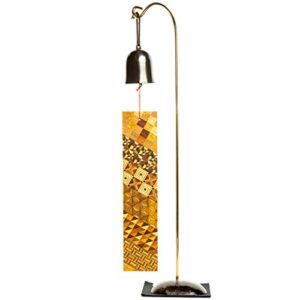 🔔 Odawara sahari bronze wind chime
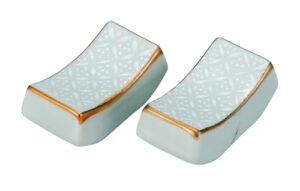 🥢 Owari cloisonné rest set
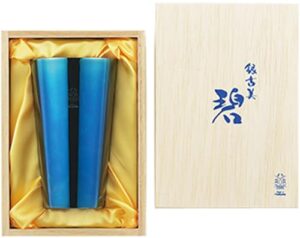 🥂 Tokyo hand-engraved silver tumbler
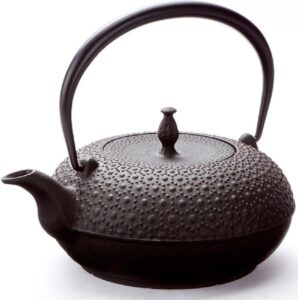 🫖 Nambu cast-iron tetsubin
🔥 Sendai forged iron trivet
🍴 Tsubame stainless flatware
📦 Shipping & where to buy from outside Japan
The specific piece in this guide is sourced from the Amazon JP Global Store, which ships internationally to 65+ countries — including Canada, the UK, and Australia. Amazon estimates and usually collects import fees at checkout for most destinations, so there are rarely surprises on delivery.
As a solid bronze object, expect international shipping in roughly the $15–$40 range to the US, EU, Canada, the UK, and Australia, depending on weight and speed. Buyers in the US who prefer domestic Prime shipping can browse comparable Japanese metal home goods on Amazon.com first (see the price table), though the exact Takaoka piece ships from Japan.
Alternative paths include the maker’s own retail channels and proxy services such as Buyee or Tenso, which re-ship from a Japanese address when a listing does not offer direct international delivery. Prices in USD are approximate and depend on the current exchange rate.
Price snapshot across stores
| Store | Item / Variant | Price | Notes |
|---|---|---|---|
| 🇺🇸 Amazon.com (US) | Browse Japanese bronze incense burners & metal home goods | varies (USD) | Best if you’re shopping from the US — Prime shipping, USD pricing, no international customs. Amazon US carries Japanese bronze and cast-metal home goods useful for comparing forms and price tiers; this exact Takaoka koro ships from Japan (next row). |
| 🇯🇵 Amazon JP Global Store | This exact hand-cast bronze koro (patinated, lidded) | See live listing (JPY authoritative; USD ≈ ¥/150) | Ships internationally from Japan to 65+ countries — including Canada, the UK and Australia — with import fees estimated at checkout. |
| Maker direct | Takaoka foundry / retailer channels | Varies | May offer wider form selection; international shipping not always direct. |
| Proxy services (Buyee / Tenso) | Any JP listing re-shipped abroad | Item + re-ship fee | Use when a listing lacks direct international delivery; adds a handling fee. |
Prices and availability were not fixed in our snapshot and fluctuate — the linked listing is authoritative. USD figures are approximate at a ¥150/USD baseline (mid-2026).
What it does well
- 🍽️ Dishwasher: no — hand-wipe only; harsh detergents strip the patina.
- ♨️ Microwave: no — it is solid metal.
- 🧴 Daily care: wipe with a soft dry cloth; empty and clean out ash after burning incense; the developing patina is part of the object, not a flaw.
Weaknesses and things to verify before buying
- Exact dimensions and weight were not in our snapshot. Confirm size on the live listing — bronze koro range from palm-sized to substantial altar pieces.
- No confirmed price in the data. The JPY figure on the listing is authoritative; do not rely on any secondhand quote.
- Patina varies piece to piece. Hand coloring means the shade you receive may differ subtly from the photo.
- It is heavy and rigid. Not a travel object; handle and ship with care.
- Care is manual. No dishwasher, no abrasive cleaners; the finish rewards gentle handling.
- Contemporary craft, not an antique. If you need documented provenance or dating, this is not that market.
Where this comes from

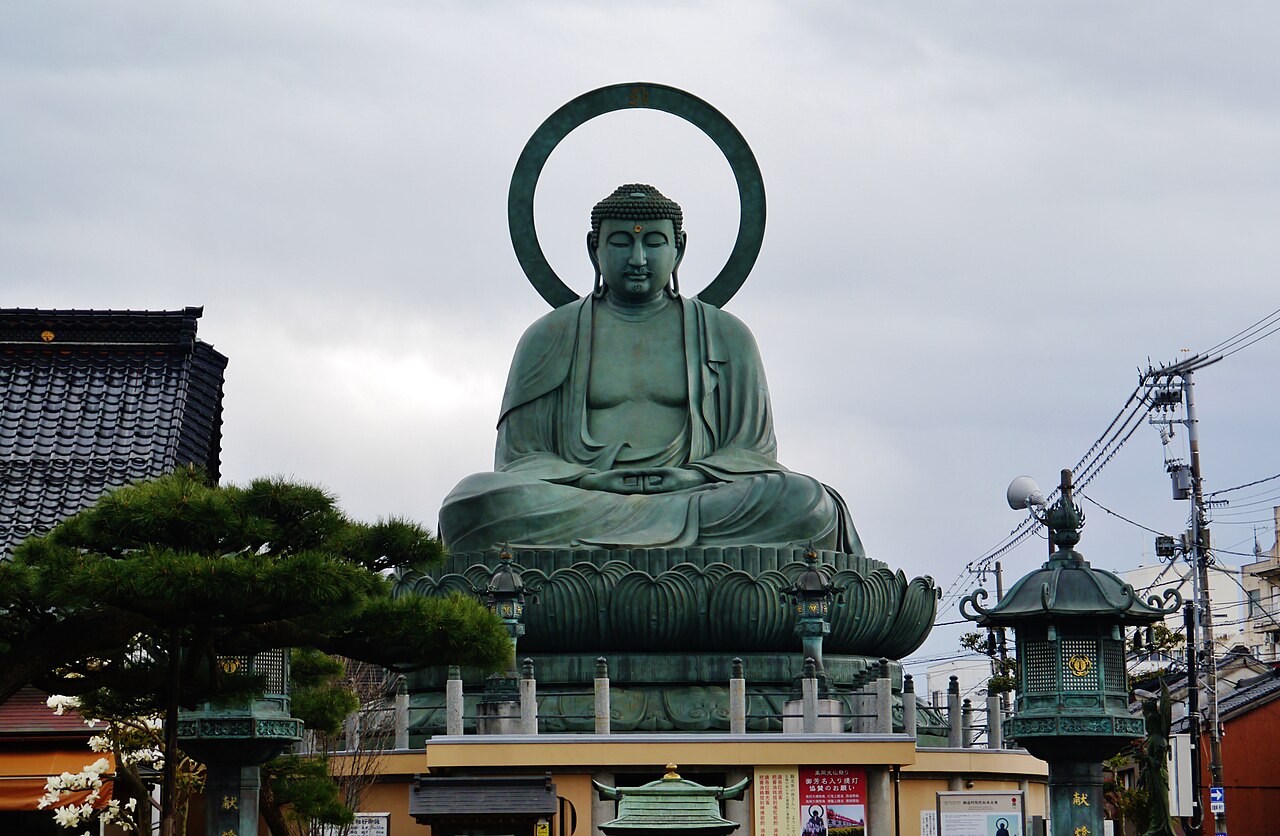
Takaoka is a river-and-port city in Toyama Prefecture, on the Sea of Japan coast of the Hokuriku region. It sits on the alluvial Toyama plain, with the Tateyama mountain range rising to the south — the kind of setting that gave a castle town water, timber, and trade routes. Metalcasting took root here by domain design rather than accident, and it never left.
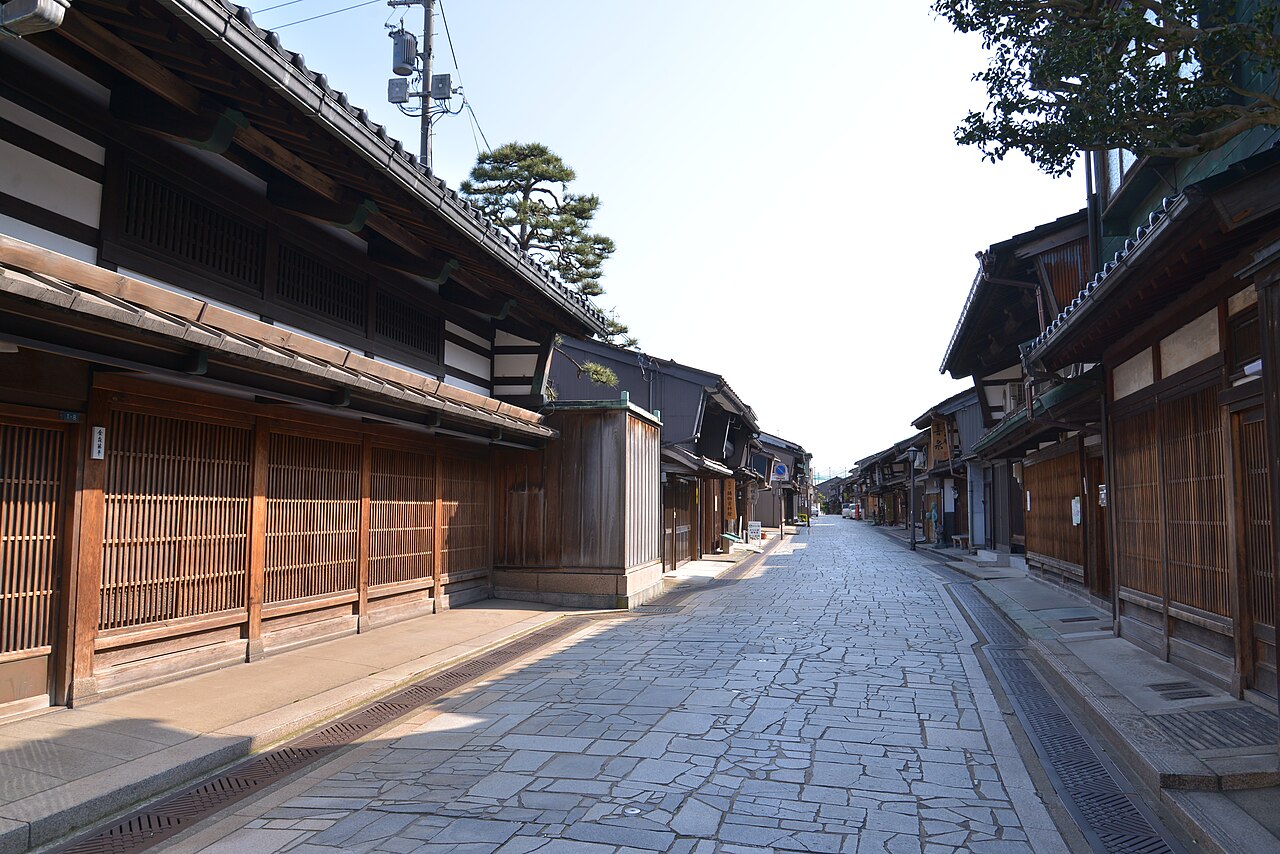
Takaoka was founded in 1609 as a castle town by Toshinaga Maeda, the second lord of the powerful Kaga domain. In 1611 he invited seven foundry casters (imono-shi) to settle in the Kanayamachi district and pour metal — the founding act of Takaoka Doki. Through the Edo period the foundries turned out everyday cast goods such as pots and kettles (nabe, kama). From the Meiji era onward the work shifted toward vases, Buddhist altar fittings, and art casting, and today Takaoka accounts for roughly 90% of Japan’s domestic copperware production.
- 1609 — Toshinaga Maeda founds Takaoka as a Kaga-domain castle town.
- 1611 — Seven foundry casters are invited to Kanayamachi, seeding the metalcasting industry.
- Edo period — Foundries cast everyday goods: iron and bronze pots and kettles.
- Meiji era (1868–1912) — Production shifts to vases, altar fittings, and art bronze.
- Early 20th century — The bronze Takaoka Daibutsu is cast, showcasing local mastery.
- 1975 — METI designates Takaoka Doki a traditional craft.
- Present — Takaoka casts roughly 90% of Japan’s copperware; Kanayamachi is a protected historic district.
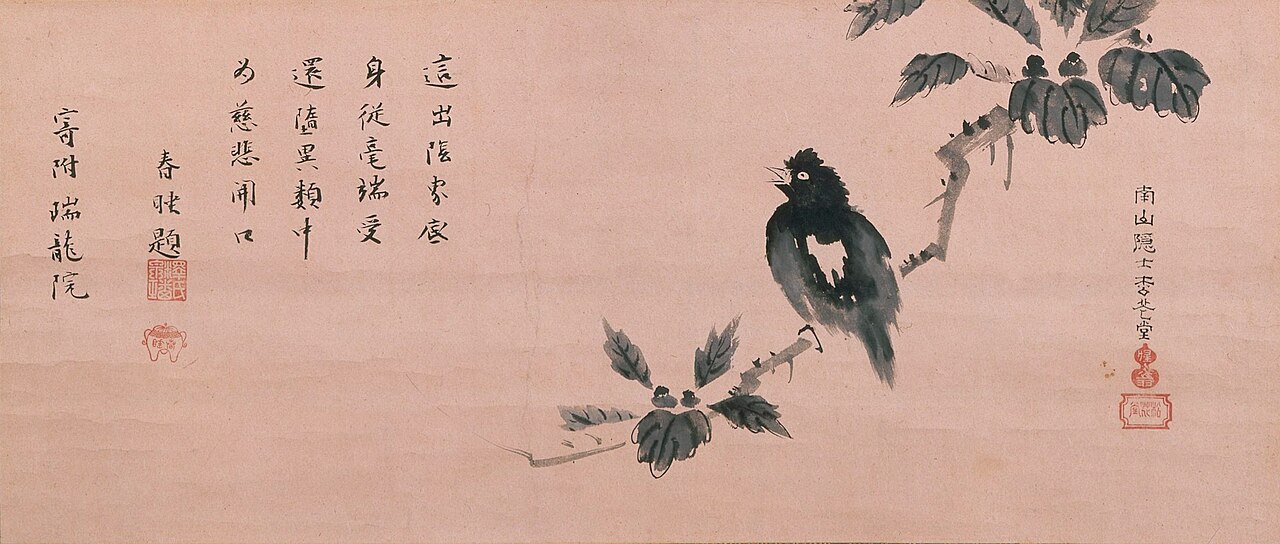
The continuity is the real point. The casting, chasing, and coloring are still divided among specialist workshops in and around Kanayamachi — the district whose senbon-goshi lattice townhouses are a designated Important Preservation District for Groups of Traditional Buildings. Two casting methods carry the tradition forward: lost-wax (rō-gata) for fine detail and sand mold (nama-gata) for repeatable forms. The finishing step, chakushoku, is where a plain bronze casting becomes the browned, greened, or blackened object a buyer recognizes.
“A castle town built in 1609 still pours nine out of every ten pieces of copper the country makes — the founding decision never stopped paying out.”
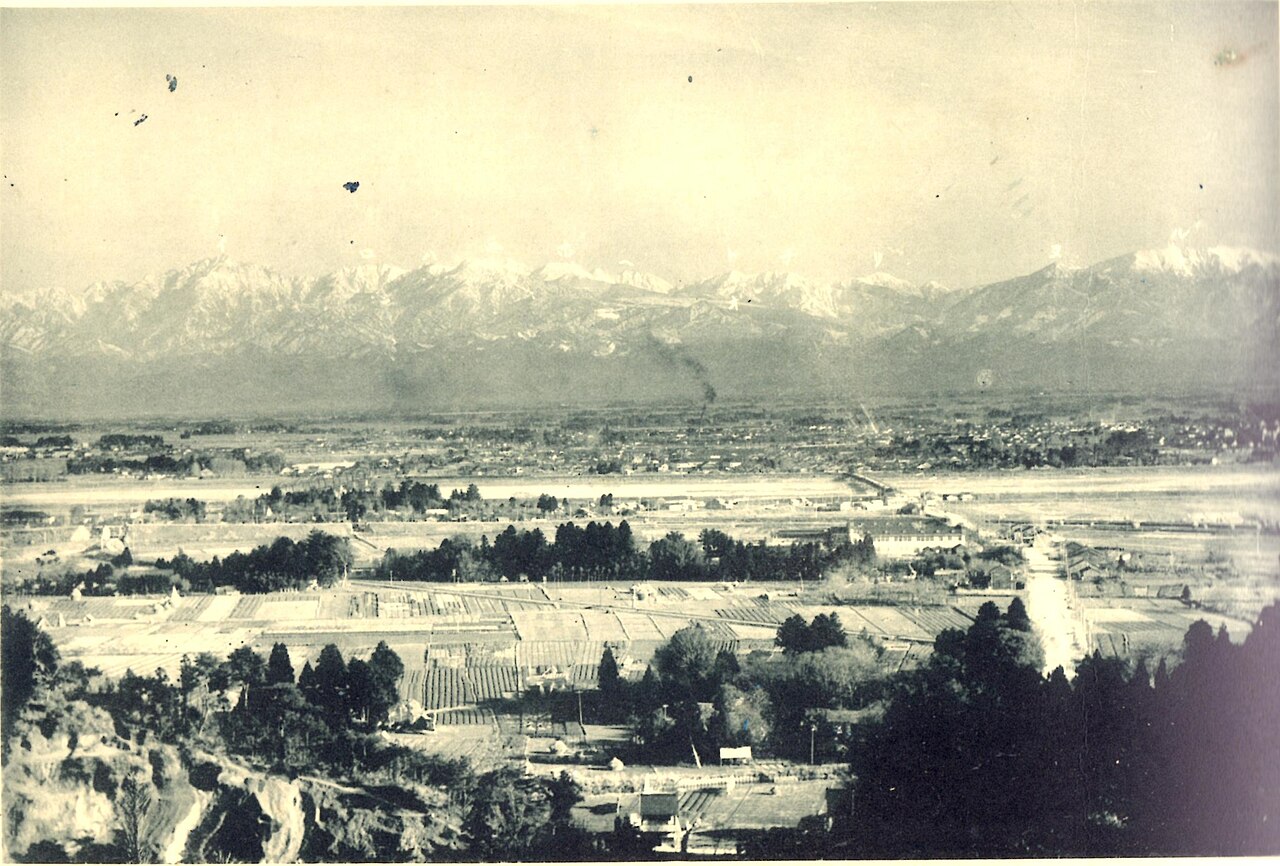
For an incense burner, the setting matters more than it seems. A koro lives in quiet rooms — the tea room, the altar, the study — and Takaoka’s bronze, colored by hand and warmed by a lifetime of use, is made for exactly that kind of slow, close attention.
Conclusion — which buyer type are you?
Other ways to approach this purchase
🏆 Editor’s Pick
❓ Frequently Asked Questions
Is this real cast bronze or plated metal?
It is a hand-cast bronze piece in the Takaoka Doki tradition, finished with a hand-applied chakushoku patina rather than plating. Confirm the exact alloy details on the live listing.
Does it ship outside Japan?
Yes. The Amazon JP Global Store ships internationally to 65+ countries, including Canada, the UK, and Australia, with import fees estimated at checkout. Proxy services such as Buyee or Tenso are a backup path.
How do I care for a bronze koro?
Hand-wipe with a soft dry cloth and clean out ash after burning incense. Avoid dishwashers, abrasive cleaners, and the microwave; the developing patina is intended, not a defect.
What is chakushoku?
Chakushoku (着色) is the hand coloring step in Takaoka bronze work, developing browns, greens, and blacks through controlled chemistry and heat. It gives depth that a painted finish cannot.
Is it suitable as a gift?
Yes — a documented, METI-designated craft object presents well for tea practitioners, altar use, or anyone who values Japanese metalwork. Confirm size on the listing so it matches the recipient’s space.
How does it compare to Nambu ironware?
Nambu tetsubin is cast iron built for boiling water; a Takaoka bronze koro is copper-alloy ware for incense and display. Both are cast-metal crafts, but the material, finish, and use differ — see our linked Nambu tetsubin guide for that side.
jpmono.com is curated by a Japan-based editorial team (working out of Toyama in the Hokuriku region and Nara in Kansai) and is independent. We don’t take payment from the makers we feature; income comes from affiliate links. Read more about our editorial standards.
This article was drafted with AI assistance and reviewed against the maker’s documented craft tradition and the source listing. Product specifications and pricing should be confirmed on the linked retailer page before purchase.
Affiliate disclosure: jpmono.com may earn a commission on qualifying purchases made through links on this page, at no additional cost to you.