![Shodai-yaki Nagashigake Guinomi: Kumamoto Folk Sake Cup [2026]](https://jpmono.com/wp-content/uploads/2026/05/shodai-yaki-fumoto-nagashigake-guinomi-where-to-buy-2026-featured.jpg)
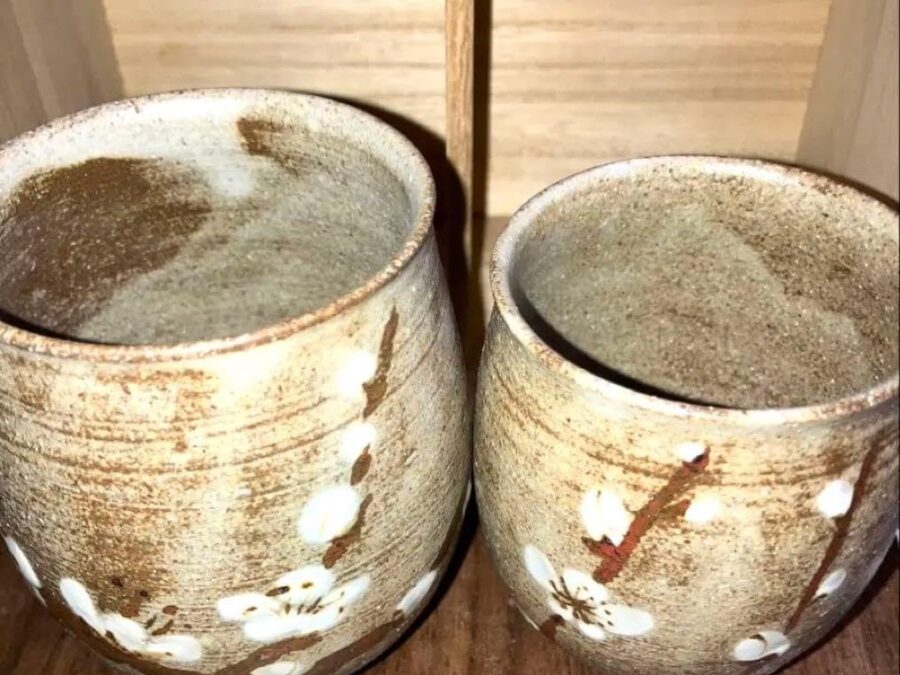
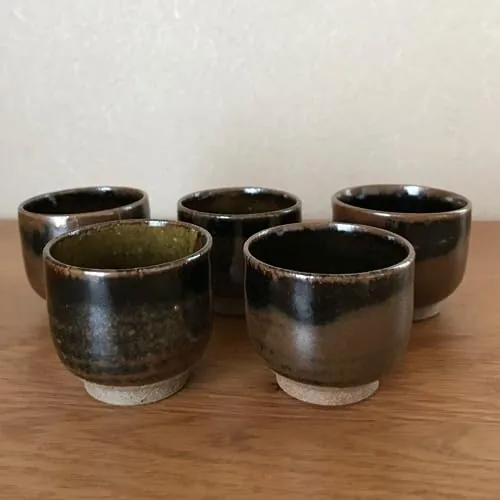
A Shodai-yaki (小代焼, “Shodai ware”) guinomi (ぐい呑み, a large sake cup) is one of those objects that looks plain in a photo and reveals itself in the hand. The body is a dark, iron-rich stoneware; over it runs a broad streak of pale ash glaze, poured rather than painted, so no two cups carry the same pattern. This piece comes from the Fumoto kiln of the Inoue lineage, one of the better-known kilns still working the tradition at the foot of Mt. Shōdai in northern Kumamoto.
What makes Shodai-yaki worth a foreign collector’s attention is not novelty but lineage. The ware dates to 1632, when the Hosokawa (細川) clan was moved from Kokura down to Higo (肥後, the old name for Kumamoto) and brought its potters south with them. It belongs to the same Korean-descended Agano/Takatori line that seeded several of Kyushu’s best stoneware traditions, and it has been used continuously as both daily folk ware and tea-ceremony utensil ever since. Its signature technique, nagashi-gake (流し掛け, “poured glazing”), gives each cup a one-off surface that mass production cannot imitate.
This guide is written for readers shopping from outside Japan who want to understand what they are buying before they commit: what the cup is, where it sits in Japan’s ceramic geography, how to buy it from abroad, and how it compares to the neighboring Kyushu wares we have covered. Because the listing data we pulled was thin, we are explicit throughout about what is verified and what you should confirm on the live listing.
🔄 Updated:
⏱️ Read time: ~9 min
![Shodai-yaki Nagashigake Guinomi: Kumamoto Folk Sake Cup [2026]](https://m.media-amazon.com/images/I/41Fc6aVnO6L._SL500_.jpg)
- Who this is for — and who should skip it
- Product overview (from published specs)
- Where this comes from — place, era, and the craft tradition
- Price snapshot across stores
- 📦 Shipping & where to buy from outside Japan
- What it does well
- Weaknesses and things to verify before buying
- Conclusion — which buyer type are you?
- Other ways to approach this purchase
- 🏆 Editor’s Pick
- ❓ Frequently Asked Questions
Who this is for — and who should skip it
- Want a sake cup with a documented regional tradition, not a generic “Japanese style” mug
- Appreciate that nagashi-gake glazing makes every cup slightly different, and accept variation from the photo
- Are building a small collection of Kyushu folk stoneware (Onta, Koishiwara, Karatsu, Agano) and want Kumamoto represented
- Drink sake or shochu at home and want a daily-use vessel with weight and texture in the hand
- Are comfortable buying from Amazon JP Global Store or a proxy service and waiting for international shipping
- Want a matched, identical set — handmade folk ware varies piece to piece by design
- Need a dishwasher- and microwave-guaranteed item (treat unglazed-foot stoneware as hand-wash unless the listing states otherwise)
- Expect a precise, mirror-smooth porcelain finish — this is rustic, iron-bodied stoneware
- Are on a tight budget and unwilling to absorb international shipping plus possible customs duty
- Need confirmed dimensions and capacity before purchase — our source data did not include them

Product overview (from published specs)
The table below is built from the spec hint in our brief, the maker tradition, and general Shodai-yaki characteristics. Several measurable fields — exact dimensions, capacity, and weight — were not present in the data we fetched, so they are marked unconfirmed rather than guessed. Only the Amazon JP Global Store listing reference (ASIN B0BVLC9TXR) was available; live pricing was unavailable at the time of writing.
Shodai-yaki Nagashigake Guinomi
小代焼(熊本県) ふもと窯 酒器 ぐい呑 灰釉掛け 8SHO0027 特製桐箱入+和紙包装
残り1点 ご注文はお早めに · Sold by 陶のぐい呑や · ASIN B0BVLC9TXR
Price and availability as of 2026-09-01 05:22 JST. The Amazon listing at the time of purchase is authoritative. jpmono.com earns a commission on qualifying purchases at no extra cost to you.
| Attribute | Value | Source |
|---|---|---|
| Object | Guinomi (large sake cup) | Spec brief |
| Ware / tradition | Shodai-yaki (小代焼), Higo folk stoneware | Spec brief |
| Kiln / maker | Fumoto kiln, Inoue lineage | Spec brief |
| Body | Iron-rich dark stoneware clay | Tradition |
| Decoration | Nagashi-gake — straw-/wood-ash white-to-blue glaze poured in broad streaks | Spec brief |
| Origin | Foot of Mt. Shōdai, northern Kumamoto (Arao / Nankan / Tamana), Kyushu | Spec brief |
| Tradition since | 1632 (Hosokawa relocation to Higo) | Spec brief |
| Designation | Designated traditional craft of Kumamoto (year not stated in our sources) | Spec brief |
| Dimensions / capacity / weight | Unconfirmed — check listing | Not in fetched data |
| Listing reference | Amazon JP Global Store, ASIN B0BVLC9TXR | Spec brief |
📖 Glossary — Japanese terms used in this article
- Shodai-yaki (小代焼) — “Shodai ware”; the folk stoneware tradition fired at the foot of Mt. Shōdai in northern Kumamoto.
- Guinomi (ぐい呑み) — a sake cup larger than the small ochoko, meant to be gripped and drunk from in fuller mouthfuls.
- Nagashi-gake (流し掛け) — “poured/trailed glazing”; ash glaze ladled over the body so it runs in streaks, never identical twice.
- Mingei (民芸) — “folk craft”; the everyday hand-made objects of ordinary use that the 20th-century mingei movement reappraised as art.
- Higo (肥後) — the old province name for present-day Kumamoto.
- Agano-yaki (上野焼) / Takatori (高取) — the Korean-descended Kyushu stoneware lineages that Shodai-yaki shares roots with.
- Hosokawa (細川) — the daimyō clan whose 1632 relocation to Higo brought the founding potters south.

Where this comes from — place, era, and the craft tradition

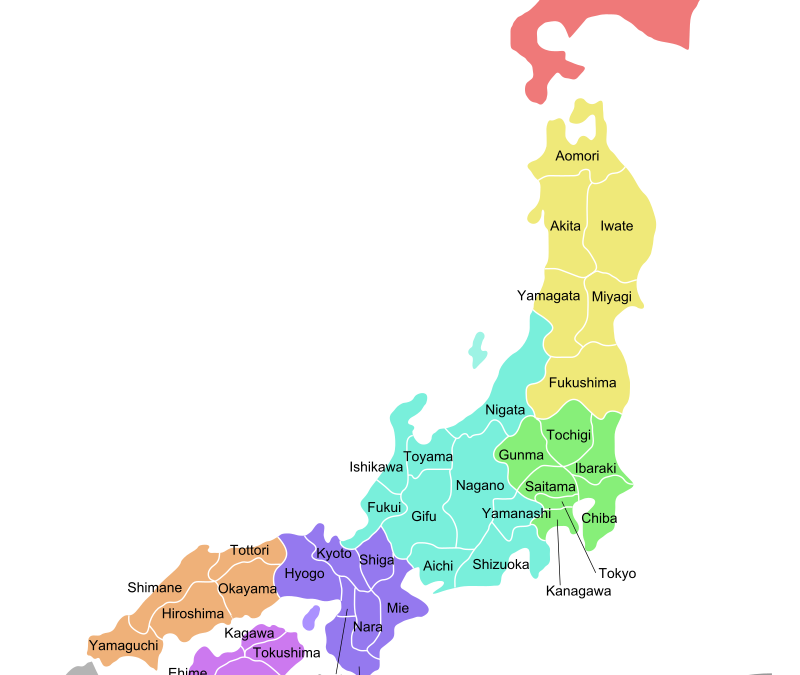
Kumamoto sits in west-central Kyushu, Japan’s southwestern main island. Shodai-yaki is not made in the prefectural capital but in the rural north — the Arao, Nankan, and Tamana districts at the foot of Mt. Shōdai (小岱山), a low range straddling the Kumamoto–Fukuoka border above the Ariake Sea. The combination that draws potters here is unremarkable to look at and decisive in practice: iron-rich local clay, woodland for ash glaze and kiln fuel, and a domain that wanted a working pottery industry.
That patronage arrived with a single administrative event. In 1632 the Hosokawa clan was reassigned from Kokura, in the old province of Buzen, down to Higo — present-day Kumamoto — and brought its potters along. Those potters belonged to the Agano/Takatori lineage, the Korean-descended families settled in northern Kyushu around the turn of the 17th century who also founded Fukuoka’s Agano-yaki. Set to work at the foot of Mt. Shōdai, they began the ware we now call Shodai-yaki. Its kinship with Agano-yaki is not a marketing flourish; it is a shared family tree.
- c. 1600 — Korean-descended potters of the Agano/Takatori lineage settle in northern Kyushu and establish stoneware kilns in Buzen.
- 1632 — The Hosokawa clan is reassigned from Kokura (Buzen) to Higo (Kumamoto) and brings its potters south; Shodai-yaki begins at the foot of Mt. Shōdai.
- Edo period — The ware is used continuously as both daily folk ware and tea-ceremony utensil under the Higo domain.
- 20th century — Rustic, hand-poured folk stoneware like Shodai-yaki is reappraised through the mingei (folk-craft) movement.
- Later 20th c. — Shodai-yaki is recognized as a designated traditional craft of Kumamoto (the exact designation year is not stated in our sources).
- Today (2026) — The Fumoto kiln (Inoue lineage) remains among the best-known active kilns continuing the nagashi-gake tradition.
What “still being made here” means, concretely, is that the Fumoto kiln of the Inoue family is one of a small group of working kilns keeping the tradition alive at the original site. The technique that defines it has not been streamlined away: the dark clay is thrown, then a pale ash glaze is poured across the body in a broad stroke and allowed to run. Where the two meet, the iron in the body bleeds through the ash to give the blue-white-to-rust gradient that is Shodai-yaki’s fingerprint.
“The glaze is poured, not painted — which is another way of saying the cup, not the catalog, decides what it finally looks like.”
For a sake cup, that matters in use. Shodai-yaki was made for the table of a region that drinks: Kumamoto and its Kyushu neighbors are shochu and sake country, and a guinomi heavy enough to sit in the palm, with a slightly absorbent stoneware lip, changes how a drink reads. This is folk ware that was always meant to be used, not displayed — and it fills the one Kyushu gap our craft coverage still had: Kumamoto’s pottery, where previously we had only the prefecture’s metalwork.

Price snapshot across stores
JPY is the authoritative price for the specific listed item; USD figures elsewhere on jpmono are approximate estimates at a ¥150/USD baseline. For this cup, no price was present in the data we fetched — so the table shows where to buy rather than a confirmed number. Always verify the live price before purchasing.
| Store | Item / variant | Price | Notes |
|---|---|---|---|
| 🇺🇸 Amazon.com (US) | Browse Japanese sake cups & guinomi | varies (USD) | Best if you are shopping from the US — Prime shipping, USD pricing, no international customs. Amazon US carries Japanese sake cups and guinomi from various makers; this exact Shodai-yaki piece is sourced from Japan (next row). |
| 🇯🇵 Amazon JP Global Store | Shodai-yaki nagashi-gake guinomi, Fumoto kiln (ASIN B0BVLC9TXR) | Live price — unavailable at time of writing | The sourced listing for the exact item. Ships internationally from Japan to most major destinations. |
| Maker direct (Fumoto kiln) | Shodai-yaki guinomi, made to the kiln’s current run | — | Inoue-lineage kiln in northern Kumamoto. No fixed online storefront price in our data; inquire with the kiln or a regional gallery. |
| Proxy services (Buyee / Tenso) | Any Japan-domestic Shodai-yaki listing | item price + fees | Useful when a listing ships only within Japan. Adds a service fee plus international forwarding; consolidate orders to offset cost. |
📦 Shipping & where to buy from outside Japan
- Amazon JP Global Store is the primary path for the exact cup (ASIN B0BVLC9TXR) and ships internationally from Japan to most major destinations.
- Expect international shipping in roughly the $15–$40 range to the US and EU, higher to other regions; the checkout shows the exact figure before you pay.
- Orders above your country’s de minimis threshold may incur customs duty or import tax on arrival — budget for it.
- If a particular listing is Japan-domestic only, route it through a proxy/forwarder (Buyee or Tenso).
- Ceramics are fragile; confirm the seller packs for international transit, and prefer consolidated shipments to reduce breakage risk per parcel.
What it does well
Weaknesses and things to verify before buying
- No confirmed dimensions or capacity. Our fetched data did not include size, weight, or volume. If you need a specific capacity, ask the seller before ordering.
- No confirmed price. Live pricing was unavailable at the time of writing; the JPY figure on the listing is authoritative once you reach it.
- Appearance will differ from any photo. Poured-glaze ware varies piece to piece — that is the point, but it means the cup you receive is not the cup pictured.
- Care is not guaranteed dishwasher/microwave-safe. Treat iron-bodied stoneware with an unglazed foot as hand-wash unless the listing explicitly states otherwise.
- Fragility in transit. Ceramics break; confirm protective packing and consider proxy consolidation for multi-piece orders.
- Customs and duty. International orders above local thresholds may attract import tax on delivery, which the listing price does not include.
Conclusion — which buyer type are you?
Other ways to approach this purchase
🏆 Editor’s Pick
❓ Frequently Asked Questions
Does Amazon JP Global Store ship this cup internationally?
Yes. The Amazon JP Global Store listing (ASIN B0BVLC9TXR) ships internationally from Japan to most major destinations. The exact shipping cost and delivery estimate are shown at checkout before you pay.
Why does the article not show a price?
Live pricing was unavailable in the data we fetched at the time of writing. The JPY price on the live listing is the authoritative figure; USD equivalents are approximate at a ¥150/USD baseline.
Will my cup look exactly like the photo?
No. Nagashi-gake glaze is poured by hand and runs differently on every piece, so each cup is unique. Treat any listing photo as representative of the style rather than the exact unit you will receive.
Is it dishwasher- and microwave-safe?
Our source data did not confirm this. Iron-bodied stoneware with an unglazed foot is generally best hand-washed; do not assume dishwasher or microwave safety unless the listing states it explicitly.
How is Shodai-yaki different from Onta or Karatsu ware?
All are Kyushu stoneware, but Shodai-yaki’s signature is the poured straw-/wood-ash nagashi-gake streak over an iron-dark body, rooted in the Agano/Takatori lineage and the Hosokawa move to Kumamoto in 1632. See the linked Onta-yaki and Karatsu-ware guides above to compare directly.
What if the listing only ships within Japan?
Use a proxy/forwarding service such as Buyee or Tenso. They purchase the domestic listing for you and forward it internationally, adding a service fee plus shipping. Consolidating multiple items reduces the per-item cost and breakage risk.
Will I owe customs duty?
Possibly. Orders above your country’s de minimis threshold may attract import duty or tax on arrival, which is separate from the listing price and shipping. Check your local threshold before ordering.
jpmono.com is curated by a Japan-based editorial team (working out of Toyama in the Hokuriku region and Nara in Kansai) and is independent. We do not take payment from the makers we feature; income comes from affiliate links. We do not physically test every product — we read maker’s specs and source listings. Read more about our editorial standards.
This article was prepared with AI assistance and reviewed against the source listing data available at the time of writing. Where data was incomplete (dimensions, capacity, and live pricing), this is stated plainly rather than filled in by guesswork.
Affiliate disclosure: jpmono.com may earn a commission on qualifying purchases made through links on this page, at no additional cost to you.