![Shodai-yaki Nagashi-gake Katakuchi Sake Pourer: Where to Buy [2026]](https://jpmono.com/wp-content/uploads/2026/06/shodai-yaki-nagashigake-katakuchi-sake-pourer-where-to-buy-2026-featured.jpg)
Shodai-yaki (小代焼, “Shodai ware”) is Kumamoto’s flagship stoneware, and the katakuchi (片口, spouted pourer) is the form that shows it off best. The craft traces to 1632, when the daimyo Hosokawa Tadatoshi was transferred from Kokura in Buzen province to Higo — present-day Kumamoto — on the island of Kyūshū. Potters who followed the clan opened a kiln at the foot of Mt. Shodai, making Shodai-yaki, from its first firing, a Hosokawa domain kiln rather than a folk-village pottery.
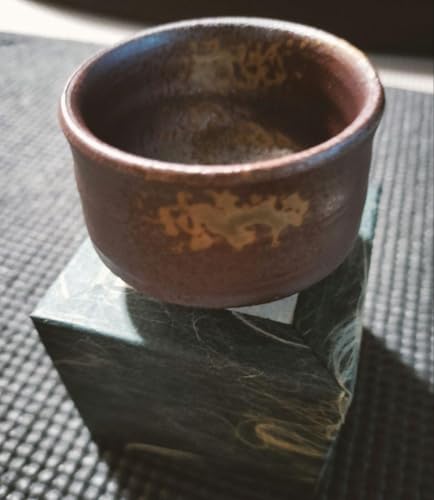
What makes it recognizable is a single technique: nagashi-gake (流し掛け), or poured glaze. The potter ladles straw-ash and wood-ash glazes over the dark, iron-rich Shodai clay and lets them run, so each piece carries flowing blue-white, amber, and yellow streaks against a brown-black ground. No two runs are identical. On a katakuchi — with its broad, sloping shoulder and pinched lip — that flow has room to move, which is exactly why this shape is a favorite among Shodai potters. The Ministry of Economy, Trade and Industry (METI) designated Shodai-yaki a Traditional Craft in 1989.
This guide is written for international readers deciding whether a Shodai-yaki katakuchi is worth importing, and where to buy one. We cover what the form does well, where the limits are, how it compares to other Japanese sake and serving vessels, and the two realistic purchase paths — Amazon US for browsing comparable Japanese tableware, and Amazon JP Global Store, which is where this specific listing is sourced and which ships internationally. Note up front: for this listing only the search keyword was retrievable at the time of writing; live pricing was unavailable, so price figures below are marked unconfirmed and should be checked at the retailer.
📅 Published: June 15, 2026
🔄 Last updated: June 15, 2026
⏱️ Read time: ~10 min

- Who this is for — and who should skip it
- Product overview (from published specs)
- Price snapshot across stores
- 📦 Shipping & where to buy from outside Japan
- What it does well
- Weaknesses and things to verify before buying
- Conclusion — which buyer type are you?
- Other ways to approach this purchase
- Where this comes from — place, era, and the craft tradition
- 🏆 Editor’s Pick
- ❓ Frequently Asked Questions
Who this is for — and who should skip it
- Want one versatile vessel that pours sake, holds salad dressing or sauce, and doubles as a single-stem flower holder
- Prefer the quiet, earthy look of poured ash glaze over bright porcelain decoration
- Value a piece tied to a documented domain-kiln history (Hosokawa, 1632) and a METI designation
- Are comfortable with handmade variation — every glaze run is unique
- Already buy from Amazon JP Global Store or a proxy service and accept international shipping lead times
- Want a matched, identical-looking set — poured glaze guarantees variation between pieces
- Need a dishwasher- and microwave-proof everyday item with printed specs you can verify
- Are shopping for the lowest possible price; handmade domain-kiln stoneware is not a budget category
- Expect a crisp white surface — the body is intentionally dark and iron-toned
- Cannot wait for cross-border shipping or want zero customs paperwork risk
Product overview (from published specs)
Based on the listing keyword and the craft’s documented characteristics, the table below summarizes what a Shodai-yaki nagashi-gake katakuchi is. Where a value was not present in the fetched data, it is marked unconfirmed rather than guessed.
Shodai-yaki Nagashi-gake Katakuchi Sake Pourer
小代焼 ドレッシングサーバー 取手付き片口鉢
通常6~7日以内に発送します。 · Sold by MoTTo · ASIN B0GSYLTCHF
Price and availability as of 2026-08-31 02:30 JST. The Amazon listing at the time of purchase is authoritative. jpmono.com earns a commission on qualifying purchases at no extra cost to you.
| Attribute | Detail (per listing / craft record) |
|---|---|
| Craft | Shodai-yaki (小代焼) stoneware |
| Form | Katakuchi (片口) — spouted pourer; serves as sake server, dressing/sauce vessel, or single-stem flower holder |
| Signature technique | Nagashi-gake (流し掛け) — straw-ash and wood-ash glazes ladle-poured over the body |
| Clay body | Iron-rich Mt. Shodai (Shodaisan) clay; dark brown-black ground |
| Glaze colors | Flowing blue-white, amber, and yellow runs |
| Origin | Foot of Mt. Shodai, Kumamoto Prefecture, Kyūshū |
| Designation | METI Traditional Craft (1989) |
| Dimensions / capacity / weight | Unconfirmed — check the live listing |
| Item ID (ASIN) | B0GSYLTCHF |
Sources: Amazon US search (primary, tag moonill-20) for browsing comparable Japanese tableware + Amazon JP Global Store (secondary, tag moonill-22) for the sourced listing + maker/craft record. Only the search keyword was retrievable for this specific listing; live pricing and physical dimensions were unavailable at the time of writing.
📖 Glossary — key terms
- Shodai-yaki (小代焼) — Kumamoto’s flagship stoneware, fired at the foot of Mt. Shodai since 1632.
- Katakuchi (片口) — a pouring vessel with a single pinched lip or spout; in Japanese homes it moves fluidly between sake, sauces, and flowers.
- Nagashi-gake (流し掛け) — “poured glaze”; ash glazes are ladled over the body and allowed to run, producing the streaked surface.
- Higo (肥後) — the historical province corresponding to present-day Kumamoto Prefecture.
- Daimyo (大名) — a feudal domain lord; here, Hosokawa Tadatoshi, whose 1632 transfer brought the founding potters.
- METI Traditional Craft — a Ministry of Economy, Trade and Industry designation recognizing a regional craft’s history, technique, and local materials.
Other Japanese ceramics, metalwork, and lacquer vessels we’ve covered — useful for weighing material, region, and form against this Shodai-yaki katakuchi.
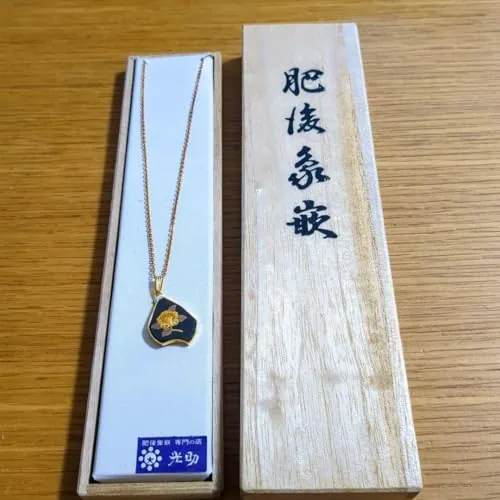 Kumamoto Higo Zogan inlay
Same prefecture, metal craft
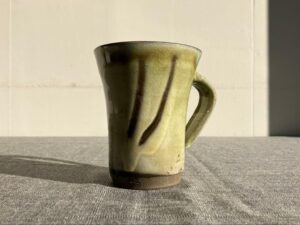 Onta-yaki mug (Kyūshū)
Folk stoneware, neighboring region
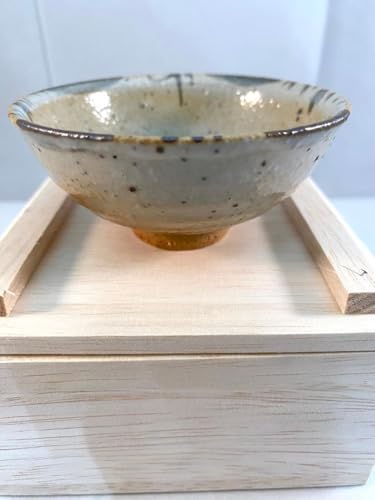 Karatsu e-garatsu guinomi
Kyūshū sake stoneware
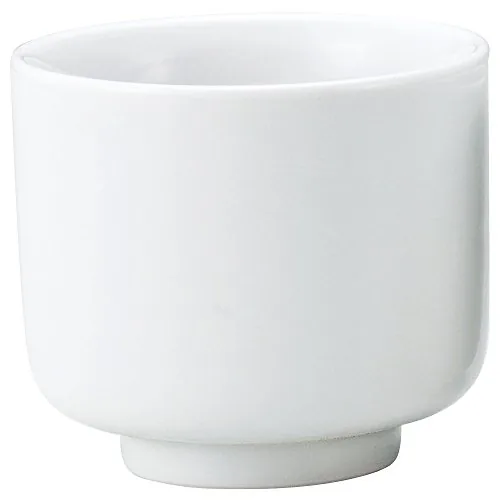 Satsuma shiro-satsuma cup
Kyūshū domain-kiln contrast
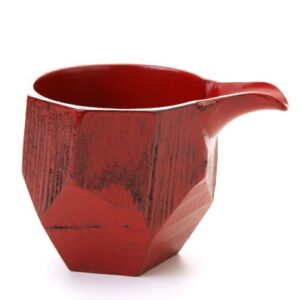 Tosa lacquer katakuchi
Same form, lacquer instead of clay
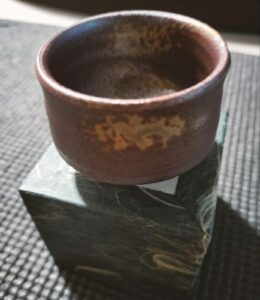 Tamba Tachikui guinomi
Ash-glazed stoneware sake cup
Arita sometsuke porcelain
Kyūshū porcelain counterpoint
Price snapshot across stores
Pricing for this specific listing was unavailable at the time of writing — only the search keyword was retrievable. Treat the figures below as placeholders to verify at the retailer; JPY is the authoritative currency and USD estimates use a ¥150/USD baseline as of mid-2026.
| Store | Item / variant | Price (JPY + USD est.) | Notes |
|---|---|---|---|
| 🇺🇸 Amazon.com (US) | Browse Japanese stoneware katakuchi & sake servers | varies (USD) | Best if you’re shopping from the US — Prime shipping, USD pricing, no international customs. Amazon US carries Japanese stoneware and sake serving vessels from various makers for comparison; this Shodai-yaki piece is sourced from Japan (next row). |
| 🇯🇵 Amazon JP Global Store | Shodai-yaki nagashi-gake katakuchi (ASIN B0GSYLTCHF) | ¥— (unconfirmed; check listing) | The sourced listing for the exact item in this guide. Ships internationally from Japan to most major destinations. |
| Maker direct | Individual Shodai-yaki kilns near Mt. Shodai | varies | Several kilns operate around Mt. Shodai; most sell domestically and may not ship abroad directly. Unconfirmed — check the individual kiln. |
| Proxy services (Buyee / Tenso) | Forwarding from JP-only shops | item price + forwarding fee | Useful when a kiln or shop only ships within Japan; adds a service fee and a second shipping leg. |
📦 Shipping & where to buy from outside Japan
The realistic path for most international readers is Amazon JP Global Store, which lists this item (ASIN B0GSYLTCHF) and ships to most major destinations from Japan. Expect international shipping in the rough range of $15–$40 to the US and EU, with higher rates to other regions; exact cost and eligibility appear at checkout. Orders above your local duty threshold may incur customs charges on arrival — budget for that separately.
If you prefer to compare Japanese stoneware and sake vessels with USD pricing and Prime shipping first, browse Amazon US, then return to the JP listing for this specific piece. Where a kiln or specialty shop sells only within Japan, a proxy/forwarding service such as Buyee or Tenso can receive and re-ship the order for a fee. As a ceramic, non-electrical item, the katakuchi has no voltage concern; the only handling caveat is breakage in transit, so confirm protective packaging.
What it does well
“The glaze is not painted on — it is poured and then released. The kiln finishes the drawing the potter only started.”
Weaknesses and things to verify before buying
- Pricing is unconfirmed here. Only the search keyword was retrievable for this listing; live price and stock were unavailable at the time of writing. Verify both at the retailer before ordering.
- Dimensions and capacity are unlisted in the fetched data. If volume matters for sake service, confirm the capacity on the live listing — it is not stated in our source data.
- Every piece varies. Poured glaze means the item you receive will not match the photo exactly. This is inherent to the craft, not a defect.
- Care is hand-wash, generally. Handmade ash-glazed stoneware is typically not guaranteed dishwasher- or microwave-safe; treat as hand-wash unless the listing says otherwise.
- Cross-border shipping and customs. International delivery adds time and possible duties above your local threshold; factor this into the total cost.
- Breakage risk in transit. Ceramics travel poorly without good packaging — confirm protective packing, especially via proxy services with a second shipping leg.
Conclusion — which buyer type are you?
Other ways to approach this purchase
Where this comes from — place, era, and the craft tradition

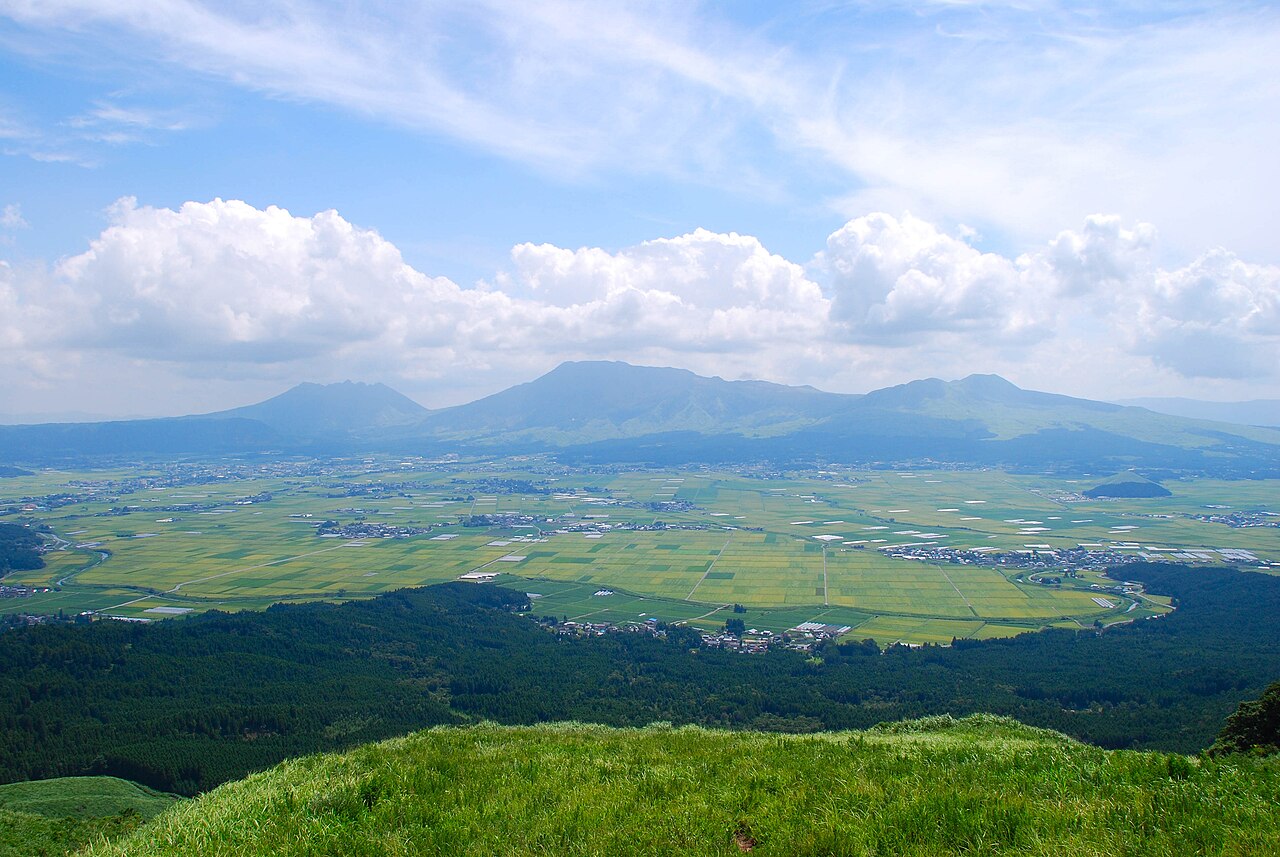
Kumamoto sits in the center of Kyūshū, the southwesternmost of Japan’s four main islands. Shodai-yaki takes its name from Mt. Shodai (Shodaisan), at whose foot the founding kiln was opened; the surrounding district supplies the iron-rich clay that gives the ware its dark, mineral body. The wider region’s geology is dominated by Mt. Aso, whose vast volcanic caldera underlies the highland soils of the prefecture — the same mineral richness that makes Kumamoto’s clays so well suited to stoneware.
The historical anchor is a single move of power. In 1632, the daimyo Hosokawa Tadatoshi was transferred from Kokura, in the old province of Buzen, to Higo — the historical name for present-day Kumamoto. Lords did not travel alone; artisans, retainers, and craftspeople followed. Among them were potters who established a kiln at the foot of Mt. Shodai, and from its first firing Shodai-yaki was a Hosokawa domain kiln — patronized pottery serving a feudal house, not an anonymous village trade.
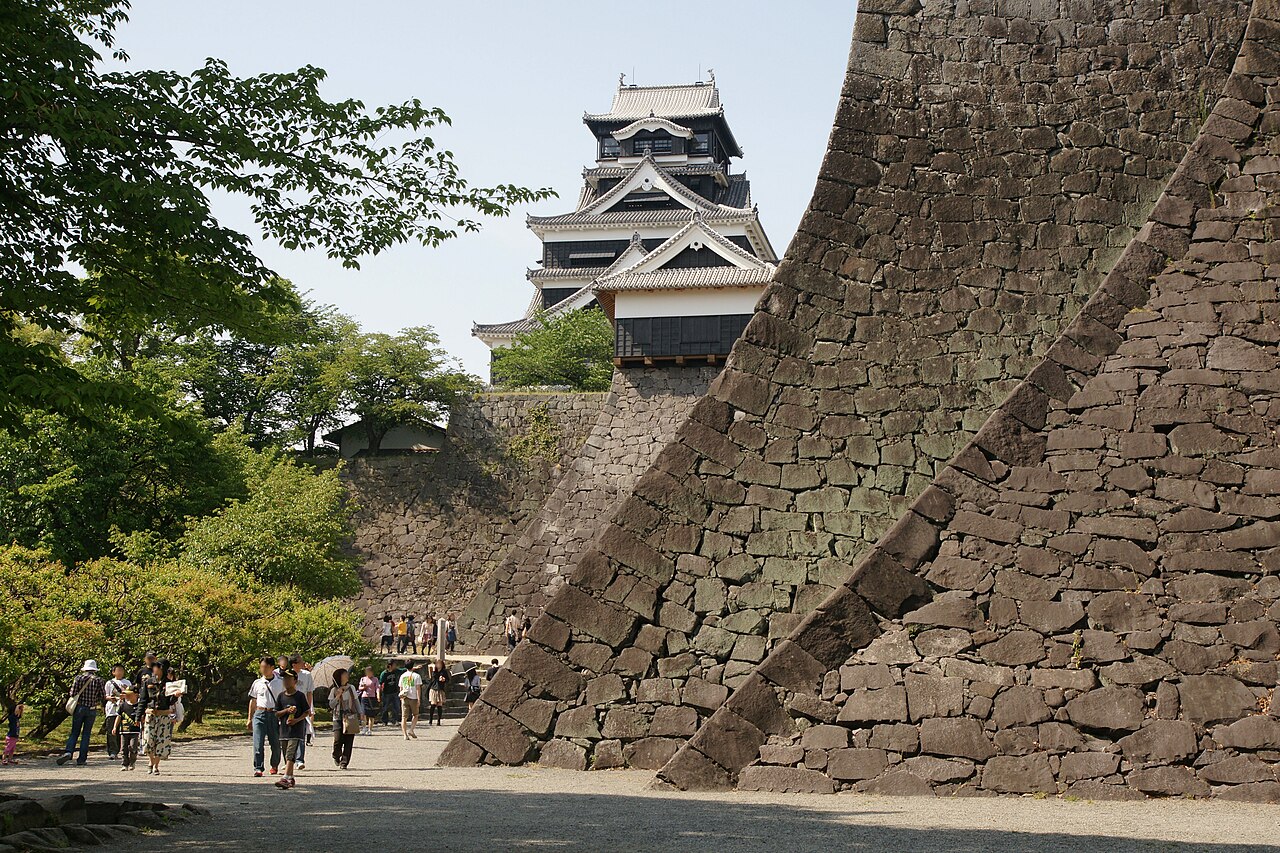
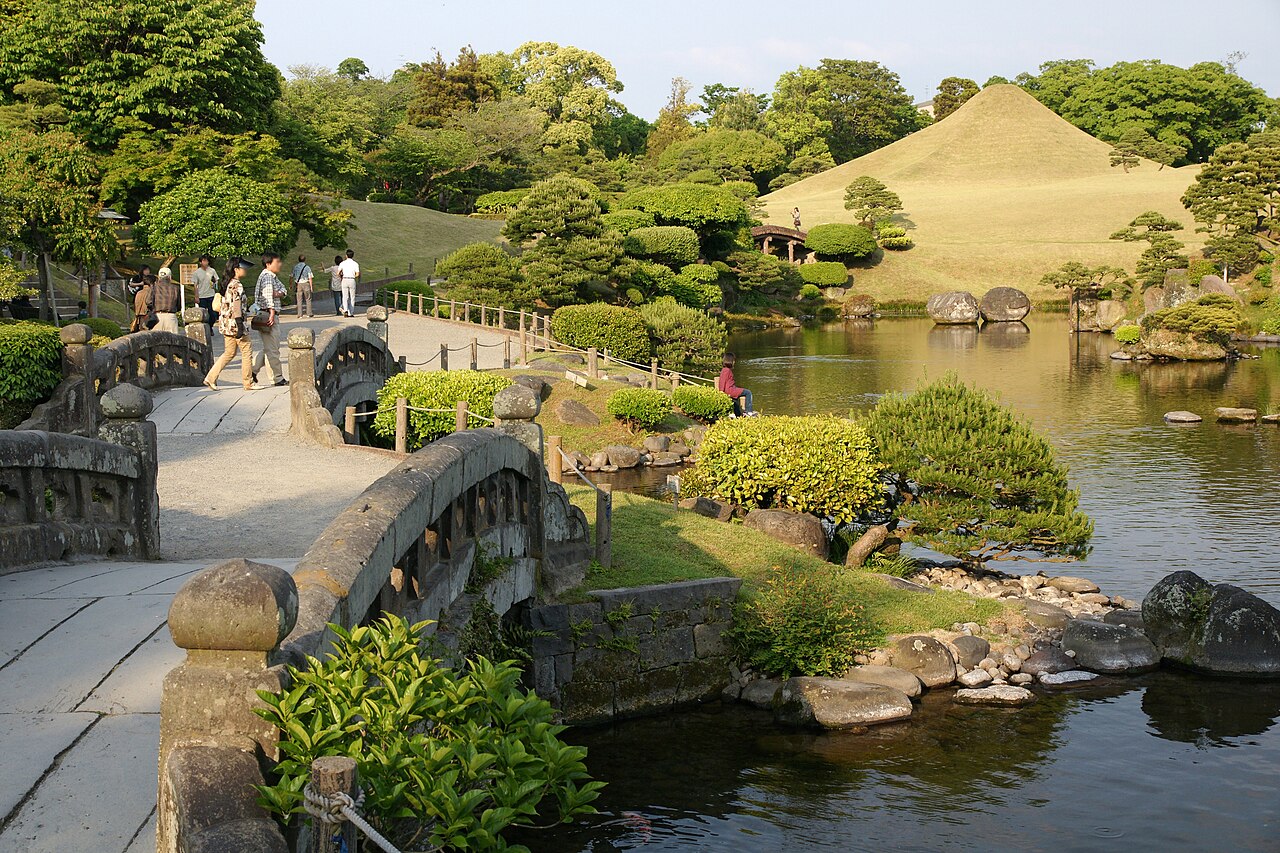
That patronage matters. A domain kiln answered to refined daimyo taste, the same aesthetic sensibility visible today in the Hosokawa clan’s strolling garden, Suizenji Jojuen, and in the keep of Kumamoto Castle. The seat of power and the kiln rose from the same culture.
- 1632 — Hosokawa Tadatoshi is transferred from Kokura (Buzen) to Higo (Kumamoto); potters who follow the clan open a kiln at the foot of Mt. Shodai.
- Early Edo period — The kiln operates as a Hosokawa domain kiln; the nagashi-gake poured-glaze technique becomes its signature.
- Edo through Meiji — Production broadens from domain commissions toward everyday stoneware: pourers, vessels, and vases.
- 1989 — Shodai-yaki is designated a Traditional Craft by METI.
- 2026 — Kilns continue firing Shodai-yaki at the foot of Mt. Shodai, the poured-glaze technique essentially unchanged.
Nearly four centuries on, “still being made here” is a literal description rather than heritage marketing. Kilns continue to operate around Mt. Shodai, pouring straw-ash and wood-ash glazes over local clay much as the founding potters did. The technique survives because it is inseparable from the place: the iron in the Shodai clay and the ash from the region’s wood and straw are what produce the dark ground and the bright, running streaks.
On the table, the katakuchi earns its place by being unfixed in purpose. Filled with cold sake in summer or warmed in winter, it is a pouring vessel for drink; the next evening it holds a vinaigrette or a soy-based sauce; the morning after, a single camellia or branch leans against its lip. In a Japanese home the same object moves through the seasons without ceremony — and the broad shoulder that makes the pour clean is also the canvas where the poured glaze does its best work.
🏆 Editor’s Pick
❓ Frequently Asked Questions
What exactly is a Shodai-yaki katakuchi used for?
A katakuchi is a spouted pourer. It works as a sake server, as a vessel for dressings or sauces, and as a single-stem flower holder. Its broad shoulder also displays the poured glaze well, which is why it’s a favorite Shodai-yaki form.
What is the nagashi-gake technique?
Nagashi-gake means “poured glaze.” Straw-ash and wood-ash glazes are ladled over the iron-rich clay body and allowed to run, producing flowing blue-white, amber, and yellow streaks against a dark brown-black ground. Because the glaze is poured rather than painted, every piece is unique.
Can it be shipped outside Japan?
Yes. The Amazon JP Global Store listing (ASIN B0GSYLTCHF) ships internationally from Japan to most major destinations. Shipping typically runs about $15–$40 to the US and EU, with customs duties possible above your local threshold. Proxy services like Buyee or Tenso can forward orders from JP-only shops.
How do I care for it?
Treat handmade ash-glazed stoneware as hand-wash unless the listing states otherwise; it is generally not guaranteed dishwasher- or microwave-safe. Rinse, avoid harsh abrasives, and dry thoroughly.
Will the piece I receive match the photo?
Not exactly. Because the glaze is poured by hand and finished in the kiln, the streak pattern varies from piece to piece. The variation is inherent to the craft rather than a flaw.
How does it compare to a lacquer katakuchi or a porcelain pourer?
A lacquer katakuchi (such as Tosa shikki) is lighter, warmer to the touch, and decorative in a different register; Kyūshū porcelain like Arita sometsuke is bright, white, and painted. Shodai-yaki is the earthy, iron-bodied stoneware option, prized for the poured-ash surface rather than applied decoration.
Is Shodai-yaki an officially recognized craft?
Yes. Shodai-yaki was designated a Traditional Craft by Japan’s Ministry of Economy, Trade and Industry (METI) in 1989, recognizing its history, technique, and use of local materials.
jpmono.com is curated by a Japan-based editorial team (working out of Toyama in the Hokuriku region and Nara in Kansai) and is independent. We don’t take payment from the makers we feature; income comes from affiliate links. We don’t physically test every product — we read maker’s specs and source listings.
This article was prepared with AI assistance and reviewed against the available source data. Specifications, pricing, and availability should be confirmed at the retailer before purchase.
Affiliate disclosure: jpmono.com may earn a commission on qualifying purchases made through links on this page, at no additional cost to you.