![Satsuma Ware Sake Cup: Where to Buy Shiro-Satsuma Guinomi [2026]](https://jpmono.com/wp-content/uploads/2026/05/satsuma-yaki-shiro-satsuma-sake-cup-where-to-buy-2026-featured.jpg)
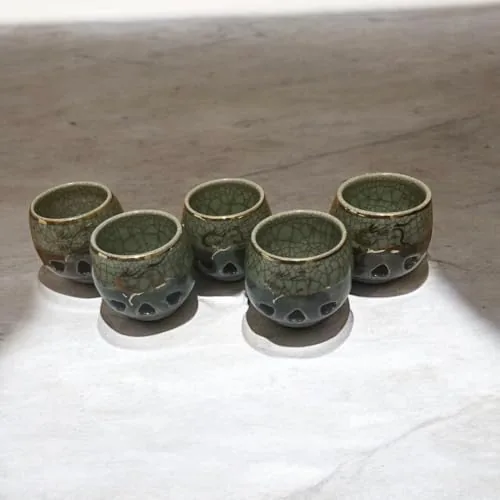
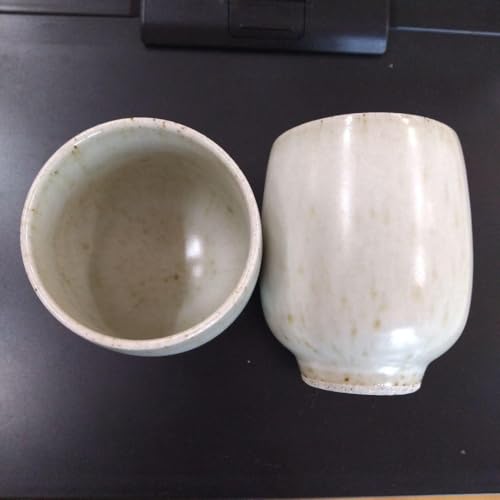
Shiro-Satsuma (白薩摩, “white Satsuma”) is the ivory-bodied, finely crackled branch of Satsuma ware — the pottery tradition that began in southern Kyūshū when the Shimazu lords of the Satsuma domain settled Korean potters in their territory at the close of the sixteenth century. A shiro-Satsuma guinomi (ぐい呑み, a small sake cup held in the palm) puts that four-century lineage in your hand: a warm cream glaze webbed with hairline kanyū (貫入, intentional crackle), made to be looked at as closely as it is drunk from.
What makes this ware internationally legible is not just age but a moment of fame. After the 1867 Paris Exposition, “SATSUMA” became one of the first Japanese ceramic names that Western collectors learned to chase, and Meiji-era export workshops shipped it across Europe and America by the crate. The cup covered here descends from that refined daimyō line rather than the everyday black-glazed shōchū vessels made for commoners — the same Shimazu-domain heritage that the Satsuma Kiriko cut-glass tradition shares.
This guide is written for an international reader deciding whether — and where — to buy a shiro-Satsuma sake cup. We lay out what the ware is, where Kagoshima sits on the map and why pottery took root there, how to actually purchase one from outside Japan, and who should pass. One caveat up front, stated plainly: the dataset fetched for this specific listing came back empty, so live price and exact measurements were unavailable at the time of writing — we flag every place that affects below and point you to the live listing for current figures.
🔄 Last updated:
⏱️ Read time: ~10 min
Kagoshima Satsuma-yaki kiln · ASIN B0FM29XJSM
![Satsuma Ware Sake Cup: Where to Buy Shiro-Satsuma Guinomi [2026]](https://m.media-amazon.com/images/I/41T4DoR8L6L._SL500_.jpg)
- Who this is for — and who should skip it
- Product overview (from published specs)
- 📍 Where this comes from — place, era, and the craft tradition
- 📌 How does it compare?
- Price snapshot across stores
- 📦 Shipping & where to buy from outside Japan
- What it does well
- Weaknesses and things to verify before buying
- Conclusion — which buyer type are you?
- Other ways to approach this purchase
- 🏆 Editor’s Pick
- ❓ Frequently Asked Questions
Who this is for — and who should skip it
- Want a small, hand-finished Japanese sake cup with documented regional heritage, not a mass-market gift-shop piece
- Like the warm ivory-and-crackle aesthetic of shiro-Satsuma rather than bright porcelain whites
- Are buying a vessel for neat sake or shōchū tasting in the traditional small format
- Appreciate visible kanyū crackle as a feature and a maker’s mark of the technique
- Are comfortable ordering from Japan and verifying price and specs on the live listing
- Need a confirmed price and exact dimensions before committing — those were not in our dataset for this item
- Want a dishwasher-safe, everyday tumbler you can treat roughly
- Dislike crackle glaze and prefer an unbroken, glassy surface
- Need guaranteed fast domestic shipping (this sources from Japan)
- Are looking for a large beer-or-water-glass capacity — guinomi are small by design

Product overview (from published specs)
The table below lists what we can state from the spec for this listing plus the purchase routes. The fetched dataset for this exact item came back empty, so measurable specs (capacity, dimensions, weight) and price are marked Unconfirmed — check listing rather than guessed. Spec sheets indicate the qualitative character of shiro-Satsuma described in the heritage notes; the live listing is the authority for numbers.
Satsuma Ware Sake Cup
ぐい呑み 薩摩焼 永田窯 5個セット 陶器 焼物 コレクション 酒器 お猪口
通常9~10日以内に発送します。 · Sold by 玩具jamp · ASIN B0FM29XJSM
Price and availability as of 2026-09-01 05:22 JST. The Amazon listing at the time of purchase is authoritative. jpmono.com earns a commission on qualifying purchases at no extra cost to you.
| Attribute | Value (per available data) |
|---|---|
| Item | Shiro-Satsuma (white Satsuma) guinomi sake cup |
| Body / glaze | Ivory stoneware body with fine kanyū (crackle) glaze, per the recommendation hint |
| Tradition | Satsuma-yaki (薩摩焼), refined shiro-Satsuma lineage |
| Origin | Kagoshima Prefecture, Kyūshū (Satsuma-yaki kiln) |
| ASIN / item ID | B0FM29XJSM |
| Capacity / dimensions / weight | Unconfirmed — check listing (not in fetched data) |
| Price | Not available at time of writing — verify on listing |
📖 Glossary — key Satsuma-ware terms
Satsuma-yaki (薩摩焼) — “Satsuma ware,” the pottery made in the former Satsuma domain (today’s Kagoshima Prefecture) since the late 1590s.
Shiro-Satsuma (白薩摩) — “white Satsuma,” the refined ivory-bodied ware with a finely crackled glaze, historically made for the daimyō (the ruling Shimazu lords).
Kuro-Satsuma (黒薩摩) — “black Satsuma,” the everyday iron-glazed ware made for commoners’ shōchū and tea vessels.
Kanyū (貫入) — the fine network of crackle in the glaze, caused by the glaze and clay body contracting at different rates. In shiro-Satsuma it is a sought-after decorative feature, not a flaw.
Kin-rande (金襴手) — “gold brocade,” the gold-enamel overglaze decoration applied to the most elaborate shiro-Satsuma export pieces.
Guinomi (ぐい呑み) — a small sake cup, generally a little larger than an ochoko, held in the palm for sipping.
Shimazu (島津) — the daimyō family that ruled the Satsuma domain and patronized both Satsuma ware and, later, Satsuma Kiriko cut glass.

📍 Where this comes from — place, era, and the craft tradition

Kagoshima sits at the southern end of Kyūshū, the southwesternmost of Japan’s four main islands, facing the East China Sea. The city wraps around a bay dominated by Sakurajima, an active volcano that still dusts the region with ash, and the surrounding land is built on volcanic shirasu soils. This was the heart of the Satsuma domain, ruled for centuries by the Shimazu family — a clan far enough from the old capitals of Nara and Kyoto to develop a distinct material culture, and close enough to the southern sea routes to absorb foreign techniques early.
The tradition began with conflict. During the Bunroku-Keichō campaigns on the Korean peninsula (1592–1598), the Satsuma lord Shimazu Yoshihiro brought Korean potters back to his domain. They established kilns at Naeshirogawa, Tateno, and Ryūmonji, and from those communities two distinct lineages of Satsuma ware diverged.
- 1592–1598 — Bunroku-Keichō campaigns; Lord Shimazu Yoshihiro brings Korean potters home to Satsuma.
- early 1600s — The potters establish the Naeshirogawa, Tateno, and Ryūmonji kilns.
- Edo period — Two lineages diverge: refined ivory shiro-Satsuma for the daimyō, and iron-black kuro-Satsuma for commoners’ shōchū and tea.
- 1867 — At the Paris Exposition, “SATSUMA” ware becomes a Western export sensation.
- Meiji era — Export workshops ship gold-enameled (kin-rande) shiro-Satsuma across Europe and America.
- to today — The Korean-descended Chin Jukan (Shim) family kiln has continued for roughly 400 years, into the 15th generation.
- 2026 — Shiro-Satsuma guinomi are still produced by Kagoshima kilns and sold internationally.
The refined line — shiro-Satsuma — used a pale, iron-poor clay to produce an ivory body, finished with a finely crackled transparent glaze and, on the most elaborate export pieces, kin-rande (金襴手) gold-brocade enamel. The everyday line — kuro-Satsuma — used a dark iron glaze for the shōchū flasks and tea vessels that working households actually drank from. Both came out of the same Korean-founded kilns; they simply served different markets.
“Born in a Korean potters’ village under the Shimazu lords, Satsuma’s ivory crackle ware crossed the world at the 1867 Paris Exposition — and ‘SATSUMA’ became one of the first Japanese ceramic names Western collectors learned to want.”
The continuity case is unusually concrete here. The Chin Jukan (沈壽官, the Japanese reading of the Korean Shim family name) kiln traces its line directly back to those first Korean potters and has operated for roughly four centuries to the fifteenth generation — a master-to-apprentice chain inside a single family, not a brand revived for the tourist trade. That is the difference between heritage as marketing and heritage as an actual unbroken workshop.
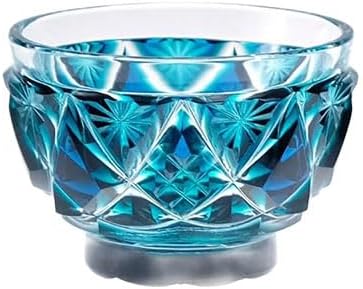
The cup also belongs to a place with a deep drinking culture. Kagoshima is shōchū country — the distilled spirit, often made from sweet potato in this region, is the local pour, and small cups like the guinomi are the traditional vessel for sipping it neat or for neat sake. The same Shimazu domain later patronized Satsuma Kiriko, the prestige cut-glass tradition; a shiro-Satsuma ceramic cup and a Satsuma Kiriko glass cup are two faces of one domain’s craft ambition, which is why the two pair so naturally on a tasting shelf.

📌 How does it compare?
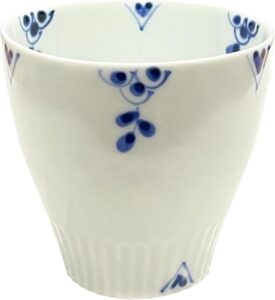
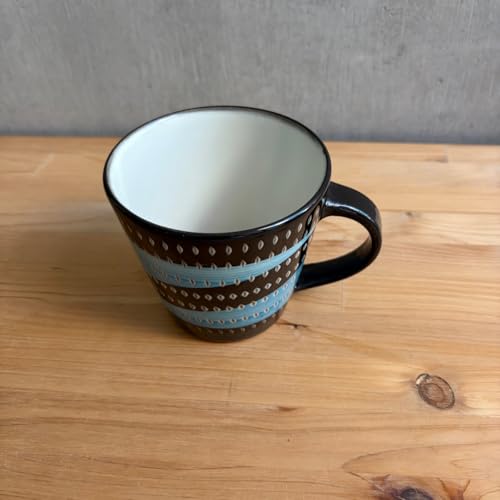
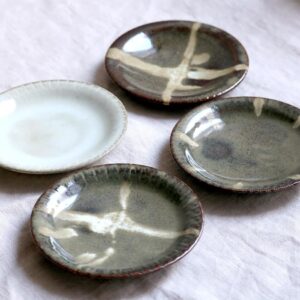
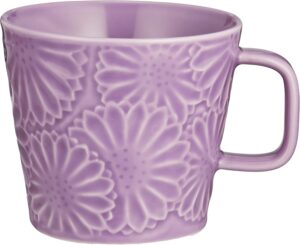
Other Japanese craft sake and tea vessels we’ve covered — useful for comparing region, technique, and price tier:
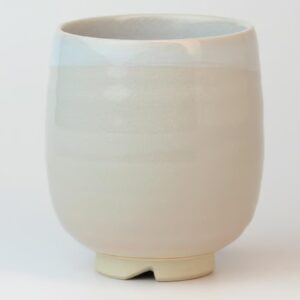
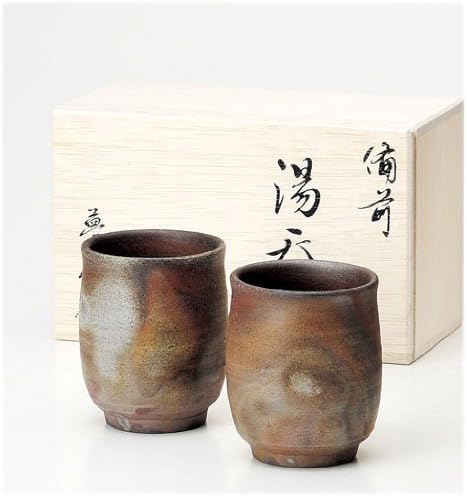
Price snapshot across stores
Based on listings, here is how the purchase routes compare. The fetched data did not include a price for this item, so the JPY figure is marked unavailable rather than estimated; USD figures cannot be derived without it. JPY (¥) is the authoritative currency when a price appears.
| Store | Item / variant | Price (JPY + USD est.) | Notes |
|---|---|---|---|
| 🇺🇸 Amazon.com (US) | Browse Japanese sake cups & guinomi | varies (USD) | Best if you’re shopping from the US — Prime shipping, USD pricing, no international customs. Amazon US carries Japanese sake cups and tasting sets from various makers, useful for comparing form and price tiers. This specific Satsuma-yaki piece is sourced from Japan (next row). |
| Amazon JP Global Store | Shiro-Satsuma guinomi (ASIN B0FM29XJSM) | Not available at time of writing — verify on listing | Where this specific item is sourced. Ships internationally from Japan to most major destinations. Confirm live price, capacity, and stock on the listing. |
| Maker direct | Kagoshima Satsuma-yaki kiln | Varies — check kiln site | Some Kagoshima kilns sell online; selection and English support vary by workshop. Not confirmed for this exact piece. |
| Proxy services (Buyee / Tenso) | Any JP listing not shipping abroad | Item price + proxy fee + forwarding | Useful when a Japanese listing does not ship internationally; adds a service fee and a forwarding leg. Slower, but opens up domestic-only listings. |
📦 Shipping & where to buy from outside Japan
The specific cup in this guide is sourced from the Amazon JP Global Store, which ships many household and tableware items internationally to most major destinations. For a small ceramic cup, expect an international shipping cost in the rough range of $15–$40 USD to the US or EU, with higher rates to other regions; the live listing shows the exact figure at checkout.
Ceramics are fragile, so transit breakage is a real (if small) risk — well-run sellers double-box small cups. If you are ordering above your country’s duty-free threshold, budget for possible customs duties on arrival. If a particular kiln listing does not ship to your country directly, a proxy service such as Buyee or Tenso can forward it for an added fee. For US-based readers who would rather avoid customs entirely, the Amazon.com search route lets you compare Japanese sake cups with domestic Prime shipping, though this exact Satsuma-yaki piece ships from Japan.
What it does well
Weaknesses and things to verify before buying
- No confirmed price in our data. The fetched listing snapshot was empty; treat any price you see at purchase as the live, authoritative figure and confirm before ordering.
- Dimensions, capacity, and weight unconfirmed. Guinomi vary in size; check the listing’s measurements if exact capacity matters to you.
- Crackle is not a flaw — but it is a surface. Kanyū can trap residue over time and is part of how the cup ages. If you want a pristine, unchanging glaze, this ware is the wrong choice.
- Care is hand-wash, not dishwasher. Treat crackle-glazed ceramics gently; thermal shock and harsh cycles risk damage. (Specific care instructions for this exact piece were not in our data.)
- Fragility in transit. International shipping of ceramics carries a small breakage risk; confirm the seller’s packaging and return policy.
- Variant uncertainty. Whether the listing is plain shiro-Satsuma or gold kin-rande, and whether it is a single cup or a set, should be verified on the listing — our dataset did not break this out.
Conclusion — which buyer type are you?
Other ways to approach this purchase
🏆 Editor’s Pick
❓ Frequently Asked Questions
What is shiro-Satsuma, and how is it different from kuro-Satsuma?
Is the fine crackle in the glaze a defect?
Where is Satsuma ware (Satsuma-yaki) made?
Can I buy a Satsuma-yaki sake cup from outside Japan?
How should I care for a shiro-Satsuma guinomi?
What is the difference between a guinomi and an ochoko?
jpmono.com is curated by a Japan-based editorial team (working out of Toyama in the Hokuriku region and Nara in Kansai) and is independent. We don’t take payment from the makers we feature; income comes from affiliate links. We don’t physically test every product — we read makers’ specs and source listings, and we flag where data is incomplete. Read more about our editorial standards.
This article was prepared with AI assistance and reviewed against the source data available at the time of writing. Where the fetched dataset was incomplete (notably price and exact measurements for this listing), those gaps are flagged in the text rather than filled with estimates. Verify current price, specifications, and availability on the retailer’s listing before purchasing.
Affiliate disclosure: jpmono.com may earn a commission on qualifying purchases made through links on this page, at no additional cost to you.