![Tanba Tachikui Yaki Mug: Hyogo’s Six Ancient Kilns Pottery [2026]](https://jpmono.com/wp-content/uploads/2026/05/tanba-tachikui-yaki-mug-where-to-buy-2026-featured.jpg)
Tanba-yaki (丹波焼) — also written Tamba-yaki and locally known as Tanba Tachikui-yaki (丹波立杭焼) — is the stoneware tradition of Tachikui village in Tamba-Sasayama City, northern Hyōgo Prefecture. It is one of the Six Ancient Kilns of Japan (Nihon Rokkoyō, 日本六古窯): six medieval kiln centers, formalized by the ceramic historian Koyama Fujio in the 1940s, whose production has continued without interruption since the medieval period. Tanba sits in this set alongside Bizen, Tokoname, Echizen, Shigaraki, and Seto.
The Tanba kilns date to the late Heian and early Kamakura periods — roughly the twelfth century — when local potters fired large unglazed storage jars (tsubo) and tea-leaf vessels in anagama tunnel kilns. The long pine-wood firings produced a signature green-to-amber natural ash glaze called shizenyu (自然釉). In 1611, climbing noborigama kilns and the kerokuro (蹴轆轤) left-turning wheel arrived via Korean potters who came in through Bizen, and the workshops expanded into tea ware and tableware. Today, around fifty active kilns still operate in Tachikui, and Tanba-yaki was designated a Traditional Craft of Japan by METI in 1978.
This guide is written for international buyers looking at their first Tanba mug. We cover Tanba’s place on the Japanese map, the long arc of its history, the practical shape of today’s Tachikui workshops, the named kilns producing daily-use stoneware (Ichiyou Gama, Shōkei Gama, Maruyama Tōen and others), and the ways to buy from outside Japan. Source data for individual product listings is thin — only the search-level keyword was available at the time of writing — so the article focuses on what is verifiable about the tradition, the workshops, and the buying paths, and is explicit where item-level pricing or specifications were not available.
🔄 Last updated:
⏱️ Reading time: ~13 min
![Tanba Tachikui Yaki Mug: Hyogo's Six Ancient Kilns Pottery [2026]](https://m.media-amazon.com/images/I/4187ZZJZNXL._SL500_.jpg)
- Who this is for — and who should skip it
- Product overview (from published specs)
- 📍 Where this comes from — place, era, and the craft tradition
- Price snapshot across stores
- What it does well
- Weaknesses and things to verify before buying
- Conclusion — which buyer type are you?
- Other ways to approach this purchase
- 🏆 Editor’s Pick
- ❓ Frequently Asked Questions
Who this is for — and who should skip it
- Want a first piece from Japan’s Six Ancient Kilns without committing to a tea-ceremony-tier price
- Already collect or use Shigaraki, Bizen, or Tokoname and want to round out the Six
- Drink coffee or tea daily from a 250–340 ml mug and want something hand-thrown for it
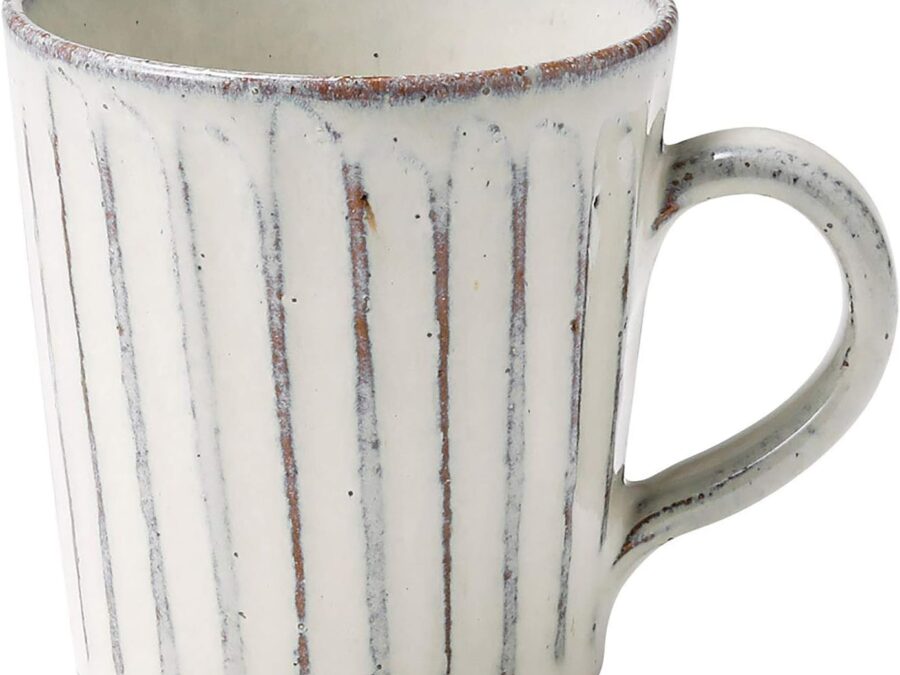
- Appreciate the iron-amber tones and uneven natural-ash-glaze pooling that define wood-fired stoneware
- Are buying a gift connected to Hyōgo — Kobe, Himeji Castle, the Tamba-Sasayama region itself
- You need a photo-exact piece — Tanba pieces are hand-thrown and each one varies in glaze pattern
- You prefer thin, white industrial porcelain — Tanba is deliberately heavy, earthen, and visibly textured
- You want dishwasher convenience — hand-wash is the recommended care for nearly all named Tanba kilns
- You want the cheapest Japanese mug available — Tanba sits above mass-market industrial pottery in price
- You need a specific listed item and final price before ordering — source data for this guide is thin, so verify current Amazon listings before checkout

Product overview (from published specs)
Sources: Amazon US search (primary, moonill-20 tag) for related Japanese stoneware mugs; Amazon JP Global Store search (secondary, moonill-22 tag) for Tanba-yaki and Tanba Tachikui-yaki listings; the Tachikui Pottery Cooperative (立杭陶磁器協同組合) for maker-direct pricing; and proxy services (Buyee / Tenso) for kiln-direct listings on Rakuten or Yahoo! Shopping JP. Item-level fetched data for this article contained only the search keyword, so the table below is keyed to the Tanba Tachikui-yaki daily-use mug category rather than a single ASIN.
| Field | Detail (Tanba Tachikui-yaki daily-use mug, May 2026) |
|---|---|
| Product category | Tanba Tachikui-yaki (丹波立杭焼) stoneware mug with natural-ash glaze (shizenyu) |
| ASIN | Not available in fetched data — verify the current listing on Amazon JP search before purchasing |
| Representative kilns | Ichiyō Gama (一陽窯), Shōkei Gama (昇陽窯), Maruyama Tōen (丸山陶苑), plus other Tachikui workshops |
| Material | Iron-bearing Tanba clay; wheel-thrown stoneware; reduction-fired with natural ash glaze in green-amber tones |
| Typical dimensions | ⌀ 8–9 cm × H 8–10 cm — daily-use mugs across named Tachikui kilns sit in this range |
| Typical capacity | 250–340 ml depending on kiln and shape |
| Made in | Tachikui village, Tamba-Sasayama City, Hyōgo Prefecture, Japan |
| Designation | METI Traditional Craft of Japan (国指定伝統的工芸品), designated 1978; one of the Six Ancient Kilns (Nihon Rokkoyō) |
| Price | Listing price not in fetched data — daily-use Tachikui mugs typically run ¥2,500–¥6,000 (≈ $17–$40 USD at ¥150/USD baseline); tea-ceremony-tier pieces run substantially higher |
| International shipping | Available via Amazon JP Global Store on most listings; stoneware transit breakage is approximately 2%, replacement typically offered on request |
| Care | Hand-wash recommended; microwave varies by kiln — check the specific listing; pre-warm before hot pours to avoid thermal shock |
📖 Glossary — key terms used in this guide
Tanba-yaki (丹波焼) — Stoneware tradition centered in Tachikui village, Tamba-Sasayama, northern Hyōgo Prefecture. Also written Tamba-yaki; locally Tanba Tachikui-yaki (丹波立杭焼). One of Japan’s Six Ancient Kilns.
Six Ancient Kilns of Japan (Nihon Rokkoyō, 日本六古窯) — Bizen, Tokoname, Echizen, Shigaraki, Tanba, and Seto — six kiln traditions with continuous medieval-through-present production, a set formalized by the ceramic historian Koyama Fujio in the 1940s.
Tachikui (立杭) — The pottery village within Tamba-Sasayama City where the Tanba kilns concentrate. The name appears in modern listings as the second half of “Tanba Tachikui-yaki.”
Shizenyu (自然釉) — Literally “natural glaze.” The green-to-amber surface produced when pine ash drifts through an anagama or noborigama kiln during the long firing and fuses with the silica in the clay body. Tanba’s signature finish.
Anagama (穴窯) — Single-chamber tunnel kiln, dug into a hillside. The earliest Japanese high-fire kiln type. Tanba’s medieval pieces were anagama-fired.
Noborigama (登窯) — Multi-chamber climbing kiln, introduced via Korean potter networks. Arrived in Tanba in 1611 alongside the kerokuro left-turning wheel; allowed larger, more controlled production.
Kerokuro (蹴轆轤) — Foot-kicked, left-turning potter’s wheel. Distinct from the right-turning wheel common elsewhere in Japan. Still used in Tachikui workshops today.
Tsubo (壺) — Large storage jar. Tanba’s earliest products were unglazed tsubo for grain, water, and tea-leaf storage.
Sasayama Domain (篠山藩) — Edo-period feudal domain centered on Sasayama Castle, ruled by the Aoyama clan after 1748. The castle-town economy supported Tanba kilns alongside Sasayama lacquer.
METI Traditional Craft (国指定伝統的工芸品) — National designation administered by Japan’s Ministry of Economy, Trade and Industry, recognizing crafts with continuous regional production and verified technique. Tanba-yaki was designated in 1978.

📍 Where this comes from — place, era, and the craft tradition

The region — Tachikui, in the hills of northern Hyōgo
Tachikui (立杭) is a small pottery village in Tamba-Sasayama City (丹波篠山市), in northern Hyōgo Prefecture (兵庫県). Hyōgo is the large Kansai prefecture that faces the Inland Sea to the south (Kobe, Akashi, Himeji) and the Sea of Japan to the north (Toyooka). Tamba-Sasayama sits inland, in the hill basin between the two coasts. The historical region known as Tanba (丹波) straddles modern Hyōgo and Kyōto prefectures and gives the pottery its name.
For an international reader’s geography: Tachikui is roughly 60 km north of Kobe, 75 km northwest of Osaka, and about an hour from Osaka by JR via the Fukuchiyama Line. Kansai International Airport (KIX) is about 130 km away. The terrain is the classic interior-Kansai mix — wooded hills, paddy basins, and small rivers — and the climate is the cool-winter, hot-summer continental pattern of inland Japan rather than the milder coastal weather of Kobe or Osaka.
Two material features anchored the pottery here. First, the local clay — iron-bearing sedimentary soil that fires to a warm red-brown stoneware body and stands up to the long, hot firings the Six Ancient Kiln tradition requires. Second, the surrounding hills supplied red pine for fuel; pine ash is the source of the green-amber shizenyu surface that Tanba is known for. Tachikui itself is a single concentrated pottery district: today the village holds roughly fifty active kilns, with their workshops, climbing-kiln ridges, and showroom shops within walking distance of each other.
The historical anchor — Heian-to-Kamakura origins and the 1611 transition
Tanba’s documented history reaches back to the late Heian and early Kamakura periods (twelfth century), when local potters began firing large, unglazed storage jars and tea-leaf vessels in anagama tunnel kilns dug into the hillsides. The pieces of this earliest tier were utilitarian — tsubo, kame (wide-mouthed jars), and suribachi (mortar bowls) — but the long pine-wood firings produced the signature green-to-amber natural ash glaze that defined Tanba’s aesthetic vocabulary for centuries afterward.
The decisive technical transition came in 1611, when climbing noborigama kilns and the left-turning kerokuro wheel arrived in Tachikui via Korean potter networks that had come into Japan through Bizen. The noborigama, with its multiple stacked chambers, allowed larger and more consistent firings; the kerokuro shifted production toward tea ware and tableware. From this point Tanba expanded into the diverse line of bowls, jars, sake vessels, and tea-ceremony pieces that the kilns continue to make today.
Through the Edo period, the Tachikui workshops sat inside Sasayama Domain (篠山藩), ruled from Sasayama Castle. After 1748 the Aoyama clan took the domain, and the castle-town economy provided steady demand for stoneware alongside Sasayama lacquer and other local crafts. Tanba was a working-class kiln complex — not a court atelier — and the continuity of the workshops through the centuries is, in large part, the continuity of an ordinary regional economy.
-
Late 12th c. (late Heian / early Kamakura) — Anagama tunnel kilns established in the Tachikui hills; unglazed storage jars (tsubo) and tea-leaf vessels are the earliest documented production. -
13th–16th c. — Long pine-fired anagama firings produce the green-amber natural ash glaze (shizenyu) that becomes Tanba’s signature surface. -
1611 — Climbing noborigama kilns and the left-turning kerokuro wheel arrive in Tachikui via Korean potter networks coming through Bizen; range expands to tea ware and tableware. -
1748 — Aoyama clan takes Sasayama Domain; the castle-town economy supports the Tachikui kilns through the Edo period. -
1940s — Ceramic historian Koyama Fujio formalizes the “Six Ancient Kilns” (Rokkoyō) classification: Bizen, Tokoname, Echizen, Shigaraki, Tanba, and Seto. -
1978 — Tanba-yaki designated a METI Traditional Craft of Japan (国指定伝統的工芸品). -
2017 — The Six Ancient Kilns are jointly recognized as a Japan Heritage (日本遺産) site, raising the international profile of all six traditions including Tanba. -
2026 — Approximately 50 active kilns operate in Tachikui; named workshops such as Ichiyō Gama, Shōkei Gama, and Maruyama Tōen continue daily-use stoneware and Amazon JP Global Store distribution.
What “still being made here” actually looks like in Tachikui
The Six Ancient Kilns label is, in practice, a continuity claim. For Tanba it points to two concrete facts. The roughly fifty workshops in Tachikui are not a tourist village built around a vanished craft; they are a working pottery district whose families have, in many cases, run their kilns across three to six generations. And the technical apparatus — the iron-bearing local clay, the left-turning kerokuro wheel, the pine-fired noborigama climbing kilns — is the apparatus medieval and early-modern Tanba potters used, evolved but not replaced.
The named workshops a foreign buyer is most likely to encounter on Amazon JP listings are Ichiyō Gama (一陽窯), Shōkei Gama (昇陽窯), and Maruyama Tōen (丸山陶苑), alongside several other Tachikui kilns. All produce daily-use stoneware mugs, yunomi, bowls, and tea ware in the Tanba idiom. Specific firing styles vary — some kilns lean into the green-amber shizenyu drips, others apply ash glazes more deliberately, still others use the underlying iron-clay body with minimal glazing. The buyer who chooses Tanba is generally choosing the body and the place over a specific glaze, since each piece varies.
“Tanba never went away. Across eight centuries — Heian temples to Edo castle towns to twenty-first-century Amazon listings — the same hillside in Tachikui has been firing the same iron-bearing clay in the same kind of kiln. The continuity is the product.”
Tanba in the Kansai craft landscape
Tanba is one of three Kansai-region traditions on the Six Ancient Kilns list, along with Shigaraki (southern Shiga) and Bizen (Okayama, technically Chūgoku but closely linked to Kansai trade). Internationally, Bizen is the best-known of the three because of its dramatic unglazed reduction-fired surface; Shigaraki is the most internationally familiar because of the comical tanuki figure; Tanba is the quieter member of the set — less famous but with the same century-deep continuity.
Within Hyōgo itself, Tanba sits alongside other tradition-anchored crafts: Banshū soroban (the abacus craft of Ono City, southwest of Kobe), Himeji leather, and the sake-brewing tradition of the Nada district in Kobe (Hyōgo accounts for roughly a quarter of Japan’s premium sake output). Tachikui sits in this broader Hyōgo network of working craft regions; the Tachikui Pottery Cooperative (立杭陶磁器協同組合) coordinates kiln maps, workshop tours, and the annual Tanba pottery festival (丹波焼陶器まつり) held every October.

Price snapshot across stores
Pricing reference as of May 2026. Item-level fetched data for this article was thin (no single ASIN), so the table below references the Tanba Tachikui-yaki daily-use mug category rather than one listed unit. The authoritative price is whichever JPY figure appears on the live Amazon JP listing at checkout time. Verify before ordering.
| Store | Item / Variant | Price (JPY + USD est.) | Notes |
|---|---|---|---|
| 🇺🇸 Amazon.com (US) | Browse Japanese stoneware mugs | varies (USD) | Best if you are shopping from the US — Prime shipping, USD pricing, no international customs. Amazon US carries Japanese stoneware mugs from Shigaraki, Mino, Hasami, and other makers — useful for comparing weight, capacity, and surface styles. Tanba’s specific Tachikui kilns ship from Japan (next row). |
| 🇯🇵 Amazon JP Global Store | Tanba Tachikui-yaki mug — Ichiyō Gama, Shōkei Gama, Maruyama Tōen and others | ¥2,500–¥6,000 (≈ $17–$40 USD) | Sourced kiln listings. Ships internationally from Japan; estimated $10–$18 USD shipping for a single mug. Stoneware transit breakage ~2%. |
| Maker direct | Tachikui Pottery Cooperative (立杭陶磁器協同組合) and named kiln shops | Catalog pricing close to retail; shipping quoted per order | The Cooperative coordinates international orders across multiple kilns. Useful for tea-ceremony-tier pieces and larger orders that Amazon JP does not stock. |
| Proxy services (Buyee / Tenso) | Forwarding from Rakuten, Yahoo! Shopping JP, or Mercari listings | Item price + proxy fee (¥500–¥1,500) + international shipping | Useful for kiln pieces Amazon JP does not list. Total cost typically above Amazon JP Global Store unless you are bundling multiple Tachikui pieces in one shipment. |
What it does well
Tachikui has been firing pottery since the late Heian period — roughly 800 years. The materials, kiln types, and left-turning wheel are direct descendants of the medieval workshops, not heritage marketing.
Tanba’s signature green-amber surface comes from pine ash drifting through the kiln during long firings and fusing with the clay body — not from applied liquid glaze. Every piece’s pattern is firing-specific.
Ichiyō Gama, Shōkei Gama, Maruyama Tōen and others are multi-generational workshops, not OEM factories. The kiln name on a Tanba listing is a verifiable address in Tachikui village.
Daily-use Tanba mugs run 250–340 ml — overlapping standard Western coffee-mug volumes. No separate matcha or chanoyu workflow is required to use the piece.
Weaknesses and things to verify before buying
- Listing-level data is thin in the fetched dataset. Only the search keyword was available at the time of writing — verify the specific ASIN, current price, capacity, and weight on the live Amazon JP listing before placing an order.
- No two pieces match exactly. Shizenyu ash glaze is firing-dependent. If you need a matched pair for a couple, ask the Cooperative or buy two from the same kiln batch where possible; do not expect identical patterns.
- Hand-wash is the safe default. Care recommendations vary by kiln; the default across named Tachikui workshops is hand-wash with warm water. Repeated dishwasher cycles can dull the iron-clay surface and stress hand-thrown stoneware.
- Stoneware transit breakage risk. Approximately 2% transit breakage is typical for international stoneware shipments. Amazon JP Global Store packaging is generally adequate; the Tachikui Pottery Cooperative direct-ship route uses heavier double-walled boxes for higher reliability on tea-ceremony pieces.
- Iron-amber base body, not white porcelain. Tanba’s clay fires to a warm red-brown. Buyers expecting a clean white background for tea-leaf reading or matcha presentation should look at Kyō-yaki or Mino porcelain lines instead.
- Thermal-shock care. Pre-warm with hot tap water before pouring freshly boiled water. Tanba stoneware is robust, but it is still wood-fired clay and benefits from gentle warming.
- Microwave compatibility varies by kiln. Some Tachikui kilns apply ash glazes that test as microwave-safe; others do not. The Amazon JP listing’s care notes are the authoritative source per individual piece.
Conclusion — which buyer type are you?
Building a serious tea-ceremony collection or Six-Ancient-Kilns set? Skip the daily-use mug tier and contact the Tachikui Pottery Cooperative for a named-kiln chawan or mizusashi in the ¥10,000–¥100,000+ range. Tanba is one of six places that completes the Rokkoyō series.
First Tanba piece, daily coffee or tea use, willing to hand-wash. Start with an Ichiyō Gama or Shōkei Gama mug in the ¥2,500–¥5,500 band on Amazon JP Global Store. Lowest-friction entry into the tradition.
Want a tangible Tanba memory under ¥2,000? A small yunomi from the Tachikui Pottery Festival in October will fit the budget. Most genuinely-named Tanba mugs sit above ¥2,500 — anything cheaper is likely industrial pottery using the Tanba aesthetic.
You want thin, sealed, dishwasher-safe industrial porcelain. Tanba is the wrong tradition — Hasami-yaki (Nagasaki) or Mino industrial porcelain lines are closer to that brief.
Other ways to approach this purchase
The Tanba-yaki Tōki Matsuri (丹波焼陶器まつり), held annually in October in Tachikui, runs direct-from-kiln pricing roughly 20–40% below Amazon JP retail across most of the village’s workshops. Worth planning a Kansai trip around if you are visiting in autumn.
Yahoo! Auctions JP and Mercari list used and lightly-used Tanba pieces, often from collector estates. Via Buyee or Tenso proxy, pricing is sometimes well below new — and Tanba stoneware ages well, so a 20-year-old piece is not a downgrade.
Amazon JP regularly issues Japanese-craft category coupons. Stacking a 5–10% coupon onto a ¥3,500 Tanba listing pushes the effective price toward ¥3,150. Check the listing page coupon banner before checkout.
If you want the Tanba surface but not the Western mug shape, a Tachikui yunomi (Japanese tea cup) is the same kiln, same clay, same shizenyu, in a smaller and often cheaper form. Pair well with sencha or hōjicha service.
🏆 Editor’s Pick
❓ Frequently Asked Questions
How is “Tanba” pronounced, and why is it sometimes “Tamba”?
“Tanba” (丹波) is pronounced “tahn-bah.” The English-language spelling “Tamba” reflects the older Hepburn romanization rule that “n” before a “b” becomes “m” — both forms refer to the same place. Modern Japanese signage and Amazon listings use both spellings; the city’s official name today is Tamba-Sasayama (丹波篠山). The pottery is also referred to as Tanba Tachikui-yaki, where Tachikui (立杭) names the specific pottery village within the city.
What is shizenyu (natural ash glaze), and why does each piece look different?
Shizenyu (自然釉) is glaze produced naturally during the firing rather than applied as a liquid beforehand. As pine wood burns, ash drifts through the kiln chamber and settles on whichever pieces happen to be in the ash path; on the clay body, the ash fuses with silica at high temperature to form a glassy surface. Because the ash distribution depends on each piece’s position in the kiln, the airflow, and the firing duration, no two shizenyu surfaces are identical. The variation is the tradition’s signature — collectors specifically look for it.
Which Tachikui kiln should I start with — Ichiyō, Shōkei, or Maruyama Tōen?
For a first piece, Ichiyō Gama (一陽窯) is generally the most accessible — daily-use mugs in the ¥2,500–¥4,500 band with clean shizenyu surfaces. Shōkei Gama (昇陽窯) sits at a slightly heavier, more ash-dramatic tier (¥3,500–¥5,500). Maruyama Tōen (丸山陶苑) leans closest to medieval Tanba aesthetics with prominent iron-clay exposure (¥4,000–¥6,500). All three are named, multi-generational Tachikui workshops; the difference is style rather than quality.
Can I use a Tanba mug in the microwave or dishwasher?
It varies by kiln. Some named Tachikui workshops apply ash glazes that test as microwave-safe; others do not. The default safe care across all Tanba pieces is hand-wash with warm water, pre-warm before hot pours, and avoid dishwasher cycles. The specific Amazon JP listing’s care notes are the authoritative source per item.
What does shipping to the US, UK, or Australia cost?
Amazon JP Global Store ships most Tanba mug listings internationally. Based on listings as of May 2026, expect roughly $10–$18 USD shipping per mug to the US and EU, and somewhat higher to Australia and New Zealand. Stoneware transit breakage is around 2% — Amazon typically replaces broken items on request. Customs duty is unlikely on a single sub-$50 item in most jurisdictions; bundling several pieces in one order may cross the de-minimis threshold in some countries.
How is Tanba-yaki different from Shigaraki, Bizen, and the other Six Ancient Kilns?
All six are medieval-and-older kiln traditions. Bizen (Okayama) is unglazed iron-rich stoneware with strong fire marks. Shigaraki (Shiga) has a coarse white-feldspar clay body and is famous for the tanuki figure. Tokoname (Aichi) specializes in red-clay tea pots (kyusu). Echizen (Fukui) and Seto (Aichi) round out the set. Tanba sits closest to Bizen and Shigaraki in body weight and reduction-firing approach, but is distinguished by its left-turning kerokuro wheel and the prominence of green-amber shizenyu surfaces. For Six-Kilns collectors, Tanba is the inland-Kansai member of the set.
Where can I see Tanba-yaki in person if I visit Japan?
The pottery village of Tachikui in Tamba-Sasayama City is the main destination — roughly fifty active kilns within walking distance, plus the Hyōgo Ceramic Art Museum (兵庫陶芸美術館) which is dedicated to the region’s ceramic traditions and sits about 1 km from the kiln cluster. The Tanba-yaki Tōki Matsuri (Tanba Pottery Festival) is held annually in October and is the best opportunity for direct-from-kiln pricing. From Osaka, allow about 1 hour by JR Fukuchiyama Line, then local bus.
jpmono.com is curated by a Japan-based editorial team working out of Toyama (Hokuriku region) and Nara (Kansai region), and is independent. We do not take payment from the makers we feature; income comes from affiliate links. We do not physically test every product (we read maker specs and source listings). Read more about our editorial standards.
Editorial note: research and drafting for this article were assisted by AI tooling against the maker’s published listing data and the editorial team’s regional knowledge base; final review and publishing are handled by the jpmono editorial team. Item-level fetched data for this article was limited to the search keyword — verify specific listings before purchasing.
Affiliate disclosure: jpmono.com may earn a commission on qualifying purchases made through links on this page, at no additional cost to you.