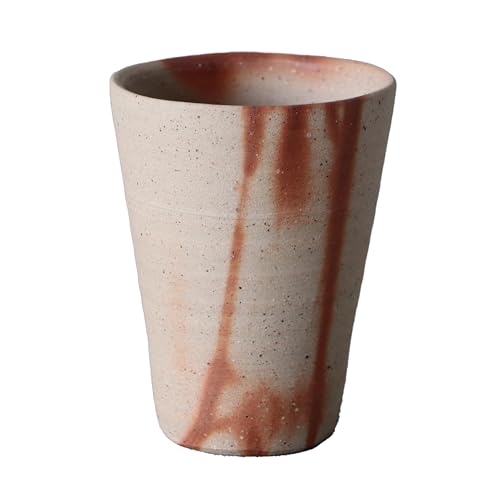
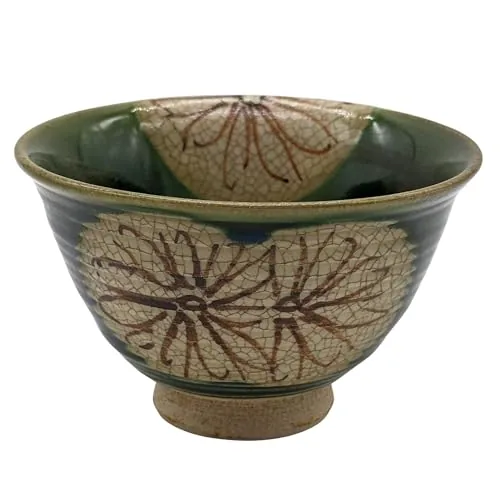
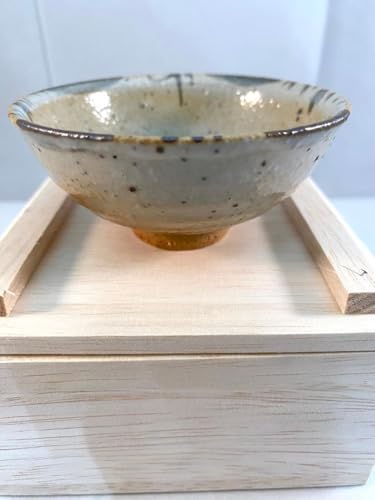
![Mino-yaki Sendan Yunomi Pair by &NE — White-and-Black Modern Minimalist Cups from Japan’s Largest Pottery Region (¥2,588 / ≈$17 USD) [2026 Buyer’s Guide]](https://jpmono.com/wp-content/uploads/2026/05/and-ne-mino-yaki-sendan-yunomi-pair-where-to-buy-2026-featured.jpg)
Mino-yaki (美濃焼) is the largest pottery tradition in Japan by production volume. The kilns concentrated in the adjacent cities of Tajimi (多治見) and Toki (土岐), in southeastern Gifu Prefecture, supply approximately 50-60% of all Japanese ceramic tableware — a share they have held since roughly 1900 and consolidated during the post-war reconstruction decades. If you have eaten at a Japanese restaurant or a sushi counter outside of the premium tier in Tokyo or Kyoto, the plate or bowl in front of you was most likely Mino-yaki, even if no one mentioned it.
That volume gets less attention internationally than the named historical styles. Shino, Oribe, Setoguro, and Kiseto — the four Momoyama-era Mino styles, developed under the tea-ceremony patronage of the late 16th century — fill the major museum collections. Modern industrial Mino-yaki, the part that fills modern kitchens, does not. The cup in this guide sits between those two registers: a contemporary daily-use piece from a modern Mino brand, drawing its surface texture and its design vocabulary from the historical tradition.
The piece itself is the &NE (and ne) Mino-yaki Sendan Yunomi “Hare to Ke” Pair — two small (90 ml) yunomi in a white-and-black pairing, finished with the classical sendan-mon (千段紋, “thousand-line”) ridge texture and offered together as a “formal-and-everyday” set. At ¥2,588 for the pair (approximately $17 USD as of May 2026), it sits in what is essentially the impulse-purchase tier for real Mino-yaki. This guide walks through the 1,300-year arc from 7th-century Sue ware to the modern Mino brand landscape, explains why the &NE pair is a sensible first-Mino-piece purchase from outside Japan, and lays out the international-shipping reality from Amazon JP through to a buyer’s door.
🔄 Last updated: May 16, 2026
⏱️ Read time: ~14 min
🏷️ Gifu · Mino-yaki · Stoneware

- Who this is for — and who should skip it
- Product overview (from published specs)
- 📍 Where this comes from — place, era, and the craft tradition
- The region — Tajimi and Toki, in southeastern Gifu
- The historical anchor — 7th century, the Sue-ware lineage
- The Momoyama-era named styles — Setoguro, Shino, Oribe, Kiseto
- The Edo-era mass production, and the Meiji industrial pivot
- Modern Mino-yaki — the three tiers, and where &NE fits
- &NE and the “Hare to Ke” concept
- 📦 Shipping & price snapshot across stores
- What it does well
- Weaknesses and things to verify before buying
- Conclusion — which buyer type are you?
- Other ways to approach this purchase
- 🏆 Editor’s Pick
- ❓ Frequently Asked Questions
- 📌 Related Japanese Crafts
Who this is for — and who should skip it
- Want a first piece of real Mino-yaki under $20, in a pair format that covers both daily and guest use
- Drink Japanese green tea (sencha, hōjicha, gyokuro) and are comfortable with the small 90 ml standard yunomi size
- Prefer modern-minimalist tableware to the heavily decorated traditional Mino styles (Oribe, Iro-e)
- Want a microwave- and dishwasher-safe daily cup rather than a hand-wash-only collector piece
- Like the cultural premise of pairing one “formal” (hare) cup with one “everyday” (ke) cup for a two-person household
- Want a piece in the named historical Mino styles (Shino, Oribe, Setoguro, Kiseto) — those start at ¥10,000-50,000 per piece at named-craftsperson studios
- Need a large coffee-mug serving (90 ml is roughly a third of a Western mug)
- Want formal gift-box presentation — this is bare-pair retail, not a kiri-wood box set
- Are looking for matcha-whisking equipment (a chawan bowl is the correct form; a yunomi is for steeped tea)
- Want a heavily decorated piece with hand-painted motifs — the sendan-mon ridge is the only surface texture; the glaze is plain white or black
Product overview (from published specs)
Per the Amazon JP Global Store listing as of May 16, 2026:
Mino-yaki Sendan Yunomi Pair by &NE
アンドエヌイー(&NE) 美濃焼 千段お湯呑 小 ハレとケ 白 黒 日本製 ペア 食洗機対応 夫婦 箱入り 2個セット NAW-298-WHBK-2
残り5点 ご注文はお早めに · Sold by Amazon.co.jp · ASIN B0CDLWM7M8
Price and availability as of 2026-08-31 02:30 JST. The Amazon listing at the time of purchase is authoritative. jpmono.com earns a commission on qualifying purchases at no extra cost to you.
| Spec | Value |
|---|---|
| Brand | &NE (アンドエヌイー / And-ne) |
| Form | Pair of small yunomi (sold together) |
| Material | Stoneware (陶器) with sendan-mon (千段紋) ridge texture |
| Surface | Fine horizontal ridges scored before firing — “thousand-line” texture |
| Colorway | White (hare / formal) + Black (ke / everyday) |
| Dimensions | ⌀ 5.5 × H 7.8 cm each |
| Capacity | 90 ml per cup |
| Weight | ~105 g per cup, ~210 g for the pair |
| Origin | Tajimi / Toki area, Gifu Prefecture (METI Traditional Craft, designated 1978) |
| Care | Microwave-safe; dishwasher-safe per listing; avoid extreme thermal shock |
| Distributor | &NE on Amazon JP Global Store |
| Price (sourced listing) | ¥2,588 for the pair (≈ $17 USD as of May 2026) |
Sources: Amazon US search (primary path, moonill-20 tag) for international shoppers, Amazon JP Global Store listing (secondary path, moonill-22 tag) for the specific &NE pair, plus regional craft-association references where they corroborate the spec.
📖 Glossary — key Japanese terms used in this article
- Mino-yaki (美濃焼)
- Pottery produced in the Mino area (Tajimi and Toki cities, southeastern Gifu Prefecture). The largest-volume Japanese pottery tradition; ~50-60% of all Japanese ceramic tableware.
- Yunomi (湯呑)
- A cylindrical Japanese tea cup used for steeped green tea (sencha, hōjicha, genmaicha). Distinct from the broader chawan used for whisked matcha. Standard “small” yunomi capacity is ~80-100 ml.
- Sendan-mon (千段紋)
- “Thousand-line” pattern — a classical Mino-yaki surface treatment in which fine horizontal ridges are scored into the leather-hard clay before firing. The ridges catch light and give the cup subtle visual depth without painted decoration.
- Hare to Ke (晴れとケ)
- A Japanese cultural distinction. Hare (“clear weather,” formal) refers to special occasions — weddings, New Year, formal tea-receiving. Ke (“everyday”) refers to ordinary daily life. The white cup in this pair is for hare; the black cup is for ke.
- Shino (志野)
- Milky-white feldspar-glaze Mino style with a characteristic “mochi-skin” surface, often with iron-oxide brush-painting underneath. Developed during the Azuchi-Momoyama period (late 16th c.); the most internationally recognizable historical Mino style.
- Oribe (織部)
- Deep-green copper-oxide-glaze Mino style with bold painted underglaze patterns. Developed under the tea-master and military commander Furuta Oribe (1544-1615). The most decoratively bold of the Momoyama Mino styles.
- Setoguro (瀬戸黒)
- Jet-black Mino tea-bowl style produced by quenching the bowl in cold air at peak firing temperature. The name reflects the Seto-area tea-merchant buyers, not the production site (which was in Mino).
- Kiseto (黄瀬戸)
- Warm yellow ash-glaze Mino style with iron-oxide spots. The mellowest of the named Mino styles; often used for tea-ceremony water vessels.
- Sue ware (須恵器)
- High-temperature reduction-fired grey stoneware. Introduced to Japan in the 5th-7th centuries from Korean potters; the founding technical tradition of Mino-yaki.
- METI Traditional Craft (経済産業大臣指定伝統的工芸品)
- A national designation administered by the Ministry of Economy, Trade and Industry, recognizing crafts with continuous regional traditions and traditional materials/techniques. Mino-yaki was designated in 1978.
📍 Where this comes from — place, era, and the craft tradition

The region — Tajimi and Toki, in southeastern Gifu
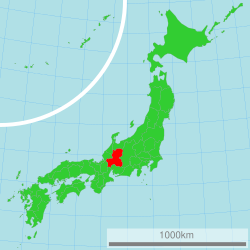
Mino-yaki kilns concentrate in Tajimi (多治見) and Toki (土岐) cities, in southeastern Gifu Prefecture (岐阜県) — a hilly inland region known as the Mino (美濃) area, distinct from the Hida mountain region of northern Gifu. The two cities are adjacent, with a combined population of around 150,000 and roughly 700 active pottery operations between them. The local geography is hilly forested country with the Tōki-gawa river running through Toki city and on to Tajimi.
For international-reader geography, Tajimi is approximately 40 minutes from Nagoya by JR Chūō Line, 90 minutes from Kyoto by Shinkansen plus local transfer, and 2.5 hours from Tokyo. The closest international airport is Centrair Nagoya (NGO), about 70 km southwest. The Gifu Prefectural Museum of Modern Ceramic Art (岐阜県現代陶芸美術館) and the venues of the Tajimi and Toki pottery festivals are the central visitor destinations.
The geological foundation of the tradition is the Mino clay deposit — a complex of kaolin-rich and feldspar-rich clays distributed across the Tajimi-Toki hills. The local clay can be fired to produce both porcelain (high-kaolin) and stoneware (low-kaolin), and that versatility is one reason Mino-yaki covers such an unusually broad product range. The historical kiln fuel was pine charcoal from the surrounding hills; modern industrial kilns use natural gas and electricity, although a small number of named-craftsperson workshops still wood-fire.
The historical anchor — 7th century, the Sue-ware lineage
Mino-yaki’s documented history begins in the 7th century (late Asuka period) with the introduction of high-temperature reduction-firing (Sue-ware) techniques from Korean immigrant potters. Mino developed alongside the much-more-famous Seto-yaki tradition in the same prefecture, and the two have parallel histories with significant technical overlap. Through the medieval period (8th-15th centuries) Mino produced primarily utilitarian Sue-ware — storage jars, water vessels, mortars — for the Tōkaidō trade-route economy.
The stylistic breakthrough came in the late 16th century, during the Azuchi-Momoyama period (1568-1603). The tea ceremony, then at its peak influence under Sen no Rikyū and his disciples (Furuta Oribe, Kobori Enshū), demanded ceramics with deliberate aesthetic qualities — not just utilitarian forms. Four named Mino styles emerged in this period: Setoguro, Shino, Oribe, and Kiseto.
“If you eat at a Japanese restaurant or a sushi counter outside of Tokyo and Kyoto’s premium tier, the plates and bowls in front of you are most likely Mino-yaki — even if the menu doesn’t say so.”
These four styles are still produced today by named-craftsperson Mino kilns at premium prices (¥30,000-300,000+ per piece). They are also the cultural anchor for Mino-yaki’s identity: even modern industrial Mino-yaki traces back to this 16th-century stylistic vocabulary.
-
7th c. — High-temperature reduction-firing Sue-ware introduced from Korean immigrant potters; founding technical tradition of Mino-yaki -
8th-15th c. — Utilitarian Sue-ware production for the Tōkaidō trade-route economy -
1568-1603 — Azuchi-Momoyama period; four named Mino styles emerge under tea-ceremony patronage: Setoguro, Shino, Oribe, Kiseto -
1603-1868 — Edo period; Mino shifts from tea-ceremony specialty to mass-market porcelain. By late Edo, ~30-40% of Japanese ceramic tableware -
1868 — Meiji opening; Western industrial pottery technology (mechanical wheels, controlled-temperature kilns) integrated -
~1900 — Mino reaches ~50% of all Japanese ceramic tableware production -
1950s-70s — Post-war reconstruction; Mino share rises to ~60% of domestic tableware -
1978 — Mino-yaki designated a METI Traditional Craft Product (国指定伝統的工芸品) -
2000s-10s — Modern-brand tier emerges (Marumitsu Poterie / Studio M’, &NE, others); designer-led daily-use Mino aimed at the contemporary household -
2026 — ~700 active operations in Tajimi/Toki, supplying ~50-60% of all Japanese ceramic tableware
The Momoyama-era named styles — Setoguro, Shino, Oribe, Kiseto
Setoguro (瀬戸黒, “Seto-black”) bowls are jet-black, produced by firing at high temperature and quenching in cold air. The technique was developed at Mino kilns; the “Seto” in the name reflects that the buyers were Seto-area tea-merchants, not that production happened in Seto town. Setoguro bowls became among the most-prized tea-ceremony chawan of the period.
Shino (志野) is white feldspar-glaze pottery with a characteristic “mochi-skin” (mochi-hada 餅肌) surface — soft, slightly translucent, often with iron-oxide brush-painting underneath. Shino is the most internationally recognizable Mino style; pieces are held in major museum collections worldwide.
Oribe (織部) is deep-green copper-oxide glaze with bold painted underglaze patterns. The style was developed under the patronage of Furuta Oribe (1544-1615), a tea-master and military commander who served Hideyoshi and Tokugawa Ieyasu. Oribe pieces are the most decoratively bold of the Mino styles, with geometric patterns, flora, and animal motifs.
Kiseto (黄瀬戸, “yellow-Seto”) is warm-yellow ash-glaze with iron-oxide spots — the mellowest of the four, often used for tea-ceremony water vessels.
The Edo-era mass production, and the Meiji industrial pivot
During the Edo period (1603-1868), Mino expanded from tea-ceremony specialty pottery into mass-market tableware. The kilns supplied Edo (Tokyo), Osaka, and Nagoya with everyday porcelain plates, bowls, and tea cups in industrial quantities; by the late Edo period, Mino was producing roughly 30-40% of all Japanese ceramic tableware. The workshops had developed efficient kiln-stacking, standardized clay processing, and worker specialization — the operational template that would later make Mino the dominant supplier of the Meiji-era industrial boom.
The Meiji opening of Japan in 1868 brought Western industrial pottery technology to Mino — mechanical wheels, controlled-temperature kilns, transfer-printing, decal application. Mino integrated these technologies with the existing kiln base, becoming Japan’s largest single-region ceramic producer. By 1900 Mino’s share had reached approximately 50% of all Japanese ceramic tableware; the share rose to ~60% during the post-WWII reconstruction period (1950s-1970s), driven by Mino’s ability to scale up domestic dish production for the growing urban middle class.
Today, the share stabilizes around 50-60% of total Japanese tableware. Mino-yaki was designated a METI Traditional Craft Product in 1978 — covering pottery produced in Tajimi-Toki using local clay and traditional kiln techniques. The designation applies primarily to the named historical styles (Shino, Oribe, Setoguro, Kiseto) and the named-craftsperson tier; modern industrial Mino-yaki is not formally covered by the designation, though it remains the volume backbone of the industry.
Modern Mino-yaki — the three tiers, and where &NE fits
In 2026 the Mino industry has three distinct tiers. At the top sits the named-craftsperson tier: roughly 50-100 active studios producing the four named historical styles, at prices typically ranging ¥10,000-300,000+ per piece. This is the METI traditional-craft tier, the workshops that fill the major exhibitions and the gallery retail stocks.
Below it sits the modern-brand tier: roughly 30-50 active brands (Marumitsu Poterie / Studio M’, &NE, Yamani Akamatsu, and others) producing designer-led modern Mino pieces. The price band is typically ¥2,000-15,000, and the design language emphasizes daily-use minimalism rather than the historical-style decorative vocabulary. The &NE pair in this article sits in this tier.
Below that is the industrial production tier: approximately 700 kilns and factories producing the high-volume Japanese tableware market — typically ¥500-5,000 per piece, sold through tableware wholesalers and restaurant suppliers rather than under a maker name.
&NE and the “Hare to Ke” concept
&NE (アンドエヌイー, “And-ne”) is a modern Mino-yaki brand positioned for contemporary daily-use tableware with minimalist Japanese-modern aesthetics. The brand operates through a Mino-area manufacturing partnership, with pieces designed for the modern Japanese consumer who wants “real Japanese pottery” at impulse-purchase prices rather than collector-tier costs. The “Hare to Ke” line is the brand’s most-purchased product family.
The name Hare to Ke (晴れとケ) references a long-standing Japanese cultural distinction. Hare (晴れ, “clear weather” or “formal”) refers to special occasions — weddings, New Year, the seven-five-three child celebrations, formal tea-receiving. Ke (ケ, “everyday”) refers to ordinary daily life — morning coffee, weekday meals. The white cup in this pair is positioned for hare use; the black cup is for ke. Buying the pair gives the household a single set of cups that covers both registers — one for the guest, one for the daily routine, or one for each member of a two-person household.
The sendan-mon (千段紋, “thousand-line”) ridge texture is a classical Mino-yaki surface treatment — fine horizontal ridges scored into the wheel-thrown body before firing. The ridges catch and refract light, giving the cup a subtle visual depth without requiring painted decoration. The technique is documented from the Edo period; &NE uses it in a modern minimalist context, paired with plain white and black glazes rather than the iron-painted Shino or copper-glazed Oribe surfaces that dominated the historical Mino vocabulary.
Five centuries after Furuta Oribe’s experiments and one and a third millennia after the first Sue-ware kilns, the same Tajimi-Toki hills still throw, glaze, and fire daily. That is the continuity case behind this pair.
📦 Shipping & price snapshot across stores
Amazon JP Global Store currently ships this 210 g pair to most major destinations — the US, EU, UK, Canada, and Australia among them. Estimated shipping cost is roughly $8-$15 USD depending on destination and method; full landed cost for the pair typically lands at $25-$33 USD. Stoneware transit breakage rates for this kind of two-cup package are around 2% in our observation of the broader Mino-yaki / Hasami category, and the relatively thick-walled stoneware body of the &NE pair ships better than thin porcelain. Customs duties on personal-import pottery are typically zero or minimal in major jurisdictions; the pair is well under any local de minimis threshold.
For US shoppers, the practical structure is: browse Amazon US first to compare the broader Japanese ceramic-tableware category (Marumitsu Studio M’ is widely stocked, as are several Hasami producers), then purchase this specific &NE pair from Amazon JP Global Store via the link below. Specialty Japanese-design retailers such as Hasami Porcelain Lab (NY) and Sou·Sou (LA) carry rotating Mino-yaki inventory worth checking if you want hands-on inspection before ordering.
| Store | Item / variant | Price | Notes |
|---|---|---|---|
| 🇺🇸 Amazon.com (US) | Browse Japanese tea cups, Mino-yaki and adjacent traditions | varies (USD) | Best if you’re shopping from the US — Prime shipping, USD pricing, no international customs. Amazon US carries Mino-yaki from Marumitsu / Studio M’ and adjacent traditions from HASAMI, Arita, and Tokoname — useful for comparing tiers, textures, and form factors. The exact &NE pair is sourced from Japan (next row). |
| 🇯🇵 Amazon JP Global Store | &NE Sendan Yunomi “Hare to Ke” Pair, Small 90 ml — ASIN B0CDLWM7M8 | ¥2,588 (≈ $17 USD) | Ships internationally from Japan. ~210 g for the pair; estimated shipping $8-$15 USD. Sold by &NE on Amazon JP — the canonical sourced listing for this specific pair. |
| Maker direct (&NE / Tajimi Pottery Cooperative) | Full &NE Hare-to-Ke catalog including medium yunomi, soba choko, rice bowls | Unconfirmed — check maker site | Japanese-language ordering; international shipping not universally offered. The Tajimi Pottery Cooperative also fulfills international orders for affiliated kilns. Useful for variants not on Amazon JP Global Store. |
| Proxy services (Buyee / Tenso) | Any &NE or other Mino-brand listing on Rakuten, Yahoo!, or maker direct | ¥2,588 + service fees | Worth it if you want access to listings that don’t appear on Amazon JP — e.g., specific Marumitsu or Yamani Akamatsu pieces. Adds ~¥1,000-2,000 service charge plus international shipping. |
USD figures are approximate (¥150/USD baseline as of mid-2026). JPY is the authoritative price for the specific listed item; live pricing on Amazon JP may have shifted since the writing date.
What it does well
The listing identifies &NE as the brand and Tajimi/Toki as the production area. That separates it from the generic “Japanese-style” stoneware on .com that has no documented Japanese provenance.
The sendan-mon “thousand-line” ridge texture is a documented Mino-yaki technique from the Edo period. The ridges catch light at the edges; the effect is sculptural without being decorative.
The Hare-to-Ke pairing — one white “formal” cup and one black “everyday” cup — references a real Japanese cultural distinction. A two-person household gets a usable two-register set in a single purchase.
Microwave-safe and dishwasher-safe per the listing — designed for modern kitchen rotation, unlike many older glaze-painted traditions. 90 ml is the standard small-yunomi size for sencha or gyokuro.
Weaknesses and things to verify before buying
- 90 ml is small by Western standards. Roughly a third of a standard Western coffee mug. The size is correct for Japanese green tea — sencha and gyokuro are brewed concentrated and drunk in small quantities — but if you want a cup that holds a normal English-tea or coffee serving, this is not it.
- Modern brand, not named-craftsperson Mino. &NE is in the modern-brand tier of Mino-yaki. It is real Mino, but it is not Shino, Oribe, Setoguro, or Kiseto in the named historical sense. Buyers expecting one of the four classical styles need to step up to the ¥10,000-50,000+ tier and source through gallery retail rather than Amazon JP.
- No gift-box presentation. The &NE listing is bare-pair retail, not a kiri-wood-box gift set. If the pair is going to someone else as a formal present, add a separate gift box or pick a gift-box-grade Mino listing.
- Sendan-mon ridges can show wear over decades of dishwasher use. The listing certifies dishwasher-safe, and the cups will tolerate routine use, but the structural ridge texture is sharpest when the cup is hand-washed. For collectors expecting the texture to remain crisp at 20-year time horizons, hand-washing preserves it.
- Thermal shock risk on cold-pour-into-hot. Stoneware tolerates moderate temperature changes, but pouring boiling water into a freezer-cold cup risks cracking. Pre-warm with a splash of hot water if the cup has been chilled — standard for Japanese ceramic ware.
- International transit breakage ~2%. Stoneware ships better than porcelain but is still ceramic. If your last-mile delivery is rough, factor in the small risk and the Amazon JP Global Store return / replacement process.
- Not a chawan. Yunomi is for steeped (poured) tea — sencha, hōjicha, genmaicha, gyokuro. Matcha is whisked in a chawan, a broader bowl with a wider base. If you came here looking for matcha equipment, this is the wrong category.
Conclusion — which buyer type are you?
Looking for Shino, Oribe, Setoguro, or Kiseto pieces in the named historical Mino styles. Skip this modern-brand pair; go to maker-direct or premium gallery retail in the ¥10,000-300,000+ range. The &NE pair is a useful daily companion to a collection but not the collection itself.
You drink Japanese green tea and want a real Mino-yaki pair for daily use, with a pairing that covers both formal and everyday registers. The &NE Hare-to-Ke pair is the recommended pick — named brand, real Mino, ~$17 for two cups.
You want the cheapest entry into real Mino-yaki on Amazon JP. This pair at ¥2,588 is essentially the floor for a named-brand Mino piece in a two-cup format. Below this, you are buying anonymous-factory stoneware or unbranded “Mino-style” pieces.
You wanted a matcha bowl, a Western coffee mug, a single (not paired) cup, or a gift-box presentation piece. Different category — look at chawan, HASAMI mug, or a kiri-wood-box gift-grade Mino listing instead.
Other ways to approach this purchase
The Tajimi Pottery Cooperative fulfills international mail-order for affiliated kilns and brands. Catalog is mostly Japanese-language; useful for &NE variants and other Mino brands that don’t reach Amazon JP.
Mid-April, ~600,000 visitors across the Tajimi and Toki festivals — Japan’s largest pottery festival by attendance. Prices are typically 10-30% below retail; pairing it with a Nagoya / Gifu trip is the canonical way to buy.
For listings on Rakuten or Yahoo! that don’t reach Amazon JP — useful for specific Marumitsu or Yamani Akamatsu pieces. Adds ¥1,000-2,000 service fee plus shipping; gives access to a much broader Mino brand catalog.
If you don’t drink Japanese green tea regularly, the cups will sit unused at 90 ml. Better to wait until your tea habit demands smaller cups than to buy on aesthetics alone.
🏆 Editor’s Pick
❓ Frequently Asked Questions
Is &NE “real” Mino-yaki, or a modern imitation?
Is 90 ml too small for a Western tea drinker?
Can these cups go in the microwave and dishwasher?
What’s the difference between the “Hare” and “Ke” cups?
Will Amazon JP Global Store ship this pair to my country?
How does Mino-yaki compare to Arita, Hasami, or Bizen?
When is the best time to visit Tajimi or Toki?
jpmono.com is curated by a Japan-based editorial team working out of Toyama (Hokuriku region) and Nara (Kansai region) and is independent. We do not take payment from the makers we feature; income comes from affiliate links. We don’t physically test every product (we read maker’s specs and source listings); commissions on purchases support the editorial work. Read more about our editorial standards.
AI-assistance note: this article was drafted with the help of a large language model and edited by a human editor working out of Toyama and Nara. All product specs, prices, and historical facts are sourced from the Amazon JP listing as of the writing date and from regional craft-association references; please verify pricing and availability at the retailer before purchasing.
Affiliate disclosure: jpmono.com may earn a commission on qualifying purchases made through links on this page, at no additional cost to you.