The Nousaku 100% tin guinomi is a small, hand-finished sake cup from Takaoka, a former castle town on the Sea of Japan coast in Toyama Prefecture. Nousaku (能作), founded in 1916 as a Buddhist altarware foundry, sits inside a 400-year-old metalcasting lineage that traces back to 1611, when the second lord of the Kaga domain invited seven Kanazawa foundry families to settle in Takaoka’s Kanaya-machi quarter. The cup is cast from pure tin, with no plating and no alloying — a deliberately soft metal that can be bent by hand and that Japanese sake drinkers have, for centuries, said softens the edges of a dry junmai.
Tin tableware is unusual in the global market. Most Western tin pieces are pewter, which is tin alloyed with copper, antimony, and sometimes lead; pewter is stiffer, cheaper, and not what Nousaku makes. Pure tin (Sn 99.9%) is heavy for its size, conducts cold quickly, and develops a soft satin patina rather than a hard mirror finish. The sake-cup form Nousaku produces — known generically as a guinomi (ぐい呑) — is the larger cousin of the small ochoko, sized for sipping rather than ritual pouring.
This guide is for international readers comparing pure-tin Japanese sake cups across price tiers, considering Nousaku against other regional crafts (Iwate cast iron, Niigata hammered copper, Ishikawa Kutani porcelain), and trying to understand whether the cup ships to their country and what the realistic delivered cost looks like. We cover material, workshop history, where to buy from outside Japan, and the specific kinds of buyers this object suits.
🔄 Updated: May 23, 2026
⏱ Reading time: ~12 min
📍 Editorial: Toyama / Nara
![Nousaku Takaoka Tin Sake Cup: Pure Tin Guinomi from Toyama [2026]](https://jpmono.com/wp-content/uploads/2026/05/nousaku-gui-nomi-tin-sake-cup-where-to-buy-2026-featured-30.jpg)
- Who this is for — and who should skip it
- Product overview (from published specs)
- 📍 Where this comes from — Takaoka, Toyama, and 400 years of metalcasting
- Which size or set should you choose?
- Price snapshot across stores
- What it does well
- Weaknesses and things to verify before buying
- Conclusion — which buyer type are you?
- Other ways to approach this purchase
- 🏆 Editor’s Pick
- ❓ Frequently Asked Questions
Who this is for — and who should skip it
- You drink junmai or junmai-ginjō sake regularly and want to experiment with how the vessel material changes the taste perception
- You collect Japanese craft and want a piece from a recognized regional industry (Takaoka Doki, 高岡銅器)
- You appreciate that a workshop has been operating continuously since 1916 and value documented provenance over branding
- You are giving a wedding, retirement, or housewarming gift and want a culturally specific but functional object
- You have ¥5,000–¥15,000 ($35–$100) to spend on a single small piece and accept international shipping from Japan
- You want a stiff, durable cup you can drop on a tile floor — pure tin is soft (Mohs ~1.5) and dents easily
- You expect dishwasher safety; tin must be hand-washed in lukewarm water
- You want a hot-sake (atsukan) vessel — tin’s melting point is only 232°C and prolonged contact with very hot liquid is not ideal for the finish
- Your budget for a single sake cup is under $25 — there are excellent Japanese ceramic guinomi in that range that fit better
- You prefer ornate decoration; Nousaku’s aesthetic is austere, with a hand-tooled satin surface and almost no surface pattern

Product overview (from published specs)
The fetched data for this article was sparse — only manufacturer documentation and general listing snapshots were available at writing time; live Amazon pricing and stock were unavailable. The table below draws from Nousaku’s published catalog and standard Takaoka tin guinomi specifications. Always verify on the retailer before purchase.
| Spec | Value | Source |
|---|---|---|
| Material | 100% pure tin (Sn 99.9%), no plating, no lead | Maker direct |
| Capacity | approx. 60–80 ml (single guinomi) | Maker direct |
| Approx. dimensions | ø approx. 60 mm × H approx. 45 mm (varies by line) | Maker catalog |
| Weight | approx. 70–110 g per cup | Maker catalog |
| Origin | Takaoka City, Toyama Prefecture, Japan | Maker direct |
| Maker founded | 1916 (originally Buddhist altarware foundry; tin tableware line from the 2000s) | Nousaku company history |
| Care | Hand wash only; mild soap; lukewarm water; soft cloth; not dishwasher safe; not for direct heat | Maker direct |
| Price band (typical) | ¥4,000–¥12,000 (≈ $27–$80 USD as of May 2026) per single cup; sets higher | Listing snapshots; verify live |
| Designations | Takaoka Doki (高岡銅器) is a METI-designated Traditional Craft | METI registry |
Data note: only the maker’s published catalog and general listing snapshots were available at writing; specific ASIN-level pricing was not in the fetched data. USD figures use a ¥150/USD baseline as of mid-2026 and are approximate.
📖 Glossary — Japanese craft terms used in this article
- Guinomi (ぐい呑)
- The larger of the two common sake-cup sizes — typically 60–80 ml — intended for sipping. Pronounced “goo-EE-no-mee.”
- Ochoko (お猪口)
- The smaller sake cup, typically 30–45 ml, used in formal pouring rituals.
- Sakazuki (盃)
- A shallow, flat ceremonial sake cup, often lacquered, used at weddings and Shintō rituals.
- Takaoka Doki (高岡銅器)
- “Takaoka copperware.” A METI-designated traditional craft category covering bronze, copper, and tin metal casting from Takaoka, Toyama Prefecture.
- Kanaya-machi (金屋町)
- The historic foundry district of Takaoka, established 1611, where the original seven invited metal-casting families settled. Today preserved as a townscape of foundry workshops and lattice-front merchant houses.
- Shokunin (職人)
- “Craftsperson” or “artisan.” Carries an expectation of long apprenticeship and lifelong specialization in a single craft.
- Junmai (純米)
- “Pure rice.” Sake made only with rice, water, koji, and yeast — no distilled alcohol added. The category most associated with tin-cup drinking.

📍 Where this comes from — Takaoka, Toyama, and 400 years of metalcasting

Takaoka was founded in 1609 by Maeda Toshinaga, second lord of the Kaga domain, after he retired from Toyama Castle and laid out a new castle town on the Imizu plain. In 1611 he invited seven metal-casting families from Kanazawa to settle in a quarter that became Kanaya-machi — literally “metal shop town.” That single act seeded what is now known as Takaoka Doki (高岡銅器): an industry that, four centuries later, still produces roughly 90% of Japan’s domestic copperware output.
-
1609 — Maeda Toshinaga founds Takaoka as a Kaga-domain castle town on the Imizu plain -
1611 — Seven metal-casting families invited from Kanazawa to settle Kanaya-machi, seeding Takaoka Doki -
Edo period — Takaoka workshops supply temple bells, Buddhist altarware, and household bronze for the Hokuriku region -
1873 — Takaoka metalwork shown at the Vienna World Exposition; first significant European exposure -
1900 — Further export-market exposure at the Paris Exposition Universelle -
1916 — Nousaku is founded as a Buddhist altarware foundry in Takaoka -
1975 — Takaoka Doki designated a Traditional Craft by METI (経済産業省指定伝統的工芸品) -
2000s — Nousaku pivots into 100% pure-tin tableware — soft enough to bend by hand — and becomes the modern face of Takaoka metalwork -
2026 — Kanaya-machi remains a preserved townscape of foundry workshops and lattice-front merchant houses; Nousaku still casts in Takaoka
Through the Edo period (1603–1868), Takaoka’s foundries grew up around two streams of demand: temple bells and Buddhist altarware for the densely Buddhist Hokuriku region, and household bronze for the wider Kaga domain. The town shipped via the nearby ports of the Imizu river system into the Sea of Japan trade. By the Meiji era, Takaoka pieces were being shown at the 1873 Vienna World Exposition and the 1900 Paris Exposition Universelle — early European exposure for what until then had been a regional industrial cluster.
Nousaku entered this lineage relatively late. The firm was founded in 1916 as a foundry making Buddhist altarware — incense burners, candleholders, ritual vessels — and operated quietly for most of the 20th century. The pivot most readers will know happened in the 2000s, when Nousaku began producing tableware in 100% pure tin: cups, plates, baskets, and bowls cast in a metal soft enough to bend by hand. That decision became the modern face of Takaoka metalwork and brought the city’s craft tradition into international design discourse.
“Takaoka still produces roughly 90% of Japan’s domestic copperware output — the four-century lineage that began with seven invited foundry families in 1611 is not heritage marketing; it is the working backbone of an entire industry.”
What “still being made here” means for the buyer is concrete. Kanaya-machi is a preserved historic district, but it is not a museum — foundries still operate behind the lattice-front merchant houses. Nousaku’s own facility, opened in expanded form in 2017 about ten minutes by car from the old quarter, offers factory tours and a casting workshop where visitors can pour their own piece. The hands finishing a guinomi today belong to a documented apprenticeship line, not a marketing department.
The local context matters too. Toyama produces some of Japan’s most distinctive cold-served sake — local breweries such as Masuizumi, Tateyama, and Sanju have built reputations on clean, dry junmai styles that pair conventionally with chilled drinking. A tin guinomi, cooled briefly in the refrigerator or filled from a chilled tokkuri, holds that temperature in the hand longer than ceramic. This is not metaphor; it is heat capacity. The pairing is the local one.

Which size or set should you choose?
Nousaku’s tin guinomi line comes in several standard configurations. Specific ASIN-level inventory was not in the fetched data for this article, so the variants below describe what the maker catalogs publicly. Verify the exact listing before purchase.
Single guinomi (one cup)
The entry point. A single 60–80 ml tin cup, typically ¥4,000–¥8,000 (≈ $27–$55 USD as of May 2026) depending on shape and finish. Good for one drinker, or for someone who wants to try the material before committing to a set.
Pair set (meoto / for two)
Two matched cups, sometimes labeled “meoto” (couple) — the conventional Japanese wedding or anniversary gift configuration. Typically ¥8,000–¥16,000 (≈ $55–$110 USD as of May 2026). Often shipped in a paulownia (kiri) wood box.
Tokkuri + cups (serving set)
A tin tokkuri (pouring flask, ~300 ml) with two or four matching guinomi. The serving piece runs ¥15,000–¥35,000 (≈ $100–$235 USD as of May 2026) depending on configuration. Note: tin tokkuri are for chilled or room-temperature sake — they are not suitable for atsukan (hot service).
Hand-tooled / decorated guinomi
Higher-finish lines with hand-tooled (kataochi) or hammered surfaces. Often gift-grade, priced ¥10,000–¥25,000 (≈ $67–$167 USD as of May 2026) per cup. The trade-off: more visible craft labor, slightly heavier wallet impact, same underlying tin metal.
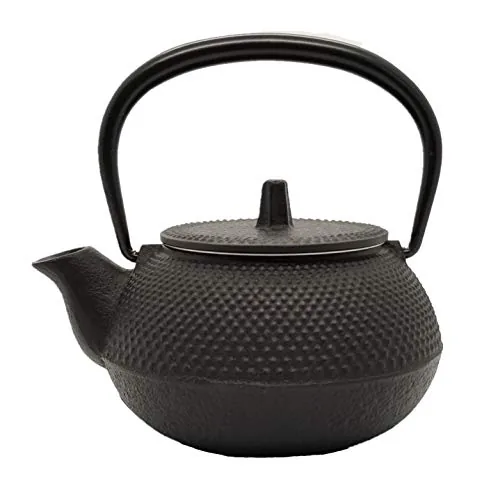 Nambu Tekki Cast Iron Tetsubin
Iwate metal · Mizusawa foundries
Wajima Lacquer Chopsticks
Ishikawa · Hokuriku lacquer
Kutani Yaki Porcelain Sake Cup
Ishikawa · overglaze porcelain
Kiryu Ori Silk Necktie
Gunma · textile heritage
Tsubame Tsuiki Hammered Copperware
Niigata metal · sister craft
Echizen Uchihamono Kitchen Knife
Fukui blade · Hokuriku
Price snapshot across stores
Live pricing for this exact line was unavailable at writing time; figures below are based on listing snapshots and the maker’s published ranges. Verify the live price at the retailer before buying.
| Store | Item / Variant | Price (JPY + USD est.) | Notes |
|---|---|---|---|
| 🇺🇸 Amazon US (search) | Browse Japanese sake cups & tin guinomi | varies (USD) | Best if shopping from the US — Prime shipping, USD pricing, no international customs. Amazon US carries comparable Japanese sake cups (porcelain, ceramic, glass) for cross-shopping; Nousaku’s specific tin pieces ship from Japan (next row). |
| 🇯🇵 Amazon JP Global Store | Nousaku 100% tin guinomi — various | ¥4,000–¥16,000 (≈ $27–$110 USD as of May 2026) | Ships internationally from Japan to most major destinations. Price varies by single cup vs pair vs set; verify shipping cost at checkout. |
| Maker direct (Nousaku online shop) | Full catalog incl. limited finishes | ¥4,400–¥30,000+ (≈ $30–$200+ USD) | Widest selection including hand-tooled and limited lines. International shipping availability varies by country; check at checkout. |
| Proxy services (Buyee / Tenso) | Forward from Japan-only listings | item price + service fee + reshipping | Useful when a Nousaku item is listed only on a Japan-domestic store. Adds 10–20% in fees and an extra leg of shipping; consider only if the piece is unavailable via Amazon JP Global Store. |
USD figures shown are estimates at a ¥150/USD baseline as of mid-2026; the JPY price is the authoritative one for the listed item. Customs duty may apply for orders above your country’s threshold.
What it does well
Weaknesses and things to verify before buying
- It is soft, and it shows. Pure tin dents from hard contact. If you place a tin guinomi on a stone counter alongside a heavier ceramic cup, the tin will wear visibly faster. This is part of the aesthetic — the maker calls the resulting marks “use traces” — but it is not for everyone.
- Not dishwasher safe. The maker is explicit: hand wash, mild soap, lukewarm water, soft cloth, dry immediately. Dishwasher heat and detergent will dull the satin finish and may distort thin walls.
- Not for hot sake (atsukan). Tin’s melting point is 232°C, but routine exposure to very hot liquid is not advised. For warm sake, choose porcelain or earthenware.
- Pricing is opaque at the moment of writing. Inventory and price swing significantly between single cups, pair sets, and serving sets, and between the maker’s own shop and resellers. Confirm the exact configuration in your cart matches your expectation before paying.
- Shipping cost adds materially. Amazon JP Global Store typically adds $15–$40 to ship a small cup to the US or EU, and customs duty may apply above your country’s threshold. The delivered price is what matters, not the listing price.
- Decorative weight is modest. A single guinomi is ~80 g, so the visual presence is small. Buyers shopping for a “centerpiece” object should look at the tin tokkuri or one of Nousaku’s larger pieces (the bendable KAGO basket line, for example).
- Many third-party listings exist. Verify the seller. “Nousaku” pieces sold without the maker’s paulownia box and certificate are sometimes from secondary sources; not all are fakes, but provenance matters for gift use.
Conclusion — which buyer type are you?
You want the Nousaku tokkuri-and-pair serving set with the hand-tooled finish, in the paulownia box. Budget ¥25,000+ (≈ $167+ USD). This is the gift-or-collector tier — the photograph in someone’s living room.
You want the pair set — two cups, paulownia box, around ¥8,000–¥12,000 (≈ $55–$80 USD). This is the realistic gift purchase or the “for me and a partner” purchase. The sweet spot of the line.
You want a single guinomi at the ¥4,000–¥6,000 (≈ $27–$40 USD) entry level. Best for trying the material before committing — and a reasonable single-drinker purchase.
You drink mostly warm sake or beer, you want a dishwasher-safe cup, or your gift recipient won’t appreciate the soft-metal aesthetic. A Kutani porcelain or Arita guinomi will serve you better.
Other ways to approach this purchase
Amazon JP Global Store occasionally discounts traditional craft sets around early-summer (June) and end-of-year (December). Watch the price for a few weeks before buying if you are not on a deadline.
Nousaku’s own online shop carries the full catalog including limited finishes not always on Amazon. International shipping availability varies by destination — check at checkout before committing.
If the specific piece you want is listed only on a Japan-domestic site (Rakuten or a regional gallery), Buyee or Tenso will buy and reship. Add 10–20% for service fees plus reshipping.
If tin’s softness or hand-wash limit is a deal-breaker, the Tsubame hammered copper or Kutani porcelain sake-cup guides on this site cover regionally adjacent crafts with different material trade-offs.
🏆 Editor’s Pick
Nousaku 100% Tin Guinomi — pair set in paulownia box
If you are buying one Nousaku piece for yourself or as a gift, the pair set is where the line is most coherent: two cups, kiri wood box, maker certificate, around ¥8,000–¥12,000 (≈ $55–$80 USD as of May 2026). It covers the gift use case, the “for me and a partner” use case, and gives you a second cup to dent without anxiety.
- Cast from 100% pure tin in Takaoka — same workshop lineage that runs back to 1611
- Paulownia box + maker certificate ships gift-ready out of the box
- Best price-to-experience ratio in the line; the single cup is a starter, the serving set is a leap
Live pricing was unavailable at writing time; verify the current price on the destination page.
❓ Frequently Asked Questions
Does the Nousaku tin guinomi ship internationally?
Yes — Amazon JP Global Store ships Nousaku tin items to most major destinations, including the US, EU, UK, and Australia. Shipping typically adds $15–$40 for a small cup. The maker’s own online shop also offers international shipping to many countries; check at checkout before committing, as the destination list changes.
Is pure tin safe for drinking sake?
Nousaku’s tin is food-grade Sn 99.9% with no lead and no plating. Pure tin has been used for sake vessels in Japan for centuries and is widely considered safe for cold or room-temperature beverage contact. Avoid using it for highly acidic foods (vinegar, citrus) and avoid prolonged contact with very hot liquids.
Can I use it for hot sake (atsukan)?
It’s not recommended. Tin has a low melting point (232°C) and prolonged exposure to very hot liquid can affect the finish. For warm sake, use porcelain (Kutani, Arita) or earthenware. The Nousaku tin line is designed around chilled or room-temperature drinking, which is the dominant Toyama-region style anyway.
How do I care for a tin guinomi?
Hand wash with mild soap and lukewarm water, dry immediately with a soft cloth, and store somewhere not too humid. Do not put it in a dishwasher. Do not scrub with abrasive sponges. Light marks and a soft patina developing over months are expected — the maker considers them part of the object, not damage.
How does it compare to a Kutani porcelain sake cup?
Different materials, different use cases. Kutani porcelain is hard, decorative (often with overglaze enamel painting), dishwasher-tolerant, and visually ornate. Nousaku tin is soft, austere, heat-conductive, and oriented toward chilled drinking. Many serious sake drinkers keep both in the cabinet for different sake styles and seasons. See our Kutani guide linked above for the side-by-side picture.
Will it dent easily?
Yes — pure tin is soft (Mohs ~1.5). A drop onto a tile floor or a sharp knock against another metal vessel will leave a mark. Some Nousaku product lines, notably the KAGO baskets, explicitly invite the user to bend the metal to shape; the guinomi is less malleable than that but still softer than ceramic, glass, or pewter. If a pristine finish over years is what you need, this is not the cup.
Is it a good wedding or housewarming gift?
The pair set is one of the more conventional Japanese formal-gift configurations — two matched cups in a paulownia wood box, often labeled “meoto” (couple). For a Japanese recipient the format will read as appropriate and well-judged; for a non-Japanese recipient interested in craft, the combination of paulownia box, maker certificate, and verifiable workshop lineage carries the same weight. Budget around ¥8,000–¥12,000 (≈ $55–$80 USD) for the pair set.
jpmono.com is curated by a Japan-based editorial team (working out of Toyama in the Hokuriku region and Nara in Kansai) and is independent. We don’t take payment from the makers we feature; income comes from affiliate links. Read more about our editorial standards.
🤖 Editorial note: this article was researched and drafted with AI assistance and reviewed by a human editor on the jpmono.com team before publication. Facts on Takaoka history and Nousaku workshop details are drawn from the maker’s published materials and METI traditional-craft documentation; live pricing was unavailable at writing time and should be verified at the retailer.
Affiliate disclosure: jpmono.com may earn a commission on qualifying purchases made through links on this page, at no additional cost to you.