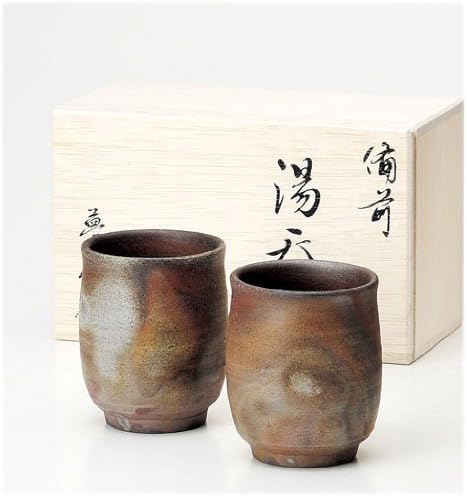
![Shussai Kiln Shussai Blue Mug: Izumo Mingei Pottery, Shimane [2026]](https://jpmono.com/wp-content/uploads/2026/05/shussai-gama-shussai-blue-mug-where-to-buy-2026-featured.jpg)
The Shussai Blue mug is a hand-thrown stoneware cup from Shussai Kiln (出西窯, Shussai-gama), a folk-craft pottery founded in 1947 in Hikawa, Izumo, in Shimane Prefecture on the Sea of Japan coast. Its defining feature is the glaze the kiln is known for: a deep cobalt called Shussai Blue, made from gosu (呉須, cobalt pigment) laid over local clay and fired in a climbing kiln.
For English-speaking readers, this pottery carries unusual weight. Shussai Kiln grew up inside the mingei (民藝, “folk craft”) movement, and in its early years it was advised by the four figures most associated with that movement abroad — Yanagi Sōetsu, Bernard Leach, Hamada Shōji, and Kawai Kanjirō. Anyone who knows Leach’s name from the St Ives pottery in England is already, indirectly, familiar with the lineage behind this cup.
This guide is written for international buyers deciding whether the mug is worth sourcing from Japan, and how to do it without guesswork. We cover what the maker and the form actually are, the place and history behind the glaze, how it compares to sister mingei kilns, where it can be bought from outside Japan, and — honestly — where the available data is thin. Based on the listing data we could retrieve, US availability is limited and pricing was not published at the time of writing, so we flag that plainly rather than paper over it.
🔄 Last updated:
⏱ About 9 min read
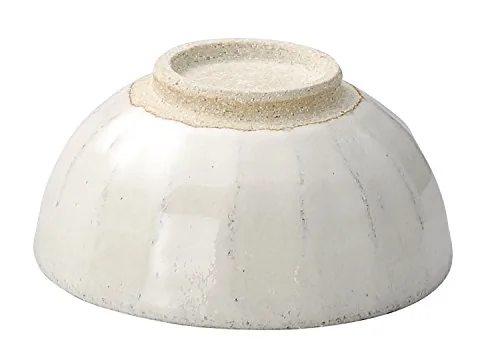
![Shussai Kiln Shussai Blue Mug: Izumo Mingei Pottery, Shimane [2026]](https://m.media-amazon.com/images/I/41-DW1Z5udL._SL500_.jpg)
- Who this is for — and who should skip it
- Product overview (from published specs)
- Where this comes from — place, era, and the craft tradition
- Price snapshot across stores
- 📦 Shipping & where to buy from outside Japan
- What it does well
- Weaknesses and things to verify before buying
- Conclusion — which buyer type are you?
- Other ways to approach this purchase
- 🏆 Editor’s Pick
- ❓ Frequently Asked Questions
Who this is for — and who should skip it
- Want a daily-use cup with a documented folk-craft lineage, not mass-market tableware
- Already know and like the mingei aesthetic — Leach, Hamada, the Yanagi school
- Are comfortable buying from Japan and waiting for international shipping
- Appreciate that hand-thrown pieces vary slightly from one to the next
- Value a deep cobalt glaze over decorated or patterned surfaces
- Need a guaranteed price and stock today — listing data here was incomplete
- Want exact, certified dimensions or capacity before committing
- Expect identical, machine-uniform mugs in a matched set
- Are unwilling to pay international shipping or possible customs duties
- Prefer dishwasher/microwave guarantees printed by the maker (unconfirmed here)

Product overview (from published specs)
The table below collects what could be verified from the maker context and the source listing. Where a value was not present in the data we retrieved, it is marked Unconfirmed rather than estimated. Only the Amazon JP listing reference was available, and live pricing was not published in that snapshot, so it may have shifted since the writing date.
| Attribute | Detail |
|---|---|
| Maker | Shussai Kiln (出西窯, Shussai-gama), founded 1947 |
| Origin | Hikawa, Izumo, Shimane Prefecture (San’in coast) |
| Item type | Mug / free cup (hand-thrown stoneware) |
| Body | Local clay stoneware, wheel-thrown |
| Glaze | “Shussai Blue” — gosu (cobalt) glaze, the kiln’s signature |
| Firing | Climbing kiln (noborigama) |
| Capacity / dimensions | Unconfirmed — check the retailer listing |
| Weight | Unconfirmed — check the retailer listing |
| Microwave / dishwasher | Unconfirmed — check manufacturer site |
| Reference ASIN | B0H21Q8FXP (Amazon JP Global Store listing) |
| Price | Unavailable at time of writing — verify at retailer |
Sources: Amazon US search (primary, moonill-20) + Amazon JP Global Store (secondary, moonill-22, sourced listing) + maker context. Spec fields not present in the retrieved data are marked Unconfirmed; nothing here is estimated from outside the data.
📖 Glossary — Japanese craft terms used here
mingei (民藝) — “folk craft.” A movement and aesthetic, articulated by Yanagi Sōetsu in the mid-1920s, that valued the beauty of ordinary, anonymous, handmade objects made for daily use.
gosu (呉須) — a cobalt-bearing pigment used as a blue glaze or underglaze in East Asian ceramics; the basis of Shussai Blue.
noborigama (登り窯) — a “climbing kiln” built in stepped chambers up a slope, wood-fired, traditional across many Japanese pottery districts.
yunomi (湯呑) — a handle-less Japanese tea cup, the close cousin of the mug/free-cup form covered here.
Kamiarizuki (神在月) — “the month when the gods are present,” the Izumo name for the tenth lunar month, when the deities of Japan are traditionally said to gather at Izumo Taisha.

Where this comes from — place, era, and the craft tradition

Izumo sits on the San’in coast — the Sea of Japan side of the Chūgoku region, at the western end of Honshū. It is geographically remote from the modern political center: Tokyo lies far to the east, and the old Kansai capitals of Nara and Kyoto are well to the southeast. That distance matters, because Izumo’s cultural weight is older than that political center entirely.
This is one of Japan’s mythic former heartlands. Izumo is home to Izumo Taisha, one of the oldest and most important Shintō shrines, and to the Kamiarizuki legend: in the tenth lunar month, when the rest of Japan calls the month Kannazuki (“the month without gods”), Izumo alone calls it Kamiarizuki — the month with gods — because the deities are traditionally said to gather here. This is folk-traditional belief, not historical record, but it tells you how the San’in coast has always carried a pre-Yamato, deep-time cultural resonance.
- Traditionally — Izumo Taisha and the Kamiarizuki legend mark the San’in coast as an ancient ritual center (folk-traditional).
- 733 — The Izumo no Kuni Fudoki, one of the few surviving ancient provincial gazetteers, is compiled.
- mid-1920s — Yanagi Sōetsu coins the term mingei, framing the beauty of everyday handmade objects.
- 1947 — Five young local potters found Shussai Kiln in Hikawa, Izumo.
- Early years — Yanagi Sōetsu, Bernard Leach, Hamada Shōji, and Kawai Kanjirō advise the new kiln.
- Today (2026) — The climbing-kiln firing continues, and Shussai Blue remains the kiln’s signature glaze.
Shussai Kiln itself is a postwar story, not an ancient one — and the data is honest about that. It was founded in 1947 by five young men from the area who set out to make useful pottery rather than art-objects. What turned a small local kiln into something with international recognition was its proximity to the mingei movement: Yanagi Sōetsu, Bernard Leach, Hamada Shōji, and Kawai Kanjirō all advised the kiln in its formative years.
The continuity case is straightforward. The kiln still throws by hand and still fires in a climbing kiln, and Shussai Blue — the gosu cobalt glaze over local clay — remains the form most associated with it. For an English-speaking buyer, the through-line to Bernard Leach’s St Ives pottery is the real hook: this is a living kiln inside the same conversation about everyday beauty that Leach carried between Japan and Britain.
“Founded in 1947, Shussai Kiln is younger than the mingei movement that shaped it — but its cobalt glaze sits inside a conversation about everyday beauty that runs from Izumo to Bernard Leach’s St Ives.”

Price snapshot across stores
Pricing for the specific listing was not published in the data retrieved at the time of writing, so the JPY/USD cells below say so rather than show a fabricated figure. Prices and stock fluctuate — verify at the retailer before purchasing.
| Store | Item / variant | Price | Notes |
|---|---|---|---|
| 🇺🇸 Amazon.com (US) | Browse Japanese mingei pottery & stoneware mugs | varies (USD) | Best if you’re shopping from the US — Prime shipping, USD pricing, no international customs. Amazon US carries Japanese stoneware mugs and tea ware from various makers; this exact Shussai Kiln piece ships from Japan (next row). |
| 🇯🇵 Amazon JP Global Store | Shussai Blue mug / free cup (ASIN B0H21Q8FXP) | Unavailable at time of writing | Ships internationally from Japan; this is the sourced listing for the exact piece. Confirm the live price on the listing. |
| Maker direct | Shussai Kiln range, Hikawa (Izumo) | Unconfirmed | The kiln’s own showroom/shop; international shipping is not confirmed — contact the maker to check. |
| Proxy services (Buyee / Tenso) | Japan-only listings | varies + proxy fee | Use when a piece is only on Japan-domestic shops; adds a forwarding fee plus international shipping on top of item price. |
USD figures, where shown elsewhere, are approximate (¥150/USD baseline as of mid-2026); the JPY price on the listing is the authoritative one. No price was fabricated where data was missing.
📦 Shipping & where to buy from outside Japan
The realistic path for most international readers is the Amazon JP Global Store listing, which generally ships to major destinations from Japan. US availability on amazon.com appears thin — the exact piece is unlikely to be individually listed there — so the US search link is best treated as a way to compare Japanese stoneware mugs broadly, with the JP Global Store as the route to this specific cup.
What it does well
Weaknesses and things to verify before buying
- Price was not published in the data we retrieved. Treat any figure you see as live-only and confirm it on the listing before ordering.
- Capacity, dimensions, and weight are unconfirmed. If you need a specific size, ask the seller or check the maker’s spec — do not assume.
- Microwave / dishwasher safety is unconfirmed. Many wood-fired stoneware glazes tolerate both, but the maker did not state it in the data here; hand-washing is the safe default.
- Unit-to-unit variation is real. Hand-thrown, climbing-kiln pieces are not identical; a matched set is unlikely.
- US availability is thin. The exact piece likely runs through Amazon JP Global Store rather than amazon.com, so expect international shipping and possible duties.
- Product photography was missing from the source. Confirm the actual colorway and form on the retailer page rather than relying on the representation in this guide.
Conclusion — which buyer type are you?
Other ways to approach this purchase
🏆 Editor’s Pick
❓ Frequently Asked Questions
Where is the Shussai Blue mug made?
What is “Shussai Blue”?
Can I buy it from outside Japan?
Is the mug microwave- and dishwasher-safe?
How is Shussai Kiln connected to Bernard Leach and the mingei movement?
How should I care for the mug?
Is each mug identical?
jpmono.com is curated by a Japan-based editorial team (working out of Toyama in the Hokuriku region and Nara in Kansai) and is independent. We don’t take payment from the makers we feature; income comes from affiliate links. We read maker context and source listings rather than physically testing every product. Read more about our editorial standards.
This article was prepared with AI assistance and reviewed against the source data available at the time of writing. Where listing data was incomplete (notably price and exact dimensions), the gaps are flagged rather than filled with estimates.
Affiliate disclosure: jpmono.com may earn a commission on qualifying purchases made through links on this page, at no additional cost to you.