![Otani-yaki Tumbler: Tokushima Indigo-Vat Stoneware Buying Guide [2026]](https://jpmono.com/wp-content/uploads/2026/05/japan-map-regions-and-prefectures-800x1050.png)
Otani-yaki (大谷焼, “Otani ware”) is the stoneware of Naruto, on the eastern edge of Tokushima Prefecture in Shikoku. It is heavy, iron-rich pottery, finished in warm, earthy ash and iron glazes, and the local kilns have fired it since 1780. A tumbler or free cup in this ware is, in effect, a hand-sized version of the giant vessels the district built its name on.
What makes Otani-yaki notable to readers outside Japan is not a delicate tea-ceremony pedigree but the opposite — scale and utility. Naruto’s potters became famous for the neronashiki, an enormous jar thrown on a wheel that one potter spins by foot while lying on their back, with a second potter shaping the clay above. Those jars were used across Tokushima as aigame, the storage vats for Awa indigo dye. The cup you can buy today carries the same robust, slightly coarse character, scaled down for daily use.
This guide is for readers deciding whether an Otani-yaki tumbler is the right Japanese stoneware to buy, and how to actually get one shipped abroad. We cover what the ware is, who makes it, how it compares to other Japanese stoneware lines we have written about, and the honest gaps in the information — because prices for individual pieces can vary.
🔄 Last updated: May 26, 2026
⏱️ Read time: about 9 minutes
Who this is for — and who should skip it
- Want everyday stoneware with weight and a hand-made surface, not thin factory porcelain
- Like warm, earthy ash and iron glazes over bright decorative patterns
- Are drawn to the indigo-vat backstory and Tokushima’s craft economy
- Are comfortable with the dimensions and offer varying by seller
- Already collect Japanese stoneware (Bizen, Echizen, Shigaraki, Tanba) and want a regional counterpart
- Want a precisely repeatable product — hand-thrown ware varies piece to piece
- Need confirmed capacity, weight, and dishwasher or microwave ratings before buying
- Expect the offer to vary
- Prefer ultra-light or translucent cups for hot drinks
- Cannot accommodate international shipping time or possible customs duties
Product overview (from published specs)
Otani-yaki Naruto stoneware varies by piece and form. The table below states only the confirmed characteristics of this craft and leaves details such as price, weight, and capacity unconfirmed rather than guessing.
| Attribute | Detail (per available data) |
|---|---|
| Ware | Otani-yaki (大谷焼) stoneware |
| Item type | Tumbler / free cup, daily-use size |
| Material & finish | Iron-rich clay; warm ash and iron glaze |
| Origin | Naruto, Tokushima Prefecture, Shikoku |
| Maker | A local Naruto kiln (for example Tamura Touen or Yano Touen) — confirm with the seller |
| Capacity / weight / dimensions | Not specified |
| Microwave / dishwasher | Not specified — treat as hand-wash unless the maker says otherwise |
📖 Glossary — Japanese craft terms used here
Otani-yaki (大谷焼, “Otani ware”) — the stoneware tradition of the Otani district of Naruto, Tokushima, fired since 1780.
Neronashiki (寝轆轤, “lying-down wheel”) — the technique of throwing very large jars on a huge wheel that one potter spins by foot while lying on their back, with a second potter shaping the clay.
Aigame (藍甕, “indigo vat”) — the large storage jars used to hold and ferment indigo dye; Otani-yaki jars served this role across Tokushima.
Awa-ai / Awa aizome (阿波藍 / 阿波藍染) — Awa indigo and the indigo-dyeing tradition of the old Awa (Tokushima) domain.
Yunomi (湯のみ) — a Japanese tea cup without a handle; a free cup is a slightly taller, general-purpose version.
Ash glaze (灰釉, haiyū) — glaze made using wood or plant ash, producing warm, earthy, often uneven tones.
Touen / gama (陶苑 / 窯) — words for a pottery workshop or kiln, seen in maker names such as Tamura Touen.
Traditional Craft of Japan (伝統的工芸品) — a designation for crafts that meet defined heritage and production criteria.
Where this comes from

Tokushima occupies the southeast of Shikoku, the smallest of Japan’s four main islands. Naruto is at its eastern edge, where the Naruto Strait separates Shikoku from Awaji Island and, beyond it, the Kansai mainland. The strait is best known for its tidal whirlpools, and the narrow crossing has long tied Tokushima’s economy to the larger markets of Osaka and the Inland Sea.
The old name for the province was Awa, governed in the Edo period by the Hachisuka family of the Tokushima domain. Awa’s defining industry was indigo. Awa-ai — Awa indigo — was farmed, fermented, and traded out of Tokushima on a scale that supplied much of the country, and that dye economy is the soil Otani-yaki grew in.
The pottery itself is traditionally dated to 1780, in the An’ei era, when a wandering potter is said to have fired the first kiln at Otani. The domain later backed local production, and the kilns specialized in something most Japanese potteries did not attempt: enormous vessels.
-
1603–1868 — Edo period: the Awa (Tokushima) domain’s Awa-ai indigo trade flourishes under Hachisuka rule (era dates are national; the indigo boom is Tokushima’s defining industry). -
1780 (An’ei era) — A wandering potter fires the first Otani kiln in Naruto; the domain later backs local production. -
Late Edo onward — Naruto kilns develop the giant neronashiki jar, used across Tokushima as aigame, the storage vats for Awa indigo dye. -
Modern era — Otani-yaki is designated a Traditional Craft of Japan (designation year not specified in available sources). -
2026 — Naruto kilns (for example Tamura Touen and Yano Touen) continue the line, producing tumblers, yunomi, and beer cups alongside the large traditional jars.
The signature piece is the neronashiki jar. To throw a vessel that large, one potter lies on their back and spins the huge wheel with their feet while a second potter, standing above, shapes the rising clay. The technique exists for one reason: to build pots big enough to matter at industrial scale.
Those jars became the aigame, the indigo-dye storage vats that the Awa indigo trade depended on. In other words, the kiln did not grow up serving tea houses; it grew up serving the dye houses. That is the direct line connecting Otani-yaki to Awa Aizome, and it is why a Tokushima indigo textile and a Tokushima stoneware cup belong on the same shelf.
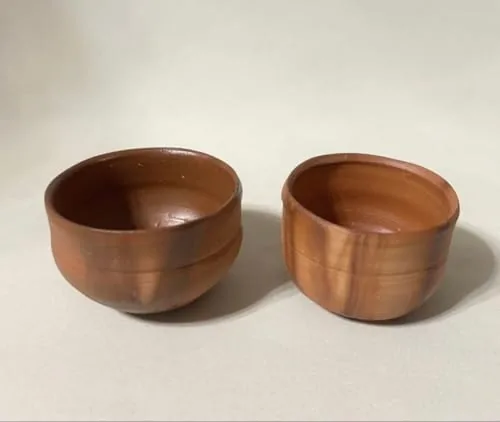
The clay is iron-rich, and the wares wear warm, earthy ash and iron glazes. Smaller daily pieces — tumblers, yunomi, beer cups — carry the same robust, slightly coarse character as the historic jars. The craft is a designated Traditional Craft of Japan, and Naruto kilns continue the line today.
Buying options
No fixed price applies to every Otani-yaki Naruto stoneware piece. JPY is the usual reference currency for ceramics from Tokushima, while any USD figures elsewhere on jpmono are approximate estimates at a ¥150/USD baseline. Compare current offers by maker, form, and finish.
| Store | Item / variant | Price | Notes |
|---|---|---|---|
| 🇺🇸 Amazon.com (US) | Browse Japanese stoneware tumblers & yunomi | varies (USD) | Best if you are shopping from the US — Prime shipping, USD pricing, no international customs. Amazon US carries Japanese stoneware cups from various kilns, useful for comparing form and glaze tiers. The specific Otani-yaki piece is sourced from Japan (next row). |
| 🇯🇵 Amazon JP Global Store | Otani-yaki tumbler / free cup | — | The selected Japanese source. Ships internationally from Japan to most major destinations. Confirm capacity and shipping at checkout. |
| Maker direct | Naruto kiln (e.g. Tamura Touen / Yano Touen) | Unconfirmed — check kiln site | Individual Naruto kilns sell directly; international shipping varies by workshop and is often Japan-domestic only. |
| Proxy services (Buyee / Tenso) | Forwarding from JP shops that do not ship abroad | Item price + service fee + forwarding | Useful when a kiln or marketplace is Japan-only. Adds a handling fee and a second shipping leg; budget for customs. |
What it does well
Weaknesses and things to verify before buying
- Offer details may vary. Confirm the current terms before committing.
- Capacity and proportions are unconfirmed. If size matters for your use, review the maker’s description before buying.
- Care ratings unspecified. Treat the piece as hand-wash and avoid the microwave unless the maker says otherwise.
- Piece-to-piece variation. Hand-thrown stoneware varies in glaze and form; the cup you receive will not match a catalog photo exactly.
- Maker not pinned down. The specific Naruto kiln is given only as an example (Tamura Touen / Yano Touen). Confirm the actual maker if provenance matters.
- International shipping and customs. Amazon JP Global Store ships many items abroad, but shipping cost, delivery time, and possible customs duties apply and vary by destination.
Conclusion — which buyer type are you?
Other ways to approach this purchase
❓ Frequently Asked Questions
What is Otani-yaki, and what makes it distinct?
How is it connected to Awa indigo?
Does Amazon JP ship an Otani-yaki tumbler internationally?
How much does it cost?
Is it dishwasher and microwave safe?
How can I tell it is genuine Otani-yaki?
How does it compare to Bizen, Echizen, or Shigaraki?
jpmono.com is curated by a Japan-based editorial team (working out of Toyama in the Hokuriku region and Nara in Kansai) and is independent. We do not take payment from the makers we feature; income comes from affiliate links. We do not physically test every product — we read maker specifications and regional sources — and we flag where information is thin.
This article was prepared with AI assistance and editorial review. Specifications and prices should be verified with the maker or retailer; where information was unavailable, gaps are marked rather than estimated.
Affiliate disclosure: jpmono.com may earn a commission on qualifying purchases made through links on this page, at no additional cost to you.