![Inkyuzan-yaki Ash-Glaze Tokkuri Sake Flask: Tottori’s Oldest Kiln, Where to Buy [2026]](https://jpmono.com/wp-content/uploads/2026/05/japan-map-regions-and-prefectures-800x1050.png)
A tokkuri (徳利, “sake flask”) is one of the quietest objects on a Japanese table — a small bottle that warms in a bath of hot water, then pours a measured cup. The one covered here comes from Inkyuzan-yaki (因久山焼), the oldest surviving kiln in Tottori Prefecture, founded around 1764 in the village of Yoro, in what is today Yazu (八頭) town in the rural Inaba region of the Sanin coast.
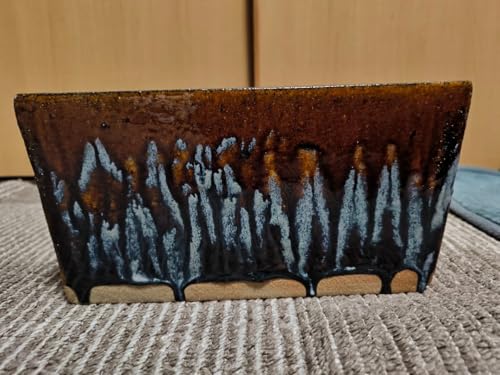
What sets this ware apart is not decoration but glaze chemistry. Inkyuzan potters work in soft wood-ash glaze (haiyu), straw-ash whites (wara-bai), and the blue-purple namako (“sea-cucumber”) glaze that pools and runs in the heat of a noborigama climbing kiln. Fed by local Inaba clay and sustained for generations under the patronage of the Ikeda clan that ruled the Tottori domain, the kiln makes pieces that feel earthy and unhurried — a deliberate contrast to the bright porcelain centers further west.
This guide is for international readers who want a place-rooted sake vessel rather than a generic gift-shop bottle. It covers how ash and namako glazes are used on stoneware, how a stoneware tokkuri compares with the guinomi cups and katakuchi pourers we have reviewed before, where the ware sits in Tottori’s history, and the honest caveats — variable handmade dimensions and international shipping — to weigh before buying.
🔄 Last updated: June 22, 2026
⏱️ Read time: ~11 min
Who this is for — and who should skip it
- Drink warm sake (kan) and want a flask that holds heat in stoneware rather than glass
- Prefer a quiet, earthy ash or namako glaze over painted or gilded decoration
- Value a vessel tied to a specific kiln and region, not a generic mass-market bottle
- Already own guinomi cups and want a matching tokkuri to pour from
- Are comfortable with the small dimensional and color variation of a hand-thrown piece
- Want a precisely repeatable, machine-uniform product with guaranteed identical units
- Only ever drink chilled or room-temperature sake and have no use for a warming flask
- Need a dishwasher- and microwave-certified item with formal international labeling
- Expect bright white porcelain or hand-painted blue-and-white motifs
- Are shopping for the lowest possible price rather than a kiln-specific piece
Product overview (from published specs)
The data available for Inkyuzan-yaki pieces varies by retailer. Live pricing and detailed dimension sheets for the current kiln output were not all returned at the time of writing, and may have shifted since. The table below combines the documented kiln characteristics with the general specs of an ash-glaze tokkuri; where a value is not confirmed, it is marked rather than guessed.
| Attribute | Detail (per available data) |
|---|---|
| Item | Tokkuri (sake flask), hand-thrown stoneware |
| Kiln / origin | Inkyuzan-yaki, Yazu (Yoro), Inaba region, Tottori Prefecture |
| Material | Local Inaba clay stoneware (tōki), glazed |
| Glaze | Wood-ash (haiyu) / straw-ash white (wara-bai) / blue-purple namako — varies by piece |
| Firing | Traditional noborigama climbing kiln |
| Capacity / dimensions | Handmade; varies by piece |
| Price | Confirm with the maker or seller |
The craft background follows the documented Inkyuzan-yaki tradition, including ash and namako glaze characteristics. Current prices can change, and no maker-direct price sheet was available when this guide was prepared.
📖 Glossary — key terms used in this guide
- tokkuri (徳利) — a small sake flask, traditionally warmed in hot water and used to pour into cups.
- guinomi (ぐい呑み) — a small, slightly deep sake cup, larger than an ochoko.
- haiyu (灰釉) — wood-ash glaze, one of the oldest Japanese glaze types, giving soft greens, ambers, and grays.
- wara-bai (藁灰) — straw-ash, used to produce milky, semi-opaque white glaze effects.
- namako (海鼠) — “sea-cucumber” glaze, a blue-and-purple streaked overglaze prized in Sanin and Tohoku folk kilns.
- noborigama (登り窯) — a multi-chambered “climbing kiln” built on a slope and fired with wood.
- tōki (陶器) — stoneware/earthenware, as distinct from jiki (porcelain).
- kan (燗) — warmed sake; nurukan is gently warm, atsukan is hot.
- Inaba (因幡) — the historic eastern province of present-day Tottori; the “In” in Inkyuzan.
Other Japanese sake vessels and Sanin/regional crafts we have covered — useful for comparing glaze, form, and region before you decide.
Same prefecture — indigo cotton runner
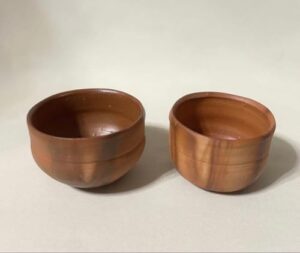 Bizen-yaki guinomi
Unglazed stoneware sake cup to pair
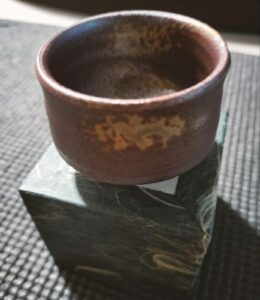 Tamba Tachikui guinomi
Six-old-kiln cup, ash-glaze cousin
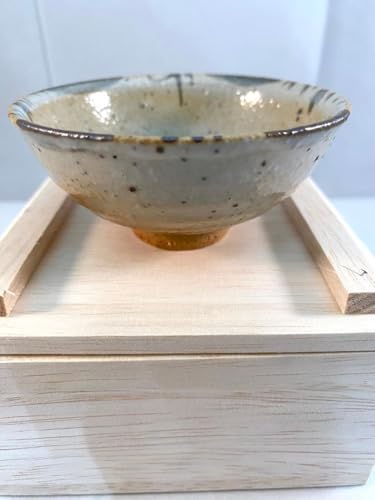 Karatsu e-garatsu cup
Painted Kyushu stoneware contrast
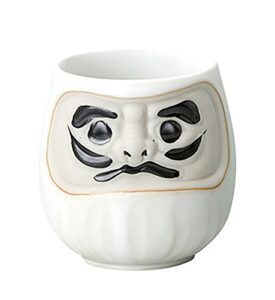 Shiraiwa namako yunomi
The same namako glaze, Akita kiln
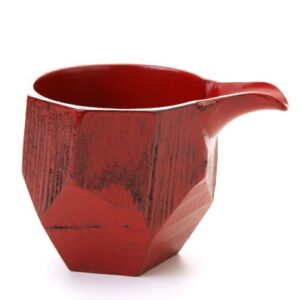 Tosa katakuchi pourer
Lacquer pourer — an alternate to a flask
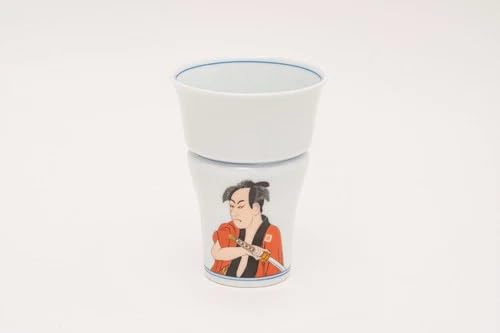 Otani-yaki tumbler
Large Tokushima stoneware vessel
Buying options compared
No current price is quoted here. Prices and shipping can change, so review the purchase terms before buying.
| Store | Item / Variant | Price (JPY + USD est.) | Notes |
|---|---|---|---|
| 🇺🇸 Amazon US (search) | Browse Japanese sake tokkuri & stoneware cups | varies (USD) | Best if you’re shopping from the US — Prime shipping, USD pricing, no international customs. Amazon US carries Japanese sake sets, tokkuri, and guinomi from various makers; the exact Inkyuzan-yaki piece ships from Japan (next row). |
| 🇯🇵 Amazon JP Global Store | Inkyuzan-yaki tokkuri | Check current availability | Ships internationally from Japan to most major destinations. |
| Maker direct | Inkyuzan kiln (Yazu, Tottori) | — | No standing international online storefront confirmed; kiln pieces are often sold through galleries and regional shops in Tottori. |
| Proxy services (Buyee / Tenso) | Forwarding for Japan-only orders | Item price + forwarding fee | Useful if a particular glaze variant is listed only on a JP-domestic shop; adds a handling fee and consolidation step. |
JPY is the authoritative price; any USD figure is an estimate at roughly ¥150/USD (as of mid-2026) and depends on the current exchange rate. Prices and stock fluctuate — verify at the retailer before purchasing.
What it does well
“A tokkuri is judged not when it sits on a shelf but in the half-second of the pour — and ash-glazed stoneware was built for that quiet, warm moment.”
Weaknesses and things to verify before buying
- Handmade variation. Glaze color, namako streaking, and small dimensional differences are inherent to a wood-fired, hand-thrown piece. The unit you receive will not exactly match any single photo.
- Care is not dishwasher-casual. Glazed stoneware is generally hand-wash-friendly, but ash-glazed surfaces and any unglazed foot can stain or absorb if soaked; microwave/dishwasher suitability is not certified in the data.
- International shipping and customs. Sourced from Japan, the item ships via the JP Global Store; expect added shipping cost and possible customs duties above your local threshold. Delivery is slower than a domestic US order.
- Not for chilled-sake-only drinkers. The flask’s strength is warm service. If you exclusively drink cold or sparkling sake, a glass carafe suits you better.
- Glaze is not painted decoration. If you expect blue-and-white motifs or gold, this earthy ware will disappoint — its appeal is texture and tone, not pattern.
Conclusion — which buyer type are you?
Other ways to approach this purchase
Where this comes from

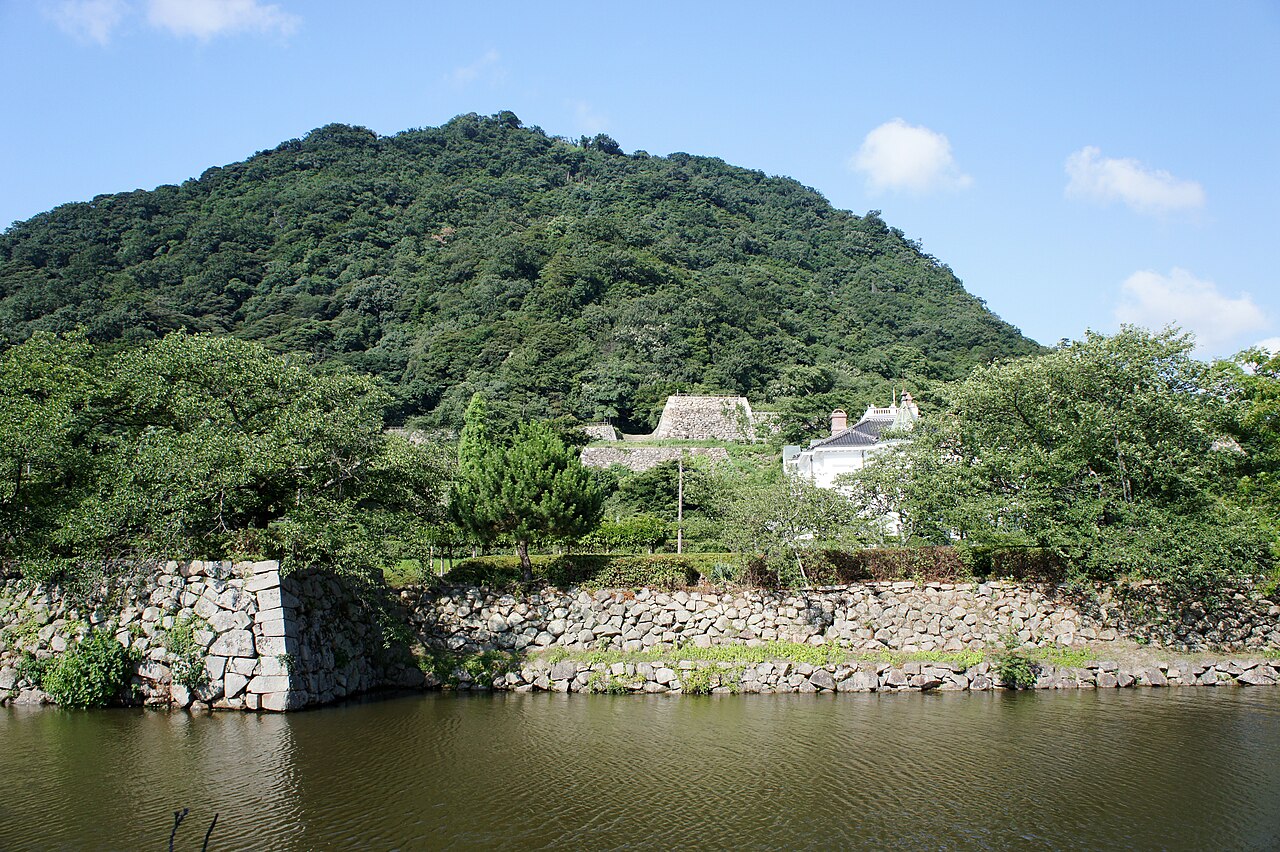
Tottori is Japan’s least-populous prefecture, set on the Sanin (“shaded side”) coast where the Chūgoku mountains meet the Sea of Japan. The eastern half of the prefecture corresponds to the old province of Inaba (因幡) — the “In” in Inkyuzan-yaki — while the west was Hōki. The Inkyuzan kiln sits inland from the coast in Yoro, in present-day Yazu (八頭) town, in a quiet river-and-rice landscape rather than a major city.

The region’s geography shaped its pottery. Local Inaba clay supplied the body; nearby forests fed the wood for both the climbing kiln and the ash that became its signature glaze. Tottori’s setting — the great dunes to the north, Mt. Daisen rising over the plain to the west, and the Sendai and Chiyo river valleys threading between — gives the ware a quiet, earthy character distinct from the bright porcelain centers further west in Kyushu.
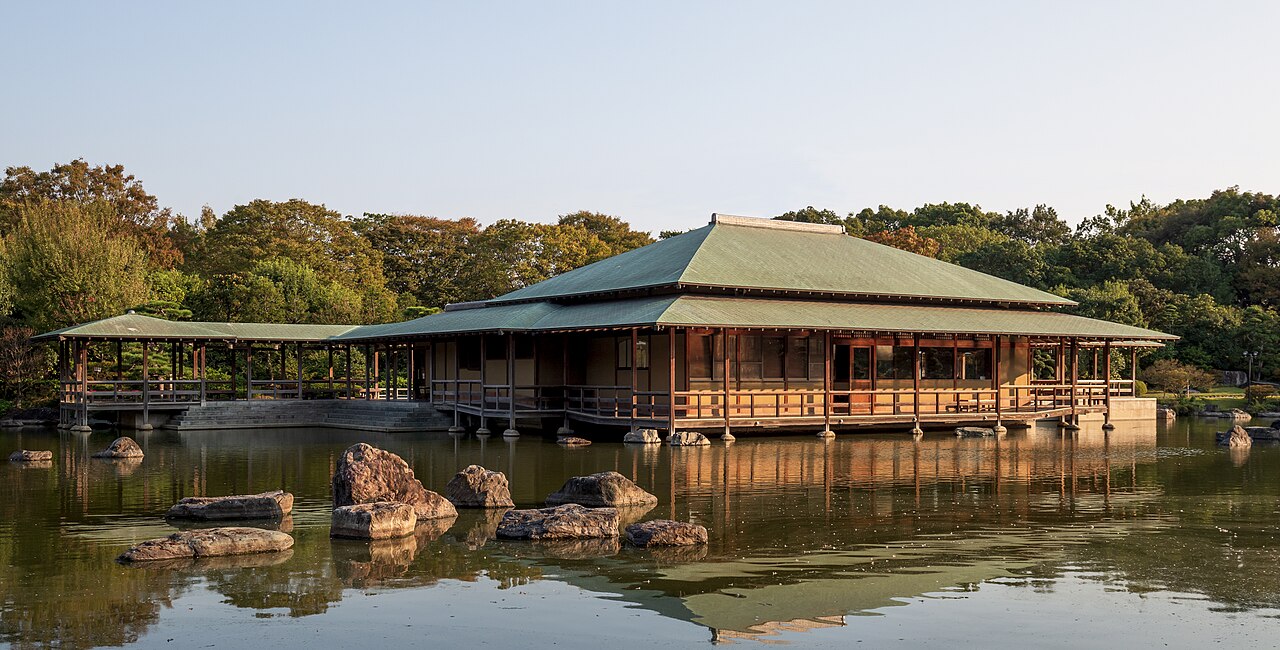
The kiln’s history runs in parallel with the domain that supported it. Inkyuzan-yaki was founded around 1764, in the Meiwa era of the mid-Edo period, and grew under the patronage of the Ikeda clan that ruled the Tottori domain from the castle town of Tottori. As a domain ware, the kiln supplied tea and sake vessels — exactly the kind of object covered in this guide — to the local elite, and that tea-and-sake demand is why a small rural kiln developed a refined glaze vocabulary rather than only utilitarian crockery.
- 1603 — The Tokugawa shogunate is established; the Edo period begins.
- Early–mid Edo — The Ikeda clan rules the Tottori (Inaba–Hōki) domain from Tottori Castle.
- c. 1764 — Inkyuzan-yaki is founded at Yoro (present-day Yazu), Inaba, in the Meiwa era.
- Late Edo — Under Ikeda patronage the kiln supplies tea and sake wares to the castle town.
- 1868 — The Meiji Restoration ends the domain system; the kiln continues as a private workshop.
- 20th c. — Inkyuzan is recognized as Tottori’s oldest surviving kiln, still firing its noborigama.
- 2026 — The kiln continues producing ash- and namako-glazed ware in Yazu.
What “still being made here” means in Inkyuzan’s case is continuity of method: the wood-fired noborigama, the local clay, and the ash-derived glazes are essentially the ones the kiln has used since the Edo period. The namako glaze in particular — a blue-purple streak produced from straw ash over an iron-bearing base — ties Inkyuzan to a wider family of folk kilns across the Sanin and Tohoku regions that work with similar ash glazes on tea ware.
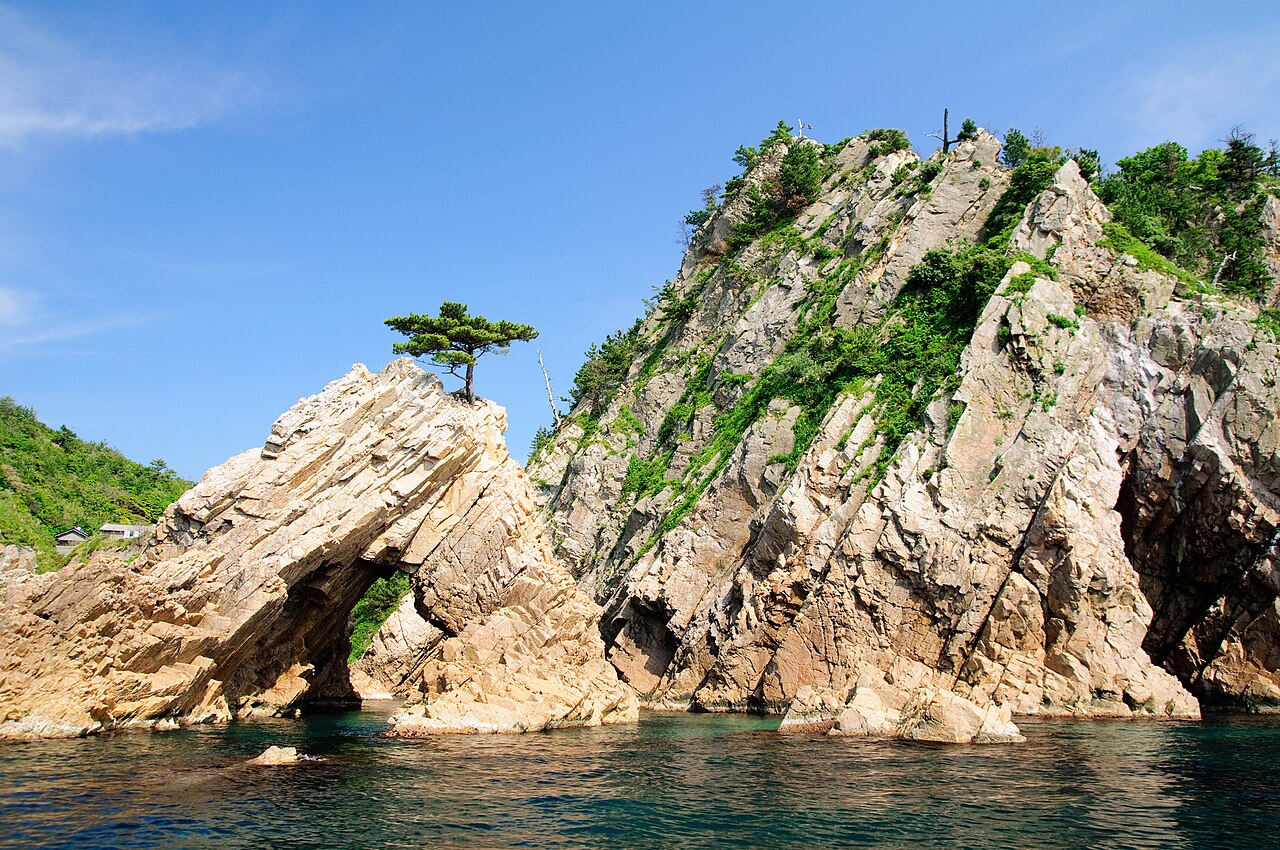
That rustic, weathered aesthetic is of a piece with the Tottori coast itself.
❓ Frequently Asked Questions
Can I use an Inkyuzan tokkuri for warm sake?
Yes. A tokkuri is traditionally warmed by standing it in a bath of hot water (yukan) to bring the sake to nurukan or atsukan temperature. Thick stoneware holds that warmth well. Avoid direct flame. Microwave suitability is not established here, so use a non-microwave heating method unless the maker confirms otherwise.
Does Amazon ship this Inkyuzan-yaki flask internationally?
Inkyuzan-yaki pieces are typically available through the Amazon JP Global Store or specialized Japanese pottery exporters, which ship to most major international destinations. Expect added international shipping cost and possible customs duties above your local threshold.
Will my flask look exactly like the photo?
No. The flask is hand-thrown and wood-fired, so glaze color, namako streaking, and minor dimensions vary between pieces. The data suggests treating the photo as representative rather than exact — that variation is the point of kiln ware.
How do I clean and care for it?
Hand-washing with mild detergent is the safe default for glazed stoneware. Do not soak for long periods, since any unglazed foot can absorb moisture, and dry it fully before storing. Dishwasher safety is not confirmed in the available data, so hand-washing avoids risk.
What cups pair well with this tokkuri?
Stoneware guinomi cups share its earthy palette — Bizen-yaki, Tamba Tachikui, or a namako-glazed cup like Shiraiwa-yaki all work, and we link reviews of each above. Matching glaze families rather than exact colors gives the most cohesive set.
Is the price shown reliable?
Live retail pricing for Inkyuzan-yaki ash-glaze tokkuri varies by size, kiln output, and the retail channel. This guide does not quote a single figure; verify the current price and stock with the workshop or retailer before purchasing, as prices and availability fluctuate.
Is this a good gift?
For a sake drinker who appreciates craft, yes — a kiln-specific flask with a named provenance reads as a considered gift. Pair it with a guinomi cup for a complete set. It is a poor gift for someone who drinks only chilled sake or wants a uniform, machine-made object.
jpmono.com is curated by a Japan-based editorial team (working out of Toyama in the Hokuriku region and Nara in Kansai) and is independent. We don’t take payment from the makers we feature; income comes from affiliate links. We don’t physically test every product — we read maker specifications and craft references.
Affiliate disclosure: jpmono.com may earn a commission on qualifying purchases made through links on this page, at no additional cost to you.