![Mashiko-yaki Teapot (Kyusu): Where to Buy This Mingei Pottery [2026]](https://jpmono.com/wp-content/uploads/2026/05/japan-map-regions-and-prefectures-800x1050.png)
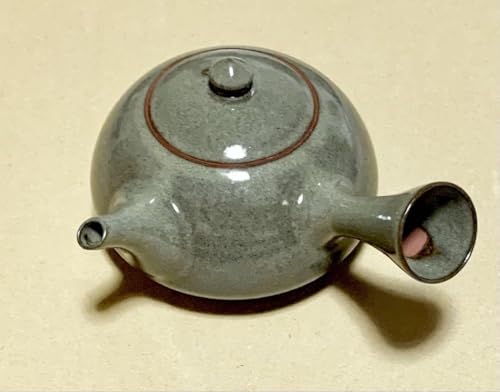
A Mashiko-yaki (益子焼, “Mashiko ware”) kyusu is a side-handle teapot thrown from iron-rich local clay and finished in one of the town’s signature stone-ash glazes — kaki persimmon-brown, nuka rice-ash white, or ame amber. It is heavy in the hand and warm to look at, the kind of object that was made to sit on a kitchen table and be used every day rather than displayed behind glass. The form covered here is the everyday side-handle pot with a built-in mesh strainer, the shape most associated with Mashiko’s folk-craft (mingei) tradition.
Mashiko sits in Tochigi Prefecture, in the Kanto region north of Tokyo. The town’s pottery was a workaday craft for most of its history, and what raised it to international recognition was the potter Hamada Shoji, who settled there in 1924, and the mingei movement of Yanagi Soetsu and the English potter Bernard Leach. Mashiko-yaki was designated a National Traditional Craft in 1979. For international readers, that lineage is the reason a relatively plain brown teapot carries the weight it does.
This guide is written for readers outside Japan who want to actually buy one — so it covers where the pot is sourced, what the glaze options mean, the honest caveats of buying heavy stoneware across borders, and how the Mashiko kyusu compares to other Japanese teaware already covered on this site. Pricing data was thin at the time of writing, and the article flags that plainly wherever it matters.
🔄 Last updated:
⏱️ Read time: ~9 min
Who this is for — and who should skip it
- Want a daily-use Japanese teapot with real folk-craft heritage, not a decorative piece
- Brew Japanese green tea (sencha, genmaicha, hojicha) and like a side handle for one-handed pouring
- Prefer earthy, hand-glazed surfaces over uniform factory finishes
- Are building a tea setup and want pieces with a documented regional story
- Are comfortable hand-washing and caring for unglazed or semi-glazed stoneware
- Want a lightweight, dishwasher-and-microwave-safe everyday pot
- Need an exact-match color — hand-glazed wares vary piece to piece
- Brew large volumes; side-handle kyusu are usually small (one to three cups)
- Are wary of shipping heavy ceramics internationally (breakage and cost)
- Confirm the final purchase details before committing; handmade pieces can vary.

Product overview (from published specs)
Mashiko-yaki kyusu are made within a stoneware tradition, and exact dimensions and prices vary by kiln, size, and form. Treat any table values as category guidance rather than universal specifications.
| Attribute | Detail | Source |
|---|---|---|
| Craft | Mashiko-yaki (益子焼) stoneware | Craft tradition |
| Form | Yokode kyusu (side-handle teapot) with built-in mesh strainer | Product description |
| Body | Iron-rich local clay; thick, warm, utilitarian | Craft tradition |
| Glaze options | Kaki (persimmon-brown), nuka (rice-ash white), ame (amber) | Craft tradition |
| Origin | Mashiko, Tochigi Prefecture, Kanto, Japan | Craft tradition |
| Designation | National Traditional Craft (designated 1979) | METI designation |
| Price | — | Data thin at writing |
Only a catalog identifier was available for this craft at the time of writing; live pricing and exact dimensions vary by piece and may have shifted since.
📖 Glossary — Japanese craft terms used here
- Kyusu (急須) — a Japanese teapot; the classic everyday form has a hollow handle set at the side (yokode), held one-handed.
- Yokode (横手) — “side handle.” The handle sits at roughly 90° to the spout, suited to small-volume green-tea brewing.
- Mingei (民藝) — the “folk craft” movement championed by Yanagi Soetsu, which found beauty in anonymous, useful, everyday objects.
- Kaki-yu (柿釉) — a persimmon-brown iron glaze, one of Mashiko’s signature finishes.
- Nuka-yu (糠釉) — a rice-ash glaze that fires to a soft, milky white.
- Ame-yu (飴釉) — an “amber/candy” iron glaze, glossy and warm brown.
- Shokunin (職人) — a skilled craftsperson; the maker behind a hand-thrown piece.

Where this comes from

Mashiko is a small town in the southeastern hills of Tochigi Prefecture, in the Kanto region that surrounds Tokyo. It is an inland place rather than a port city, and its pottery grew from two practical facts: the local ground yields an iron-rich clay well suited to thick, sturdy wares, and the Kinugawa river route gave the town a reliable way to move heavy goods toward the Edo (now Tokyo) market. Cheap, durable jars and grinding bowls travel best when there is a city nearby that always needs more of them.
The craft’s documented history begins in the mid-19th century, late by the standard of Japan’s oldest kilns. It came as a branch of an older neighbor.
- 1853 — Otsuka Keisaburo opens the first Mashiko kiln, bringing methods learned at neighboring Kasama (Ibaraki).
- 1850s–1900s — Everyday kame jars, suribachi grinding bowls, and teaware ship to Edo/Tokyo via the Kinugawa river route.
- 1924 — The potter Hamada Shoji settles in Mashiko.
- 1920s–1930s — The mingei movement of Yanagi Soetsu and Bernard Leach elevates Mashiko from folk pottery to a craft of international standing.
- 1979 — Mashiko-yaki is designated a National Traditional Craft.
- 2026 — Kilns in the district still throw side-handle kyusu in kaki, nuka, and ame glazes.
The founding link matters because it places Mashiko in a family tree. In 1853 Otsuka Keisaburo opened a kiln in Mashiko after learning the trade at Kasama, just over the prefectural line in Ibaraki — which is why the two wares are often described as parent and child. Kasama is the older, “mother” kiln; Mashiko is the offshoot that eventually overtook it in fame. (That Kasama rice bowl in the cross-link box above is the literal mother kiln of the pot on this page.)
For most of its first seventy years, Mashiko ware was unpretentious stuff: iron-glazed kame jars, suribachi grinding bowls, and rough teaware made to be used and replaced. What changed its standing was a person. Hamada Shoji settled in Mashiko in 1924 and, together with the philosopher Yanagi Soetsu and the English potter Bernard Leach, made Mashiko a touchstone of the mingei (folk-craft) movement — the idea that real beauty lives in anonymous, useful, everyday objects rather than in signed art pieces.
“Thick in the hand and generous in glaze, the Mashiko kyusu was made to be poured from every morning — not admired behind glass.”
That ethos is still legible in a present-day kyusu. The side-handle form, the heavy stoneware wall, and the iron and ash glazes are the same vocabulary the town has used for generations, and kilns in the district continue to throw these pots today. National Traditional Craft designation arrived in 1979, formal recognition of a continuity that long predated it. For an international buyer, “still being made here” is not marketing — it is the reason a plain brown teapot from a small Kanto town carries the name it does.
Purchase options
Pricing for Mashiko-yaki kyusu varies by kiln, size, and form; a price for one piece should be treated as an individual offer rather than a market-wide standard.
| Store | Item / variant | Price (JPY + USD est.) | Notes |
|---|---|---|---|
| 🇺🇸 Amazon.com (US) | Browse Japanese kyusu teapots | varies (USD) | Best if you are shopping from the US — Prime shipping, USD pricing, no international customs. Amazon US carries Japanese kyusu and teaware from various makers for comparison; this exact Mashiko piece is sourced from Japan (next row). |
| 🇯🇵 Amazon JP Global Store | Mashiko-yaki side-handle kyusu | — | Ships internationally from Japan to most major destinations. |
| Maker direct | Mashiko kiln / pottery-fair shops | varies | Many Mashiko kilns sell directly or at the twice-yearly Mashiko pottery fair; international shipping is case by case. |
| Proxy services (Buyee / Tenso) | Any Japan-only option | item + service fee + forwarding | Useful when a kiln or shop only ships within Japan; adds a handling fee and a second shipping leg. |
USD figures are approximate and depend on the current exchange rate. JPY remains the reference currency.
What it does well
The side handle (yokode) sits at the right angle for controlled, one-handed pouring of small green-tea servings.
Kaki, nuka, and ame glazes give a warm, tactile finish that ages gracefully with daily use.
A National Traditional Craft (1979) tied to Hamada Shoji and the mingei movement — verifiable, not invented backstory.
An integrated strainer keeps leaves out of the cup without a separate basket, simplifying everyday brewing.
Weaknesses and things to verify before buying
- Confirm the current purchase details before ordering; they may change.
- Hand-glazed color varies. Kaki, nuka, and ame are families of color, not exact swatches. The piece you receive may differ in tone and pooling from any sample photo.
- Small capacity. Side-handle kyusu are typically one to three cups. If you brew for a group or want mug-sized volumes, this is the wrong form.
- Heavy ceramic, fragile in transit. Stoneware is breakable and adds weight to international shipping. Confirm packaging and any breakage policy before ordering.
- Care requirements. Hand washing is safest; do not assume dishwasher, microwave, or direct-flame use. Earthy stoneware can stain over time, often considered part of its character.
- Exact size can vary. Confirm the size or capacity before ordering.
- Customs and duties. Orders shipped from Japan may incur import duty or tax above your country’s threshold; this is separate from the item price.
Conclusion — which buyer type are you?
You want a documented folk-craft piece and will pay for the lineage. Choose a kiln-marked kaki or ame pot and treat it as a daily heirloom.
You drink green tea daily and want a real kyusu over a generic pot. The side handle and built-in strainer fit your routine — confirm capacity first.
You like the look but price and shipping matter. Compare Japanese kyusu on Amazon US first, then weigh the JP Global Store cost including duty.
You want lightweight, dishwasher-safe, large-volume, or an exact-match color. A factory teapot will serve you better than hand-thrown stoneware.
Other ways to approach this purchase
Cross-border ceramics rarely discount steeply, but watch for Amazon seasonal events and shipping promotions to offset international postage.
Mashiko holds a large twice-yearly pottery fair; kiln shops and galleries sell directly. Best if you (or a contact) are in Japan.
If you already use Amazon points or a cashback card, applying them here softens the shipping and duty premium on a single heavy item.
If the caveats outweigh the appeal, a Mino-yaki yunomi pair or a celadon mug (cross-links above) may suit your routine for less risk.
❓ Frequently Asked Questions
Does Amazon JP Global Store ship a Mashiko-yaki kyusu internationally?
Yes. Amazon JP Global Store ships many household items, including ceramics, to most major destinations. Shipping cost and delivery time vary by country, and import duty may apply above your local threshold. Confirm the per-item shipping quote at checkout.
What is the difference between kaki, nuka, and ame glazes?
Kaki is a persimmon-brown iron glaze, nuka is a soft rice-ash white, and ame is a glossy amber iron glaze. All three are traditional Mashiko finishes over the same iron-rich stoneware body. Because they are hand-applied, exact tone and pooling vary piece to piece.
Why a side handle instead of a top or back handle?
The yokode (side handle) kyusu is the classic Japanese green-tea form. The handle sits at roughly 90° to the spout, which gives controlled, one-handed pouring of small servings — well suited to sencha, genmaicha, and hojicha.
How should I care for it?
Hand washing is the safest default for hand-glazed stoneware. Unless the maker specifies otherwise, avoid assuming dishwasher, microwave, or direct-flame use. Earthy surfaces may stain with tea over time, often regarded as part of the ware’s character.
How is Mashiko-yaki related to Kasama-yaki?
They are parent and child. Mashiko-yaki began in 1853 when Otsuka Keisaburo opened a kiln after learning the trade at neighboring Kasama in Ibaraki. Kasama is the older “mother” kiln; Mashiko later became the more internationally known of the two.
Why is no price shown in this guide?
Prices for Mashiko-yaki kyusu vary with kiln, size, and form. USD conversions are approximate and depend on the exchange rate.
Should I buy on Amazon US or Amazon JP?
If you are in the US and want Prime shipping and USD pricing, browse Japanese kyusu on Amazon US first. Mashiko-yaki kyusu purchased directly from Mashiko-area workshops typically ships from Japan; factor international postage and possible duty into the comparison.
jpmono.com is curated by a Japan-based editorial team (working out of Toyama in the Hokuriku region and Nara in Kansai) and is independent. We do not take payment from the makers we feature; income comes from affiliate links. We do not physically test every product — we read maker specifications and describe the craft context.
Affiliate disclosure: jpmono.com may earn a commission on qualifying purchases made through links on this page, at no additional cost to you.