![Nanbu Tekki Cast Iron Wind Chime: Iwachu Iwate Furin Guide [2026]](https://jpmono.com/wp-content/uploads/2026/06/nanbu-tekki-cast-iron-wind-chime-furin-where-to-buy-2026-featured.jpg)
A furin (風鈴) is a small wind chime hung under the eaves through a Japanese summer, sounded by the breeze. Most of them are blown glass or pressed bronze. The Nanbu Tekki (南部鉄器, “Nanbu ironware”) version is different in one decisive way: the bell is cast iron, and the note comes straight out of the metal body — a high, clear tone with an unusually long sustain that hangs in the air after the wind has passed. It is made in Morioka, Iwate, by the same foundry tradition that pours the region’s famous tetsubin kettles.
The maker most visible to overseas buyers is Iwachu (岩鋳), founded in Morioka in 1902. The piece featured here is a hand-cast Iwachu iron furin with an iron tongue and a paper reed strip (tanzaku) that catches the wind. It is a seasonal object — small, inexpensive relative to a full kettle, and a genuine entry point into a casting tradition that has run continuously in this domain since the 17th century.
This guide is written for international readers deciding whether an iron furin is the right summer object for their home, and how to buy an authentic one from outside Japan. We cover what the iron tone actually sounds like, how it compares to glass and bamboo wind chimes, the care it needs in a humid climate, and the two buying paths — Amazon US for comparison shopping, and the Amazon JP Global Store where the specific listed item is sourced.
🗓️ Published: · Updated: · ⏱️ Read time: about 9 minutes

- Who this is for — and who should skip it
- Product overview (from published specs)
- Where this comes from — place, era, and the craft tradition
- Price snapshot across stores
- What it does well
- Weaknesses and things to verify before buying
- Conclusion — which buyer type are you?
- Other ways to approach this purchase
- 🏆 Editor’s Pick
- ❓ Frequently Asked Questions
Who this is for — and who should skip it
- Want a wind chime with a long, ringing sustain rather than a short glassy “ting”
- Like the matte black, weighty look of cast iron as a year-round object
- Are drawn to a piece tied to a documented regional craft, not a generic import
- Have a sheltered eave, balcony, or porch with reliable air movement
- Want an affordable entry into Nanbu Tekki before committing to a kettle
- Live where summers are still and windless — no breeze, no sound
- Prefer the soft, low tone of bronze or the bright clink of glass
- Cannot tolerate any sound at night (the tone carries and lingers)
- Hang it in a coastal, salt-air, or constantly wet spot where bare iron will rust quickly
- Want a large statement piece — a furin is small by design
Product overview (from published specs)
The data available for this guide is thin: the live Amazon US search returned no individually listed item, and no confirmed price was captured from the Amazon JP Global Store at the time of writing. The table below states only what is anchored in the maker tradition and the listing identity; price and exact dimensions should be verified at the listing before purchase.
Nanbu Tekki Cast Iron Wind Chime
岩鋳(Iwachu) 風鈴 夕立 銀/紫紺 Φ5×(H)5cm 南部鉄器 27168
在庫あり。 · Sold by Amazon.co.jp · ASIN B07VCBTWS1
Price and availability as of 2026-08-31 02:30 JST. The Amazon listing at the time of purchase is authoritative. jpmono.com earns a commission on qualifying purchases at no extra cost to you.
| Attribute | Detail (per listing / maker tradition) |
|---|---|
| Item | Nanbu Tekki cast iron wind chime (furin) |
| Maker | Iwachu (岩鋳), Morioka, Iwate — founded 1902 |
| Material | Cast iron bell + iron tongue + paper reed strip (tanzaku) |
| Origin | Morioka, Iwate Prefecture, Tōhoku region, Japan |
| Sound character | High, clear tone with long sustain (from the iron body itself) |
| Dimensions / weight | Unconfirmed — check the listing (small, eave-hung scale) |
| Price | Not confirmed at time of writing — verify at listing |
| Source listing | Amazon JP Global Store (ASIN B07VCBTWS1), secondary tag |
Sources: Amazon US search (primary, moonill-20) returned no individual listing; Amazon JP Global Store (secondary, moonill-22) is the sourced listing for ASIN B07VCBTWS1; maker tradition per Iwachu / Nanbu Tekki background. Spec sheets indicate the tone-and-sustain character above; the data suggests no confirmed price was captured.
📖 Glossary — key terms
- Nanbu Tekki (南部鉄器) — the cast-iron tradition of Morioka and Mizusawa in Iwate; “Nanbu” is the clan that ruled the Morioka domain.
- Furin (風鈴) — a small summer wind chime hung under the eaves, sounded by the breeze.
- Tetsubin (鉄瓶) — a cast iron kettle; the better-known product of the same foundries.
- Imono (鋳物) — cast metalwork; objects formed by pouring molten metal into a mold.
- Tanzaku (短冊) — the narrow paper strip hung below the chime that catches the wind and starts the swing.
- Shokunin (職人) — a skilled craftsperson working within an established trade tradition.
Where this comes from — place, era, and the craft tradition

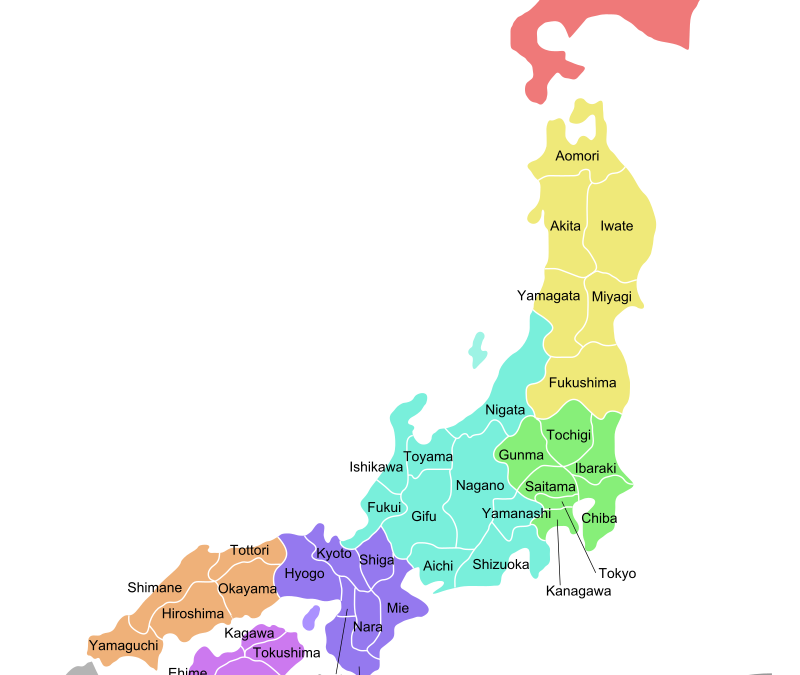
Iwate is the large, mountainous prefecture occupying the northeast shoulder of Honshū, on the Pacific side of the Tōhoku region. Morioka, its capital, is an inland castle town set where three rivers meet. The geography is the reason the craft is here: the surrounding hills yielded iron sand, the rivers deposited the fine clay used to line molds, and the forests supplied the charcoal needed to reach casting temperatures. A domain with all three raw materials in one valley becomes a foundry town almost by default.
In the 17th century the Nanbu clan, who ruled Morioka, invited Kyoto kettle-casters into the domain to supply tea-ceremony ware. That patronage is the founding event of Nanbu Tekki. The casters stayed, the materials sustained them, and the practice has run continuously in the domain since — first kettles for the tea room, later the everyday tetsubin, and the small seasonal objects like the furin.
- 1124 — Chūson-ji’s Konjikidō completed at nearby Hiraizumi, marking the region’s earlier golden age.
- 17th century — The Nanbu clan, ruling Morioka, invites Kyoto kettle-casters to supply tea-ceremony ware.
- 17th–19th c. — Local iron sand, river clay, and lacquer-grade charcoal sustain a continuous casting center.
- 1902 — Iwachu founded in Morioka; it becomes the maker most visible to overseas buyers.
- 1975 — Nanbu Tekki recognized as a national Traditional Craft (per public METI records).
- 2026 — The same foundries still cast both tetsubin kettles and summer furin in Morioka; Iwachu ships internationally.
What “still being made here” means is concrete. The same foundries that pour the tetsubin kettle also cast the furin; it is not a separate novelty industry but a small-format use of the established molds and iron. The note you hear is a property of that iron — a high, clear tone with a long sustain, distinct from the short clink of glass or the soft hum of bronze.
“The sound does not come from glass or bronze, but from the iron body itself — a high, clear note with an unusually long sustain.”
Culturally, the furin belongs to the height of the Japanese summer. Hung at a window or under an eave, its job is partly acoustic and partly psychological: the tone signals moving air, and moving air reads as cooler. It is a seasonal object that is put up in early summer and often taken down in autumn — a small annual ritual rather than a permanent fixture.
Price snapshot across stores
📦 Shipping note: Iwachu ships hand-cast furin internationally, and the Amazon JP Global Store path generally ships to most major destinations. No confirmed price was captured at the time of writing — the figures below say “varies / verify” rather than guess. International shipping typically adds roughly $15–$40 to the US or EU; orders above local thresholds may incur customs duties.
| Store | Item / variant | Price | Notes |
|---|---|---|---|
| 🇺🇸 Amazon.com (US) | Browse Japanese cast iron wind chimes | varies (USD) | Best if you’re shopping from the US — Prime shipping, USD pricing, no international customs. Amazon US carries Japanese iron furin and related home goods; the specific Iwachu piece is sourced from Japan (next row). |
| 🇯🇵 Amazon JP Global Store | Iwachu cast iron furin (ASIN B07VCBTWS1) | Not confirmed — verify at listing | The exact sourced item. Ships internationally from Japan. JPY is the authoritative price once shown on the listing. |
| Maker direct (Iwachu) | Full furin range | Varies | Widest selection of finishes; international shipping terms vary by destination. |
| Proxy services (Buyee / Tenso) | Any JP listing | Item + forwarding fee | Use when a finish is only on a Japan-only shop; adds a consolidation/forwarding charge. |
Prices and stock fluctuate; always confirm the current figure at the affiliate link before purchasing. Only the Amazon JP Global Store listing identity was available as a source — no confirmed price was captured at the time of writing.
What it does well
Weaknesses and things to verify before buying
- No price was confirmed. The data for this guide did not include a captured price — check the live listing before ordering, and treat any third-party figures with caution.
- Rust is the real maintenance issue. Bare iron in coastal, salt-air, or constantly wet locations will corrode. A sheltered eave and occasional drying extend its life; verify whether your chosen piece has a protective finish.
- It needs wind. In a still, windless spot it is a silent ornament. The reed strip (tanzaku) catches the breeze; no breeze, no sound.
- The sustain carries. The long ringing tone that buyers love is the same property that can disturb a light sleeper or close neighbors at night. Consider where you hang it.
- Dimensions and weight are unconfirmed. The dataset did not include exact size or mass — confirm on the listing if you have a specific eave or hook in mind.
- Variant images were not in the dataset. Finish and motif descriptions here are qualitative; check the listing photos for the exact piece you receive.
Conclusion — which buyer type are you?
Other ways to approach this purchase
🏆 Editor’s Pick
❓ Frequently Asked Questions
Does an iron furin really sound different from a glass one?
Yes. The spec character of a Nanbu iron furin is a high, clear note with an unusually long sustain produced by the iron body, whereas a glass furin gives a brighter, shorter clink that decays quickly.
Will it rust outdoors?
Bare cast iron can rust, especially in coastal or constantly wet conditions. Hang it under a sheltered eave, dry it after heavy rain, and check whether your piece has a protective finish. With reasonable care it lasts for years.
Can it ship outside Japan?
Iwachu ships hand-cast furin internationally, and the Amazon JP Global Store path generally ships to most major destinations. Expect roughly $15–$40 added shipping to the US or EU, with possible customs duties above local thresholds.
How much does it cost?
No confirmed price was captured at the time of writing, so we don’t quote one here. Check the live Amazon JP Global Store listing for the current figure; the JPY price shown there is authoritative.
Is it the same maker as the Nanbu tetsubin kettles?
It is the same tradition and, for Iwachu, the same foundry. The furin is a small-format use of the iron and molds that also produce tetsubin kettles in Morioka.
When should I hang it?
A furin is a summer object, put up in early summer and often taken down in autumn. It needs a spot with reliable air movement so the breeze can sound it.
jpmono.com is curated by a Japan-based editorial team (working out of Toyama in the Hokuriku region and Nara in Kansai) and is independent. We don’t take payment from the makers we feature; income comes from affiliate links. We don’t physically test every product — we read maker’s specs and source listings.
This article was prepared with AI assistance and reviewed against the maker’s listing and source data. Facts about price, dimensions, and stock should be verified at the retailer before purchase.
Affiliate disclosure: jpmono.com may earn a commission on qualifying purchases made through links on this page, at no additional cost to you.