![Yakusugi Cedar Tea Caddy: Where to Buy This Yakushima Craft [2026]](https://jpmono.com/wp-content/uploads/2026/05/japan-map-regions-and-prefectures-800x1050.png)
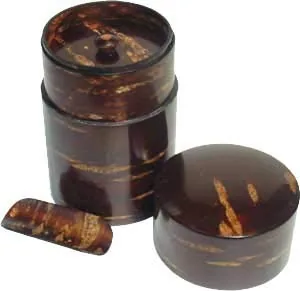
- What it is: A tea caddy (chazutsu, 茶筒) turned from solid Yakusugi — the thousand-year cedar of Yakushima — with a snug inner lid and a natural, unlacquered finish.
- Made in: Yakushima, Kagoshima Prefecture, southern Kyūshū — worked only from dosaibutsu (recovered stumped cedar), since live felling is banned.
- Price band: Mid-range for solid-wood tea caddies.
- Best for: loose-leaf tea drinkers who want a fragrant, breathable natural-wood caddy with visible growth rings.
- Skip if: you need an airtight, dishwasher-safe, or lacquered container.
- Shipping: ships internationally from Amazon Japan — jump to our pick ↓
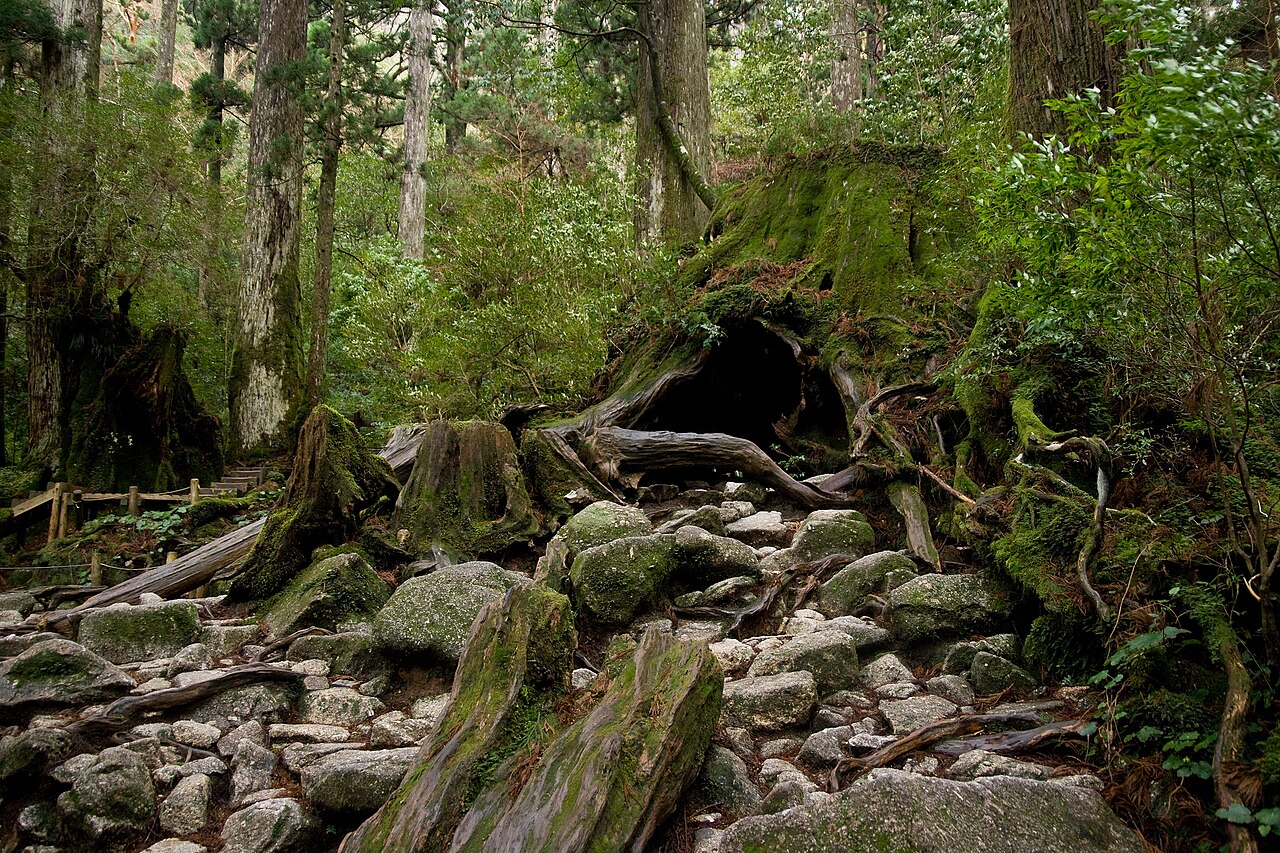
The cedar for this caddy was never cut from a living tree. On Yakushima, live felling of Yakusugi (屋久杉, “Yakushima cedar”) has been banned for decades, so a maker works only dosaibutsu — stumps and buried timber recovered from the forest floor, some of it left there since the Edo period. A tea caddy turned from that wood carries growth rings laid down over a thousand or more years, spaced so tightly that the grain reads almost like a fingerprint.
Yakushima is a granite island off the southern coast of Kagoshima, registered as a UNESCO World Natural Heritage site in 1993 for exactly these cedars. Cryptomeria japonica growing in the island’s extreme rainfall and thin soil grows slowly, packing resin into a dense, aromatic wood. The fragrance and the mirror-like grain are why small turned pieces — tea caddies, cups, boxes — became the island’s signature souvenir craft rather than large furniture.
This guide is written for an international reader deciding whether a Yakusugi chazutsu belongs in their kitchen: what the wood actually is, how it behaves as a tea container, where it comes from, and how to find one outside Japan. Solid Yakusugi wood varies from piece to piece, so capacity, height, weight, and other details should be treated as maker-specific.
📅 Published: · ♻️ Last updated: · ⏱️ Read time: about 9 minutes
ℹ️ Yakusugi cedar tea caddies are solid-wood craft objects; exact capacity, height, weight, and other specifications vary by maker.
- Who this is for — and who should skip it
- Product overview (from published specs)
- Where this comes from — place, era, and the craft tradition
- 📦 Shipping & where to buy from outside Japan
- Where to buy
- What it does well
- Weaknesses and things to verify before buying
- Conclusion — which buyer type are you?
- Other ways to approach this purchase
- ❓ Frequently Asked Questions
Who this is for — and who should skip it
- Drink loose-leaf Japanese tea and want a breathable, natural-wood caddy
- Value visible thousand-year growth rings and a real cedar scent
- Prefer objects made from recovered wood, with no living tree felled
- Are comfortable hand-washing and wiping dry after use
- Want a compact, giftable piece of Yakushima craft that ships worldwide
- Need an airtight, gasket-sealed container for long-term storage
- Want something dishwasher- and microwave-safe
- Dislike any aroma transfer into delicate or scented teas
- Expect every piece to match the catalog photo exactly (grain varies)
- Are shopping purely on price against mass-produced tins
Product overview (from published specs)
The table below combines the craft facts for Yakushima yakusugi cedar with general guidance for solid-wood tea caddies. Because each piece varies, dimensions and other unconfirmed attributes are identified plainly rather than guessed.
| Attribute | Detail | Source |
|---|---|---|
| Object | Tea caddy (chazutsu) with fitted inner lid | Product recommendation |
| Material | Solid Yakusugi cedar (Cryptomeria japonica), resin-rich tight grain | Product recommendation |
| Finish | Natural, unlacquered | Product recommendation |
| Lid | Snug turned inner lid (not gasket-sealed / not airtight) | Product recommendation |
| Origin | Yakushima, Kagoshima Prefecture, Japan | Data notes |
| Capacity / dimensions | — | — |
| Weight | — | — |
- 🍽️ Dishwasher: no — hand-wash the natural unlacquered cedar
- ♨️ Microwave: no
- 🧴 Daily care: wipe dry after use; avoid soaking, direct sun, and dry heaters, which can crack or warp cedar
📖 Glossary — key terms
- Yakusugi (屋久杉, “Yakushima cedar”) — Cryptomeria japonica on Yakushima that is over 1,000 years old; slow growth gives it unusually tight, resin-dense grain.
- Chazutsu (茶筒, “tea cylinder”) — a lidded caddy for storing loose-leaf tea.
- Dosaibutsu (土埋木) — buried or centuries-old stumped Yakusugi wood recovered from the forest floor; the only Yakusugi legally worked today.
- Hiragi (平木) — thin cedar shingle timber; under the Shimazu domain of the Edo period, Yakusugi was felled and paid as hiragi in tax.
- Jōmon-sugi (縄文杉) — the island’s oldest and most famous cedar, estimated at 2,000–7,000 years old, and its living symbol.
Where this comes from — place, era, and the craft tradition

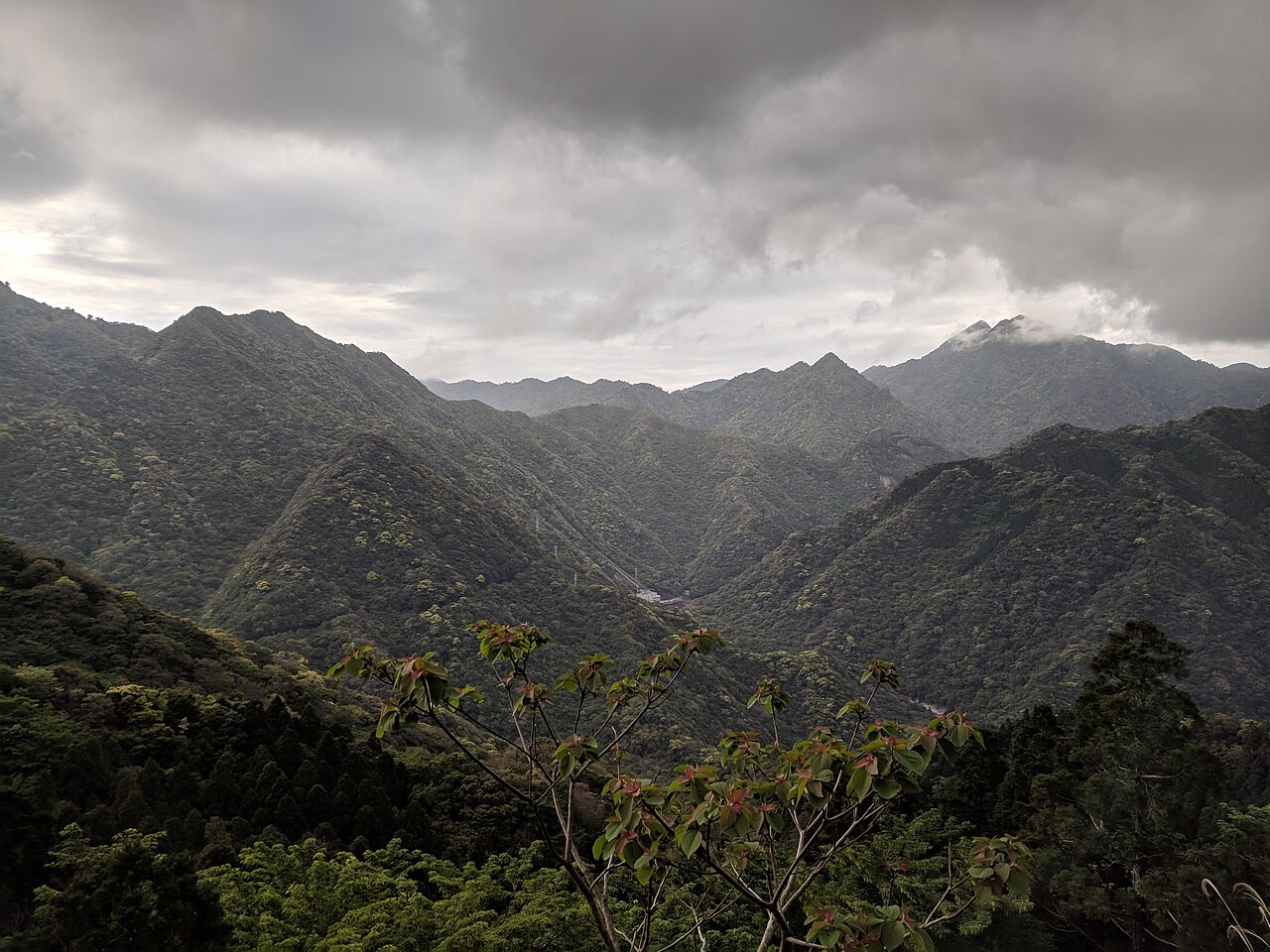
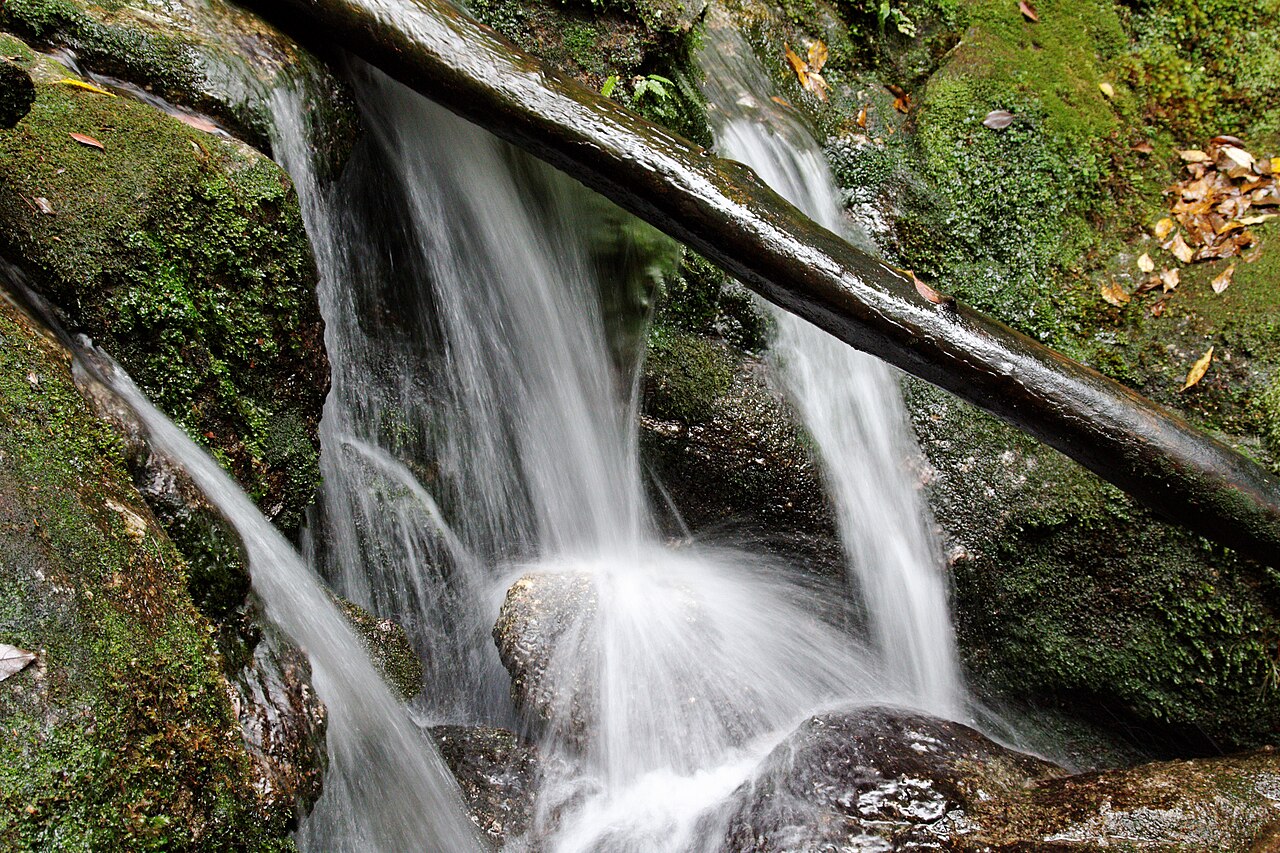
Yakushima sits well south of mainland Japan, closer to Okinawa’s latitude than to Tokyo, yet its interior rises into peaks over 1,800 meters. That combination — a warm subtropical sea and cold high mountains packed into one small island — traps moisture and produces staggering rainfall. Locals say it rains “thirty-five days a month,” and while that is a saying rather than a measurement, the point holds: this is a rainforest built on granite, where soil is thin and trees grow slowly.
Slow growth is the whole story of Yakusugi. A cedar that would mature in a century on richer ground takes many centuries here, laying down fine annual rings dense with resin. That density is what a tea caddy shows off: the grain is tight enough to read like contour lines, and the resin gives the wood its lasting fragrance and natural resistance to decay.
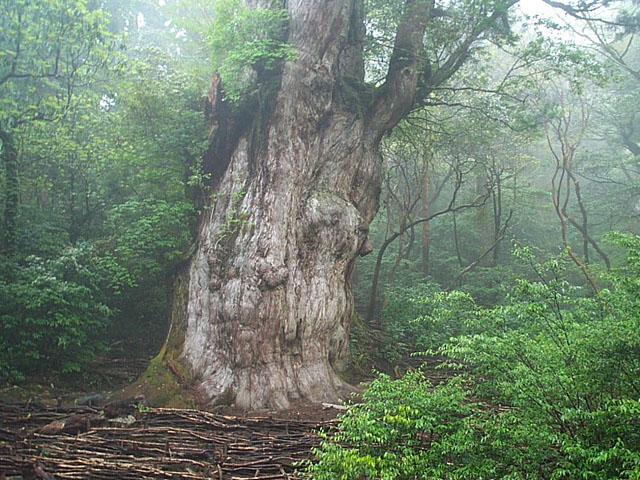
“The rings in a single caddy can span more centuries than most nations have been countries — and no living tree was cut to turn it.”
The human history here is a logging history. Under the Shimazu domain during the Edo period (1603–1868), Yakusugi was felled and processed into hiragi — thin cedar shingle timber — which islanders paid as tax. The stumps of those cut cedars still dot the mountains. In time, live felling of Yakusugi was banned to protect the forest, and craftspeople were restricted to dosaibutsu: buried logs and old stumps recovered from the forest floor. That is the wood a modern caddy is turned from.
-
c. 2,000–7,000 years ago — The Jōmon-sugi germinates; it remains the island’s living symbol. -
Edo period (1603–1868) — Under the Shimazu domain, Yakusugi is felled for hiragi shingle timber paid as tax; the stumps remain in the mountains. -
Modern era — Live felling of Yakusugi is banned; craftspeople work only dosaibutsu (recovered buried or stumped wood). -
1993 — Yakushima is registered as a UNESCO World Natural Heritage site for its ancient cedars. -
Today (2026) — Small turned pieces — tea caddies, cups, boxes — remain the island’s signature souvenir craft.
What “still being made here” means, then, is unusual. The raw material is finite and protected: every caddy comes from wood that was cut generations ago or fell on its own, not from a fresh tree. That constraint shapes the craft toward small objects — a tea caddy uses little wood and rewards the grain — and it is why the fragrance-and-figure of turned Yakusugi, rather than any large furniture tradition, became the island’s calling card for visitors.
If you are weighing a Yakusugi caddy against other Japanese craft objects — other tea caddies, other woods, other regional makers — these related jpmono guides are worth reading side by side.
📦 Shipping & where to buy from outside Japan
For international orders, shipping and import handling for a small wooden tea caddy vary by destination, carrier, and service. Check the customs rules and delivered cost for your country before ordering.
International shipping for a small, light woodcraft item varies by destination and carrier. Prices for handmade tea caddies also vary with the wood, finish, size, and workmanship; a proxy service may help when a domestic purchase is the only option.
Where to buy
Prices for Yakusugi tea caddies vary with the wood, finish, size, and workmanship. Compare current seller information rather than treating an unverified figure as a standard price.
| Store | Item / Variant | Price (JPY + USD est.) | Notes |
|---|---|---|---|
| 🇺🇸 Amazon.com (US) | Browse Japanese cedar tea caddies | varies (USD) | Best if you’re shopping from the US — Prime shipping, USD pricing, no international customs. Amazon US carries Japanese woodware and tea accessories from various makers; this Yakusugi piece itself ships from Japan (next row). |
| 🇯🇵 Amazon JP Global Store | Yakusugi solid cedar tea caddy | — | Ships internationally from Japan to 65+ countries — including Canada, the UK and Australia — with import fees estimated at checkout. |
| Maker direct | Yakushima cedar workshops | Unconfirmed | Individual island workshops sell turned Yakusugi wares; overseas shipping varies by shop and may require inquiry. |
| Proxy services (Buyee / Tenso) | Domestic JP products forwarded abroad | Item price + forwarding fee | Useful when a caddy is only sold domestically in Japan; adds a handling fee and a second shipping leg. |
USD amounts are approximate and depend on the current exchange rate; use the rate at the time of comparison.
What it does well
Weaknesses and things to verify before buying
- Not airtight. The turned inner lid is snug, not gasket-sealed; this is a breathable caddy, not a long-term humidity-lock container.
- Hand-wash only. Natural unlacquered cedar is not dishwasher- or microwave-safe, and soaking or heat can crack or warp it.
- Aroma transfer. The cedar scent that many buyers want can be unwelcome with delicate or scented teas — consider what you plan to store.
- Piece-to-piece variation. Because each caddy is turned from recovered wood, grain, color and exact size differ; the one you receive will not match the catalog photo precisely.
- Capacity varies by caddy. Choose a size that suits your tea routine.
- Environment sensitivity. Keep it away from direct sun and dry heaters; sudden drying can open the grain over time.
Conclusion — which buyer type are you?
Other ways to approach this purchase
❓ Frequently Asked Questions
Does a Yakusugi tea caddy keep tea airtight and fresh?
No. The turned inner lid fits snugly but is not gasket-sealed, so it is a breathable caddy rather than an airtight one. It suits everyday loose-leaf storage; for long-term or humidity-sensitive storage, keep an airtight tin as well.
Can I wash it in the dishwasher?
No. The natural unlacquered cedar should be hand-wiped only. Soaking, dishwashers, microwaves, and direct heat can crack or warp the wood.
Will the cedar smell affect my tea?
There is a soft cedar fragrance, which many drinkers enjoy with loose-leaf tea. If you store delicate or scented teas and want no aroma transfer, this caddy may not be the right container for those.
Is a living tree cut to make this?
No. Live felling of Yakusugi is banned. Craftspeople work only dosaibutsu — buried logs and old stumps recovered from the forest floor, some cut generations ago under the Shimazu domain.
Can I buy it from outside Japan?
Yakusugi cedar caddies are associated with Yakushima’s cedar craft tradition. International availability and shipping vary by destination, and a proxy service may help with a domestic purchase when needed.
Why does each caddy look different?
Because each is turned from recovered wood, the grain, color, and exact dimensions vary from piece to piece. The one you receive will not match the catalog photo precisely — that variation is part of the object.
jpmono.com is curated by a Japan-based editorial team (working out of Toyama in the Hokuriku region and Nara in Kansai) and is independent. We don’t take payment from the makers we feature; income comes from affiliate links. Read more about our editorial standards.
🤖 This article was drafted with AI assistance from public craft references, then edited for clarity by the jpmono team. We do not physically test every product; specifications and prices vary by maker.
Affiliate disclosure: jpmono.com may earn a commission on qualifying purchases made through links on this page, at no additional cost to you.