![Usaburo Kokeshi Sosaku Wooden Doll from Gunma: Where to Buy [2026]](https://jpmono.com/wp-content/uploads/2026/06/usaburo-kokeshi-sosaku-wooden-doll-where-to-buy-2026-featured.jpg)
Kokeshi (こけし, lathe-turned wooden dolls) began in late-Edo-period Tohoku as souvenirs that kiji-shi (木地師, woodturners) sold to visitors at hot-spring towns. The doll covered in this guide belongs to a younger, freer branch of that lineage: Usaburo Kokeshi, a workshop founded in 1950 by Usaburo Okamoto in Shinto Village, at the foot of Mt. Haruna in Gunma Prefecture, and today the flagship studio of Japan’s largest sosaku (創作, “creative”) kokeshi producing region.
Where the eleven traditional Tohoku kokeshi schools work within strict inherited design rules, sosaku kokeshi makers are bound only by the lathe. Usaburo’s dolls are turned (rokuro woodturning) from local mizuki dogwood, cherry, and chestnut, then hand-painted with modern motifs — which is why a Usaburo piece reads as both recognizably “kokeshi” and unmistakably its own thing. For international buyers, it is one of the most accessible entry points into Japanese woodturning culture.
This guide is written from a Japan-based editor’s perspective for readers shopping from outside Japan. It covers what the listing data does and does not confirm, where Shinto Village sits in Gunma’s larger craft story, how the doll compares with other turned-wood objects already covered on this site, and the cleanest purchase paths on Amazon US and the Amazon JP Global Store in 2026.
🔄 Last updated:
⏱ Read time: about 12 min

- Who this is for — and who should skip it
- Product overview (from published specs)
- 📍 Where this comes from — Shinto Village, the Haruna foothills, and Gunma’s craft economy
- 📦 Shipping & where to buy from outside Japan
- Price snapshot across stores
- What it does well
- Weaknesses and things to verify before buying
- Conclusion — which buyer type are you?
- Other ways to approach this purchase
- 🏆 Editor’s Pick
- ❓ Frequently Asked Questions
Who this is for — and who should skip it
- Want an authentic, workshop-made Japanese wooden doll rather than a mass-molded figurine
- Prefer the modern, freer sosaku style over the strict patterns of traditional Tohoku kokeshi
- Are looking for a compact, unbreakable-feeling display object or housewarming gift from Japan
- Appreciate visible woodgrain and hand-painted variation as a feature, not a defect
- Value a traceable origin — a named studio (Usaburo, est. 1950) in a named village (Shinto Village, Gunma)
- Specifically collect dento (伝統, traditional-school) kokeshi — Naruko, Togatta, Yajiro, and the other Tohoku lineages are a different category
- Need a toy for a small child — this is a decorative craft object, not a certified children’s toy
- Expect two pieces to look identical — hand-painting and natural wood mean unit-to-unit variation
- Want confirmed live pricing before reading further — the data snapshot for this listing did not include a price (details below)
- Prefer functional objects (bowls, trays) over purely ornamental ones
Product overview (from published specs)
Per the listing reference and spec notes as of June 10, 2026, this is what can be stated about the doll. Where the data snapshot is silent, the table says so rather than guessing. Sources consulted: Amazon US search (primary), Amazon JP Global Store listing reference (secondary, the sourced listing), and the maker’s published profile.
Usaburo Kokeshi Sosaku Wooden Doll from Gunma
ウサブロ 日本製 こけし人形 うらららか 赤 着物 花柄 2014-9
残り13点 ご注文はお早めに · Sold by Amazon US · ASIN B08SKHH4D1
Price and availability as of 2026-09-01 05:22 JST. The Amazon listing at the time of purchase is authoritative. jpmono.com earns a commission on qualifying purchases at no extra cost to you.
| Item | Detail |
|---|---|
| Maker | Usaburo Kokeshi — founded 1950 by Usaburo Okamoto |
| Place of production | Shinto Village, Gunma Prefecture, Japan (foot of Mt. Haruna) |
| Category | Sosaku (creative) kokeshi — lathe-turned wooden doll |
| Primary material | Mizuki dogwood; the studio also turns cherry and chestnut |
| Technique | Rokuro (轆轤, lathe) woodturning, finished with hand-painting |
| Listing ID (ASIN) | B0GV3RH6JQ (Amazon JP Global Store, sourced listing) |
| Dimensions / weight | Not captured in the data snapshot — verify on the listing page |
| Price at writing | Live pricing was unavailable in the fetched data at the time of writing — check the listing for current ¥/USD figures |
One honest note up front: the Amazon US data snapshot for this exact keyword returned no individual listings at fetch time, and the JP listing snapshot did not include a captured price. The data suggests availability fluctuates; treat the links in this article as live look-ups rather than fixed quotes.
📖 Glossary — kokeshi and woodturning terms used in this article
- Kokeshi (こけし)
- A lathe-turned wooden doll with a simple cylindrical body and round head, born in late-Edo-period Tohoku as a hot-spring-town souvenir.
- Sosaku kokeshi (創作こけし)
- “Creative” kokeshi — a post-WWII movement freed from the inherited design rules of the traditional schools. Makers choose their own forms, motifs, and palettes.
- Dento kokeshi (伝統こけし)
- Traditional kokeshi, made within eleven recognized Tohoku lineages (Naruko, Togatta, Yajiro, and others), each with fixed proportions and painted patterns.
- Rokuro (轆轤)
- The woodturning lathe. The blank spins while the turner shapes it with hand-held blades — the same principle behind Yamanaka lacquerware bodies and Kiso combs.
- Kiji-shi (木地師)
- Itinerant woodturners of pre-modern Japan, who settled near hardwood forests and hot springs; the craftsmen who first turned kokeshi.
- Mizuki (水木)
- Japanese dogwood — a pale, fine-grained, close-textured hardwood favored for kokeshi because it takes paint cleanly and resists splitting.
- Engimono (縁起物)
- “Luck-bringing things” — gift figures such as daruma and maneki-neko. Sosaku kokeshi inherit this gift-figure role in modern form.
📍 Where this comes from — Shinto Village, the Haruna foothills, and Gunma’s craft economy

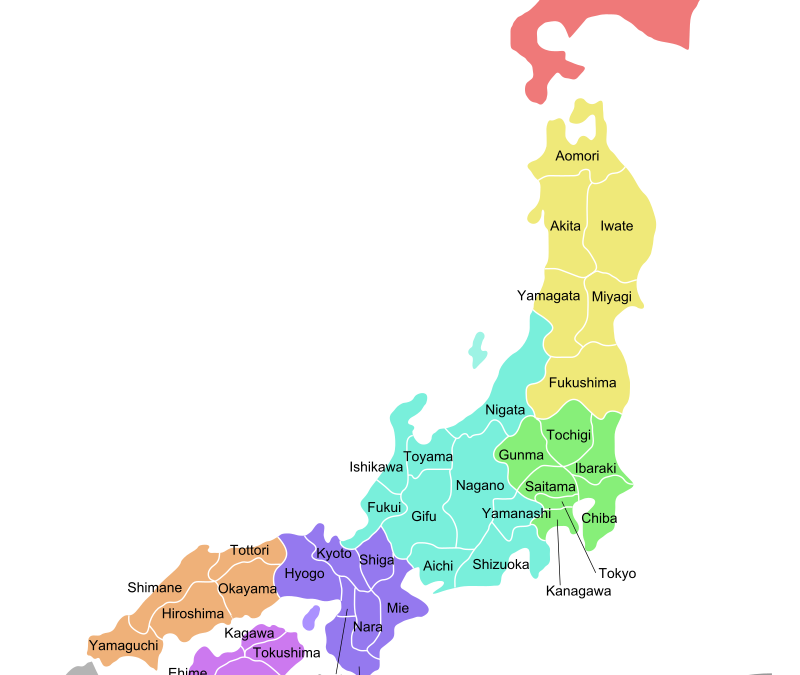
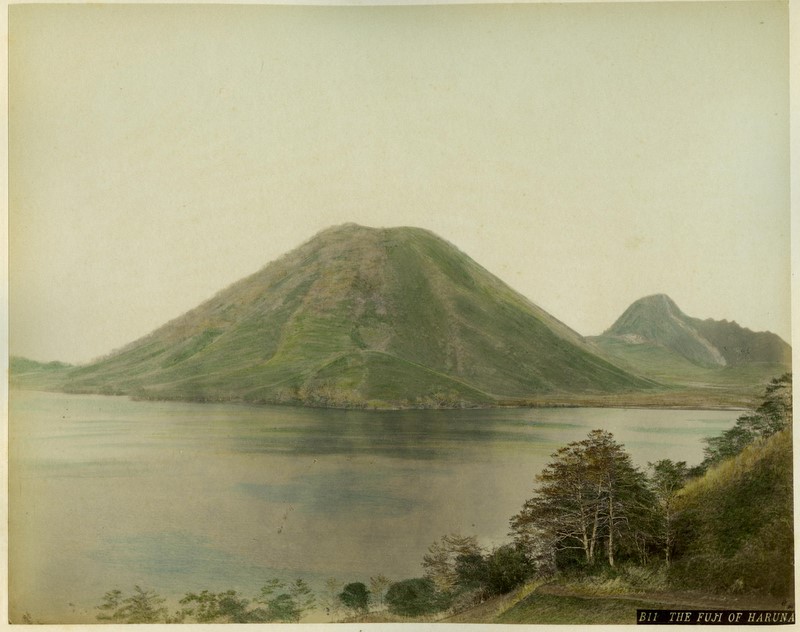
Gunma Prefecture sits at the northwestern corner of the Kantō plain, where the flatlands that eventually run to Tokyo Bay meet the volcanic uplands of central Honshu. Shinto Village lies on the Jomo plain beneath two of the prefecture’s landmark volcanoes — Mt. Haruna to the west and Mt. Akagi to the east. The Haruna massif matters to this story twice over: its slopes carry the hardwood forests that feed the lathes, and its presence as a sacred mountain shaped the settlement pattern of the villages below it.
Kokeshi themselves were not born here. They emerged in late-Edo-period Tohoku, in the hot-spring towns of the northeast, where kiji-shi woodturners — craftsmen who lived off the hardwood forests, turning bowls and trays — began shaping simple dolls as souvenirs for bathers. That souvenir trade hardened, over generations, into eleven traditional schools, each with fixed proportions and painted patterns passed from master to apprentice.
The Gunma chapter starts after the war.
In 1950, Usaburo Okamoto founded his workshop in Shinto Village at the foot of Mt. Haruna and helped pioneer sosaku kokeshi — “creative” kokeshi freed from the design rules of the Tohoku lineages. A sosaku maker keeps the lathe, the wood, and the doll form, but is free to invent everything else: silhouette, palette, expression, subject. Gunma is today Japan’s largest producer of sosaku kokeshi, and Usaburo Kokeshi is the region’s flagship studio.
- Late Edo period — kiji-shi woodturners in Tohoku hot-spring towns begin turning kokeshi as souvenirs for bathers
- 1872 — Tomioka Silk Mill opens in Gunma, anchoring the prefecture’s sericulture economy and its craft-and-cottage-industry culture
- Post-WWII — the sosaku kokeshi movement breaks from the eleven traditional Tohoku schools’ fixed designs
- 1950 — Usaburo Okamoto founds Usaburo Kokeshi in Shinto Village at the foot of Mt. Haruna
- Heisei era — Tomioka Silk Mill is inscribed as a UNESCO World Heritage site, formal recognition of Gunma’s industrial-craft heritage
- 2026 — Gunma remains Japan’s largest sosaku kokeshi producer, with Usaburo Kokeshi as its flagship studio, still turning mizuki on the rokuro
The material logic is straightforward. The hardwood forests around the Haruna caldera supply mizuki dogwood — pale, fine-grained, paint-friendly — along with cherry and chestnut. The blank is turned on the rokuro lathe, the same rotating-blank principle used by woodturners across Japan, and the doll is then painted by hand. Mizuki’s tight, even grain is why kokeshi faces can be drawn with a few unbroken brush strokes without the line feathering.
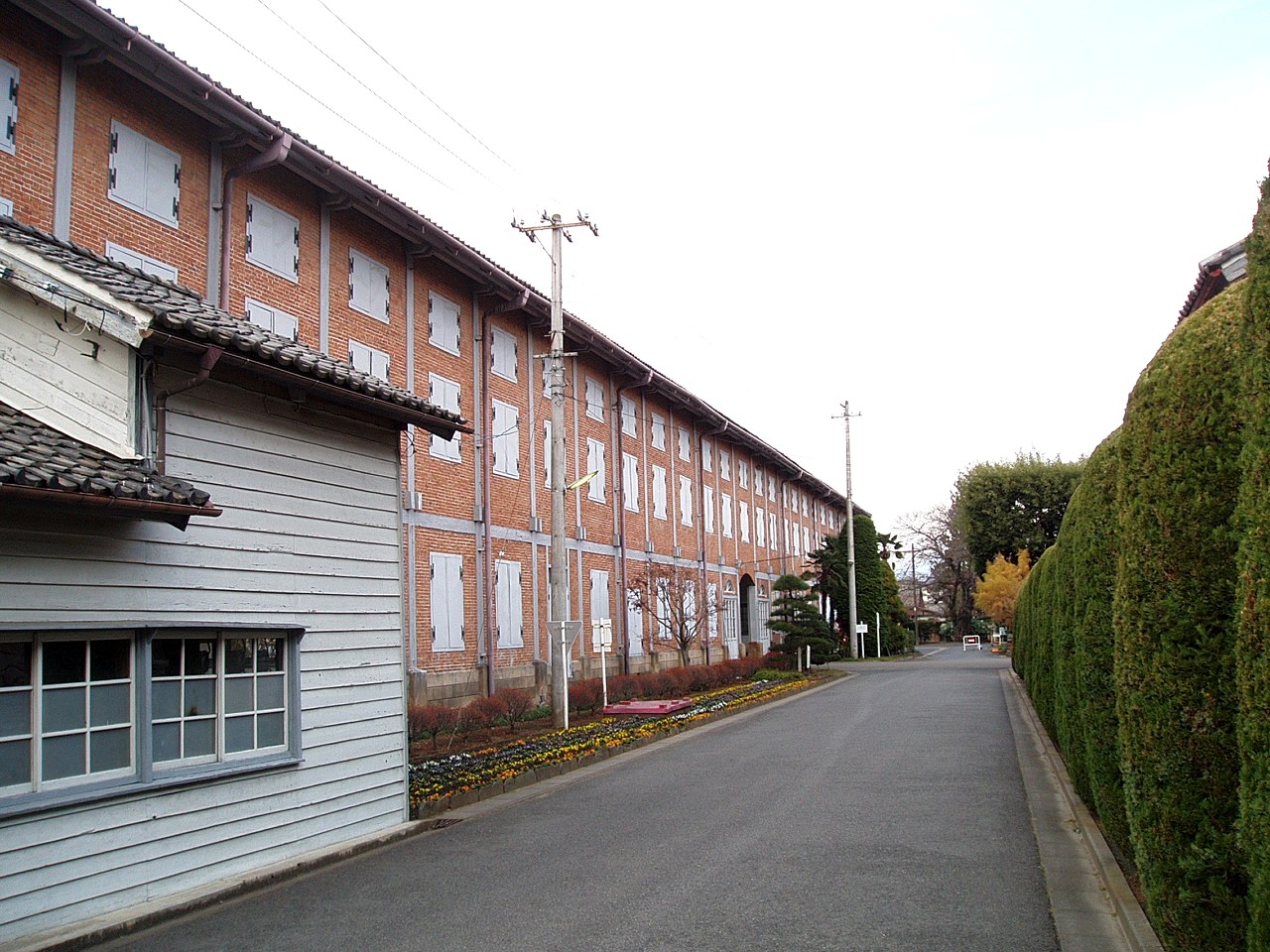
Why did a craft industry take root in Gunma at all? The prefecture’s modern answer is silk. Tomioka Silk Mill, opened in 1872 and now a UNESCO World Heritage site, made Gunma the heart of Japan’s sericulture economy, and together with the Kiryu weaving district it seeded a dense culture of skilled cottage industry across the Jomo plain — households and small workshops accustomed to precise, repetitive handwork sold to distant markets. A postwar kokeshi studio scaling up in a Gunma village was drawing on that existing labor culture, not inventing one.
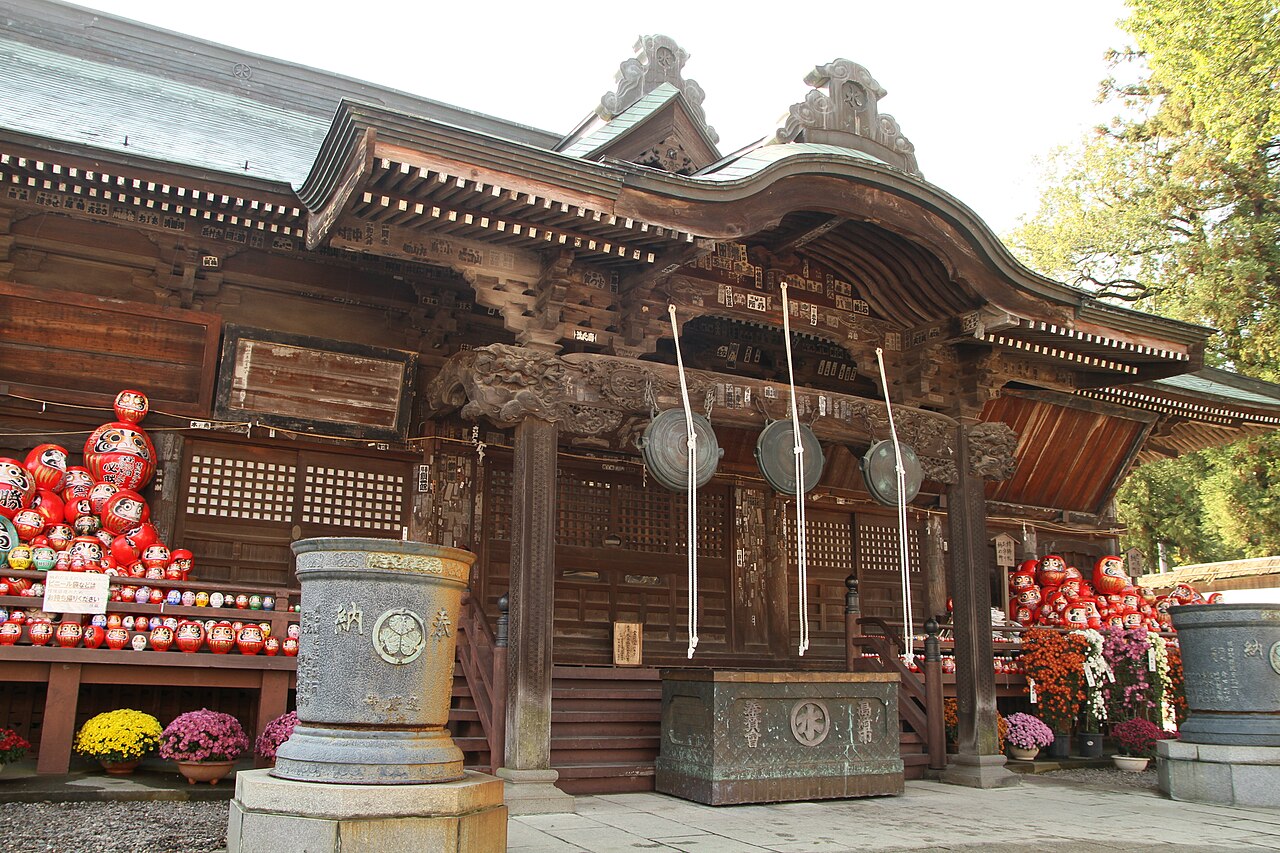
There is also a cultural fit. Nearby Takasaki is the home of the Takasaki daruma, the round red wishing figure produced at the foot of Shorinzan Daruma-ji temple — Gunma’s signature engimono (縁起物, lucky charm) tradition. Sosaku kokeshi inherit exactly this gift-figure sensibility: an object you give to mark an occasion, set on a shelf, and keep. In Gunma the wooden doll and the papier-mâché daruma are two expressions of the same local instinct for the small, auspicious figure.
“Tohoku gave the kokeshi its form; Gunma gave it its freedom. A Usaburo doll is what happens when a 200-year-old souvenir is allowed to choose its own face.”
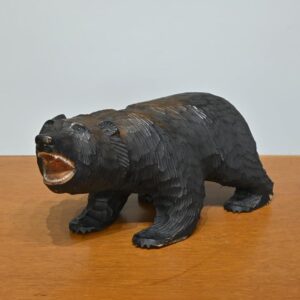
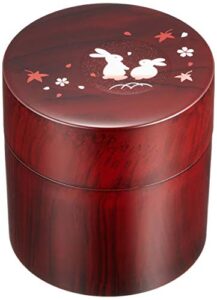
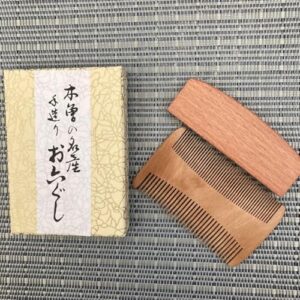
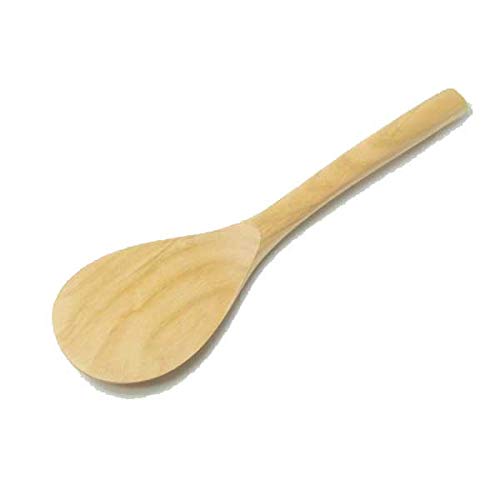
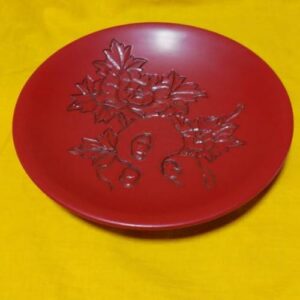
Turned and carved wood is one of the deepest veins on this site. If the rokuro-and-hand-paint approach appeals to you, these related guides map the neighboring territory — same Gunma prefecture, same lathe technique, or the same Kanto craft belt.
📦 Shipping & where to buy from outside Japan
For US readers the simplest path is Amazon.com itself: kokeshi and other Japanese wooden dolls circulate on the US marketplace with domestic Prime shipping, USD pricing, and no customs paperwork. The search link in the Editor’s Pick section below goes straight to current US-side listings for this keyword.
The specific Usaburo listing referenced in this guide is sourced from the Amazon JP Global Store, which ships many household and craft items internationally to most major destinations. International shipping on small wooden objects typically lands in the $15–$40 range to the US and EU (higher elsewhere), and orders above your local customs threshold may incur duties — verify both at checkout. Per the data snapshot, live availability for this exact ASIN was not captured at writing time, so confirm the “ships to your address” flag on the listing page itself.
Price snapshot across stores
Live pricing for this listing was unavailable in the fetched data at the time of writing — the table below maps the purchase paths rather than quoting figures. Prices and stock fluctuate; the links carry the current numbers.
| Store | Item / variant | Price | Notes |
|---|---|---|---|
| 🇺🇸 Amazon.com (US, search) | Browse Japanese kokeshi & wooden dolls | varies (USD) | Best if you are shopping from the US — Prime shipping, USD pricing, no international customs. Amazon US carries Usaburo and other Japanese kokeshi makers; selection rotates, so the exact piece in this guide may appear US-side or only via Japan (next row). |
| 🇯🇵 Amazon JP Global Store | Usaburo sosaku kokeshi, mizuki dogwood, hand-painted (ASIN B08SKHH4D1) | Not captured at writing — check listing (¥ is authoritative) | The sourced listing for the specific doll in this guide. Ships internationally from Japan to most major destinations; confirm the ship-to flag and current ¥ price on the page. |
| Maker direct (Usaburo Kokeshi) | Full studio range | — | The studio operates in Shinto Village, Gunma. International checkout availability is unconfirmed — check the maker’s site. |
| Proxy services (Buyee / Tenso) | Any Japan-only listing | item + proxy fees | Fallback if the Global Store flag is off for your country. Proxy forwarding adds service and consolidation fees on top of the item price. |
What it does well
Weaknesses and things to verify before buying
- No captured price in our data snapshot. The fetched listing data did not include a live price at writing time. Check the current ¥ figure on the JP listing (or USD figures on the US search results) before deciding.
- Size and weight are unconfirmed. The snapshot did not state dimensions. Kokeshi range from palm-size to shelf-dominating; verify the listed height before you assign it a spot.
- It is a decorative object, not a toy. The listing data does not indicate any children’s-toy certification. Treat it as an adult display piece, not a plaything for small children.
- Unit-to-unit variation is inherent. Hand-painting and natural mizuki grain mean your doll will differ slightly from the listing photo — a feature of the craft, but a mismatch for buyers expecting injection-molded uniformity.
- Wood dislikes extremes. Direct sunlight fades pigment and prolonged humidity swings can stress any turned hardwood. Display away from south-facing windowsills and bathroom shelves.
- Sosaku is not dento. If your goal is collecting the eleven traditional Tohoku schools, this Gunma creative-school piece belongs to a different (younger) lineage — wonderful on its own terms, but not a Naruko or Togatta.
- Check the seller line on the listing. Kokeshi-shaped generics circulate on every marketplace. Confirm “Usaburo” appears in the title or brand field before checkout.
Conclusion — which buyer type are you?
Other ways to approach this purchase
🏆 Editor’s Pick
❓ Frequently Asked Questions
What is the difference between sosaku kokeshi and traditional kokeshi?
Traditional (dento) kokeshi are made within eleven recognized Tohoku lineages, each with fixed proportions and painted patterns passed from master to apprentice. Sosaku (creative) kokeshi, a post-WWII movement, keep the lathe-turned wooden doll form but free the maker to invent the shape, motifs, and palette. Usaburo Kokeshi in Gunma is a flagship studio of the sosaku branch.
Who makes this doll, and where?
It is made by Usaburo Kokeshi, a workshop founded in 1950 by Usaburo Okamoto in Shinto Village, Gunma Prefecture, at the foot of Mt. Haruna. Gunma is today Japan’s largest producer of sosaku kokeshi, and Usaburo is the region’s best-known studio.
What wood is the doll made from?
The primary timber is mizuki (Japanese dogwood) — a pale, fine-grained hardwood from the forests around Mt. Haruna that takes brush painting cleanly and resists splitting. The studio also turns cherry and chestnut. Each doll is lathe-turned and then painted by hand.
Can I buy it from outside Japan?
Yes, by two routes. Amazon.com (US) carries Japanese kokeshi listings with domestic shipping, and the specific Usaburo listing in this guide is sourced from the Amazon JP Global Store, which ships internationally to most major destinations (typically $15–$40 freight to the US/EU for small items). Confirm the ship-to flag and any customs duties for your country at checkout.
How should I care for a kokeshi doll?
Keep it away from direct sunlight (which fades pigment) and from large humidity swings (which stress turned hardwood). Dust with a dry, soft cloth — don’t wash it or use solvent cleaners, since the painted surface sits directly on the wood.
Is it suitable as a gift or for children?
As a gift, very much so — kokeshi belong to Japan’s engimono (lucky-charm) gift-figure culture, alongside Gunma’s own Takasaki daruma. As a children’s toy, no: the listing data shows no toy certification, so treat it as a decorative object for display.
Why is no exact price listed in this article?
The data snapshot fetched for this article on June 10, 2026 did not include a captured live price for this listing, and we don’t print guessed figures. The Amazon JP listing’s JPY price is the authoritative one for the specific item; the affiliate links show current pricing.
jpmono.com is curated by a Japan-based editorial team (working out of Toyama in the Hokuriku region and Nara in Kansai) and is independent. We do not take payment from the makers we feature; income comes from affiliate links. We do not physically test every product — we read maker’s specs and source listings, and we say plainly when data is thin.
This article was drafted with AI assistance and reviewed by a human editor. Product facts are drawn from the listing data snapshot and maker-published information current as of June 10, 2026.
Affiliate disclosure: jpmono.com may earn a commission on qualifying purchases made through links on this page, at no additional cost to you.