![Kiyomizu-yaki Kyusu Teapot — Where to Buy This Kyoto Sencha Pot [2026]](https://jpmono.com/wp-content/uploads/2026/06/kiyomizu-yaki-kyusu-teapot-where-to-buy-2026-featured.jpg)
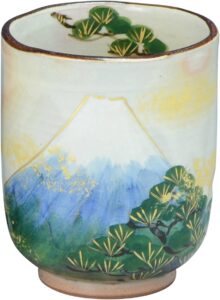
A Kiyomizu-yaki kyusu (清水焼急須, “Kiyomizu-ware side-handle teapot”) is a small, hand-painted ceramic pot built for one job: drawing a short, fragrant infusion of Japanese green tea. The piece covered in this guide is a yokode (横手, “side-handle”) sencha pot from the Gojozaka kiln district on the eastern slopes of Kyoto, in the lineage of long-running Higashiyama workshops such as Tosen and Asahido. It carries a fine stainless mesh built into the spout-side wall, so leaf and liquor part cleanly when you pour.
Kyoto’s kilns are a different proposition from Japan’s rustic folk-pottery towns. As the imperial capital for more than a thousand years, the city concentrated court and tea-ceremony patronage, and its potters answered with refined, painterly overglaze wares rather than heavy everyday stoneware. The seventeenth-century masters Nonomura Ninsei and Ogata Kenzan set that decorative idiom, and the side-handle kyusu itself evolved around the sencha and gyokuro culture of the Kansai region, where the leaf is grown in nearby Uji and brewed cool, slow, and small.
This article is for the reader deciding whether a hand-painted Kyoto kyusu belongs in their kitchen — and where it actually ships. We cover who it suits and who should skip it, what the published listing does and does not confirm, how it compares to other Japanese tea vessels, the realistic ways to buy it from outside Japan, and an Editor’s Pick with the buying links laid out plainly.
🔄 Updated:
⏱️ Read time: ~9 min

- Who this is for — and who should skip it
- Product overview (from published specs)
- Where this comes from — place, era, and the craft tradition
- Price snapshot across stores
- What it does well
- Weaknesses and things to verify before buying
- Conclusion — which buyer type are you?
- Other ways to approach this purchase
- 🏆 Editor’s Pick
- ❓ Frequently Asked Questions
Who this is for — and who should skip it
- Brew loose-leaf Japanese green tea — sencha, gyokuro, or kabusecha — at a low temperature
- Want a hand-painted Kyoto piece rather than a mass-produced teapot
- Pour small, frequent servings and value a fine built-in strainer
- Appreciate a single-serving-to-two-cup vessel for solo or paired drinking
- Already own Japanese tea cups (yunomi) and want a matching pour vessel
- Mainly drink black tea or herbal tisanes that want a large, tall pot
- Need to serve four or more cups from one brew
- Want a dishwasher-and-forget vessel for daily rough handling
- Prefer a top-handle (ushirode) or upright Western-style teapot grip
- Are shopping purely on price and do not need a hand-decorated piece
Product overview (from published specs)
The data available for this guide is thin. Only the Amazon listing reference (ASIN B0G5HK9BW8) is on hand; the fetched search snapshot returned no live price or full specification block, so live pricing may have shifted since the writing date and several attributes below are described in the general terms typical of the form rather than asserted from a confirmed spec sheet. Where a value is not confirmed in the data, it is marked as such.
Kiyomizu-yaki Kyusu Teapot
京焼 加春窯 清水焼 横手急須 急須 蔦
通常6~7日以内に発送します。 · Sold by 伊糖ショップ · ASIN B0G5HK9BW8
Price and availability as of 2026-08-31 02:30 JST. The Amazon listing at the time of purchase is authoritative. jpmono.com earns a commission on qualifying purchases at no extra cost to you.
| Attribute | Detail (from listing / craft form) | Source |
|---|---|---|
| Craft | Kiyomizu-yaki / Kyo-yaki, hand-painted ceramic | Listing / data notes |
| Form | Yokode (side-handle) kyusu, sencha pot | Listing |
| Strainer | Built-in fine stainless-steel mesh | Listing |
| Origin | Gojozaka kiln district, Higashiyama, Kyoto (e.g., Tosen / Asahido lineage) | Listing / data notes |
| Capacity | Unconfirmed — check manufacturer / listing (kyusu of this type are typically single-serving to ~2 cups) | — |
| Weight | Unconfirmed — check listing | — |
| Decoration | Hand-painted; traditional Kyo-yaki uses sometsuke (blue underglaze) and akae (overglaze enamel) idioms | Craft form |
| ASIN | B0G5HK9BW8 | Amazon JP Global Store |
📖 Glossary — key terms for this teapot
- Kyusu (急須) — a Japanese teapot for green tea, usually small, often with a side handle.
- Yokode (横手) — “side handle,” set at roughly 90° to the spout; you pour with a relaxed wrist rather than a raised arm.
- Kiyomizu-yaki / Kyo-yaki (清水焼 / 京焼) — pottery from Kyoto’s Higashiyama kilns; “Kiyomizu ware” names the slopes below Kiyomizu-dera, and “Kyo ware” is the broader Kyoto term.
- Sencha (煎茶) — the everyday steamed Japanese green tea, brewed around 70–80°C.
- Gyokuro (玉露) — a shaded premium green tea brewed cooler still (around 50–60°C) for a sweet, low-astringency cup.
- Sometsuke (染付) / Akae (赤絵) — blue-and-white underglaze painting, and multi-color overglaze enamel painting, respectively.
- Gojozaka (五条坂) — the historic pottery-shop slope in Higashiyama, the heart of the Kiyomizu kiln cluster.
Related jpmono guides — other Kyoto tea-table pieces and Japanese drinking vessels worth weighing against this kyusu.
Where this comes from — place, era, and the craft tradition

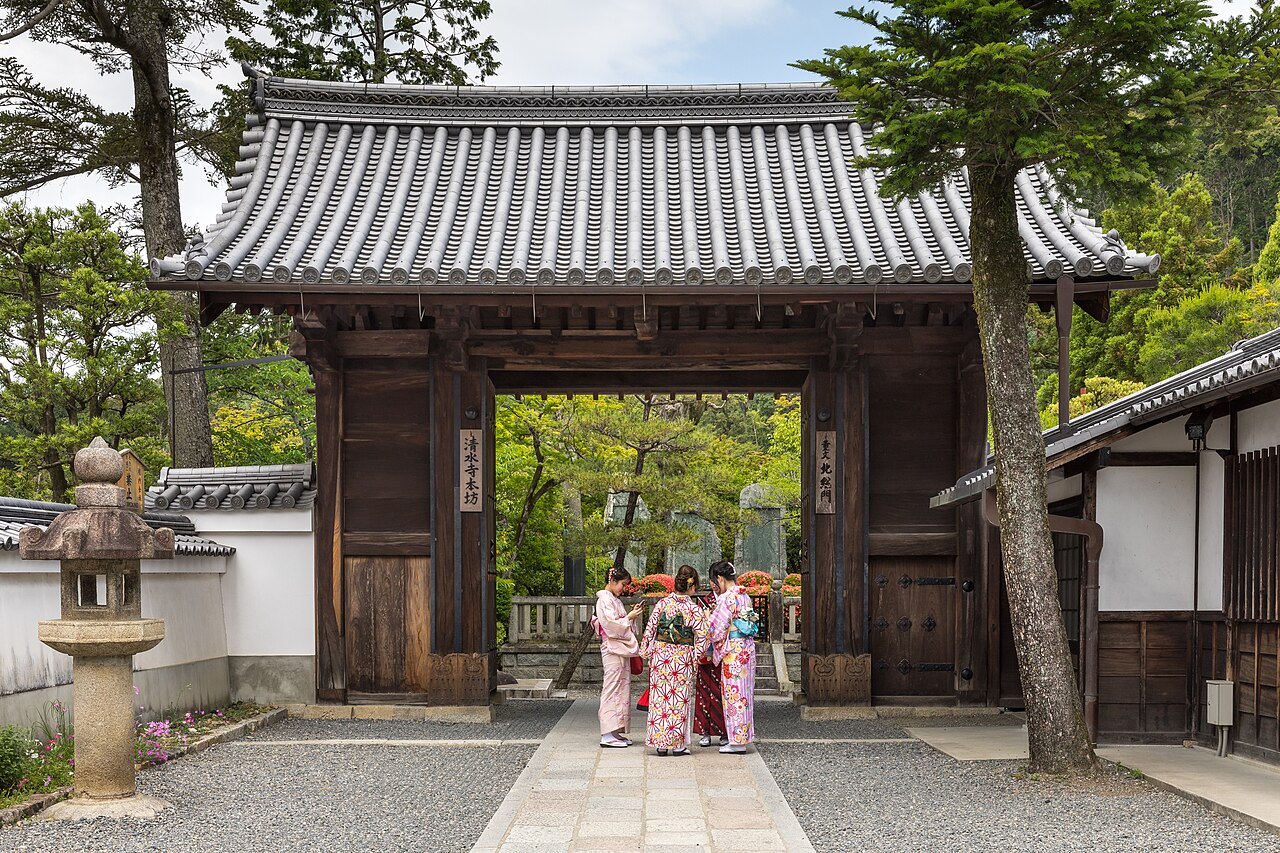
Kyoto was Japan’s imperial capital from 794 until 1869 — over a thousand years during which the court, the great temples, and the tea ceremony all sat within walking distance of one another. That concentration of patronage is the single most important fact about Kyo-yaki. Where other Japanese pottery towns served farmers and fishers with sturdy everyday stoneware, Kyoto’s kilns served aristocrats, abbots, and tea masters, and they specialized accordingly in refined, hand-painted, decorative wares.
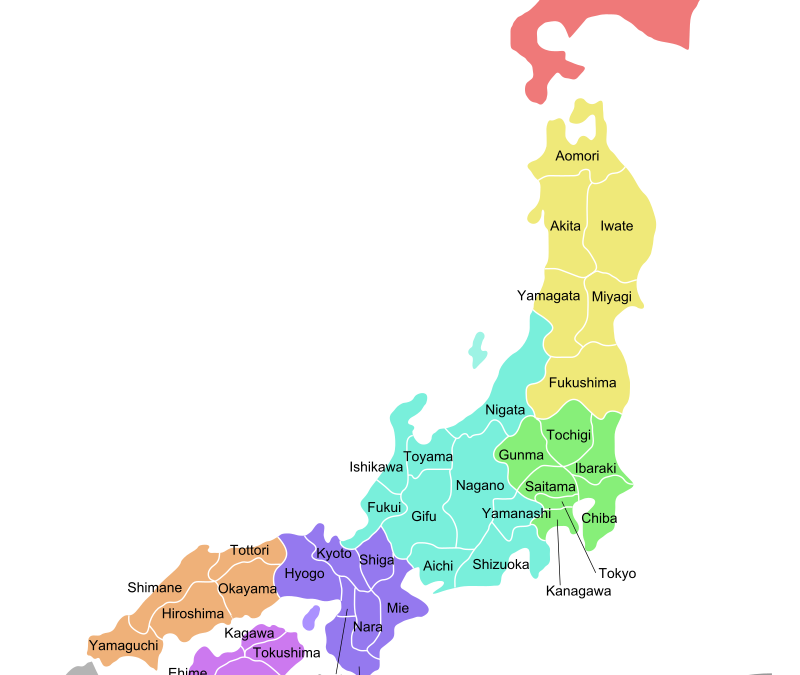
The kilns clustered on the eastern hills of the city — Higashiyama — and especially along the Gojozaka and Kiyomizu-zaka slopes that climb toward Kiyomizu-dera. The temple gave the ware its popular name: Kiyomizu-yaki, the pottery from below Kiyomizu. The broader term Kyo-yaki (“Kyoto ware”) covers the same Higashiyama tradition.
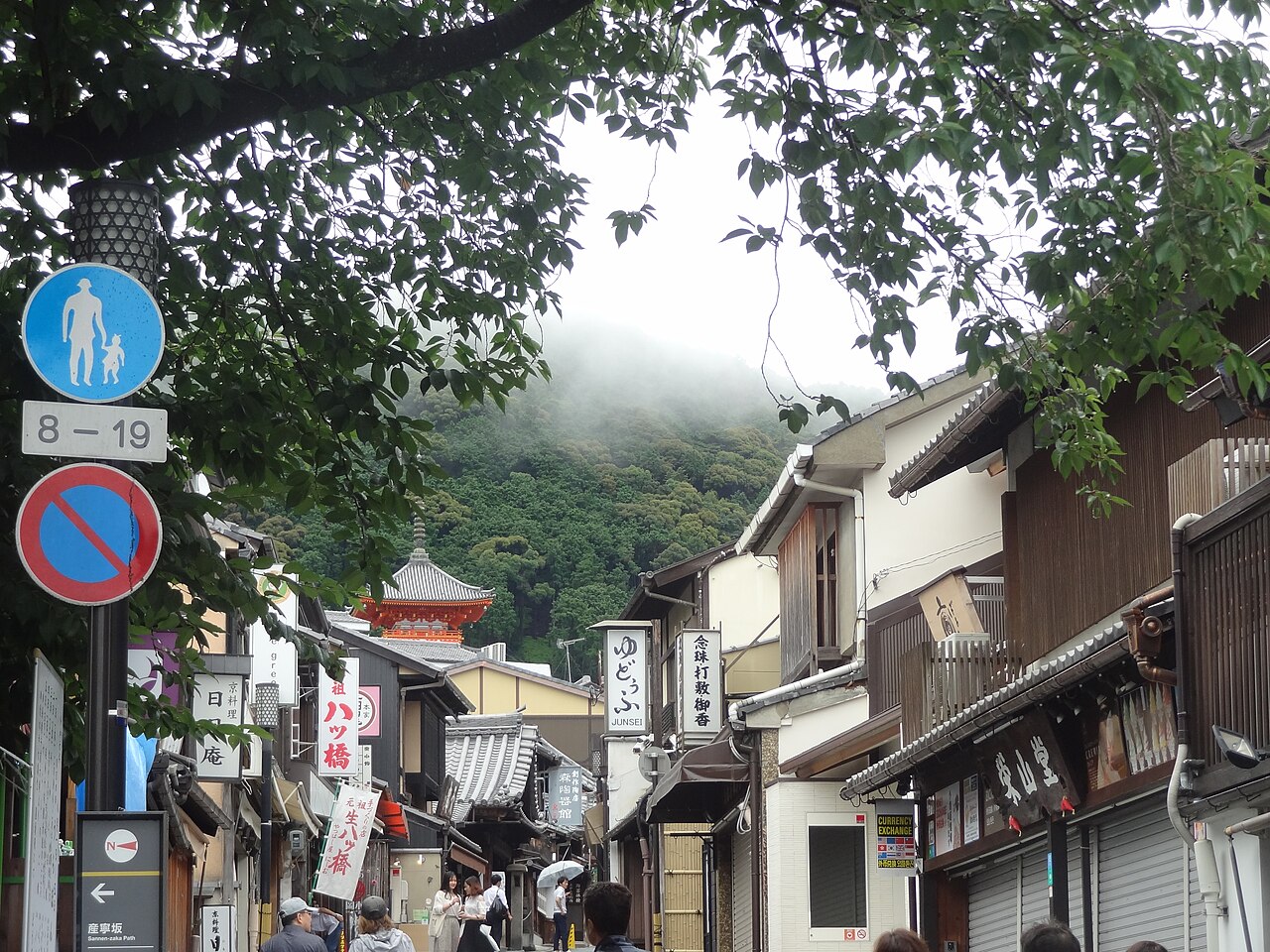
The painterly idiom that still defines the ware was set in the seventeenth century. Nonomura Ninsei perfected lustrous overglaze enamel painting, and Ogata Kenzan brought a bold, calligraphic, almost graphic sensibility to the surface. Their work pushed Kyoto away from imitating Chinese and Korean models and toward a distinctly Kyoto decorative language — one built on fine throwing, imported clays, and enamel and gold painting rather than on a single local clay body.
- 794 — Heian-kyō (Kyoto) becomes Japan’s imperial capital; court patronage concentrates craft in the city.
- mid-1600s — Nonomura Ninsei perfects overglaze enamel painting at the Omuro kilns.
- early 1700s — Ogata Kenzan brings a bold painterly idiom that still defines Kyo / Kiyomizu ware.
- 1700s–1800s — The Gojozaka / Kiyomizu-zaka kiln district flourishes; sencha culture spreads through Kansai.
- 1869 — The capital moves to Tokyo; Kyoto kilns adapt toward art pottery and the tea trade.
- 1977 — Kyo-yaki / Kiyomizu-yaki is designated a Traditional Craft (dentōteki kōgeihin) by Japan’s trade ministry.
- 2026 — Workshops in the Tosen / Asahido lineage continue producing hand-painted kyusu in Higashiyama.
“A Kyoto kyusu is less a kitchen tool than a thousand years of court taste shrunk to the size of your hand.”
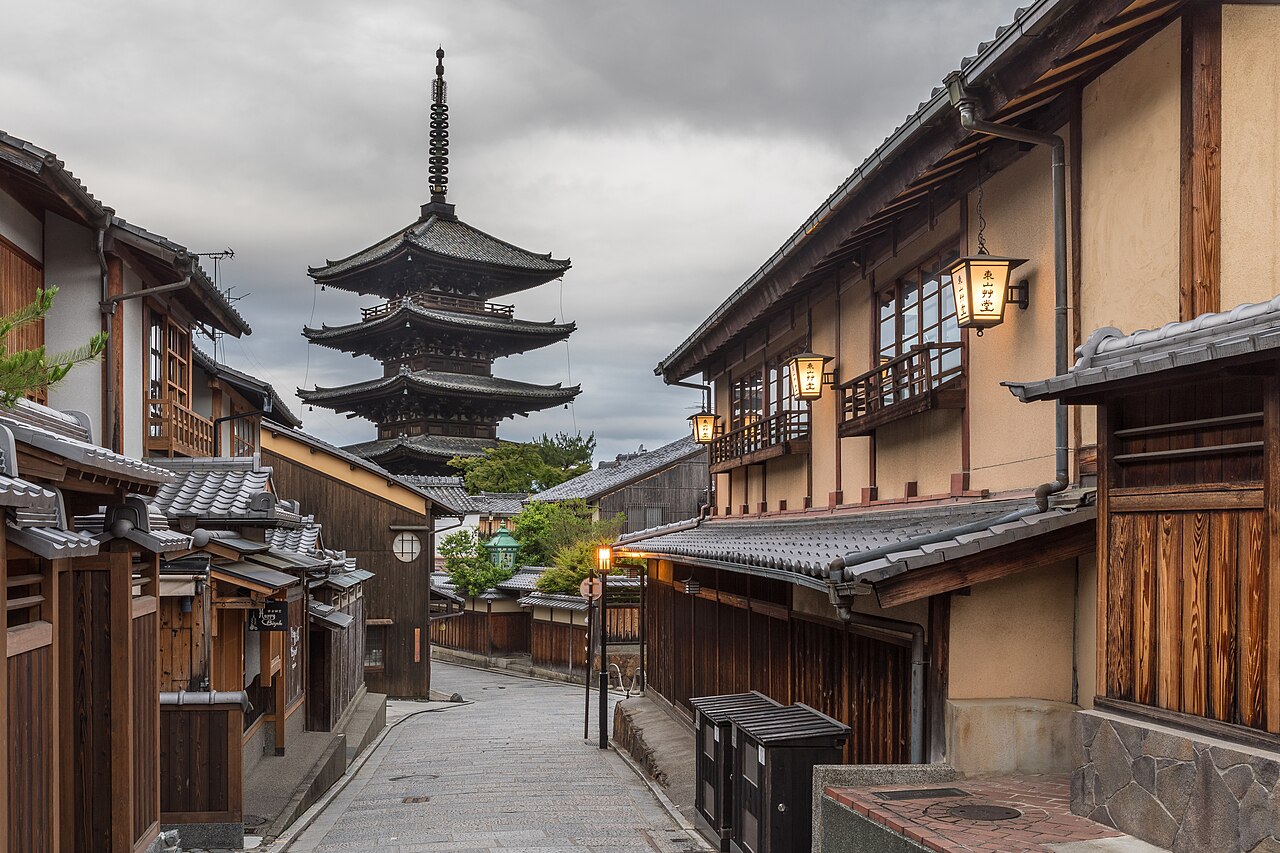
What “still being made here” means in practice is a small district of working kilns and decorating studios, many of them family operations that have passed the brush down for generations. The Higashiyama slopes that once held dozens of climbing kilns now hold a smaller cluster of electric and gas kilns plus the painting houses that finish their surfaces — but the master-to-apprentice line that runs back to the Ninsei–Kenzan idiom has not been broken.
The side handle itself is a tell of place and purpose. The yokode kyusu evolved around the sencha and gyokuro grown in nearby Uji, just south of the city. Those teas are brewed cool and short — gyokuro can want water near 50°C — and they reward a small pot you can refill several times from one charge of leaf. You cradle the side handle, tilt with the wrist, and pour a few centiliters at a time. It is a vessel shaped by a specific way of drinking, in a specific place.
Price snapshot across stores
Pricing for this specific listing was not captured in the fetched data, so the table below leads with where to look rather than a confirmed figure. The JPY price on the Amazon JP Global Store listing is the authoritative one for this exact item; always verify it at the retailer before buying. USD figures elsewhere on jpmono are approximate at a ¥150/USD baseline.
| Store | Item / Variant | Price | Notes |
|---|---|---|---|
| 🇺🇸 Amazon US (search) | Browse Japanese kyusu teapots | varies (USD) | Best if you are shopping from the US — Prime shipping, USD pricing, no international customs. Amazon US carries Japanese kyusu and green-tea sets from various makers; this exact Kiyomizu piece is sourced from Japan (next row). |
| Amazon JP Global Store | This hand-painted Kiyomizu-yaki kyusu (ASIN B0G5HK9BW8) | Check listing (JPY authoritative) | The sourced listing for this exact item. Ships internationally from Japan to most major destinations. Price not captured in fetched data — verify on the listing. |
| Maker direct | Gojozaka kilns / Higashiyama studios | Varies | Some Kiyomizu studios sell direct, but many ship within Japan only. Useful for confirming the kiln lineage if that matters to you. |
| Proxy services (Buyee / Tenso) | Forward a domestic-only listing | Item + forwarding fee | A fallback when a piece sells only on a Japan-domestic store; adds a service fee and a second shipping leg. Mind customs duties above your local threshold. |
What it does well
Weaknesses and things to verify before buying
- Capacity is unconfirmed in the data. Side-handle kyusu are typically single-serving to about two cups; if you regularly serve three or more people, confirm the volume on the listing before buying.
- Price was not captured. The fetched snapshot returned no live price, so treat any figure as unverified until you see it on the Amazon JP listing.
- Hand-painted means variation. Pattern, color, and minor surface detail can differ piece to piece; the photo is representative, not a guarantee of an identical unit.
- Care is not dishwasher-casual. Hand-painted ceramic with overglaze enamel is best hand-washed; dishwashers and abrasive scrubbing can dull or damage decoration. Confirm the maker’s care guidance.
- The fine mesh needs cleaning. A built-in stainless strainer traps fine sencha particles and should be rinsed and occasionally cleared so flow does not slow.
- It is the wrong tool for some teas. For large pots of black tea, hojicha by the liter, or tisanes, an upright top-handle pot suits better.
- Shipping path matters. Confirm the item is fulfilled by the Amazon JP Global Store (ships internationally) rather than a domestic-only seller before you order from outside Japan.
Conclusion — which buyer type are you?
Other ways to approach this purchase
🏆 Editor’s Pick
❓ Frequently Asked Questions
Is Kiyomizu-yaki the same as Kyo-yaki?
They overlap. Kyo-yaki (“Kyoto ware”) is the broad name for the city’s Higashiyama pottery tradition, and Kiyomizu-yaki (“Kiyomizu ware”) names the kilns clustered on the slopes below Kiyomizu-dera. In everyday use the two terms are often treated as one designated craft.
Will a side-handle kyusu ship internationally?
When the listing is fulfilled by the Amazon JP Global Store, it ships to most major destinations from Japan. Confirm on the product page that it is the Global Store seller; if a piece is domestic-only, a proxy service such as Buyee or Tenso can forward it.
How should I care for a hand-painted ceramic teapot?
Hand-wash is safest. Hand-painted overglaze decoration can dull in a dishwasher or under abrasive scrubbing, so rinse with mild soap, clear the stainless mesh of fine leaf, and let it dry fully. Check the maker’s specific care guidance where available.
What tea is this kyusu designed for?
Loose-leaf Japanese green tea — primarily sencha and gyokuro, brewed cool and short. The small body and side handle suit the Kansai style of pouring several small servings from one charge of leaf.
Why is the handle on the side instead of the top?
The yokode (side-handle) form lets you pour with a low, relaxed wrist motion over the cups, which suits the small, frequent servings of cool-brewed green tea. Top- or rear-handle pots are better for larger volumes and hotter, longer infusions.
How is it different from a Tokoname kyusu?
A Kiyomizu kyusu is a hand-painted Kyoto piece in a refined, decorative idiom, often with a stainless mesh. A Tokoname kyusu is typically unglazed red clay (shudei) prized for how the clay interacts with the tea. They are different traditions; this guide covers the Kyoto, Kiyomizu-yaki version.
jpmono.com is curated by a Japan-based editorial team (working out of Toyama in the Hokuriku region and Nara in Kansai) and is independent. We do not take payment from the makers we feature; income comes from affiliate links. Read more about our editorial standards.
🤖 This article was prepared with AI assistance and reviewed against the source listing data. Specifications, pricing, and availability should be confirmed on the retailer’s page before purchase.
Affiliate disclosure: jpmono.com may earn a commission on qualifying purchases made through links on this page, at no additional cost to you.