![Kasukabe Kiri Paulownia Accessory Chest: Saitama Woodwork [2026]](https://jpmono.com/wp-content/uploads/2026/05/japan-map-regions-and-prefectures-800x1050.png)
A Kasukabe kiri-zaiku (春日部桐細工, “Kasukabe paulownia joinery”) accessory chest is a small drawered box — a miniature tansu — built from paulownia wood in one of Japan’s oldest paulownia-working towns. Kasukabe sits in eastern Saitama, on the old Nikko Kaido highway, and its joiners have shaped the same featherlight, humidity-buffering timber into storage furniture since the early Edo period. The chest covered here is a compact form of that lineage, sized for jewelry, watches, seals, folded scarves, and the kind of small documents that warp or mildew in lesser boxes.
What makes paulownia (kiri, 桐) worth a dedicated article is not romance but material behavior. Kiri is among the lightest workable hardwoods in Japan, it swells and contracts to buffer ambient humidity, it resists insects, and it chars rather than flames quickly — the combination that made kiri-tansu the default storage for kimono, ledgers, and valuables in merchant households, and the standard wedding-dowry furniture passed between families. A small drawered chest brings that same envelope to a desktop or a shelf.
This guide is written for international readers deciding whether a Kasukabe paulownia chest is worth importing and how to buy one outside Japan. It covers what paulownia does and does not do, the regional and historical context behind the craft, the honest weaknesses, price and shipping considerations, and which buyer profile this suits. Paulownia chests vary in size and construction, so dimensions and drawer count should be confirmed for any piece.
🔄 Updated:
⏱️ Read time: about 11 minutes
- Who this is for — and who should skip it
- Product overview (from published specs)
- Where this comes from — place, era, and the craft tradition
- 📦 Shipping & where to buy from outside Japan
- Where to buy Kasukabe kiri chests
- What it does well
- Weaknesses and things to verify before buying
- Conclusion — which buyer type are you?
- Other ways to approach this purchase
- ❓ Frequently Asked Questions
Who this is for — and who should skip it
- Want a humidity-stable home for jewelry, watches, or seals (hanko)
- Store washi documents, certificates, or letters that warp in damp air
- Value light, quiet-sliding drawers over heavy hardwood furniture
- Care about a verifiable regional craft lineage, not generic “wood box” goods
- Want an heirloom-style gift with a real dowry and storage tradition behind it
- Need a hard-sided, knock-proof travel case — kiri is soft and dents
- Want a lockable safe; most kiri chests are not security furniture
- Expect dark, heavily grained wood — paulownia is pale and understated
- Are shopping purely on lowest price; craft joinery carries a premium
- Plan to keep it in a wet bathroom or outdoors — it is indoor furniture
Product overview (from published specs)
Paulownia chests are produced in several sizes. The table separates established craft characteristics from details that vary, such as dimensions and drawer count, rather than guessing at them.
| Attribute | Detail | Source |
|---|---|---|
| Item | Kasukabe kiri-zaiku accessory chest / mini tansu with drawers | Amazon reference |
| Material | Paulownia (kiri, 桐) wood | Maker tradition |
| Form | Small drawered chest (jewelry / accessory storage) | Amazon reference |
| Origin | Kasukabe, Saitama Prefecture, Kantō | Craft tradition |
| Dimensions | — | — |
| Drawer count | Unconfirmed — varies by model | — |
| Finish | Traditionally pale natural kiri; some pieces lightly waxed or wiped | Maker tradition |
📖 Glossary — key terms
- Kiri (桐) — paulownia wood; light, soft, humidity-regulating, insect-resistant, slow to burn.
- Kiri-zaiku (桐細工) — paulownia joinery; the craft of building boxes and chests from kiri.
- Tansu (箪笥) — a Japanese chest of drawers; a small accessory chest is a miniature tansu.
- Kiri-tansu (桐箪笥) — a full-size paulownia chest, traditionally for storing kimono.
- Sashimono (指物) — fine wooden joinery assembled without (or with minimal) nails.
- Shukuba (宿場) — a post town on an Edo-period highway, where travelers rested and changed horses.
- Kurazukuri (蔵造り) — clay-walled, fire-resistant storehouse construction, seen across Kawagoe.
Related Japanese craft on jpmono.com — paulownia and other woodwork, plus Saitama’s wider craft heritage.
Where this comes from — place, era, and the craft tradition

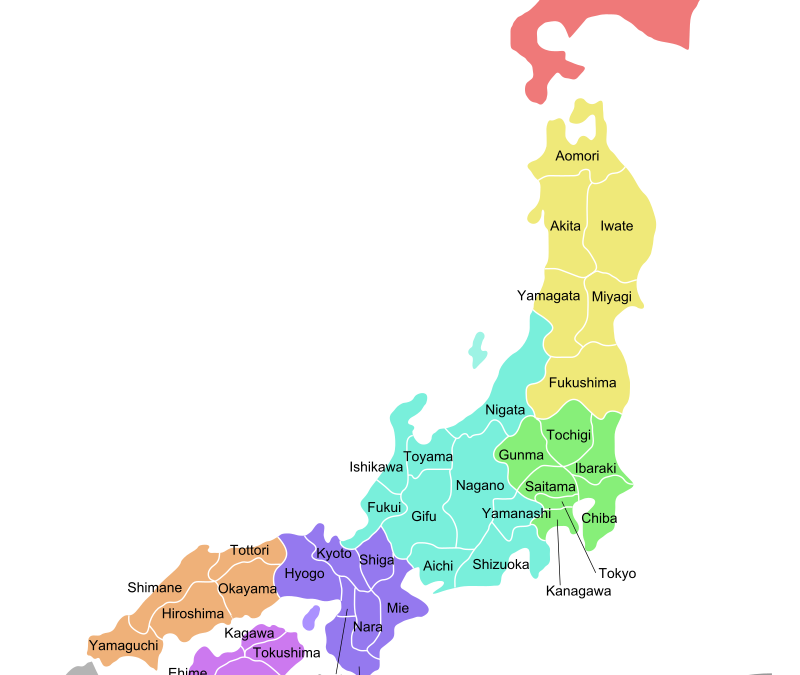
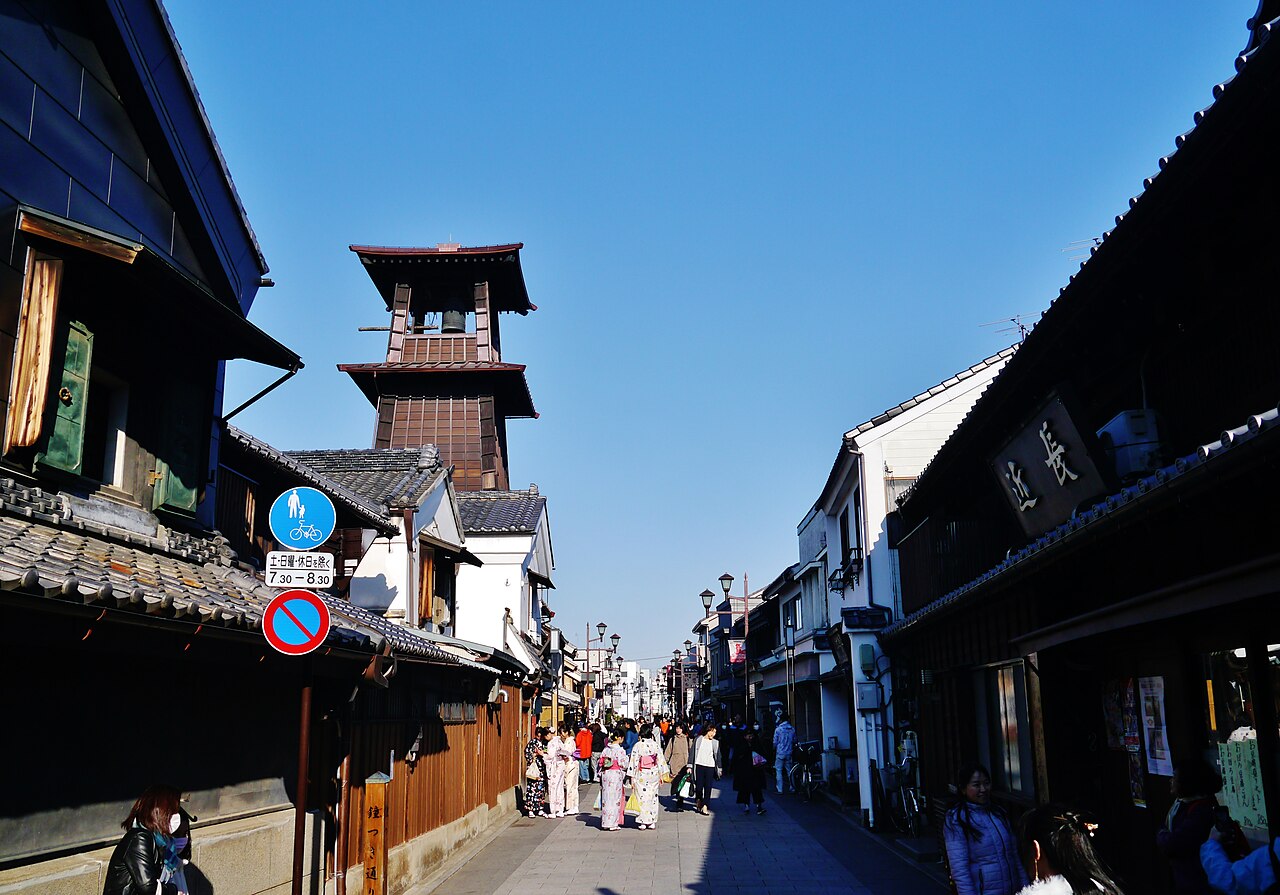
Kasukabe is a city in the eastern lowlands of Saitama Prefecture, in the Kantō region, roughly 35 km north of central Tokyo and within easy reach of the Edo and Furutone river systems. That geography is the reason a paulownia industry took root here. Paulownia thrives in the deep, well-drained alluvial soil deposited by those rivers, and the same waterways and highways that carried timber also carried finished furniture toward the consumer market of Edo — the city that became Tokyo.
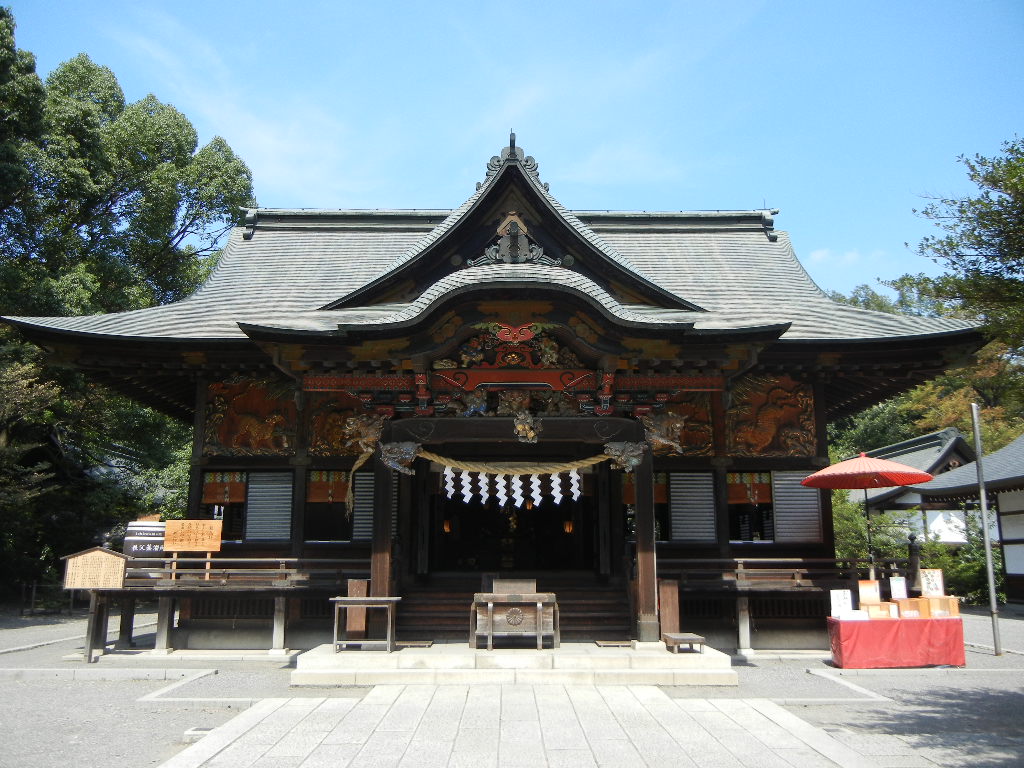
The craft’s beginnings trace to the early Edo period. Kasukabe was a shukuba — a post town — on the Nikko Kaido, the highway running north from Edo toward the Tokugawa mausoleum complex at Nikko. When carpenters, joiners, and other woodworkers gathered for the great rebuilding of Nikko Toshogu, a share of those craftsmen settled along the route, and Kasukabe’s position on the highway gave their skills a place to stay and a market to serve.
- 1603 — The Edo period begins; the Nikko Kaido develops and Kasukabe serves as a post town on the highway.
- 1617 — Tokugawa Ieyasu is enshrined at Nikko Toshogu, drawing pilgrims and traffic along the route past Kasukabe.
- 1630s — The major rebuilding of Nikko Toshogu draws carpenters and joiners north; some settle along the Nikko Kaido near Kasukabe.
- Edo period (approx.) — Paulownia is cultivated in the alluvial Edo and Furutone river basin; kiri-tansu becomes favored merchant storage and wedding-dowry furniture.
- 19th century — Nearby Kawagoe flourishes as “Little Edo,” its kurazukuri storehouses anchoring a regional culture of guarding family treasures in protective wood.
- 2026 — Kasukabe workshops still produce paulownia chests, from full-size kiri-tansu to small drawered accessory chests.
Why paulownia, and why does it deserve the reputation it carries? Kiri is one of the lightest workable woods in Japan, which is why a fully loaded chest of drawers can still be moved by hand. More usefully, the wood breathes: it takes on and releases moisture with the surrounding air, so the interior of a well-built kiri box stays more stable than the room around it. It resists insects, and it is slow to burn — it tends to char on the outside while protecting what is sealed within.
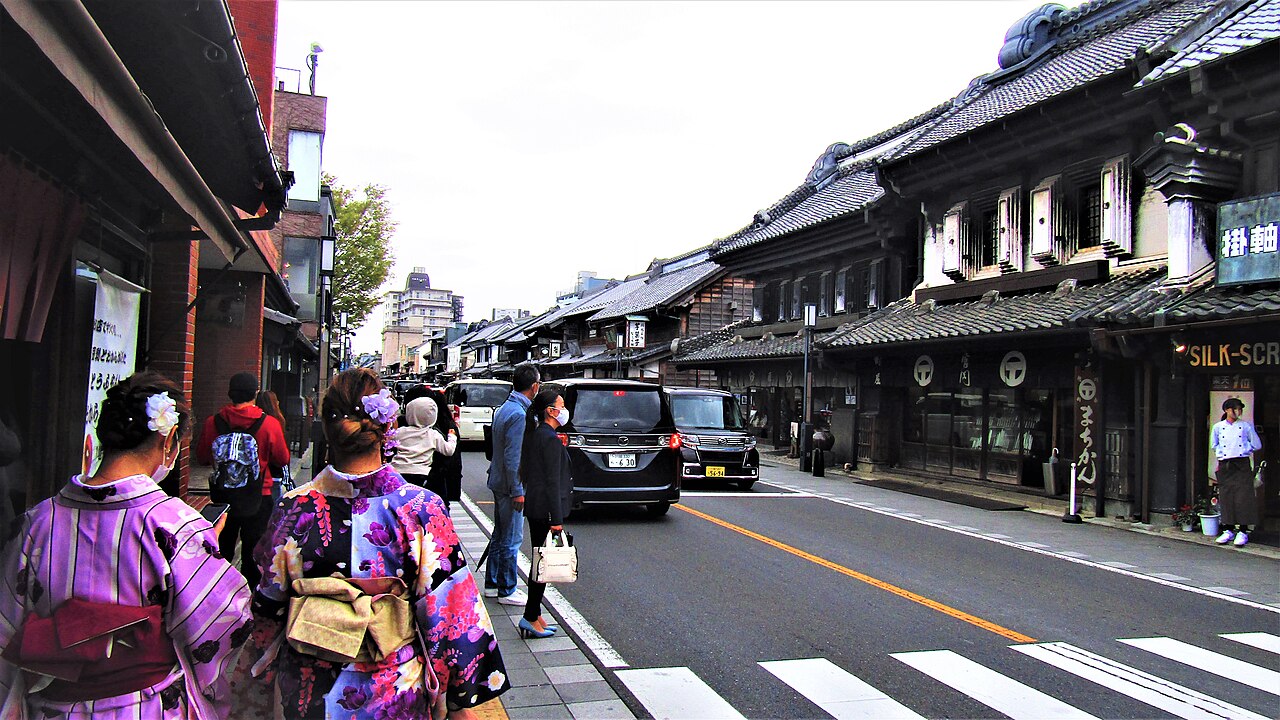
Those properties explain the chest’s social role. In Edo-period merchant households, the kiri-tansu was where kimono, account ledgers, and valuables lived — and a paulownia chest was standard among the furniture a bride brought into a marriage. The instinct ran through the whole region. Kawagoe, a short distance from Kasukabe and known as “Little Edo,” lined its streets with kurazukuri storehouses built to keep family treasures safe from fire and damp. A small accessory chest is the same logic shrunk to fit a dresser top.
“A kiri chest is not just a container. For Edo merchants and for brides alike, it was the wood you trusted to outlast fire, damp, and generations.”
The continuity is the point. The full-size kiri-tansu and the small drawered accessory chest come from the same workshops and the same joinery vocabulary; the smaller form simply adapts the tradition to apartments, desktops, and international buyers who want the wood without a wall of furniture. When a Kasukabe maker builds a jewelry chest today, the material logic — light, breathing, insect-resistant kiri — is the one their predecessors used along the Nikko Kaido.
📦 Shipping & where to buy from outside Japan
Paulownia is light, which helps keep shipping reasonable for a wooden chest. International shipping depends on the chest’s size, weight, destination, and customs requirements.
Customs duties may apply once an order crosses a local de minimis threshold, so factor that into the landed cost. For domestic Japanese purchases, a forwarding service can add a fee. As wood furniture, there is no voltage concern; the main handling caution is that kiri is soft, so protective packaging matters.
Where to buy Kasukabe kiri chests
Prices vary by chest size, joinery, and finish. JPY is the base currency, and any USD conversion is approximate because exchange rates change.
| Store | Item / Variant | Price (JPY + USD est.) | Notes |
|---|---|---|---|
| 🇺🇸 Amazon.com (US) | Browse Japanese paulownia & kiri storage boxes | varies (USD) | Best if you are shopping from the US — Prime shipping, USD pricing, no international customs. Amazon US carries paulownia and kiri storage boxes from various makers; the exact Kasukabe chest is sourced from Japan (next row). |
| 🇯🇵 Amazon JP Global Store | Kasukabe kiri-zaiku accessory chest | — | Ships internationally from Japan. |
| Maker direct | Kasukabe paulownia workshops | varies | Some workshops sell direct domestically; international shipping is not always offered. |
| Proxy services (Buyee / Tenso) | Forwarding for domestic-only shops | item price + service fee | Use when a shop does not ship to your country directly. |
What it does well
Weaknesses and things to verify before buying
- Soft surface. Paulownia dents and scratches more easily than oak or walnut. It is indoor furniture, not a knock-proof case.
- Not a safe. Most kiri accessory chests are not lockable security furniture; treat them as storage, not protection against theft.
- Pale, understated look. Kiri is light-toned with a quiet grain. If you want dark, dramatic wood, this is the wrong material.
- Check the chest details. The fit and drawer configuration are not established here; verify both before buying.
- Moisture extremes. The wood buffers normal household humidity but should not be kept in a wet bathroom or outdoors.
- Price premium. Craft joinery costs more than mass-produced jewelry boxes; budget shoppers may find the value hard to justify.
Conclusion — which buyer type are you?
Other ways to approach this purchase
❓ Frequently Asked Questions
Does Amazon JP ship a Kasukabe paulownia chest internationally?
For a chest bought internationally, confirm destination eligibility at checkout. If direct shipping is unavailable, a forwarding service may be needed.
Why is paulownia (kiri) used for storing valuables?
Kiri is exceptionally light, regulates humidity by taking on and releasing moisture, resists insects, and is slow to burn. Those properties made it the favored wood for storing kimono, documents, and valuables in Edo-period households.
How do I care for a paulownia chest?
Keep it indoors at normal household humidity, wipe it with a dry or barely damp cloth, and avoid wet rooms or direct prolonged sun. The wood is soft, so guard against dents and heavy scratches.
Is it a good gift?
Yes. Paulownia chests carry a long tradition as wedding-dowry furniture and heirloom storage, which makes a small drawered chest a meaningful gift for weddings, milestones, or anyone who keeps jewelry and keepsakes.
How is this different from a Kyo Sashimono paulownia box?
Both use paulownia, but a Kasukabe accessory chest is a Saitama drawered mini-tansu, while Kyo Sashimono refers to Kyoto fine joinery, often as a plain lidded box rather than a chest of drawers. The drawered form is what distinguishes a Kasukabe accessory chest from the Kyoto tradition.
What does it cost?
A confirmed price depends on size, finish, and seller. JPY is the base currency, and any USD conversion is approximate.
Are there customs duties when importing one?
Possibly. Duties depend on your country’s de minimis threshold and the order value. Treat any duty as part of the landed cost, and check your local rules before ordering.
Affiliate disclosure: jpmono.com may earn a commission on qualifying purchases made through links on this page, at no additional cost to you.