![Iwayado Tansu: Iwate Iron-Hardware Zelkova Chest, Where to Buy [2026]](https://jpmono.com/wp-content/uploads/2026/05/japan-map-regions-and-prefectures-800x1050.png)
Iwayado Tansu (岩谷堂箪笥, “Iwayado chests”) is a class of cabinetry from the Esashi district of Oshu City, in inland Iwate Prefecture, in Japan’s northern Tōhoku region. It pairs honey-toned zelkova wood and urushi lacquer with thick, hand-forged iron hardware — the kind of object where the metalwork is as much the point as the wood. The piece covered in this guide is a small chest in that tradition: a kotansu or jewelry box carrying the same wood-lacquer-iron signature as the full-size furniture.
What makes Iwayado Tansu worth a curator’s attention internationally is not novelty but lineage. The craft sits downstream of one of the most remarkable episodes in Japanese provincial history — the gold-and-lacquer culture of the Oshu Fujiwara at 12th-century Hiraizumi — and it was later organized into a working industry under Edo-period domain patronage. The hand-chiseled iron fittings (tehori kanagu) connect it directly to the same regional iron-forging tradition that produced Nambu ironware.
This article is written for the international reader deciding whether, and how, to buy one from outside Japan. We cover what the form actually is, the place and history behind it, how the small chest compares with related Tōhoku and woodwork crafts, the realistic purchase paths (Amazon US search, Amazon JP Global Store, maker-direct, and proxy services), and the honest caveats — including who should pass.
🔄 Updated:
⏱️ Read time: ~12 min
- Who this is for — and who should skip it
- Product overview (from published specs)
- Where this comes from — place, era, and the craft tradition
- 📦 Shipping & where to buy from outside Japan
- Purchase options
- What it does well
- Weaknesses and things to verify before buying
- Conclusion — which buyer type are you?
- Other ways to approach this purchase
- ❓ Frequently Asked Questions
Who this is for — and who should skip it
- Want a heritage object where the metalwork is the visible character, not a hidden fastener
- Appreciate strongly figured zelkova grain under a hand-applied lacquer finish
- Are building a collection of Tōhoku or nationally designated traditional crafts
- Prefer a smaller, shippable kotansu or jewelry box over full-size furniture
- Are comfortable buying from Japan via Global Store or a proxy service
- Want a low-cost storage box — this is a craft object, not flat-pack furniture
- Need a guaranteed in-stock item with fast domestic shipping outside Japan
- Dislike visible metal hardware or prefer minimalist Scandinavian lines
- Expect identical, mass-produced units — hand-finishing means each piece varies
- Are unwilling to hand-care a lacquered wood surface (no harsh cleaners)
Product overview (from published specs)
Iwayado Tansu is a Japanese chestmaking tradition known for zelkova wood and iron hardware. Exact dimensions and finish vary by piece; the table focuses on craft-defining attributes.
| Attribute | Detail | Source |
|---|---|---|
| Craft name | Iwayado Tansu (岩谷堂箪笥) — nationally designated traditional craft | Maker tradition |
| Origin | Esashi district, Oshu City, Iwate Prefecture (Tōhoku) | Maker tradition |
| Primary wood | Zelkova (keyaki, 欅) — strongly figured grain | Maker tradition |
| Finish | Urushi lacquer (kijiro clear / kokushoku black styles) | Maker tradition |
| Hardware | Hand-forged, hand-chiseled iron fittings (tehori kanagu); auspicious motifs (dragon, peony, lion) | Maker tradition |
| Item type (this guide) | Small chest / jewelry box (kotansu) | Recommendation hint |
| Dimensions / weight | — | Not in fetched data |
| Price | Unconfirmed — live pricing unavailable at time of writing | Not in fetched data |
📖 Glossary — key terms
- Tansu (箪笥) — traditional Japanese chest of drawers or cabinet. A kotansu (小箪笥) is a small chest, often a desktop or jewelry-scale box.
- Keyaki (欅, zelkova) — a hard, strongly figured hardwood prized in Japanese cabinetry for its grain.
- Urushi (漆) — natural lacquer from the urushi tree, applied in thin coats; the durable finish on the wood.
- Tehori kanagu (手彫り金具) — hand-chiseled metal fittings; the signature iron hardware of Iwayado work.
- Oshu (奥州) — historical name for the far north of Honshu; today also the name of the city containing Esashi.
- Nambu (南部) — the clan/region name attached to Iwate’s iron-casting tradition (Nambu tetsubin, “Nambu ironware”).
- Dentōteki kōgeihin (伝統的工芸品) — “traditional craft product,” a national designation administered by Japan’s industry ministry.
Related jpmono guides on Tōhoku metalwork, Iwate textiles, and Japanese woodwork and lacquer that share materials or region with Iwayado Tansu.
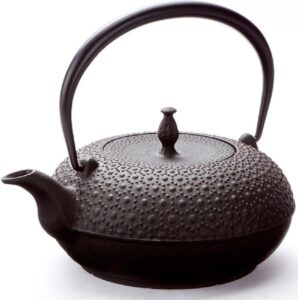 Iwate Nambu ironware
Oigen Nambu tetsubin iron kettle — the same Iwate iron-forging tradition.
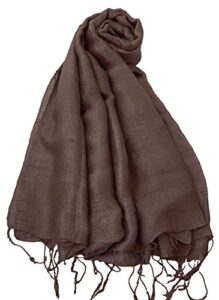 Iwate homespun
Hand-woven wool from the same prefecture.
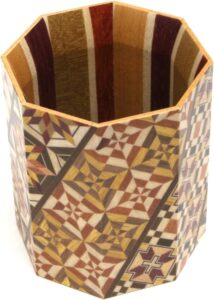 Hakone yosegi woodwork
Marquetry approach to figured wood, a different tradition.
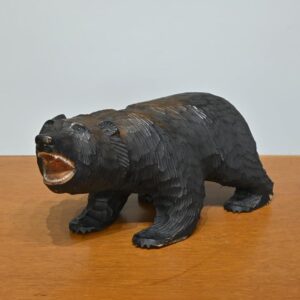 Hokkaido wood carving
Northern woodcraft okimono in carved form.
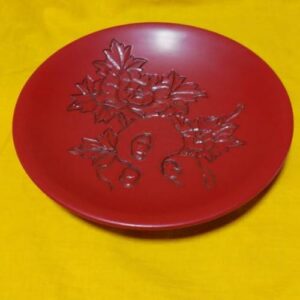 Murakami carved lacquer
Carved-and-lacquered work for a lacquer comparison.
Akita cherry-bark work
Neighboring Tōhoku wood-and-bark craft.
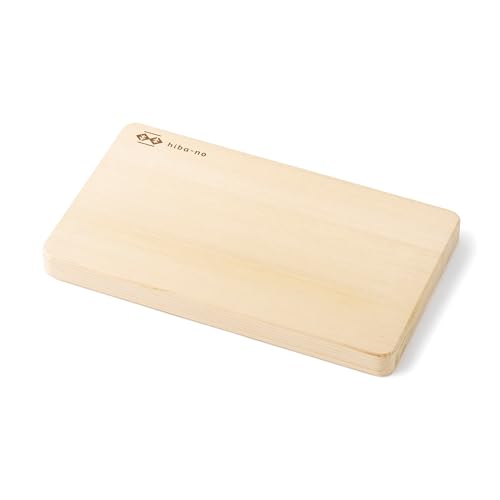 Aomori hiba woodwork
Another Tōhoku wood tradition, this one aromatic hiba.
Akita lacquerware
Tōhoku urushi lacquer in tableware form.
Where this comes from — place, era, and the craft tradition

Esashi is an inland district of Oshu City, in the southern half of Iwate Prefecture, set in the Kitakami river basin between forested ranges. This is interior Tōhoku — cold winters, a long agricultural and forestry economy, and the hardwoods, including zelkova, that a furniture craft needs. The region’s craft economy did not appear in isolation; it grew on top of an unusually rich layer of provincial history.
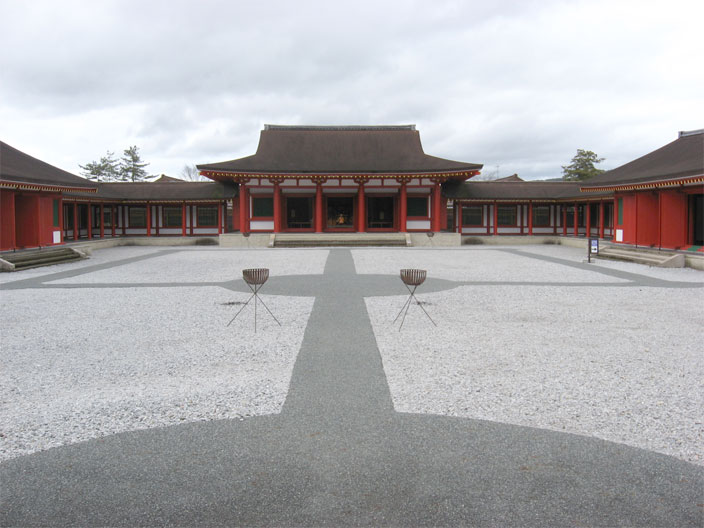
That history centers on Hiraizumi, a short way north of Esashi.
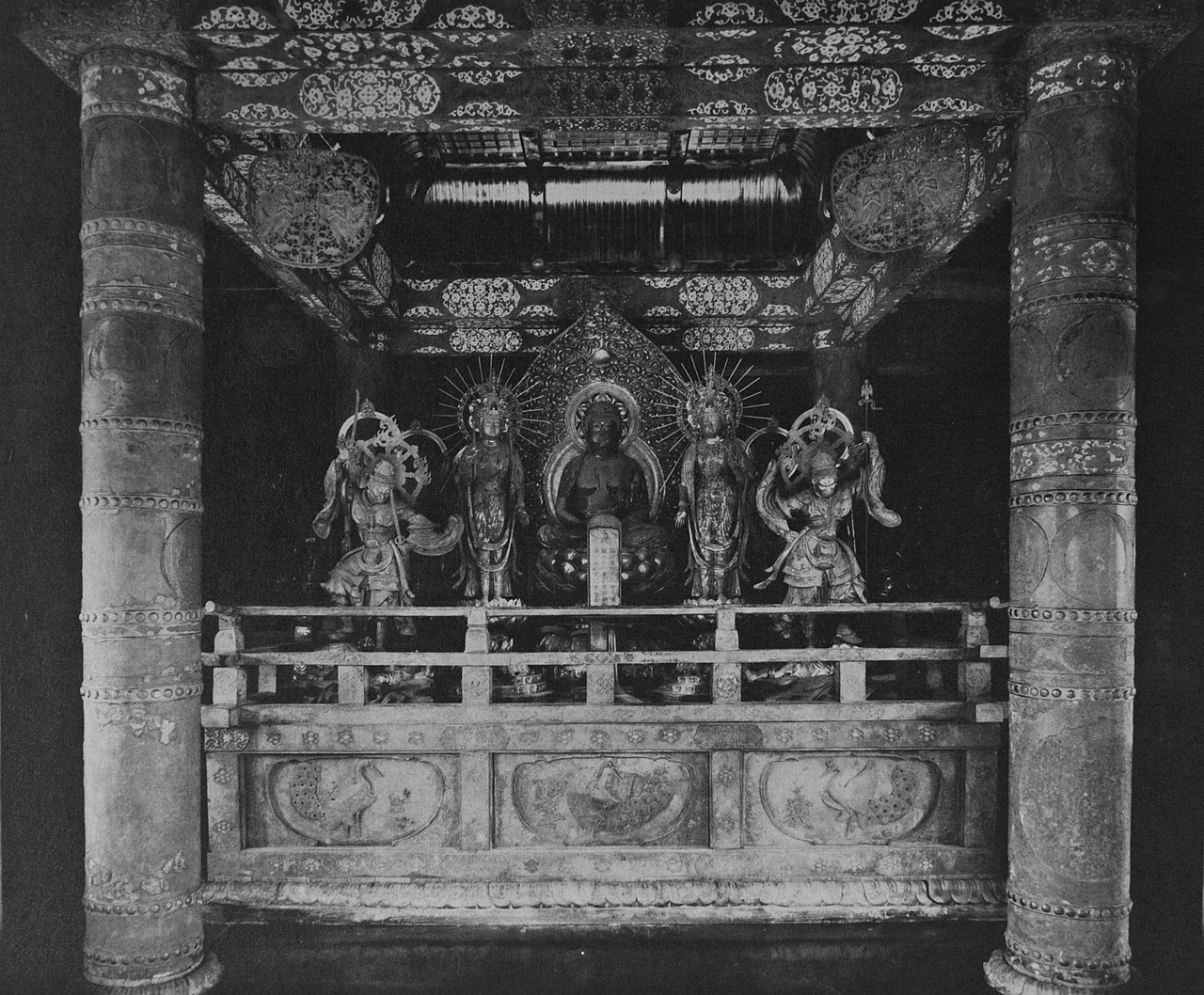
In the 12th century, the Oshu Fujiwara family ruled the north from Hiraizumi and accumulated extraordinary wealth, much of it in gold. The most famous surviving expression of that wealth is the Konjiki-dō (金色堂, “Golden Hall”) of Chūson-ji, completed in 1124 — an interior almost entirely sheathed in gold leaf, lacquer, and inlay. A culture that could build and maintain such a thing concentrated woodworkers, lacquer artisans, and metalworkers in the region. The Oshu Fujiwara’s golden age ended in 1189, but the decorative skill base it gathered did not simply vanish.
- 1124 — Konjiki-dō of Chūson-ji completed in Hiraizumi under the Oshu Fujiwara.
- 1189 — Fall of the Oshu Fujiwara; the region’s decorative skill base persists locally.
- Late Edo period — Chest-making organized as a local domain industry at Iwayado, under Date-clan retainer patronage.
- Meiji era — Esashi consolidates as the production center for Iwayado Tansu.
- Shōwa era — Iwayado Tansu recognized as a nationally designated traditional craft (dentōteki kōgeihin).
- 2011 — Hiraizumi’s temples and gardens, including Chūson-ji and Mōtsū-ji, inscribed as a UNESCO World Heritage site.
- 2026 — Iwayado Tansu still made in the Esashi district of Oshu City.
The chest-making form itself was organized later, in the late Edo period, when local patronage turned scattered woodworking and metalworking skills into a recognizable domain industry at Iwayado. The promotion of crafts as a domain product is commonly credited to the Iwayado castle lord, with the broader area under Date-clan influence. The result fused three crafts into one object: the zelkova cabinet, the lacquer finish, and the heavy iron hardware.
“On an Iwayado chest, the iron is not a fastener hidden at the back — it is the face of the object, hammered and chiseled by hand into dragons, peonies, and lions.”
That iron hardware is the link many readers miss. The same regional iron-forging tradition that gives Iwate its Nambu ironware — the cast-iron kettles and pans known internationally as Nambu tetsubin — also underwrites the hand-forged fittings on these chests. Iwate is, in short, an iron prefecture, and the Iwayado chest is where its ironwork meets its woodwork and lacquer.
The continuity case is straightforward: Iwayado Tansu remains in production in Esashi today, carrying a national craft designation, and the small chests and jewelry boxes are simply the compact end of the same wood-lacquer-iron form that produces full-size furniture. For a buyer outside Japan, the kotansu is the realistic entry point — it shows the entire craft signature in a piece you can actually ship.
📦 Shipping & where to buy from outside Japan
Iwayado Tansu pieces are made in Japan. For international buyers, Japanese craft retailers and forwarding services may provide routes abroad; shipping and availability vary by destination.
Customs note: orders above your country’s de-minimis threshold may incur import duties and taxes on arrival. A wooden, lacquered craft object is generally unrestricted, but confirm any agricultural-wood rules for your destination before ordering.
Purchase options
Prices for Iwayado Tansu vary with chest size, zelkova wood, iron hardware, and finish. Compare current offers in JPY, while remembering that USD conversions depend on the exchange rate.
| Store | Item / Variant | Price (JPY + USD est.) | Notes |
|---|---|---|---|
| 🇺🇸 Amazon US (search) | Browse Japanese woodwork & chests | varies (USD) | Best if you are shopping from the US — Prime shipping, USD pricing, no international customs. Amazon US carries Japanese home and woodwork goods to compare; the Esashi-made Iwayado chest itself ships from Japan (next row). |
| 🇯🇵 Amazon JP Global Store | Iwayado Tansu small chest (kotansu), | — | Ships internationally from Japan. This is where the specific item is sourced. |
| Maker direct | Esashi Iwayado-tansu workshops | varies — check maker site | Full range including large furniture; international shipping not guaranteed — may require a proxy. |
| Proxy services (Buyee / Tenso) | Forwarded JP options | item + service fee + shipping | Useful when a seller does not ship abroad directly; a handling fee is added. |
What it does well
Weaknesses and things to verify before buying
- Chest prices vary widely by size and hardware. Confirm the final cost before ordering.
- Chest dimensions and weight vary. Confirm the fit for your space before ordering.
- Lacquer requires gentle care. Avoid harsh cleaners, prolonged direct sun, and extreme dryness; wipe with a soft cloth.
- Hand-finishing means unit-to-unit variation. Grain, hardware detail, and lacquer tone differ between pieces — expect individuality, not uniformity.
- International shipping and customs add cost and time. Factor duties above your country’s threshold and longer transit from Japan.
- Stock can be limited. Small-batch craft items may sell out or show as unavailable; the search and proxy paths are fallbacks.
- Iron hardware needs a dry environment. High humidity is not ideal for hand-forged iron fittings over the long term.
Conclusion — which buyer type are you?
Other ways to approach this purchase
❓ Frequently Asked Questions
Can I buy Iwayado Tansu from outside Japan?
Yes. Iwayado Tansu pieces can sometimes be shipped internationally through Japanese craft retailers. Comparable Japanese woodwork and forwarding services are other routes; shipping and customs vary by destination.
What wood and hardware are used?
Iwayado Tansu is traditionally built from zelkova (keyaki), finished with urushi lacquer, and fitted with hand-forged, hand-chiseled iron hardware that often depicts auspicious motifs such as dragons, peonies, and lions.
How should I care for a lacquered zelkova chest?
Wipe with a soft, dry or barely damp cloth and avoid harsh cleaners, prolonged direct sunlight, and extreme dryness. Keep the iron hardware in a reasonably dry environment to protect it over the long term.
Why is it described as “iron-hardware” furniture?
Because the iron is part of the visible design, not just a fastener. The hand-forged fittings are a defining feature of Iwayado Tansu and connect the craft to Iwate’s wider iron tradition, including Nambu ironware.
Is the small chest the same craft as a full-size tansu?
Yes. The kotansu, drawer boxes, and jewelry chests carry the identical zelkova, lacquer, and iron-hardware signature as the large furniture; they are simply the compact end of the same tradition.
How does it relate to Nambu ironware?
They share Iwate’s iron-forging tradition. The same regional metalworking culture that produces Nambu tetsubin iron kettles also underwrites the hand-forged fittings on Iwayado chests.
What is the price, and where is it sourced?
Prices for Iwayado Tansu vary by chest size and finish. Compare current offers in JPY and account for exchange-rate changes.
jpmono.com is curated by a Japan-based editorial team (working out of Toyama in the Hokuriku region and Nara in Kansai) and is independent. We do not take payment from the makers we feature; income comes from affiliate links. We do not physically test every product — we read maker specifications and describe the craft context.
Affiliate disclosure: jpmono.com may earn a commission on qualifying purchases made through links on this page, at no additional cost to you.