![Tsuboya-yaki Shisa Pair: Okinawa Pottery Guardian Lion-Dogs [2026]](https://jpmono.com/wp-content/uploads/2026/06/tsuboya-yaki-shisa-pair-okimono-where-to-buy-2026-featured.jpg)
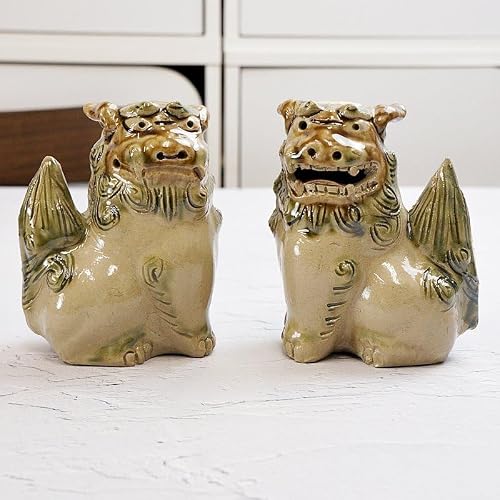
A pair of Tsuboya-yaki (壺屋焼, “Tsuboya ware”) shisa are not decoration in the way a souvenir trinket is decoration. They are guardians. Hand-formed and hand-glazed in the centuries-old kiln district of Tsuboya in Naha, on the main island of Okinawa, these ceramic lion-dogs are traditionally set in a male-and-female pair at a threshold — a gate, a doorway, a rooftop ridge — to turn away misfortune and hold good fortune in place. The open-mouthed one keeps evil out; the closed-mouthed one keeps blessings from leaving.
What makes the Tsuboya version notable to an international buyer is not the motif alone — shisa are sold all over Okinawa in every material — but the lineage behind the clay. Tsuboya is Okinawa’s flagship pottery, the descendant of kilns the Ryukyu Kingdom centralized in 1682, and the genre that the Japanese folk-craft (mingei) movement singled out for praise in the early twentieth century. The glazed jōyachi tradition that produces these shisa is the same one that produced Okinawa’s first Living National Treasure ceramist.
This guide is written for the reader weighing a genuine Okinawan ceramic pair against the resin and cement versions that flood the gift market — and for the reader who simply wants to understand where the object comes from before paying for it. We cover the craft and its place, the comparison axes (material, role, regional alternatives), the realities of buying from outside Japan, and an honest list of what to verify before you commit.
🔄 Updated:
⏱️ Read time: ~11 min
- Who this is for — and who should skip it
- Product overview (from published specs)
- Price snapshot across stores
- Where this comes from
- What it does well
- Weaknesses and things to verify before buying
- Conclusion — which buyer type are you?
- Other ways to approach this purchase
- 🏆 Editor’s Pick
- ❓ Frequently Asked Questions
Who this is for — and who should skip it
- Want a genuine Okinawan ceramic pair, not a resin or cement reproduction
- Like the idea of a paired threshold guardian as a housewarming or wedding gift
- Appreciate hand-glazed work where each piece varies slightly from the next
- Are building a small collection of regional Japanese folk craft (mingei)
- Want an indoor okimono (置物, “display object”) with a clear cultural story
- Need a large outdoor rooftop pair rated for weather and typhoons
- Want every unit identical — handwork means color and form drift
- Are shopping purely on price and a mass-market resin pair will do
- Cannot accommodate customs handling or longer cross-border shipping
- Expect detailed live specs — listing data for this exact pair was thin at writing time
Product overview (from published specs)
A transparency note before the table: the fetched data for this specific listing returned no live price, dimension, or weight fields at the time of writing. The specification table below therefore reflects the genre-level facts established for hand-glazed Tsuboya-yaki jōyachi shisa, with item-specific cells marked as unconfirmed. Always verify the exact figures on the live listing before purchasing.
Tsuboya-yaki Shisa Pair
品 シーサー 置物 おきもの 手づくり 立シーサー ペア 緑 壺屋焼 置物 玄関 シーサーの置物 沖縄 やちむん 作家
現在在庫切れです。 · ASIN B0D761TCKT
Price and availability as of 2026-08-31 02:30 JST. The Amazon listing at the time of purchase is authoritative. jpmono.com earns a commission on qualifying purchases at no extra cost to you.
| Attribute | Detail (per available data) |
|---|---|
| Craft | Tsuboya-yaki (壺屋焼), Okinawa yachimun pottery |
| Object type | Shisa pair (male + female), okimono guardian lion-dogs |
| Tradition | Jōyachi (上焼, glazed ware) — hand-formed, hand-glazed |
| Material | Glazed ceramic / Okinawan clay |
| Origin | Tsuboya district, Naha, Okinawa Prefecture |
| Dimensions / weight | Unconfirmed — check the live listing |
| ASIN | B0D761TCKT |
| Data sources | Amazon US search (primary, moonill-20) + Amazon JP Global Store (secondary, moonill-22, sourced listing); live spec fields were unavailable in fetched data |
Only a thin listing snapshot was available for this exact item; live pricing, dimensions, and weight may have shifted since the writing date and were not confirmable from the fetched data.
📖 Glossary — key terms
- Shisa (シーサー) — Okinawan guardian lion-dog, a relative of the Chinese guardian lion, placed in pairs at gates, doorways, and rooftops to ward off evil.
- Tsuboya-yaki (壺屋焼) — “Tsuboya ware,” the pottery of the Tsuboya district in Naha; Okinawa’s flagship ceramic tradition.
- Yachimun (やちむん) — the Okinawan word for pottery, used broadly for Okinawan ceramic ware.
- Jōyachi (上焼) — glazed Okinawan ware (vessels, plates, shisa), as opposed to the unglazed style.
- Arayachi (荒焼) — unglazed Okinawan ware, traditionally large jars for water and awamori.
- Okimono (置物) — a display object meant to be set out rather than used functionally.
- Mingei (民芸) — the Japanese folk-craft movement that championed everyday handmade objects, Tsuboya ware among them.
- Awamori (泡盛) — Okinawa’s distilled rice spirit, historically stored in arayachi jars.
Other jpmono guides covering Okinawan craft, regional pottery, and Japanese clay figurines worth weighing alongside this pair.
 Ryukyu Glass Kara-Kara
Okinawa · glass sake server
Okinawa Hand-Forged Knife
Okinawa · blade
Ryukyu Bingata Placemat
Okinawa · textile
 Hakata Ningyo Figurine
Fukuoka · clay figurine
 Akita Yatsuhashi Clay Doll
Akita · clay doll
 Onta-yaki Mingei Mug
Oita · folk pottery
 Karatsu E-Garatsu Guinomi
Saga · pottery
Price snapshot across stores
Live pricing for this exact pair was not present in the fetched data, so the JPY figure below is marked unconfirmed rather than guessed. Where a JPY price is shown elsewhere, treat it as the authoritative figure and the USD as an approximate estimate at a ¥150/USD baseline as of mid-2026.
| Store | Item / Variant | Price | Notes |
|---|---|---|---|
| 🇺🇸 Amazon US (search) | Browse Japanese shisa & Okinawan pottery | varies (USD) | Best if you’re shopping from the US — Prime shipping, USD pricing, no international customs. Amazon US carries shisa and Japanese ceramic figurines from various makers, useful for comparing size and price tiers. The exact Tsuboya pair here is sourced from Japan (next row). |
| 🇯🇵 Amazon JP Global Store | Tsuboya-yaki shisa pair (ASIN B0D761TCKT) | Unconfirmed — verify on listing | Where the specific item is sourced; ships internationally from Japan to most major destinations. Live price was unavailable at time of writing. |
| Maker direct | Tsuboya kiln / Yachimun Street workshop | Varies by kiln | Individual Tsuboya kilns sell on-site and through gallery shops; international shipping varies by workshop. |
| Proxy services (Buyee / Tenso) | Forwarding for JP-only listings | Item + fees + freight | Useful when a kiln or shop sells only within Japan; adds a service fee and consolidated forwarding. Fragile-ceramic packing matters — request extra cushioning. |
Prices in USD are approximate and depend on the current exchange rate. The JPY price is the authoritative one for the specific listed item.
Where this comes from

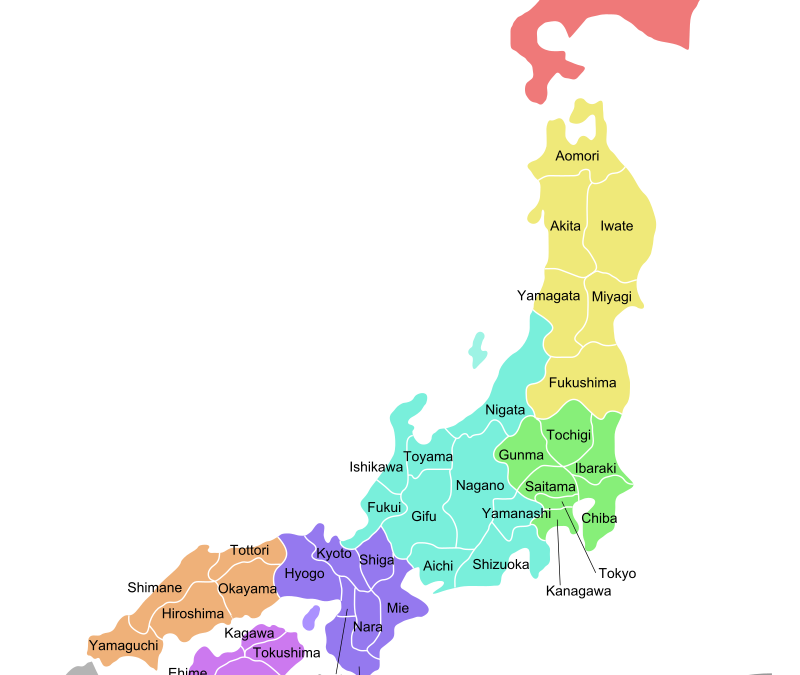
Okinawa is not a small detail at the bottom of the Japanese map; it is a chain of islands stretching for hundreds of kilometers across the East China Sea, subtropical in climate, and historically oriented as much toward China and Southeast Asia as toward the Japanese mainland. Naha, the prefectural capital, sits on the southwest coast of the main island. Tsuboya is a district within it — a pocket of old streets, climbing kilns, and workshops that survived the twentieth century with its craft identity intact.
The reason pottery concentrated here is the reason it concentrated anywhere in pre-modern Japan: clay, fuel, water, and a ruling power that wanted production in one place it could oversee. For Okinawa, that power was the Ryukyu Kingdom — and the kingdom’s role is what gives Tsuboya ware a lineage distinct from any mainland tradition.
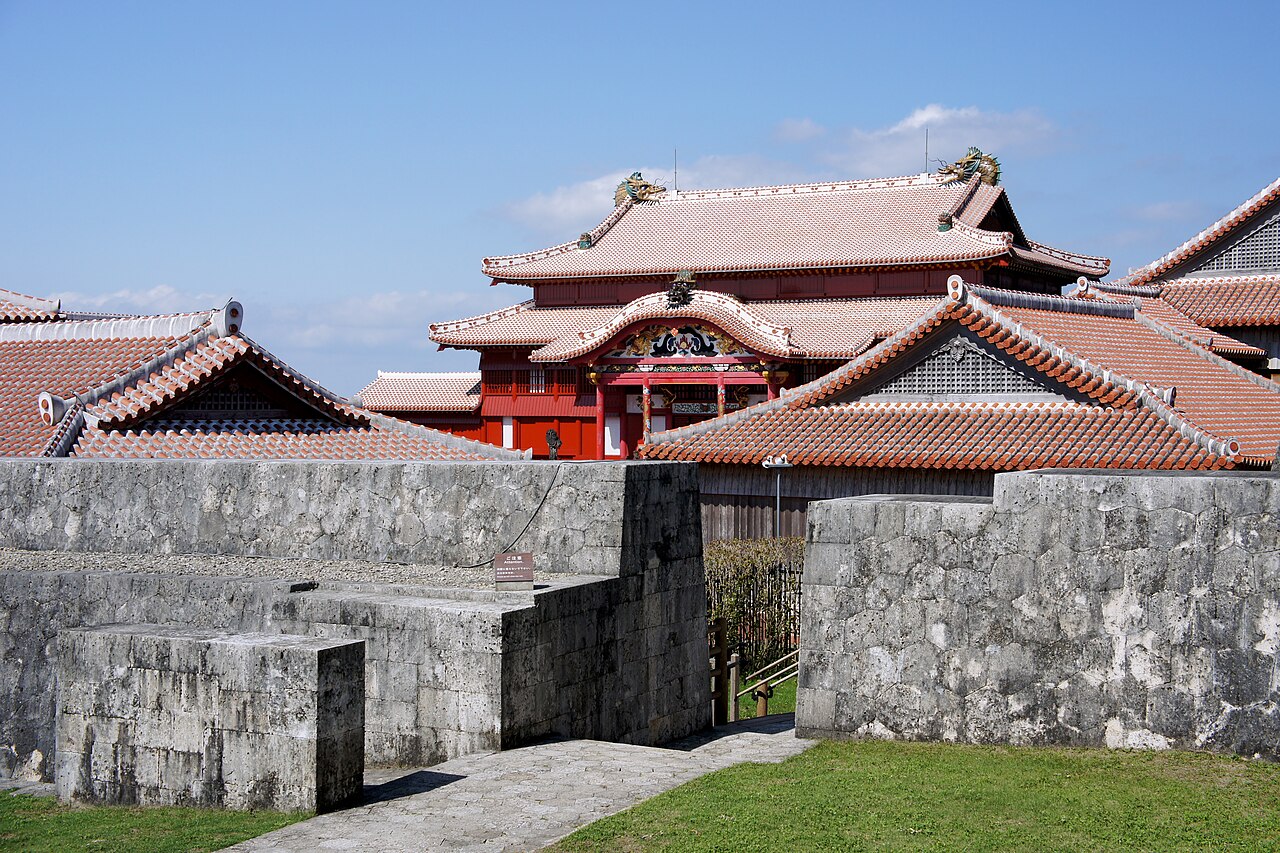
The decisive year is 1682. King Sho Tei of the Ryukyu Kingdom ordered the scattered kilns of Wakuta, Chibana, and Takaraguchi consolidated into a single district in Naha — Tsuboya — so that ceramic production could be centralized and managed. That administrative act is the founding of Tsuboya ware as a unified tradition. Because Ryukyu was a maritime trading kingdom, its potters had already absorbed Chinese, Korean, and Southeast Asian ceramic influence, and two streams settled into the work: unglazed arayachi (荒焼), the large jars that stored water and awamori, and glazed jōyachi (上焼), the vessels, plates, and figurines — shisa among them.
- 1429 — The Ryukyu Kingdom is unified, opening centuries of maritime trade across East and Southeast Asia.
- 1600s — Continental and Korean glazing techniques take root in Ryukyu kilns.
- 1682 — King Sho Tei consolidates the Wakuta, Chibana, and Takaraguchi kilns into the Tsuboya district of Naha.
- 1879 — The Ryukyu Kingdom is abolished and Okinawa Prefecture is established.
- 1920s–1930s — Yanagi Soetsu and Hamada Shoji of the mingei movement champion Tsuboya ware.
- 1945 — The Battle of Okinawa devastates the islands; Tsuboya becomes an early center of postwar revival.
- 1972 — Okinawa reverts to Japanese administration.
- 1985 — Kinjo Jiro becomes the first Living National Treasure tied to the Tsuboya tradition.
- 2026 — Kilns and workshops still produce shisa and yachimun ware in the Tsuboya district.
The mingei (民芸, folk-craft) connection matters because it is what lifted Tsuboya from regional utility ware to nationally recognized craft. In the early twentieth century, Yanagi Soetsu — the philosopher who founded the movement — and the potter Hamada Shoji praised Tsuboya work for exactly the qualities the movement prized: honest materials, unselfconscious form, beauty in everyday use. Decades later, the ceramist Kinjo Jiro became the first Living National Treasure associated with the tradition, sealing its standing.
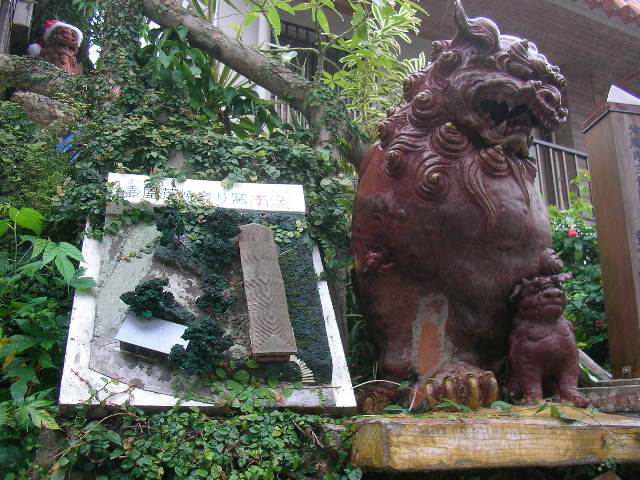
What “still being made here” means in practice is that the Tsuboya district remains an active craft quarter, not a museum. Along Yachimun Street and in the surrounding lanes, kilns and workshops continue to throw, glaze, and fire — shisa, plates, cups, and the broad family of yachimun ware. A shisa formed and glazed by hand here carries the marks of that handwork: each pair differs slightly, and the male-and-female asymmetry is intentional rather than a flaw.
“One shisa opens its mouth to drive misfortune away; the other closes its mouth to keep good fortune in. A single guardian is incomplete — the pair is the point.”
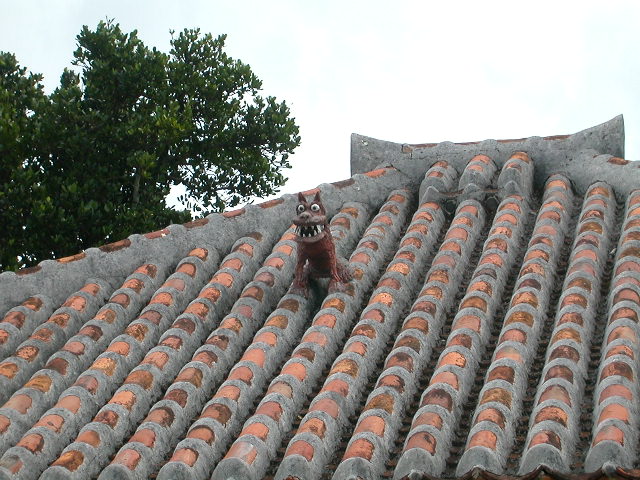
Culturally, the shisa is everywhere in Okinawa — on rooftop ridges, flanking gates, set beside doorways. It is traditionally believed to ward off evil and invite good fortune, a folk role rather than a scientifically demonstrated one. The pair sold for indoor display is a smaller, gentler descendant of the rooftop guardian, suited to a shelf, an entryway console, or a genkan. As a gift, it reads clearly: protection for a new home, balance for a marriage, a wish of good fortune that does not require translation.
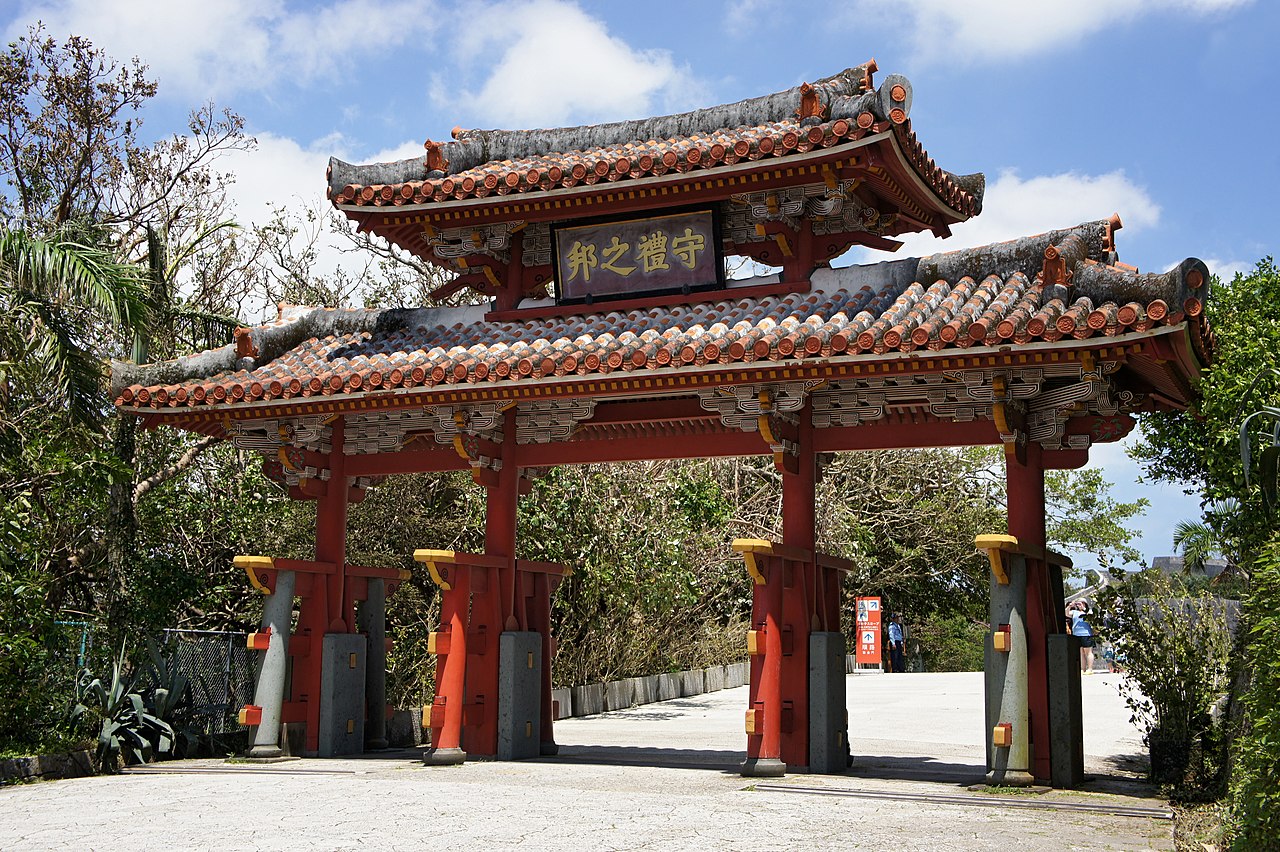
That trading history is not a footnote. The glazes, the figural vocabulary, and the very idea of a paired lion guardian all trace back through Ryukyu’s centuries of exchange with China and Southeast Asia. The shisa is a cousin of the Chinese guardian lion, reshaped by Okinawan hands and clay into something unmistakably local.
What it does well
Weaknesses and things to verify before buying
- Listing data was thin. The fetched data returned no confirmed price, dimensions, or weight for this exact pair. Verify all of these on the live listing before buying.
- Size can surprise you. Indoor shisa pairs range from palm-sized to substantial. Without confirmed dimensions, check the listing’s measurements so you are not surprised by a much smaller (or larger) pair.
- Indoor display, not weatherproof rooftop use. A display pair is not the same product class as a large outdoor rooftop guardian rated for sun, rain, and typhoon wind. Do not assume outdoor durability.
- Handwork variation is real. Color, glaze pooling, and facial expression drift from pair to pair. If you want a specific look, accept that the photo is representative rather than exact.
- Fragile in transit. Glazed ceramic chips and cracks. For international or proxy shipping, request extra cushioning and confirm the seller’s breakage policy.
- “Tsuboya-style” is not always Tsuboya. The shisa market is full of mass-market reproductions. Confirm the listing actually states Tsuboya-yaki / Okinawan yachimun if authenticity matters to you.
- Customs and duties. Cross-border orders above local thresholds may attract import duties; factor this into the real landed cost.
Conclusion — which buyer type are you?
Other ways to approach this purchase
🏆 Editor’s Pick
❓ Frequently Asked Questions
What is the difference between the two shisa in a pair?
Traditionally, one shisa has an open mouth and the other a closed mouth. The open-mouthed one is said to drive misfortune away, while the closed-mouthed one keeps good fortune from leaving. They are meant to be displayed together as a complete pair.
Is Tsuboya-yaki different from a generic shisa?
Yes. Shisa are sold in many materials and from many regions, including resin and cement reproductions. Tsuboya-yaki refers specifically to hand-glazed ceramic ware from the Tsuboya district of Naha, Okinawa’s flagship pottery tradition. If authenticity matters, confirm the listing states Tsuboya-yaki or Okinawan yachimun.
Can I display this pair outdoors on a roof or gate?
A display pair like this is intended for indoor use — a shelf, console, or entryway. Large outdoor rooftop guardians are a separate product class rated for weather. Do not assume an indoor display pair is weatherproof.
Does Amazon JP ship this pair internationally?
The item is sourced from the Amazon JP Global Store, which ships internationally to most major destinations. Because it is fragile glazed ceramic, confirm packing and the breakage policy, and budget for possible customs duties on orders above your local threshold.
Why don’t you list a confirmed price?
The fetched listing data for this exact pair did not include a confirmed live price at the time of writing, so we mark it unconfirmed rather than guessing. The JPY price shown on the live Amazon JP listing is the authoritative figure; verify it before buying.
Is a shisa pair a good gift?
It works well as a housewarming or wedding gift. The pair’s meaning — protection and good fortune for a home or a couple — reads clearly across cultures, and the handmade ceramic quality gives it more weight than a mass-market trinket.
How do I care for a glazed ceramic shisa pair?
As an indoor okimono, dust it gently and wipe with a soft, slightly damp cloth. Avoid drops and knocks — glazed ceramic chips easily — and keep the pair out of paths where it could be brushed off a shelf.
jpmono.com is curated by a Japan-based editorial team (working out of Toyama in the Hokuriku region and Nara in Kansai) and is independent. We do not take payment from the makers we feature; income comes from affiliate links.
This article was prepared with AI assistance and reviewed against the available listing data. Specifications, pricing, and availability should be confirmed at the retailer before purchase.
Affiliate disclosure: jpmono.com may earn a commission on qualifying purchases made through links on this page, at no additional cost to you.