![Miyajima Shamoji Rice Paddle: Hiroshima’s Wooden Scoop Craft [2026]](https://jpmono.com/wp-content/uploads/2026/06/miyajima-shamoji-rice-paddle-where-to-buy-2026-featured.jpg)
A shamoji (しゃもじ, “rice paddle”) is the most ordinary object in a Japanese kitchen — the flat wooden or plastic scoop used to turn and serve cooked rice. The Miyajima version is the same humble tool with an unusually specific origin: it was devised at the gate of one of Japan’s most famous shrines, shaped after a musical instrument, and carried home by pilgrims as a good-luck charm. Today the small island of Miyajima, in Hiroshima Prefecture, is still treated as the spiritual home of the rice paddle, and Hiroshima accounts for the large majority of Japan’s shamoji output.
Miyajima-zaiku (宮島細工, “Miyajima woodwork”) paddles are turned and carved from cypress (hinoki), cherry (sakura), and zelkova (keyaki) — woods chosen for a smooth, close grain that releases cooked rice cleanly instead of letting it cake on. That is the entire pitch: a single-material wooden tool that does one job well and, with a little care, lasts for years.
This guide covers what the craft is, where it comes from, how a wooden paddle compares with the plastic one already in most kitchens, and the realistic paths for buying one from outside Japan. The data here is thin — at the time of writing only the listing snapshot for one representative item was available, with no live price — so where a number is missing, this article says so rather than guessing.
🔄 Updated:
⏱️ Read time: ~9 min
- Who this is for — and who should skip it
- Product overview (from published specs)
- Which finish should you choose?
- 📍 Where this comes from — place, era, and the craft tradition
- Price snapshot across stores
- What it does well
- Weaknesses and things to verify before buying
- Conclusion — which buyer type are you?
- Other ways to approach this purchase
- 🏆 Editor’s Pick
- ❓ Frequently Asked Questions
Who this is for — and who should skip it
- Want a natural-wood rice paddle that does not stick the way plastic can
- Like owning everyday tools with a documented regional craft history
- Are buying a small, light, gift-friendly souvenir of Hiroshima or Miyajima
- Appreciate the “meshi-toru” (to scoop rice / take in fortune) good-luck symbolism
- Are comfortable hand-washing and air-drying a wooden utensil
- Want something dishwasher-safe and zero-maintenance (choose plastic)
- Expect non-stick performance equal to a coated synthetic paddle
- Need a guaranteed exact size, weight, or wood species — these vary by maker
- Will leave it soaking in water (wood will warp, crack, or stain over time)
- Want a verified live price right now — current data did not include one
Product overview (from published specs)
Source data for this category is limited. The table below reflects a representative Miyajima-zaiku wooden shamoji listing (item ID B08YJBLH5X) plus the general craft attributes documented for Miyajima-zaiku; it is not an exhaustive manufacturer spec sheet. Only the Amazon JP Global Store listing snapshot is available, and live pricing may have shifted since the writing date.
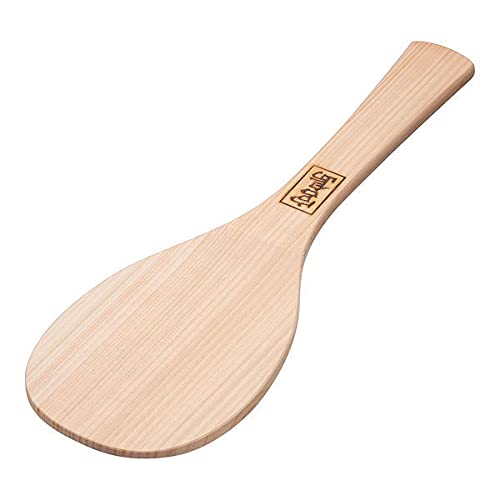
Miyajima Shamoji Rice Paddle
遠藤商事 TKG 檜 宮島杓子 30cm BSY6401
残り11点(入荷予定あり) · Sold by Amazon.co.jp · ASIN B08YJBLH5X
Price and availability as of 2026-08-31 02:30 JST. The Amazon listing at the time of purchase is authoritative. jpmono.com earns a commission on qualifying purchases at no extra cost to you.
| Attribute | Value (per available data) |
|---|---|
| Craft | Miyajima-zaiku (宮島細工) — Miyajima woodwork |
| Object | Shamoji (しゃもじ) — rice paddle / scoop |
| Material | Cypress (hinoki), cherry (sakura), or zelkova (keyaki) — solid wood |
| Form | Traditional biwa-lute (琵琶) silhouette, rounded bowl, smooth grain |
| Origin | Miyajima (Itsukushima), Hiroshima Prefecture, Chūgoku region |
| Size / weight | Unconfirmed — varies by maker; check listing |
| Care | Hand-wash, air-dry; not dishwasher-safe; avoid prolonged soaking |
| Price | Not present in current data — verify at the listing before buying |
Spec sheets indicate the defining feature is the wood itself rather than any coating or mechanism: a tight, smooth grain that cooked rice does not cling to. Sources for the comparison and price tables below are Amazon US search (primary), Amazon JP Global Store (secondary, the sourced listing), and maker-direct where relevant.
📖 Glossary — key terms
Shamoji (しゃもじ) — the flat paddle used to mix, fluff, and serve cooked rice. A fixture of every Japanese kitchen.
Miyajima-zaiku (宮島細工) — the woodworking tradition of Miyajima island, encompassing trays, bowls, and rice paddles turned and carved from local hardwoods.
Biwa (琵琶) — a Japanese short-necked lute. The shamoji’s rounded body is said to imitate the lute held by the goddess Benzaiten.
Benzaiten (弁財天) — the goddess of music, water, and fortune, associated with Itsukushima Shrine; her lute inspired the paddle’s shape.
Meshi-toru (飯取る) — “to scoop rice.” The phrase puns on “taking in fortune / victory,” which is why the paddle became a good-luck charm.
Hinoki (檜) — Japanese cypress, a pale, aromatic, close-grained wood widely used for utensils and shrine construction.
Which finish should you choose?
This piece is listed in 2 options. The photos below are the actual サイズ options on the listing right now — pick the one you want and confirm it on the product page before ordering, since hand-finished wares vary slightly piece to piece.
Other Japanese regional crafts we have covered — useful for comparing wood species, region, and use case.
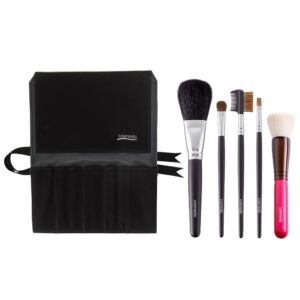 🖌️ Hiroshima Kumano fude brushes
 💇 Kiso wooden comb
 🪣 Kishu hinoki bucket
 🐻 Hokkaido kibori bear
🍺 Bizen ware mug
🔪 Yamaguchi Suō sujihiki
🎋 Iyo bamboo sudare
📍 Where this comes from — place, era, and the craft tradition

Miyajima — formally Itsukushima — is a small forested island in Hiroshima Bay, part of the Seto Inland Sea on the southern edge of the Chūgoku region. The island sits only a short ferry crossing from the mainland near Hiroshima city, yet it has been treated as sacred ground for well over a millennium, to the point that for much of its history ordinary commerce and even births and deaths were restricted on the island itself.
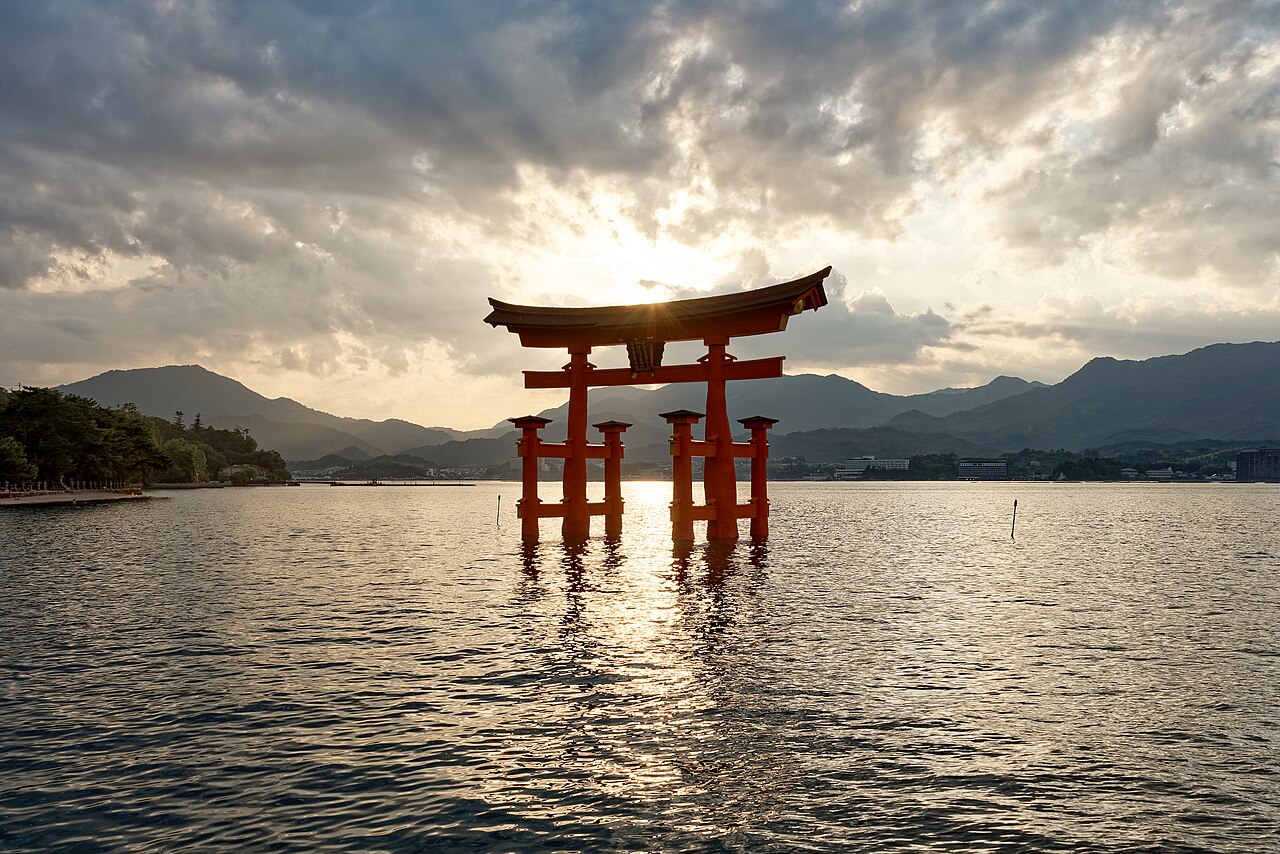
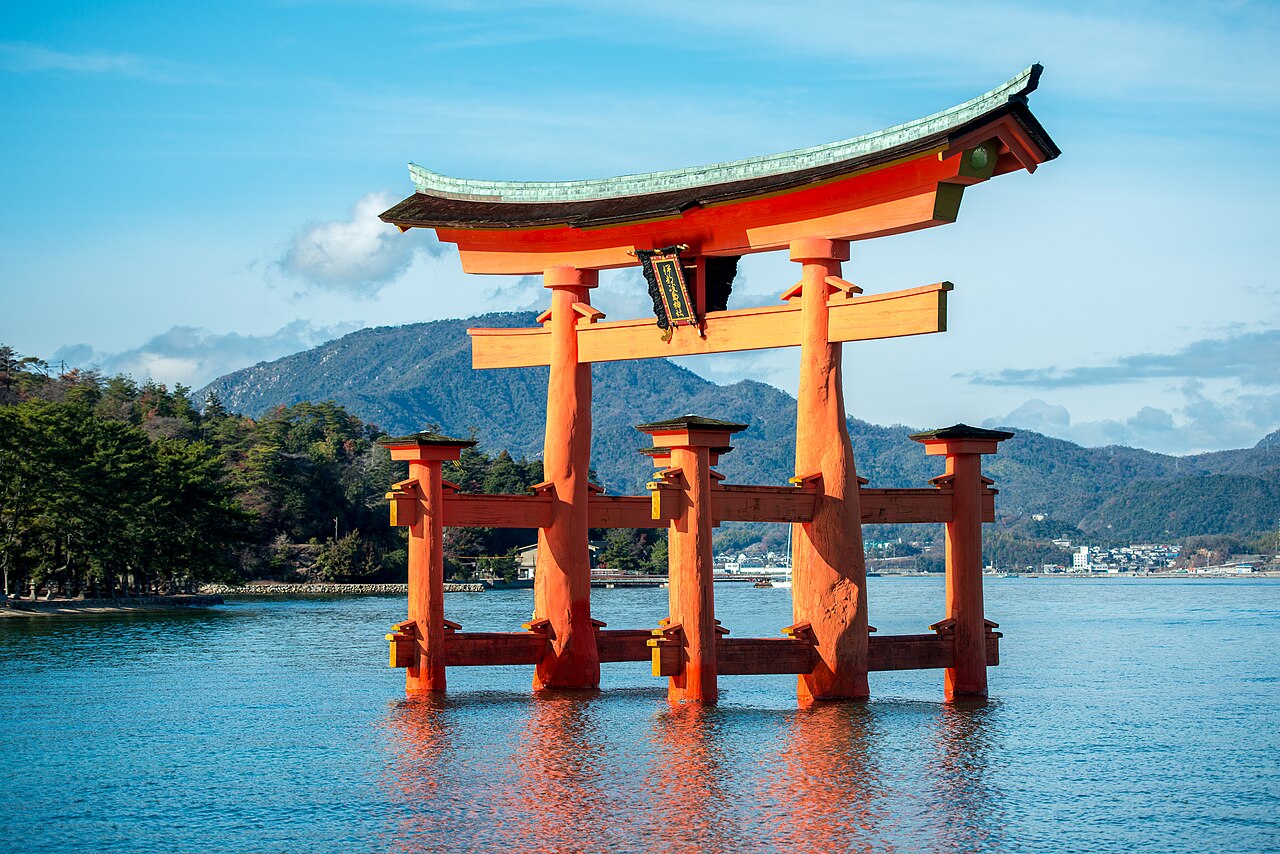
The shrine at its heart, Itsukushima Jinja, is built out over a tidal flat so that at high tide its great vermilion torii appears to float on the sea. The shrine and its surrounding forest were inscribed as a UNESCO World Heritage site in 1996. Behind the shrine rises Mount Misen, the sacred peak that anchors the island’s religious landscape and whose forests supplied the hardwoods that made a woodworking trade possible.
The shamoji’s invention is tied directly to that devotion. In the late Edo Bunka era (the first decade of the 1800s), a monk named Seishin of the temple Kōmyō-in is said to have devised the rice paddle, shaping it after the biwa lute held by Benzaiten — the goddess of music, water, and fortune venerated on the island. He is credited with teaching islanders to carve the paddles as a source of income and as an auspicious souvenir for the pilgrims who came to worship.
“A monk shaped a kitchen tool after a goddess’s lute — and a pun on ‘scooping rice’ turned it into a charm for taking in good fortune.”
That pun is the engine of the whole tradition. Meshi-toru (飯取る) means “to scoop rice,” but it also reads as “to take in” fortune or victory, and so the paddle became a talisman. During the Russo-Japanese War it spread nationwide as a charm for military victory, and the association with winning has never fully faded. Hiroshima still accounts for the large majority of Japan’s shamoji production, and Miyajima remains its symbolic home.
- 593 — Itsukushima Shrine traditionally said to be founded on the island.
- 1168 — Taira no Kiyomori rebuilds the shrine in its grand over-the-water form.
- c.1800s — In the Bunka era, the monk Seishin of Kōmyō-in devises the shamoji after Benzaiten’s biwa lute and teaches islanders to carve it.
- 1904–05 — The paddle spreads nationwide as a charm for victory during the Russo-Japanese War.
- 1982 — Miyajima-zaiku woodwork is designated a Traditional Craft by Japan’s national government.
- 1996 — Itsukushima Shrine is inscribed as a UNESCO World Heritage site.
- 2026 — Hiroshima still makes the large majority of Japan’s shamoji; Miyajima carves them as a living souvenir craft.

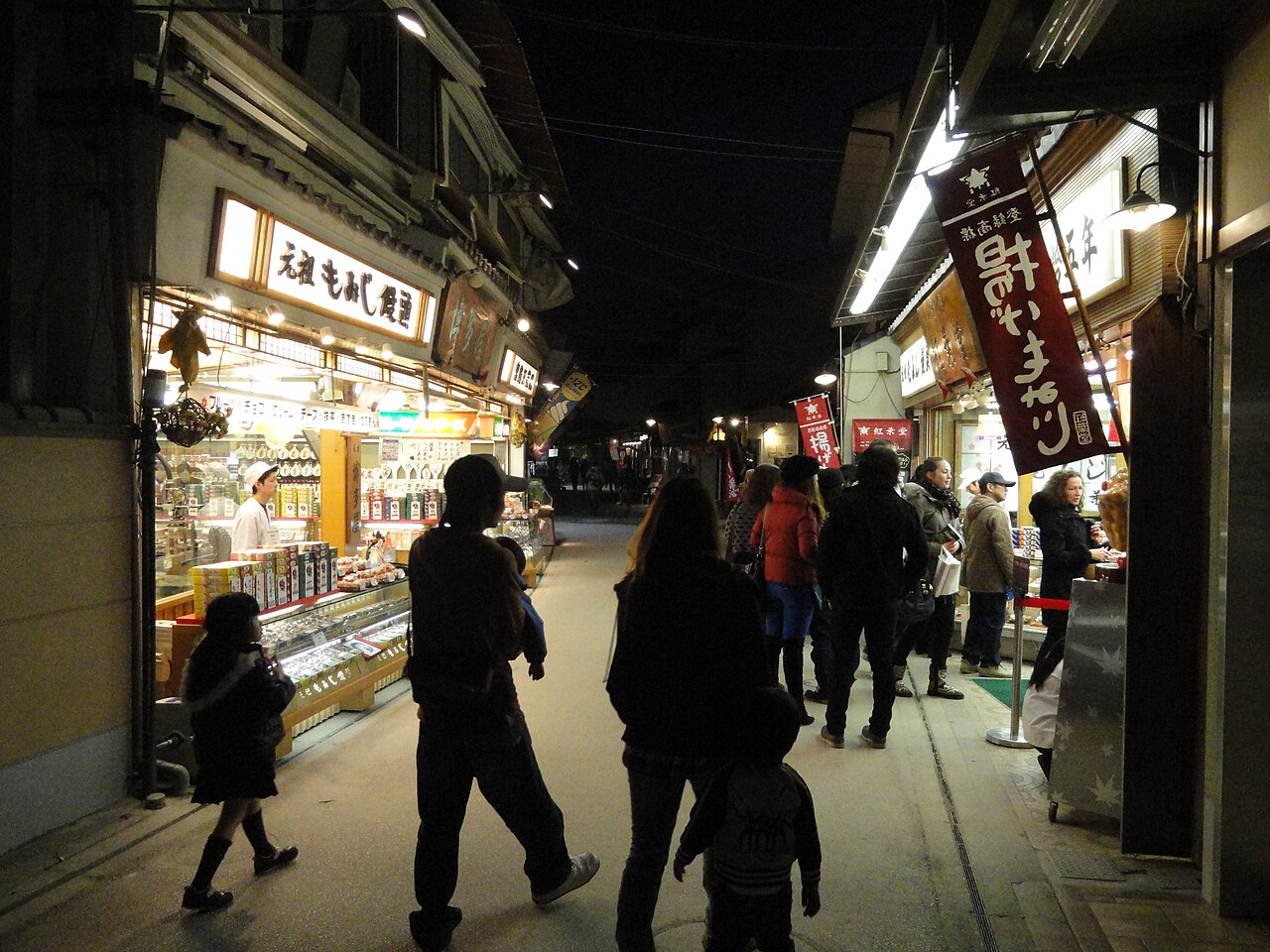
Miyajima-zaiku was designated a Traditional Craft by Japan’s national government in 1982, a recognition that covers the island’s trays and bowls as well as its paddles. The shamoji is the most visible product of all: the island’s Omotesandō shopping arcade displays a giant Ōfuku-shamoji, an oversized paddle that advertises Miyajima as the home of the rice scoop. It is the kind of landmark that makes the connection between place and object obvious before a visitor has bought anything.
Price snapshot across stores
Live pricing was not available in the current dataset; the JPY figure for the specific item should be read directly from the JP Global Store listing. USD figures, where shown, are approximate estimates at a ¥150/USD baseline as of mid-2026, and the JPY price is the authoritative one.
| Store | Item / Variant | Price | Notes |
|---|---|---|---|
| 🇺🇸 Amazon US (search) | Browse Japanese wooden rice paddles | varies (USD) | Best if you are shopping from the US — Prime shipping, USD pricing, no international customs. Amazon US carries wooden and lacquered Japanese rice paddles and kitchen tools from various makers; the specific Miyajima-zaiku piece is sourced from Japan (next row). |
| 🇯🇵 Amazon JP Global Store | Miyajima-zaiku wooden shamoji (B08YJBLH5X) | Check listing (¥ authoritative) | Ships internationally from Japan. This is the sourced listing for the exact item in this guide. Live price was not in the dataset — verify before buying. |
| Maker direct | Miyajima workshop paddles | Unconfirmed | Island workshops and Omotesandō arcade shops sell direct, but most are Japanese-language only and may not ship abroad. |
| Proxy services (Buyee / Tenso) | Any JP-only listing | Item + fee + forwarding | Useful for maker or specialty-shop listings that do not ship internationally; adds a service fee and a forwarding leg. |
Prices in USD are approximate and depend on the current exchange rate. Amazon JP Global Store ships many household items worldwide; estimate roughly $15–$40 in shipping to the US or EU for a small wooden utensil, and check your local customs threshold for larger combined orders.
What it does well
Weaknesses and things to verify before buying
- No live price in the data. The current dataset did not include a price for this item; confirm the JPY figure on the JP Global Store listing before ordering.
- Specs vary by maker. Wood species (hinoki, sakura, or keyaki), exact length, and weight differ between workshops. If a precise size matters to you, read the individual listing carefully.
- Maintenance is on you. Wooden paddles are not dishwasher-safe and should not be left soaking. They need hand-washing and air-drying, or they may warp, crack, or stain.
- Not as non-stick as plastic. The grain helps, but a wooden paddle will not match a coated synthetic one for absolute rice release, especially with very sticky short-grain rice.
- “Miyajima-style” is not always Miyajima-made. Many wooden paddles sold online are simply biwa-shaped; verify the listing actually states Miyajima-zaiku or a named island workshop if provenance matters to you.
- International shipping adds cost and time. A small utensil is cheap to ship, but the fee can be a meaningful fraction of the item’s value, and customs rules vary by country.
Conclusion — which buyer type are you?
Other ways to approach this purchase
🏆 Editor’s Pick
❓ Frequently Asked Questions
Why is a wooden rice paddle better than the plastic one I already have?
How do I care for a Miyajima wooden shamoji?
Does Amazon ship a Miyajima shamoji internationally?
Why is the shamoji considered a good-luck charm?
What wood is it made from?
Is every “Miyajima-style” paddle actually made on Miyajima?
jpmono.com is curated by a Japan-based editorial team (working out of Toyama in the Hokuriku region and Nara in Kansai) and is independent. We don’t take payment from the makers we feature; income comes from affiliate links. We don’t physically test every product — we read maker’s specs and source listings.
🤖 This article was prepared with AI assistance and editorial review. Specifications, prices, and availability are drawn from listing data at the time of writing and may have changed; always confirm details at the retailer before purchasing.
Affiliate disclosure: jpmono.com may earn a commission on qualifying purchases made through links on this page, at no additional cost to you.