![Nibutani-ita Ainu Carved Wood Tray (Hokkaido): Where to Buy [2026]](https://jpmono.com/wp-content/uploads/2026/06/nibutani-ita-ainu-carved-wood-tray-where-to-buy-2026-featured.jpg)
A Nibutani-ita (二風谷イタ, “Nibutani tray”) is a hand-carved hardwood serving tray from the village of Nibutani in Biratori, southern Hokkaido — the historic heartland of Ainu culture along the Saru River. The surface is incised, not painted: a carver cuts the flowing moreu spiral, the thorn-like aiushi, and the scale-like ramu into local katsura or walnut, building the dense, interlocking patterns that are the signature visual language of Ainu woodwork.
What makes this object internationally notable is not only its surface. In 2013, Nibutani-ita — together with the elm-bark cloth Nibutani-attus — became the first Ainu crafts ever designated national Traditional Crafts (dento-teki kogeihin, 伝統的工芸品) by Japan’s Ministry of Economy, Trade and Industry (METI). That designation marked a milestone in the formal recognition of Indigenous Japanese making, a tradition that long predates the prefectural and national craft categories most readers know.
This guide is written for international buyers deciding where and how to buy one. We cover what the tray is and is not, how the Ainu motif vocabulary works, where the craft is made and why it survives in only a small number of hands, the international shipping picture, a store-by-store price snapshot, honest weaknesses, and a clearly-flagged data limitation: at the time of writing, only the Amazon JP Global Store listing reference was available, and live pricing could not be confirmed.
📅 Published: June 21, 2026 · 🔄 Last updated: June 21, 2026 · ⏱️ Read time: ~10 min


- Who this is for — and who should skip it
- Product overview (from published specs)
- Where this comes from
- What it does well
- Weaknesses and things to verify before buying
- Price snapshot across stores
- Conclusion — which buyer type are you?
- Other ways to approach this purchase
- 🏆 Editor’s Pick
- ❓ Frequently Asked Questions
Who this is for — and who should skip it
- Want a genuine Indigenous Japanese craft with documented national-designation status, not a souvenir reproduction.
- Value hand-incised surface work and can appreciate small tool marks as evidence of carving by hand.
- Are buying as a meaningful gift or a collection piece tied to a specific place and people.
- Are comfortable buying from a Japan-sourced listing and waiting for international shipping.
- Want a functional tray for tea service, small objects, or display.
- Need an exact price and stock confirmed before committing — live pricing was not available at writing.
- Expect identical, machine-uniform pieces; each tray varies in grain and cut.
- Want a dishwasher-safe, heavy-daily-use tray — carved hardwood needs gentle care.
- Are shopping purely on lowest cost; designated-craft handwork carries a premium.
- Cannot accommodate international shipping times or possible customs handling.
Product overview (from published specs)
Published data for this specific listing is thin. The table below reflects what is documented about the Nibutani-ita tradition and the listing reference; where a value could not be confirmed from the fetched data, it is marked rather than guessed.
Nibutani-ita Ainu Carved Wood Tray (Hokkaido)
木製 アイヌ 木彫り 小皿 茶托 二風谷イタ 4枚
通常6~7日以内に発送します。 · Sold by ぽぽななショップ · ASIN B0GNS528TW
Price and availability as of 2026-08-31 02:30 JST. The Amazon listing at the time of purchase is authoritative. jpmono.com earns a commission on qualifying purchases at no extra cost to you.
| Attribute | Detail | Source |
|---|---|---|
| Craft | Nibutani-ita — Ainu carved wood tray | Maker tradition / METI designation |
| Material | Local Hokkaido hardwood (katsura, walnut) | Tradition data |
| Surface | Hand-incised moreu, aiushi, and ramu motifs | Tradition data |
| Origin | Nibutani, Biratori, Hokkaido (Saru River basin) | Tradition data |
| Designation | National Traditional Craft, METI (2013) — first Ainu craft so designated | METI |
| Dimensions / weight | Unconfirmed — check the listing | — |
| Listing reference (ASIN) | B0GNS528TW (Amazon JP Global Store) | Spec |
⚠️ Data note: Only the Amazon JP Global Store listing reference was available at the time of writing; live pricing and exact dimensions could not be confirmed and may have shifted since. Always verify at the retailer before purchasing.
📖 Glossary — key terms
- Nibutani-ita (二風谷イタ) — the carved wooden tray of the Ainu, made in Nibutani; ita means “tray/board.”
- Ainu (アイヌ) — the Indigenous people of Hokkaido, northern Honshu, and the surrounding islands; recognized by Japan’s Diet as an Indigenous people in 2008.
- moreu (モレウ) — the rolling spiral motif, the most recognizable element of Ainu surface design.
- aiushi (アイウシ) — a thorn- or barb-like motif, often interlocked with moreu spirals.
- ramu (ラム) — a scale-like motif used to fill and texture the carved field.
- Nibutani-attus (二風谷アットゥシ) — elm-bark woven cloth from the same district, designated alongside Nibutani-ita in 2013.
- dento-teki kogeihin (伝統的工芸品) — “Traditional Craft,” Japan’s national craft designation administered by METI.
- chise (チセ) — a traditional Ainu dwelling, the cultural setting in which these motifs developed.
- katsura (桂) — Japanese Judas tree, a fine-grained hardwood favored for carving.
Related jpmono guides — other Hokkaido crafts, other Ainu work, and the wider world of Japanese woodwork to compare against:
🔪 Ainu craft: Makiri knife
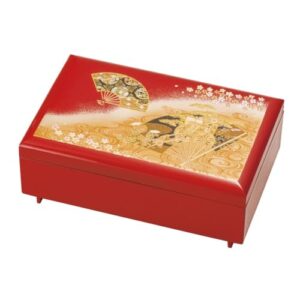 📦 Joinery woodwork: Kyo Sashimono box
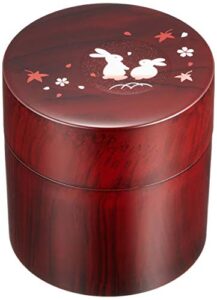 🍵 Turned woodwork: Yamanaka tea caddy
 🗿 Carved woodwork: Hida Ittobori netsuke
🍚 Everyday woodwork: Miyajima shamoji
 🗄️ Paulownia woodwork: Kasukabe chest
Where this comes from

Nibutani is a village within the town of Biratori, in the Hidaka region of southern Hokkaido, set along the Saru River as it runs down toward the Pacific. Hokkaido is Japan’s northernmost main island — cold, forested, and historically the homeland of the Ainu rather than part of the older Honshu domains. The Saru River basin in particular has long been regarded as one of the densest concentrations of Ainu settlement and cultural continuity in the country, which is why the carving and weaving traditions here, rather than elsewhere, carried the first national designations.

The forests of the basin supplied the raw material directly. Nibutani-ita is cut from local hardwoods — katsura (Japanese Judas tree) and walnut among them — woods fine enough to hold a clean incised line without splintering. The tray is a shallow board, and the work is in the cutting: the carver lays down the canonical Ainu motifs, the spiraling moreu, the barbed aiushi, and the scale-like ramu, in dense, flowing arrangements that read as protective and continuous rather than as isolated pictures.
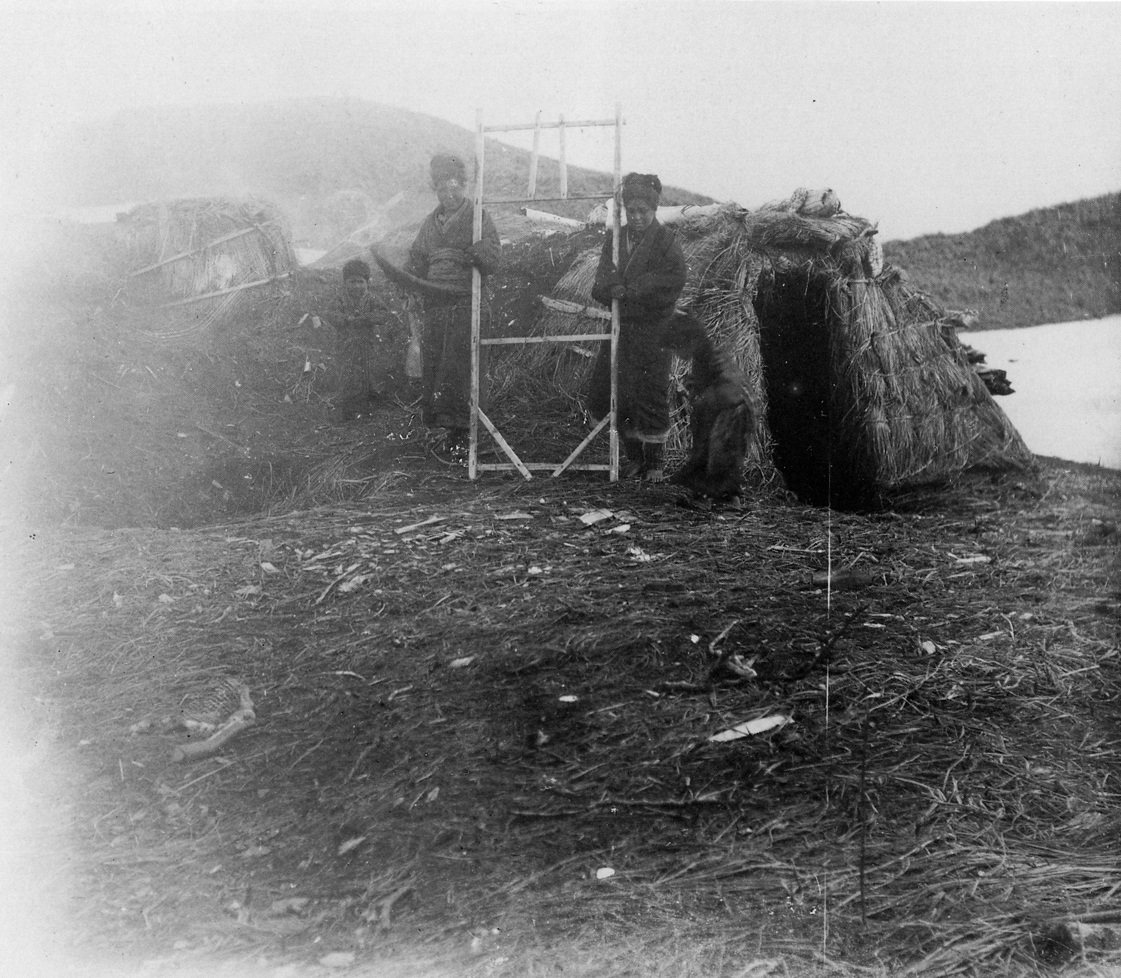
These motifs are not decoration applied to a foreign object. They belong to a single visual system that ran across Ainu material culture — woven attus cloth, carved knife sheaths and makiri handles, ritual implements, and the trays themselves — developed in and around the chise dwelling and passed down by hand. The tray is one surface in a much larger carved and woven world.
“In 2013, Nibutani-ita became the first Ainu craft Japan ever recognized as a national Traditional Craft — Indigenous making, entered into the national record on its own terms.”
- Edo period (pre-1868) — Ainu artisans of the Saru River basin carve trays, bowls, and ritual objects incised with moreu, aiushi, and ramu motifs.
- Meiji era (from 1868) — Hokkaido is incorporated and rapidly settled; Ainu craft comes under pressure, but carving continues in Nibutani.
- 2007 — The UN adopts the Declaration on the Rights of Indigenous Peoples, sharpening the global context for Ainu recognition.
- 2008 — Japan’s Diet formally recognizes the Ainu as an Indigenous people of Japan.
- 2013 — Nibutani-ita and Nibutani-attus become the first Ainu crafts designated national Traditional Crafts by METI.
- 2019 — The Ainu Policy Promotion Act is enacted, the first law to name the Ainu as Indigenous.
- 2020 — Upopoy, the National Ainu Museum and Park, opens at Shiraoi in Hokkaido.
- 2026 — Carving continues through a small number of Biratori artisans and the Nibutani Ainu Culture Museum.
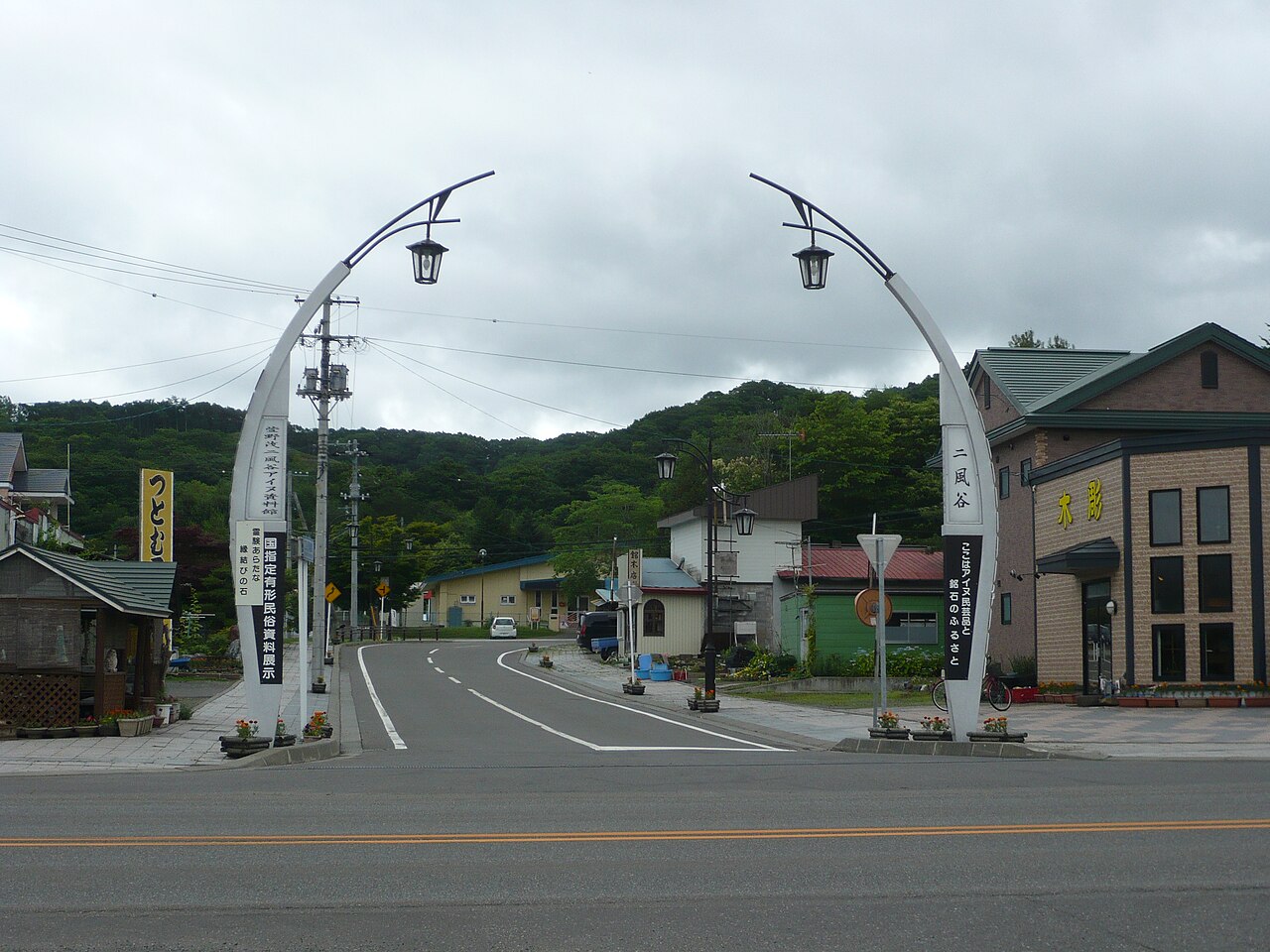
The continuity case here is real but narrow. The craft survives through a small number of Biratori carvers and is anchored institutionally by the Nibutani Ainu Culture Museum, which preserves and transmits the patterns and techniques. This is not a large industry with dozens of workshops; it is a designated tradition kept alive by relatively few hands, which is part of why an authenticated piece carries the weight — and the price — that it does.
What it does well
Weaknesses and things to verify before buying
- Price was not confirmed. Only the Amazon JP Global Store listing reference was available at writing; verify the current price and stock at the listing before you commit.
- Dimensions and weight are unlisted here. Tray size was not in the fetched data — check the listing if you need a specific footprint.
- Each piece varies. Hand-carved hardwood means grain, exact motif layout, and tone differ from piece to piece; do not expect a uniform match to the photo.
- Care matters. Carved, likely finished hardwood is not made for dishwashers, soaking, or heavy wet use; wipe clean and keep it out of prolonged moisture and direct heat.
- International shipping and customs. Buying from the JP Global Store means longer transit and possible duties depending on your destination and order value.
- Authenticity. “Ainu-style” pieces exist that are not designated Nibutani-ita; if provenance matters to you, confirm the maker and origin with the seller.
Price snapshot across stores
JPY is the authoritative price. USD figures are approximate estimates at a ¥150/USD baseline (mid-2026) and depend on the current exchange rate. Live pricing was unavailable at the time of writing.
| Store | Item / Variant | Price (JPY / USD est.) | Notes |
|---|---|---|---|
| 🇺🇸 Amazon.com (US) | Browse Japanese carved wood & Ainu-style trays | varies (USD) | Best if you are shopping from the US — Prime shipping, USD pricing, no international customs. Amazon US carries Japanese carved wood and home goods for comparison; the exact Nibutani-ita piece is sourced from Japan (next row). |
| 🇯🇵 Amazon JP Global Store | Nibutani-ita carved wood tray (ASIN B0GNS528TW) | Unavailable — verify at listing | Where the specific item is sourced; ships internationally from Japan to most major destinations. Live price could not be confirmed at writing. |
| Maker direct / Nibutani workshops | Carver-made trays | Varies | Biratori workshops and the Nibutani Ainu Culture Museum area sell directly; typically Japan-domestic, often no English ordering. |
| Proxy services (Buyee / Tenso) | Forwarding from JP shops | Item + service fee + forwarding | Useful when a piece is sold only on a Japan-domestic site; adds fees and an extra shipping leg. |
Conclusion — which buyer type are you?
Other ways to approach this purchase
🏆 Editor’s Pick
❓ Frequently Asked Questions
What exactly is a Nibutani-ita?
It is a hand-carved wooden tray made by Ainu carvers in Nibutani, in the town of Biratori, southern Hokkaido. The surface is incised with the traditional Ainu moreu (spiral), aiushi (thorn), and ramu (scale) motifs, cut into local hardwoods such as katsura and walnut.
Why is it considered historically significant?
In 2013, Nibutani-ita — together with the elm-bark cloth Nibutani-attus — became the first Ainu crafts ever designated national Traditional Crafts by Japan’s METI, a milestone in recognizing Indigenous Japanese making.
Does it ship internationally?
The item is sourced from the Amazon JP Global Store, which ships internationally to most major destinations. Expect longer transit than a domestic order, and check whether customs duties apply at your destination depending on order value.
How much does it cost?
Live pricing was unavailable at the time of writing — only the Amazon JP Global Store listing reference was available. JPY is the authoritative price; any USD figure is an estimate at a ¥150/USD baseline. Please confirm the current price directly on the listing.
How should I care for the tray?
Treat it as carved, finished hardwood: wipe clean, avoid dishwashers, soaking, and prolonged moisture, and keep it away from direct heat and long sun exposure. This protects both the wood and the crispness of the incised motifs.
How do I know a tray is genuinely Nibutani-ita?
“Ainu-style” trays exist that are not the designated craft. If authenticity matters, confirm the maker and the Nibutani/Biratori origin with the seller; the Nibutani Ainu Culture Museum anchors the tradition and is a useful reference point.
What else might I compare it with?
Within Hokkaido, the Ainu makiri knife and Kobushi-yaki pottery are natural companions. For carved and turned woodwork more broadly, Hida Ittobori netsuke and a Yamanaka tea caddy offer useful points of comparison — see the compare box above.
jpmono.com is curated by a Japan-based editorial team (working out of Toyama in the Hokuriku region and Nara in Kansai) and is independent. We do not take payment from the makers we feature; income comes from affiliate links. We do not physically test every product — we read maker specs and source listings — and we flag where data is thin.
🤖 This article was prepared with AI assistance and reviewed against the available source data. Where source data was thin — including live pricing for this listing — the limitation is stated rather than filled with estimates.
Affiliate disclosure: jpmono.com may earn a commission on qualifying purchases made through links on this page, at no additional cost to you.