![Kamakura-bori Carved Lacquer Sweets Plate: Kanagawa’s Zen Guri Relief [2026]](https://jpmono.com/wp-content/uploads/2026/07/kamakura-bori-carved-lacquer-sweets-plate-where-to-buy-2026-featured.jpg)
Some Japanese crafts were born in workshops. Kamakura-bori (鎌倉彫, “Kamakura carving”) was born in temples. In the 13th century, Buddhist sculptors — the busshi who carved statues and altar fittings for the great Zen monasteries of Kamakura — began cutting relief patterns into wood and sealing them under coat after coat of urushi (漆, natural lacquer). The technique made incense trays, sutra tables, and other ritual implements. Eight centuries later, the same carve-then-lacquer method produces small everyday objects like the kashizara (菓子皿, “sweets plate”) that anchors this guide.
What makes Kamakura-bori unusual is not only the surface, which combines carved-wood depth with the glow of layered lacquer, but its address. It comes from Kamakura, in Kanagawa Prefecture — the seat of Japan’s first samurai government, the Kamakura shogunate (1185–1333). Few household objects carry a historical spine this deep, or this specific: this is craft from the country’s “eastern former capital,” not a generalized “old Japan.”
This article covers one specific listing — a guri-carved lacquer sweets plate sourced through Amazon’s Japan Global Store — and treats it as a lens on the wider tradition. We look at what the piece is, who it suits and who should pass, how to read the maguro and guri carved patterns, where and how to buy it from outside Japan, and how it compares to other Japanese carved-and-lacquered wares we have covered. A note up front: the fetched product data for this item was thin, so specifications are described in general, tradition-level terms and every price is flagged as unconfirmed.
🔄 Updated:
⏱️ Read time: about 11 min

- Who this is for — and who should skip it
- Product overview (from published specs)
- 📍 Where this comes from — place, era, and the craft tradition
- 📦 Shipping & where to buy from outside Japan
- Price snapshot across stores
- What it does well
- Weaknesses and things to verify before buying
- Conclusion — which buyer type are you?
- Other ways to approach this purchase
- 🏆 Editor’s Pick
- ❓ Frequently Asked Questions
Who this is for — and who should skip it
- Want a small, usable object with genuine, traceable craft heritage rather than a mass-produced souvenir
- Appreciate the tactile contrast of carved relief under hand-polished lacquer
- Serve wagashi, chocolates, or nuts and want a serving piece that starts a conversation
- Collect Japanese lacquerware and do not yet own a carved (chōkoku) piece from the Kantō region
- Are buying a meaningful gift and value provenance over brand names
- Need a dishwasher- and microwave-safe everyday plate — natural urushi tolerates neither
- Want a precise, guaranteed spec sheet before buying — the data for this listing is thin
- Have a known urushi (lacquer) sensitivity; cured lacquer is inert, but this is worth flagging
- Are shopping strictly on price and want the cheapest plate that will do the job
- Dislike the maintenance rhythm of hand-wiping and air-drying a lacquer surface
Product overview (from published specs)
The table below summarizes what can be stated about this specific listing plus the tradition it belongs to. Where the fetched listing did not confirm a value, the cell says so rather than guessing. Only a Japan Global Store listing snapshot was available, and live pricing may have shifted since the writing date.
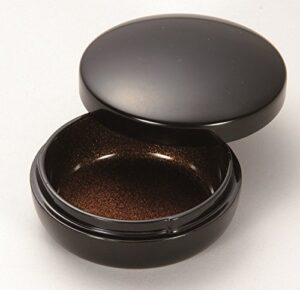
Kamakura-bori Carved Lacquer Sweets Plate
鎌倉彫 菓子皿 笹の葉文様
通常7~8日以内に発送します。 · Sold by aozoraショップ · ASIN B0HGQBF81F
Price and availability as of 2026-09-01 05:22 JST. The Amazon listing at the time of purchase is authoritative. jpmono.com earns a commission on qualifying purchases at no extra cost to you.
| Attribute | Detail | Source |
|---|---|---|
| Craft | Kamakura-bori (carved lacquerware) | Tradition / maker convention |
| Item | Kashizara sweets / serving plate | Listing keyword |
| Body material | Carved katsura (桂) or ho (朴) wood, per tradition | Tradition; not itemized in listing |
| Finish | Black makuro-urushi with vermilion, hand-polished | Tradition |
| Motif | Peony (botan) relief; guri / maguro carving | Recommendation hint / tradition |
| Dimensions / weight | Unconfirmed — check the listing | Not in fetched data |
| Origin | Kamakura, Kanagawa Prefecture, Kantō | Craft designation |
| Item ID (ASIN) | B0HGQBF81F | Spec |
Store labels used throughout this guide: Amazon US (search) as the primary path, then Amazon JP Global Store as the sourced-listing path, then Maker direct and Proxy services (Buyee / Tenso) where relevant.
📖 Glossary — key terms
Kamakura-bori (鎌倉彫) — “Kamakura carving.” Wood carved in relief, then coated in layered urushi lacquer; a carved lacquerware tradition from Kamakura.
Urushi (漆) — natural lacquer refined from tree sap. It cures into a hard, water-resistant, warm-toned film but is intolerant of heat, dishwashers, and prolonged UV.
Makuro-urushi (真黒漆) — the deep “true black” lacquer used as the base layer, over which vermilion is applied and polished back.
Guri (屈輪) / maguro (真黒) — the two signature carved-pattern families of Kamakura-bori: guri is a scrolling, spiral-groove relief; maguro refers to the black-ground finish.
Kashizara (菓子皿) — a small plate for serving wagashi (Japanese sweets) or other confections.
Busshi (仏師) — Buddhist sculptors who carved statues and ritual fittings for temples; the originators of Kamakura-bori.
Tsuishu / tsuikoku (堆朱・堆黒) — Chinese carved lacquer (red / black), imported from Song-dynasty China, that inspired the Kamakura busshi to develop a carved-wood-plus-lacquer shortcut.
📍 Where this comes from — place, era, and the craft tradition

Para A — the region on the map. Kamakura sits on the shore of Sagami Bay in Kanagawa Prefecture, in the Kantō region of eastern Japan — about 50 km southwest of central Tokyo and a short train ride from Yokohama. It is a natural fortress: enclosed on three sides by steep wooded hills and open on the fourth to the sea. That defensibility is exactly why a samurai government chose it. The surrounding hills also supplied the raw material a carving tradition needs — workable hardwoods like katsura and ho — while the temple economy supplied the demand.
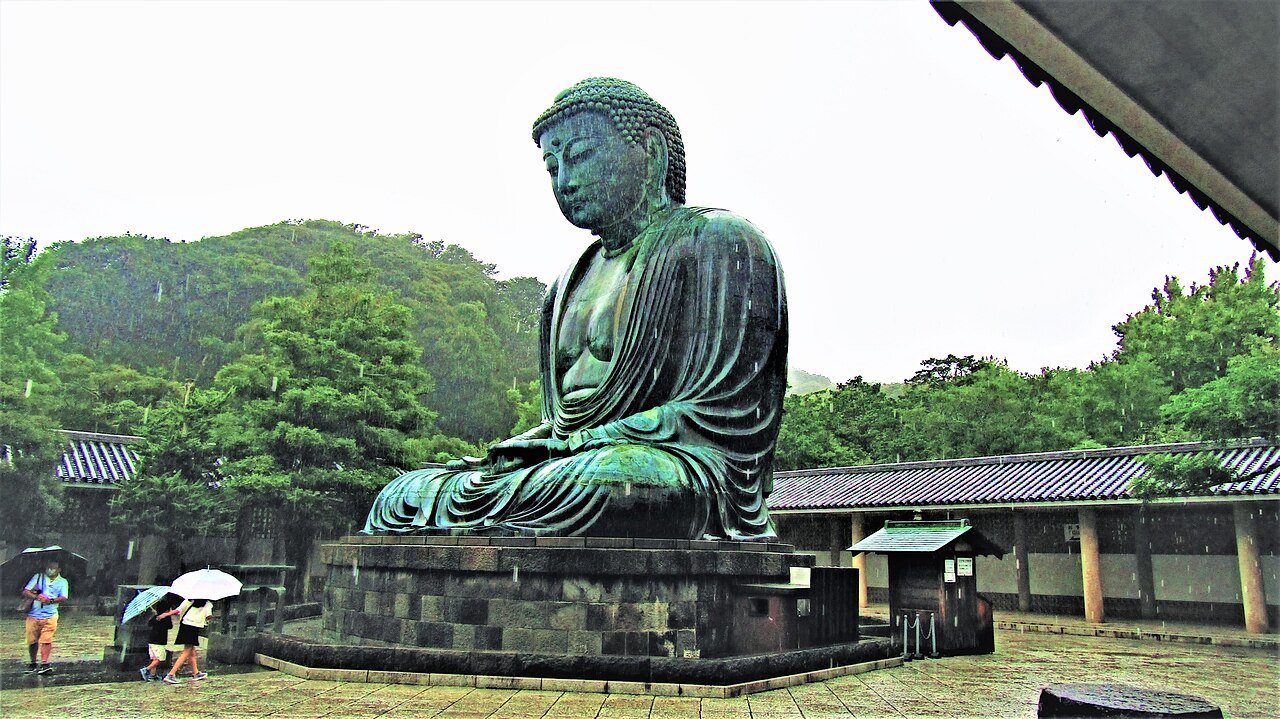
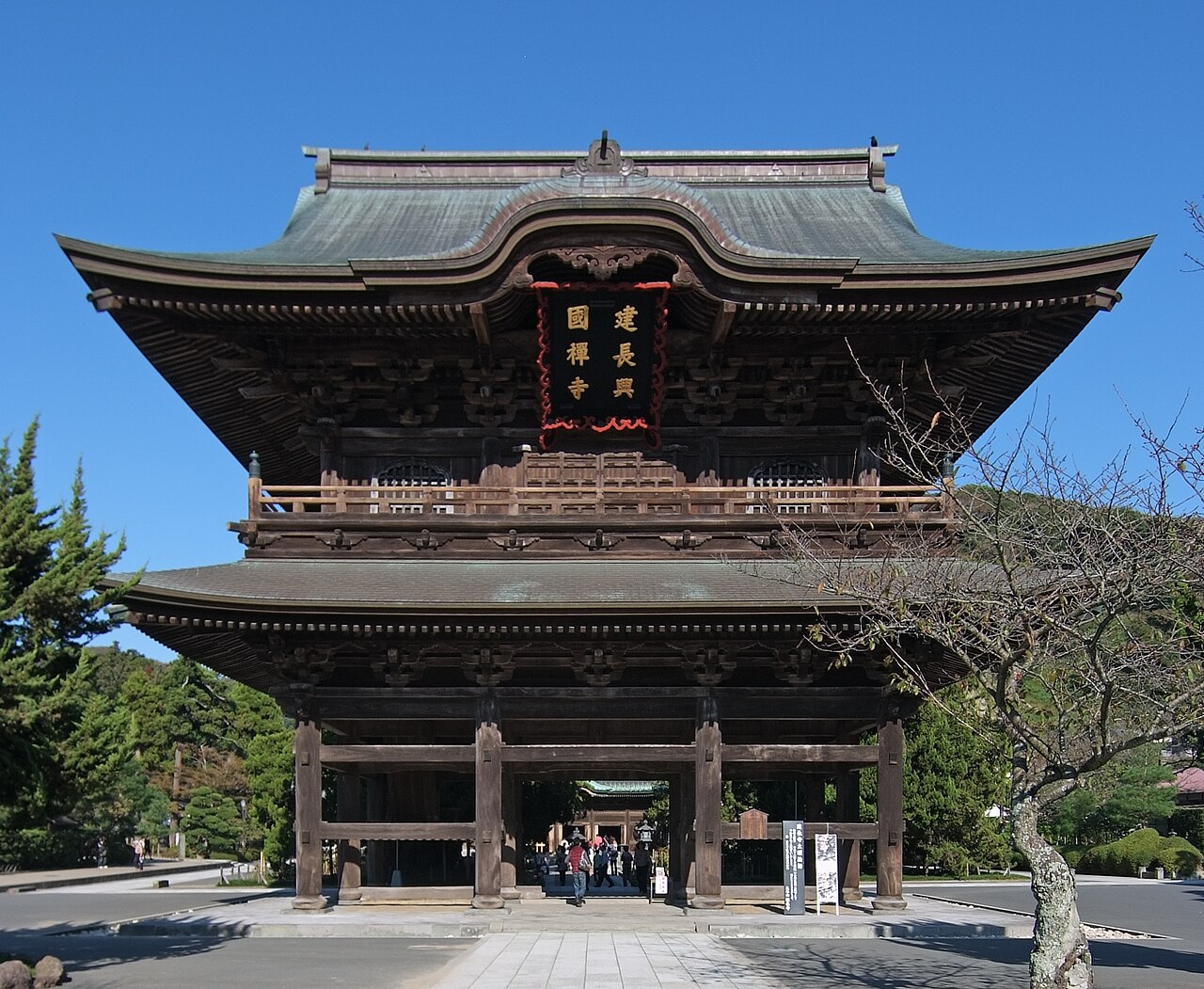
Para B — the historical anchor. In 1185, Minamoto no Yoritomo established the Kamakura shogunate, Japan’s first warrior government, and for nearly 150 years this small coastal town — not Kyoto — was the country’s effective political center. Kamakura is, in that sense, an “eastern former capital.” The period’s Zen Buddhism arrived with a strong cultural current from Song-dynasty China, and among the imports were pieces of Chinese carved lacquer, tsuishu and tsuikoku. Kamakura’s Buddhist sculptors, working at monasteries such as Kenchoji (founded 1253, Japan’s oldest Zen training monastery) and Enkakuji (founded 1282), adapted the look: rather than build up dozens of lacquer layers and carve into them the Chinese way, they carved the wood first and then lacquered it. That shortcut is the birth of Kamakura-bori. The same Buddhist milieu produced the Great Buddha of Kotoku-in, cast in the 13th century and still seated in the open air today.
- 1185 — Minamoto no Yoritomo establishes the Kamakura shogunate, Japan’s first samurai government.
- 13th c. — Zen Buddhism and Song-dynasty carved lacquer (tsuishu / tsuikoku) reach Kamakura; the Great Buddha of Kotoku-in is cast.
- 1253 — Kenchoji founded; busshi carve lacquered ritual implements — the origin of Kamakura-bori.
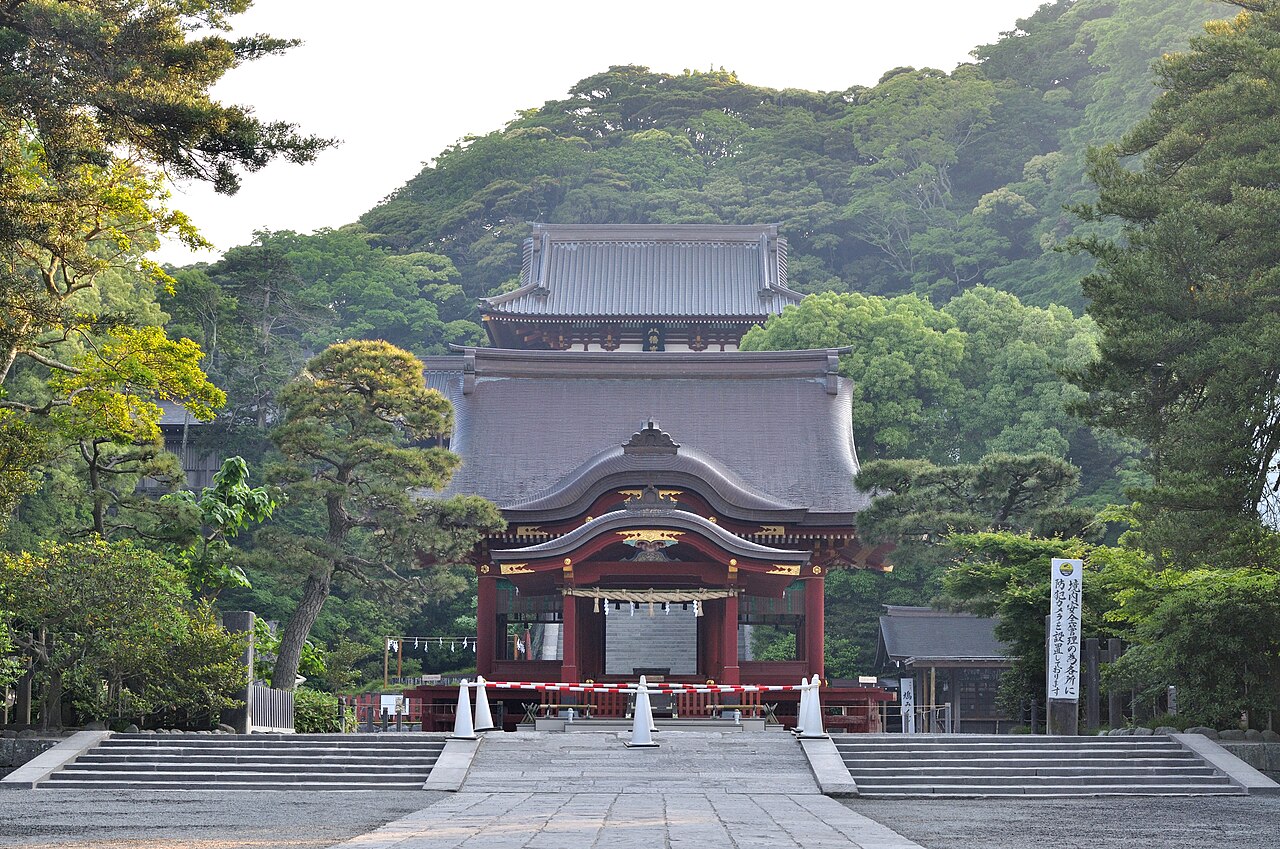
- 1282 — Enkakuji founded, deepening Kamakura’s Zen sculptural workshops.
- 1333 — The Kamakura shogunate falls; craft workshops persist in the temple town.
- 14th–16th c. — As the tea ceremony spreads in the Muromachi era, Kamakura-bori shifts toward tea utensils.
- Meiji era (from 1868) — The craft broadens into household lacquerware for everyday use.
- Shōwa era — Kamakura-bori is designated a nationally recognized traditional craft (dentōteki kōgeihin).
- 2026 — Kamakura workshops still carve and lacquer plates, trays, and tea utensils by hand.
Para C — what “still being made here” means. Kamakura-bori did not fossilize when the shogunate fell. As the tea ceremony spread in the Muromachi era, the craft moved from Buddhist implements to tea utensils; in the Meiji era it moved again, into household lacquerware — plates, trays, boxes, and mirrors of the kind produced today. The through-line is the method: carve first, lacquer after. A piece like this sweets plate is the domestic, present-day descendant of a sutra table, made with the same two verbs.
“Where Chinese carved lacquer built up the surface and cut into it, the Kamakura busshi carved the wood and then dressed it in lacquer — a shortcut that became a signature.”
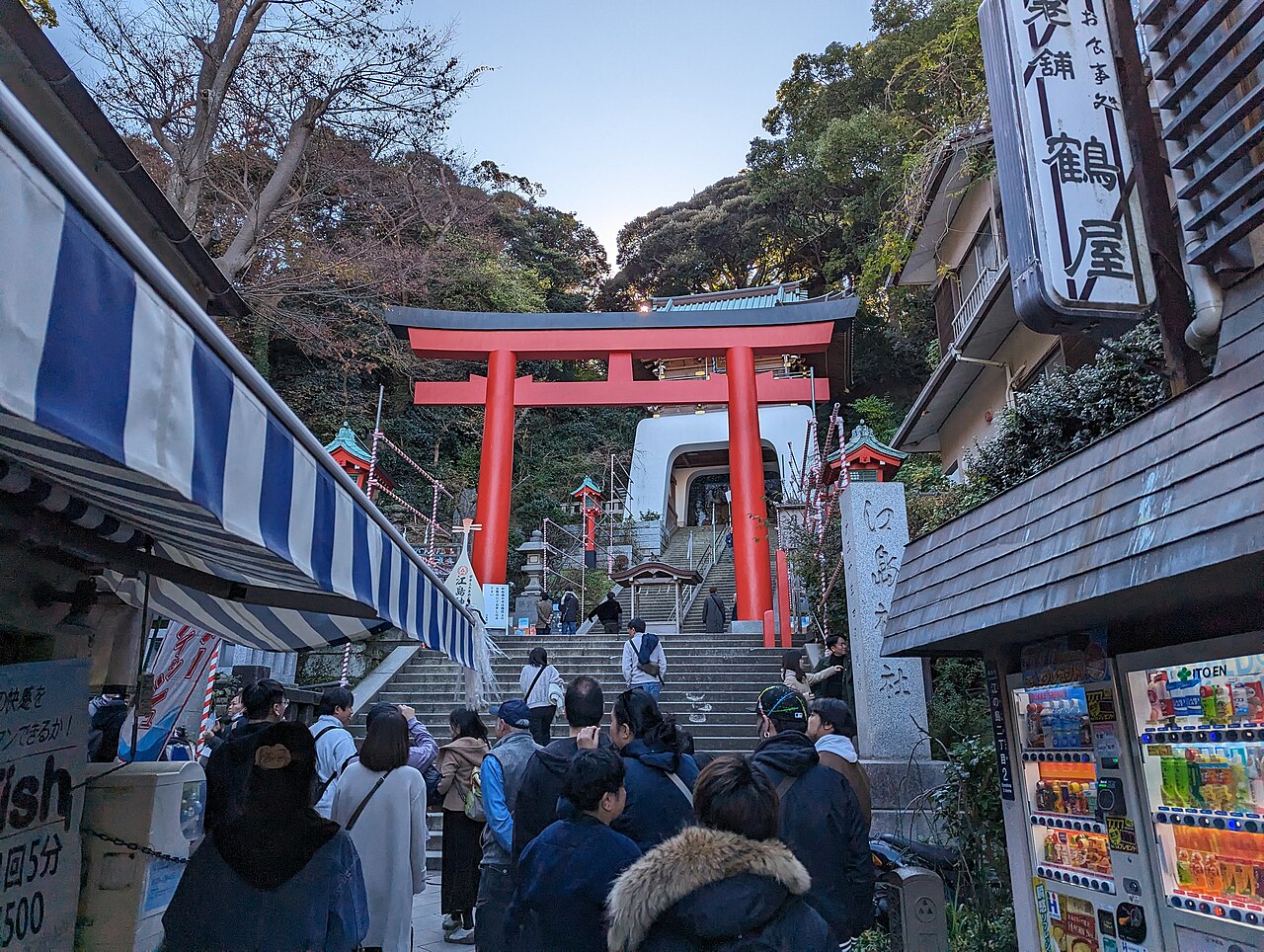
Para D — culinary and cultural role. A kashizara’s job is to hold sweets. In practice that means a few wagashi beside a bowl of matcha, seasonal higashi (dry confections), or — in a modern home — chocolates and nuts. The carved relief catches light at a low angle, so the plate reads differently depending on where it sits; the vermilion-over-black finish is traditionally associated with celebration and formality. Kamakura remains a living tourist and pilgrimage town — Tsurugaoka Hachimangu, the Great Buddha, and the Shonan coastline around Enoshima keep visitors, and craft shops, in steady supply.
Other Japanese carved-and-lacquered wares we have covered — useful for comparing technique, region, and price tier.
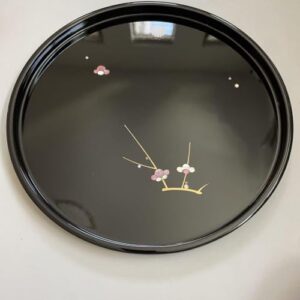
 🎴 Kyo Shikki Maki-e kogo incense container
 🐚 Takaoka Shikki aogai raden lacquer box
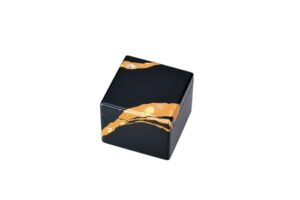 ✨ Owari Nagoya Maki-e lacquer box
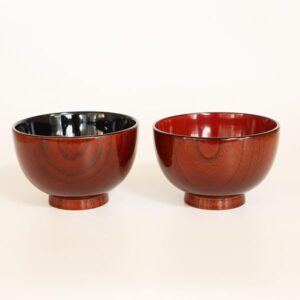 🍜 Naruko Shikki kijiro lacquer soup bowl
🪞 Nara Shikki raden lacquer hand mirror
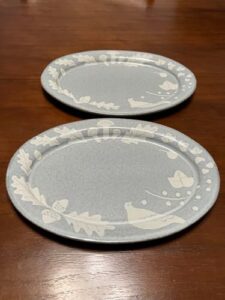 🍽️ Kasama-yaki oval serving plate (Kantō)
📦 Shipping & where to buy from outside Japan
The specific plate covered here is sourced from the Amazon JP Global Store, which ships many household items internationally to most major destinations. Buyers outside Japan generally have three practical paths, summarized in the price snapshot below.
Based on typical Global Store handling, expect international shipping in roughly the $15–$40 range to the US and EU, with higher rates to other regions, plus possible customs duties once an order crosses your country’s de minimis threshold. Because urushi lacquer is heat- and moisture-sensitive, this is a “carry-on-mindset” object rather than a rugged everyday import — the risk in transit is chipping, not spoilage. Prices in USD are approximate and depend on the current exchange rate.
Price snapshot across stores
Only a Japan Global Store listing snapshot was available for this item, and no confirmed price was present in the fetched data; live pricing may have shifted since the writing date. Verify at the retailer before purchasing.
| Store | Item / Variant | Price (JPY + USD est.) | Notes |
|---|---|---|---|
| 🇺🇸 Amazon US (search) | Browse Japanese lacquerware & serving plates | varies (USD) | Best if you are shopping from the US — Prime shipping, USD pricing, no international customs. Amazon US carries Japanese lacquer trays, bowls, and plates from various makers; this exact Kamakura-bori plate is sourced from Japan (next row). |
| 🇯🇵 Amazon JP Global Store | This exact Kamakura-bori kashizara (ASIN B0HGQBF81F) | Price unconfirmed — check listing | The sourced listing for this specific item. Ships internationally from Japan to most major destinations. |
| Maker direct | Kamakura-bori workshops / cooperative | varies (JPY) | Kamakura workshops sell in-town and some online; widest selection of carving patterns, but often Japan-only shipping. |
| Proxy services (Buyee / Tenso) | Forwarding for Japan-only listings | item + fees | Use when a workshop or marketplace does not ship abroad; adds a service fee and consolidated forwarding. |
What it does well
Weaknesses and things to verify before buying
- Thin listing data. Exact dimensions, weight, and the precise wood species were not confirmed in the fetched data. Confirm these on the live listing before you buy.
- No confirmed price. No price was present in the fetched snapshot. Treat any figure as unverified until you see it at the retailer.
- Not dishwasher, microwave, or oven safe. Natural urushi cannot tolerate high heat, harsh detergents, or prolonged soaking. Hand-wipe only.
- Sunlight and dryness. Lacquer can dull or crack under prolonged direct UV and very dry indoor air; store away from a sunny windowsill and heating vents.
- Handmade variation. Carving depth, color tone, and grain differ piece to piece. If you expect factory uniformity, this will read as inconsistency rather than character.
- Shipping fragility. Carved-and-lacquered wood chips if knocked in transit; buy from a seller who packs well, and inspect on arrival.
- Lacquer sensitivity (rare). Fully cured urushi is inert, but individuals with a known lacquer allergy may prefer to avoid raw or freshly finished pieces.
Conclusion — which buyer type are you?
Other ways to approach this purchase
🏆 Editor’s Pick
❓ Frequently Asked Questions
Is this real lacquer, and is it safe for food?
Can I put it in the dishwasher or microwave?
Does it ship outside Japan?
What is the difference between guri and maguro carving?
How is Kamakura-bori different from Chinese carved lacquer (tsuishu)?
Is it a good gift?
Why does the price seem uncertain in this guide?
jpmono.com is curated by a Japan-based editorial team (working out of Toyama in the Hokuriku region and Nara in Kansai) and is independent. We do not take payment from the makers we feature; income comes from affiliate links. We do not physically test every product — we read maker specs and source listings.
🤖 This article was drafted with AI assistance and edited against maker specifications and source listings. Where listing data was thin, the text says so rather than filling gaps with unverified figures.
Affiliate disclosure: jpmono.com may earn a commission on qualifying purchases made through links on this page, at no additional cost to you.