![Miki Uchihamono Oire Nomi: Where to Buy Japanese Bench Chisels [2026]](https://jpmono.com/wp-content/uploads/2026/07/miki-uchihamono-oire-nomi-chisel-where-to-buy-2026-featured.jpg)
- What it is: a Japanese oire-nomi — a general-purpose bench chisel with a laminated white-paper-steel edge and a hooped oak handle for mallet work.
- Made in: Miki, Hyogo — the old Harima province, a METI-designated traditional craft as Banshu Miki Uchihamono.
- Price band: mid-range for hand-forged Japanese woodworking chisels (see the live listing — pricing was not in our snapshot).
- Best for: woodworkers who want a joinery chisel that takes and holds a very fine edge and can be re-flattened and re-sharpened for decades.
- Skip if: you want a set you can throw in a drawer and ignore — carbon-steel edges rust and need after-use care.
- Shipping: ships internationally from Amazon Japan — jump to our pick ↓
In the winter of 1580, the castle town of Miki was starved into surrender and burned, and the smiths who rebuilt it never left. The reconstruction pulled carpenters and blacksmiths in from across the country, and the tools they forged to raise new timber halls became the town’s permanent trade. Four and a half centuries later, Miki in Hyogo Prefecture is still Japan’s comprehensive hardware town — chisels, planes, saws, and trowels — and the oire-nomi (追入鑿, “general bench chisel”) is its everyday workhorse.
An oire-nomi is not a specialist’s tool. It is the chisel a Japanese carpenter reaches for first: paring, chopping mortises, cleaning joints. What makes the Miki version notable to woodworkers outside Japan is the construction — a hard white-paper-steel (shirogami) cutting layer forge-welded onto a soft-iron body, a red-oak or Japanese-oak handle, and a steel katsura hoop ringing the handle end so it survives repeated mallet blows. That laminated build is why these chisels sharpen to a keener edge than a mono-steel Western chisel and hold it longer.
This guide is for woodworkers and tool collectors deciding whether a Banshu Miki oire-nomi belongs on their bench, and how to buy one from outside Japan. We cover what the steel-and-oak construction actually does, who should pass, where the craft comes from, and the two realistic purchase paths — an Amazon US search for comparable Japanese chisels, and the Amazon Japan Global Store listing that ships the specific tool worldwide.
🔄 Updated:
⏱️ Read time: ~9 min

ℹ️ Live pricing and some specs weren’t in our snapshot — the linked listing is authoritative; unconfirmed attributes are marked below.
- Who this is for — and who should skip it
- Product overview (from published specs)
- 📍 Where this comes from — place, era, and the craft tradition
- 📦 Shipping & where to buy from outside Japan
- Price snapshot across stores
- What it does well
- Weaknesses and things to verify before buying
- Conclusion — which buyer type are you?
- Other ways to approach this purchase
- 🏆 Editor’s Pick
- ❓ Frequently Asked Questions
Who this is for — and who should skip it
- Do joinery, furniture, or timber framing and want an edge that pares end grain cleanly.
- Already sharpen freehand on waterstones and want steel that rewards it.
- Value a tool you can re-flatten, re-hone, and re-handle for decades rather than replace.
- Want a hooped handle built to take mallet strikes, not just hand pressure.
- Appreciate buying from a documented traditional-craft district rather than an anonymous factory.
- Want a maintenance-free chisel — white steel rusts without after-use care.
- Expect a ready-to-use edge out of the box; Japanese chisels often need initial back-flattening (uraoshi) and setup.
- Only do occasional DIY and a hardware-store chisel already covers your needs.
- Need a pry bar or paint scraper; a laminated fine edge chips if abused.
- Prefer a stainless, dishwasher-tolerant tool with zero rust risk.
Product overview (from published specs)
The construction below reflects the general spec of a Banshu Miki oire-nomi as described by the maker tradition and the sourced listing. Exact dimensions, blade width, and whether the item ships as a single chisel or a set depend on the specific option you choose on the listing, so verify those on the product page before buying.
Miki Uchihamono Oire Nomi
播州三木打刃物 伝統工芸士 岩崎永祐作 「左のぶ弘」追入鑿9㎜ (一枚裏・赤樫柄付・本刃付)「三木金物商工協同組合連合会認定書付」 (岩崎鑿製作所)
通常6~7日以内に発送します。 · Sold by 三木金物展示即売館通販事業部 · ASIN B00JWCBHRW
Price and availability as of 2026-08-31 02:30 JST. The Amazon listing at the time of purchase is authoritative. jpmono.com earns a commission on qualifying purchases at no extra cost to you.
| Attribute | Detail | Source |
|---|---|---|
| Type | Oire-nomi (追入鑿), general-purpose bench chisel | Maker tradition |
| Cutting steel | Shirogami (white-paper steel), laminated onto soft-iron body | Maker tradition |
| Handle | Red oak / Japanese oak (akagashi), steel katsura hoop | Maker tradition |
| Origin | Miki, Hyogo (old Harima province) — Banshu Miki Uchihamono | METI traditional-craft designation |
| Blade width / set count | Varies by option — confirm on listing | Amazon JP Global Store (sourced listing) |
| Price | Not in our snapshot — see live listing | Amazon JP Global Store |
Store paths for this item: Amazon US (search) for comparable Japanese chisels (primary, moonill-20), Amazon JP Global Store for the specific sourced listing (secondary, moonill-22), plus maker-direct and proxy services where relevant.
- 🍽️ Dishwasher: no — white steel is carbon steel and will rust; wipe clean, never soak.
- 🧴 Daily care: wipe the blade dry after use and give it a light film of camellia oil (tsubaki) before storage.
- 🪵 Handle: if the hoop loosens, tap it back and mushroom the handle end over the katsura ring.
- 🔧 Repairs: fully re-sharpenable and re-flattenable on waterstones for the life of the tool; the edge is meant to be maintained, not disposable.
📖 Glossary — key terms
- Oire-nomi (追入鑿) — the general-purpose Japanese bench chisel, used for paring and light chopping in joinery.
- Shirogami (白紙, “white paper steel”) — a high-purity carbon steel prized for taking an extremely fine edge; named for the white paper its maker wrapped it in.
- Katsura (冠) — the steel hoop ringed around the top of the handle so it withstands mallet blows without splitting.
- Uraoshi (裏押し) — flattening the hollow-ground back of the blade, part of the initial setup of a Japanese chisel.
- Uchihamono (打刃物) — “struck blades,” i.e., hand-forged edged tools, the umbrella term for Miki’s chisels, planes, and knives.
- Miyadaiku (宮大工) — the carpenters who build and repair shrines and temples, the traditional users of tools like these.
📍 Where this comes from — place, era, and the craft tradition

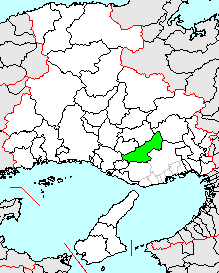
Miki sits on the inland Harima plain of southern Hyogo Prefecture, in the Kansai region of western Japan — about 30 km west of Kobe and roughly 500 km west of Tokyo. This is old Harima province (Banshu), a region of river valleys, rice, and — the reason the tools matter — a long tradition of large-scale timber construction in its castles and temples. Miki is not on the coast; it grew as an inland smithing and market town, and its identity for centuries has been metal, not fishing or trade.
The origin of Miki’s tool industry is martial. In 1578 the warlord Toyotomi Hideyoshi laid siege to Miki Castle, held by Bessho Nagaharu, and rather than storm it he cut off its supply lines. The two-year blockade is remembered as Miki no Hoshigoroshi (三木の干殺し, “the starving of Miki”), and it ended in 1580 with Nagaharu’s surrender and death and the castle town in ashes.
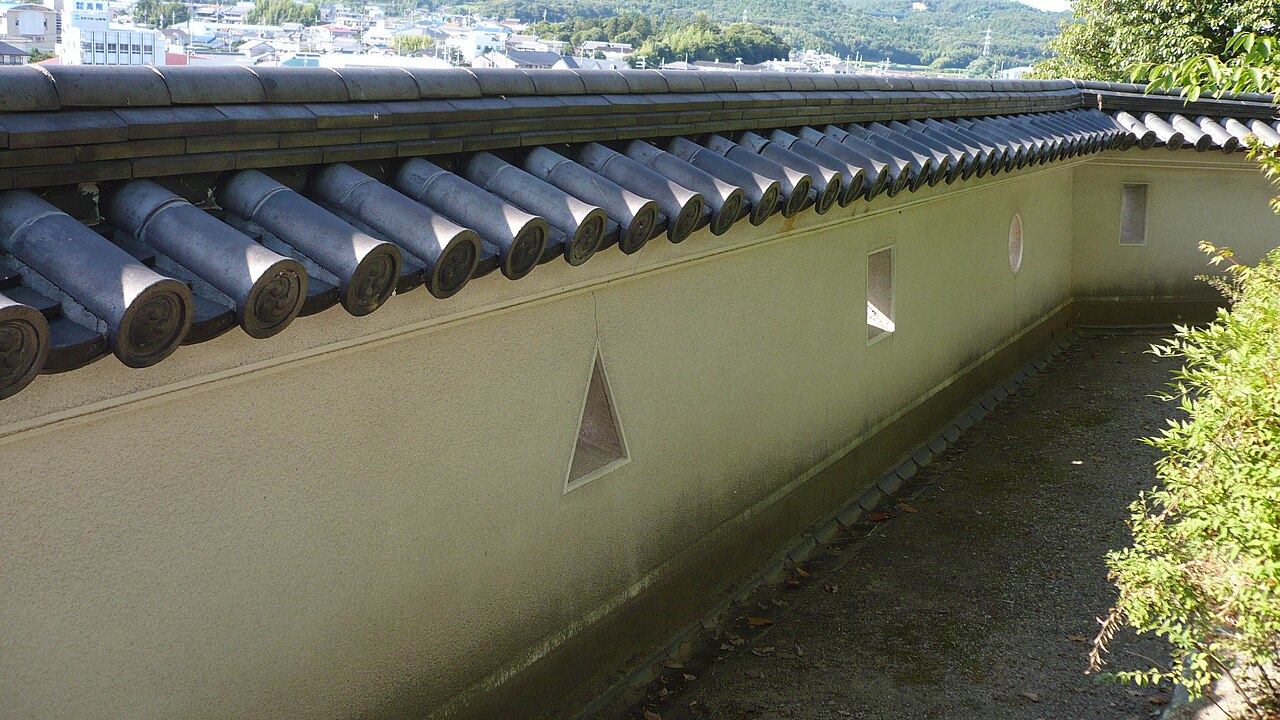
What happened next is the actual founding of the craft. Rebuilding a destroyed castle town is a carpentry project at enormous scale, and the reconstruction boom drew smiths and carpenters from across the country to Miki. They stayed. Over the Edo period the town consolidated from scattered blacksmiths into a comprehensive hardware-forging district producing the full carpenter’s kit — nomi (chisels), kanna (planes), nokogiri (saws), and kote (trowels). That breadth is unusual; most Japanese blade towns specialize in one product, while Miki became the place that made everything a builder carries.
- 1578 — Hideyoshi begins the siege of Miki Castle, held by Bessho Nagaharu.
- 1580 — The “Miki no Hoshigoroshi” blockade ends; the castle town is left in ashes.
- 1580s–1600s — Reconstruction draws smiths and carpenters nationwide; tool-smithing takes root.
- Edo period — Miki consolidates into a comprehensive hardware-forging district (chisels, planes, saws, trowels).
- Modern era — Recognized as Banshu Miki Uchihamono, a nationally designated traditional craft.
- Today — Miki still forges carpentry tools; the Kanamono Shrine and yearly Kanamono Matsuri honor the trade.
Miki’s self-understanding as a “hardware town” (kanamono no machi) is not marketing. The town has a Kanamono Shrine (金物神社) dedicated to the tutelary deities of metalworking, and every autumn it holds the Kanamono Matsuri, a festival built around the tool trade. This is a place that treats forged steel the way other towns treat sake or ceramics — as the thing it is known for and the thing it protects.
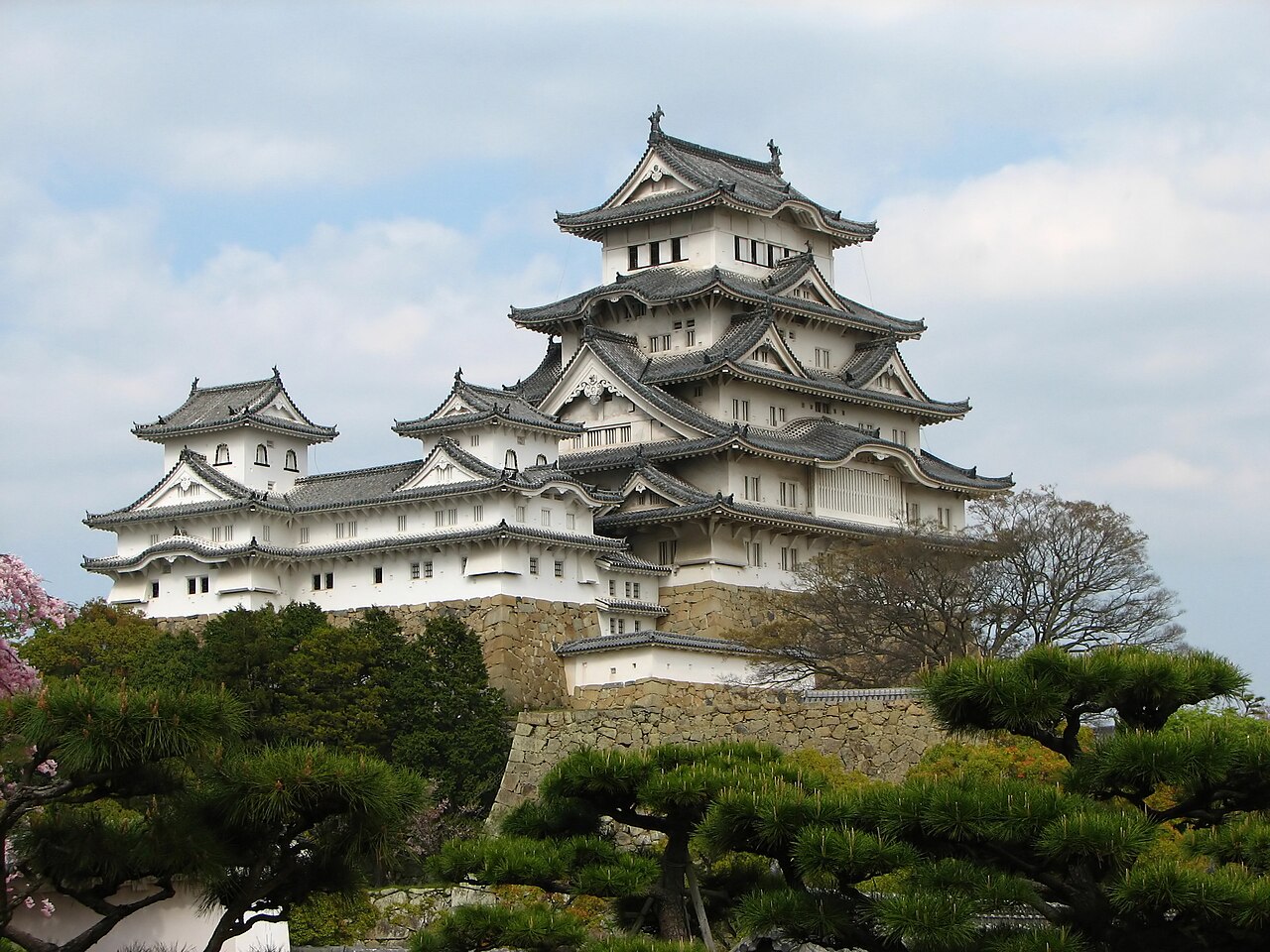
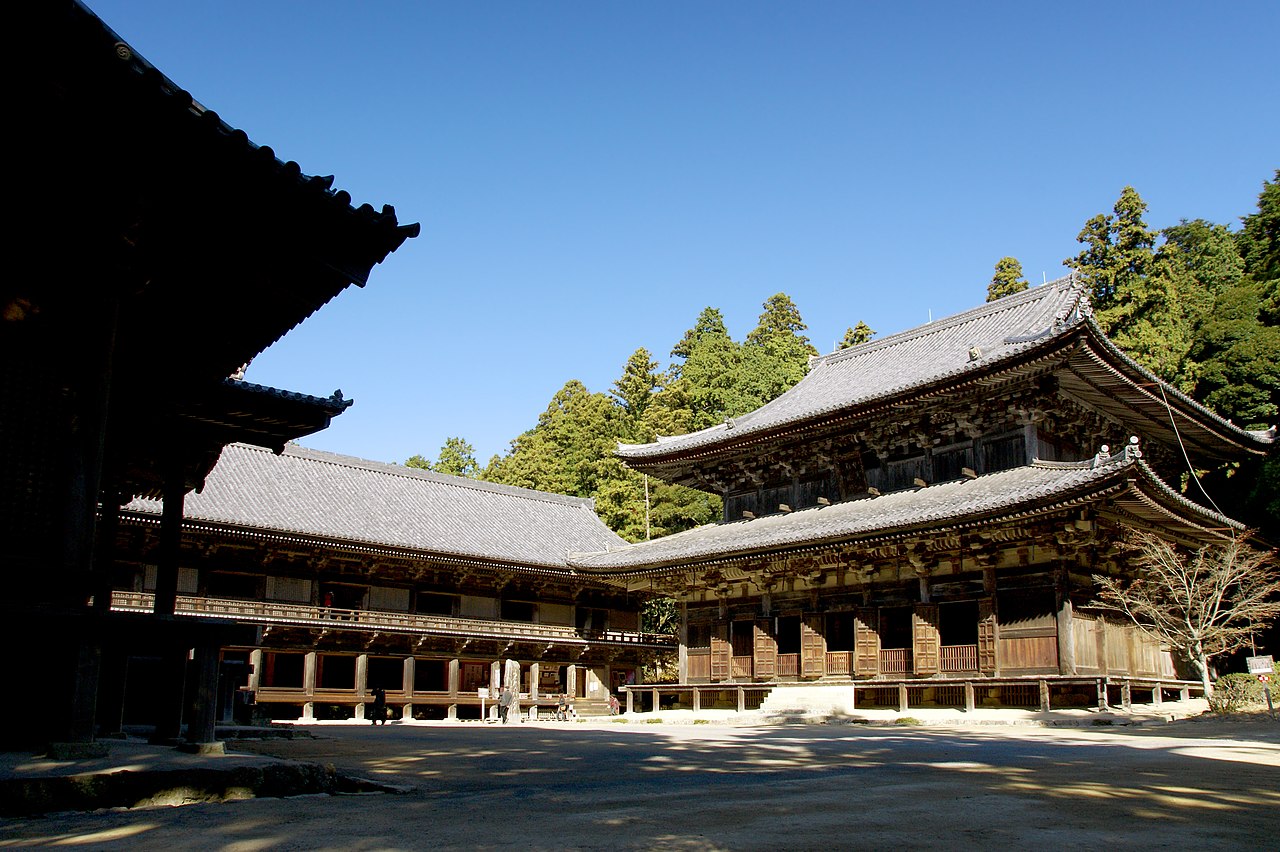
To understand what these chisels are for, look at what old Harima built. The province is home to Himeji Castle — the largest surviving wooden castle keep in Japan — and to the hilltop temple complex of Engyoji on Mount Shosha. Structures like these are enormous exercises in joinery: interlocking timber frames cut and fitted without relying on nails. An oire-nomi is one of the tools that cuts those joints, and Banshu tools were forged in the middle of exactly this building culture.
“A siege that starved a castle to death also fed a trade — the carpenters who rebuilt Miki never packed up their forges.”
Miki still forges. The district remains an active center for carpentry-tool production rather than a museum piece, and the laminate-and-forge method behind an oire-nomi — hard steel welded to soft iron, quenched, and hand-finished — is essentially the Edo-period process. When woodworkers overseas seek out Banshu chisels, they are buying into a continuous working tradition, not a revival.
📦 Shipping & where to buy from outside Japan
The specific tool covered here is sourced from the Amazon Japan Global Store, which ships household and craft goods internationally to 65+ countries — including Canada, the UK, and Australia. For most destinations, Amazon estimates and collects import fees at checkout, so there is no surprise customs bill on delivery. Expect shipping in roughly the $15–$40 range to the US, EU, Canada, the UK, and Australia, depending on weight and speed.
If you are shopping from the US and would rather compare Japanese chisels with Prime shipping and USD pricing, the Amazon US search path (first row below) is the easy option. If you want this exact Banshu Miki tool, use the Amazon Japan Global Store link — it ships worldwide. Proxy services such as Buyee or Tenso are a fallback only if a particular seller does not ship to your country directly.
Price snapshot across stores
| Store | Item / Variant | Price | Notes |
|---|---|---|---|
| 🇺🇸 Amazon.com (US) | Browse Japanese bench chisels | varies (USD) | Best if you’re shopping from the US — Prime shipping, USD pricing, no international customs. Amazon US carries Japanese oire-nomi and chisel sets from various makers, useful for comparing steel types and price tiers. This exact Banshu Miki tool is sourced from Japan (next row). |
| 🇯🇵 Amazon JP Global Store | Banshu Miki oire-nomi (this listing) | See live listing (¥ authoritative) | Ships internationally from Japan to 65+ countries — including Canada, the UK, and Australia — with import fees estimated at checkout. This is the sourced listing for the specific tool. |
| Maker direct | Banshu tool workshops / retailers | Varies | Some Miki toolmakers and specialist Japanese-tool dealers sell direct; selection is broader but international shipping is not always offered. |
| Proxy services (Buyee / Tenso) | Japan-only listings, forwarded | Item + service fee | Use only if a seller does not ship to your country directly; adds a handling fee and a second shipping leg. |
Prices in USD are approximate and depend on the current exchange rate (¥150/USD baseline as of mid-2026). The JPY price on the listing is the authoritative one. Prices and availability were based on data at the time of writing and may have changed.
What it does well
Weaknesses and things to verify before buying
- It rusts. White steel is carbon steel; without wiping dry and oiling, the edge will spot with rust. This is not a stainless tool.
- Setup is required. Japanese chisels commonly need initial back-flattening (uraoshi) and the hoop seated before first use — plan for setup time, not instant use.
- Confirm blade width and set count. Our snapshot did not fix whether this listing is a single chisel or a set, or the exact widths — verify on the product page before ordering.
- Pricing was not in our snapshot. Treat the live listing as authoritative; do not assume a price band from this article.
- Not an abuse tool. A fine laminated edge chips if used as a pry bar, scraper, or on hidden nails.
- Sharpening skill assumed. To get the value, you need waterstones and at least basic freehand sharpening; it rewards skill and frustrates buyers expecting a disposable edge.
Conclusion — which buyer type are you?
Other ways to approach this purchase
🏆 Editor’s Pick
❓ Frequently Asked Questions
What is an oire-nomi, and how is it different from a Western chisel?
An oire-nomi is the Japanese general-purpose bench chisel. Unlike a typical Western mono-steel chisel, it laminates a hard white-steel cutting layer onto a soft-iron body and has a hollow-ground back plus a hooped handle for mallet work, which lets it take a finer edge and be re-sharpened more easily.
Does it ship outside Japan?
Yes. The specific tool is sourced from the Amazon Japan Global Store, which ships to 65+ countries including Canada, the UK, and Australia, with import fees usually estimated at checkout. US shoppers can also browse comparable Japanese chisels on Amazon US.
Will it arrive ready to use?
Usually not fully. Japanese chisels commonly need initial back-flattening (uraoshi) and the katsura hoop seated before first use. Plan for a short setup on waterstones rather than expecting an out-of-the-box edge.
How do I stop the blade from rusting?
White steel is carbon steel, so wipe the blade dry after use and apply a light film of camellia (tsubaki) oil before storage. Never leave it wet or soaking. With basic care it will not rust.
Is a single chisel or a set better to start with?
For most beginners, a single mid-width oire-nomi is enough to learn sharpening and technique before investing in a set. Confirm on the listing whether the option you are viewing is a single chisel or a multi-width set.
Why is Miki known for tools specifically?
After Hideyoshi’s 1578–1580 siege destroyed the castle town, the reconstruction drew smiths and carpenters nationwide, and the tool trade stayed. Over the Edo period Miki consolidated into a comprehensive hardware-forging district making chisels, planes, saws, and trowels — honored today at its Kanamono Shrine.
Can I buy it if a seller does not ship to my country?
Yes — proxy forwarding services such as Buyee or Tenso can receive a Japan-only order and re-ship it to you. Expect an added handling fee and a second shipping leg, so use them only when direct international shipping is unavailable.
jpmono.com is curated by a Japan-based editorial team (working out of Toyama in the Hokuriku region and Nara in Kansai) and is independent. We don’t take payment from the makers we feature; income comes from affiliate links. Read more about our editorial standards.
🤖 This article was drafted with AI assistance and reviewed against the source listing and maker tradition before publication. Specs and prices should be confirmed on the live listing.
Affiliate disclosure: jpmono.com may earn a commission on qualifying purchases made through links on this page, at no additional cost to you.