![Toyama Glass Hand-Blown Tumbler: Where to Buy the City of Glass [2026]](https://jpmono.com/wp-content/uploads/2026/07/toyama-glass-hand-blown-tumbler-where-to-buy-2026-featured.jpg)
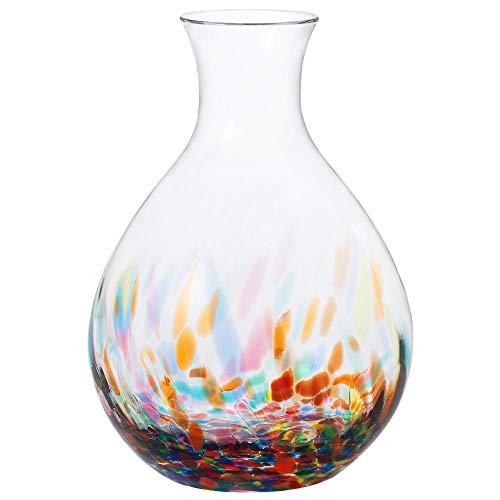
- What it is: a hand-blown, colored-glass tumbler made by a studio glassblower in Toyama, Japan.
- Made in: Toyama City, Toyama Prefecture — the self-declared “City of Glass” (Garasu no Machi Toyama), a campaign the prefecture launched in 1985.
- Price band: Studio-glass tier for a one-off handmade piece, not factory glassware.
- Best for: buyers who want a daily-use drinking glass that is also a small piece of contemporary studio craft.
- Skip if: you need a matched, identical set or dishwasher-hardy factory glass.
- Shipping: ships internationally from Amazon Japan — jump to our pick ↓
Toyama’s traveling medicine sellers spent the Edo period walking the length of Japan with lacquered chests of powders and pills — and every one of those remedies needed a small glass bottle to hold it. That quiet, unglamorous demand for medicine glass is the reason a mountain prefecture on the Sea of Japan coast ended up, three centuries later, calling itself the “City of Glass.” The hand-blown tumbler in this guide is a direct descendant of those bottles: same material, same city, entirely different intent.
What makes Toyama glass unusual among Japanese crafts is that its continuity is real but recent. This is not a thousand-year lineage of tea-ceremony vessels. It is a twentieth-century pharmaceutical-glass industry that was deliberately rebuilt into an art form when the bottle business collapsed — a civic decision, taken in the 1980s, to keep the skill alive by pointing it at studio work instead of factory work. The result is a small, dense community of glassblowers producing exactly the kind of colored, one-off drinking glass covered here.
This article is written for international readers deciding whether a Toyama hand-blown tumbler is worth importing, and where to find this kind of craft glass. We cover what the object is, how hand-blown glass developed from medicine-bottle production into studio art, how it compares to Japan’s other glass traditions, and the practical shipping and care questions that decide whether it belongs in your cupboard. Our editorial base is in Toyama itself, so this is, unusually, home ground.
🔄 Updated: July 18, 2026
⏱️ Read time: ~9 min
ℹ️ Toyama hand-blown tumblers are one-off handmade objects; dimensions, care details, and other specifications vary by maker.
- Who this is for — and who should skip it
- Product overview (from published specs)
- Where to buy
- What it does well
- Weaknesses and things to verify before buying
- Conclusion — which buyer type are you?
- Other ways to approach this purchase
- 📍 Where this comes from — place, era, and the craft tradition
- ❓ Frequently Asked Questions
Who this is for — and who should skip it
- Want a daily drinking glass that is also a handmade object, not factory stock.
- Like color, subtle asymmetry, and the marks of the blowpipe in your glassware.
- Appreciate the medicine-bottle-to-studio-glass backstory and want a piece of it.
- Are comfortable buying a one-off item where each piece varies slightly.
- Are shopping from outside Japan and want an item that ships worldwide.
- Need a matched set of six identical glasses for a dinner service.
- Want cheap, replaceable tumblers you will not worry about breaking.
- Require confirmed dishwasher, oven, or freezer safety before buying.
- Expect flawless, machine-perfect symmetry with no bubbles or tool marks.
- Are unwilling to pay a studio-craft premium over factory glassware.
Product overview (from published specs)
Toyama hand-blown tumblers are handmade pieces, so dimensions and other details may vary from one piece to another. The maker, glass type, and general form are more reliable guides than assuming a standard specification.
| Attribute | What the data shows | Source |
|---|---|---|
| Object | Hand-blown colored-glass tumbler / cold-drink glass | Amazon JP Global Store |
| Maker | Toyama Glass Studio (Toyama Garasu Kobo) — contemporary studio glassblowing | Amazon JP Global Store |
| Origin | Toyama City, Toyama Prefecture, Japan | Maker / product details |
| Method | Free-blown by hand; each piece is a one-off with natural variation | Maker / product details |
| Capacity / dimensions | — | — |
| Color / finish | Colored studio glass; colorways vary by product | Product details below |
| Price | — | — |
| Sold via | Amazon JP Global Store (ships internationally); comparable Japanese glass on Amazon US | Amazon |
Toyama hand-blown glass is a one-off handmade craft, so the exact tumbler may differ slightly from another piece in shape, bubbles, or surface character.
📖 Glossary — key terms
- Garasu no Machi Toyama (ガラスの街とやま, “Toyama, City of Glass”) — the civic identity Toyama adopted in 1985 to rebuild its declining bottle industry as a studio-glass culture.
- Toyama Garasu Kobo (富山ガラス工房, “Toyama Glass Studio”) — the municipal glass studio opened in 1994 where trained glassblowers produce and sell studio work.
- Baiyaku (売薬, “medicine selling”) — Toyama’s centuries-old traveling patent-medicine trade, the original driver of local demand for glass bottles.
- Free-blowing — shaping molten glass with breath and hand tools rather than pressing it into a mold, which is why each piece is slightly different.
- Studio glass — the international movement of individual artists blowing glass in small workshops, as opposed to industrial glass factories.
Toyama glass is one of several Japanese glass and Hokuriku craft traditions we cover. If you are still deciding, these related guides put it in context:
Where to buy
USD figures are approximate and depend on the exchange rate; where JPY is shown it is the authoritative figure for the specific listed item. Prices and stock fluctuate — always confirm at the retailer before buying.
| Store | Item / variant | Price | Notes |
|---|---|---|---|
| 🇺🇸 Amazon.com (US) | Browse Japanese hand-blown glass tumblers | varies (USD) | Best if you are shopping from the US — Prime shipping, USD pricing, no international customs. Amazon US carries hand-blown Japanese glassware from various makers, useful for comparing color, form, and price tiers. This exact Toyama studio tumbler is sourced from Japan (next row). |
| 🇯🇵 Amazon JP Global Store | The exact Toyama hand-blown tumbler in this guide | — | Ships internationally from Japan to 65+ countries — including Canada, the UK and Australia — with import fees estimated at checkout. |
| Maker direct | Toyama Glass Studio shop / studio pieces | varies | The municipal studio sells work on-site in Toyama; international shipping availability is not confirmed in our data — inquire directly. |
| Proxy services (Buyee / Tenso) | Japan-only products forwarded abroad | item + forwarding fee | Useful if a particular studio piece is only listed on a Japan-domestic shop; adds a handling and re-shipping fee. |
What it does well
General guidance for hand-blown studio glass: because each piece is handmade, follow the maker’s care instructions and handle it as a one-off object.
- 🍽️ Dishwasher: hand-washing is the safe default for hand-blown glass; treat dishwasher use as unconfirmed unless the care guidance states it.
- ♨️ Thermal shock: avoid sudden temperature swings (boiling water into a cold glass, or a hot glass into ice water), which can crack studio glass.
- 🧴 Daily care: wash gently by hand with a soft sponge; dry with a lint-free cloth to keep the color clear.
Weaknesses and things to verify before buying
- Capacity and height vary by tumbler. Choose a tumbler that fits your intended use (water glass vs. small whisky pour).
- Handmade glass carries a premium over factory glassware. Compare the current product information before committing.
- Each piece varies. Color intensity, bubble patterns, and exact form differ from the photo. That is the nature of free-blowing, not a defect — but it means you cannot expect a perfect match to a set.
- Care rules are unconfirmed for this specific piece. Dishwasher, microwave, and heat tolerance are not documented in our data; default to hand-washing and avoiding thermal shock.
- Fragility in transit. Glass ships at some risk; check the seller’s packaging and breakage policy, and prefer a fulfillment path with clear returns.
- Not a matched set. If you need six identical glasses, a single studio tumbler will not scale cleanly — buying multiples means accepting visible variation between them.
Conclusion — which buyer type are you?
Other ways to approach this purchase
📍 Where this comes from — place, era, and the craft tradition

Toyama City is the capital of Toyama Prefecture, on the Sea of Japan coast in the Hokuriku part of the Chūbu region of central Honshu. It sits on a broad alluvial plain hemmed in by mountains: the Tateyama range of the Northern Alps rises to the south and east, feeding the plain with cold meltwater rivers, while Toyama Bay opens to the north. That combination of mountain water, port access, and a merchant economy is the backdrop against which the local glass story unfolds.
The historical anchor here is not a temple or a castle but a trade. From the Edo period, Toyama’s domain built its economy around baiyaku (売薬) — traveling patent-medicine sellers who carried compact medicine kits across Japan and restocked them on a “use first, pay later” system. That trade needed an enormous, steady supply of small glass bottles and vials, and over generations it concentrated glassmaking know-how in the region.

By the early twentieth century, that demand had grown into a concentrated pharmaceutical-glass industry — factories turning out medicine bottles at scale. Then, after the war, the bottle business declined as packaging changed and production moved elsewhere. Rather than let the accumulated skill disappear, the city made a deliberate choice: convert an industrial material into a cultural one.
- Edo period — Toyama’s baiyaku medicine sellers create sustained demand for small glass bottles.
- Early 1900s — A concentrated pharmaceutical-glass (medicine-bottle) industry takes root in Toyama.
- Postwar — The medicine-bottle industry declines as packaging and production shift.
- 1985 — Toyama declares itself the “City of Glass” (Garasu no Machi Toyama).
- 1991 — The Toyama Institute of Glass Art is founded to train glassblowers.
- 1994 — The Toyama Glass Studio (Toyama Garasu Kobo) opens for production and sales.
- 2015 — The Kengo Kuma-designed Toyama Glass Art Museum opens inside TOYAMA Kirari, with a permanent Dale Chihuly installation.

The 1985 “City of Glass” declaration is what makes this a living tradition rather than a nostalgic one. The prefecture backed it with institutions: an institute to teach glassblowing (1991), a municipal studio where trained blowers actually work and sell (1994), and finally the Kengo Kuma-designed Toyama Glass Art Museum inside the TOYAMA Kirari complex (2015), which holds a permanent installation by the American glass artist Dale Chihuly. The tumbler in this guide comes out of exactly that ecosystem — a working studio, not a legend.
“Most Japanese crafts trace a line back through the centuries. Toyama glass runs the other way — a dying bottle industry that a city chose, on purpose, to turn into art.”
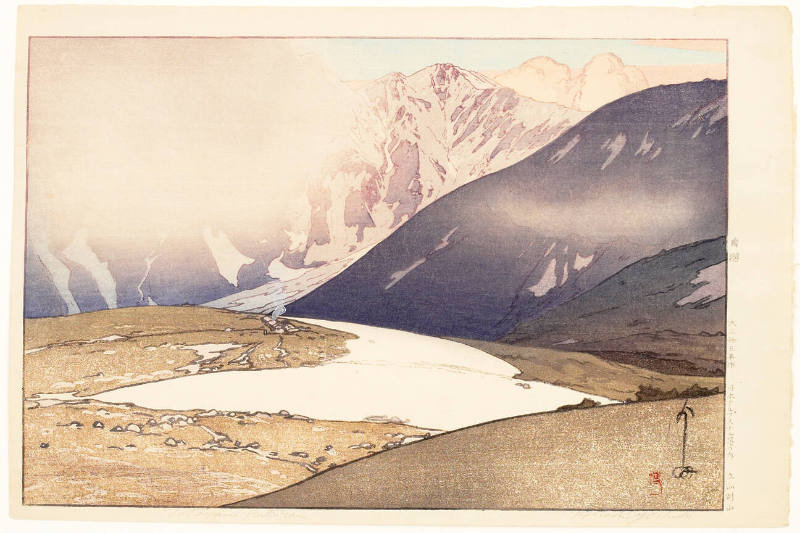
It is easy to see why the material and the place suit each other. Toyama’s identity is bound up with water and light — snowmelt off the Tateyama range, the deep blue of Toyama Bay, the clarity of the mountain air. Local glassblowers frequently point to that landscape when describing the cool, transparent palettes their colored glass tends toward, and a cold-drink tumbler is a natural expression of it.

For an international buyer, the practical takeaway is that this is a young tradition with an honest paper trail. You are not buying a claim about samurai-era secrets; you are buying a hand-blown glass from a specific, publicly documented studio culture that a Japanese prefecture built on purpose. That is, if anything, a sturdier basis for trust.
❓ Frequently Asked Questions
Is Toyama glass a traditional Japanese craft?
It is a real but modern tradition. Toyama’s glass skill grew out of its Edo-period medicine-bottle demand, but the studio-glass culture is a deliberate civic project dating to the 1985 “City of Glass” declaration, the 1991 glass institute, and the 1994 municipal studio. So it has genuine roots without being centuries old as an art form.
Will each tumbler look exactly like the photo?
No. Because these are free-blown by hand, color intensity, small bubbles, and exact shape vary from piece to piece. The photo is representative rather than exact, and that variation is part of what you are paying for.
Can I put it in the dishwasher or microwave?
For hand-blown glass, hand-washing is a safe default and sudden temperature changes should be avoided. Follow the maker’s care guidance before using a dishwasher, microwave, or strong heat.
Does it ship outside Japan?
Yes. Toyama glass is commonly sold through Amazon JP Global Store, which ships to 65+ countries including Canada, the UK and Australia, with import fees estimated at checkout. Buyers in the US can also browse comparable Japanese hand-blown glass on Amazon US.
How much does it cost?
Hand-blown studio glass generally costs more than factory glassware because of the individual forming and finishing work. Price varies with the maker, glass, size, and amount of handwork.
How does it compare to Tsugaru or Ryukyu glass?
Tsugaru Bidoro (Aomori) and Ryukyu glass (Okinawa) are other well-known Japanese glass traditions with their own color vocabularies and histories. Toyama glass is distinguished by its studio-art orientation and its medicine-bottle-to-art-form backstory. See the linked guides in the comparison box above to weigh them side by side.
jpmono.com is curated by a Japan-based editorial team (working out of Toyama in the Hokuriku region and Nara in Kansai) and is independent. We don’t take payment from the makers we feature; income comes from affiliate links. This one is close to home — Toyama is where part of our team is based. Read more about our editorial standards.
🤖 This article was drafted with AI assistance and edited by our Japan-based team against maker information. We do not physically test every product; where details vary, we have said so rather than guessed.
Affiliate disclosure: jpmono.com may earn a commission on qualifying purchases made through links on this page, at no additional cost to you.