![Sakai Deba Knife by Takumi-Saku ‘Seikō-jirushi’ — Single-Bevel 180mm Hand-Forged Japanese Steel (¥9,580 / ≈$64 USD) [2026 Buyer’s Guide]](https://jpmono.com/wp-content/uploads/2026/05/takumi-saku-sakai-deba-knife-where-to-buy-2026-featured-1400x1050.jpg)
Sakai uchihamono (堺打刃物) is the single-bevel forged-blade tradition of Sakai, Osaka — Japan’s most consequential professional-knife forging town since the 16th century. Roughly nine out of every ten single-bevel knives used in professional Japanese-cuisine kitchens are forged here, a concentration the trade has held for centuries and the Ministry of Economy, Trade and Industry (METI) recognized formally in 1982. The Takumi-Saku (匠作, “Master Saku”) workshop is one of the named Sakai forges, selling its hand-forged pieces under the brand mark Seikō-jirushi (清高印, “Clear-High Mark”).
This guide centers on a specific item from that workshop: a 180 mm single-bevel deba (出刃) — the canonical Japanese fish-cleaver — listed on Amazon JP Global Store at ¥9,580 (≈ $64 USD as of May 2026). The deba is not a general kitchen knife. It is the knife a Japanese chef reaches for when breaking down a whole fish: parting the head from the body, sliding along the spine, lifting clean fillets. The 180 mm size is the adult standard, suited to fish up to about 40 cm whole length — roughly the range of mackerel, sea bream, and most home-cook salmon.
The article is written for international readers comparing Japanese kitchen-knife options at a real entry tier — not the ¥30,000+ Damascus-pattern Sakai Takayuki pieces, and not the mass-produced Seki stainless lines, but the ¥10,000 hand-forged tier where a named Sakai workshop is still affordable. We cover the 450-year arc from Sakai’s gun-barrel forging origins to today’s named-craftsperson workshops, how a single-bevel deba differs from the two-bevel Echizen santoku we covered earlier, and where the item ships from outside Japan.
🔄 Updated:
⏱️ Reading time: ~14 min
🇯🇵 Sakai, Osaka

- Who this is for — and who should skip it
- Product overview (from published specs)
- 📍 Where this comes from — Sakai, Osaka, and the 450-year forging tradition
- Other Sakai makers — where Takumi-Saku sits in the market
- Which size should you choose?
- 📌 How does it compare? — related jpmono guides
- 📦 Shipping & where to buy from outside Japan
- Price snapshot across stores
- What it does well
- Weaknesses and things to verify before buying
- Conclusion — which buyer type are you?
- Other ways to approach this purchase
- 🏆 Editor’s Pick — the Sakai deba we’d start with
- ❓ Frequently Asked Questions
- 📌 Related Japanese Crafts
Who this is for — and who should skip it
- Break down whole fish at home (mackerel, sea bream, salmon up to ~40 cm) and want the correct tool for it
- Already cook Japanese food regularly and have a santoku or gyuto — and are adding a specialized blade
- Want a real hand-forged Sakai single-bevel piece without spending ¥30,000+ on a Damascus line
- Are willing to hand-wash, wipe dry, and learn single-bevel whetstone sharpening
- Like that the workshop name (Takumi-Saku) and brand mark (Seikō-jirushi) identify a specific Sakai forge, not an anonymous OEM
- Are buying your first Japanese knife — start with a two-bevel santoku (more versatile, ambidextrous)
- Are left-handed — single-bevel deba is right-handed by default; left-handed Sakai deba exist but are custom-order
- Want a dishwasher-safe stainless knife — this is high-carbon, hand-wash only, and will rust if neglected
- Do not break down whole fish — a deba sits in the drawer if there is no fish-prep practice to use it for
- Expect the blade to cut bones or frozen ingredients — single-bevel debas chip and roll on hard contact beyond the spine
Product overview (from published specs)
Sakai Deba Knife by Takumi-Saku 'Seikō-jirushi'
清高印 出刃包丁 180mm 日本製 (堺市) 日本刃物鋼 堺 出刃 包丁
Sold by 播州みき刃物 · ASIN B0DT7R8SYN
Price and availability as of 2026-08-31 02:30 JST. The Amazon listing at the time of purchase is authoritative. jpmono.com earns a commission on qualifying purchases at no extra cost to you.
| Spec | Value |
|---|---|
| Maker | Takumi-Saku (匠作), Sakai-uchihamono workshop, Sakai, Osaka |
| Brand mark | Seikō-jirushi (清高印, “Clear-High Mark”) |
| Knife type | Deba (出刃) — single-bevel fish-cleaver |
| Blade length | 180 mm (single-bevel / 片刃 kataba) |
| Total length | ≈ 330 mm |
| Weight | ≈ 250 g |
| Steel | Japanese knife steel (日本刃物鋼 / SK material) — high-carbon, non-stainless |
| Handle | Traditional Japanese wooden handle with ferrule |
| Made in | Sakai City, Osaka Prefecture, Japan |
| Listed price (JP) | ¥9,580 (≈ $64 USD as of May 2026, ¥150/USD baseline) |
| International shipping | Amazon JP Global Store ships to US/EU/AU/CA; estimated $15–$30 USD |
Per the Amazon JP listing for ASIN B0DT7R8SYN as of May 16, 2026. Prices and stock fluctuate — verify at the retailer before purchase.
📖 Glossary — Japanese knife terms used in this article
- Uchihamono (打刃物)
- “Struck blade” — the umbrella term for hand-forged Japanese blades (kitchen knives, scissors, sickles), as opposed to machine-stamped or cast blades.
- Deba (出刃)
- The single-bevel fish-cleaver. Thick spine, heavy in hand, used to part heads, cut along the spine, and lift fillets. 180 mm is the standard adult size.
- Kataba (片刃) / Ryōba (両刃)
- Single-bevel (kataba) blades are ground from one side only — the flat back is a sharpened plane. Two-bevel (ryōba) blades are ground symmetrically. Most Japanese professional knives are kataba; most home-kitchen knives are ryōba.
- Yanagiba (柳刃)
- “Willow blade” — single-bevel sashimi slicer. Long, thin, narrow. The other half of the Sakai sushi-chef toolkit.
- Usuba (薄刃)
- “Thin blade” — single-bevel vegetable knife for traditional Japanese cuisine; used for katsuramuki (paper-thin daikon ribbons) and similar precision cuts.
- Santoku (三徳) / Gyuto (牛刀)
- Two-bevel general-purpose knives. Santoku is the standard Japanese home-kitchen knife; gyuto is the Western-form chef’s knife adapted to Japanese steel. Sakai produces both, but Echizen and Seki dominate this segment.
- Shokunin (職人)
- Craftsperson. In Sakai uchihamono, a shokunin typically inherits the workshop and the maker mark from a parent or master, often across three to five generations.
- SK material / 日本刃物鋼
- A family of high-carbon non-stainless tool steels used in traditional Japanese blade-forging. Holds an edge well, rusts easily, sharpens cleanly on whetstones.
📍 Where this comes from — Sakai, Osaka, and the 450-year forging tradition

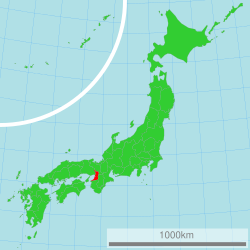
The region — Sakai, a merchant city turned forging capital
Sakai (堺) is a city of about 830,000 people in southern Osaka Prefecture, on the Pacific (Osaka Bay) coast. Historically it was an independent merchant city under the Ashikaga shogunate during the 14th–16th centuries — wealthy, walled, and famously self-governing during a period when much of Japan was at war. Today it is the southern suburb of Osaka with a distinct industrial identity, and the cutlery district (堺刃物商工業協同組合) in central Sakai houses roughly thirty active forges, along with the Sakai Traditional Crafts Museum (堺伝匠館) where visitors can watch blade-forging demonstrations.
Three geographic facts seeded the forging industry here. First, Osaka Bay’s port access — Sakai was the major commercial port for Kansai in the medieval era, with raw-iron imports flowing in by ship. Second, the surrounding Kawachi plain agricultural economy — farm-blade and sickle demand sustained a working forging community. Third, proximity to the charcoal-producing mountains of the Kii Peninsula to the south, which fed the forges’ fuel supply.
The historical anchor — gun barrels, sword hunts, and the pivot to blades
Sakai uchihamono’s founding story is unusual and well-documented. In 1543 Portuguese matchlock arquebuses arrived in Tanegashima, off southern Kyushu, introducing iron-barrel firearm technology to Japan. Sakai merchants — the wealthiest commercial class of the era — secured exclusive rights to manufacture Japanese versions of these arms. By the 1550s and 60s the city had developed sophisticated iron-forging techniques for matchlock barrels: wrapping iron strips around a mandrel and hammer-welding them into a seamless cylinder, work that required precise control of forging temperature, hammer rhythm, and welding heat.
Those skills transferred directly to blade-forging. The pivot came in 1588 with Toyotomi Hideyoshi’s “sword hunt” (katanagari), which confiscated weapons from peasants and Buddhist sects to consolidate Toyotomi power. Hideyoshi simultaneously moved to disarm Sakai’s gun-manufacturing industry to prevent rival arms production. Sakai forges pivoted to tobacco-cutting knives (tabako-bōchō, 煙草包丁) — the new Portuguese import of tobacco had just reached Japan and required specialized blades — and from there to kitchen knives and agricultural blades as the tobacco trade fluctuated. By the early 1600s Sakai was the dominant Japanese forging center for high-quality kitchen and professional blades.
“Sakai’s knife industry exists because matchlock arquebuses arrived from Portugal, and because Toyotomi Hideyoshi later took them away. The same forging skill that built gun barrels in the 1550s now grinds the bevels on a 180 mm deba.”
-
1543 — Portuguese matchlock arquebuses arrive in Tanegashima, introducing iron-barrel forging to Japan. -
1550s–60s — Sakai becomes Japan’s primary matchlock-manufacturing town; barrel-forging techniques develop in the city’s forges. -
1588 — Toyotomi Hideyoshi’s “sword hunt” (katanagari); Sakai’s gun industry is curtailed. Forges pivot to tobacco-cutting and kitchen blades. -
1600s–1860s — Throughout the Edo period Sakai develops the modern proportions of the deba, yanagiba, and usuba, and becomes the dominant supplier of professional Japanese-cuisine knives. -
1868 — Meiji opening; the new kappō and ryōtei restaurant culture in Tokyo and Osaka expands the professional market Sakai already dominates. -
1982 — METI designates Sakai uchihamono a national Traditional Craft Product (国指定伝統的工芸品). -
2019 — The Mozu burial mounds (including the Daisen-ryō Kofun, 5 km from central Sakai) are inscribed as a UNESCO World Heritage Site. -
2026 — Roughly thirty named Sakai forges remain active. About 90% of professional single-bevel Japanese knives still originate here.
What “still being made here” actually means
Through the Edo period (1603–1868) Sakai developed its specialization: single-bevel professional knives for Japanese-cuisine kitchens. The deba, yanagiba, and usuba — all single-bevel, all designed for specific Japanese culinary techniques — reached their modern proportions in this period. By the late Edo era roughly 60–70% of professional Japanese knives came from Sakai. The Meiji opening of 1868 did not disrupt that dominance; if anything, the new restaurant culture (kappō, ryōtei) expanded the professional market.
Today the figure is approximately 90% of single-bevel professional Japanese knives. The modern industry runs on two tiers. Independent named forges — about thirty active in Sakai — produce hand-forged pieces by two-to-five-generation craftsperson families, typically priced ¥10,000–50,000. And brand-distributed Sakai forging — roughly ten active workshops — supplies the branded lines like Sakai Takayuki (堺孝行) and Sakai Kyuba (堺久場), priced ¥10,000–100,000+ depending on materials.
Takumi-Saku sits at the named-craftsperson tier, with the Seikō-jirushi brand mark explicitly identifying the forge.
Single-bevel vs. two-bevel — the technical distinction that matters
For an international home cook the practical reading is this: a single-bevel deba is a specialty knife, not a primary kitchen knife. Buy it specifically for breaking down whole fish, sushi or sashimi prep, or for an existing Japanese-cooking practice. For general home use the Echizen-Saji two-bevel santoku covered in our earlier article is a more practical first knife. The two are complements, not substitutes.
Visiting Sakai
If a Sakai stop is part of a Japan trip, four locations cluster usefully. The Sakai Traditional Crafts Museum (堺伝匠館) is the visitor center for the three local crafts — uchihamono, sennshu hand-knotted carpets, and lacquerware — and includes regular forging demonstrations. The Sakai City Museum holds archaeological finds from the nearby Mozu burial mounds. The Daisen-ryō Kofun (the tomb attributed to Emperor Nintoku), the largest tomb-mound in Japan and a UNESCO World Heritage Site since 2019, sits 5 km from central Sakai. The historic Edo-period commercial port — now in industrial use — anchors the city’s old waterfront. All four are reachable within a single afternoon from central Osaka.
Other Sakai makers — where Takumi-Saku sits in the market
Which size should you choose?
The Takumi-Saku deba line covers the standard adult sizes. Per the Amazon listing notes, the workshop produces 150 mm and 165 mm smaller debas, plus a larger 210 mm at correspondingly higher prices. The 180 mm — the subject of this article — is the standard adult size.
Takumi-Saku ‘Seikō-jirushi’ Sakai Deba 180mm — ¥9,580
The standard adult deba. Handles fish up to about 40 cm whole length — mackerel, sea bream, medium salmon, sea bass. 250 g overall weight, traditional wooden handle. High-carbon Japanese knife steel; hand-wash only.
Recommended: adult home cooks adding their first deba.
Smaller sizes (150 mm / 165 mm)
Per the listing notes, Takumi-Saku also produces 150 mm and 165 mm debas. These are easier to handle for smaller fish (aji, smaller mackerel, fillets already started) and suit cooks with smaller hands or limited cutting-board space. Live pricing for these sizes was unavailable at time of writing — check the Amazon JP listings.
Recommended: smaller fish, limited counter space.
Larger 210 mm
For larger fish (60 cm+ — yellowtail, larger salmon, small tuna at home). Heavier, longer; meant for cooks who regularly break down larger whole fish. Listed at a correspondingly higher price than the 180 mm; check the listing for current pricing.
Recommended: regular larger-fish prep.
📌 How does it compare? — related jpmono guides
Cross-references to other Japanese-craft pieces we’ve covered. The Echizen Saji Takeshi santoku is the closest comparison — same price tier, different forging town, two-bevel home-kitchen geometry.
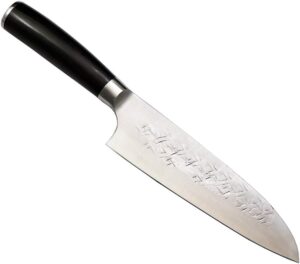

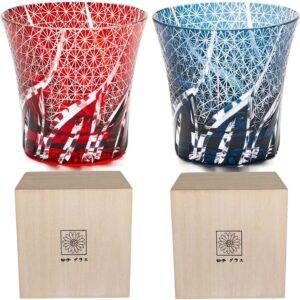

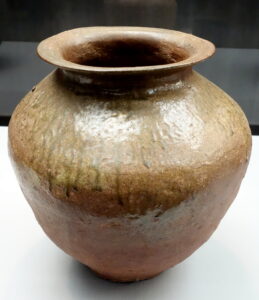
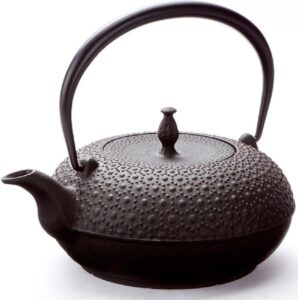


📦 Shipping & where to buy from outside Japan
Kitchen knives are unrestricted personal imports under most jurisdictions, and the Takumi-Saku deba is a 250 g item — well inside personal-import weight limits. The buying paths split into four:
- Amazon JP Global Store ships the listed item directly to US, EU, UK, Australia, and Canada. Estimated shipping is $15–$30 USD depending on destination. Customs duties are unlikely on a single ¥9,580 / ≈ $64 USD item; the US de minimis threshold is $800 and most EU countries waive duty on personal-use items under €150.
- Amazon US (amazon.com) carries Sakai-forged knives with substantial direct ASIN coverage — Sakai Takayuki, Yoshihiro, Masamoto. The exact Takumi-Saku ‘Seikō-jirushi’ piece may not be individually listed on .com, but comparable Sakai deba in similar size and material are available there at roughly 1.5–2× markup over Amazon JP. Useful for Prime-eligible delivery and USD pricing if you do not want to deal with international shipping.
- Yoshihiro-Cutlery.com is a US-based Sakai-knife distributor; their site lists deba knives in 165 mm and 180 mm sizes with US-warehouse fulfillment.
- Proxy services (Buyee, Tenso) let you place orders on Japanese Amazon and rakuten sellers that do not ship internationally, then consolidate and reship from a Japan-based warehouse. Adds roughly $10–$25 USD in service fees plus the international shipping; useful if the specific Takumi-Saku listing is restricted to Japan-only delivery (some Marketplace sellers exclude Global Store).
Two compliance notes for non-US destinations. Some EU countries (Germany, UK) require buyers to be 18+ for any bladed item — personal import for home cooking is permitted, but the carrier may request age verification at delivery. Australia permits personal import of kitchen knives without a permit; check the latest Australian Border Force guidance before ordering anything unusual.
Price snapshot across stores
| Store | Item / variant | Price | Notes |
|---|---|---|---|
| 🇺🇸 Amazon.com (US) | Browse Japanese kitchen knives | varies (USD) | Best if you’re shopping from the US — Prime shipping, USD pricing, no international customs. Amazon US carries hand-forged Japanese kitchen knives from Sakai Takayuki, Yoshihiro, Masamoto and other makers — useful for comparing geometry, steel, and price tiers. Takumi-Saku’s exact Seikō-jirushi piece ships from Japan (next row). |
| 🇯🇵 Amazon JP Global Store | Takumi-Saku Seikō-jirushi Sakai Deba 180mm (B0DT7R8SYN) | ¥9,580 (≈ $64 USD) | Ships internationally from Japan. This is the sourced listing for the specific item in this article. Shipping $15–$30 USD to US/EU; 250 g item, customs unlikely under most thresholds. |
| Maker direct (Sakai Takayuki / similar) | Sakai Takayuki deba lines, V金10号 stainless or Damascus | ¥20,000–50,000+ | The flagship Sakai brand ships internationally via the official online store. Different price tier — Damascus or V金10号 stainless rather than the SK high-carbon steel of the Takumi-Saku piece. |
| Proxy services (Buyee / Tenso) | Any Amazon JP / Rakuten / Yahoo Auctions Japan-only listing | ¥9,580 + $10–$25 USD fees | Use if Amazon JP Global Store does not ship to your country, or to consolidate this with other Japan-only purchases into one international parcel. |
Prices in USD are approximate and depend on the current exchange rate (¥150/USD baseline as of May 2026). The JPY figure on the Amazon JP listing is the authoritative price.
What it does well
Weaknesses and things to verify before buying
- It rusts. Non-stainless high-carbon steel oxidizes quickly. The listing’s care notes are explicit: hand-wash only with hot water, wipe dry immediately after use, especially after cutting fish (fish acids accelerate corrosion of high-carbon steel). A patina develops over time and offers some protection, but neglect leads to rust pitting.
- Right-handed only by default. Single-bevel debas are ground from the right side, with the flat plane on the left. Left-handed cooks need a custom-order left-handed deba — these exist from Sakai workshops but are not the listed item, and pricing typically runs 30–50% higher. Verify the listing’s handedness before purchase.
- Single-bevel sharpening is a learned skill. The bevel side is sharpened on the whetstone; the back (flat) side gets only a minimal pass to remove burrs. This is the opposite of two-bevel sharpening and takes practice to do correctly. Sharpening it like a Western knife will round the back plane and destroy the geometry.
- The dataset describes the listing, not the physical item. We do not physically test items at jpmono. Reviewers’ photos and the listing photos are the source of truth on appearance, weight balance, and handle finish. Read the Amazon JP review section before ordering.
- Live pricing may have shifted. The ¥9,580 figure is the listed price as of May 16, 2026. Amazon JP prices on third-party Marketplace listings can move ¥1,000–¥3,000 in either direction over a few weeks. Verify on the affiliate link before purchasing. Stock is also not guaranteed — small Sakai workshops fulfill in batches.
- Not your first Japanese kitchen knife. The deba is a specialty knife for fish-prep, not a daily driver. If you do not regularly break down whole fish, the knife will sit in the drawer. Start with a santoku (two-bevel, ambidextrous, all-purpose) — see the Echizen-Saji guide linked above.
- USD figure depends on exchange rate. The ≈ $64 USD estimate uses a ¥150/USD baseline. At ¥140/USD the same item is ≈ $68 USD; at ¥160/USD it is ≈ $60 USD. The JPY figure is authoritative.
Conclusion — which buyer type are you?
Other ways to approach this purchase
🏆 Editor’s Pick — the Sakai deba we’d start with
❓ Frequently Asked Questions
Is the Takumi-Saku ‘Seikō-jirushi’ deba dishwasher-safe?
No. The blade is non-stainless high-carbon Japanese knife steel (SK material), which rusts quickly when left wet. The listing’s care notes specify hand-wash with hot water and wipe dry immediately after each use, especially after cutting fish — fish acids accelerate corrosion of high-carbon steel. The wooden handle is also not dishwasher-safe.
Can a left-handed cook use this deba?
Not effectively. Single-bevel (kataba) debas are ground from the right side with the flat plane on the left, so the geometry is right-hand-specific. Left-handed Sakai debas exist as custom-order pieces from various workshops, typically at a 30–50% price premium. The Takumi-Saku listing in this article is the right-handed default. Left-handed buyers should look for an explicitly labeled 左利き (hidari-kiki, “left-handed”) deba.
How does this compare to the Saji Takeshi Echizen santoku you covered earlier?
They are complementary, not substitutes. The Saji Takeshi santoku is a two-bevel general-purpose home-kitchen knife from Echizen (Fukui), used for vegetables, boneless meats, and most daily cutting tasks. The Takumi-Saku deba is a single-bevel specialized fish-cleaver from Sakai (Osaka), used to break down whole fish. A practical Japanese home kitchen often has both: a santoku as the daily driver and a deba reserved for fish-prep. If you can only have one, start with the santoku.
Does Amazon JP Global Store actually ship knives internationally?
Yes, for most destinations. Kitchen knives are unrestricted personal imports in the US, EU, UK, Australia, and Canada — they ship as regular parcels with no special permits required. Some EU countries require age verification at delivery (18+); Australia has no permit requirement for kitchen knives. At 250 g, the Takumi-Saku deba sits well within personal-import weight thresholds, and shipping runs $15–$30 USD depending on destination. A small number of Marketplace listings are Japan-only — check the Global Store eligibility on the product page before ordering.
How do I sharpen a single-bevel deba?
Use a Japanese whetstone (1000-grit for routine sharpening, 3000-grit for finishing). Sharpen the bevel side fully — flat against the stone, with the existing bevel angle maintained — until a burr forms on the back side. Then flip the knife and lightly pass the back (flat) side across the stone to remove that burr only; do not grind the back. Do this every 2–3 weeks of regular use. Sharpening the back as if it were a two-bevel knife will round the flat plane and destroy the geometry, so go slowly the first few times.
What does “Seikō-jirushi” mean, and is it the same as “Takumi-Saku”?
Takumi-Saku (匠作, literally “Master Saku” or “craftsperson’s work”) is the workshop name. Seikō-jirushi (清高印, “Clear-High Mark”) is the brand mark the workshop stamps on its own pieces — comparable to the way Sakai Takayuki is a brand mark applied to pieces forged by several supplying workshops. Both names appear on this listing because the workshop sells its own-mark pieces directly. The combination is the equivalent of a named-forge signature.
Why is the price so much lower than a Sakai Takayuki Damascus deba?
Two reasons. First, materials: the Takumi-Saku piece uses SK high-carbon Japanese knife steel — traditional, single-layer, sharpens well, rusts easily. Sakai Takayuki Damascus pieces use V金10号 stainless cladded with multiple Damascus layers, which costs substantially more in raw materials and forging time. Second, finishing: Damascus pattern-development, mirror-polished spine, and ornate handle work add labor hours. The Takumi-Saku piece is the working-tool finish — clean and functional, not display-grade. The forging quality is comparable; the materials and finish are not.
jpmono.com is curated by a Japan-based editorial team (working out of Toyama in the Hokuriku region and Nara in Kansai) and is independent. We do not take payment from the makers we feature; income comes from affiliate links. We do not physically test every product — we read maker specifications and source listings carefully — and we disclose this so readers can weigh the information accordingly. Read more about our editorial standards.
Editorial note: this article was drafted with AI assistance from Amazon JP listing data and verified against the maker’s published specifications. Facts, prices, and shipping conditions reflect publicly available information as of the publication date; readers should confirm current details at the retailer before purchasing.
Affiliate disclosure: jpmono.com may earn a commission on qualifying purchases made through links on this page, at no additional cost to you.