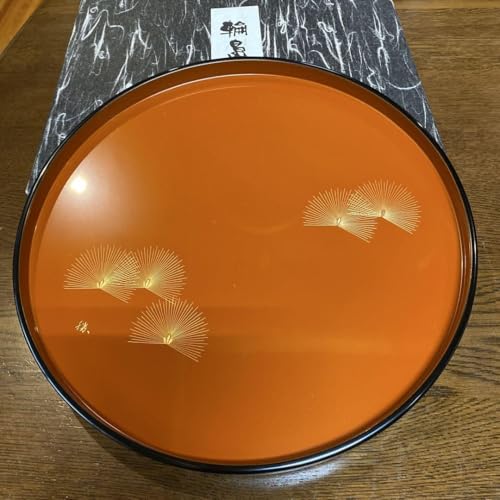
- What it is: A serving tray in Wajima Nuri (輪島塗) — a wooden base finished with urushi lacquer, built up in layers rather than sprayed on.
- Made in: Wajima, Ishikawa Prefecture — a lacquerware town on the Noto Peninsula, and a nationally designated Traditional Craft.
- Price band: Above mass-market lacquerware — Wajima pieces are multi-process, multi-workshop work; the live listing carries the current figure.
- Best for: Households that serve tea, sweets, or a small meal on a tray every day and want one object that ages instead of wearing out.
- Skip if: You want something dishwasher-safe, stackable in a crowded cupboard, or replaceable at a low price.
- Shipping: Sourced from Amazon Japan, which ships internationally to 65+ countries — jump to our pick ↓
A Wajima tray is not painted. It is built: a wooden core, then undercoat over undercoat of urushi, each one dried, sanded, and covered again before the finish coat ever goes on.
That layering is the whole point of Wajima Nuri (輪島塗), the lacquerware of Wajima City on the Noto Peninsula in Ishikawa Prefecture. The town developed its ware through the Edo period as a durable, multi-layer urushi product, and it organized production around specialized steps — one workshop for the wood core, another for undercoating, another for the finish — instead of asking one person to do everything. The Japanese government designates it as a Traditional Craft, and the reason buyers outside Japan seek it out is not ornament. It is that a lacquer surface built this way stands up to hot bowls, repeated washing, and decades of handling.
This article is for readers deciding whether a Wajima tray earns a place in a working kitchen rather than a display cabinet. It covers what the current listing actually states, what it does not, how the piece is used in a Japanese household, where the town sits and why it became a lacquerware center, the realistic cost of shipping it abroad, and which related pieces are worth comparing before you commit.
· · 9 min read

- Who this is for — and who should skip it
- Product overview (from published specs)
- Where this comes from — Wajima, the Noto Peninsula, and the sea road
- Price snapshot across stores
- 📦 Shipping & where to buy from outside Japan
- What it does well
- Weaknesses and things to verify before buying
- Conclusion — which buyer type are you?
- Other ways to approach this purchase
- 🏆 Editor’s Pick
- ❓ Frequently Asked Questions
Who this is for — and who should skip it
- Serve tea, wagashi, or a light meal on a tray most days and want the tray itself to be the considered object.
- Prefer materials that darken and soften with use over surfaces that stay uniformly new.
- Are building a small set of Japanese tableware and want a flat piece to anchor it.
- Hand-wash your tableware anyway, so the care instructions change nothing about your routine.
- Want a gift that carries a place with it — a named town, a named craft, a documented process.
- Rely on a dishwasher for everything and do not want an exception in the cupboard.
- Need a stack of twelve matching trays for a café or event, at a per-unit price that survives loss and breakage.
- Want a tray for outdoor use, a camp table, or anywhere it will sit in direct sun.
- Have a known sensitivity to urushiol, the sap compound that urushi lacquer is made from.
- Need a specific dimension matched to an existing shelf — verify the size before ordering rather than after.
Product overview (from published specs)
ℹ️ Live pricing and some specs were not in the snapshot available at the time of writing — the linked listing is authoritative, and gaps are marked in the table rather than guessed.
| Attribute | Detail | Basis |
|---|---|---|
| Item | Wajima Nuri lacquer tray | Listing title |
| Origin | Wajima, Ishikawa Prefecture, Japan | Listing, craft record |
| Material | Natural wood base, urushi lacquer coating | Listing description |
| Craft classification | National Traditional Craft (Wajima Nuri) | Designation as recorded |
| Dimensions | — (not part of the snapshot) | Live listing |
| Weight | — (not part of the snapshot) | Live listing |
| Surface treatment | Urushi coating over the wood core | Listing description |
| Care | Hand-wash; no dishwasher, no microwave | Urushi ware practice |
| Price | Current figure on the listing | Live listing |
The meaningful spec here is not a number but a sequence. A Wajima tray passes through a wood turner or joiner, then an undercoating workshop, then a coating workshop, and in many cases a finisher who handles the final surface. The layers are applied, dried in a humid drying room, and sanded back between coats. That is why the finish has depth rather than a film-like sheen, and it is also why the piece cannot be evaluated like a factory product with a single material code.
Urushi (漆) — lacquer
The refined sap of the lacquer tree (Toxicodendron vernicifluum), applied in thin coats that cure hard in warm, humid air. It is a natural material, not a synthetic varnish, and it darkens with age.
Wajima Nuri (輪島塗) — Wajima lacquerware
The lacquerware tradition of Wajima City, Ishikawa Prefecture. Its distinguishing feature is the accumulation of undercoats beneath the visible surface.
Shikki (漆器) — lacquerware
The general Japanese word for lacquered vessels and tableware. Wajima Nuri is one regional branch of a craft practiced in several parts of Japan.
Kiji (木地) — the wooden body
The core of a lacquer piece, shaped from wood before any coating begins. Its dryness and precision determine whether the finished tray stays flat.
Nuri (塗) — the coating stage
A suffix attached to the name of a lacquerware style, referring to how and where it is coated. It signals that the coating process, not the shape alone, defines the product.
Dentō Kōgeihin (伝統的工芸品) — Traditional Craft
A national designation for crafts that meet criteria on technique, tradition, and regional production. Wajima Nuri is designated under this program.
Where this comes from — Wajima, the Noto Peninsula, and the sea road
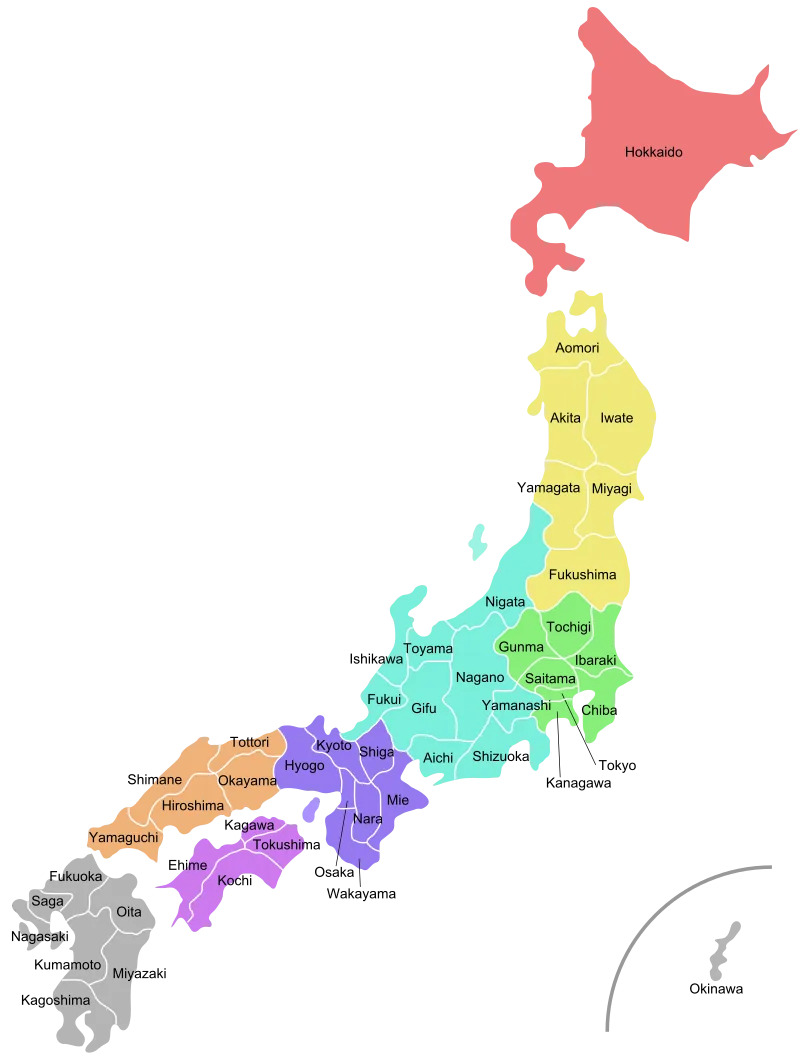
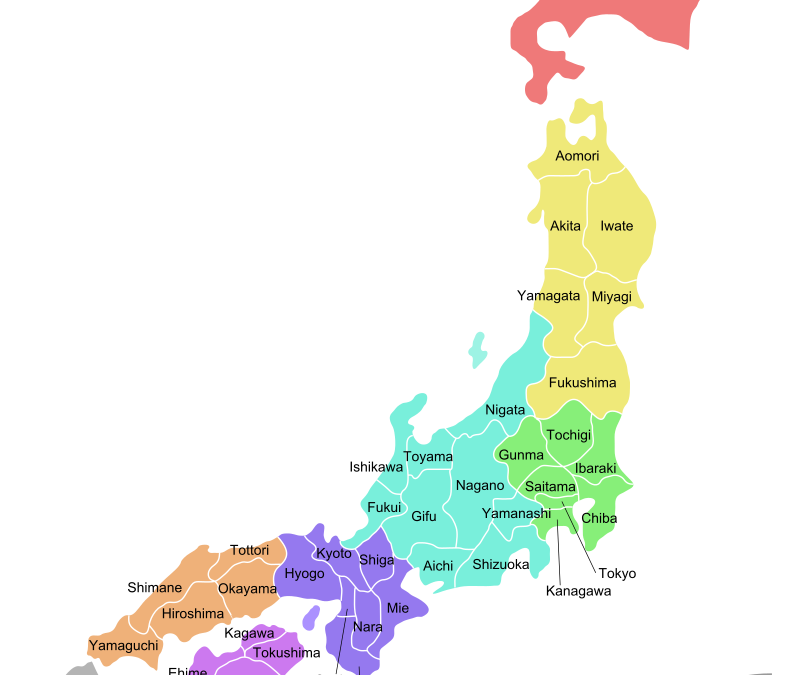
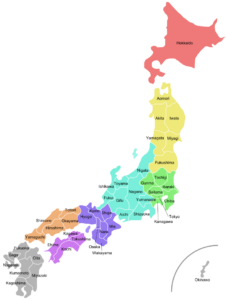
Wajima sits at the end of the Noto Peninsula, the long arm of land that reaches north into the Sea of Japan from Ishikawa Prefecture. The peninsula’s interior is hilly and its coast is exposed; the town itself grew around a harbor on the western shore. Travel south along the peninsula and you reach Kanazawa, the prefectural capital and the castle town that administered the region for centuries. That geography matters to the craft for a simple reason: a peninsula produces few bulky goods and plenty of portable ones, and lacquerware is portable.
Through the Edo period — the years between 1603 and 1868 — Wajima’s workshops developed the multi-layer urushi ware the town is known for today. The commonly told account is that the local method took shape as undercoating techniques improved, allowing workshops to build a durable body beneath the decorative surface rather than relying on a single thick coat. What is certain from the craft’s published record is the result: a ware defined by its undercoats, produced through a chain of specialized processes rather than by a single hand.
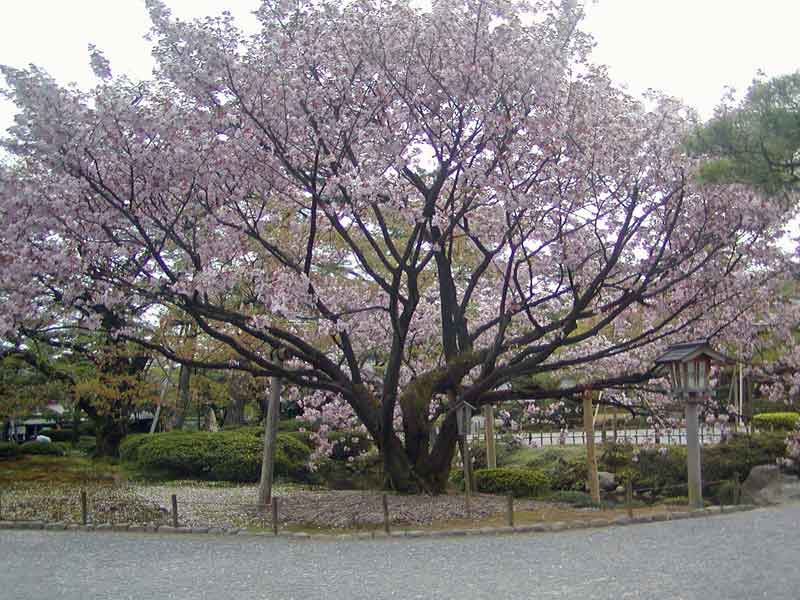
The domain connection is the part international readers usually miss. Noto was administered from Kanazawa under the Kaga Domain, and a castle town of that size sustained a market for lacquered tableware — formal serving pieces, soup bowls, trays for ceremonial occasions. A craft town does not survive on beauty alone; it survives on customers who eat from the product every day. Kanazawa’s households, temples, and tea circles were that customer base, and the domain’s administrative reach gave Wajima’s workshops a stable hinterland.

The second half of the story is water. Wajima prospered as a port on the Sea of Japan, and the shipping routes that ran along that coast carried lacquerware far beyond the peninsula. A bowl coated in Wajima could be sold in Hokkaido ports to the north or in Osaka to the south without ever crossing a mountain road. The craft did not need to be famous in Tokyo to be commercially viable; it needed to be on a ship route, and it was.
-
1603 — The Edo period begins; over the following two and a half centuries Wajima’s workshops develop the multi-layer urushi ware the town is known for. -
Edo period — Wajima operates as a port on the Sea of Japan; coastal shipping carries its lacquerware to distant markets. -
1868 — The Edo period ends. The craft towns of Ishikawa enter the modern market with their workshop structure intact. -
1871 — The domain system is abolished and prefectures take its place, ending the Kaga Domain’s administration of the region. -
1970s — Wajima Nuri is formally recognized within Japan’s national Traditional Craft framework. -
January 1, 2024 — An earthquake strikes the Noto Peninsula, causing severe damage in Wajima. Workshop capacity and stock have varied since. -
2026 — The tray covered in this article is listed for international sale through Amazon Japan.

What “still made here” means in practice is a division of labor that has survived into the present. A single tray is not the work of one artisan but of several: the wooden body is cut and dried, the undercoats are applied and sanded by a workshop that does nothing else, the finish coats go on elsewhere, and any decoration is added by a specialist. This is why Wajima ware carries a higher price than lacquerware produced in one pass, and why the town’s product is unusually resistant to daily use — the thickness under the surface is doing the work.
“The value of a Wajima tray is in what you cannot see: the layers under the surface that let it take a hot bowl, a wet cloth, and another forty years.”
The seasonal setting is straightforward. In a Japanese household a tray is the piece that carries a teapot and cups to a guest, holds wagashi beside tea, or presents a bowl of noodles without asking the guest to balance anything. Trays also appear at New Year, when food is served in lacquered boxes and on lacquered plates, and at memorial and celebratory meals where matching tableware is part of the etiquette. A plain wood-and-urushi tray fits all of these without belonging to any one of them.
Related pieces on this site — bowls, chopsticks, and trays from the same craft region and from neighboring lacquer traditions.
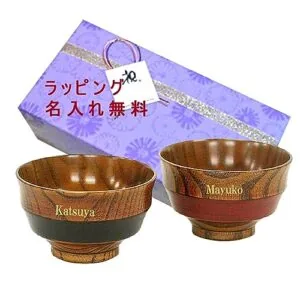
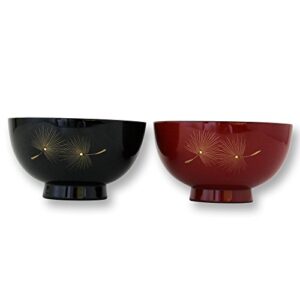 Wajima Soup Bowl →
 Echizen Soup Bowl →
 Wajima-nuri Lacquer Chopsticks: Where to Buy Noto Urushi Ohashi [2026] →
 Yamanaka Lacquer Soup Bowl (Owan): Kaga Urushi Craft Guide [2026] →
 Yamanaka Lacquer Natural Wood Free Cup: Where to Buy Turned Kaga Urushi [2026] →
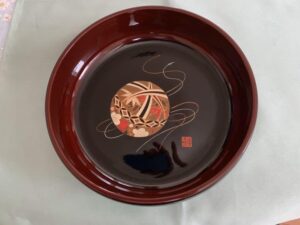 Aizu-nuri Makie Lacquer Tray: Fukushima’s 430-Year Urushi Craft, Where to Buy [2026] →
Price snapshot across stores
Prices below reflect what each route showed or stated at the time of writing. JPY is the authoritative figure for the specific item; USD equivalents are approximate and move with the exchange rate. Amounts are rounded and should be treated as a guide only.
| Store | Item / variant | Price | Notes |
|---|---|---|---|
| 🇺🇸 Amazon.com (US) | Browse Japanese lacquerware and urushi serving trays | varies (USD) | Best if you are shopping from the US — Prime shipping, USD pricing, no import paperwork. Amazon.com carries lacquer and wood serveware from several makers, which makes it a useful place to compare sizes and price tiers. This specific Wajima tray ships from Japan (next row). |
| 🇯🇵 Amazon JP Global Store | Wajima Nuri lacquer tray — natural wood base, urushi coating (B0FQH4QM9C) | See live listing | Ships internationally from Japan to 65+ countries — including Canada, the UK and Australia — with import fees estimated at checkout. This is the sourced listing for the exact tray in this article. |
| Maker direct / Wajima cooperative shops | Workshop stock varies by maker | Not confirmed | Several Wajima workshops and the town’s cooperative retail channels sell directly, sometimes with English-language pages. Stock and export paperwork differ by workshop; expect email correspondence before an international order is accepted. |
| Proxy services (Buyee / Tenso) | Domestic Japanese listings, forwarded overseas | Item price + proxy fee + international postage | Useful when a workshop sells only within Japan or the Global Store listing blocks your address. You pay the domestic price plus a service fee, then a second charge for international shipping; consolidation lowers that second charge. |
📦 Shipping & where to buy from outside Japan
Amazon JP Global Store is the simplest route: the tray is listed there, and the storefront handles export packing and international carriage. It ships to more than 65 countries, including Canada, the UK and Australia. Import fees are usually estimated and collected at checkout, so the figure you see at payment is close to the figure at the door.

Expect roughly $15–$40 in international carriage for a parcel this size to the US or the EU, with similar ranges to Canada, the UK and Australia; the exact figure depends on the consolidated box, not on the tray alone. Lacquerware is light for its volume, which keeps postage down, but it is also fragile at the rim, so sellers who pack it well add bulk. Orders above your country’s low-value threshold may attract duty or tax; Amazon collects an estimate at checkout for most destinations, while proxy parcels are assessed on arrival.
If the Global Store will not ship to your address, the alternatives are a workshop’s own international page or a proxy service such as Buyee or Tenso. Both add steps and both add cost, but they also open up pieces that never appear in an export listing.
What it does well
The ware is built for use, not for the cabinet. Multiple undercoats mean a rim that survives being set down, stacked, and washed rather than chipping at the first knock.
A flat tray is the most adaptable piece of Japanese tableware: tea and sweets, a bowl of soba, a plate carried from kitchen to table, a gift presented with both hands.
Urushi deepens in tone with exposure and handling. A tray used for a decade looks different from a new one, and the change is the material behaving as intended rather than wearing out.
Wajima Nuri is a designated Traditional Craft from a specific town on a specific peninsula. That provenance is verifiable, which is more than can be said for most “Japanese style” lacquer on the market.
- 🍽️ Dishwasher: no — urushi ware is hand-washed. Warm water, a soft cloth, no abrasive sponge.
- ♨️ Microwave: no. Direct heat and steam cabinets are the usual causes of clouding and cracking.
- 🧴 Daily care: wipe with a damp cloth and dry immediately; do not soak, and keep the tray out of direct sun.
- 🔧 Repairs: worn edges can be re-coated. Wajima production is organized around re-coating, so ask the seller about repair service before you need it.
Weaknesses and things to verify before buying
- Price is only visible on the listing. The figure moves with exchange rate and stock, so any number printed in an article ages badly. Check the live page before you budget.
- Confirm the dimensions against your shelf. Trays are bought by eye and returned because they did not fit a cupboard or a serving cart. Measure first, then compare with the listing’s stated size.
- It is not dishwasher-safe. If your household runs everything through a machine, this tray will become the exception you have to remember every night.
- Rim damage is the weak point. Lacquer is hard but thin at an edge; a tray dropped on a stone floor can lose a chip that a bowl would survive.
- Urushi is a natural sap. Cured ware is stable for normal use, but people with a known urushiol sensitivity should handle lacquerware with care, particularly older or damaged pieces.
- Workshop capacity on Noto has been uneven since the 2024 earthquake. Stock, lead times, and the exact piece photographed may change; if a specific size matters, confirm availability rather than assuming a listing means immediate dispatch.
Conclusion — which buyer type are you?
You want the piece that represents the craft at its most complete, and you are willing to buy direct or through a proxy to get a specific workshop’s work. Start with the tray, then add a bowl from the same town so the set reads as one tradition.
You serve tea or a light meal on a tray most days and want one good object instead of three disposable ones. Buy one tray in the size you will actually use, and accept hand-washing as part of the routine.
You want the material experience before the full commitment. Chopsticks or a small bowl from the same tradition cost less and teach you how urushi behaves before you spend on a tray.
You need something that survives a dishwasher, a café’s daily volume, or a child’s table. A melamine or ceramic tray does that job better and cheaper; lacquer is the wrong material for it.
Other ways to approach this purchase
Amazon JP runs seasonal promotions, and craft listings sometimes drop for a short window. Watching the listing for a few weeks costs nothing and occasionally saves a meaningful fraction.
Wajima workshops and the town’s cooperative shops sell direct, often with a wider choice of sizes than an export listing shows. Correspondence is slower, and shipping is arranged case by case.
If you already hold a card with foreign-transaction fee waivers or Amazon points, routing the purchase through it reduces the effective cost of the exchange rate and the import estimate.
If the care routine or the price does not fit, a plain wooden tray or a ceramic platter serves the same meals with none of the maintenance. There is no obligation to own lacquer.
🏆 Editor’s Pick
The tray covered throughout this article, made in Wajima and listed through Amazon Japan. Three reasons it is the piece to start with:
- It is the actual Wajima product, not a lacquer-look imitation — wood core, urushi coating, town of origin named.
- The format is the most useful one in the craft: a flat tray does the work of a plate, a serving board, and a presentation piece.
- It is available through a route that handles export packing and import estimates, which removes the hardest part of buying from Japan.
❓ Frequently Asked Questions
Is a Wajima lacquer tray food-safe for direct contact?
Yes for normal table use. The tray is a wood core finished with urushi, and urushi ware is made to hold and serve food. If you need documented food-contact compliance for a commercial kitchen, ask the seller for the paperwork rather than assuming the retail listing includes it.
Can it go in the dishwasher?
No. Urushi finishes are hand-washed. Dishwasher heat, long soaking, and harsh detergent are the usual ways a lacquer tray fails, and the damage shows up as clouding or fine cracking rather than a clean break.
Will Amazon Japan ship this tray to the US, Canada, the UK or Australia?
Amazon JP Global Store ships to more than 65 countries, including Canada, the UK and Australia, and usually estimates import fees at checkout. If the item page refuses your address, a proxy service such as Buyee or Tenso is the alternative route.
Why does Wajima lacquerware cost more than other lacquered trays?
Because one piece passes through several workshops and many separate coating and drying steps. The undercoats that make the tray durable are the slowest part to build, and that labor is what separates Wajima ware from a single-coat product.
How should I store it when it is not in use?
Keep it dry and out of direct sun. If you stack trays, put a soft cloth between them so the rims do not rub, and avoid storing it against a radiator, a sunny window, or anywhere that stays damp for long periods.
What happens if the surface chips or wears through?
Worn or chipped areas can be re-coated, and Wajima production is organized around re-coating as a normal stage of the craft. Ask the seller whether they offer repair or refinishing, and keep the piece out of water until it is seen to.
jpmono.com is curated by a Japan-based editorial team working out of Toyama in the Hokuriku region and Nara in Kansai, and is independent. We do not take payment from the makers we feature; income comes from affiliate links. We read maker specifications and source listings rather than physically testing every item. Read more about our editorial standards.
This article was drafted with AI assistance and reviewed by our editorial team. Product details, prices, and availability were checked against the source listing at the time of writing; always confirm current information at the retailer.
Affiliate disclosure: jpmono.com may earn a commission on qualifying purchases made through links on this page, at no additional cost to you.