![Echizen Shikki Lacquer Soup Bowl: Where to Buy Fukui Urushiware [2026]](https://jpmono.com/wp-content/uploads/2026/05/echizen-shikki-lacquer-soup-bowl-where-to-buy-2026-featured.jpg)
Most Japanese lacquerware that reaches international shelves is sold as art: a single Wajima bowl in a paulownia box, photographed against black felt, priced like jewelry. Echizen Shikki (越前漆器, “Echizen lacquerware”) is the opposite case. It is the lacquer that does the actual work — the miso soup bowl set in front of you at a Kyoto inn, the lidded vessel a restaurant washes three hundred times a month. Per the trade’s own figures cited in the maker context for this guide, Echizen supplies an estimated 80% or more of the lacquerware used across Japan’s restaurants, ryokan (traditional inns), and food service.
The piece this guide centers on is a black-and-red urushi miso soup bowl (汁椀, shiru-wan) from the Echizen tradition, sourced through Amazon Japan’s Global Store (ASIN B09YH467RN). It is the everyday end of a craft whose recorded history runs back roughly fifteen centuries, to a region whose humid climate happens to be exactly what raw lacquer needs in order to cure.
This article is written for international readers deciding whether a daily-use Japanese lacquer bowl is worth importing — what it is, where it sits on the map and in history, how to buy it from outside Japan, and which buyer it does and does not suit. Where data was thin, that is stated plainly rather than filled in.
🗓 Published:
🔄 Last updated:
⏱ Read time: ~11 min

- Who this is for — and who should skip it
- Product overview (from published specs)
- 📍 Where this comes from — place, era, and the craft tradition
- 📌 How does it compare?
- Price snapshot across stores
- What it does well
- Weaknesses and things to verify before buying
- Conclusion — which buyer type are you?
- Other ways to approach this purchase
- 🏆 Editor’s Pick
- ❓ Frequently Asked Questions
Who this is for — and who should skip it
- Want a lacquer bowl you will actually use daily, not store in a box
- Eat miso soup, rice, or donburi-style meals and want a warm-to-the-hand vessel
- Prefer the durable, workhorse end of urushi over fragile art-piece lacquer
- Value a craft with a long, documented regional lineage in Fukui
- Are comfortable buying from Amazon JP Global Store and waiting on international shipping
- Want a museum-grade, signed maki-e art piece for display — that is Wajima’s lane, not this
- Will run it through a dishwasher or microwave without checking the listing’s care notes first
- Need a confirmed price and stock right now (live pricing was unavailable at writing)
- Expect Prime-speed domestic US delivery rather than a cross-border parcel
- Prefer dishwasher-proof porcelain or glass for a busy household with small children
Product overview (from published specs)
Live listing data for this ASIN was thin at the time of writing — only the Amazon JP Global Store listing snapshot is available, and live pricing may have shifted since. The table below states what is confirmed from the listing and the maker context, and marks unconfirmed fields rather than guessing.
Echizen Shikki Lacquer Soup Bowl
越前漆器さじべえ 夫婦椀 汁椀 なち 黒赤セット 350ml 名入れ対応 木製 結婚祝い お椀 漆器 プレゼント ギフト
通常2~3日以内に発送します。 · Sold by 名入れギフト越前漆器さじべえ · ASIN B09YH467RN
Price and availability as of 2026-08-31 02:30 JST. The Amazon listing at the time of purchase is authoritative. jpmono.com earns a commission on qualifying purchases at no extra cost to you.
| Field | Detail |
|---|---|
| Item | Echizen Shikki urushi miso soup bowl (汁椀, shiru-wan), black-and-red lacquer finish |
| Origin | Echizen City (former Kawada district), Fukui Prefecture, Hokuriku region |
| Tradition | Echizen Shikki lacquerware — dated to roughly the 6th century |
| Finish | Layered urushi (and/or modern reinforced lacquer); positioned for daily washing and use |
| Use case | Everyday tableware — miso soup, rice, small donburi |
| Microwave / dishwasher | Listing references microwave-safe everyday use for the reinforced line — verify the exact unit’s care label before use; traditional pure-urushi pieces are typically hand-wash only |
| Dimensions / weight | Unconfirmed — check the live Amazon JP listing |
| Price | Unavailable at time of writing — see the live listing |
| ASIN | B09YH467RN (Amazon JP Global Store) |
📖 Glossary — key Japanese terms in this guide
urushi (漆) — natural lacquer, the refined sap of the lacquer tree. It cures by absorbing moisture from humid air rather than drying, which is why a damp climate like Hokuriku’s suits it.
shikki (漆器) — lacquerware; literally “lacquer vessel.” Echizen Shikki means “Echizen lacquerware.”
wan (椀) / shiru-wan (汁椀) — a bowl; specifically the lidless or lidded soup bowl used for miso soup, held in the hand while eating.
kiji (木地) — the bare turned wooden core of a bowl, before any lacquer is applied. In Echizen, core-turning and lacquering are traditionally separate specialist trades.
nuri (塗り) — the act of lacquering, or a lacquer coat; appears in names like Wajima-nuri and Aizu-nuri.
ryokan (旅館) — a traditional Japanese inn, a major buyer of everyday lacquer tableware.
Dentōteki Kōgeihin (伝統的工芸品) — “Traditional Craft,” a designation conferred by Japan’s national government on regional crafts that meet heritage and technique criteria.
📍 Where this comes from — place, era, and the craft tradition

Fukui occupies the southwestern end of the Hokuriku region, a strip of Honshū that faces the Sea of Japan and catches heavy winter snow off it. That weather is usually framed as a hardship, but for lacquer it is an asset. Urushi does not dry; it cures by drawing moisture from the air, and Hokuriku’s damp valleys give it the slow, even humidity the process wants. Echizen lacquerware grew up in the former Kawada district — now part of Echizen City — where bowl-turning and lacquering settled into a cluster of specialist workshops.
The tradition is old. The craft is dated to roughly the 6th century, which places its roots near the very beginning of Japan’s recorded courtly history.
“Echizen is not the lacquer you put behind glass. It is the lacquer that holds your soup — an estimated four out of five bowls in Japan’s restaurants and inns trace to this craft.”
Local legend ties the origin to Emperor Keitai before his accession. As the story goes, a Kawada lacquer craftsman repaired the future emperor’s damaged crown and presented him with a black-lacquered bowl; the court’s encouragement is traditionally believed to have set the local industry in motion. Like most founding legends it should be read as tradition rather than documented fact, but it captures the self-image of the place: lacquer here has always been tied to use, repair, and service.
-
c. 6th century — Traditional origin of Echizen lacquerware; the Emperor Keitai crown-repair legend (folk tradition). -
Nara–Heian eras — Lacquer craft takes hold across Hokuriku’s humid river valleys, where urushi cures well. -
Edo period (1603–1868) — The Kawada district shifts toward volume production for merchants, temples, and inns rather than court display. -
Meiji onward (1868–) — Echizen consolidates as Japan’s commercial lacquerware hub, supplying the food-service trade nationwide. -
1975 — Designated a national Traditional Craft (Dentōteki Kōgeihin) by Japan’s then-Ministry of International Trade and Industry. -
Today (2026) — Echizen supplies an estimated 80%+ of the lacquerware used in Japan’s restaurants, ryokan, and food service.
Era ranges follow standard Japanese period boundaries; the 6th-century origin and crown legend are folk-traditional. Treat them as the craft’s self-account rather than dated record.
What distinguishes Echizen from the better-known art lacquers is precisely this commercial DNA. Wajima-nuri, across the bay in Ishikawa, is built around the single ceremonial or gift piece. Echizen instead built an industry around durability at scale: thick, layered urushi — and in the modern lines, reinforced finishes — made to survive daily washing in a working kitchen. The miso soup bowl is the emblem of that identity. It is the most ordinary object the craft makes, and the one that best explains it.
That continuity is the case for buying one. A bowl from Echizen is not a costume version of Japanese craft; it is the same category of object that sits on tables and inn trays across the country today, made in the district that has specialized in it for centuries.
📌 How does it compare?
Related guides on jpmono.com — same Fukui town, other regional lacquers, and neighboring crafts:
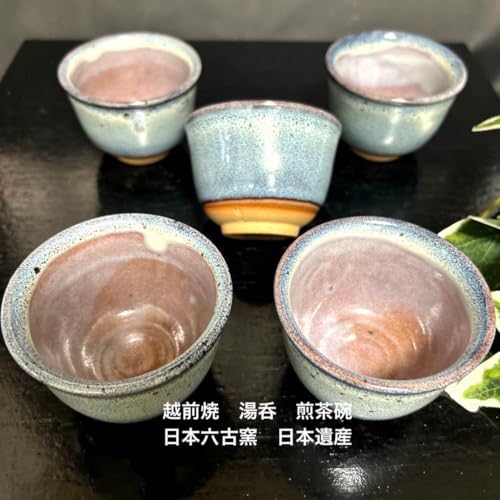 Echizen-yaki yunomi (same Fukui town) →
 Echizen forged santoku knife →
Echizen washi goshuincho →
Kawatsura lacquer soup bowl (Akita) →
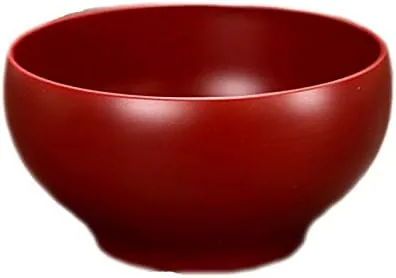 Aizu-nuri marumi soup bowl →
 Kishu lacquer soup bowl pair →
Wajima-nuri sake cups (Hokuriku lacquer) →
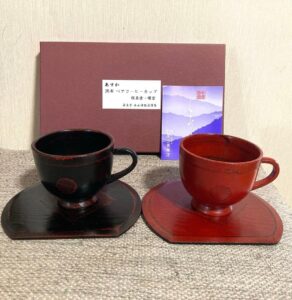 Kiso lacquer coffee cups →
Price snapshot across stores
JPY (¥) is the authoritative price for the specific sourced item; any USD figure is an approximate estimate at a ¥150/USD baseline as of mid-2026. Live pricing for this ASIN was unavailable at the time of writing — treat the table as a routing guide, and confirm the current figure at the listing.
| Store | Item / variant | Price | Notes |
|---|---|---|---|
| 🇺🇸 Amazon.com (US) | Browse Japanese lacquer soup bowls | varies (USD) | Best if you are shopping from the US — Prime shipping, USD pricing, no international customs. Amazon US carries Japanese lacquer and urushi-style tableware from various makers, useful for comparing shapes and price tiers. The exact Echizen piece in this guide ships from Japan (next row). |
| 🇯🇵 Amazon JP Global Store | Echizen black-and-red urushi miso soup bowl (B09YH467RN) | ¥ — (unavailable at writing) | The sourced listing for this guide. Ships internationally from Japan to most major destinations; customs/import fees may apply on arrival. |
| Maker direct | Echizen lacquer cooperatives / individual workshops | varies (¥) | Widest finish selection (plain, two-tone, chinkin, maki-e). Many sites are Japan-domestic only; international checkout is not guaranteed. |
| Proxy services (Buyee / Tenso) | Any Japan-domestic Echizen listing | listing price + fees | Forwarding route for items that do not ship abroad directly. Adds a service fee plus re-shipping; useful for maker-direct or domestic-only stock. |
Prices in USD are approximate and depend on the current exchange rate. The JPY price of the specific listed item is the authoritative figure.
What it does well
Weaknesses and things to verify before buying
- Care rules vary by line. The reinforced/modern line may tolerate microwave and gentler washing, but traditional pure-urushi pieces are typically hand-wash only and dislike prolonged soaking, dishwashers, and direct heat. Confirm the exact unit’s care label before assuming.
- No confirmed price at writing. Live pricing for this ASIN was unavailable; you must check the listing for the current figure and stock before deciding.
- Limited spec data. Dimensions, weight, and exact maker line were not in the fetched data. If precise capacity or rim diameter matters to you, verify on the live listing.
- Not an art piece. If you want a signed, museum-grade maki-e bowl for display, Echizen’s everyday line is the wrong category — look to Wajima or higher Echizen tiers instead.
- Cross-border logistics. Shipping from Japan adds time and potential customs/import duty depending on your country’s thresholds. This is not a same-week domestic purchase.
- Lacquer and sunlight. Urushi can be sensitive to prolonged direct UV and extreme dryness over years; store and use accordingly for longest life.
Conclusion — which buyer type are you?
Other ways to approach this purchase
🏆 Editor’s Pick
❓ Frequently Asked Questions
Does Amazon JP Global Store ship this bowl internationally?
Can I put an Echizen lacquer bowl in the microwave or dishwasher?
How is Echizen Shikki different from Wajima-nuri or Aizu-nuri?
How old is the Echizen lacquer tradition?
Why is the price not shown in this article?
Is this a good gift, or more of an everyday item?
jpmono.com is curated by a Japan-based editorial team (working out of Toyama in the Hokuriku region and Nara in Kansai) and is independent. We do not take payment from the makers we feature; income comes from affiliate links. We do not physically test every product — we read maker specs and source listings. Read more about our editorial standards.
🤖 This article was prepared with AI assistance from product-listing and maker-context data, then edited for accuracy. Specifications, pricing, and shipping terms can change — always confirm details at the retailer before purchasing.
Affiliate disclosure: jpmono.com may earn a commission on qualifying purchases made through links on this page, at no additional cost to you.