![Bizen Osafune Nakiri Knife: Hand-Forged Okayama Vegetable Blade [2026]](https://jpmono.com/wp-content/uploads/2026/05/japan-map-regions-and-prefectures-800x1050.png)
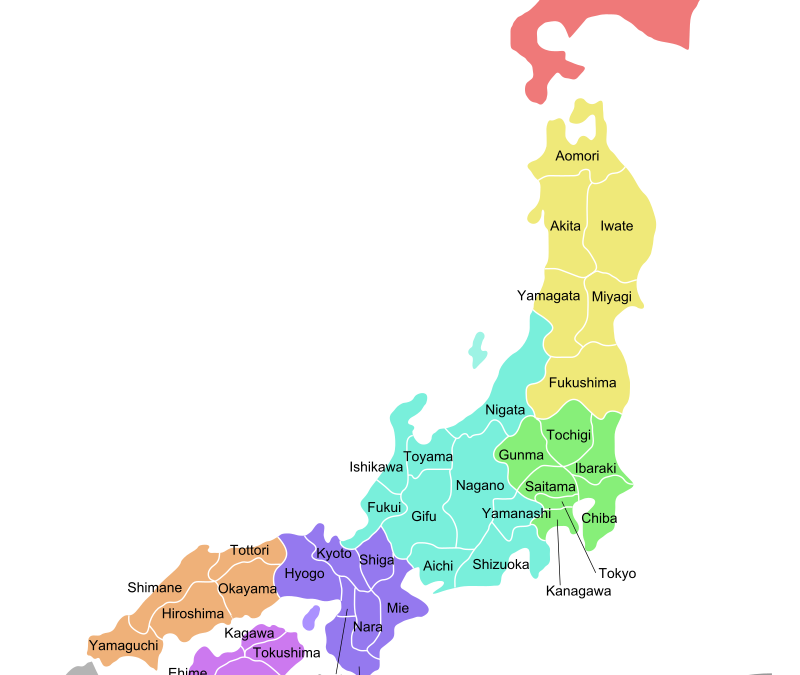
A nakiri (菜切り, “vegetable cutter”) is the knife a Japanese home cook reaches for when the cutting board is full of vegetables. Its blade is flat, tall, and squared off — built for clean, straight-down push cuts through cabbage, daikon, and herbs rather than the rocking motion of a Western chef’s knife. Hand-forged Bizen Osafune nakiri come from Osafune, a district of Setouchi City in Okayama Prefecture that was, for roughly four centuries, the single largest sword-producing center in Japan.
That lineage is the whole story here. Osafune was the heartland of the Bizen-den (備前伝), one of the Gokaden — the Five Traditions of Japanese swordsmithing. When the Haitorei sword ban of 1876 ended the market for katana, the region’s smiths did not vanish; they redirected the same forging knowledge into agricultural tools and kitchen knives. A high-carbon nakiri from this district is, in a real and traceable sense, descended from sword steel.
This guide is written for international readers comparing hand-forged Japanese vegetable knives — covering who the flat-profile nakiri suits, who should choose a santoku or chef’s knife instead, the care a carbon-steel edge demands, and how to actually buy one from outside Japan. Note up front: hand-forged single-maker knives are restocked irregularly and live pricing varies by steel, finish, and retailer, so verify at the seller before purchase.
🔄 Updated: June 25, 2026
⏱️ Read time: ~11 min
- Who this is for — and who should skip it
- Product overview (from published specs)
- 📌 How does it compare?
- Buying options across stores
- What it does well
- Weaknesses and things to verify before buying
- Where this comes from — place, era, and the craft tradition
- 📦 Shipping & where to buy from outside Japan
- Conclusion — which buyer type are you?
- Other ways to approach this purchase
- ❓ Frequently Asked Questions
Who this is for — and who should skip it
- Prep a lot of vegetables and want clean, full-contact push cuts
- Value a documented regional craft lineage over a brand name
- Are willing to hand-wash, dry, and lightly oil a carbon-steel blade
- Already own a chef’s knife or santoku and want a dedicated vegetable blade
- Appreciate a knife that develops a natural patina with use
- Want one do-everything knife for meat, fish, and bread
- Expect a dishwasher-safe, maintenance-free stainless blade
- Need to rock-chop — the flat edge is not designed for it
- Cut a lot of bone, frozen food, or hard squash (carbon edges chip)
- Cannot verify current price and shipping before committing
Product overview (from published specs)
Hand-forged Bizen Osafune nakiri vary by maker and piece, so several spec fields below are marked unconfirmed rather than guessed. The maker-tradition column describes the craft background, while per-item measurements should be treated as variable.
| Attribute | Detail |
|---|---|
| Knife type | Nakiri (flat-profile vegetable knife) |
| Blade steel | High-carbon steel (hagane); forged, not stamped |
| Edge profile | Flat / straight, for straight-down push cuts |
| Origin | Osafune, Setouchi City, Okayama Prefecture (Bizen-den heartland) |
| Production method | Hand-forged in the regional swordsmithing-derived lineage |
| Blade length | Unconfirmed — confirm the blade length; nakiri in this category vary in size |
| Handle | Unconfirmed — confirm the handle style; Japanese wa-handles are common in this category |
📖 Glossary — key terms
- Nakiri (菜切り) — a flat-edged double-bevel vegetable knife designed for straight push or pull cuts, not rocking.
- Bizen-den (備前伝) — the Bizen tradition, one of the Gokaden Five Traditions of Japanese swordsmithing, centered on Osafune.
- Gokaden (五箇伝) — the “Five Traditions” of classical Japanese swordmaking, regional schools with distinct steel and forging styles.
- Hagane (鋼) — high-carbon steel; takes a very keen edge but can rust and chip if neglected.
- Haitorei (廃刀令) — the 1876 government edict banning the wearing of swords, which redirected smiths toward tools and knives.
- Uchihamono (打刃物) — hand-forged bladeware, the category that swordsmithing lineages moved into.
- Patina — the protective grey-blue oxide layer that forms naturally on a well-used carbon blade.
📌 How does it compare?
If you are weighing the Bizen Osafune nakiri against other Japanese blades and Okayama craft, these comparisons help place it:
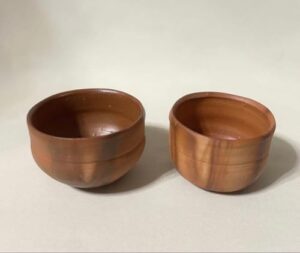 Okayama: Bizen-yaki guinomi
The other great Okayama craft — wood-fired sake cups
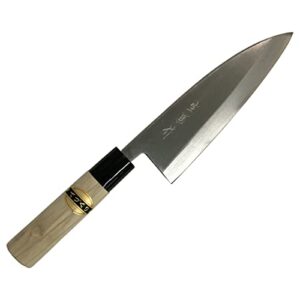 Echizen forged santoku
All-purpose alternative to the flat nakiri
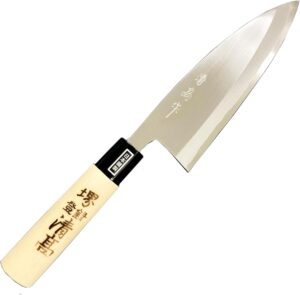 Sakai deba knife
Single-bevel fish blade from Osaka
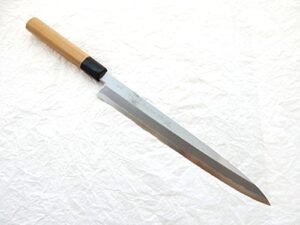 Tsukiji yanagiba
Long sashimi slicer for raw fish
 Hizen ajikiri knife
Small forged blade for prepping small fish
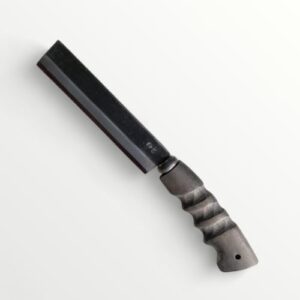 Miyakonojo nata
Heavy outdoor/garden hatchet blade
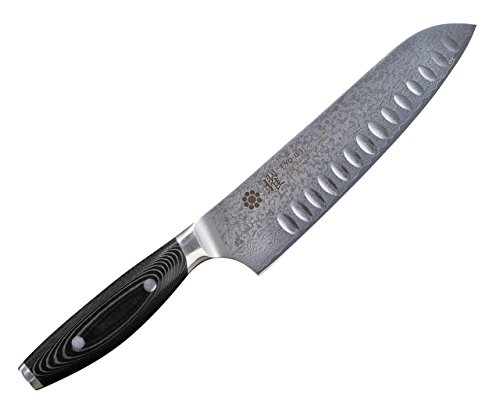 Seki Damascus santoku
Stainless Damascus, low-maintenance option
Buying options across stores
| Store | Item / Variant | Price (JPY + USD est.) | Notes |
|---|---|---|---|
| 🇺🇸 Amazon.com (US) | Browse Japanese kitchen knives | varies (USD) | Best if you are shopping from the US — Prime shipping, USD pricing, no international customs. Amazon US carries hand-forged Japanese nakiri and santoku from several makers, useful for comparing geometry and steel. The exact Bizen Osafune piece is sourced from Japan (next row). |
| 🇯🇵 Amazon JP Global Store | Bizen Osafune hand-forged nakiri | Confirm the current purchase terms | The product page for the item. Ships internationally from Japan to most major destinations. Confirm the details before buying. |
| Maker direct | Osafune-district forges / Setouchi craft shops | Varies — Unconfirmed | Some regional forges sell direct or through the Sword Museum area; domestic-Japan shipping is more common than international. |
| Proxy services (Buyee / Tenso) | Forwarding for JP-only purchases | Item price + fee + forwarding | Useful when a forge only ships within Japan; adds a service fee and a second shipping leg. |
USD figures are approximate (¥150/USD baseline as of mid-2026), and prices depend on the exchange rate and retailer.
What it does well
“When the sword ban of 1876 ended the demand for katana, Osafune’s smiths did not put down their hammers — they turned the same steel toward the kitchen.”
Weaknesses and things to verify before buying
- Carbon steel rusts. It must be hand-washed, dried immediately, and lightly oiled for storage. It is not dishwasher-safe and not a “leave it in the sink” knife.
- Flat profile, not for rocking. If your technique relies on the rocking motion of a Western chef’s knife, the straight edge will feel unfamiliar; it rewards a push/pull stroke.
- Not a do-everything blade. A nakiri is a vegetable specialist. It is poor for fish butchery (use a deba), slicing sashimi (use a yanagiba), or carving meat off bone.
- Edge can chip. Hard squash, frozen food, bone, and twisting cuts can micro-chip a thin, hard carbon edge. Cut on wood or poly boards, never glass or stone.
- Specs need confirmation. Blade length, handle material, and weight were not provided; confirm them with the seller before ordering.
- Availability can change. Hand-forged single-maker items can sell out and restock irregularly; confirm current availability before ordering.
- International handling. Confirm that the Amazon JP Global Store ships to your country, and allow for possible customs duties above your local threshold.
Where this comes from — place, era, and the craft tradition

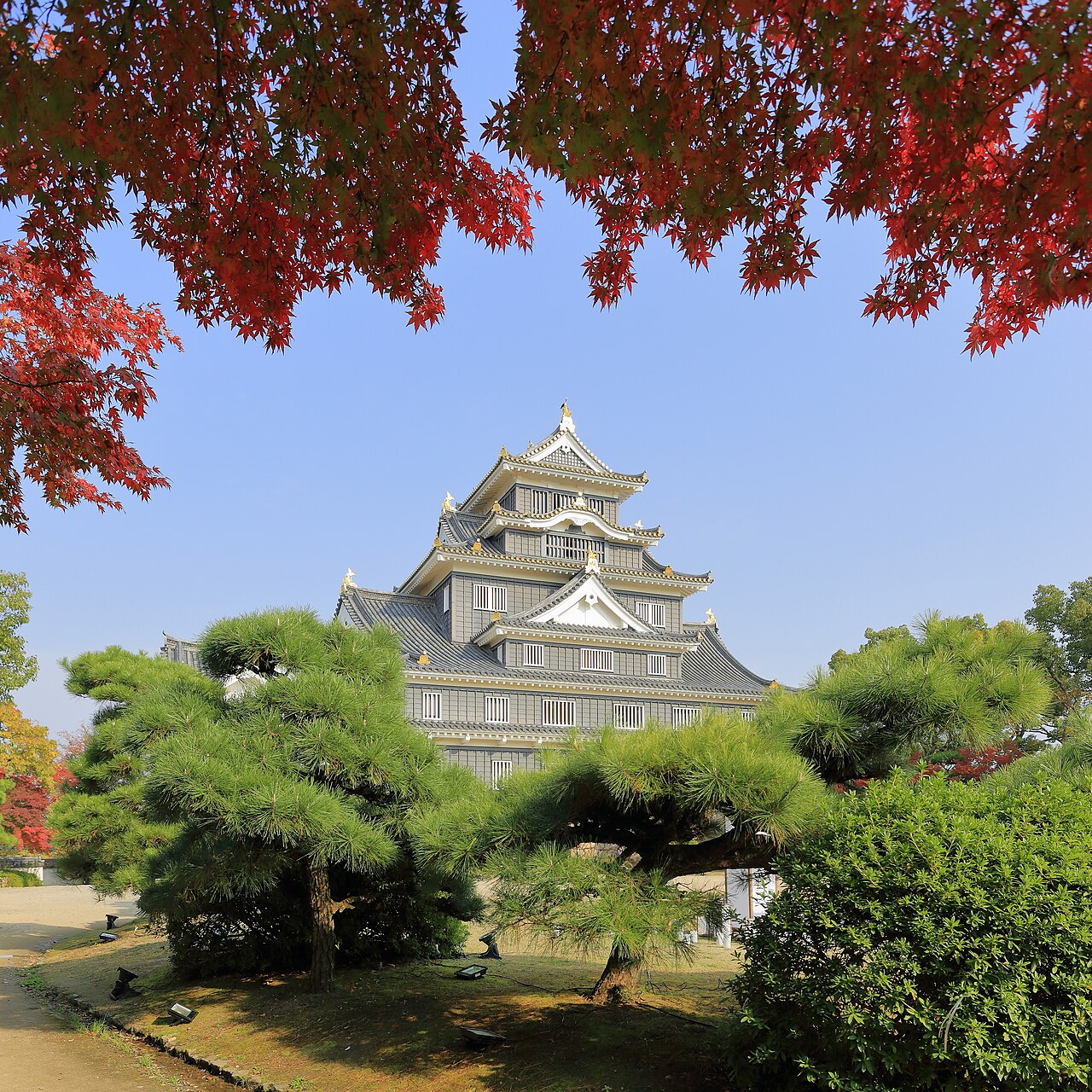
Okayama sits on the Chūgoku region’s southern, Seto-Inland-Sea-facing side, a stretch of warm, dry, low-rainfall country historically called the province of Bizen (備前). Osafune lies in its southeast, in what is today Setouchi City, beside the Yoshii River. Three things made this a forging center: iron sand carried and concentrated by the river system, abundant pine for charcoal, and water transport that moved both raw material and finished blades to market. The same Ikeda-domain prosperity that later built Okayama Castle and Korakuen garden grew out of this productive, well-connected country.
From the Kamakura period (1185–1333) onward, Osafune became the largest sword-producing district in Japan. The Bizen-den it belonged to was one of the Gokaden — the Five Traditions of Japanese swordsmithing — and Bizen blades account for the single largest share of swords later designated National Treasures. For roughly four centuries, generations of smiths here forged for warriors across the country.
- Late 12th c. — The Bizen-den swordmaking tradition takes shape in the province of Bizen.
- 1185–1333 — Kamakura period: Osafune grows into Japan’s largest sword-producing district.
- 1336–1573 — Muromachi period: mass production for the warring provinces; Bizen blades circulate nationwide.
- Edo period — Under the Ikeda domain, Bizen country prospers; Okayama Castle and Korakuen become symbols of its patronage.
- 1876 — The Haitorei sword ban ends demand for katana; smiths redirect their forging into tools and kitchen knives.
- 1983 — The Bizen Osafune Japanese Sword Museum opens in Setouchi City, preserving the living forging lineage.
- 2026 — Hand-forged carbon-steel kitchen knives, including nakiri, continue to come out of the district.
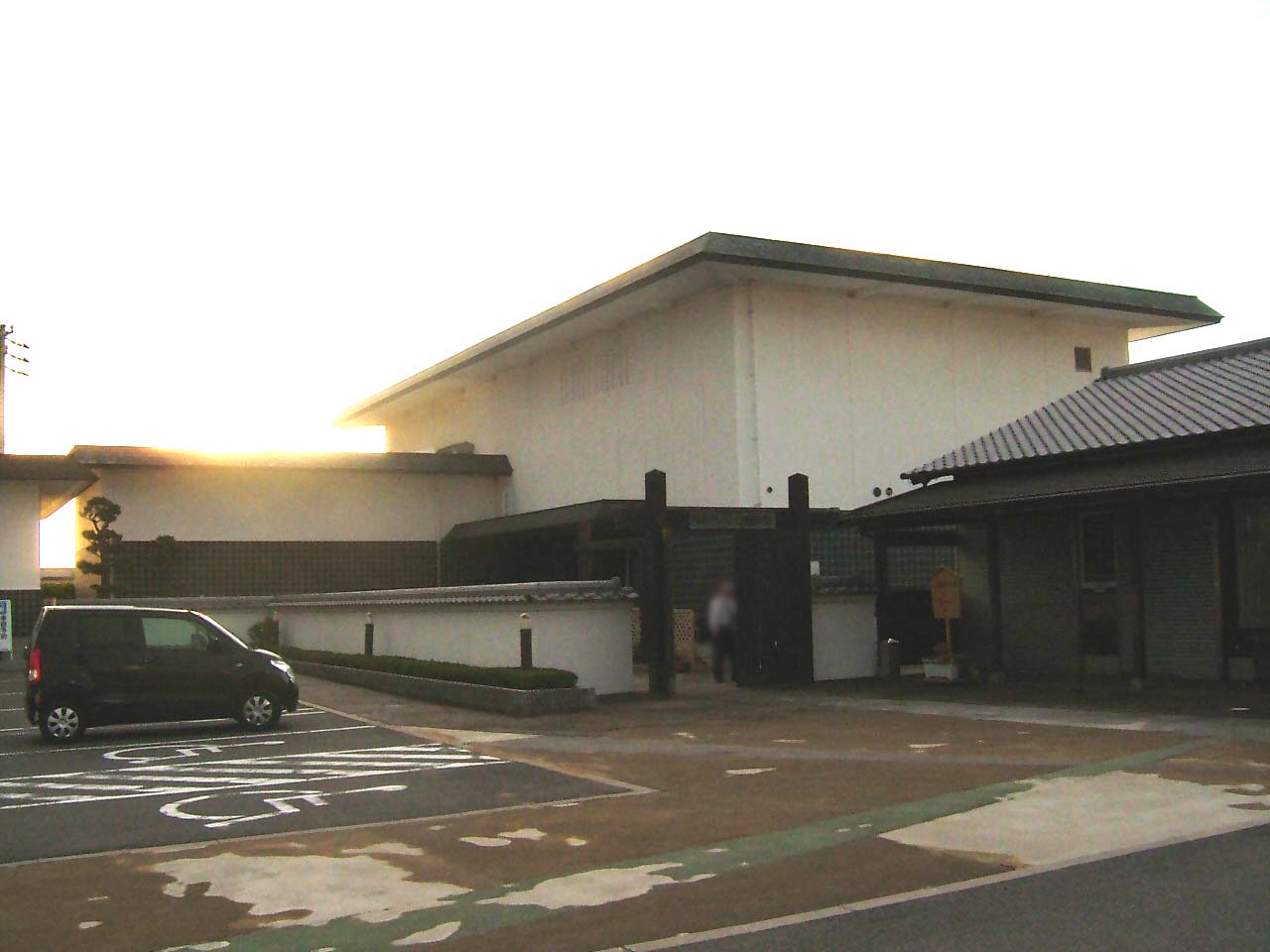
The continuity case is unusually concrete here. The Haitorei edict of 1876 ended the legal wearing of swords and, with it, the market that had sustained Osafune for centuries. Rather than disappear, the forging knowledge migrated into uchihamono — hand-forged agricultural tools and kitchen blades — using the same fire-management, folding, and edge-setting skills. Today the Bizen Osafune Japanese Sword Museum and its working forges keep that line visible, and the carbon-steel nakiri sold under the district’s name is a direct descendant of that transition.
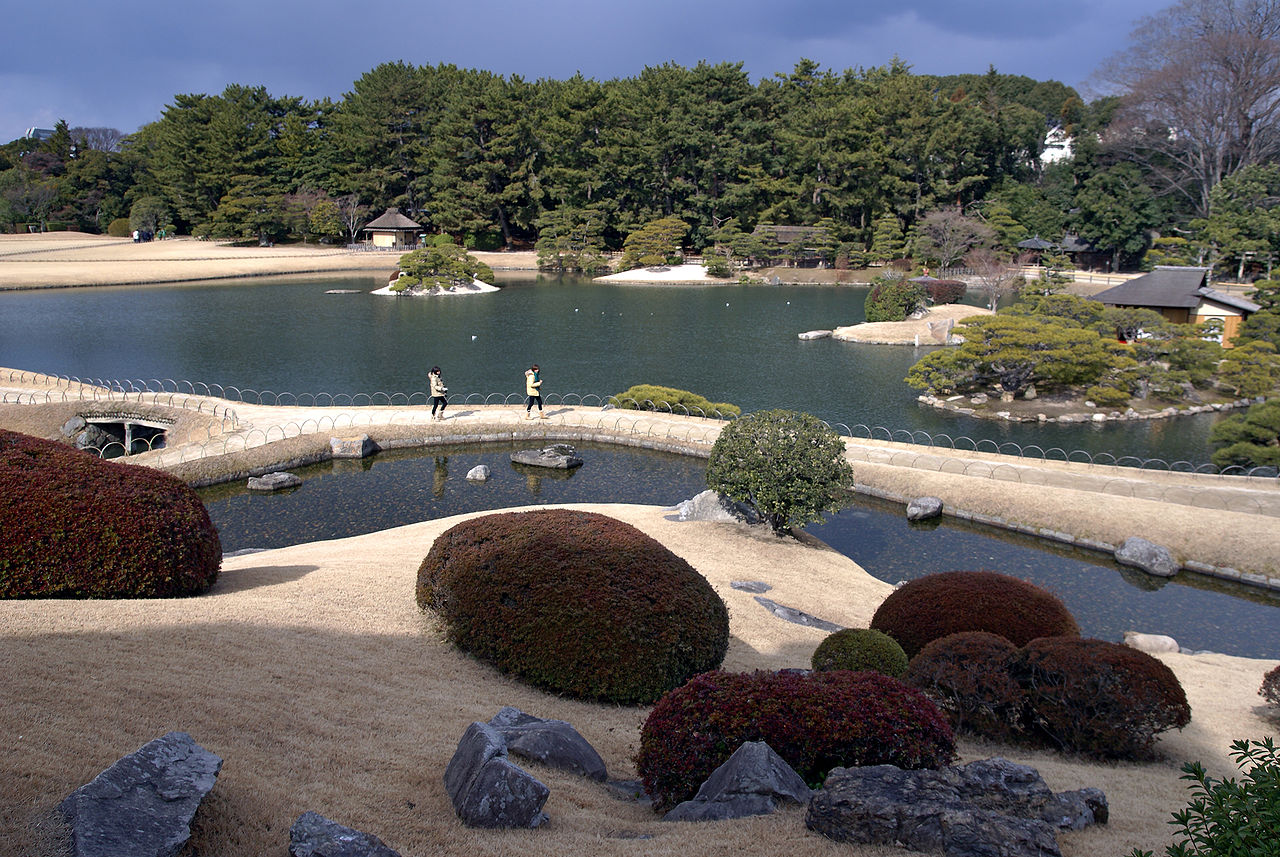
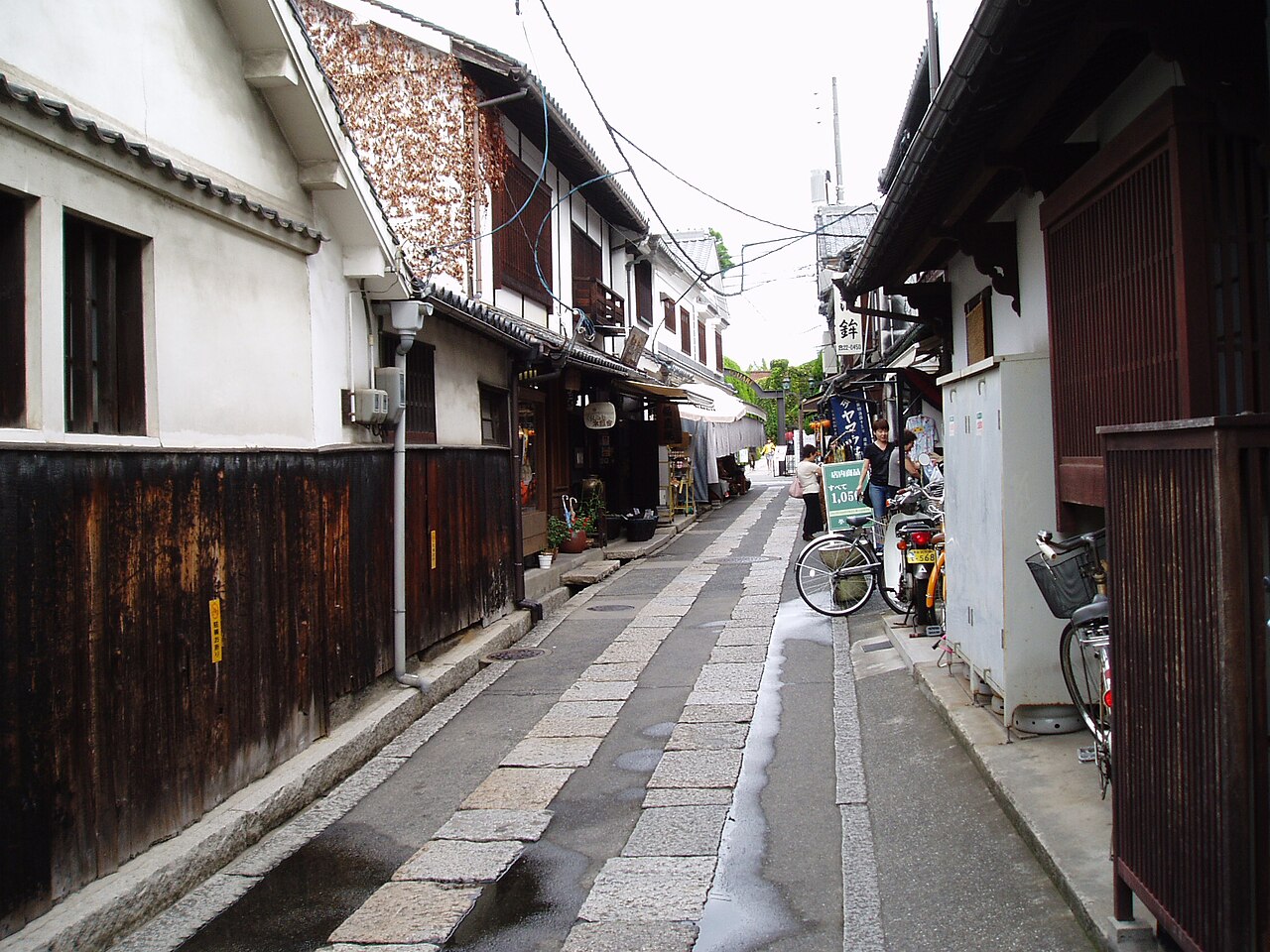
That patronage shaped the wider landscape. The Ikeda lords built Okayama Castle — the black-clad “Crow Castle” — and laid out Korakuen, counted among Japan’s three great gardens. The same merchant-era prosperity is legible an hour west in Kurashiki, whose Bikan canal quarter preserves the white-walled storehouses of the trade that moved Bizen goods to market. A kitchen knife from this country is rooted in a region whose wealth, water, and metal all reinforced one another.
Okayama is also where you find Bizen-yaki, the unglazed wood-fired stoneware whose six-old-kiln lineage runs parallel to the swords — two crafts, one province, both unbroken. The nakiri and the guinomi sake cup belong to the same place.
📦 Shipping & where to buy from outside Japan
If you are based in the US, the simplest path is often to browse Amazon.com for comparable hand-forged Japanese nakiri first — Prime shipping, USD pricing, and no customs paperwork. The exact Bizen Osafune piece, however, comes from Japan. If a regional forge sells only domestically, proxy services (Buyee / Tenso) can forward it, at the cost of a service fee and a second shipping leg.
Customs note: orders above your country’s de-minimis threshold may incur duties and import VAT on arrival. A single kitchen knife is usually low-value, but confirm your local rules. As cutlery, it must travel in checked baggage, not carry-on, if you ever fly with it.
Conclusion — which buyer type are you?
Other ways to approach this purchase
❓ Frequently Asked Questions
What is a nakiri actually for?
A nakiri is a vegetable specialist. Its tall, flat blade is made for straight-down push and pull cuts through produce — cabbage, daikon, leafy greens, herbs — rather than the rocking motion of a Western chef’s knife. It is not intended for meat, fish, or bone.
How is this connected to Japanese swords?
Osafune was the center of the Bizen-den, one of the Gokaden Five Traditions of swordsmithing, and for centuries Japan’s largest sword-producing district. After the 1876 Haitorei sword ban ended katana demand, the same smiths redirected their forging into kitchen knives and tools — a continuity preserved today around the Bizen Osafune Japanese Sword Museum.
Does carbon steel rust, and how do I care for it?
Yes. High-carbon steel can rust if left wet. Hand-wash it, dry it immediately, and wipe it with a thin film of food-safe oil for storage. Do not put it in the dishwasher. With use it forms a grey-blue patina that helps protect the surface.
Can it ship outside Japan?
As cutlery, a knife should travel in checked baggage if you fly with it. International shipping and customs costs vary by destination.
Nakiri or santoku — which should I get?
Choose a nakiri if you want a dedicated vegetable knife with a flat profile for clean push cuts. Choose a santoku if you want one all-purpose knife for vegetables, meat, and fish with a slightly curved edge. Many cooks own both; if you can have only one, the santoku is more versatile.
Why was no price shown in this guide?
Not every retailer publishes a complete price history for hand-forged single-maker knives, so live pricing should be checked at the seller at the time of purchase. Hand-forged single-maker items also restock irregularly. Always confirm the current price and availability before buying.
Is it a good gift?
For someone who cooks and is willing to maintain a carbon edge, yes — it pairs a practical tool with a documented regional craft story. For a recipient who wants zero maintenance, a stainless santoku is a kinder gift.
jpmono.com is curated by a Japan-based editorial team (working out of Toyama in the Hokuriku region and Nara in Kansai) and is independent. We do not take payment from the makers we feature; income comes from affiliate links. Read more about our editorial standards.
Note: This article was prepared with AI assistance and reviewed against the available craft and product information. Specifications and prices are presented with the limitations noted in the article.
Affiliate disclosure: jpmono.com may earn a commission on qualifying purchases made through links on this page, at no additional cost to you.