![Miyakonojo Uchihamono Hand-Forged Nata Hatchet, Miyazaki Blade Town [2026]](https://jpmono.com/wp-content/uploads/2026/05/japan-map-regions-and-prefectures-800x1050.png)
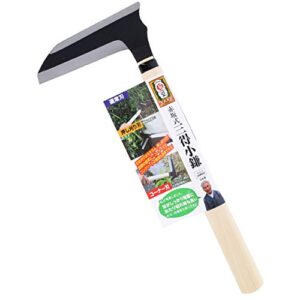
A nata (鉈) is the blade a rural Japanese household reaches for when a kitchen knife is too delicate and an axe is too crude: a thick, heavy billhook-hatchet for splitting kindling, trimming branches, clearing brush, and rough garden work. The piece covered here is a hand-forged, full-tang nata from Miyakonojo (都城) in southern Miyazaki Prefecture, on the southern island of Kyūshū — a town that the Japanese state formally recognized in 2017 as the home of a designated traditional cutlery craft, the only such cutlery designation in all of Kyūshū.
What makes Miyakonojo’s blades distinctive is not a signature pattern or a brand name but a method. In most Japanese cutlery towns, forging is divided across specialists — one smith draws out the steel, another sharpens, another fits the handle. In Miyakonojo, a single smith carries one blade through every step, from the first heat to the final edge, and most pieces are made to order rather than mass-produced. That is the tradition this article is about, and it is the reason a Miyakonojo nata reads differently from a hardware-store hatchet.
This guide is written for international readers — bushcrafters, gardeners, campers, and tool collectors outside Japan — who want to understand what they are buying, where it comes from, and how to actually get one shipped abroad. We cover the Miyakonojo craft and its place, the general specifications and sizing conventions, honest weaknesses, the buyer types it suits, and the two general search paths: Amazon US for comparable Japanese outdoor blades, and Amazon JP Global Store for the wider Miyakonojo uchihamono category.
🗓️ Published:
🔄 Updated:
⏱️ Read time: ~12 min
- Who this is for — and who should skip it
- Product overview (from published specs)
- 📍 Where this comes from — place, era, and the craft tradition
- 📦 Shipping & where to buy from outside Japan
- Where to buy across stores
- What it does well
- Weaknesses and things to verify before buying
- Conclusion — which buyer type are you?
- Other ways to approach this purchase
- ❓ Frequently Asked Questions
Who this is for — and who should skip it
- Do real outdoor work — bushcraft, kindling, brush clearing, garden and orchard pruning
- Want a hand-forged carbon-steel blade and are willing to maintain it (oil, dry, hone)
- Value single-maker, made-to-order tools over mass-produced hardware
- Already own and care for carbon-steel knives or tools
- Are buying a working tool you intend to keep for decades, not a display piece
- Want a maintenance-free stainless tool you can leave wet in a shed
- Need a guaranteed in-stock item shipped today — these are often made to order
- Are shopping on a tight budget for occasional light use
- Cannot safely import or store a fixed, unsheathed blade where you live
- Expect precise published weight/length specs before buying (data here is thin)
Product overview (from published specs)
Information on individual Miyakonojo nata hatchets is limited. The table below draws on the maker’s craft tradition and typical blade geometry rather than a complete specification sheet. Values that vary by piece are marked as such — nothing below is invented.
| Attribute | Value | Source |
|---|---|---|
| Item type | Nata hatchet / billhook (鉈) | Product description |
| Craft tradition | Miyakonojo Uchihamono (都城打刃物), nationally designated traditional craft (2017) | METI designation |
| Steel | Carbon steel (white / blue steel, according to the product description) | Product description |
| Edge geometry | Double-bevel (両刃) | Product description |
| Construction | Full-tang | Product description |
| Production method | Single smith, all steps; most pieces made to order | Maker tradition |
| Origin | Miyakonojo, Miyazaki Prefecture, Kyūshū | Maker / seller |
| Blade length / weight | Not specified — confirm before buying | — |
| Price | Not stated at the time of writing — confirm before buying | — |
Only a Japan-market reference was available; current prices, dimensions, and steel types can vary. Confirm those details with the seller before purchasing.
📖 Glossary — key terms (tap to open)
- Nata (鉈) — a thick, heavy single-purpose chopping blade between a kitchen knife and an axe; used for kindling, brush, and branch work. Often translated as “billhook” or “froe.”
- Uchihamono (打刃物) — “hammer-forged blades”; cutlery made by forging steel under a hammer rather than stamping it from sheet.
- Full tang — the steel of the blade runs the full length of the handle, giving the tool strength for heavy chopping.
- Double-bevel (両刃, ryōba) — sharpened on both faces, symmetrical; easier for most users to control than a single-bevel tool.
- White steel / blue steel (白紙・青紙, shirogami / aogami) — high-carbon Japanese tool steels prized for keen, easily resharpened edges; they rust if neglected.
- Shokunin (職人) — a skilled craftsperson or artisan working within a defined trade tradition.
📍 Where this comes from — place, era, and the craft tradition

Miyakonojo lies in a broad basin in southwestern Miyazaki Prefecture, on the southern island of Kyūshū. It sits on what was historically the border country between Hyūga (old Miyazaki) and Satsuma (old Kagoshima), at the foot of the Kirishima volcanic range that straddles the two prefectures. For most international readers, this is unfamiliar ground: it is roughly 1,000 km southwest of Tokyo and a long way from the cutlery towns of central Japan that Western buyers know — Seki in Gifu, Sakai near Osaka, Echizen in Fukui.
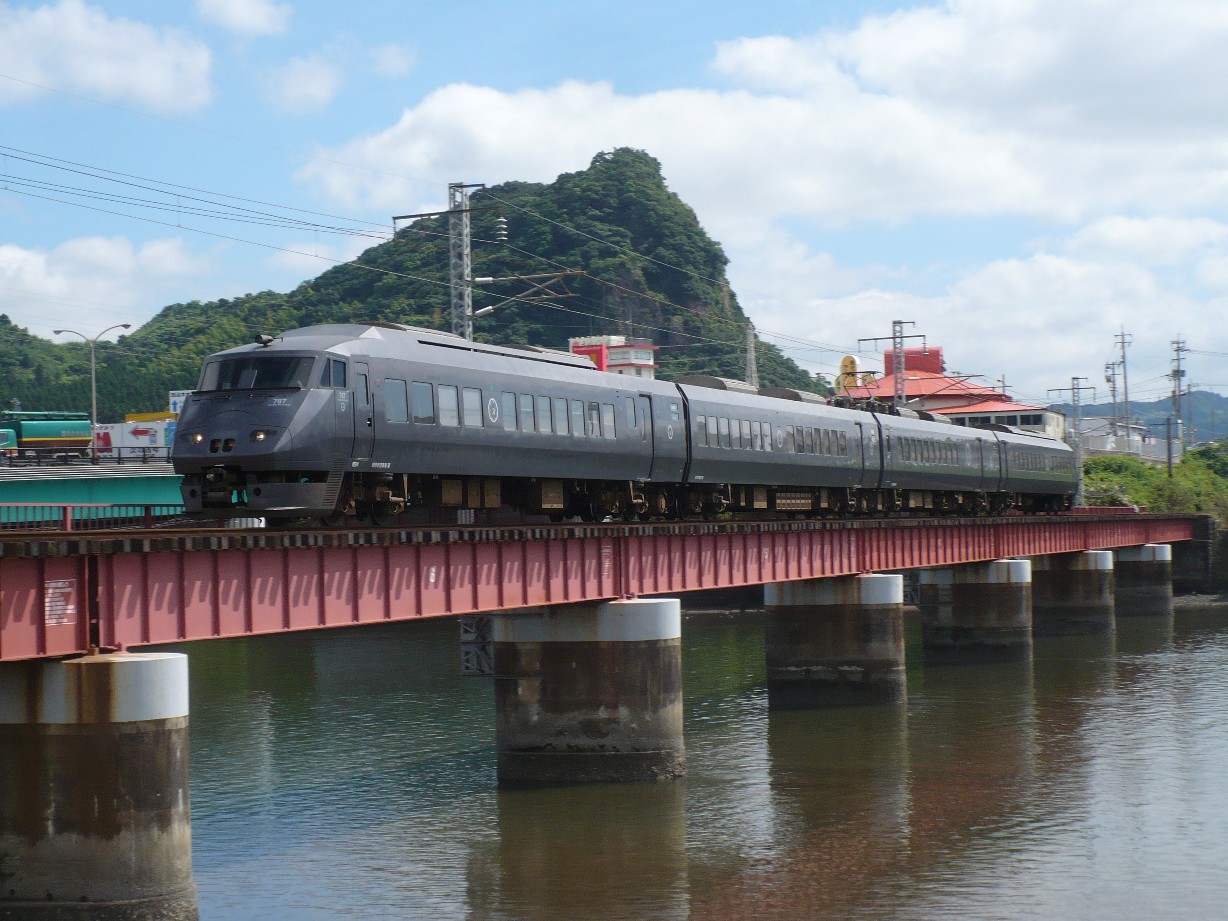
The forge town arose here for material reasons. The Kirishima range and the surrounding forests gave smiths two things they needed in quantity: charcoal to fuel the fire, and iron sand to work into steel. With fuel and raw metal close at hand, and a domain economy that needed blades, smithing took root and stayed.
The political backdrop matters too. Miyakonojo was governed by a Miyakonojo-Shimazu branch house — a cadet line of the Shimazu, the powerful clan that ruled the Satsuma domain to the south. This was frontier territory of a martial domain, and metalworking trades were part of how such a domain sustained itself.
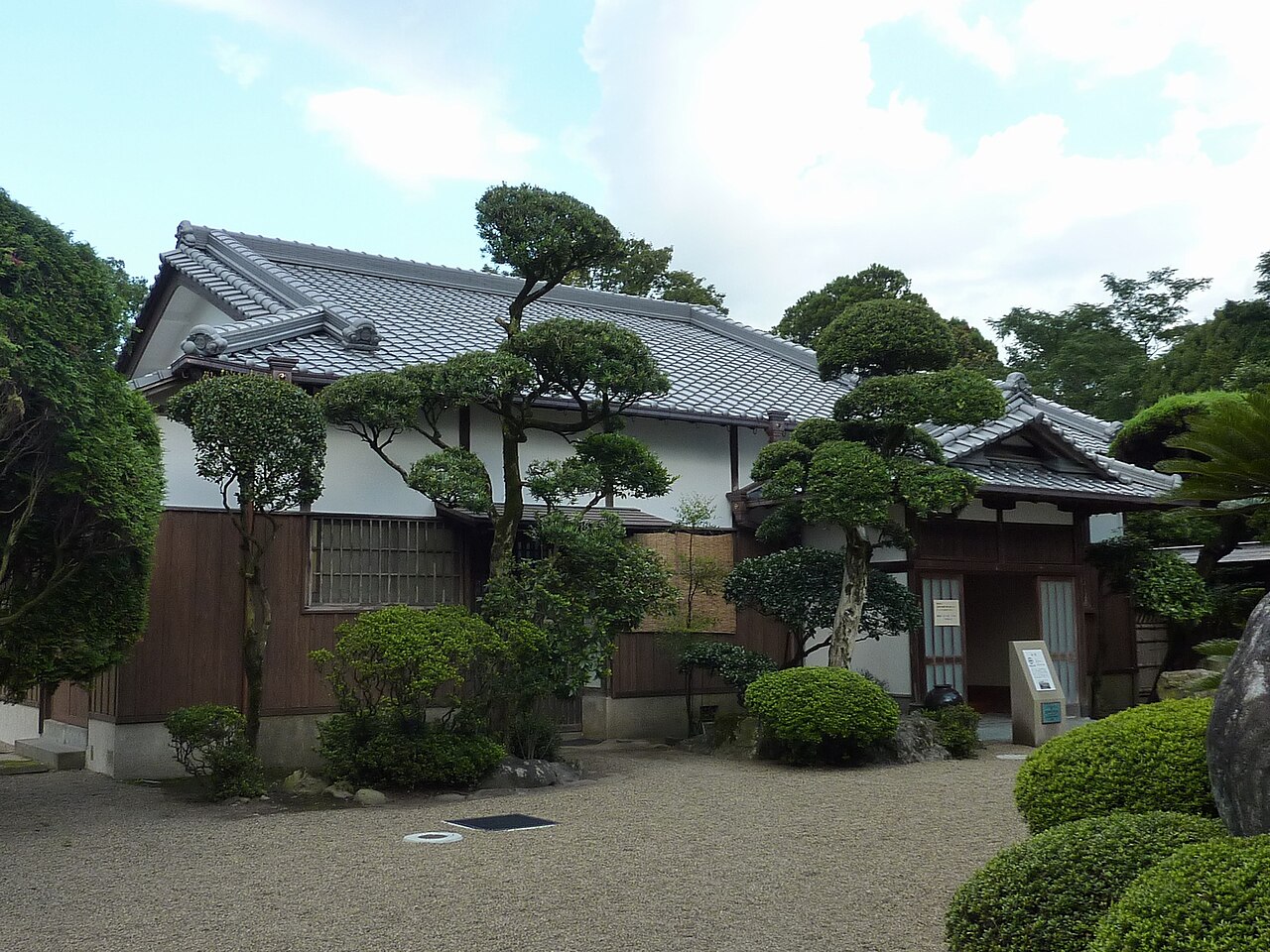
- Edo period — Miyakonojo, governed by the Miyakonojo-Shimazu branch house, becomes a smithing town using Kirishima charcoal and iron sand.
- Edo period — Swordsmithing and edged-tool trades cluster on the Satsuma/Shimazu frontier.
- Meiji era (1868–1912) — As sword demand collapses, smiths convert to farm and forest tools — nata, kama (sickles), and hocho — for the region’s cedar plantations and fields.
- 20th century — Single-smith, made-to-order production — one maker carrying each blade through every step — becomes the district’s signature method.
- 2017 — Miyakonojo Uchihamono (都城打刃物) is designated a national traditional craft — the only cutlery designation in Kyūshū.
- 2026 — Miyakonojo smiths continue forging each blade end to end, by hand, mostly to order.
The craft’s modern shape was set by an economic shock. When the Meiji government abolished the samurai class and demand for swords collapsed, the smiths who had served the domain turned their skills to tools the region actually needed. Miyazaki is heavy cedar-plantation country, and a forest-and-farm economy needs nata to split kindling and clear undergrowth, kama to cut grass and grain, and hocho to work in the kitchen. The sword tradition did not vanish so much as redirect.
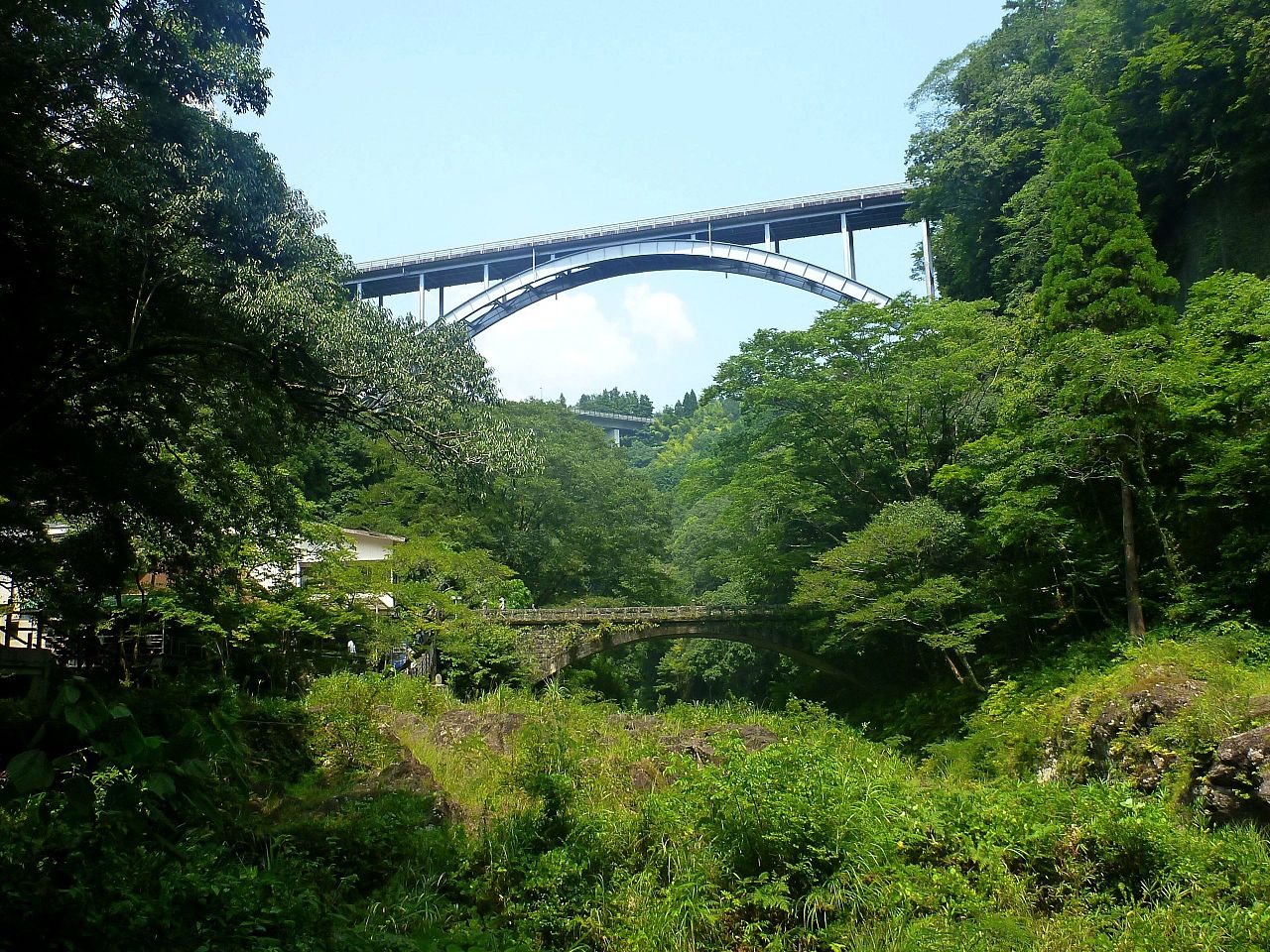
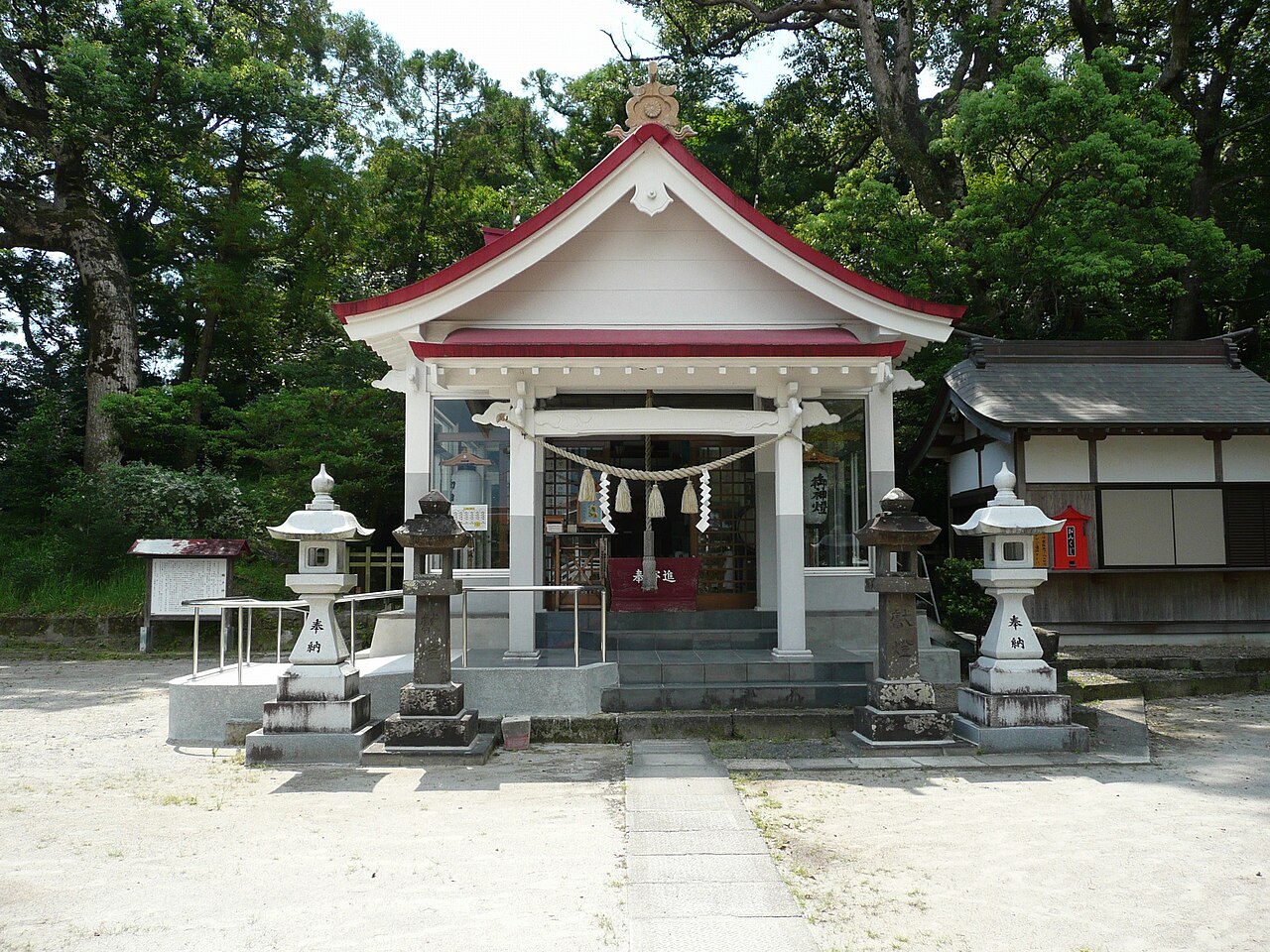
Miyazaki carries a deep association with fire, iron, and creation in Japanese folklore — the province is traditionally tied to the Amano-Iwato (the heavenly rock cave) and the divine-smith legends of the Takachiho highlands. These are folk-mythological associations, not historical claims about this particular workshop, but they explain why a forge identity feels native to this corner of Kyūshū rather than imported.
“One smith, one blade, from the first heat to the final edge — Miyakonojo’s signature is not a pattern but a method.”
That continuity is the point of buying here rather than from a factory line. The 2017 national designation is recent, but what it recognizes is old: a town where edged tools have been hammer-forged for generations, and where a single shokunin still takes responsibility for the whole blade. For a working tool, that is a meaningful difference — the person who chose the steel is the person who set the edge.
Related jpmono guides — other Miyazaki crafts, other hand-forged Japanese blades, and Shimazu/Kyūshū objects worth seeing alongside this one.
📦 Shipping & where to buy from outside Japan
This is the part international buyers actually need. Miyakonojo nata are sourced through Japan-based retailers and specialist tool dealers, many of which ship internationally to major destinations. Fixed blades can carry extra handling or restrictions depending on your country, so confirm import rules for your destination before ordering.
- Amazon JP Global Store — the direct path for this exact item; ships from Japan to most major countries. International shipping to the US and EU typically runs in the rough range of $15–$40 depending on weight and speed, plus possible import duties.
- Amazon US (search) — easiest if you want a comparable Japanese nata, hatchet, or bushcraft blade with Prime shipping and USD pricing, though this specific single-smith piece may not be listed there.
- Maker direct / made-to-order — some Miyakonojo smiths take commissions directly; expect Japanese-language ordering and lead times.
- Proxy services (Buyee / Tenso) — useful when a particular smith’s offer is available only in Japan; you pay a service fee plus forwarded shipping.
- Customs — orders above your country’s de minimis threshold may incur duties and tax on import; budget for this.
Where to buy across stores
USD figures are approximate estimates at a ¥150/USD baseline as of mid-2026; the JPY price is authoritative for the specific listed item. No live price was captured at time of writing, so verify before buying.
| Store | Item / variant | Price (JPY + USD est.) | Notes |
|---|---|---|---|
| 🇺🇸 Amazon.com (US) | Browse Japanese nata, hatchets & bushcraft blades | varies (USD) | Best if you’re shopping from the US — Prime shipping, USD pricing, no international customs. Amazon US carries Japanese nata, hatchets, and outdoor knives from various makers for comparing steel and price tiers; this exact Miyakonojo single-smith piece ships from Japan (next row). |
| 🇯🇵 Amazon JP Global Store | Miyakonojo Uchihamono nata (single-smith, made-to-order) | Price not stated at the time of writing — confirm before buying | Ships internationally from Japan. This is the Japan-based store option for this guide’s hatchet. |
| Maker direct | Made-to-order commission | varies | Some Miyakonojo smiths accept direct commissions; expect Japanese-language ordering and lead times. |
| Proxy services (Buyee / Tenso) | Forwards Japan-only purchases | item price + proxy fee + shipping | Useful if a particular smith’s offer is available only in Japan. |
What it does well
One maker carries the blade from drawing out the steel to the final edge — the district’s defining method, and rare in modern cutlery.
A thick, heavy nata is the town’s signature tool — designed for splitting kindling, clearing brush, and forest-and-garden work, not light slicing.
White/blue carbon steel takes a keen edge and resharpens easily — the trait Japanese tool steels are valued for.
Miyakonojo Uchihamono is a nationally designated traditional craft (2017) — the only cutlery designation in Kyūshū.
Weaknesses and things to verify before buying
- Carbon steel rusts. White/blue steel needs to be dried, lightly oiled, and stored dry. If you want a leave-it-wet tool, this is the wrong blade.
- Product details are limited. Confirm the hatchet’s fit for your work before committing.
- Made to order. Single-smith pieces are often produced on demand, so expect lead times rather than same-day dispatch.
- No price is quoted here. Confirm the current price before buying.
- Import and storage rules vary. A fixed, unsheathed blade can face shipping handling or local possession restrictions; check your country’s rules before ordering.
- Not a precision cutting tool. A nata is a chopping blade, not a chef’s knife — wrong tool for fine kitchen prep.
Conclusion — which buyer type are you?
You want a single-smith, designated-craft tool and will maintain carbon steel. A Miyakonojo nata is squarely for you — look for pieces from Miyazaki-based smiths through specialty Japanese tool dealers.
You do regular bushcraft or garden work and like quality but want options. Compare Japanese hatchets and nata on Amazon US, then decide.
For occasional light chopping, a mass-produced hatchet costs far less. A made-to-order forged nata is overkill for the casual user.
You want a maintenance-free stainless tool, need it in hand immediately, or can’t import a fixed blade. This is not the right purchase.
Other ways to approach this purchase
Cross-border prices shift with the yen. If price matters, watch market prices and the exchange rate before ordering.
Older Japanese nata turn up secondhand. A carbon blade can be re-ground back to life, but inspect for cracks and pitting first.
If you buy through Amazon, card points or Amazon rewards can offset international shipping on a single larger order.
If you only need to split a few logs a year, a hardware-store hatchet does the job at a fraction of the cost and care.
❓ Frequently Asked Questions
What is a nata, and how is it different from an axe or hatchet?
A nata is a thick, heavy Japanese chopping blade — a billhook — that sits between a kitchen knife and an axe. It is used for splitting kindling, trimming branches, and clearing brush. Unlike an axe, it has a long straight cutting edge you can choke up on for controlled work; unlike a kitchen knife, it is built for heavy chopping.
Is this carbon steel or stainless steel?
White or blue carbon steel takes a keen, easily resharpened edge but will rust if left wet or neglected, so it needs basic care. It is not stainless.
How do I care for a carbon-steel nata?
Wipe it dry after use, apply a thin film of oil (camellia oil is traditional, but any food-safe or tool oil works), and store it dry. Hone the edge as needed with a whetstone. A patina will form over time, which is normal and helps resist deeper rust.
Does Amazon JP Global Store ship this internationally?
Amazon JP Global Store ships many household and tool items from Japan to most major destinations. Fixed blades can carry extra handling, and import rules vary by country, so confirm shipping availability and local regulations with the retailer or carrier before ordering.
Is the blade single-bevel or double-bevel?
A double-bevel (両刃) nata is sharpened symmetrically on both faces. Double-bevel blades are generally easier for most users to control and resharpen than single-bevel tools.
Why does it cost more than a hardware-store hatchet?
Each Miyakonojo blade is hand-forged through every step by a single smith, mostly to order, within a nationally designated traditional craft (2017). You are paying for hand work and craft continuity, not factory output. For occasional light use, a mass-produced hatchet is more economical.
jpmono.com is curated by a Japan-based editorial team (working out of Toyama in the Hokuriku region and Nara in Kansai) and is independent. We do not take payment from the makers we feature; income comes from affiliate links. We do not physically test every product — we read maker specifications and craft notes.
🤖 This article was prepared with AI assistance and reviewed against verified craft notes. Specifications and pricing reflect the information available at the time of writing and may have changed; verify details with the seller before purchasing.
Affiliate disclosure: jpmono.com may earn a commission on qualifying purchases made through links on this page, at no additional cost to you.