![Echizen Tansu: Iron-Fitted Wood Chest from Fukui, Where to Buy [2026]](https://jpmono.com/wp-content/uploads/2026/05/japan-map-regions-and-prefectures-800x1050.png)
Echizen Tansu (越前箪笥, “Echizen chest”) is a class of nailless wooden cabinetry made in Echizen City and the wider Sabae and Echizen district of Fukui Prefecture, on the Sea of Japan side of central Japan. The cabinets pair zelkova (keyaki) fronts with paulownia (kiri) interiors, dovetailed together without nails, then finished in urushi or wiped lacquer. What sets the form apart is the heavy hand-forged iron hardware bolted across the face — the locks, corner braces, and decorative mounts that a Western reader would recognize as the most visible signature of the piece.
That ironwork is not borrowed. It grew out of Echizen’s own blacksmithing tradition, conventionally dated to around 1337, when the swordsmith Chiyozuru Kuniyasu is said to have settled in the area. The same forges that hammered out farm tools and blades later spun off the Echizen uchihamono (打刃物, “forged edged tools”) knife industry that international cooks now know well. A chest of drawers built in this town, in other words, carries both the cabinetmaker’s joinery and the blacksmith’s iron in one object — and Japan formally recognized that combination as a designated Traditional Craft (指定) in 2013.
This guide is written for readers outside Japan who are weighing a small, lacquered, iron-fitted Japanese chest as an heirloom-grade accessory cabinet rather than as flat-pack furniture. We cover what the form is, what to verify before buying, how the international purchase path works, and where the genre sits relative to other Japanese woodwork we have reviewed. The data available for the specific item at the time of writing was thin, so we flag clearly where a figure is unconfirmed rather than guessing.
🗓 Published:
🔄 Updated:
⏱ Read time: ~11 min
- Who this is for — and who should skip it
- Product overview (from published specs)
- Where this comes from
- 📦 Shipping & where to buy from outside Japan
- Buying options
- What it does well
- Weaknesses and things to verify before buying
- Conclusion — which buyer type are you?
- Other ways to approach this purchase
- ❓ Frequently Asked Questions
Who this is for — and who should skip it
- Want a small, lacquered cabinet you can hand down rather than replace
- Value visible craft — exposed iron hardware, wood-grain faces, dovetailed corners
- Already appreciate paulownia’s light weight and moisture-buffering for storage
- Are furnishing a tea room, entryway, or desk with one deliberate object
- Are comfortable buying a sourced item from Japan and waiting for it to ship
- Need large-volume storage — these accessory chests are small by design
- Want a low price; hand-forged hardware and lacquer command a premium
- Expect same-week delivery — international shipping from Japan takes time
- Plan to keep it in a damp or full-sun spot that stresses lacquered wood
- Prefer a uniform, machine-perfect finish over visible hand-work variation
Product overview (from published specs)
Specifications for an Echizen tansu chest vary widely between workshops and styles, so confirming exact dimensions, drawer count, hardware finish, and current price from the information supplied with the individual chest is worth the few minutes it takes. A two-drawer ko-dansu typically runs around 60–80 cm wide and 40–50 cm tall, while larger sendai-dansu pieces climb noticeably. If those basic measurements are not provided, ask before ordering rather than assume.
| Attribute | Detail | Source |
|---|---|---|
| Craft / form | Echizen Tansu — iron-fitted wood chest | Designated craft profile |
| Origin | Echizen City (Takefu), Fukui Prefecture | Designated craft profile |
| Body wood | Zelkova (keyaki) faces, paulownia (kiri) interior | Designated craft profile |
| Joinery | Dovetailed, built without nails | Designated craft profile |
| Finish | Urushi or wiped lacquer | Designated craft profile |
| Hardware | Hand-forged iron kazari-kanagu, locks, corner braces | Designated craft profile |
| Designation | Traditional Craft, designated 2013 | Designated craft profile |
| Dimensions / weight | — | — |
| Price | — | — |
📖 Glossary — key terms
- tansu (箪笥) — a traditional Japanese chest of drawers or cabinet.
- keyaki (欅, “zelkova”) — a hard, strongly figured hardwood prized for cabinet faces.
- kiri (桐, “paulownia”) — an extremely light wood that buffers humidity, used for drawer interiors and storage boxes.
- kazari-kanagu (飾り金具, “decorative metal fittings”) — the iron mounts, pulls, and corner braces fixed to the cabinet face.
- urushi (漆, “lacquer”) — natural lacquer from the urushi tree, applied in coats and polished.
- uchihamono (打刃物, “forged edged tools”) — Echizen’s forged knives, from the same blacksmith lineage as the chest hardware.
- shokunin (職人, “artisan”) — a skilled craftsperson working within a named trade tradition.
Related jpmono guides on Japanese woodwork, joinery, and the same blade town — useful for placing this chest in context.

Where this comes from

Fukui faces the Sea of Japan on the inner, weather-side coast of central Honshu. Winters here are long and snowbound — the Hokuriku region records some of the heaviest seasonal snowfall in the country — and that climate did more than test roofs. It pushed rural households indoors for months at a time, and indoor months favored indoor crafts: weaving, paper-making, lacquering, and cabinetmaking. The valleys around Echizen had the timber, the water for finishing work, and the long quiet season that fine joinery rewards.
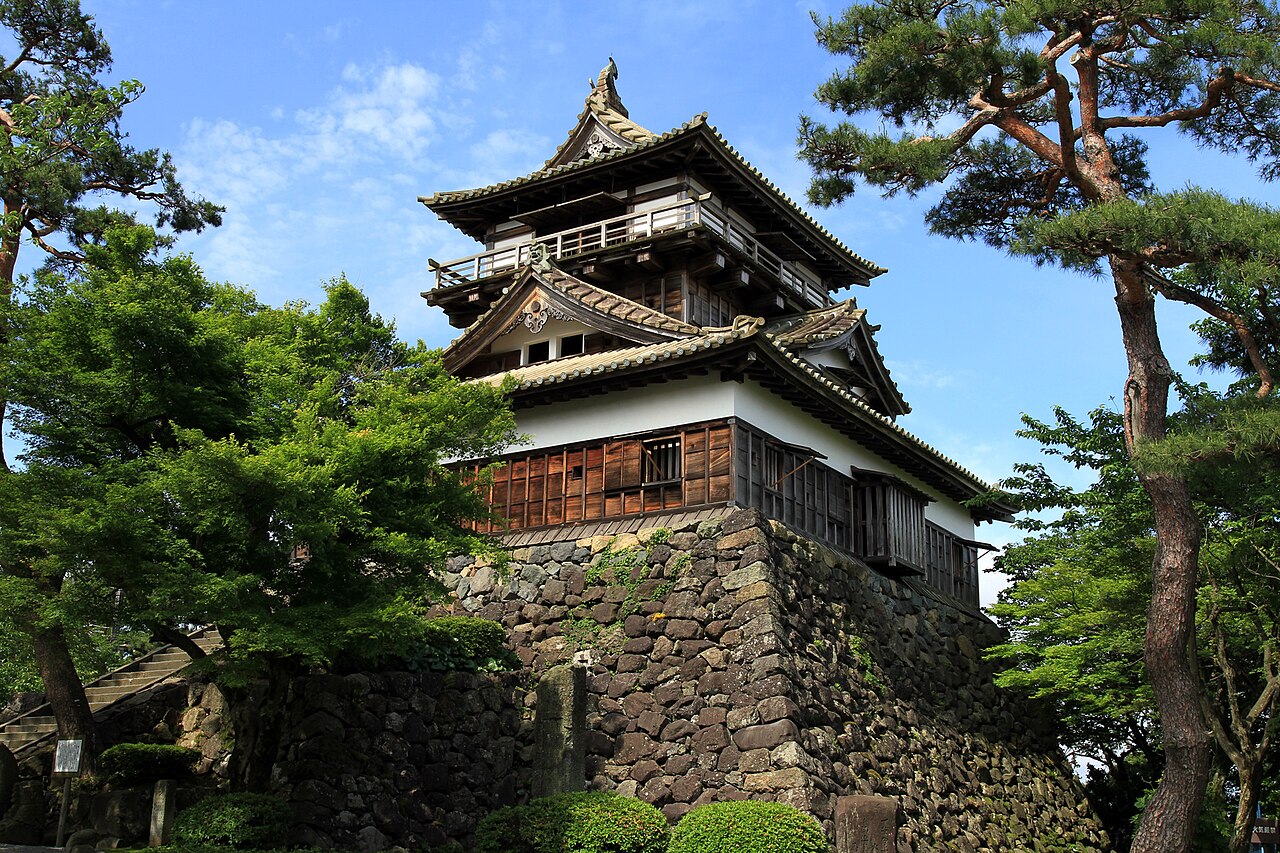
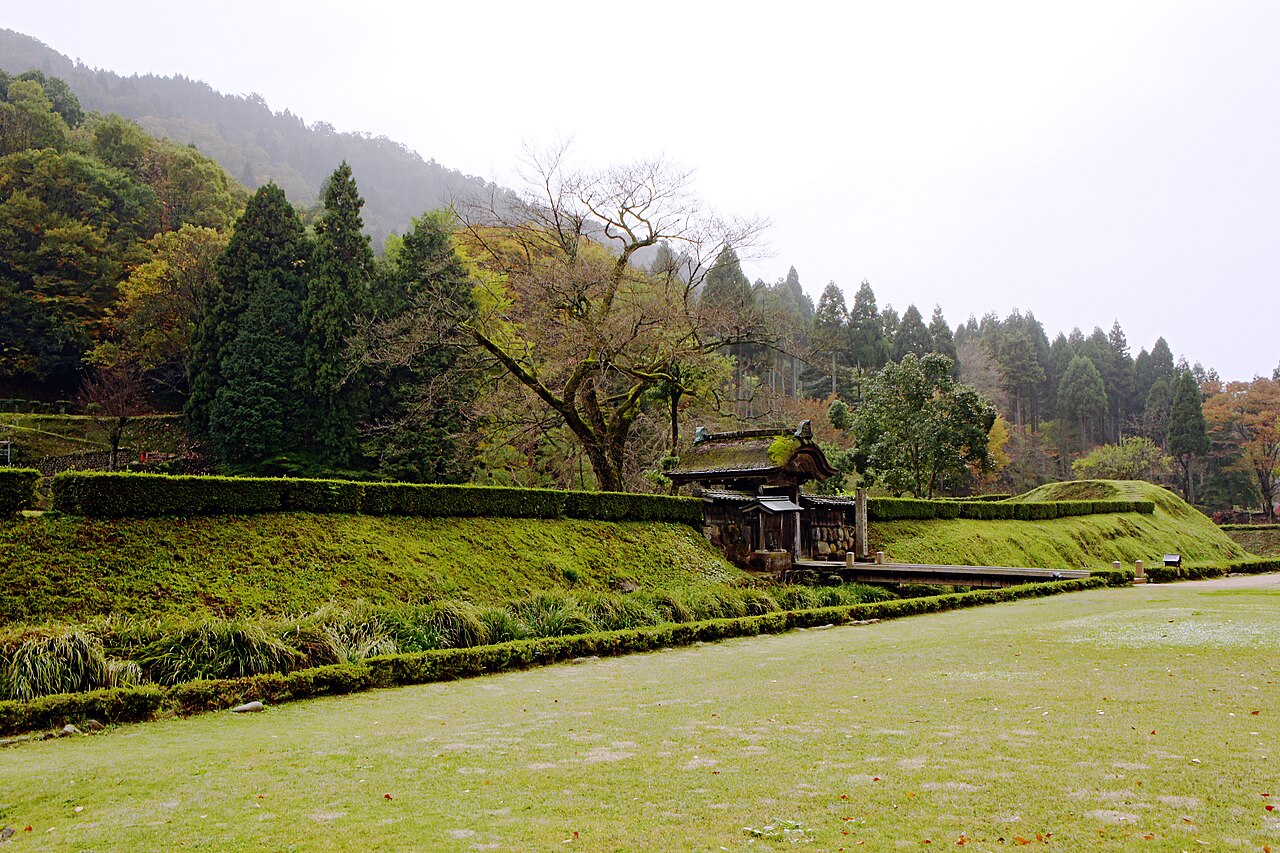
The region’s making culture has deep roots. Eiheiji, the head temple of the Sōtō school of Zen, was founded in the Fukui mountains in 1244 and brought with it a discipline of woodwork, joinery, and lacquered fittings. Two centuries later the Asakura clan built their fortified town at Ichijodani and concentrated smiths, carpenters, and other craftspeople in a single valley. And at Maruoka stands a wooden castle keep often described as the oldest of its kind still standing in Japan — a standing argument for how seriously this corner of the country took timber construction.
- 1244 — Eiheiji, the Sōtō Zen head temple, is founded in the Fukui mountains.
- c. 1337 — Swordsmith Chiyozuru Kuniyasu settles in Echizen, seeding the local blacksmith tradition.
- 15th–16th c. — The Asakura clan’s castle town at Ichijodani concentrates smiths and craftsmen in one valley.
- 16th c. — Maruoka Castle’s wooden keep is built, now regarded as Japan’s oldest surviving keep.
- Edo period — Cabinetmakers combine keyaki and kiri joinery with local hand-forged ironwork into the tansu form.
- 2013 — Echizen Tansu is formally designated a Traditional Craft.
- 2026 — Chests are still built in Echizen City, alongside the town’s knife forges.
The iron is the part to understand. Echizen’s blacksmithing is conventionally traced to around 1337 and the arrival of the swordsmith Chiyozuru Kuniyasu. Over the following centuries the same forges that supplied blades and farm sickles learned to beat out the locks, hinges, corner braces, and broad decorative mounts that a tansu carries on its face. This is the lineage that later produced Echizen uchihamono, the forged kitchen knives now exported worldwide. A chest from this town is, quite literally, cabinetmaking and blacksmithing bolted together.
“A chest built where the knives are forged carries both trades in one object — the joiner’s dovetail and the smith’s iron, made to outlast the buyer.”

The finishing tells the second half of the story. Echizen Tansu is finished in urushi or wiped lacquer — coats of natural lacquer rubbed back to bring up the keyaki grain rather than to hide it. That same lacquering discipline runs through the wider Fukui making culture, from temple woodwork down to the wiped-lacquer chest in front of you. The drawer interiors use paulownia, the lightest of Japanese cabinet woods, valued because it swells slightly to seal against humidity and then releases it — traditionally believed to protect textiles and paper stored inside.
What “still made here” means in practice is that the chest, the lacquering, and the iron all stay within the same Fukui district that has supported these trades for centuries. The 2013 Traditional Craft designation is recent on paper, but it formalizes a continuity that the timeline above makes plain — and it is why a small Echizen accessory chest is priced and built as a multi-generation object rather than a seasonal furniture purchase.
📦 Shipping & where to buy from outside Japan
International delivery for a lacquered, iron-fitted wooden cabinet can add meaningfully to the total. Shipping cost and delivery time depend on the destination and the chest’s size, so confirm them before ordering.
If a workshop or shop does not ship directly to your country, a Japan-based proxy service such as Buyee or Tenso can forward a purchase: you buy through the proxy’s Japan address, then it consolidates and re-ships internationally. This adds a service fee and a second shipping leg, but can make Japan-only purchases possible.
One customs note: orders above your country’s de minimis threshold may attract import duty or VAT on arrival. For a single mid-value chest this is usually modest, but it is the buyer’s responsibility, not the seller’s. There is no electrical or voltage concern here — this is a wooden cabinet, not an appliance.
Buying options
| Store | Item / Variant | Price | Notes |
|---|---|---|---|
| 🇺🇸 Amazon.com (US) | Browse Japanese wood chests & cabinets | varies (USD) | Best if you’re shopping from the US — Prime shipping, USD pricing, no international customs. Amazon US carries Japanese paulownia boxes and small cabinets from various makers; the exact Echizen chest is sourced from Japan (next row). |
| 🇯🇵 Amazon JP Global Store | Echizen Tansu accessory chest | — | Ships internationally from Japan. |
| Maker direct | Echizen-area cabinetmakers | varies (¥) | Some workshops sell direct or accept commissions; international shipping varies by workshop. |
| Proxy services (Buyee / Tenso) | Forward a Japan-only source | item price + fees | Use when the Global Store will not ship to your country; adds a service fee and a second shipping leg. |
What it does well
Weaknesses and things to verify before buying
- Check the fit before ordering. Do not judge the chest’s fit from photos alone.
- Small by design. Accessory chests of this type hold jewelry, stationery, or small textiles — not bulk storage. Check internal drawer dimensions against what you intend to store.
- International shipping adds cost and time. A wooden cabinet is heavier and bulkier than typical small parcels; factor the quote and lead time into your decision.
- Lacquer and solid wood need a stable environment. Avoid prolonged direct sun, radiators, or damp; sudden humidity swings can stress lacquered solid-wood furniture over time.
- Hand-work means variation. Grain, lacquer sheen, and iron finish will differ piece to piece. If you expect machine-uniform consistency, this is the wrong category.
- Customs and duties may apply above your country’s threshold — budget for the possibility.
- Returns on cross-border craft items can be slow or limited. Read the seller’s return policy before purchase.
Conclusion — which buyer type are you?
Other ways to approach this purchase
❓ Frequently Asked Questions
Does the Amazon JP Global Store ship Echizen Tansu internationally?
Echizen tansu chests are typically sourced through Fukui-based tansu cooperatives, specialty Japanese furniture shops, or craft platforms carrying traditional woodwork. Because a wooden cabinet is bulkier than a small parcel, confirm the shipping quote and delivery estimate before ordering, and use a proxy service such as Buyee or Tenso if the maker or shop will not ship directly to your country.
Why does this chest use two different woods?
Keyaki (zelkova) is hard and strongly figured, so it is used for the visible, handled faces and takes lacquer well. Kiri (paulownia) is very light and buffers humidity, so it is used for the drawer interiors to protect textiles and paper. Combining them puts each wood where its properties matter most.
What makes the iron hardware special?
The locks, corner braces, and decorative mounts are hand-forged in Echizen, whose blacksmithing tradition is conventionally traced to around 1337. The same forge lineage later produced Echizen uchihamono kitchen knives, so the hardware on the chest and the town’s knives share a craft origin.
How do I care for a lacquered, iron-fitted wood chest?
Keep it out of prolonged direct sun and away from radiators or damp, and wipe it with a soft dry cloth. Avoid harsh solvents on the lacquer. Stable indoor humidity is the main thing — sudden swings stress lacquered solid wood over time.
Is this large enough to use as a main dresser?
No. Accessory chests of this type are small by design and suit jewelry, stationery, documents, or small textiles rather than bulk clothing storage. Compare the internal drawer dimensions supplied for the chest with what you plan to keep in it.
Will I pay customs duties when it arrives?
Possibly. Orders above your country’s de minimis threshold may attract import duty or VAT on arrival, which is the buyer’s responsibility. For a single mid-value chest this is usually modest, but budget for the possibility.
Why is no price shown for the specific item?
Echizen tansu pricing varies with wood choice, drawer count, iron-fitted hardware, and whether the piece is a current workshop production or a restored antique. As a rough guide, a small two-drawer ko-dansu in paulownia sits well below the cost of a full sendai-dansu, while larger or iron-heavy pieces land noticeably higher. Treat any listed figure as the seller’s current quote rather than a fixed market price.
jpmono.com is curated by a Japan-based editorial team (working out of Toyama in the Hokuriku region and Nara in Kansai) and is independent. We do not take payment from the makers we feature; income comes from affiliate links. We do not physically test every product — we consult maker specifications and public craft references.
This article was prepared with AI assistance and reviewed against the craft and regional reference material available at the time of writing. Figures not established in that material are marked as unconfirmed.
Affiliate disclosure: jpmono.com may earn a commission on qualifying purchases made through links on this page, at no additional cost to you.